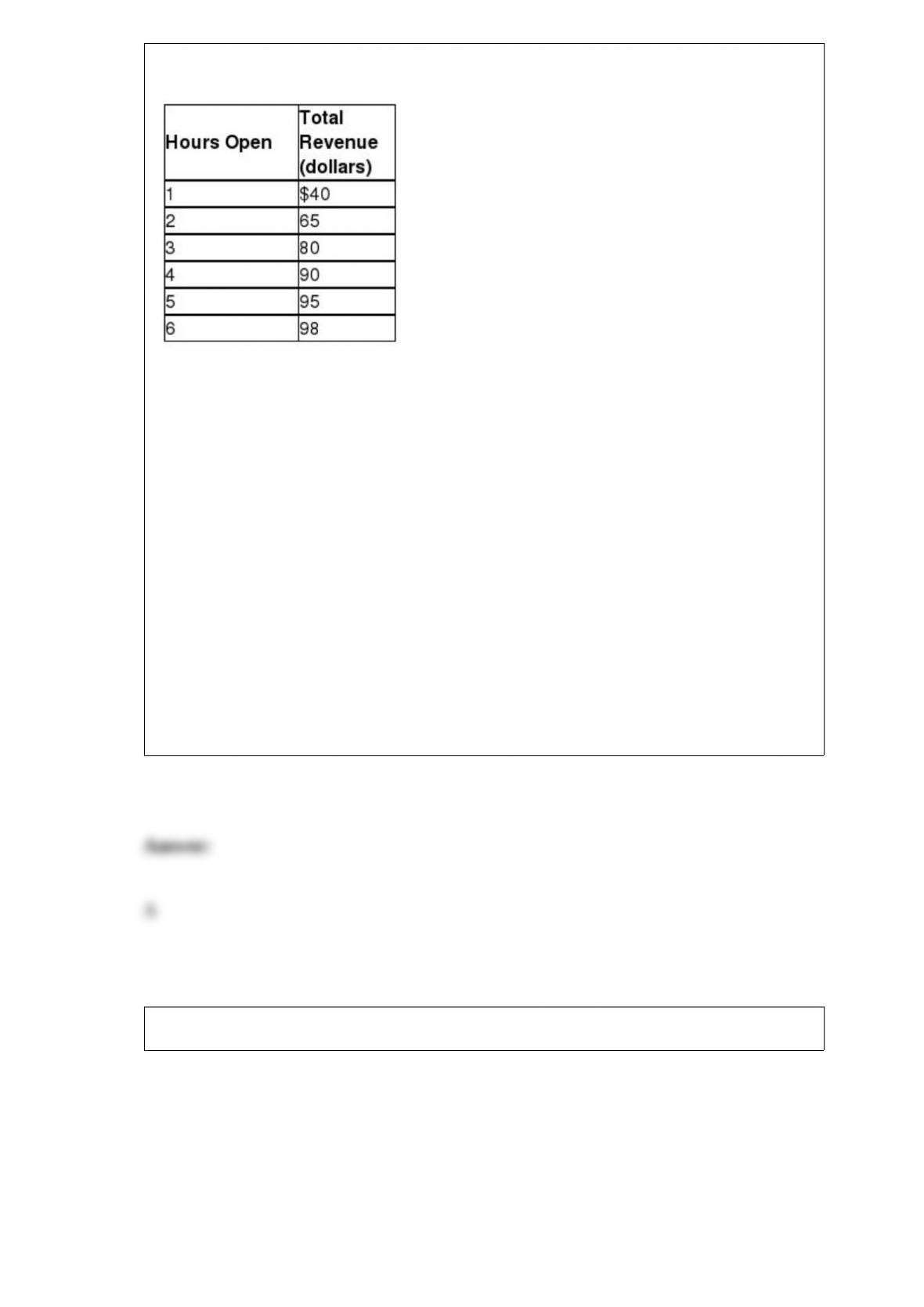
Table 1-2
Julius runs a small tailor shop in the city of Bloomfield. He is debating whether he
should extend his hours of operation. Julius figures that his sales revenue will depend
on the number of hours the tailor shop is open as shown in the table above. He would
have to hire a worker for those hours at a wage rate of $18 per hour.
Refer to Table 1-2. Using marginal analysis, determine how many hours should Julius
extend his shop’s hours of operations?
A) 2 hours
B) 3 hours
C) 4 hours
D) 5 hours
E) 6 hours
Figure 5-1
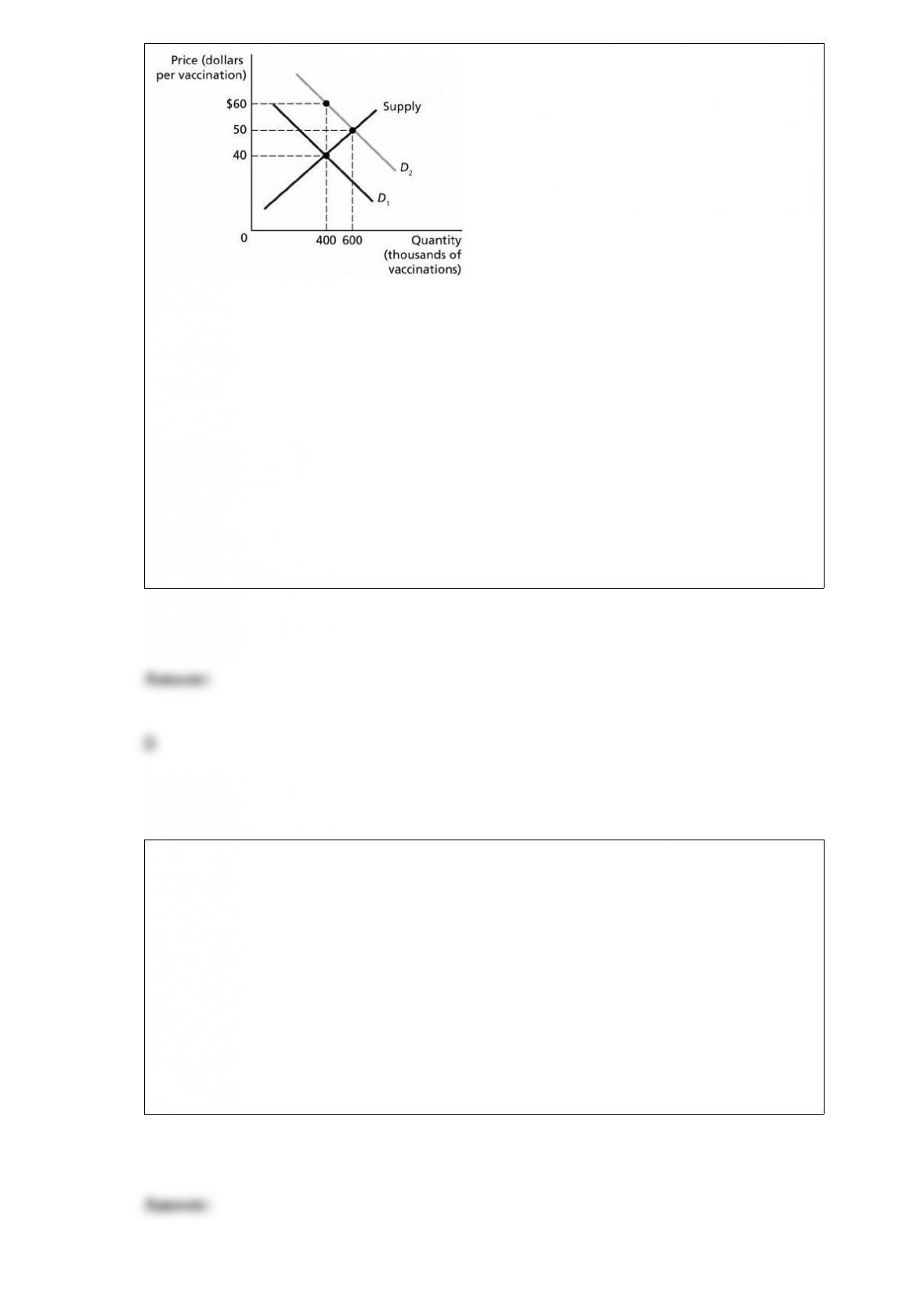
Figure 5-1 represents the market for vaccinations. Vaccinations are considered a benefit
to society, and the figure shows both the marginal private benefit and the marginal
social benefit from vaccinations.
Refer to Figure 5-1. The efficient equilibrium price is
A) $60.
B) $50.
C) $40.
D) <$40.
The advice to “keep searching, there are plenty of jobs around here for which you are
qualified,” would be most appropriate for which of the following types of
unemployment?
A) frictional unemployment
B) structural unemployment
C) cyclical unemployment
D) seasonal unemployment

If the price level in the United States is 110, the price level is 120 in Mexico, and the
nominal exchange rate is 140 pesos per dollar, what is the real exchange rate from the
U.S. perspective?
A) 94
B) 115
C) 128
D) 153
Why does the short-run aggregate supply curve shift to the right in the long run,
following a decrease in aggregate demand?
A) Workers and firms adjust their expectations of wages and prices downward and they
accept lower wages and prices.
B) Workers and firms adjust their expectations of wages and prices downward and they
push for higher wages and prices.
C) Workers and firms adjust their expectations of wages and prices upward and they
push for higher wages and prices.
D) Workers and firms adjust their expectations of wages and prices upward and they
accept lower wages and prices.
For each watch that Switzerland produces, it gives up the opportunity to make 50
pounds of chocolate. Germany can produce 1 watch for every 100 pounds of chocolate
it produces. Which of the following is true about the comparative advantage between
the two countries?
A) Switzerland has the comparative advantage in chocolate.
B) Switzerland has the comparative advantage in watches.
C) Germany has the comparative advantage in watches and chocolate.
D) Germany has the comparative advantage in watches.
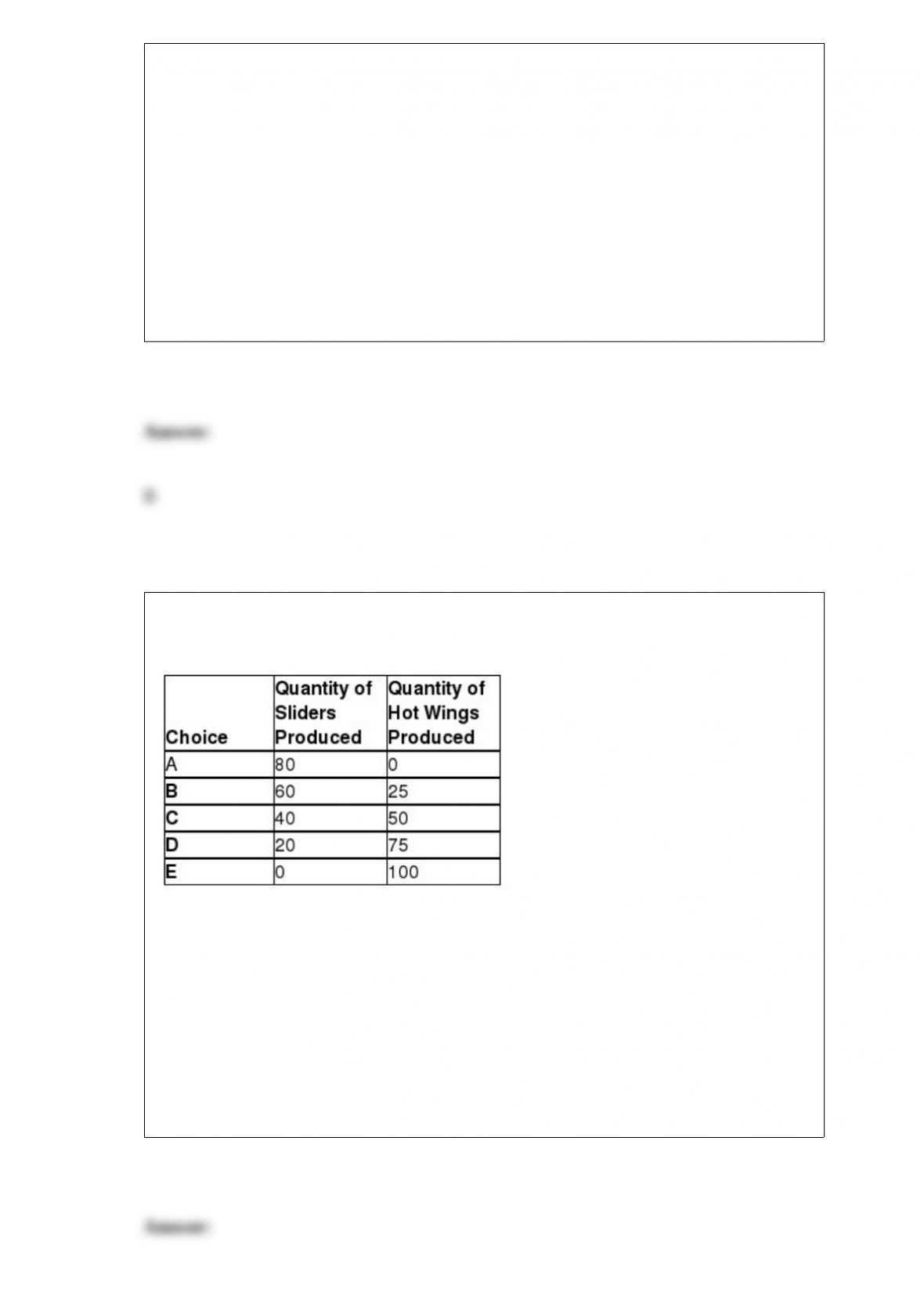
Table 2-1
Production Choices for Dina’s Diner
Refer to Table 2-1. Assume Dina’s Diner only produces sliders and hot wings. A
combination of 40 sliders and 25 hot wings would appear
A) along Dina’s production possibilities frontier.
B) inside Dina’s production possibilities frontier.
C) outside Dina’s production possibilities frontier.
D) at the vertical intercept of Dina’s production possibilities frontier.

From an initial long-run macroeconomic equilibrium, if the Federal Reserve anticipated
that next year aggregate demand would grow significantly slower than long-run
aggregate supply, then the Federal Reserve would most likely
A) decrease interest rates.
B) increase interest rates.
C) decrease income tax rates.
D) increase income tax rates.
If a vineyard wants to raise funds to purchase a new bottling machine, it does so in the
A) factor market.
B) output market.
C) product market.
D) alcoholic beverages market.
A financial asset is considered ________ if it can be sold in a secondary market.
A) a commodity
B) a security
C) a liability
D) durable
All of the following explain why purchasing power parity does not completely explain
long-run fluctuations in exchange rates except
A) not all goods and services produced in any country are traded internationally.
B) consumer preferences for goods and services differ across countries.
C) some countries impose barriers to trade.
D) most countries have free markets with little, if any, government regulation.
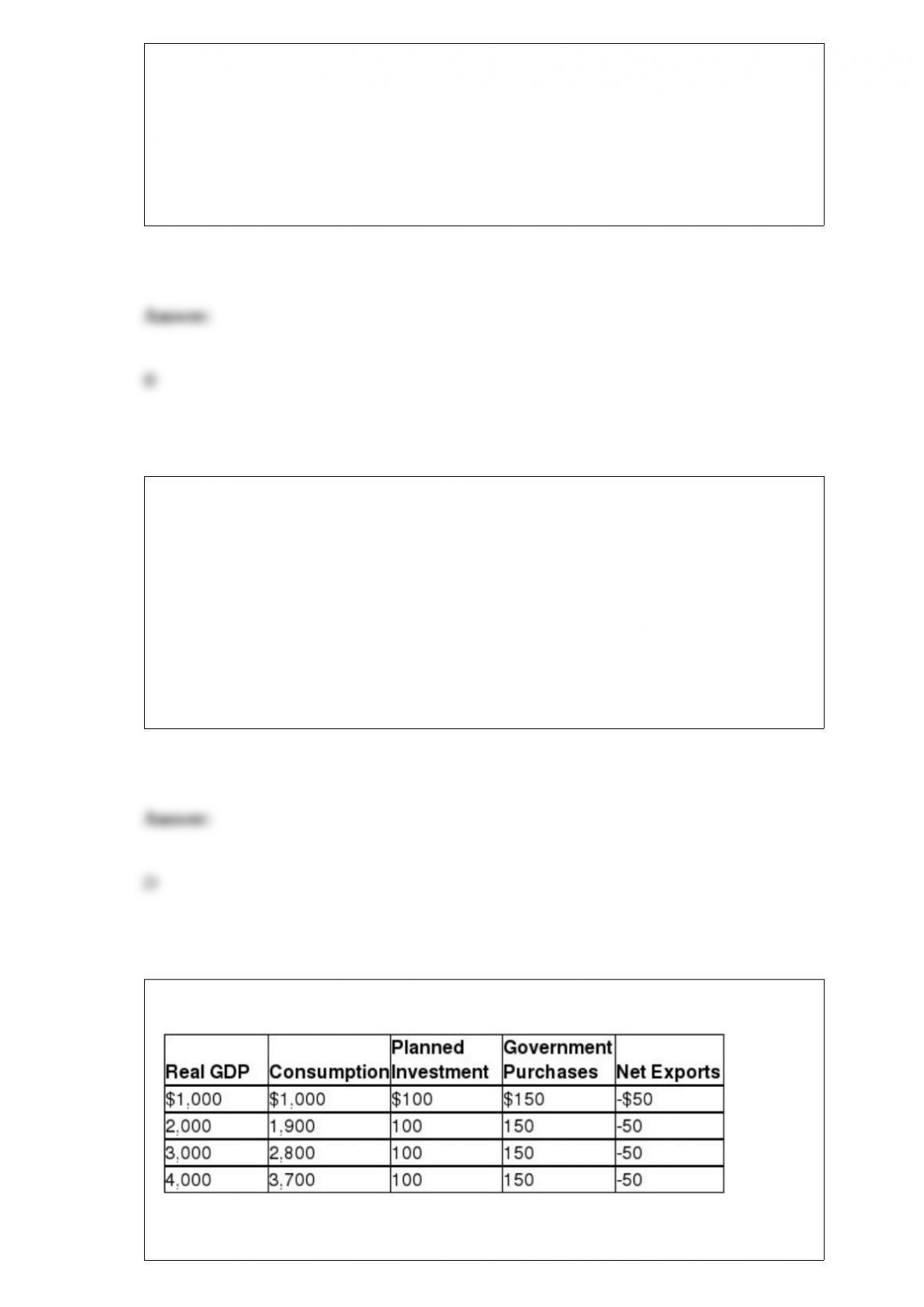
Table 12-14
Refer to Table 12-14. Using the table above, answer the following questions. The
numbers in the table are in billions of dollars.
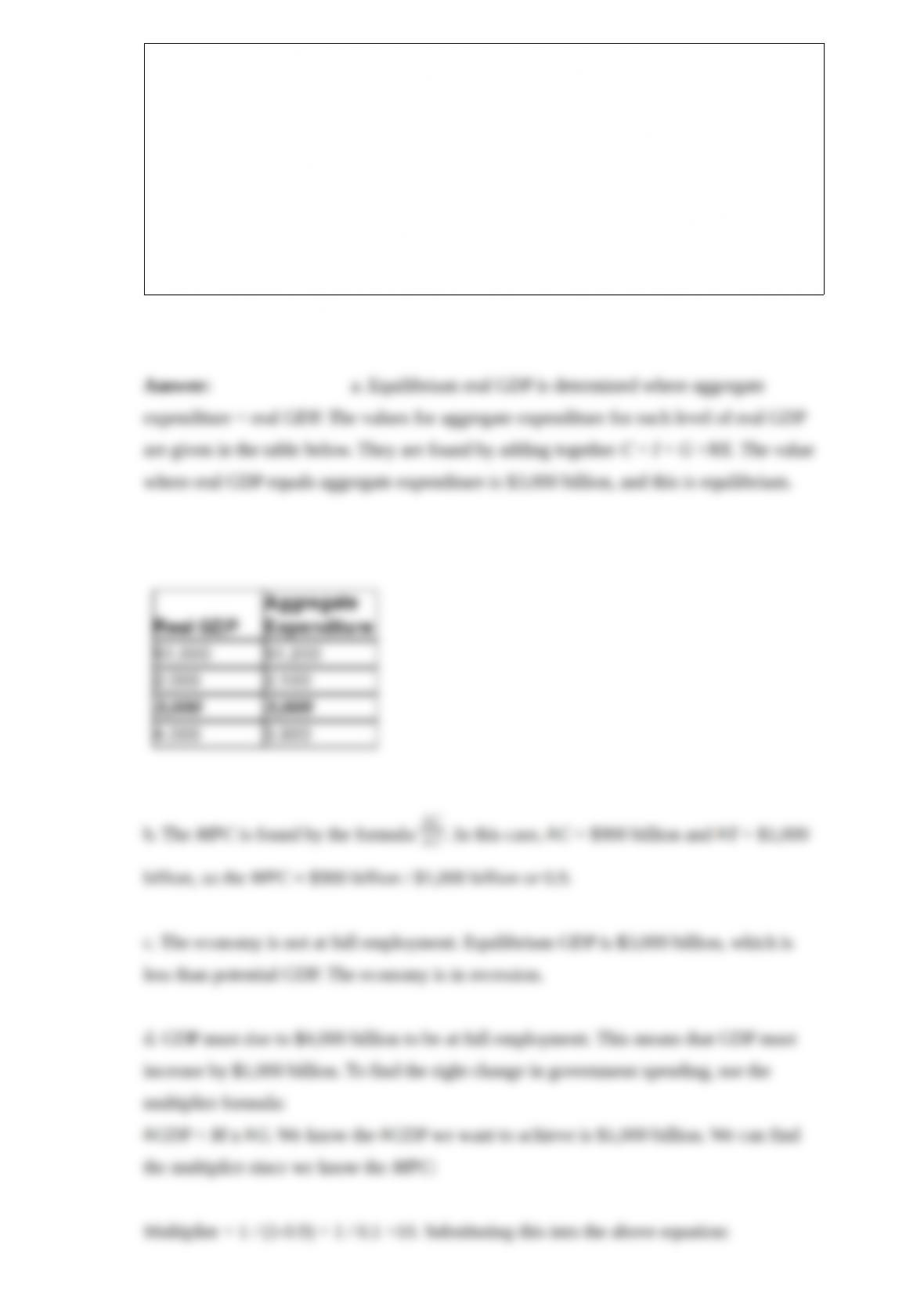
a. What is the equilibrium level of real GDP?
b. What is the MPC?
c. If potential GDP is $4,000 billion, is the economy at full employment? If not, what is
the condition of the economy?
d. If the economy is not at full employment, by how much should government spending
increase so that the economy can move to the full employment level of GDP?

In the 1973 movie Save the Tiger, Jack Lemmon plays Harry Stoner, the CEO of a
clothing manufacturer whose business has fallen on hard times. In one of the key scenes
of the movie, Stoner tries to convince his partner that they should hire someone to burn
one of their buildings in order to collect on their insurance policy. Harry Stoner’s
actions are an example of
A) adverse selection.
B) moral hazard.
C) self-interest.
D) asymmetric information.
Which of the following would shift the supply curve for smartphones to the right?
A) an increase in the price of a substitute in production
B) an increase in consumer income (assuming that all smartphones are normal goods)
C) a decrease in the number of firms that produce smartphones
D) a decrease in the price of an input used to produce smartphones

The three most widely followed stock indexes in the United States include all of the
following except
A) the Dow Jones Industrial Average.
B) the S&P 500.
C) the Fortune 500.
D) The NASDAQ.
Suppose the equilibrium real federal funds rate is 5 percent, the target rate of inflation is
3 percent, the current inflation rate is 5 percent, and real GDP is 4 percent above
potential real GDP. If the weights for the inflation gap and the output gap are both 1/2,
then according to the Taylor rule the federal funds target rate equals
A) 1 percent.
B) 9 percent.
C) 13 percent.
D) 17 percent.

If the Federal Reserve targets the money supply, and the money demand curve shifts to
the left, then the Fed
A) cannot maintain the money supply target.
B) can maintain the money supply target, but at a lower interest rate.
C) can maintain the money supply target, but at a higher interest rate.
D) can maintain the money supply target with no change in the interest rate.