
Is GDP an accurate measure of a country’s well being?
a. Yes, it is the best measure of national well being.
b. Yes, provided we use real GDP and not nominal GDP.
c. The answer is uncertain, depending on whether GDP is rising or falling.
d. No, it is not.
Is it possible for a currency to appreciate relative to one currency, and depreciate
relative to another?
a. No, a currency rises or falls against all currencies.
b. No, this could happen only under the gold standard.
c. Yes, but only if all governments agree on the new rates.
d. Yes, this is possible in a world of floating rates.
Transfer payments represent income that is not earned but received by individuals.
a. True
b. False

Gross Domestic Product in 2013 was almost five times larger than it was in 1960 but it
is important to note that
a. none of the growth represented more output.
b. measurement of output omitted any effect of inflation.
c. the population grew substantially over the same time period.
d. graphs of output were unable to display such growth.
Despite both monetary and fiscal policy actions, real GDP declined at an annualized
rate of 6% during the last quarter of 2008 and the first quarter of 2009.
a. True
b. False

On May 12, 2011, it cost U.S. $1.64 to buy one British pound. How many British
pounds would U.S. $1 buy?
a. 0.56
b. 0.61
c. 1.64
d. 2.64
Double taxation of corporate earnings
a. tends to restrict the activities of corporate firms.
b. causes stockholders to earn a lower return than they would on other securities of
comparable risk.
c. results in more investment in research and development.
d. All of the above are correct.
____ completely deplete the most vital resources.
a. We are not going to
b. In the near future we will
c. We are eventually going to
d. We have already begun to
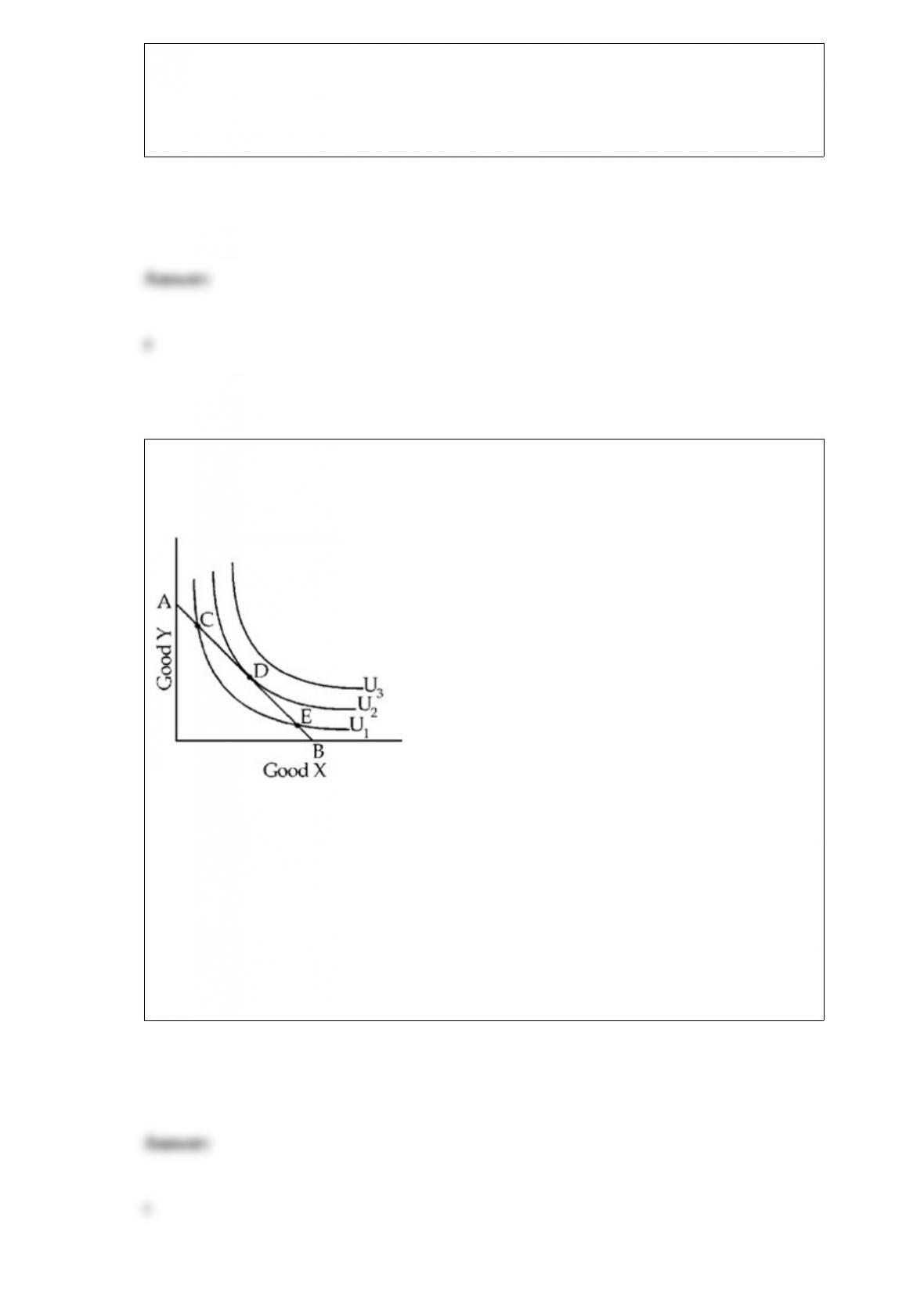
Figure 5-19
In Figure 5-19, the consumer experiences at point C
a. greater total utility than at point D.
b. greater total utility than at point E.
c. less total utility than at point D.
d. total utility equal to that experienced at point D.

If unemployment and inflation move inversely, then we can infer that business
fluctuations are
a. from the demand side.
b. from the supply side.
c. from both the demand and supply side.
d. purely random events.
The human consequences of the Great Depression included
a. homeless families.
b. closed factories.
c. bankrupt farmers.
d. soup lines.
e. all of the above conditions.
The phrase “capital formation” is synonymous with

a. investment spending.
b. buying shares of stock.
c. creating mutual funds.
d. purchasing financial assets.
A monopolist is a price taker, just like a perfect competitor.
a. True
b. False
The budget deficit
a. is the value of the government’s indebtedness at a moment in time.
b. was $13.5 trillion in fiscal 2014.
c. is the amount by which the government’s expenditures exceed receipts during a
specific time period.
d. All of the above are correct.

The laws of supply and demand force prices to an equilibrium.
a. True
b. False
Argentina in 2001 faced a debt problem more serious than the U.S. debt problem
because Argentina was obligated to repay its debt in
a. U.S. dollars.
b. their own currencies.
c. a relatively short period of time.
d. large installments.
Division of iron ore between the production of bridge girders and tanker drums is an
example of
a. a distribution problem.
b. production planning.
c. input-output analysis.
d. both output selection and distribution
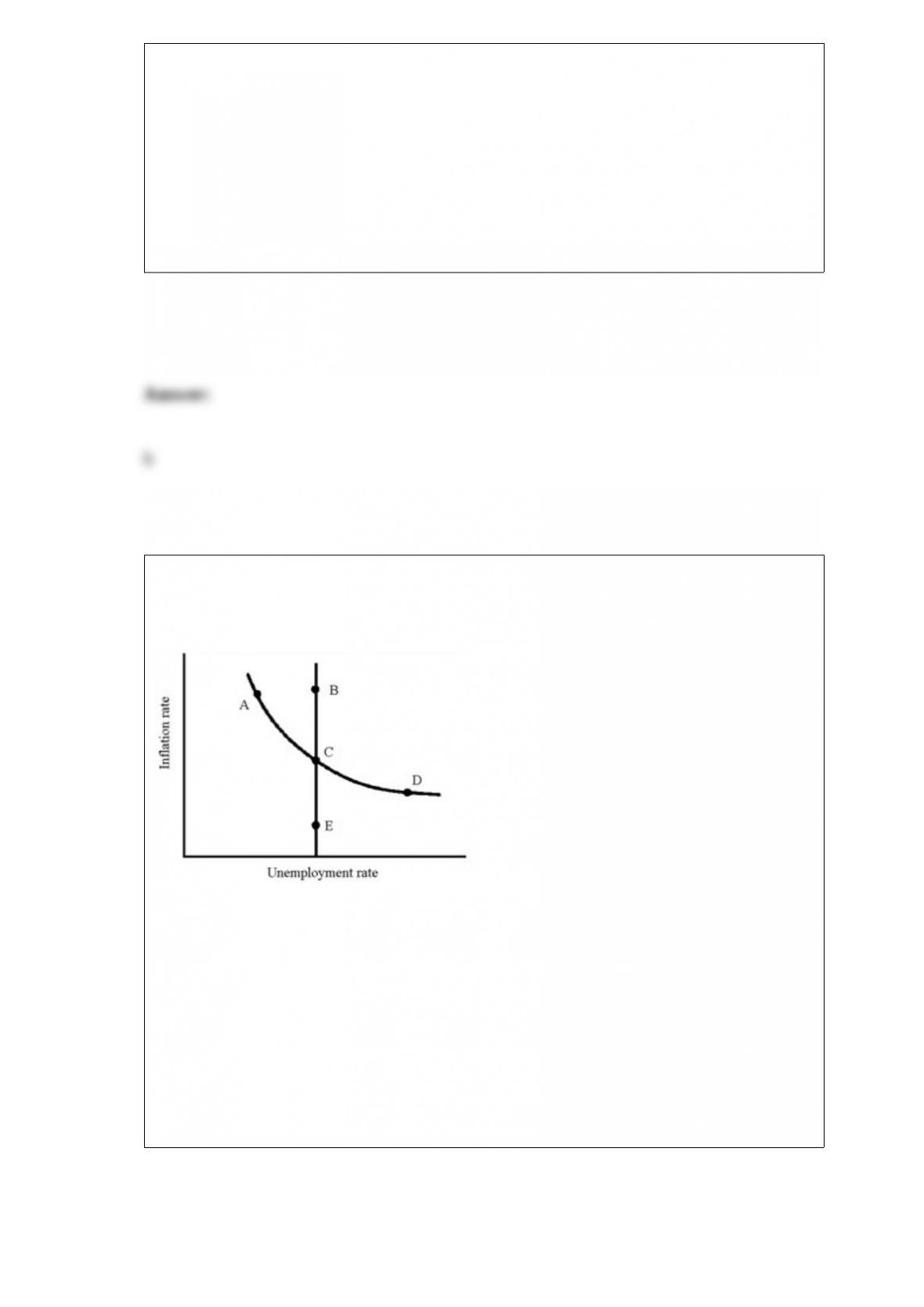
Figure 17-8
In Figure 17-8, which of the following movements reflects the closing of a recessionary
gap through the economy’s self-correcting mechanism?
a. A to B
b. A to C
c. C to E
d. D to E

The U.S. government restricts the production of peanuts by limiting production
licenses. By also prohibiting imports, the government maintains prices well above
levels peanut farmers would obtain if supply were not restricted. Economists call this
type of program a(n)
a. price ceiling.
b. price floor.
c. opportunity cost.
d. shortage.
e. efficiency move.
The price mechanism solves the “for whom” problem by assigning high prices to goods
in high demand and letting customers choose whether to purchase them.
a. True
b. False
If the quantity of one good that must be forgone increases as successive units of another
good are produced, then there is said to be increasing opportunity cost between the two
goods.
a. True
b. False
If total profit is maximized, then marginal cost must equal marginal revenue.
a. True
b. False
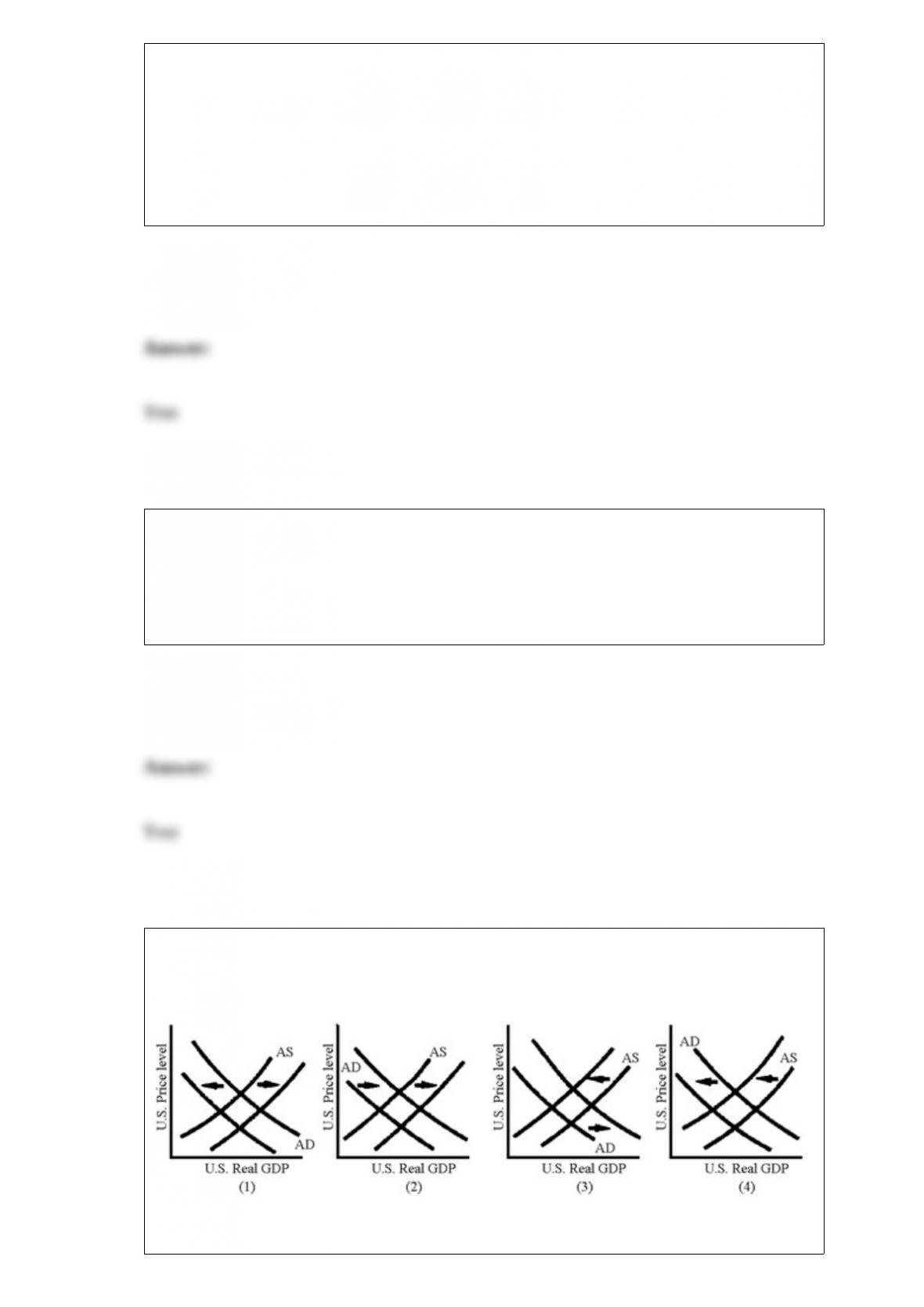
Figure 20-8
Which of the graphs in Figure 20-8 illustrates the AD-AS shifts associated with a

currency depreciation?
a. 1
b. 2
c. 3
d. 4
A price increase will always increase a firm’s revenue.
a. True
b. False
We observe that the price of food rises and the quantity purchased also rises. This
means the
a. supply curve shifted to the left.
b. demand curve shifted to the right.
c. demand curve shifted to the left.
d. supply curve shifted to the right.

In a market with perfectly competitive firms, the market demand curve is usually ____
and the demand curve facing each individual firm ____.
a. upward sloping; horizontal
b. downward sloping; horizontal
c. horizontal; downward sloping
d. downward sloping; downward sloping
Rhode Island has enacted a substantial increase in the tax on employers that finances
the workman’s compensation system. For some employers, the tax is about $25 per
$100 paid in wages. Employers claim they cannot afford to pay the tax. Under which of
the following conditions will the actual burden of the tax fall on employers?
a. The employers’ demand for labor is perfectly elastic.
b. The supply of labor is perfectly inelastic.
c. The employers’ demand for labor is perfectly inelastic.
d. The demand for the good they produce must be perfectly inelastic.

In a market economy, goods are allocated to
a. all potential uses.
b. all citizens on an equal basis.
c. citizens with political power.
d. citizens with both the desire and the willingness to pay for the goods.
If marginal profit is zero, then total profit is at a maximum.
a. True
b. False
A firm now produces its sales-maximizing level of output. If the firm increased its
output by one unit, its marginal revenue would become
a. negative.

b. smaller but still positive.
c. larger but still negative.
d. larger but still positive.
Under laissez faire, society’s decisions about how much of every product to produce
depend on
a. consumer preferences only.
b. production costs only.
c. consumer preferences and production costs.
d. neither consumer preferences nor production costs.
The act of putting a new product on the market in order to make profits is called
a. invention.
b. innovation.
c. investment.
d. development.