
If there is a $1 per box tax imposed on the sale of tea and the price paid by consumers
increases by $0.50, what may we conclude about the price elasticities of demand and
supply?
a. The elasticity of supply must be less than the price elasticity of demand
b. The amount exchanged in the market will remain the same
c. The elasticity of supply must be greater than the price elasticity of demand
d. The elasticity of supply must be equal to the elasticity of demand
e. We need more information to answer the question
Public choice theory suggests that political candidates try to get elected by
a. appealing to conservatives
b. appealing to liberals
c. appealing to senior citizens
d. appealing to the median voter
e. raising taxes
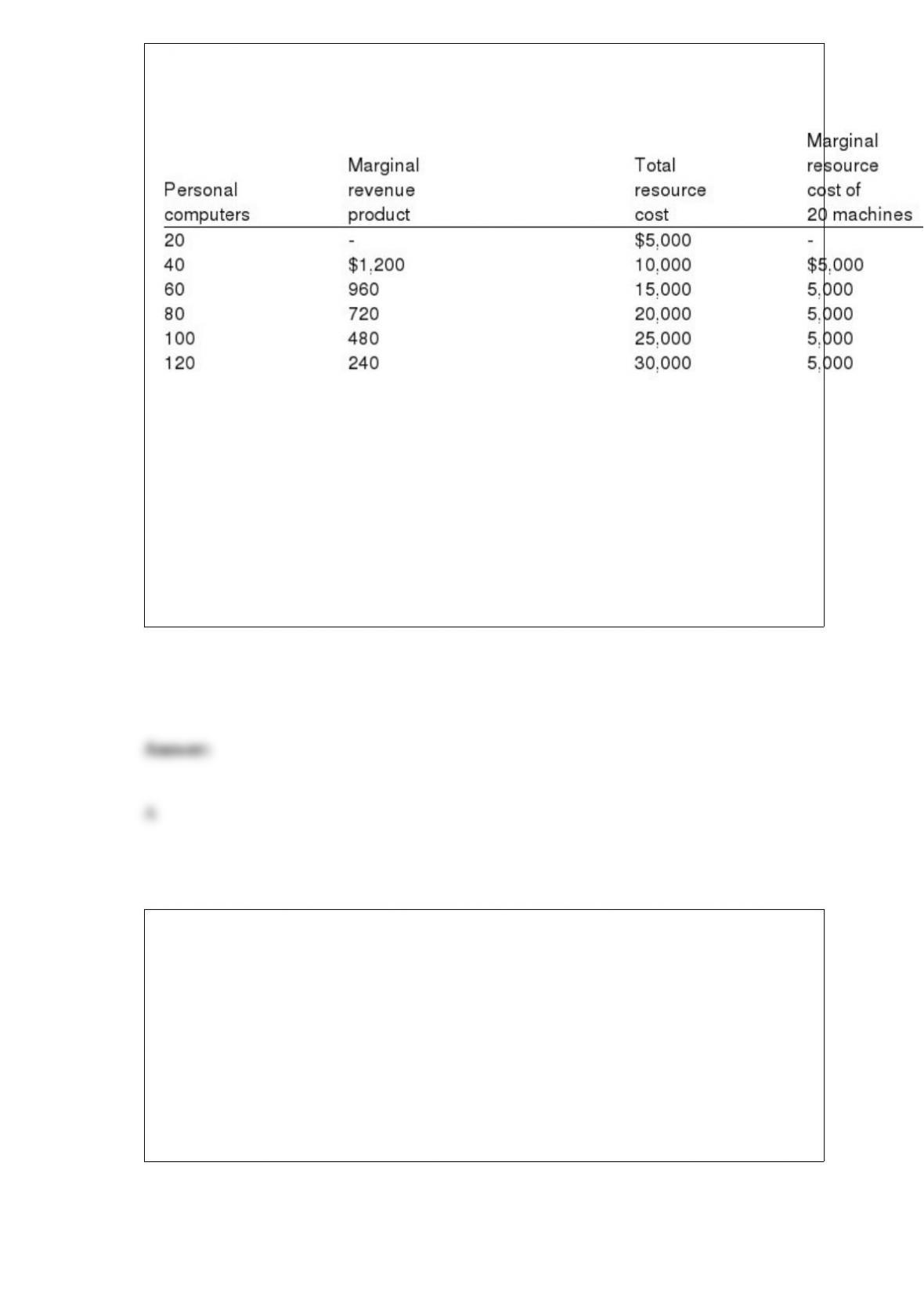
Exhibit 13-4
Exhibit 13-4 shows data gathered by Memo Co. as it prepares to purchase personal
computers for its sales offices. Assume that the personal computers are expected to last
indefinitely, that operating expenses are negligible, and that the price of Memo’s
product is expected to remain constant in the future. The marginal rate of return on 60
personal computers is closest to
a. 19 percent
b. 24 percent
c. 30 percent
d. 52 percent
e. 520 percent
Suppose that a price-discriminating monopolist divides its market into two segments. If
the firm sells its product for a price of $42 in the market segment where demand is
relatively less elastic, the price in the market segment whose customers’ demand is
more elastic will be
a. $42
b. greater than $42
c. less than $42
d. less than marginal revenue in that market segment
e. equal to marginal revenue in that market segment

Jack F. Altrades’s decision whether to purchase a good from a firm or hire resources
directly in the market will
a. depend, in part, on his production skill but not on his contract negotiation skill
b. depend, in part, on the opportunity cost of his time but not on his skill
c. not depend on the cost of identifying, measuring, and pricing inputs
d. not depend on the cost of negotiating contracts
e. depend, in part, on both his skill and the opportunity cost of his time
Which of the following did not contribute to the increase in competition in the United
States between 1958 and 1988?
a. antitrust activity
b. deregulation of transportation industries
c. deregulation of banking
d. increased imports
e. conglomerate mergers

Tickets to the Michigan-Notre Dame football game are usually sold out in advance of
game day. This suggests that
a. the price of the tickets must be very high or else people would not consider them
valuable
b. the price is set below the equilibrium level
c. the football stadium is relatively small
d. everyone who attends the game will enjoy it
e. the price is determined primarily by the fixed supply of tickets
When supply and demand analysis is used to study the exchange rate, foreign exchange
is treated just like
a. a good or a service
b. debt
c. fiat money
d. commodity money
e. investment

Wheat farmers in Kansas would benefit from a devastating crop failure in North Dakota
(another major wheat-producing state) if the U.S. demand for wheat is
a. inelastic
b. elastic
c. unit elastic
d. downward sloping
e. perfectly elastic
Economists believe that individuals respond in a predictable way to changes in costs
and benefits. The term that best describes this belief is
a. opportunity cost
b. demand
c. supply
d. scarcity
e. rational behavior

Despite specialization and comparative advantage, household production still exists
because for some households
a. the opportunity cost of production at home is greater than the cost of purchasing the
good in the market
b. production at home is less costly than purchasing the good in the market
c. the value of home production exceeds the sunk cost of home production
d. the value of home production is ignored
e. food and clothing expenditures represent a small portion of their total budget
A market
a. is often a physical place
b. facilitates exchanges between buyers and sellers
c. typically involves monetary transactions
d. might not have well-defined geographical limits
e. all of the above
A business executive who buys a portable computer so that she can work on airplanes is

trying to reduce the cost of traveling.
a. True
b. False
Federal individual income taxes illustrate the ability-to-pay principle of taxation.
a. True
b. False
Along a given demand curve, a decrease in supply will typically
a. decrease price, but the change in quantity could be in either direction
b. increase price and decrease the quantity
c. decrease price but leave quantity unchanged
d. decrease both quantity and price
e. increase both quantity and price
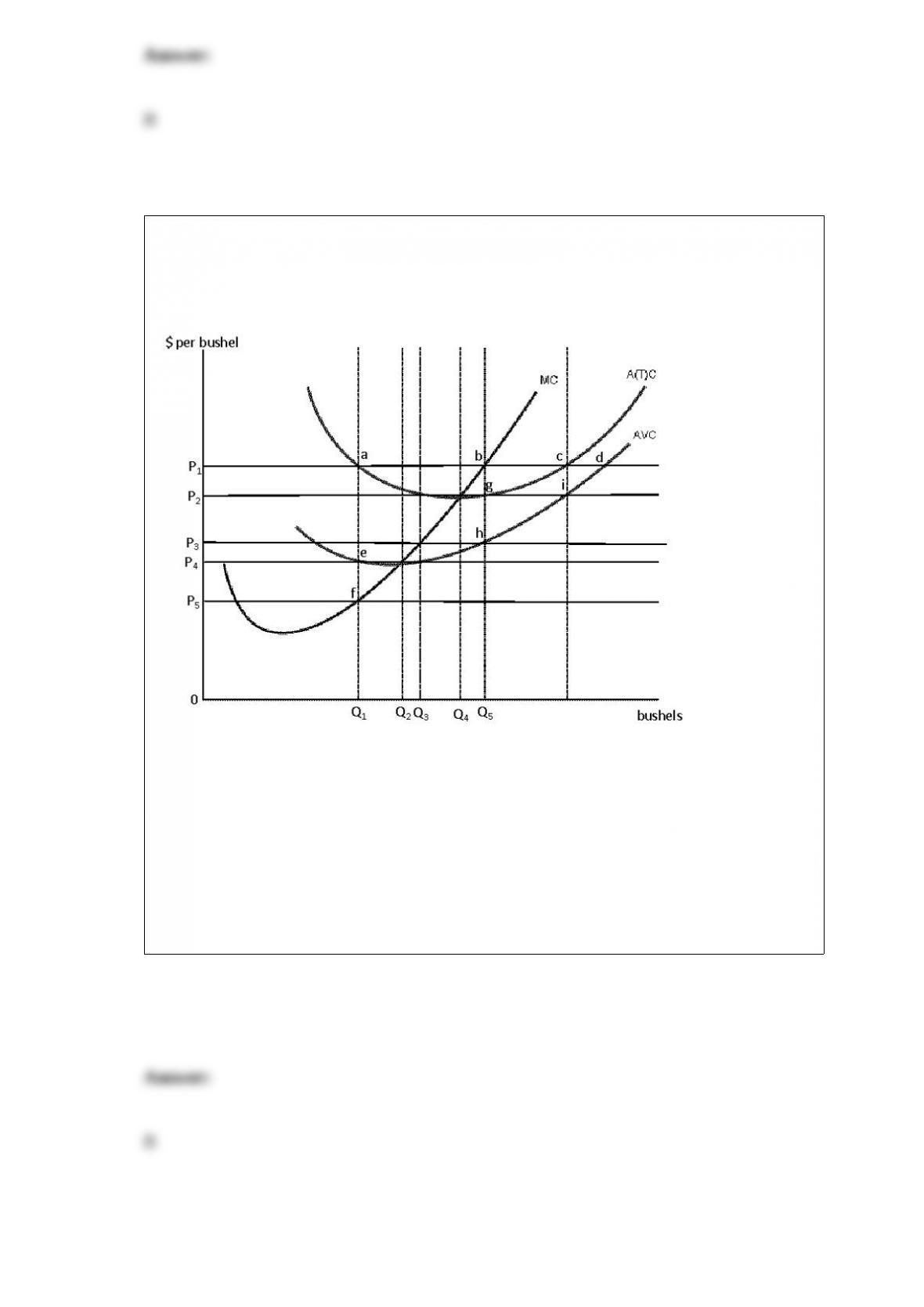
Exhibit 8-19 A Single Firm in a Perfectly Competitive Market
Consider Exhibit 8-19. When the market price is P1, which of the following most
acurately reflects the firms short-run situation?
a. The firm will choose to produce quantity Q5and earn exactly 0 profit
b. The firm will choose to produce quantity Q5and earn a profit
c. The firm will choose to produce quantity Q5and suffer a loss
d. The firm will choose to produce quantity Q1and earn a profit > 0
e. The firm will choose to produce quantity Q1and earn exactly 0 profit

Exhibit 5-19
The curve shown in Exhibit 5-19 could represent
a. perfectly elastic demand or supply
b. perfectly inelastic supply or perfectly elastic demand
c. perfectly elastic supply or perfectly inelastic demand
d. perfectly inelastic supply or demand
e. perfectly inelastic supply or demand which is unit elastic
If a foreign currency becomes more expensive in United States dollars, we would
expect
a. U.S. exports to increase
b. U.S. imports to increase
c. U.S. exports to remain constant
d. U.S. exports to decrease
e. the quantity of foreign currency demanded in the United States to rise
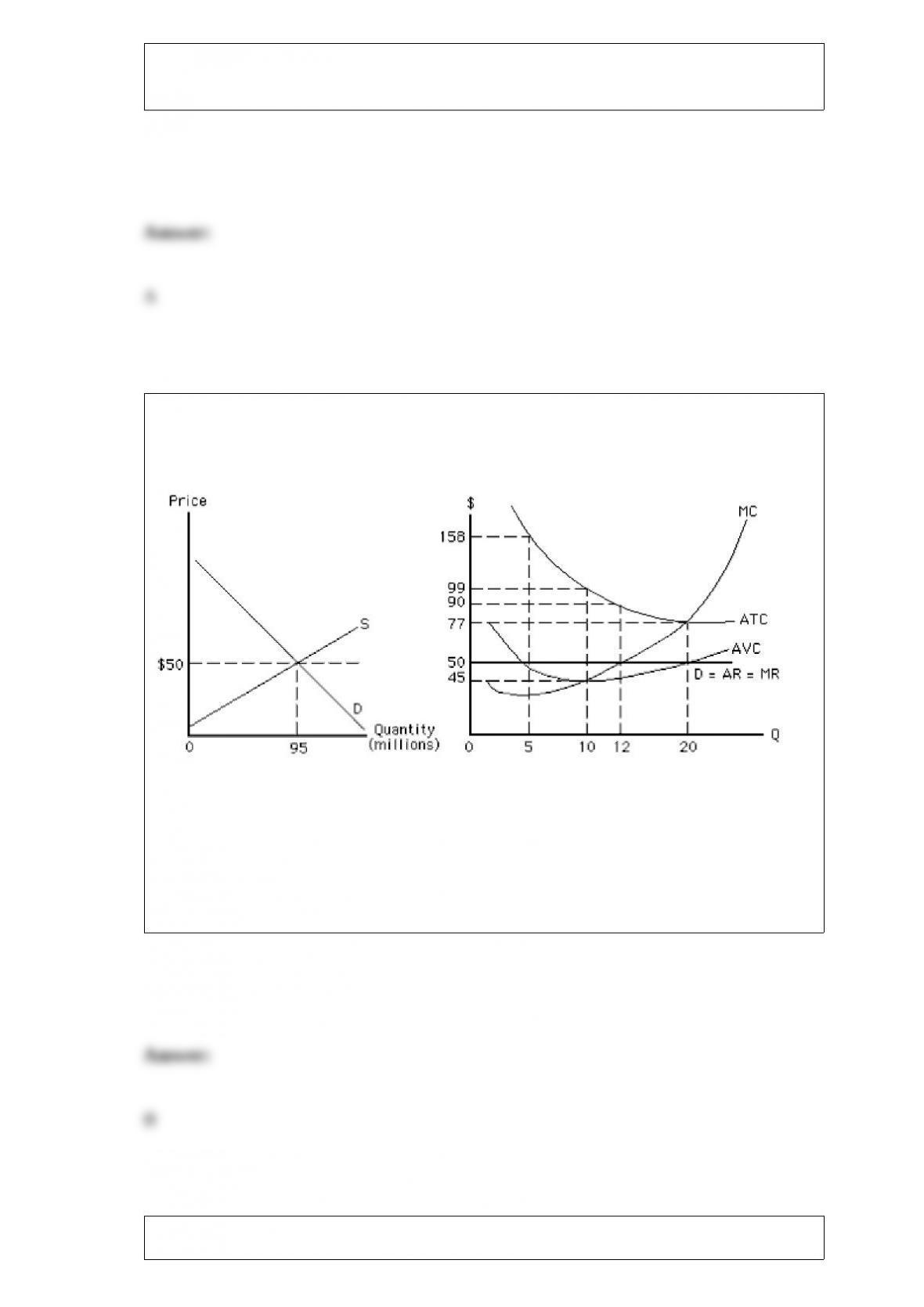
Exhibit 8-15
The maximum economic profit (or minimum economic loss) for the firm in Exhibit
8-15 is a
a. loss of $540
b. loss of $480
c. profit of $60
d. loss of $490
e. loss of $108
Opportunity cost is measurable only when prices are known

a. True
b. False
Mary Green takes a summer course in London, England. She doesn’t buy British pounds
at the U.S. airport, where the rate is 1 pound = $1.60. Upon arrival in London, she finds
that she can buy pounds for $1.65 each. Which of the following is true?
a. Green would have been better off if she had bought pounds in the United States
where U.S. dollars were cheaper.
b. Green would have been better off if she had bought pounds in the United States
where pounds were less expensive.
c. The pounds were more expensive in London because a currency is always most
valued in its home country.
d. The pounds were more expensive in the United States because they are less available
there.
e. It doesn’t matter where she buys the pounds, since she can’t use U.S. money anyway
once she’s in England.
Firms achieve productive efficiency in the long run by
a. striving to minimize fixed cost

b. striving to maximize revenue
c. producing at their minimum long-run average cost
d. producing at their minimum long-run marginal cost
e. producing the output consumers want most
When a developing country relies on export promotion,
a. it concentrates on producing for its domestic market
b. it builds its technological and educational base and then can make more complex
products for export
c. domestic producers have sufficient protection that they can afford to become
inefficient
d. its government must intervene more in markets
e. None of the answers is correct
Which of the following statements about economic methodology is correct?
a. An economic law is a cause-and-effect relationship that has been verified by a
controlled experiment.
b. The test of a theory’s validity is its usefulness in explaining reality.
c. An economic law is a statement about group behavior that is based on the observed

behavior of a single individual.
d. An economic law, because it is based on probabilities, can only be expected to be true
about half the time.
e. Assumptions are ignored in the development of hypotheses.
Elvis values the first gravy sandwich at $5, the second at $4.50, the third at $4. If he
buys three for $4 each, his consumer surplus is
a. $5
b. $4
c. $1.50
d. $9.50
e. $12
Exhibit 6-1
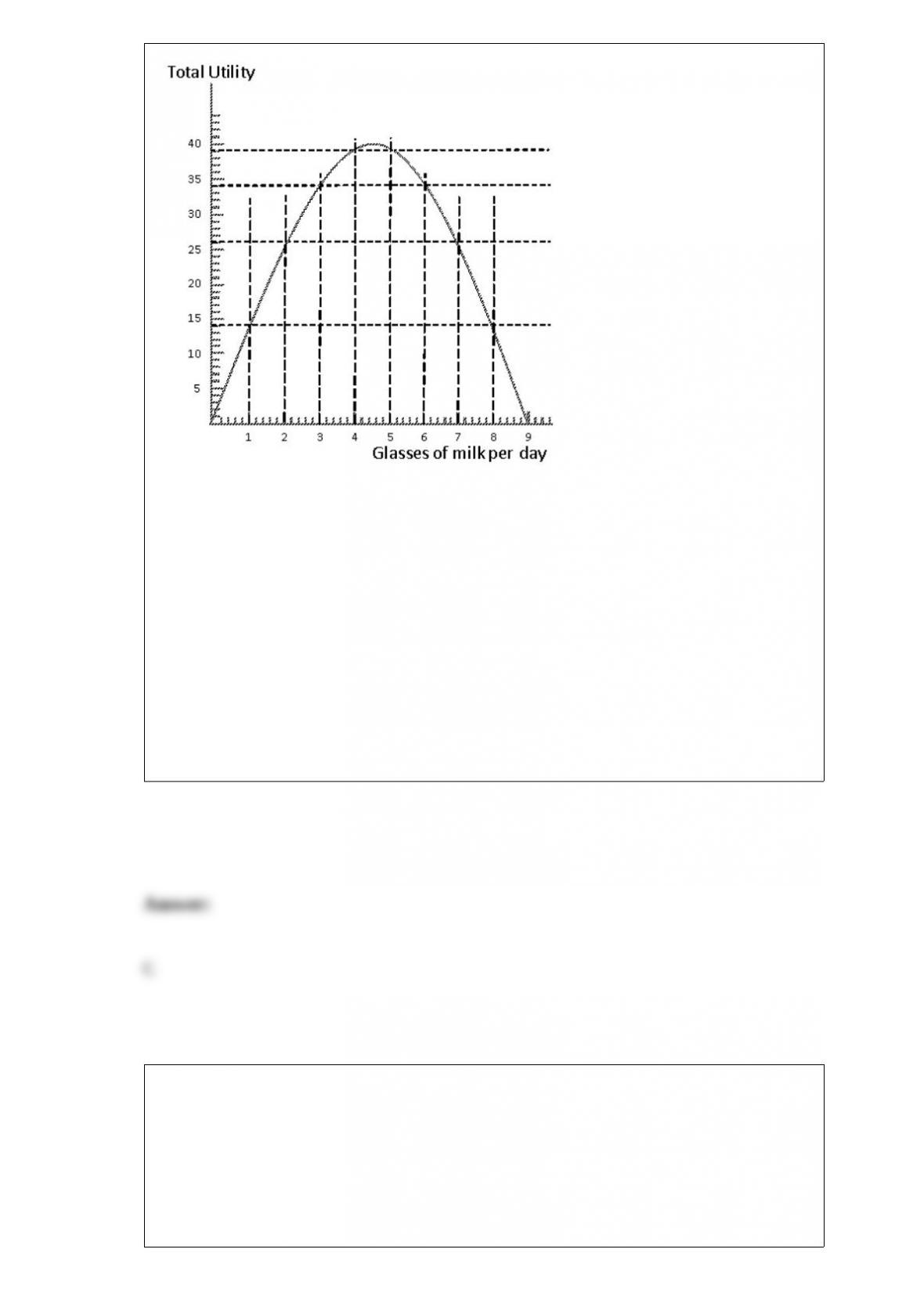
Consider Exhibit 6-1 which shows the total utility derived from various numbers of
glasses of milk consumed in a day. The marginal utility of the third glass of milk is
a. 0 units of utility
b. 5 units of utility
c. 8 units of utility
d. 12 units of utility
e. 14 units of utility
If Jin-Ho buys a personal computer to maintain household financial records and prepare
budgets, he
a. will spend less time in nonmarket work
b. will spend more time engaged in leisure activities

c. will increase the productivity of market work
d. is less likely to hire tax preparation services on the market
e. is less likely to prepare his own income tax returns at home
If a union negotiates a wage above the market equilibrium, each firm’s
a. supply of labor is greater than its marginal resource cost
b. supply of labor is less than its marginal resource cost
c. supply of labor is equal to its marginal resource cost
d. demand for labor is less than its marginal resource cost
e. demand for labor is greater than its marginal resource cost
Exhibit 4-15
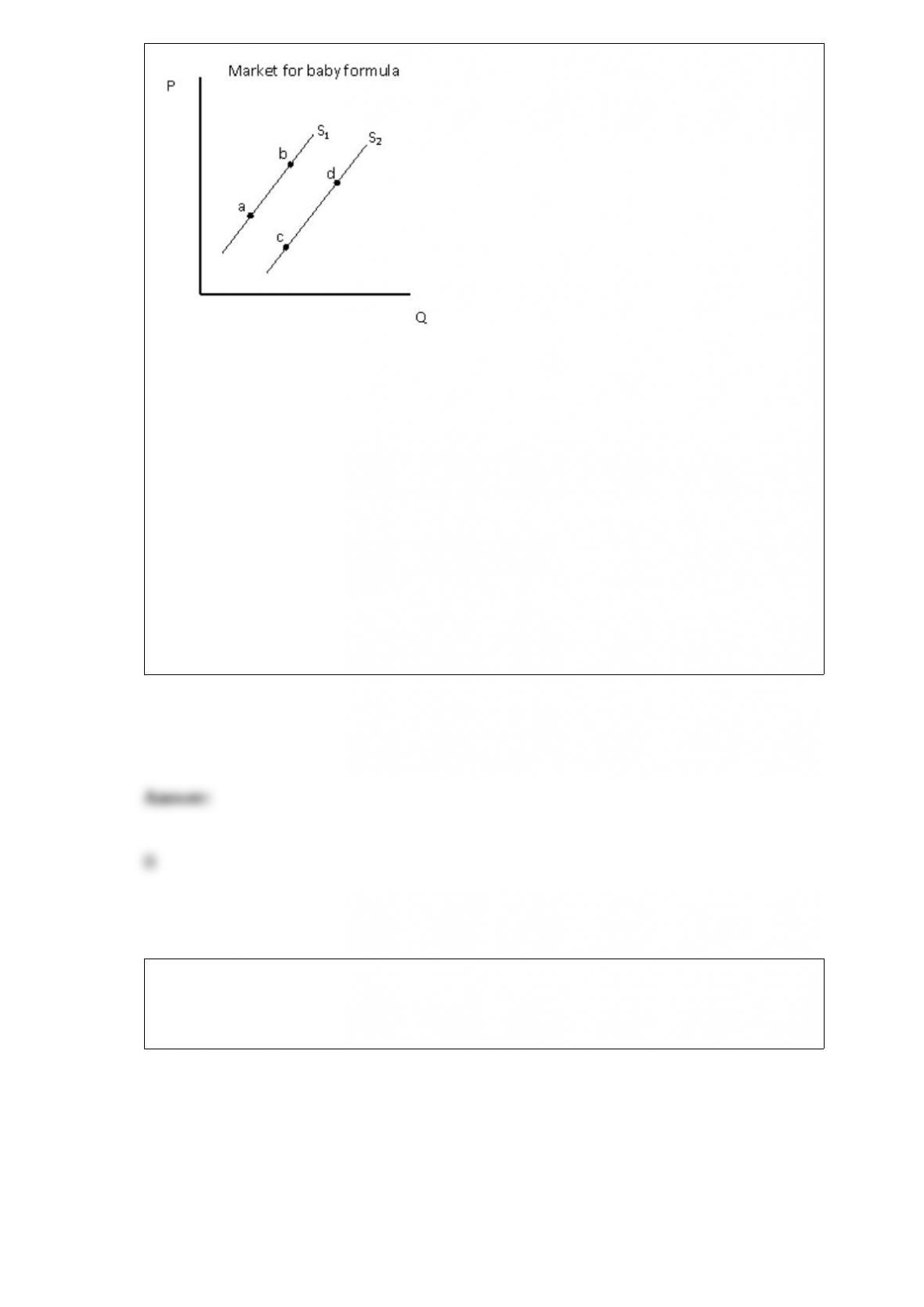
Refer to exhibit 4-15. An increase in the number of firms producing baby formula will
cause which of the following to happen?
a. a movement from a to b along supply curve S1
b. supply shift from S1 to S2
c. movement from c to d along supply curve S2
d. supply shift from S2 to S1
e. movement from d to c along supply curve S2
Exhibit 19-4
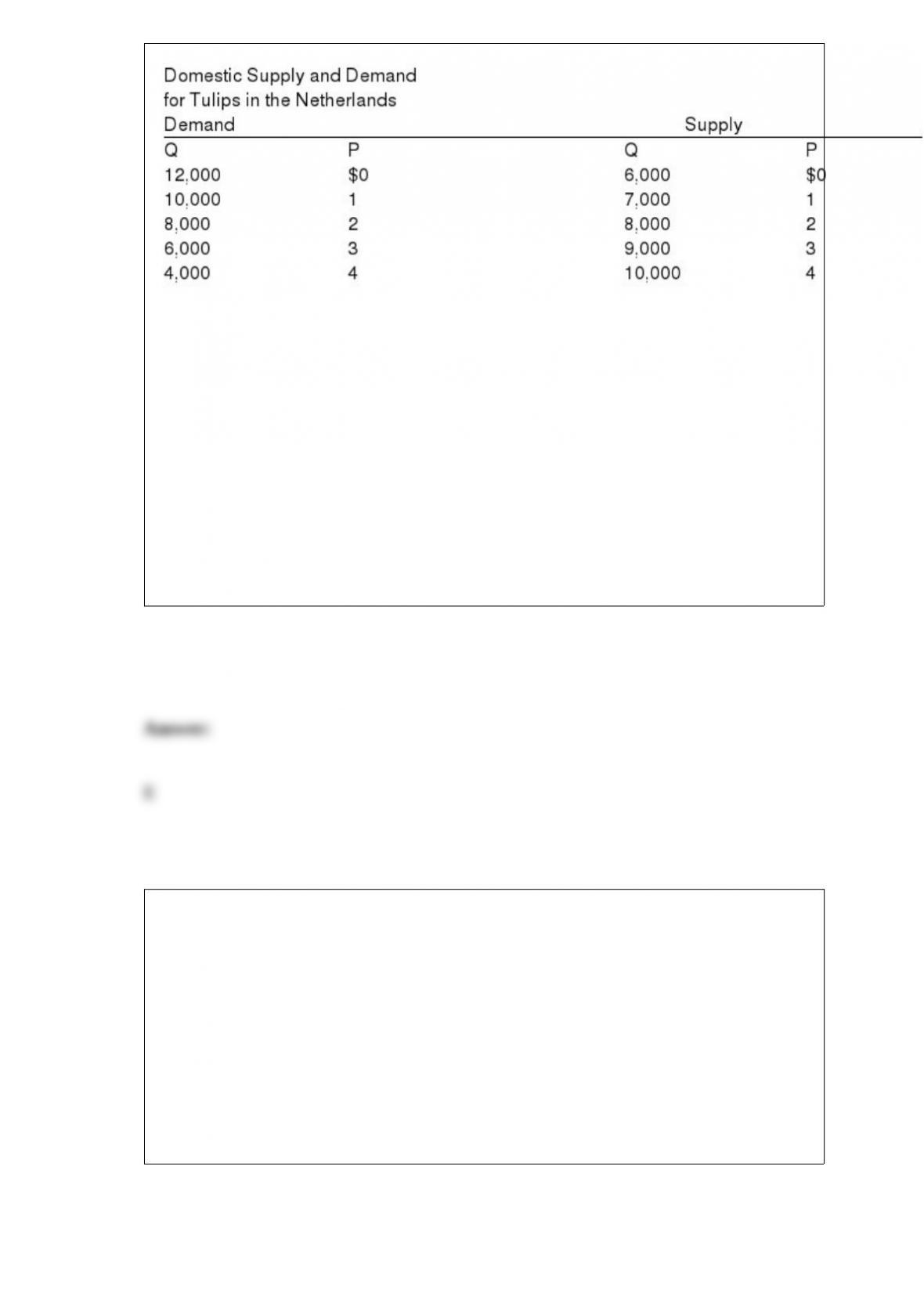
In Exhibit 19-4, if the world price of tulips is $1 and there are no trade restrictions, The
Netherlands will
a. produce 7,000, consume 10,000, and export 3,000 tulips
b. produce 10,000 and consume 10,000 tulips
c. produce no tulips
d. import all of the tulips that it consumes
e. consume all of the tulips that it produces
Minimum efficient scale is the level of output at which
a. short-run average total cost stops decreasing
b. short-run average total cost stops increasing
c. long-run average cost stops decreasing
d. long-run average cost stops increasing
e. profit stops increasing

As long as trade across borders is unrestricted and exchange rates adjust freely, the
purchasing power parity theory predicts that the exchange rate between two national
currencies will adjust in the
a. short run because of the actions of arbitrageurs
b. long run to reflect differences in the nations’ price levels
c. long run to reflect changes in the governments’ trade policies
d. short run because of the actions of speculators
e. long run to reflect differences in military power