1) Harry owns a barber shop and charges $6 per haircut. By hiring one barber at $10 per
hour the shop can provide 24 haircuts per 8-hour day. By hiring a second barber at the
same wage rate the shop can now provide a total of 42 haircuts per day.
Refer to the above information. Harry should:
A.hire the second barber because he will add $28 to profits.
B.hire the second barber because he will add $108 to profits.
C.not hire the second barber because he is less productive than the first barber.
D.not hire the second barber because he will diminish profits.
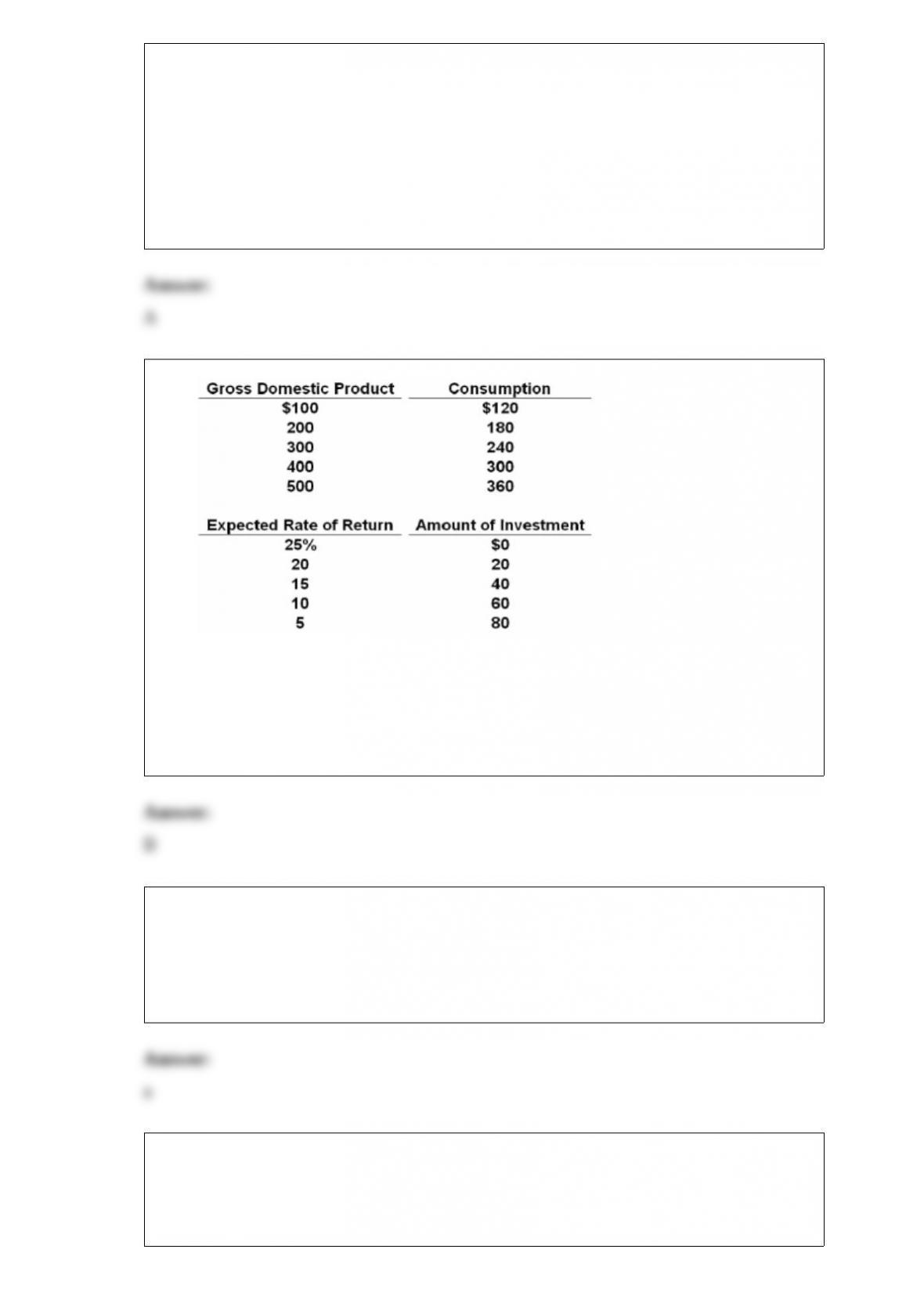
2)
Refer to the above information. The multiplier for this economy is:
A.2.
B.2.5.
C.3.
D.4.
3) the short-run shut-down point for a purely competitive firm occurs:
a.at any point where price is less than the minimum avc.
b.between the two break-even points.
c.at any point where total revenue is less than total cost.
d.at any point where the firm is not making an economic profit.
4) The actual budget deficit of the Federal government in 1991 was about $269 billion.
On the basis of this information it:
A.can be concluded that the economy was faced with serious inflation in 1991.
B.cannot be determined whether fiscal policy had an expansionary or a contractionary
impact in 1991.
C.can be concluded that fiscal policy was contractionary in 1991.
D.can be concluded that fiscal policy was expansionary in 1991.
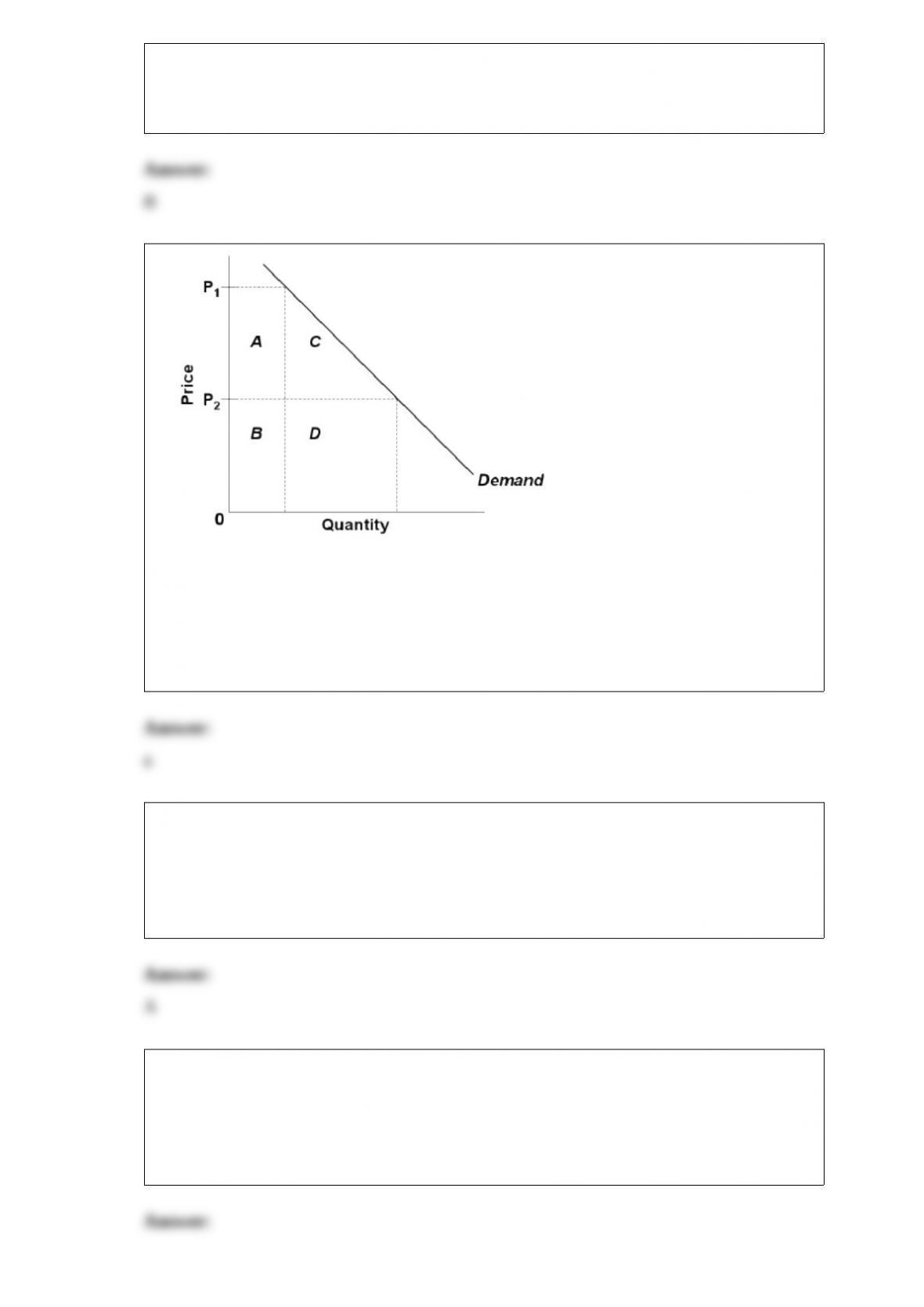
5)
refer to the above diagram. if price falls from p1to p2, total revenue will become
area(s):
a.b + d
b.c + d
c.a + c
d.c
6) The prime interest rate usually:
A.rises when the Federal funds rate rises.
B.rises when the discount rate falls.
C.falls when the Federal funds rate rises.
D.falls when the Fed sells bonds in the open market.
7) An increase in the poverty rate:
A.will necessarily shift the Lorenz curve toward the diagonal.
B.will necessarily shift the Lorenz curve away from the diagonal.
C.may leave the Lorenz curve unchanged.
D.normally accompanies strong growth of the economy.
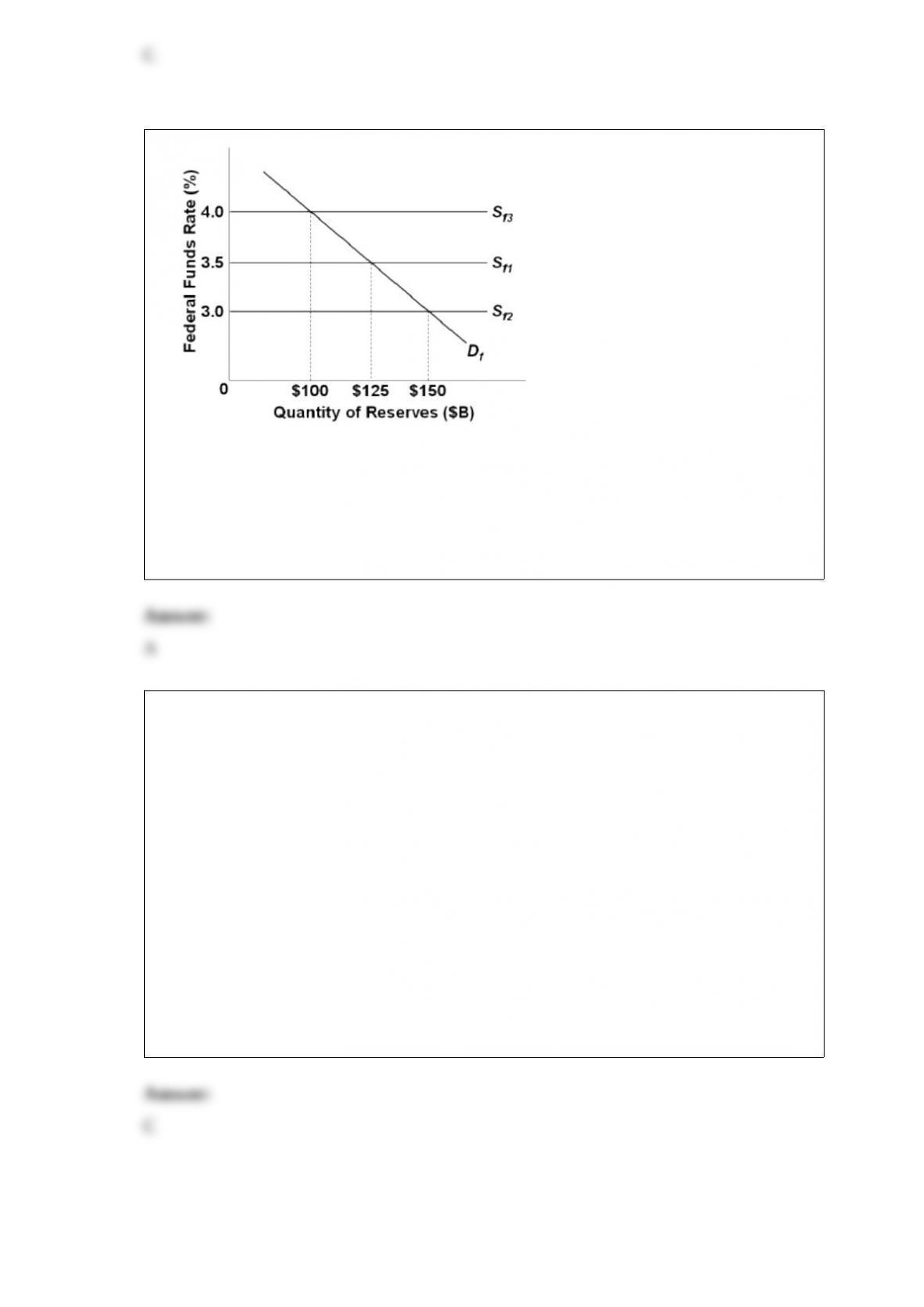
8)
Refer to the above diagram for the Federal funds market. The equilibrium Federal funds
rate:
A.depends on the supply of Federal funds.
B.is 3.0 percent.
C.is 3.5 percent.
D.is 4.0 percent.
9) Answer the next question(s) on the basis of the following list of assets:
1> Large ($100,000 and over) time deposits
2> Noncheckable savings deposits
3> Currency (coins and paper money)
4> Small (under $100,000) time deposits
5> Stock certificates
6> Checkable deposits
7>Money market deposit accounts
8>Money market mutual fund balances held by individuals
9>Money market mutual fund balances held by businesses
Refer to the above list. Which of the following are considered to be “near-monies?”
A.items 2, 5, 8, and 9
B.all items except for 3
C.items 2, 4, 7, and 8
D.items 1 and 5
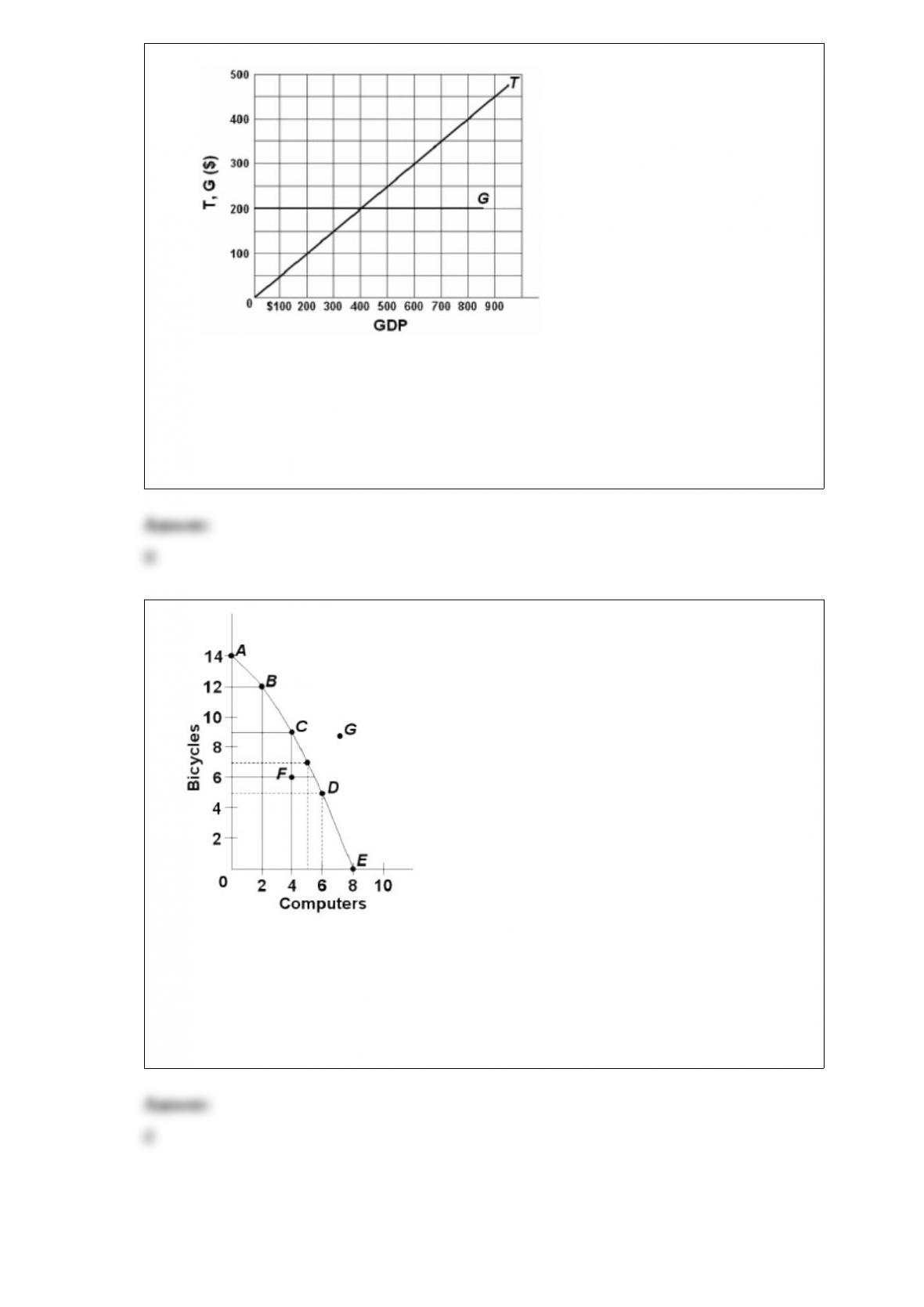
10)
Refer to the above diagram in which T is tax revenues and G is government
expenditures. All figures are in billions. This diagram portrays the idea of:
A.progressive taxation.
B.built-in stability.
C.the multiplier.
D.discretionary fiscal policy.
11)
refer to the above diagram. the movement down the production possibilities curve from
point a to point e suggests that the production of:
a.computers, but not bicycles, is subject to increasing opportunity costs.
b.bicycles, but not computers, is subject to increasing opportunity costs.
c.both bicycles and computers are subject to constant opportunity costs.
d.both bicycles and computers are subject to increasing opportunity costs.