Factors of production are usually divided into all of the following categories except
A) labor.
B) capital.
C) interest.
D) natural resources.
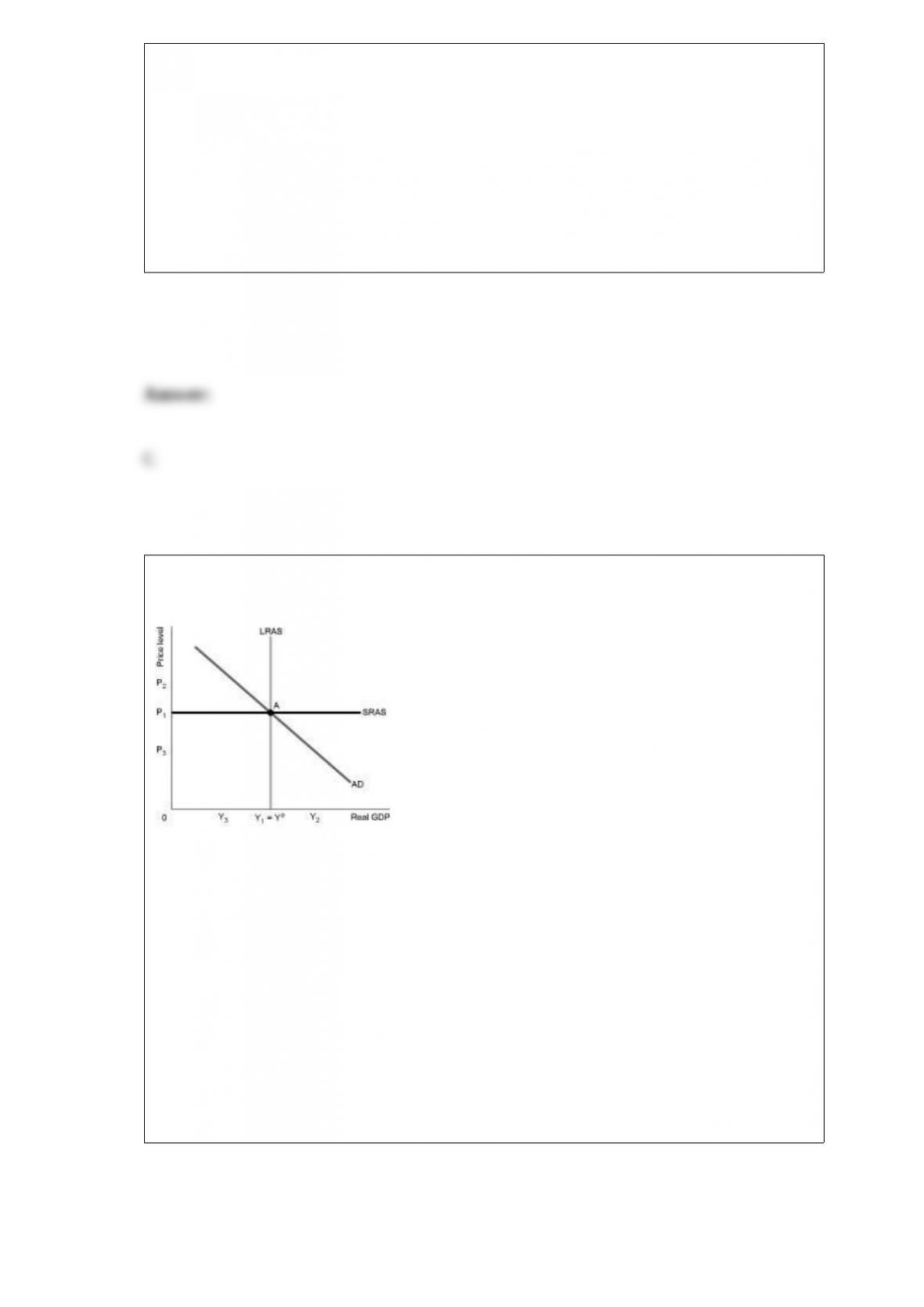
Figure 9.1
Refer to Figure 9.1. Assume the economy is initially at point A. The initial change from
a shock that increases investment expenditure is best represented by which short-run
equilibrium combination of price level and real GDP?
A) P2; Y2
B) P3; Y2
C) P1; Y2
D) P2; Y1

The quantity of goods and services that can be produced by one worker or by one hour
of work is known as
A) per-capita GDP.
B) labor productivity.
C) real domestic output.
D) the labor force participation rate.
Suppose that in 2013,potential GDP in the nation of Octavia is $85,000, real GDP is
$75,000, and potential GDP grows at a rate of 2% per year.
a. If real GDP is $78,000 in 2014, using Okun’s law, calculate the cyclical rate of
unemployment.
b. If real GDP is $83,000 in 2015, using Okun’s law, calculate the cyclical rate of
unemployment.

Suppose Chevrolet produced 90,000 Camaros in the United States in 2012 and during
2012 sold 69,000 to U.S. customers and exported 14,000 to foreign buyers. The
remaining Camaros were sold to U.S. customers in 2012. How many of these Camaros
would count as a part of U.S. GDP in 2012?
A) 69,000
B) 76,000
C) 83,000
D) 90,000
Samantha’s wealth is $100,000, she expects to work for another 30 years at a constant
salary of $200,000 and live for another 50 years. Assume yearly taxes are $50,000 and
that Samantha completely smooths consumption over her lifetime. Calculate the
following:
a. Samantha’s annual consumption
b. Samantha’s annual consumption if she receives a one-time tax rebate of $10,000
during her first year of work
c. The amount of the tax rebate that Samantha will save during her first year of work

Gross domestic product minus the consumption of fixed capital equals
A) gross national product.
B) national income.
C) deprecation.
D) disposable personal income.
Other things equal, if the central bank raises the target inflation rate, this would result in
the
A) AD curve shifting temporarily to the right.
B) AD curve shifting permanently to the right.
C) AS curve shifting temporarily to the left.
D) AS curve shifting permanently to the left.

The AK growth model indicates that countries with high saving rates experience
________, and countries with low saving rates experience ________.
A) high growth rates; low growth rates
B) low growth rates; high growth rates
C) positive growth rates; no growth
D) negative growth rates; positive growth rates
Other things equal, an increase in transfer payments will ________ consumption
expenditures, which leads to ________ in output and employment.
A) increase; an increase
B) increase; a decrease
C) decrease; an increase
D) decrease; a decrease

Included among the Fed’s primary goals to promote a well-functioning economy are
A) high employment, low inflation, and a high foreign-exchange value of the dollar.
B) price stability, economic growth, and a high reserve ratio.
C) low government budget deficits, interest rate stability, and no inflation.
D) a low rate of unemployment, a low and stable inflation rate, and financial market
stability.
From 1950-1970, labor productivity growth in the Soviet Union was driven primarily
by
A) capital accumulation.
B) population increases.
C) total factor productivity.
D) Capital, population increases, and total factor productivity contributed about equally
to labor productivity growth.
Which of the following would cause the unemployment rate as measured by the Bureau
of Labor Statistics to understate the true degree of joblessness in the economy?

A) people employed in the underground economy
B) unemployed persons who falsely report themselves as actively looking for a job
C) retired people who have no intention of returning to work
D) people with part-time jobs who would prefer to be working full time
In building an economic model, variables that will be explained by the model are
referred to as ________ variables.
A) exogenous
B) endogenous
C) fluctuating
D) demonstrative
If the dollar appreciates relative to the Swiss franc,
A) U.S. exports to Switzerland become more expensive.
B) U.S. exports to Switzerland become less expensive.
C) Swiss imports to the United States become more expensive.
D) The value of Swiss imports to the United States does not change.
Borrowers benefit and lenders lose when the
A) actual interest rate is less than the expected real interest rate.
B) actual interest rate is greater than the expected real interest rate.
C) actual interest rate is equal to the expected real interest rate.
D) actual inflation rate is less than the expected inflation rate.
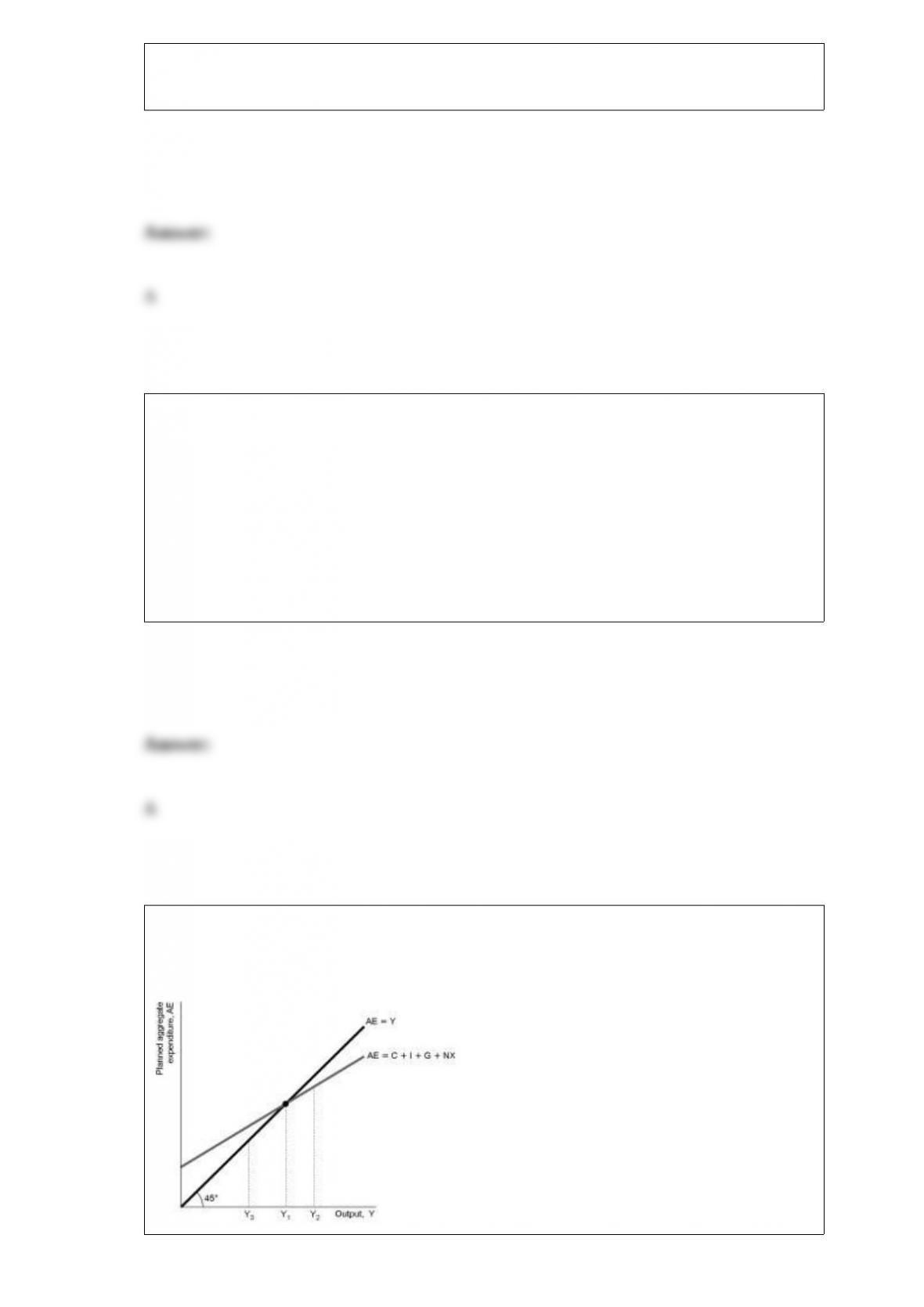
Figure 1

Refer to Figure 10.1. If the level of real GDP is initially Y2, spending is ________
production and there is an unexpected ________ in inventories.
A) greater than; increase
B) greater than; decrease
C) less than; increase
D) less than; decrease
Under a fixed exchange rate system, at high domestic real interest rates net capital
outflows are ________, so the central bank ________ foreign-exchange reserves.
A) positive; acquires
B) positive; loses
C) negative; acquires
D) negative; loses
Economic models do all of the following except
A) simplify some aspect of economic life.
B) answer economic questions.
C) make economic ideas explicit and concrete for use by decision makers.
D) portray reality in all its minute details.
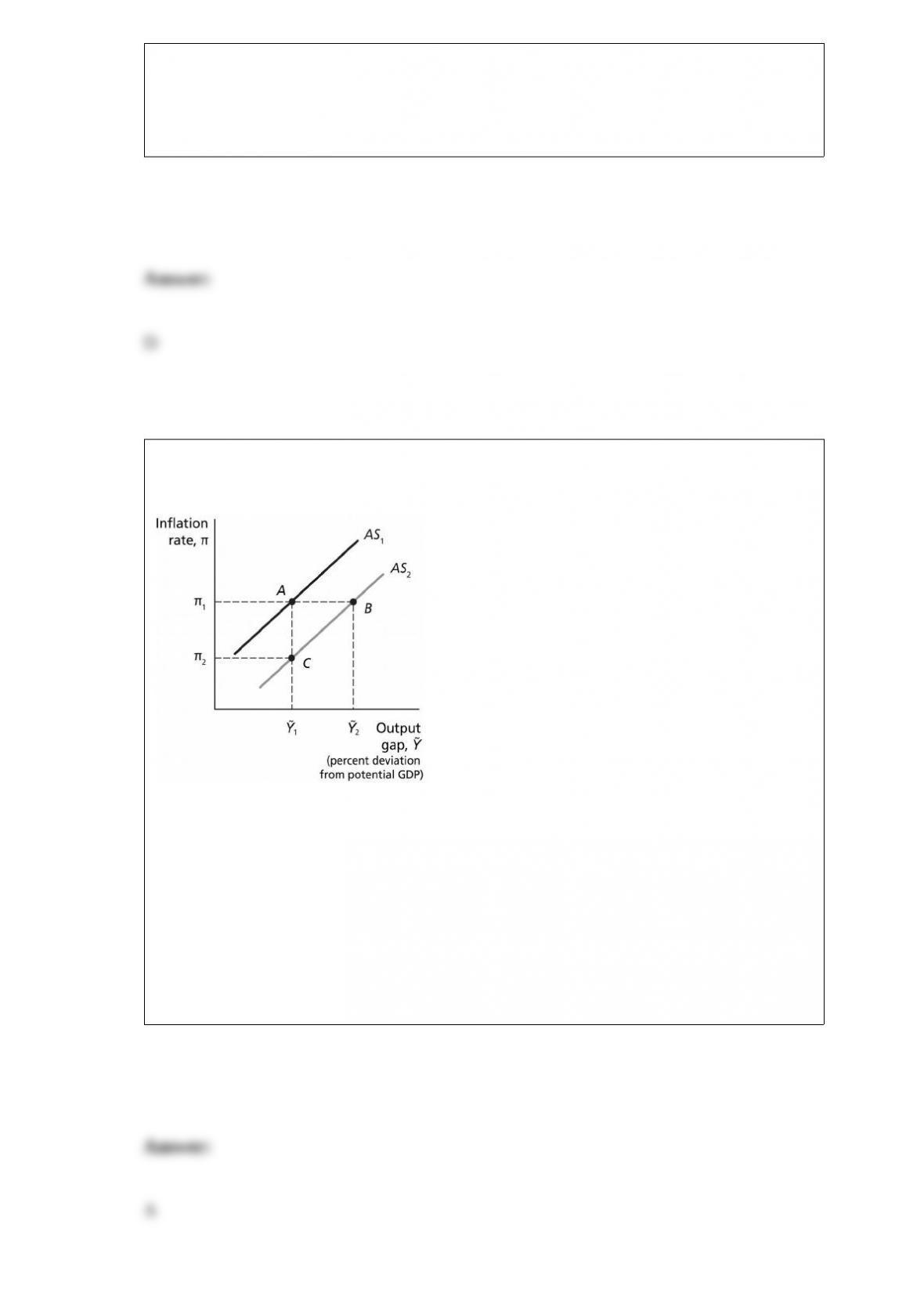
Figure 14.2
Refer to Figure 14.2. Other things equal, technological innovation would best be
represented by a movement from
A) point A to point B.
B) point B to point A.
C) point C to point B.
D) point B to point C.

Table 2.3
2007 2010 2013
Quantity Price Quantity Price Quantity Price
Table 3 gives quantities and prices for each good produced in a simple economy in
2007, 2010, and 2013.
Refer to Table 2.3. Assume that 2010 is the base year. The GDP deflator for 2007 is
A) 67.1
B) 84.5
C) 100
D) 118.3
Which of the following is a positive economic statement?
A) Income tax rates for the rich should be increased.
B) The Federal Reserve should not increase interest rates until the unemployment rate
falls below 7%.
C) Rising global demand for gasoline has led to an increase in the price of oil.
D) The government should increase spending on infrastructure to lower the
unemployment rate.

Labor-augmenting technological change refers to improvements in efficiency that
A) occur without increasing the productivity of labor or the efficiency of capital goods.
B) increase the productivity of labor and the efficiency of capital goods.
C) increase the efficiency of capital goods without having to increase the productivity
of labor.
D) increase the productivity of labor but that do not directly make capital goods more
efficient.
When the central bank increases the monetary base, the purchasing power of previously
existing currency ________, and this essentially transfers wealth ________.
A) increases; from those who own existing currency to the government
B) decreases; from those who own existing currency to the government
C) increases; from the government to those who own existing currency
D) decreases; from the government to those who own existing currency

Historically, the largest U.S. federal budget deficits as a percentage of GDP since the
beginning of the 20th century occurred during
A) the Great Depression.
B) World War I and World War II.
C) 1970-1997.
D) 2007-2009.
Suppose Paul Allen deposits $1 million cash into his checking account at Bank of
America. If the required reserve ratio is 20%, what is the maximum amount of required
reserves that this deposit will generate in the banking system?
A) $1 million
B) $4 million
C) $5 million
D) $25 million
Assume that for the third quarter of 2012, actual real GDP was $176.1 billion and
potential real GDP was $163.9 billion. According to Okun’s law, the cyclical

unemployment rate during the third quarter of 2012 was
A) -6.1%.
B) -3.7%.
C) 3.5%.
D) 6.1%.
Over the past 20 years, purchases of foreign financial assets by U.S. investors has
A) increased significantly.
B) decreased significantly.
C) remained fairly consistent.
D) become negative.
A firm maximizes profits when the ________ equals the ________.
A) actual marginal product of capital; actual marginal product of labor
B) actual marginal product of capital; expected marginal product of capital
C) expected marginal product of capital; the opportunity cost of capital
D) expected marginal product of capital; user cost of capital
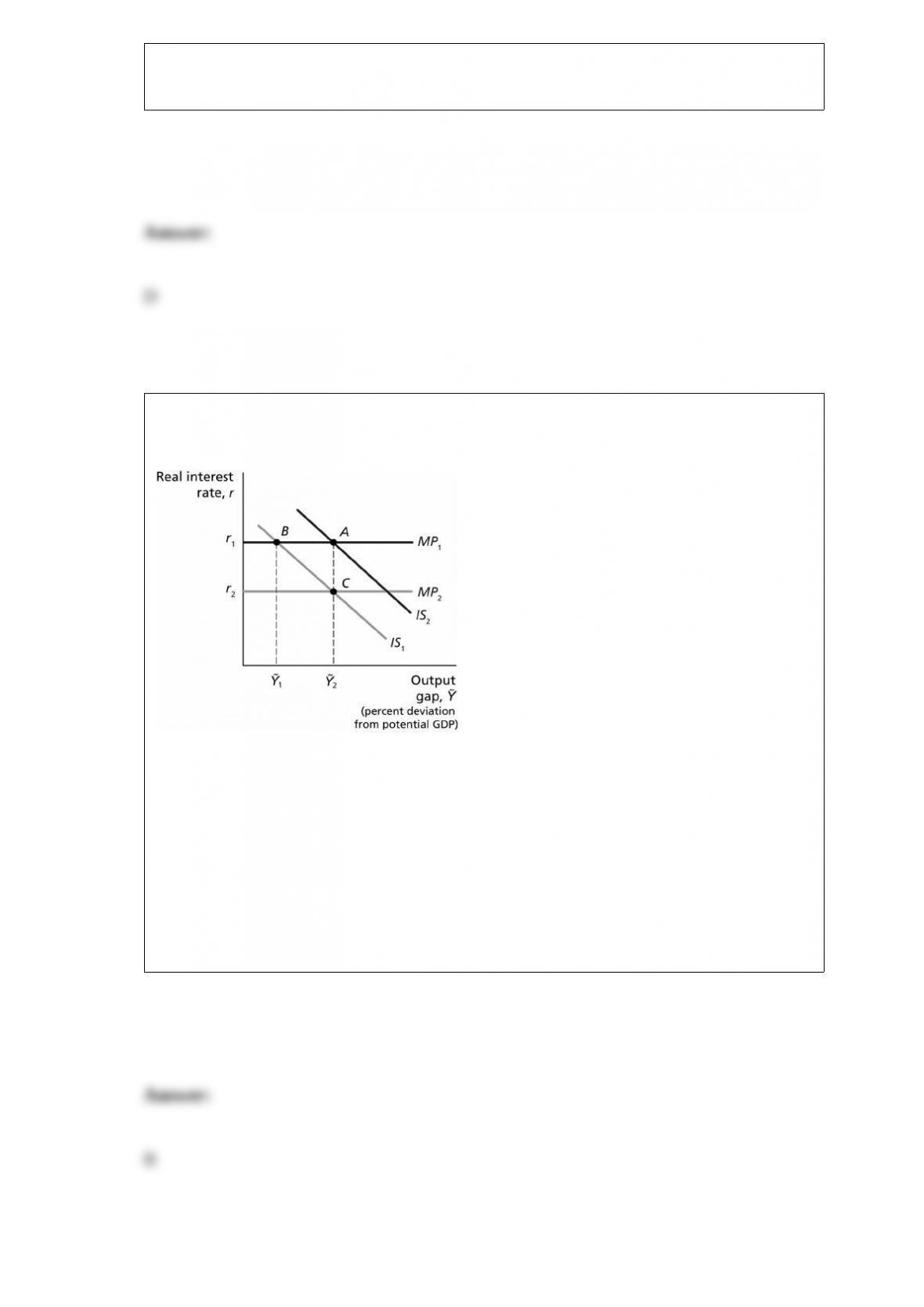
Figure 13.1
Refer to Figure 13.1. All else equal, a decrease in income taxes would best be
represented by a movement from
A) point A to point B.
B) point B to point A.
C) point B to point C.
D) point C to point B.
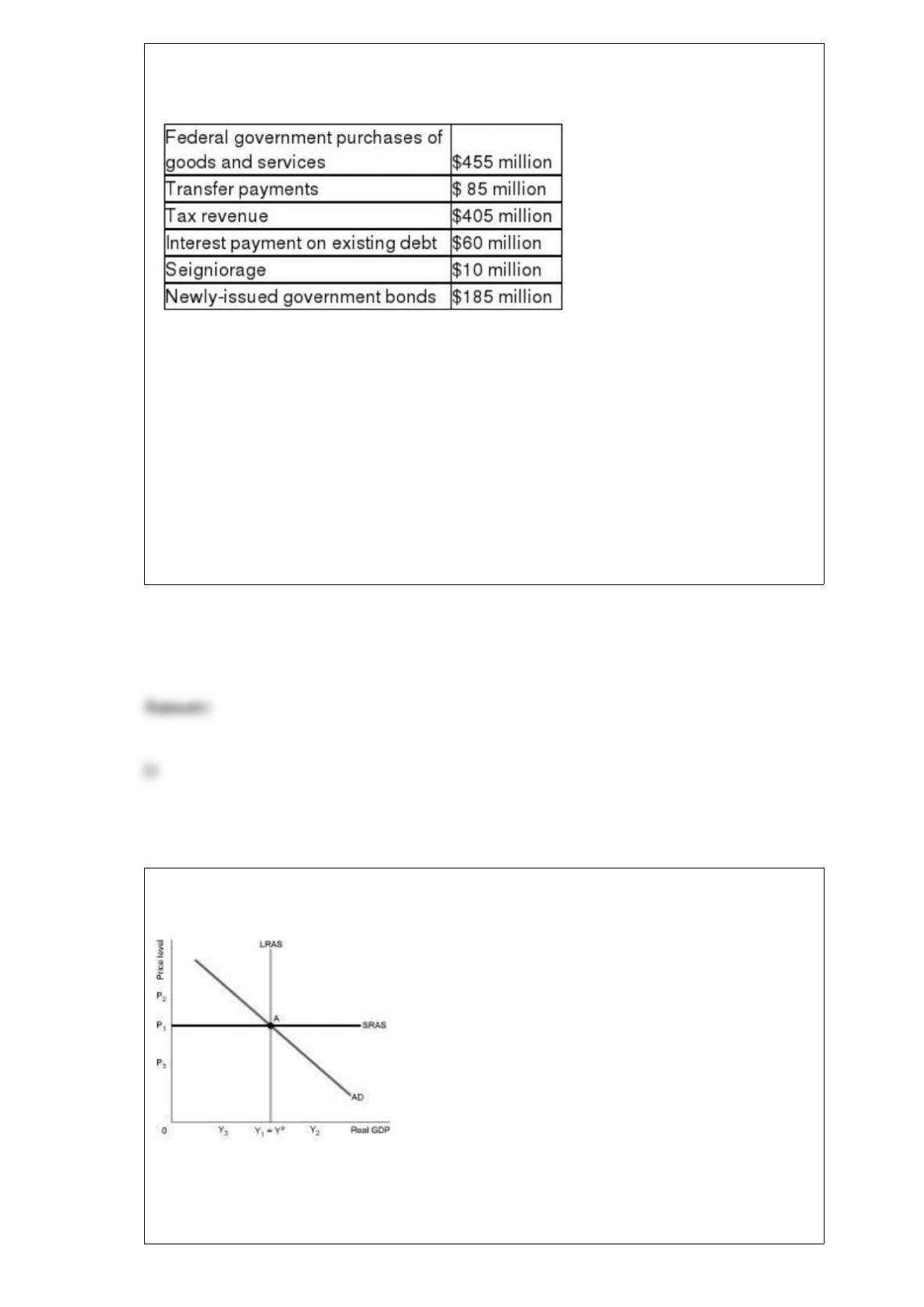
Table 15.1
The data in the table represents budget figures for the nation of Arugula for 2012
Refer to Table 15.1. The sources of government funds for Arugula in 2012 total
A) $135 million.
B) $195 million.
C) $380 million.
D) $600 million.
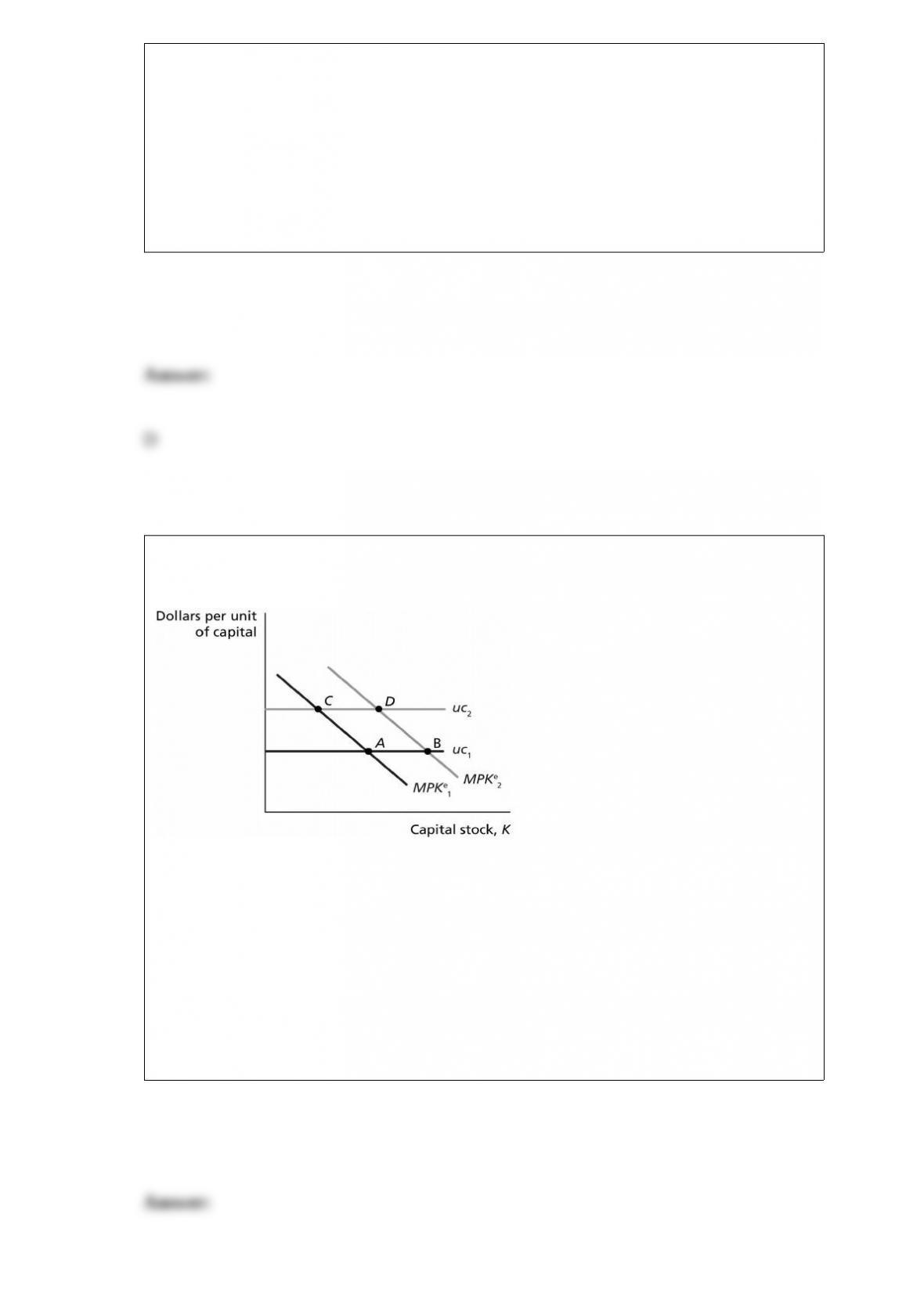
Figure 9.1
Refer to Figure 9.1. Assume the economy is initially at point A. The eventual change
from a shock that increases investment expenditure is best represented by which
long-run equilibrium combination of price level and real GDP?
A) P2; Y2
B) P3; Y1
C) P1; Y2
D) P2; Y1
Figure 16.1
Refer to Figure 16.1. An increase in expected output in the future is best represented by
a movement from
A) point A to point B.
B) point B to point A.
C) point A to point C.
D) point C to point A.