1) the term quantity demanded:
a.refers to the entire series of prices and quantities that comprise the demand schedule.
b.refers to a situation in which the income and substitution effects do not apply.
c.refers to the amount of a product that will be purchased at some specific price.
d.means the same thing as demand.
2) the number of countries belonging to the world trade organization (wto) currently
(2008) is about.
a.151.
b.105.
c.128.
d.22.
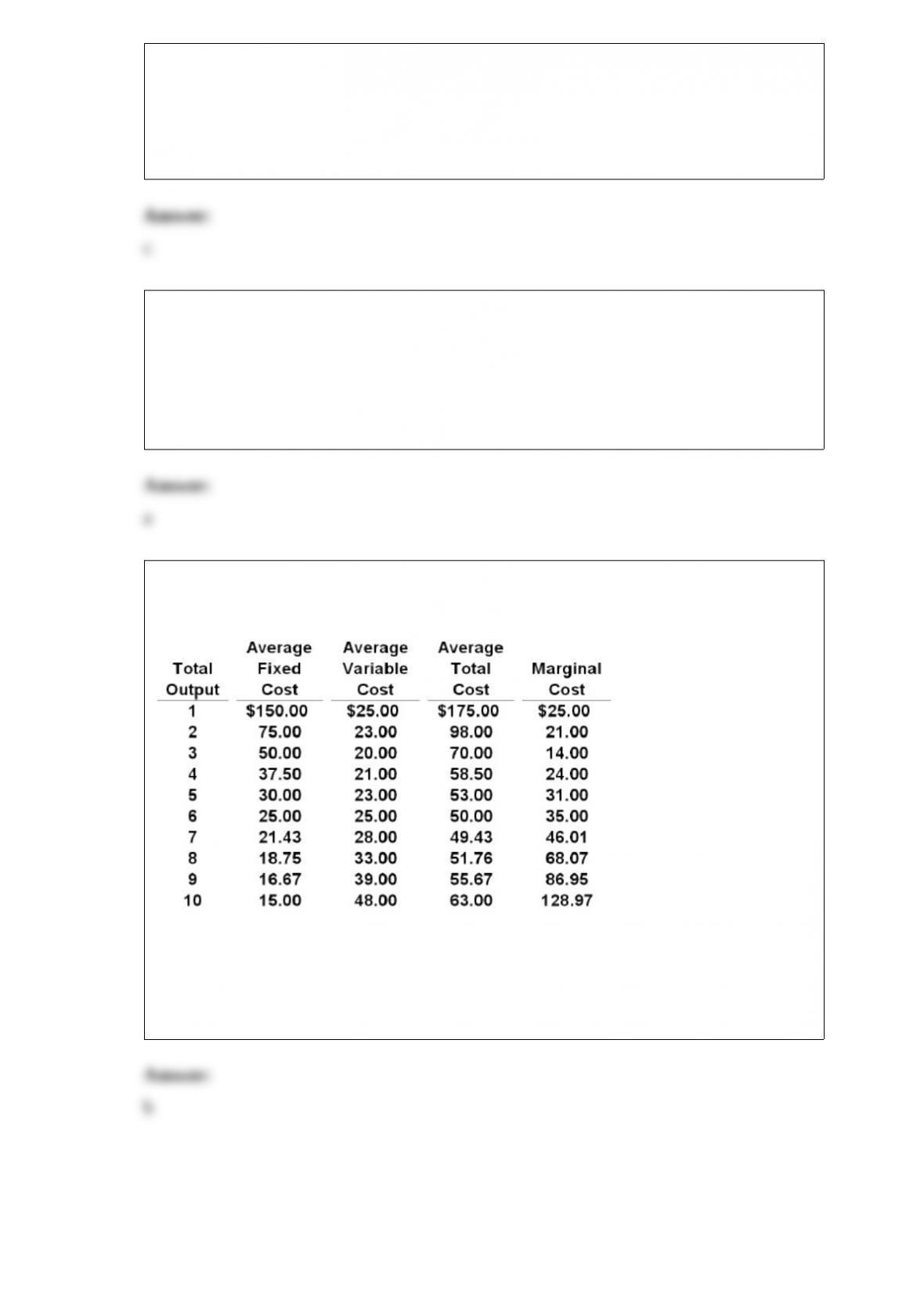
3) the following cost data for a firm that is selling in a purely competitive market.
refer to the above data. if the market price for this firm’s product is $35, it will produce:
a.6 units at a loss of $150.
b.6 units at a loss of $90.
c.9 units at an economic profit of $281.52.
d.8 units at an economic profit of $130.48.
4)
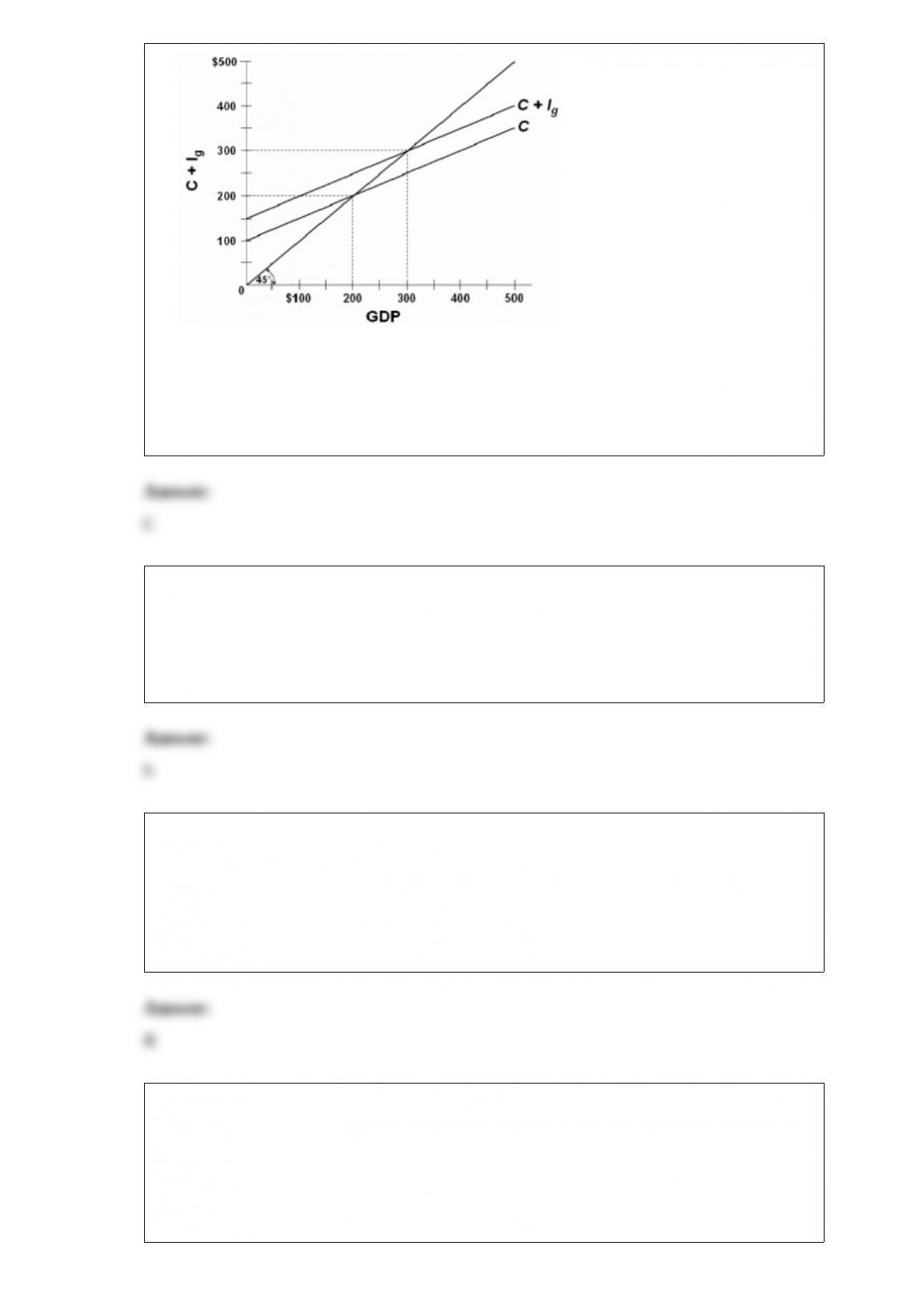
Refer to the above diagram for a private closed economy. The MPC and MPS are:
A..6 and .4 respectively.
B..7 and .3 respectively.
C.both .5.
D.both .7.
5) when a purely competitive firm is in long-run equilibrium:
a.marginal revenue exceeds marginal cost.
b.price equals marginal cost.
c.total revenue exceeds total cost.
d.minimum average total cost is less than the product price.
6) Which of the following allegedly understates the true size of the Federal budget
deficit?
A.inclusion of government spending on the savings and loan (S&L) bailout
B.inclusion of the Social Security surplus
C.inclusion of Federal excise tax receipts
D.inclusion of current transfer payments
7) a constant-cost industry is one in which:
a.a higher price per unit will not result in an increased output.
b.if 100 units can be produced for $100, then 150 can be produced for $150, 200 for
$200, and so forth.
c.the demand curve and therefore the unit price and quantity sold seldom change.
d.the total cost of producing 200 or 300 units is no greater than the cost of producing
100 units.
8) transfer payments are about ____ percent of u.s. domestic output.
a.40 percent
b.8 percent
c.13 percent
d.22 percent
9) income data that show how total income is distributed as wages, rents, interest, and
profits describe the:
a.functional distribution of income.
b.horizontal distribution of income.
c.personal distribution of income.
d.vertical distribution of income.
10)
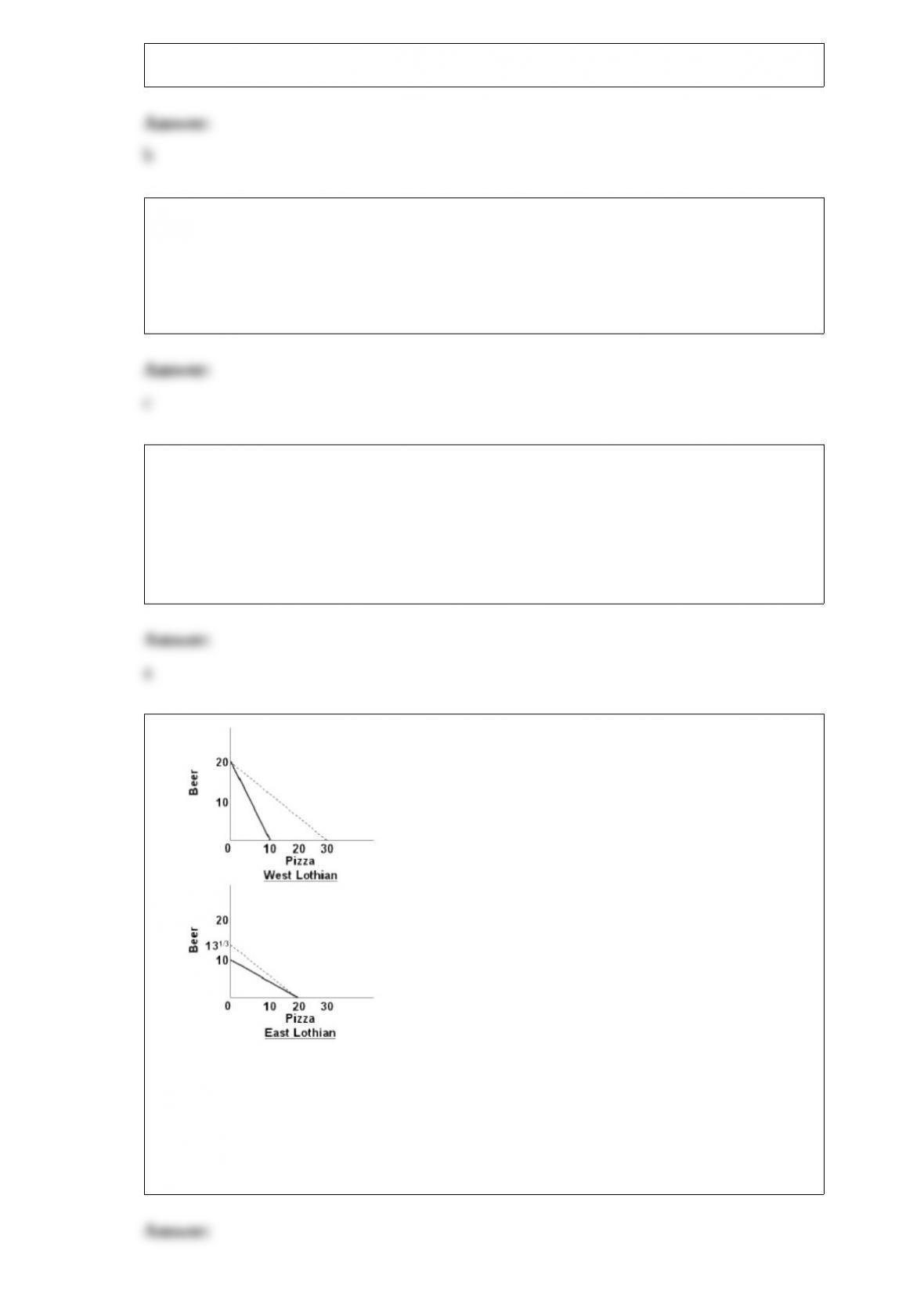
Refer to the above diagrams. The solid lines are production possibilities curves; the
dashed lines are trading possibilities curves. The opportunity cost of producing a:
A.pizza is 2 beers in both countries.
B.beer is 1/2 a pizza in both countries.
C.pizza in East Lothian is 1 beer.
D.beer in West Lothian is 1/2 a pizza.
11) If D equals the maximum amount of new demand-deposit money that can be
created by the banking system on the basis of any given amount of excess reserves; E
equals the amount of excess reserves; and m is the monetary multiplier, then:
A.m = E/D.
B.D = E m.
C.D = E-1/m.
D.D = m/E.
12) the production possibilities curve illustrates the basic principle that:
a.the production of more of any one good will in time require smaller and smaller
sacrifices of other goods.
b.an economy will automatically obtain full employment of its resources.
c.if all the resources of an economy are in use, more of one good can be produced only
if less of another good is produced.
d.an economy’s capacity to produce increases in proportion to its population size.
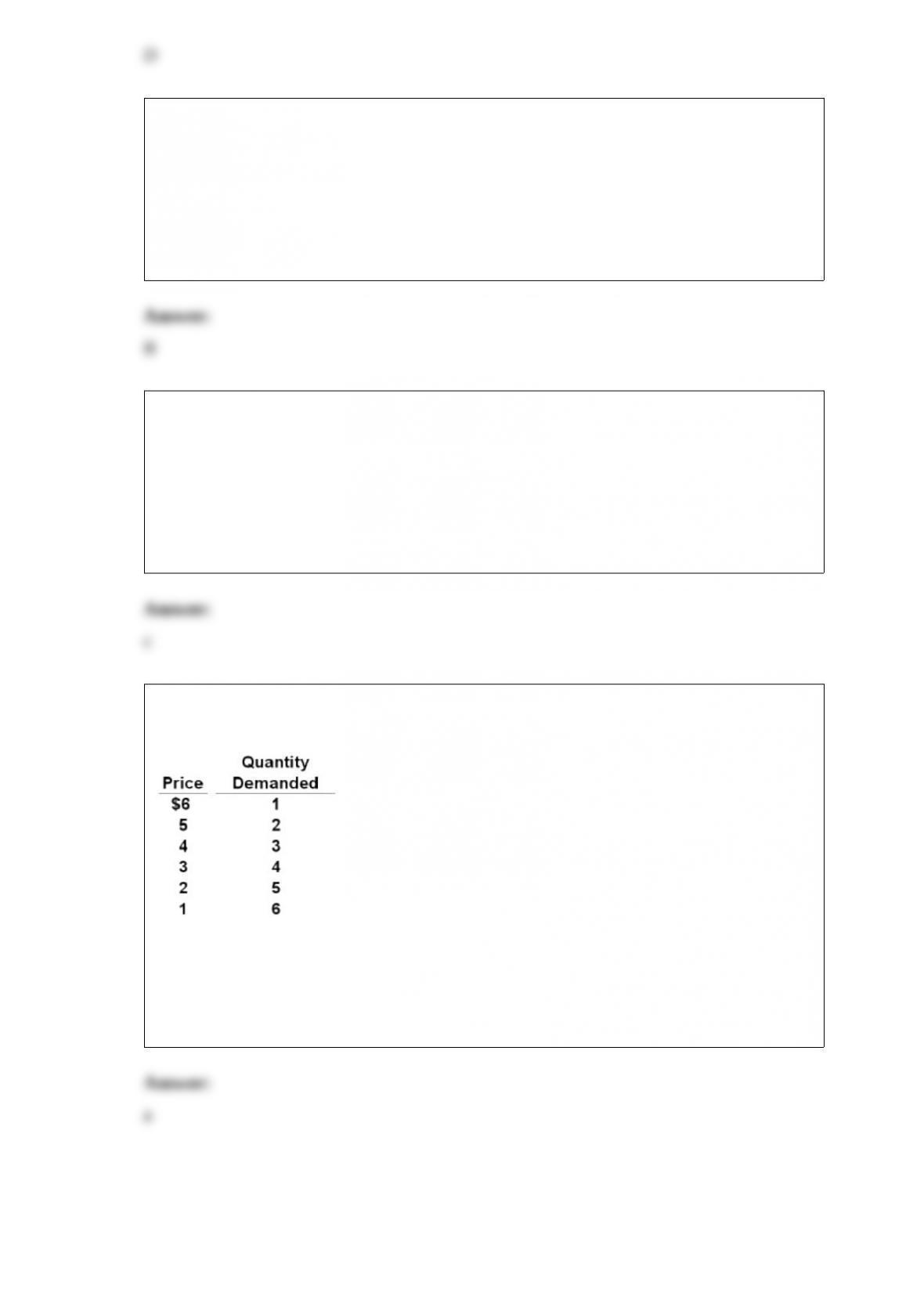
13) the following demand schedule:
refer to the above data. the price elasticity of demand is relatively elastic:
a.in the $6-$4 price range.
b.over the entire $6-$1 price range.
c.in the $3-$1 price range.
d.in the $6-$5 price range only.

14)
refer to the above tables. the opportunity cost of the fifth unit of capital goods:
a.is higher in north cantina than in south cantina.
b.is the same in north cantina and south cantina.
c.is lower in north cantina than in south cantina.
d.cannot be determined from the information provided.
15) Which of the following factors is not relevant in explaining the persistence of wage
differentials?
A.labor immobilities
B.compensating differences
C.free public education
D.noncompeting groups
16) (Last Word) In 2004, the wealthiest 1 percent of U.S. households held ____ percent
of U.S. household wealth.
A.33.4
B.69.5
C.82.4
D.26.8
17) In 2005, the top 1 percent of all taxpayers in the United States faced an overall
Federal tax rate of:
A.31.2 percent.
B.27.4 percent.
C.38.8 percent.
D.60.7 percent.

18) Upon which of the following industries is a restrictive monetary policy likely to be
most effective?
A.furniture
B.clothing
C.food processing
D.residential construction
19) International transactions fall into what two broad categories?
A.Manufacturing trade and services trade.
B.International trade and international asset transactions.
C.Currency transactions and services trade.
D.Newly created assets and preexisting assets.