1) open economies have more:
a.competition
b.firm turnover
c.new firms entering the market
d.all of these
2) increased foreign competition tends to:
a.intensify inflationary pressures at home
b.induce falling output per worker-hour for domestic workers
c.place constraints on the wages of domestic workers
d.increase profits of domestic import-competing industries
3) should canada impose a tariff on imports, one would expect canada’s:
a.terms of trade to improve and volume of trade to decrease
b.terms of trade to worsen and volume of trade to decrease
c.terms of trade to improve and volume of trade to increase
d.terms of trade to worsen and volume of trade to increase
4) american critics of u.s. multinational enterprises contend that they promote
a.runaway jobs
b.technology transfers abroad
c.tax evasion
d.all of the above
5) anti-dumping law has been called unfair for all of the following reasons except:
a.they do not reflect currency fluctuations
b.they are based on average variable cost

c.they are based on average total cost
d.all of these are reasons to call these laws unfair
6) if u.s. labor productivity growth is 2 percent per annum and swiss labor productivity
growth is 6 percent per annum, the dollar will depreciate against the franc under a
system of floating exchange rates.
a.true
b.false
7) vertical integration occurs if a parent multinational corporation establishes foreign
subsidiaries to produce intermediate goods or inputs that go into the production of a
finished good.
a.true
b.false
8) the theory of overlapping demands applies best to trade in manufactured goods.
a.true
b.false
9) the figure below depicts the steel market for portugal, a small nation that is unable to
affect the world price. assume that germany and france can supply steel to portugal at a
price of $200 and $300 respectively.
figure 8.2. portugal’s steel market
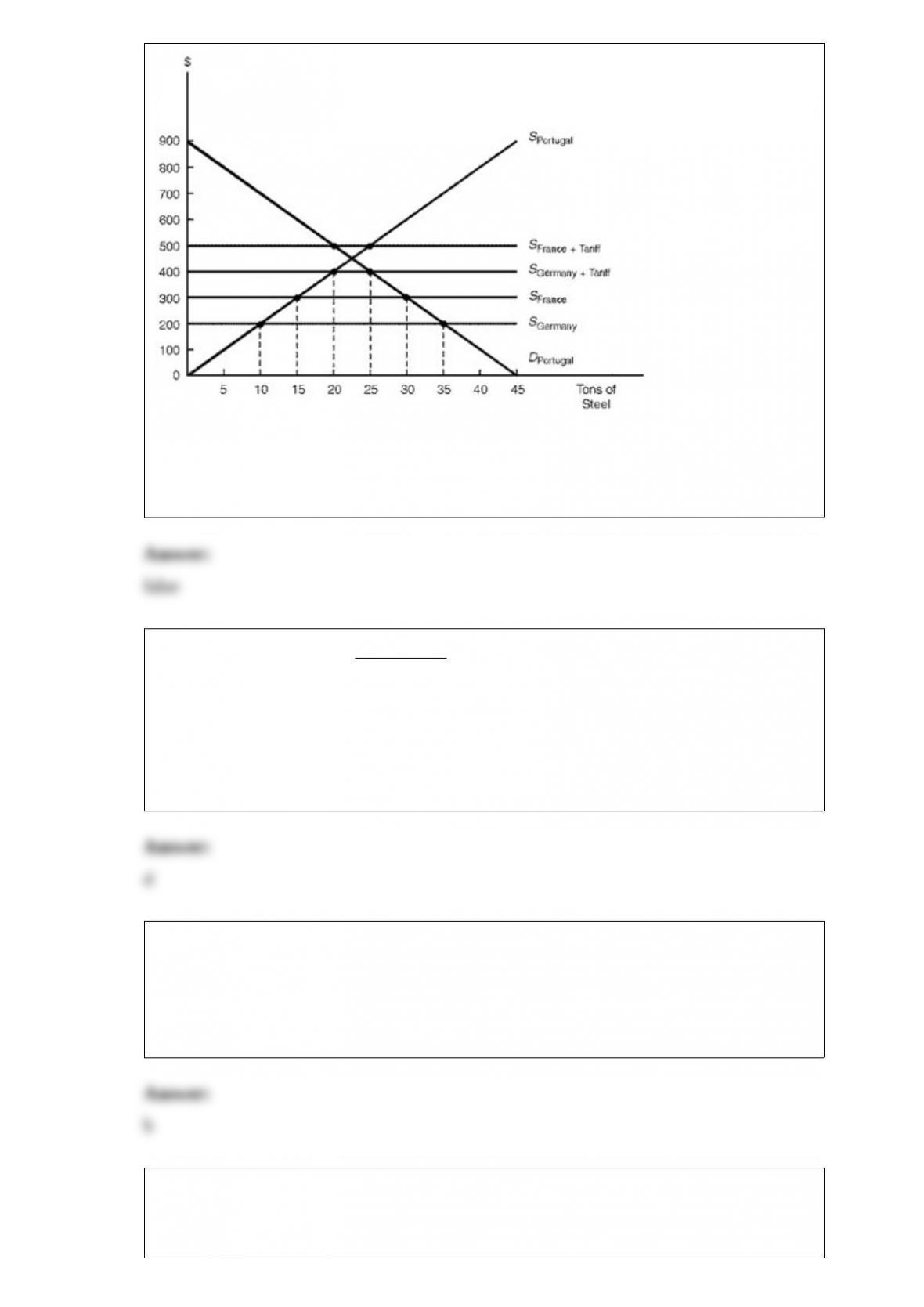
consider figure 8.2. as a result of a customs union formed with france, portugal’s overall
welfare rises by $900.
a.true
b.false
10) to temporarily offset a depreciation in the dollar’s exchange value, the federal
reserve could ____ the u.s. money supply which would promote a (an) ____ in u.s.
interest rates and a (an) ____ in investment flows to the united states.
a.increase, decrease, decrease
b.increase, increase, increase
c.decrease, decrease, increase
d.decrease, increase, increase
11) as a result of international trade, specialization in production tends to be:
a.complete with constant costs–complete with increasing costs
b.complete with constant costs–incomplete with increasing costs
c.incomplete with constant costs–complete with increasing costs
d.incomplete with constant costs–incomplete with increasing costs
12) figure 6.2 illustrates the calculator market for mexico, assumed to be a small nation
that is unable influence the south korean (world) price. assume the south korean price to
be $60 per calculator.
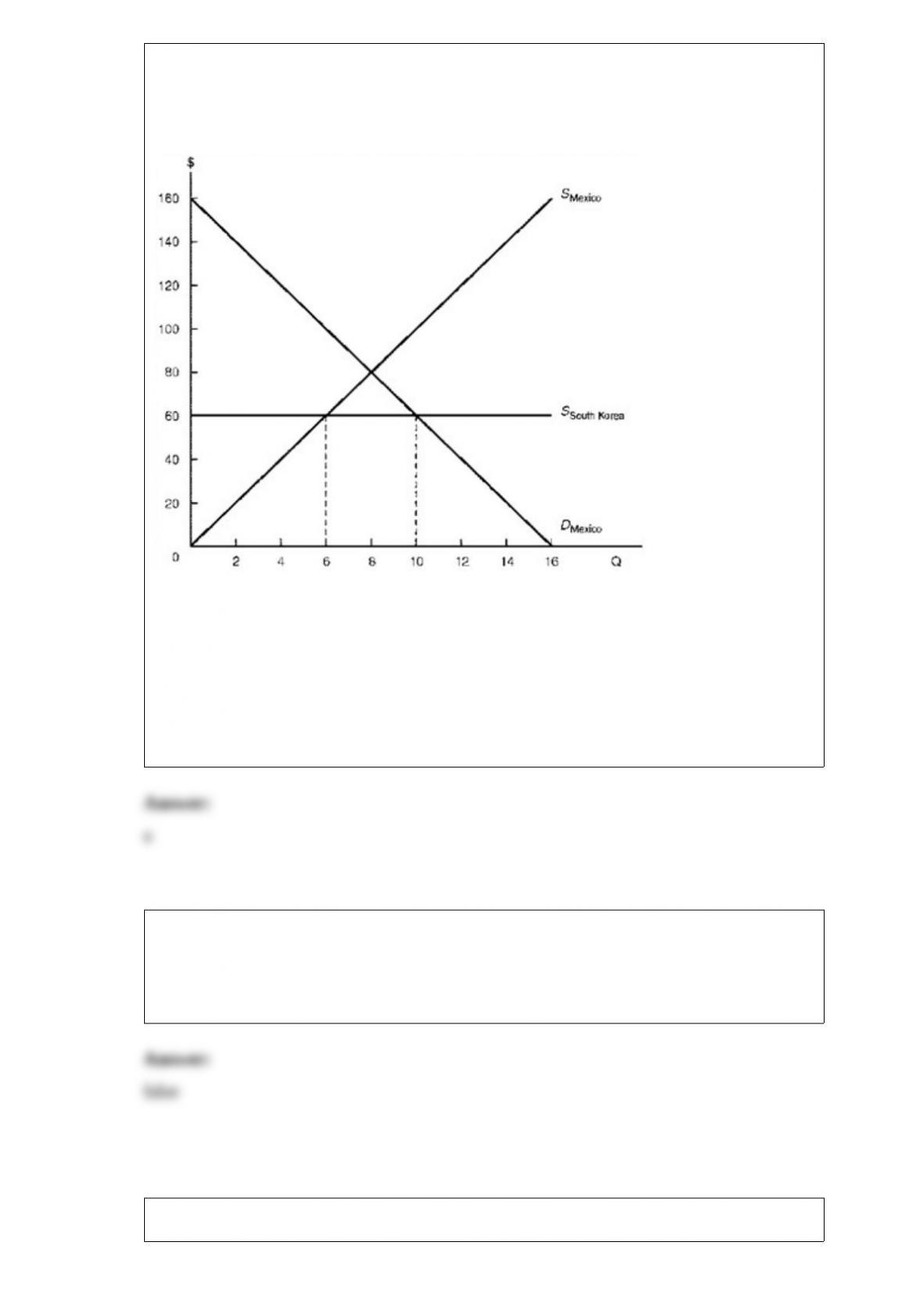
figure 6.2. effects of an export subsidy
consider figure 6.2. to help its firms further penetrate export markets, suppose the south
korean government provides them a production subsidy of $20 per calculator. with the
subsidy, south korean firms charge a price of $____ and export ____ calculators to
mexico.
a.$40, 8
b.$40, 10
c.$20, 8
d.$20, 10
13) when transportation costs are added to our trade model, the degree of specialization
in production between two countries increases as do the gains from trade.
a.true
b.false
14) a main advantage of specialization results from:

a.economies of large-scale production
b.the specializing country behaving as a monopoly
c.smaller production runs resulting in lower unit costs
d.high wages paid to foreign workers