
Is there a difference between the terms interest and interest rate?
a. No. Interest is simply a shorthand version of interest rate.
b. Yes. Interest refers to the return that capital earns, whereas interest rate is the
payment to someone who lends money to someone else.
c. Yes. Interest is what one earns by placing funds in a savings account, whereas
interest rate is the rate that the U.S. Treasury pays for borrowed funds when the
government incurs a deficit.
d. Yes. Interest is a dollar payment for the use of funds, whereas interest rate is the ratio
of that dollar amount to the total amount of funds borrowed.
Economists use the terms neutral good and normal good interchangeably.
a. True
b. False
Which of the following statements is false?
a. The higher the labor cost-total cost ratio, the higher the elasticity of demand for labor.
b. The more substitutes for labor, the higher the elasticity of demand for labor.
c. The higher the elasticity of demand for the product, the higher the elasticity of
demand for the labor that produces the product.

d. A change in the MFC of a factor leads to a change in the MRP of a factor.
Which statement uses the term ceteris paribus correctly?
a. If you exercise regularly, you will be healthier, ceteris paribus.
b. Blue is to green, ceteris paribus, as red is to purple.
c. Most people consider Sunday to be the first day of the week, ceteris paribus.
d. Interest rates usually rise in October, ceteris paribus.
e. a and d
If the cross elasticity of demand for two goods is negative,
a. one of the goods is necessarily a normal good, and the other good is necessarily an
inferior good.
b. both goods are normal goods.
c. the goods are substitutes.
d. the goods are complements.

It is possible for everyone to be better off (in absolute terms) even though the income
distribution has become more unequal.
a. True
b. False
Because there are so few diamonds in the world, the consumption of diamonds
a. takes priority over the consumption of water.
b. takes place at relatively high marginal utility.
c. takes place at relatively low marginal utility.
d. is more important than the consumption of water.
If the price a buyer pays for a good is $50 and the maximum price she would be willing
and able to pay is $53, then ____________ is _______________.
a. producers’ surplus; $103
b. consumers’ surplus; $103
c. consumers’ surplus; $3
d. producers’ surplus; $3
e. consumers’ surplus; $40
Which of the following is an example of a network good?
a. Facebook
b. Microsoft Excel
c. Microsoft Word
d. all of the above
If a monopolist wishes to sell an additional unit of the good, then
a. it must raise its price to signal consumers that its product is now a more important
part of their budget, and they will purchase more.
b. like a competitive firm, it can simply make more output available and not lower
price.
c. it must lower price.
d. it can raise price and not worry that sales will decrease.
e. a and d
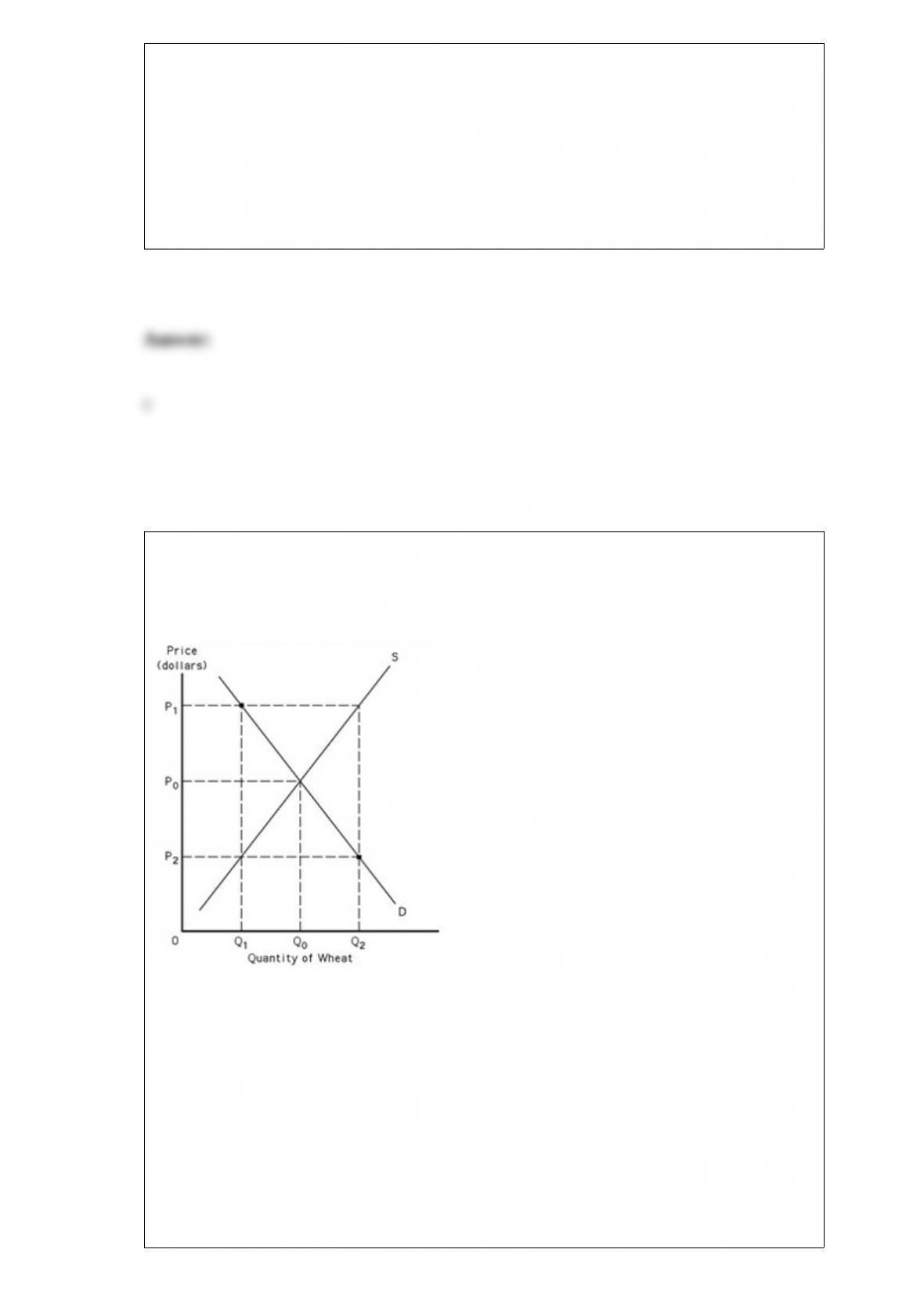
Refer to Exhibit 39-2. If P1 is a price support, the quantity of wheat purchased by the
government would be equal to
Exhibit 39-2
a. Q0 – Q1.
b. Q2 – Q1.
c. Q2 – Q0.
d. Q2.
e. Q1.
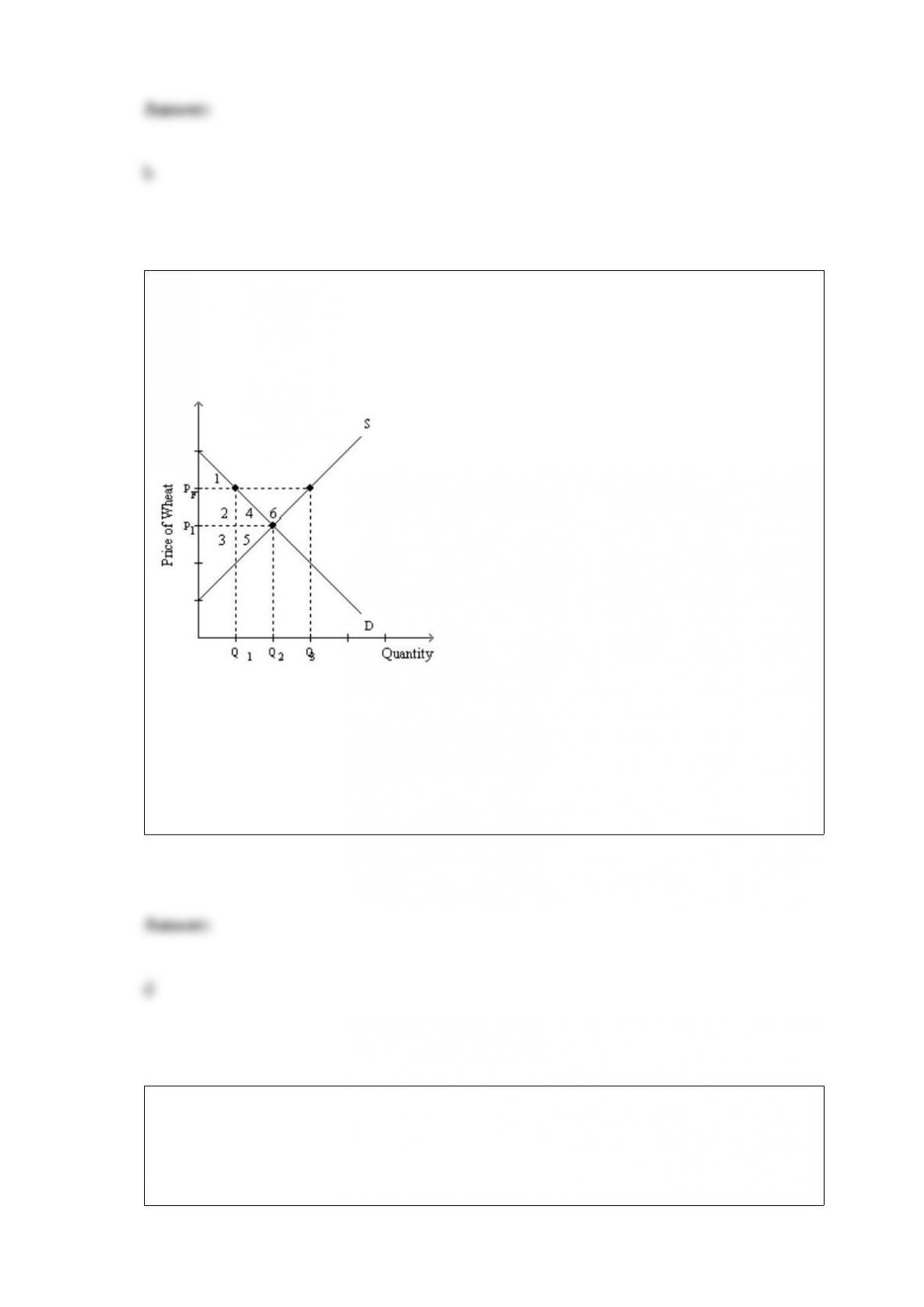
Refer to Exhibit 4-8.Suppose that wheat producerslobby the government for a price
floor and receive one.This price floor is set at PF.What has happened to the producers’
surplus as a result of the imposition of the price floor?
Exhibit 4-8
a. Producers’ surplus has risen by (area 2 + 3)
b. Producers’ surplus has fallen by (area 4 + 5)
c. Producers’ surplus has changed by (area 3 – area 5)
d. Producers’ surplus has changed by (area 2 – area 5)
Refer to Exhibit 20-2. The market for good X is initially in equilibrium at $5. The
government then places a per-unit tax on good X, as shown by the shift of S1 to S2. As a
result, the equilibrium price
Exhibit 20-2
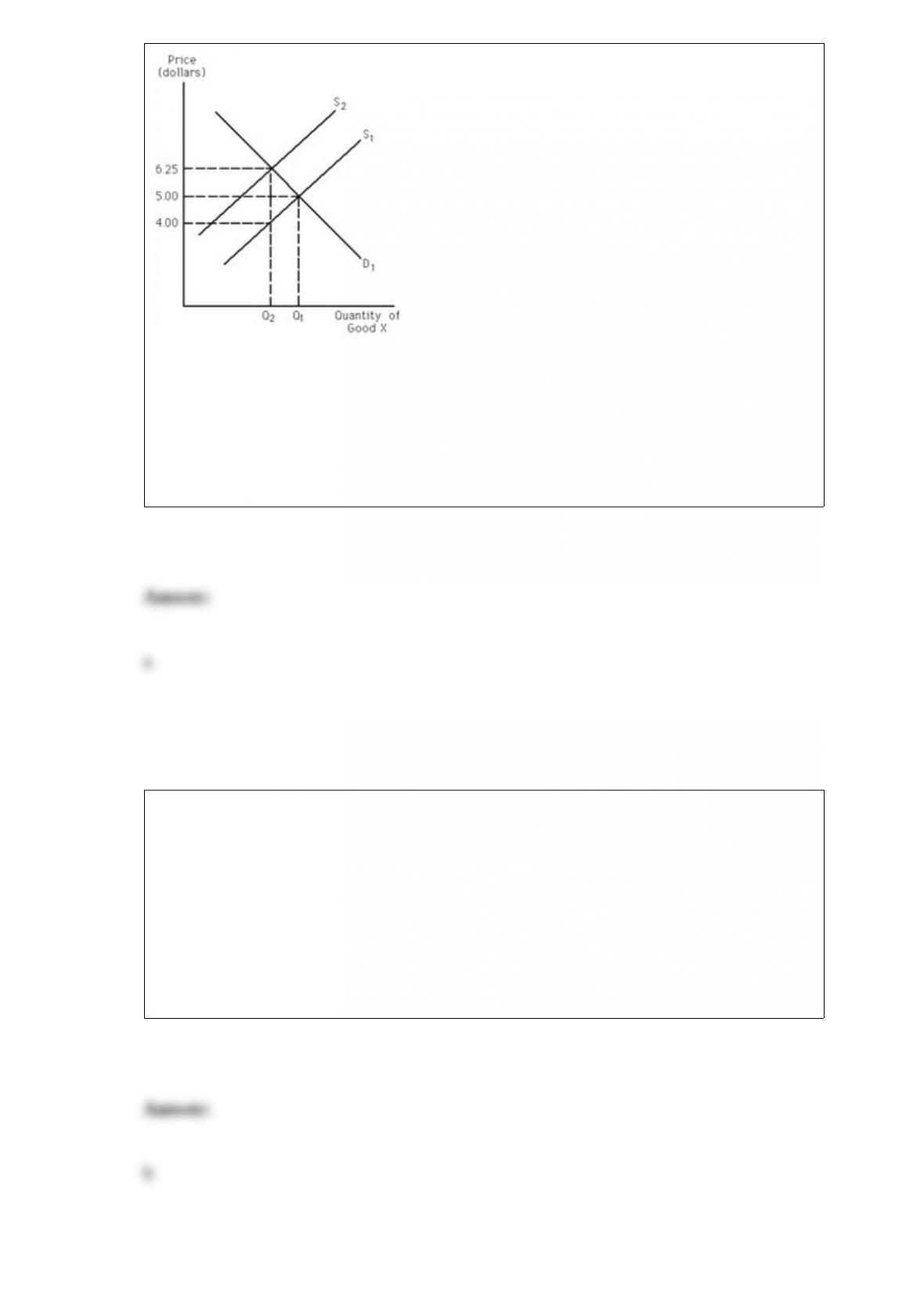
a. rises from $5.00 to $6.25.
b. falls from $5.00 to $4.00.
c. remains constant at $5.00.
d. none of the above
If private property rights were established in the air, there would probably be
a. more air pollution.
b. less air pollution.
c. the same amount of air pollution that exists without private property rights in the air.
d. better weather.
Which of the following statements is true?
a. Explicit costs always equal implicit costs.
b. Zero economic profit is a smaller dollar figure than normal profit.
c. Zero economic profit is a larger dollar figure than normal profit.
d. Saying that a firm earned zero economic profit is the same as saying it earned normal
profit.
e. none of the above
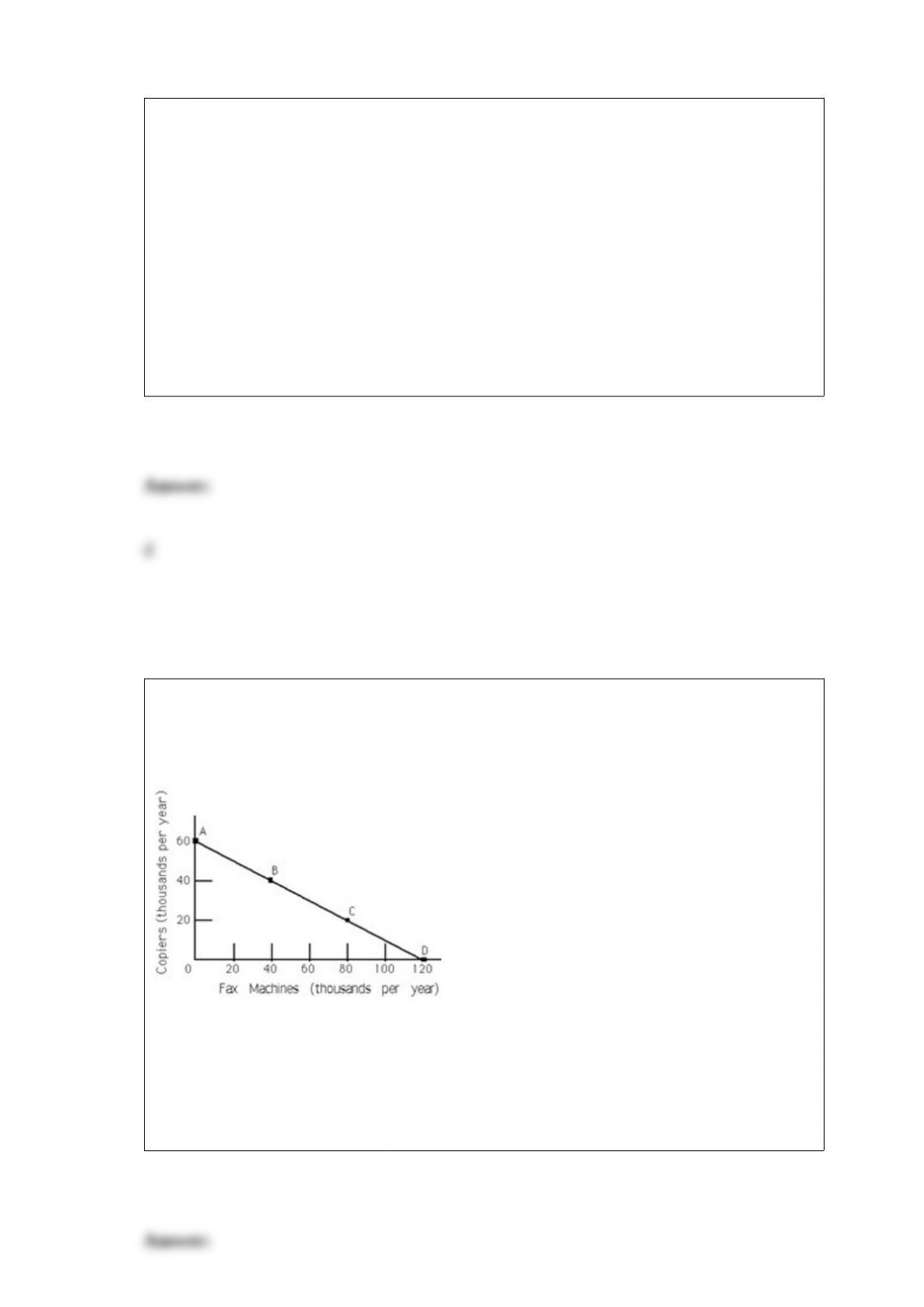
Refer to Exhibit 2-4. As more fax machines are produced, the opportunity cost of
producing them
Exhibit 2-4
a. increases.
b. decreases.
c. remains constant.
d. first decreases and then increases.
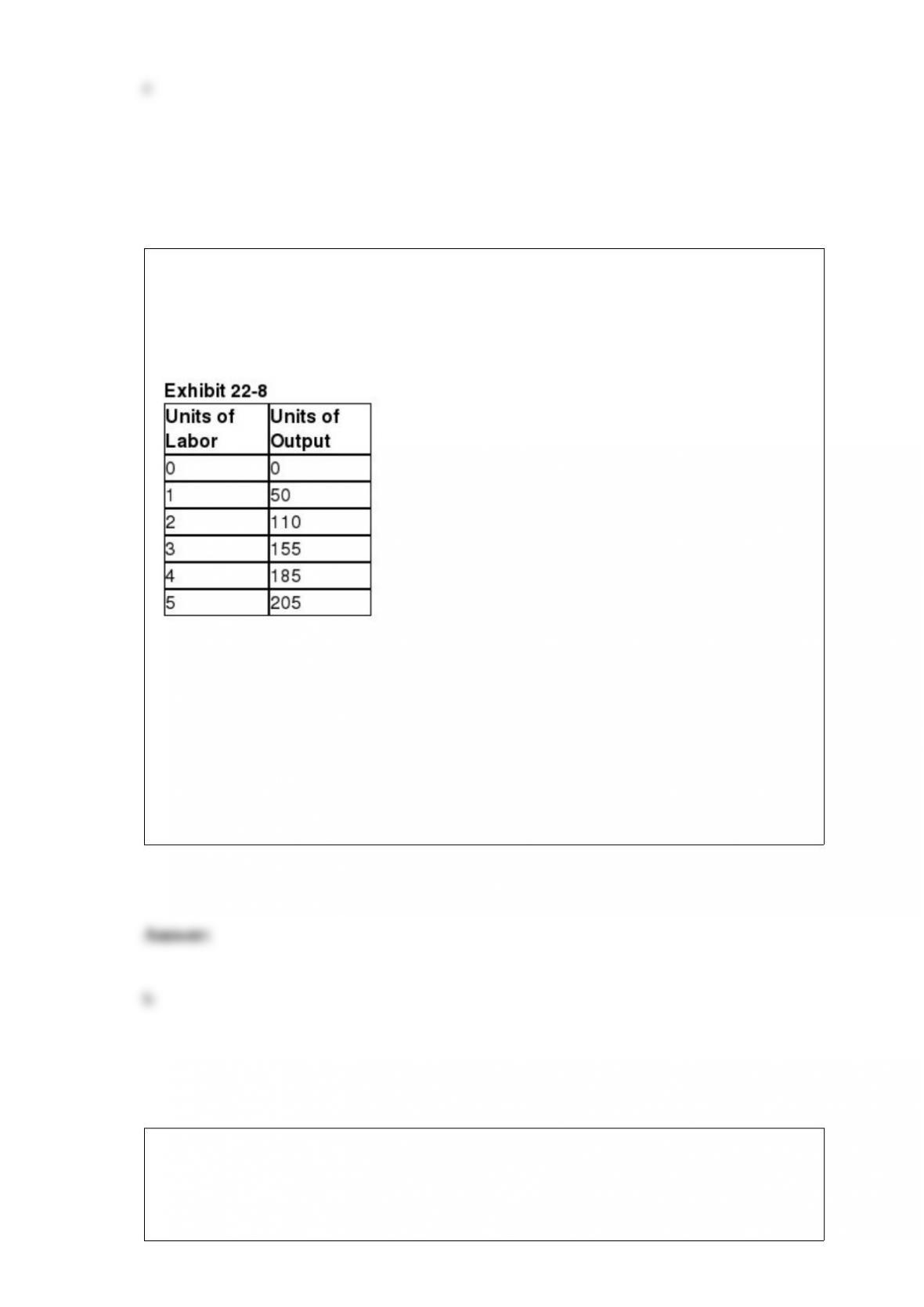
Exhibit 22-8 shows how output varies with the only variable input used in its
production. If the cost of a unit of labor is $500, what is the approximate marginal cost
of the 185th unit of output?
a. $2.50
b. $16.67
c. $12.50
d. $50.00
e. $100.00
If, for the last unit of a good produced by a perfectly competitive firm, MR > MC, then
in producing that unit the firm
a. added more to total costs than it added to total revenue.

b. added more to total revenue than it added to total costs.
c. added an equal amount to both total revenue and total costs.
d. maximized profits or minimized losses.
Income rises from $3,500 to $4,000 a month and the quantity demanded of good X falls
from 7 to 5 units a month. Income elasticity of demand (for good X) is __________ and
good X is a(n) __________ good.
a. -2.50; inferior
b. 0.40; normal
c. -2.28; inferior
d. 2.50; normal
e. 0.40; normal