A labor union undertakes a training program for its members. The objective of the
training program is to
a. increase substitute factor prices.
b. increase the marginal physical product of its members and therefore increase the
demand for their services.
c. reduce the availability of substitutes for the product it produces.
d. lower the supply of its labor.
e. none of the above
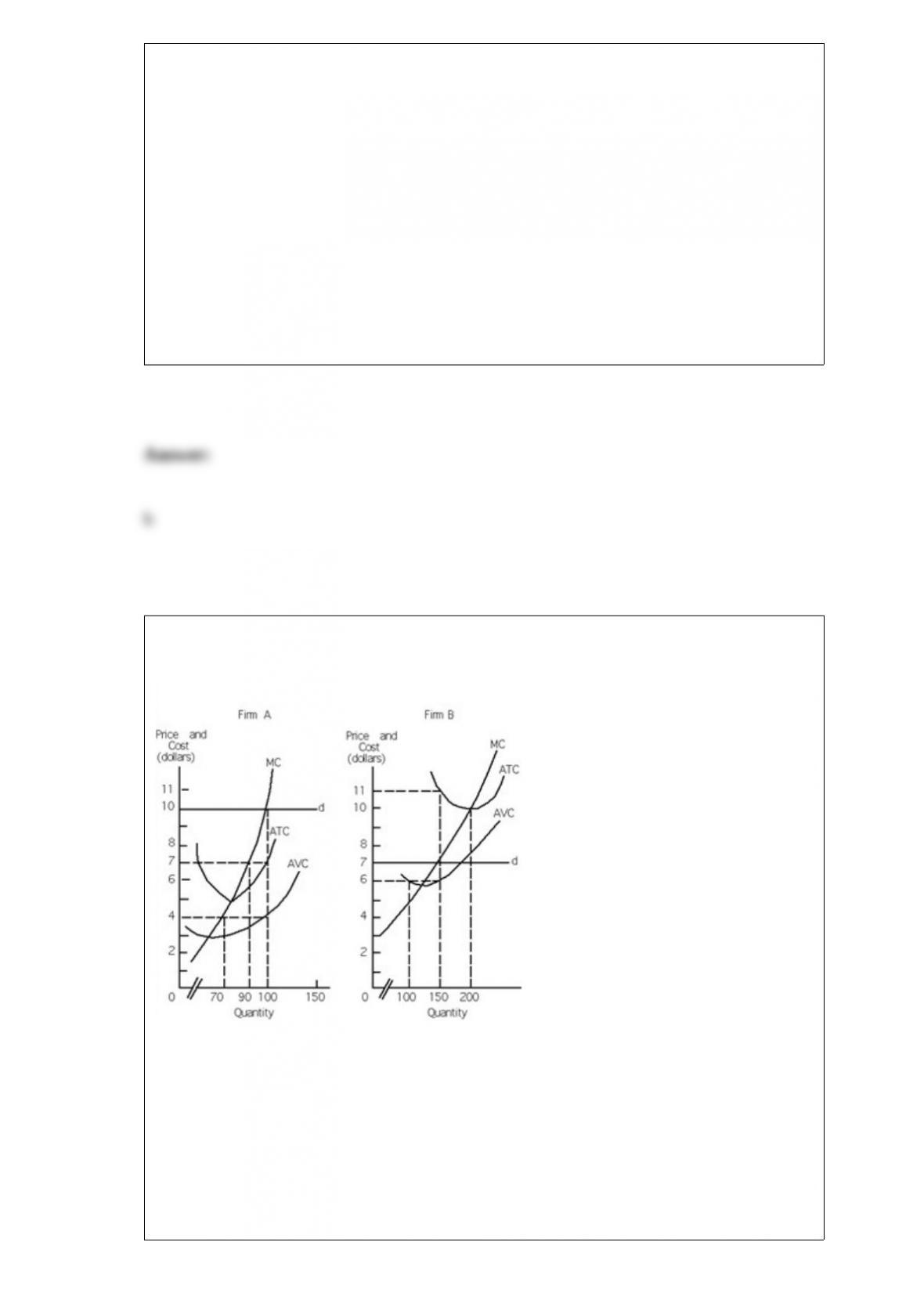
Exhibit 23-8
What is the total fixed cost of firm A at the profit-maximizing (or loss-minimizing)
level of output?
a. $3
b. $300
c. $90

d. $400
e. There is not enough information provided to answer this question.
Competition is legally prohibited when barriers to entry take the form of
a. public franchises.
b. economies of scale.
c. exclusive ownership of a resource.
d. all of the above
e. none of the above
A good is rivalrous in consumption if
a. its consumption by one person reduces its consumption by others.
b. it can be used to satisfy many needs (as compared to just one need).
c. it can be used to satisfy many wants (as compared to just one want).
d. its consumption by one person increases its consumption by others.
e. a and c
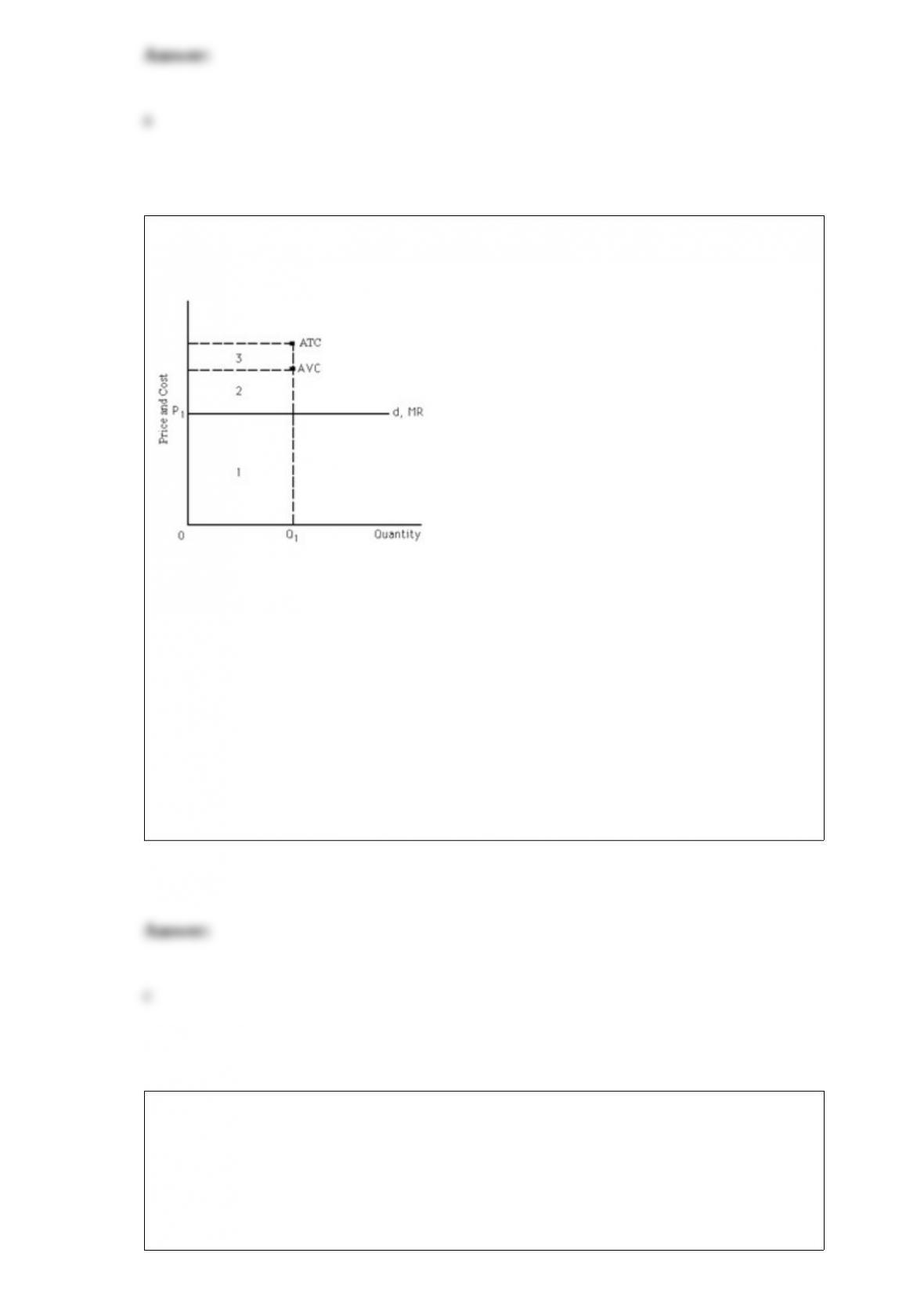
Exhibit 23-4
The firm sells its product at P1 and produces Q1. Given this situation,
a. total variable cost is equal to area 2 + area 3.
b. total revenue is equal to area 1 + area 2.
c. total cost is equal to area 1 + area 2 + area 3.
d. profit equals area 1.
e. none of the above
There are 200 firms in a perfectly competitive industry. Half of the firms supply 100
units at $3 per unit and the other half of the firms supply 130 units at $3 per unit. One
point on the market supply curve is
a. 23,000 units at $3.
b. 10,000 units at $3.
c. 13,000 units at $3.
d. 23,000 units at $6.
e. none of the above
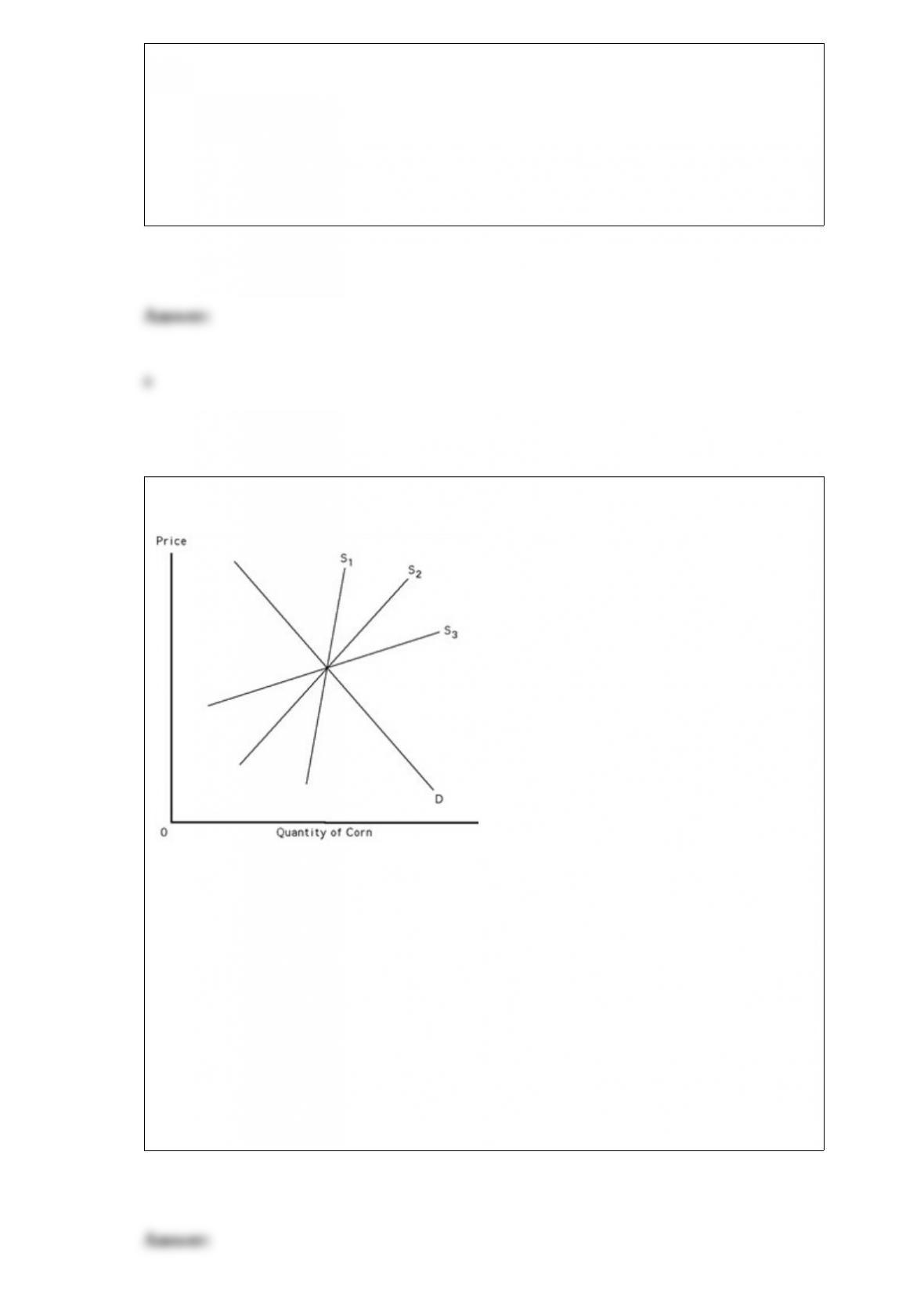
Exhibit 39-5
Low price elasticity of demand for corn coupled with unpredictable weather makes both
price and total revenue in the market for corn extremely volatile. Which of the supply
curves would result in the least volatility?
a. S1.
b. S2.
c. S3.
d. The changes are not dependent upon elasticity of supply.

If income elasticity of demand for a good is negative, the good is a(n) __________
good.
a. normal
b. positive
c. complementary
d. substitute
e. inferior
High demand for a product does not necessarily mean a high quantity demanded for
that product if the price is high enough.
a. True
b. False
It is possible for an increase in minimum wage to increase the number of workers hired
in a competitive labor market, but not in a monopsony setting.
a. True
b. False
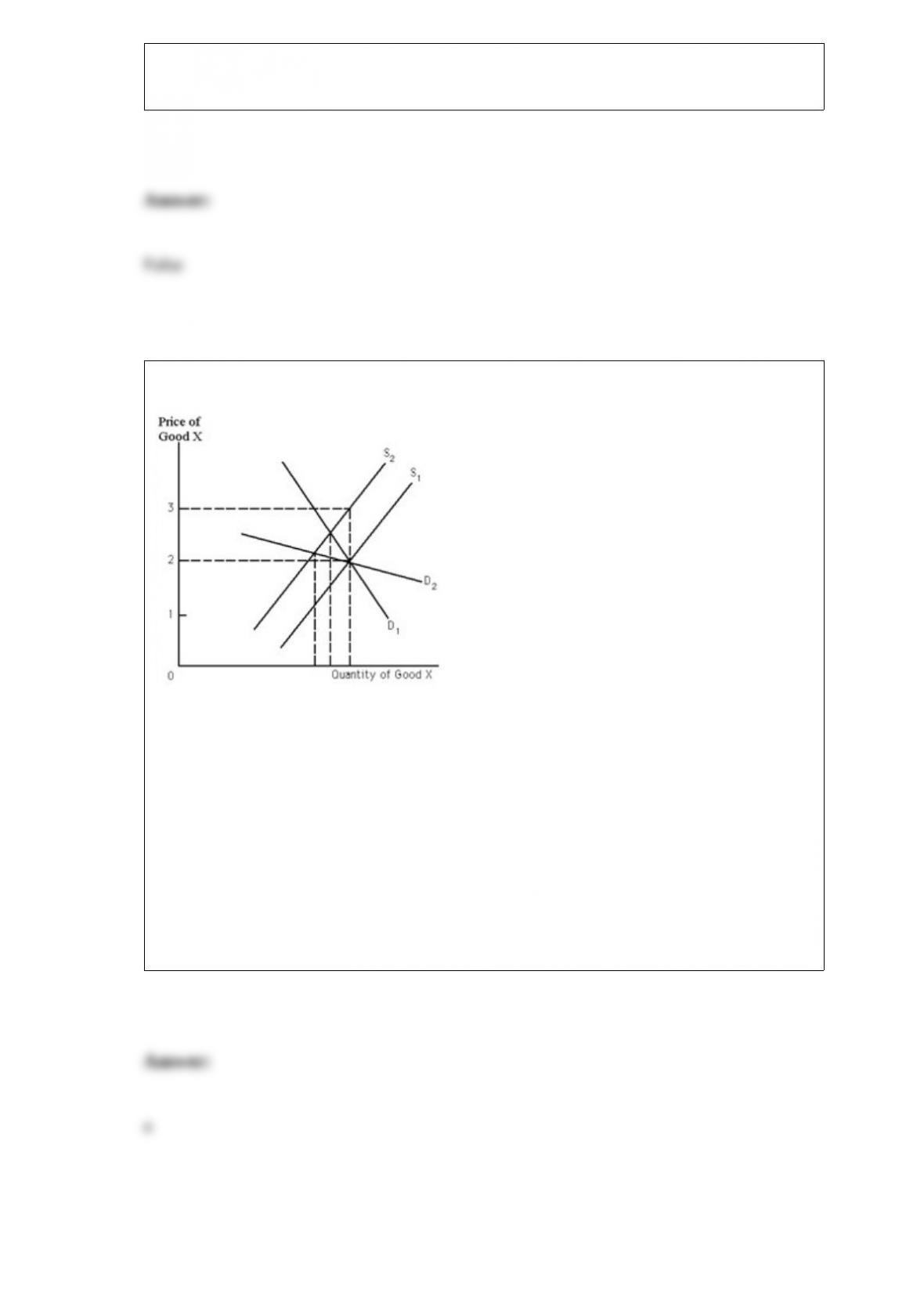
Exhibit 20-6
Let S1 be the supply curve of a producer. If S2 is the supply curve of the same producer
after the government imposes a per-unit tax, the tax revenue generated will be
a. greater if D1 is the demand curve facing the firm.
b. greater if D2 is the demand curve facing the firm.
c. the same regardless of which demand curve the firm faces.
d. Any of the above, depending on the type of good the tax is imposed on.
The marginal utility curve for units 1 through 5 of good Z lies above the horizontal
axis.What does this imply must be true about the total utility curve for units 1 through 5
of good Z?
a. That portion of good Z’s total utility curve must be upward sloping.
b. That portion of good Z’s total utility curve must be downward sloping.
c. That portion of good Z’s total utility curve must be horizontal.
d. That portion of good Z’s total utility curve must also lie above the horizontal axis.
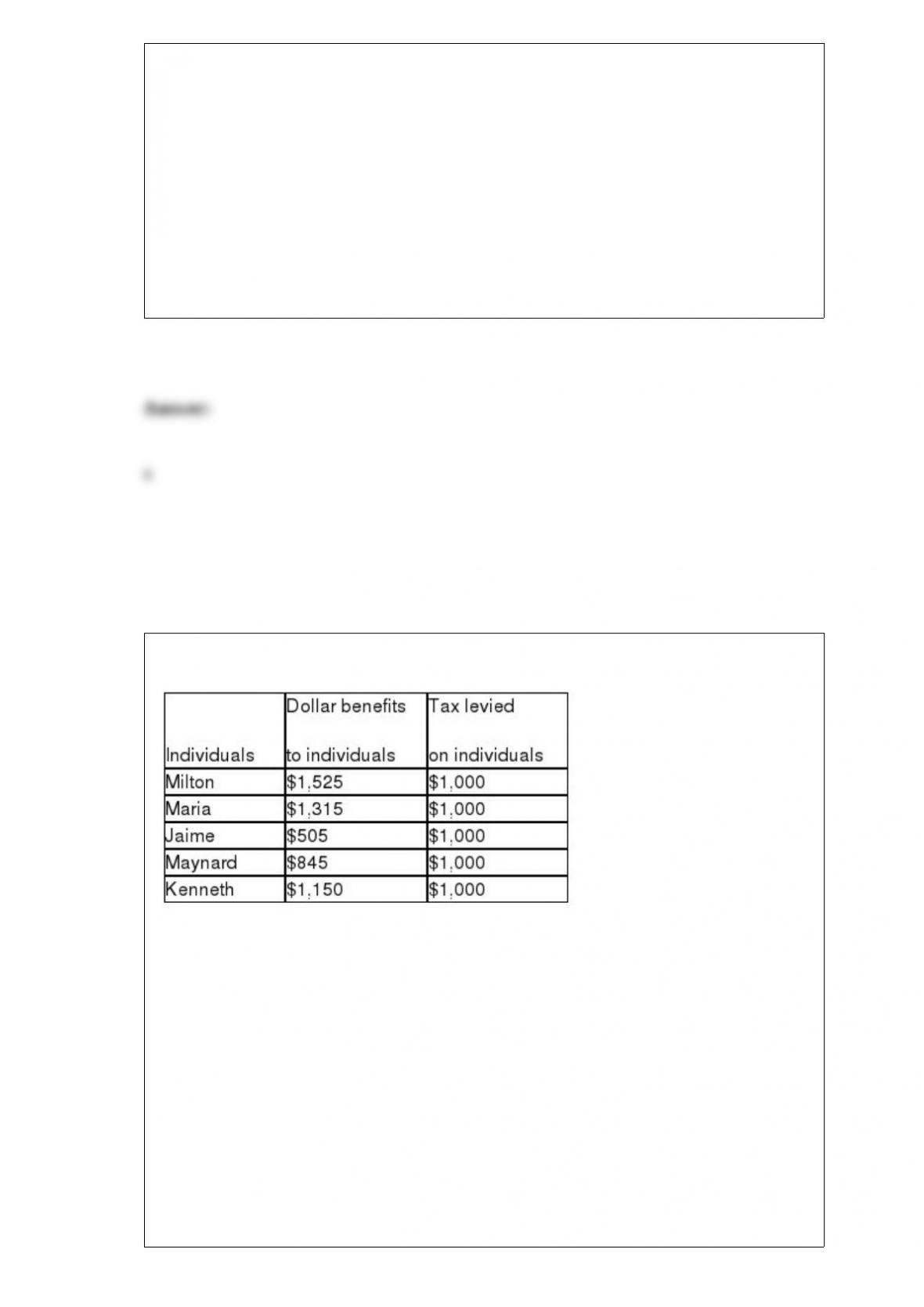
Exhibit 32-3
The exhibit shows the breakdown of benefits and costs for a five-person community
considering whether to purchase a $5,000 statue of Adam Smith to put in the center of
the public square. How will each of the five persons (from Milton to Kenneth, in order)
vote?
a. against; against; against; for; for
b. against; against; for; for; against
c. against; for; for; for; for
d. for; for; for; against; against

e. for; for; against; against; for