
If the dollar price of a foreign currency increases, there will be a(n)
a. rightward movement along the supply of foreign exchange curve
b. leftward movement along the supply of foreign exchange curve
c. leftward shift of the supply of foreign exchange curve
d. rightward shift of the supply of foreign exchange curve
e. tendency for the supply of foreign exchange curve to become flatter
Which of the following would be most likely to increase the demand for money?
a. An increase in the price level
b. A decrease in real income
c. An increase in the interest rate
d. A decrease in the cost of converting other assets into money
e. A decrease in the price level
Marginal utility
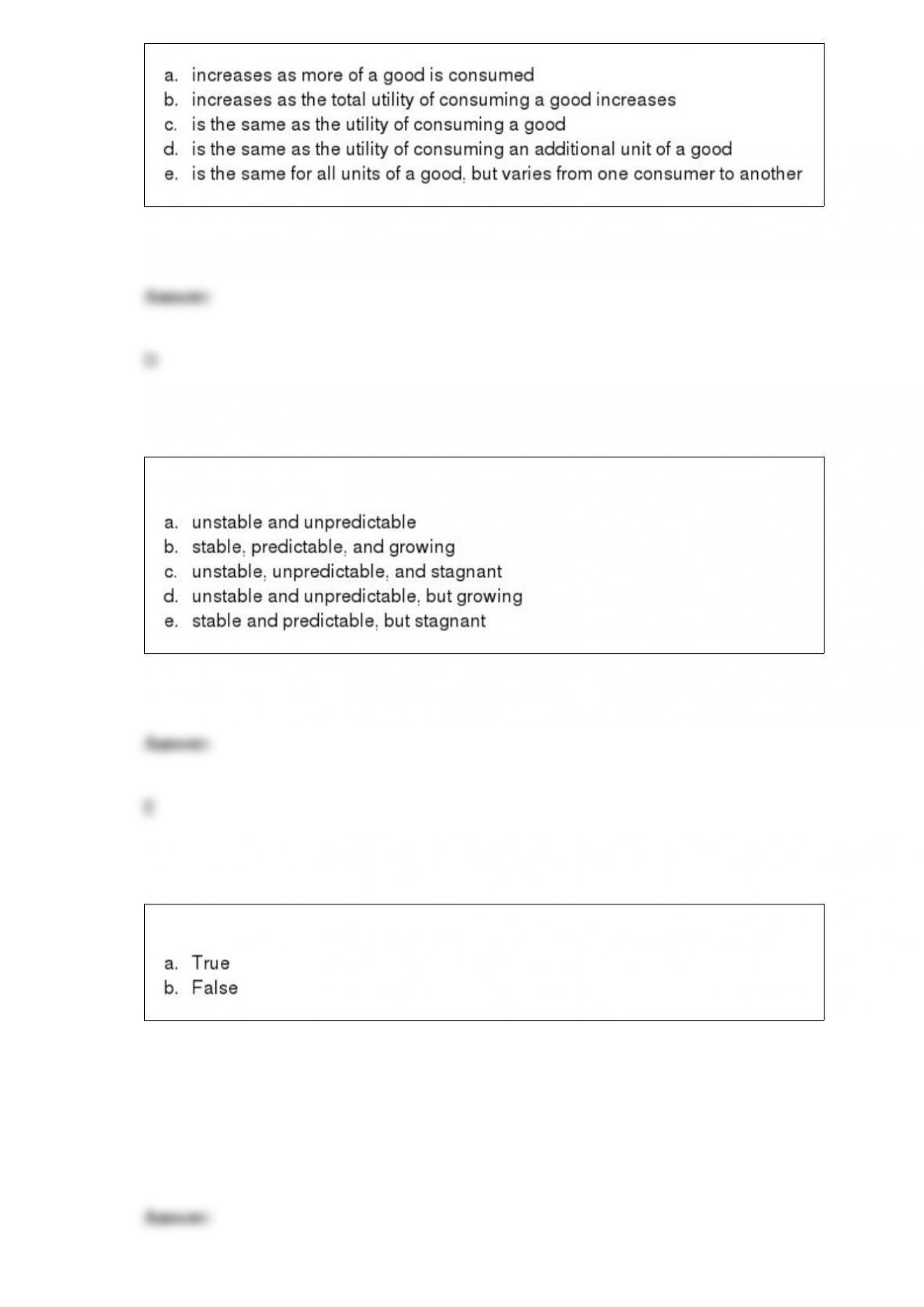
Traditional economies tend to be
To maintain an interest rate target the Fed must make adjustments to the money supply.
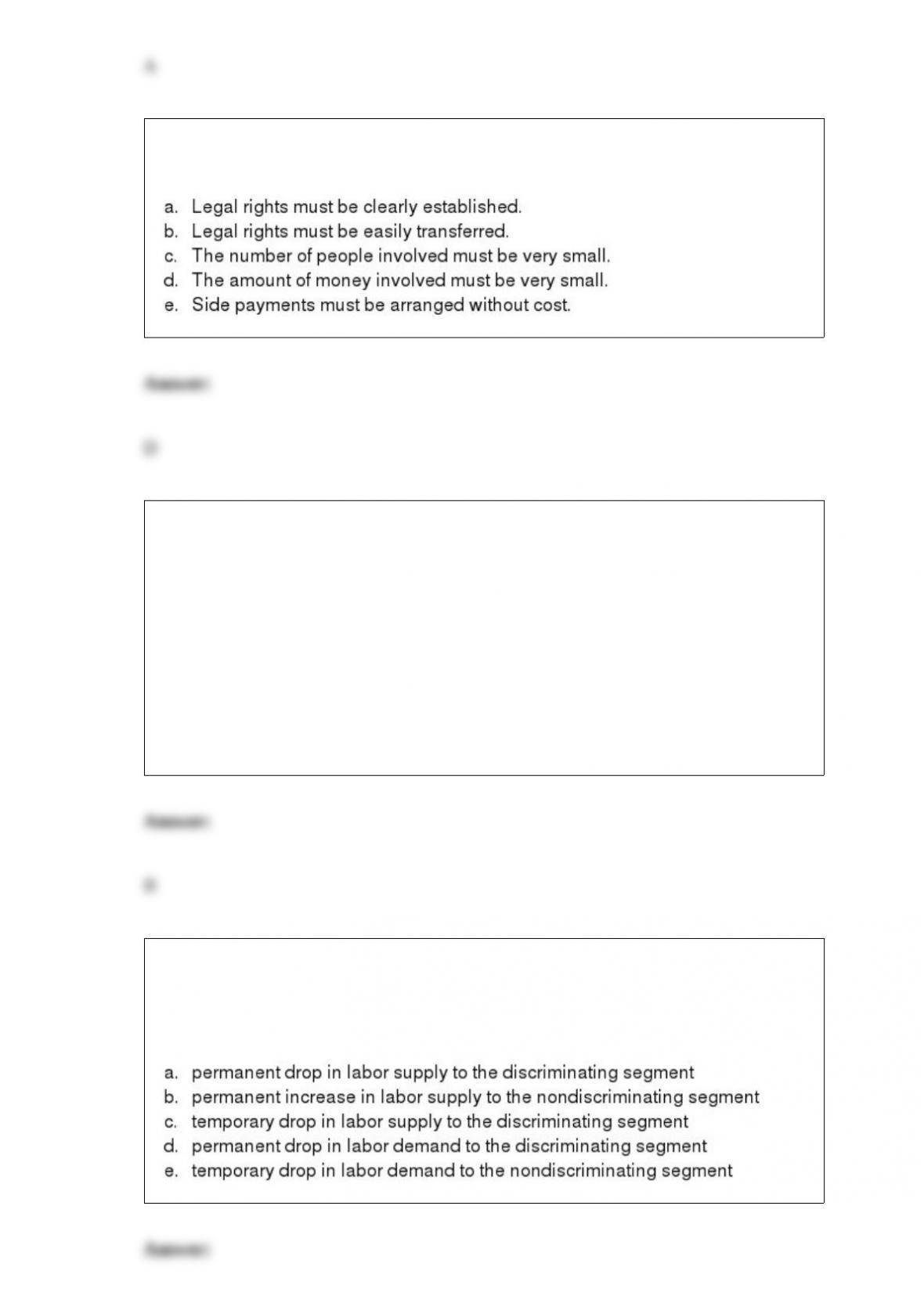
Each of the following, except one, is a condition necessary for a private market solution
to an externality problem. Which is the exception?
If aggregate expenditure was less than GDP, which of the following would happen?
a. Inventories would shrink and GDP would drop in future periods.
b. Inventories would grow and GDP would drop in future periods.
c. Inventories would shrink and GDP would increase in future periods.
d. Inventories would grow and GDP would increase in future periods.
e. Inventories would not change and GDP would drop in future periods.
A labor market is divided into two segments. All workers have the same qualifications
and find jobs in either segment equally attractive. Initially, both segments are in
competitive equilibrium. If the development of employer prejudice then reduces the
employment of minorities in one segment, there will be a
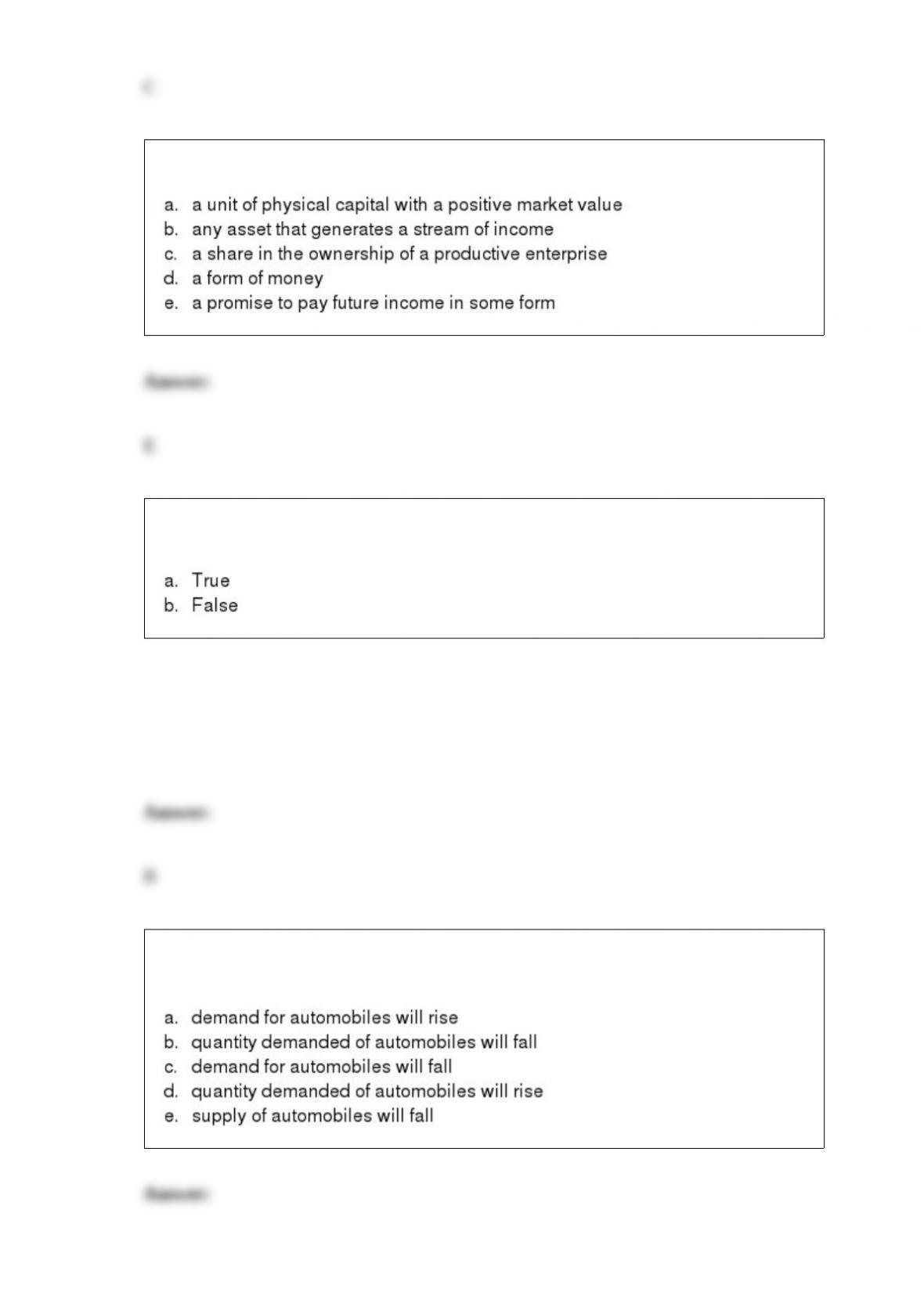
A financial asset is
The 1990-91 recession was caused by a Federal Reserve policy change designed to
minimize the adverse economic effects of the Gulf War.
If automobiles are like most goods and the price of automobiles rises, then holding all
else constant, the
Deleveraging is the process of reducing leverage, and therefore increasing the risk to
capital from any further declines in asset prices.