1) over the long run, foreign exchange rates are determined by transfers of bank
deposits that respond to differences in real interest rates and to shifting expectations of
future exchange rates.
a.true
b.false
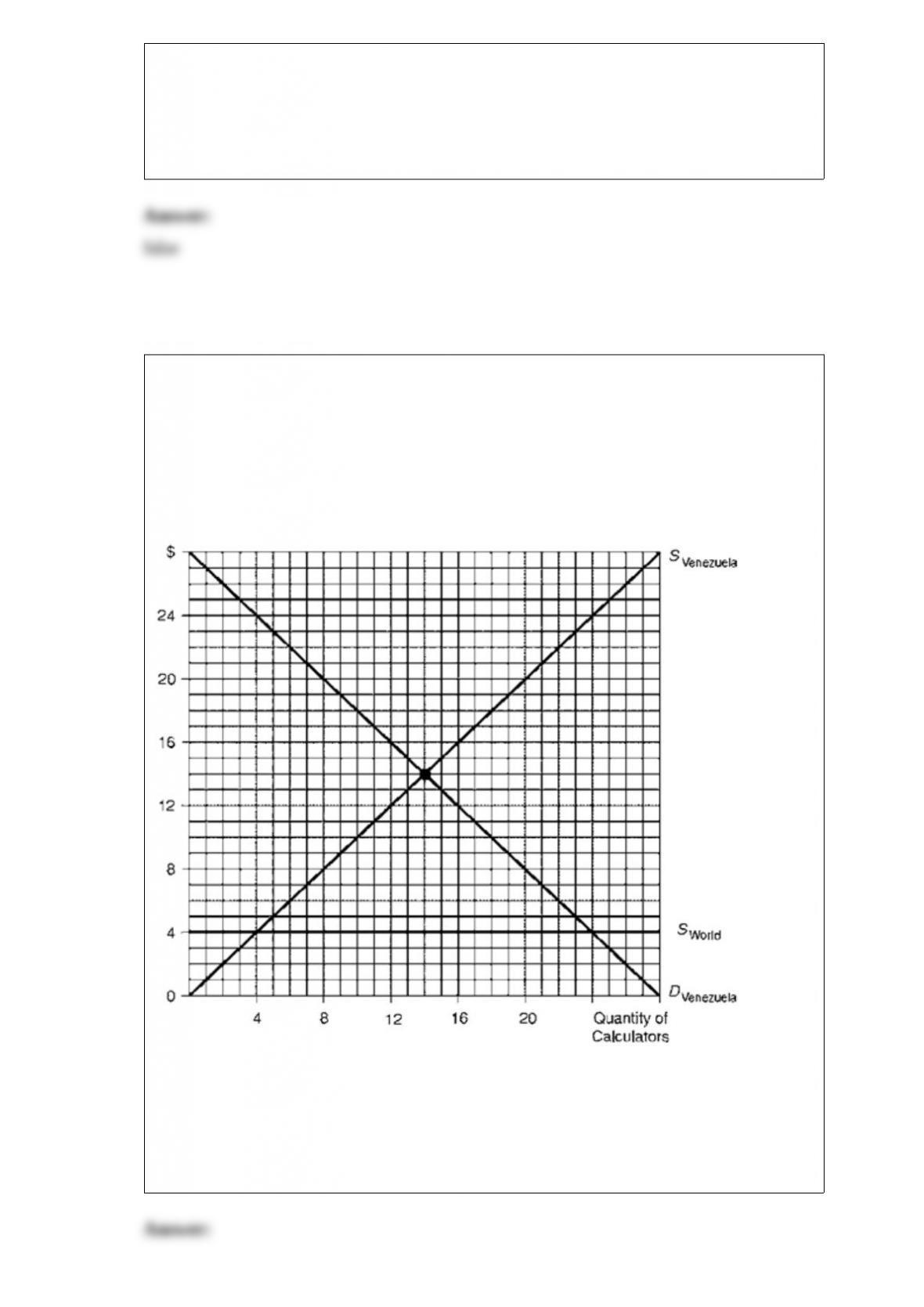
2) figure 5.4 illustrates the calculator market for venezuela, assumed to be a ‘small”
country that is unable to affect the world price. svenezuela is the domestic supply
schedule and dvenezuela is the domestic demand schedule.
figure 5.4. venezuelan calculator market
consider figure 5.4. suppose the rest of the world supplies calculators to venezuela at a
price of $4 each. with free trade, venezuelan imports total:
a.8 calculators
b.16 calculators
c.20 calculators
d.24 calculators

3) ____ is the ability of a firm/industry, under free and fair market conditions, to design,
produce, and market goods and services that are better and/or cheaper than those of
other firms/industries.
a.competitiveness
b.protectionism
c.comparative advantage
d.absolute advantage
4) in the long run, competitiveness depends on an industry’s natural resources, its stock
of machinery and equipment, and the skill of its workers in creating goods that people
want to buy.
a.true
b.false
5) the extent to which a change in the exchange rate leads to changes in import and
export prices is known as:
a.the j-curve effect
b.the marshall-lerner effect
c.the absorption effect
d.pass-through effect
6) figure 11.3 the market for the euro
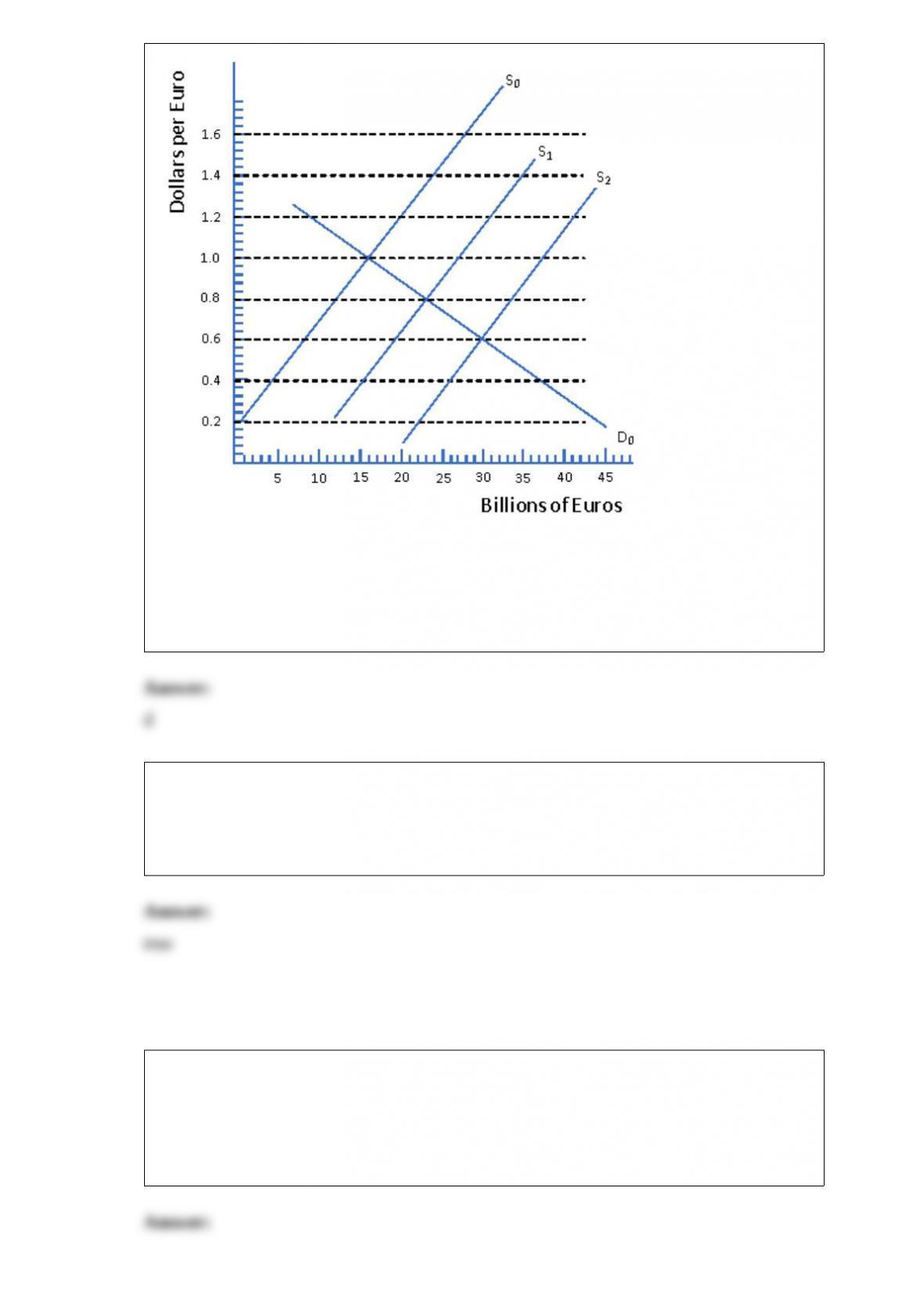
refer to figure 11.3. if the supply curve shifts from s2 to s1
a.the dollar has depreciated relative to the euro
b.the euro has appreciated relative to the dollar
c.the euro has depreciated relative to the dollar
d.both a and b
7) in the short run, exchange rates are primarily determined by investor expectations of
returns on assets such as government securities and bank accounts.
a.true
b.false
8) international trade benefits:
a.all workers
b.most workers
c.many workers
d.none of these is correct
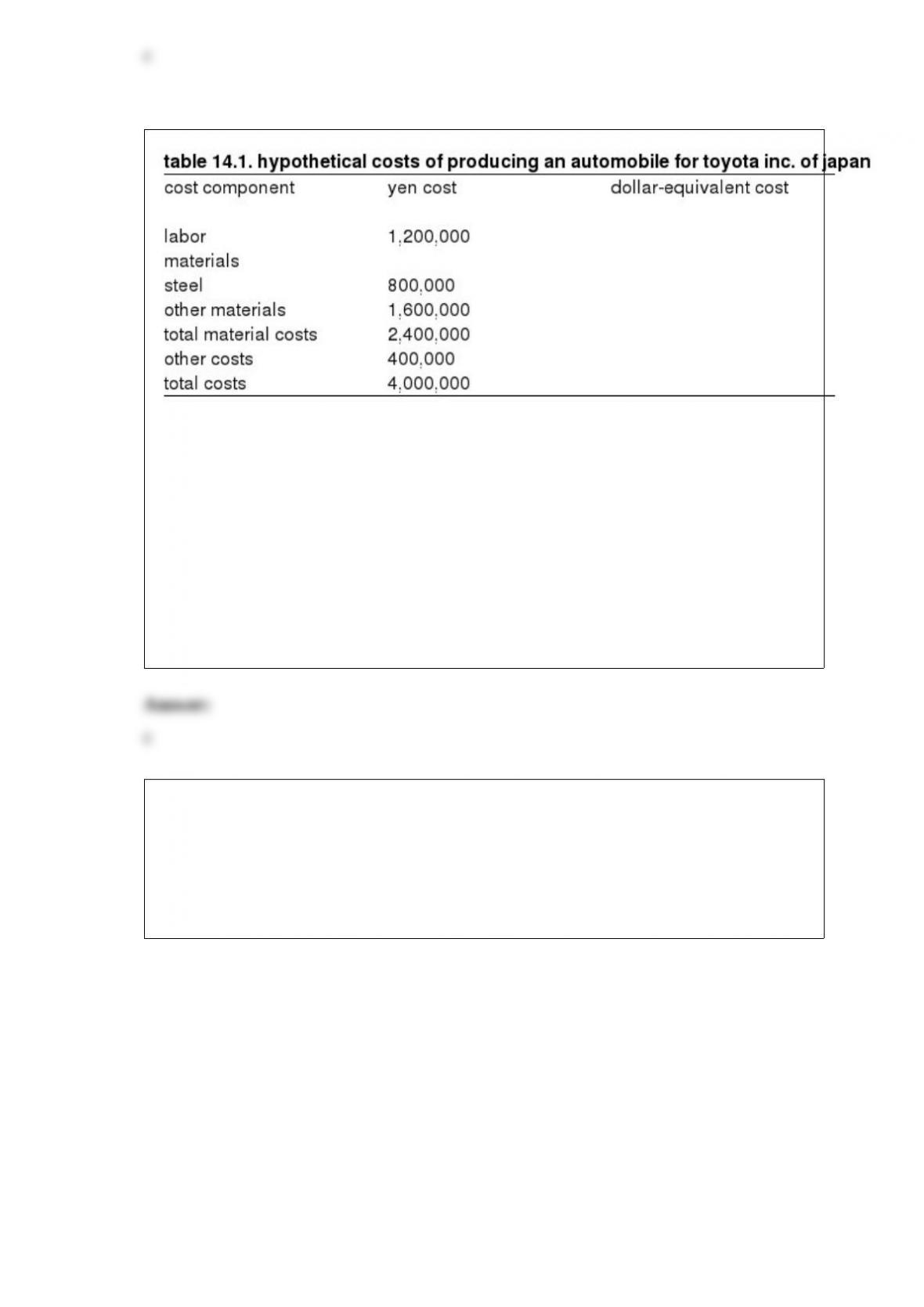
9) refer to table 14.1. assume that toyota inc. imports steel from u.s. suppliers, whose
costs are denominated in dollars, while all other inputs are obtained from japanese
suppliers whose costs are denominated in yen. if the yen’s exchange value appreciates
from 200 yen = $1 to 100 yen = $1, the dollar-equivalent cost of a toyota automobile
equals:
a.$24,000
b.$30,000
c.$36,000
d.$42,000
10) the figure below illustrates the market for swiss francs in a world of
market-determined exchange rates. assume the equilibrium exchange rate is $0.5 per
franc, given by the intersection of schedules s0 and d0.
figure 11.2. market for francs
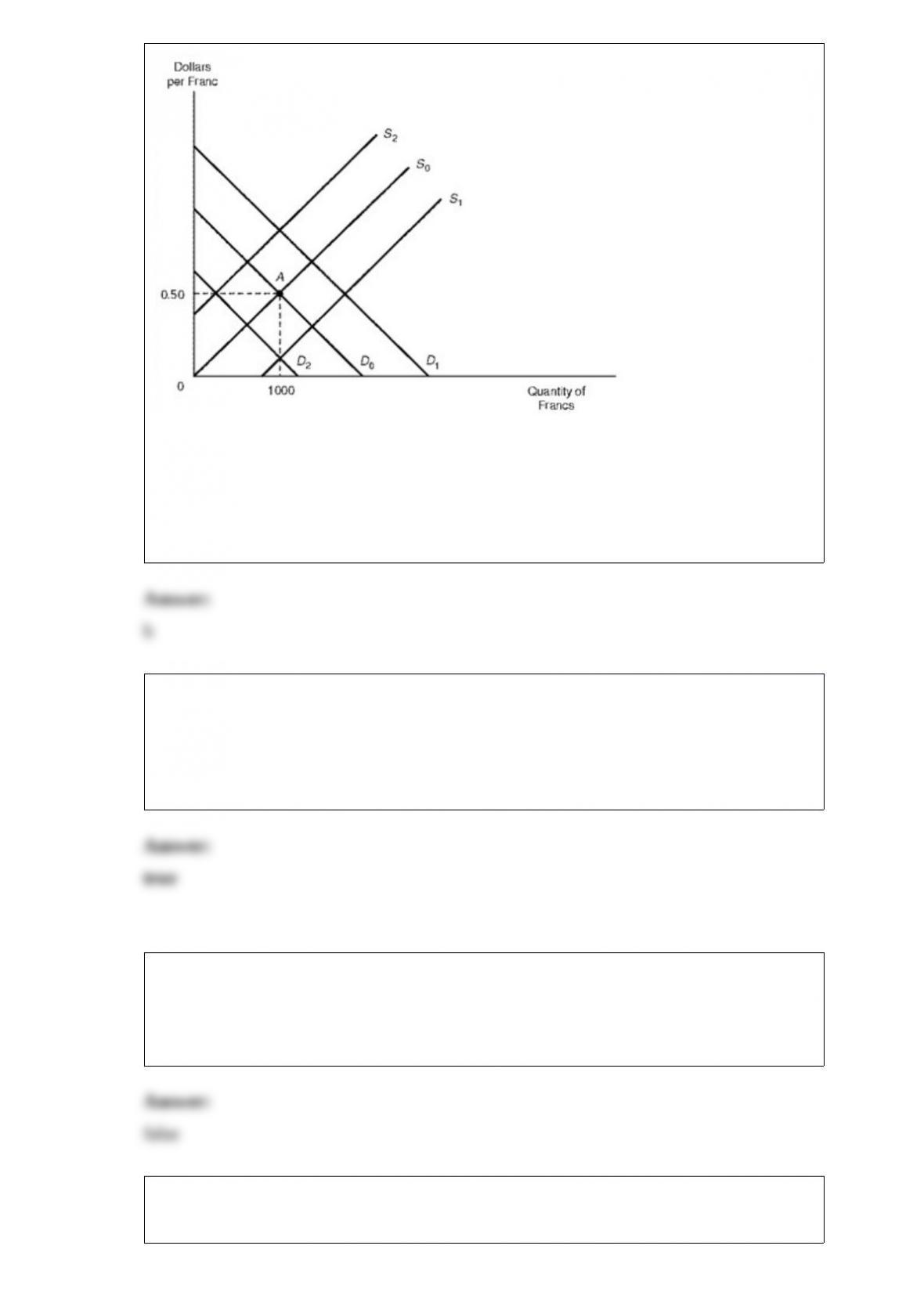
refer to figure 11.2. a shift in the demand for francs from d0 to d2, or a shift in the
supply of francs from s0 to s1, would result in a (an):
a.depreciation in the dollar against the franc
b.appreciation in the dollar against the franc
c.no change in the dollar/franc exchange rate
d.none of the above
11) current trade rules permit countries to enact measures to protect the health and
safety of their citizens as long as all goods are treated equally, the tobacco companies
argue.
a.true
b.false
12) the strategic-trade-policy hypothesis assumes that domestic firms operate under
increasing cost conditions as well as in perfectly competitive markets.
a.true
b.false
13) suppose the u.s. price elasticity of demand for imports equals 1.2 and the foreign
elasticity of demand for u.s. exports equals 1.5. according to the marshall-lerner
condition, an appreciation of the dollar’s exchange value would worsen the u.s. balance
of trade.
a.true
b.false
14) during the 1980s, u.s. steel-using companies (caterpillar) actively supported the u.s.
government’s negotiation of voluntary export agreements with foreign steel-exporting
countries.
a.true
b.false
15) a u.s. export company scheduled to receive 1 million pounds six months from today
can hedge its foreign exchange risk by:
a.buying today 1 million pounds in the forward market for delivery in six months
b.buying 1 million pounds in the spot market for delivery in six months
c.selling 1 million pounds in the spot market for delivery in six months
d.selling today 1 million pounds in the forward market for delivery in six months
16) does exposure to competition with the world leader in a particular industry improve
a firm’s productivity?
17) explain the theory of optimum currency areas.
18) what are the challenges of the international trading system?
19) what are some major trade problems faced by developing nations?
20) discuss the pitfalls of outsourcing, especially as experienced by boeing.
21) what are some of the growth strategies that have been employed by the developing
nations? how successful are these strategies?
22) has industrial policy contributed significantly to japan’s economic growth?
23) what are the essential arguments in favor of free trade?