1) When a country abandons a no-trade policy, adopts a free-trade policy, and becomes
an exporter of a particular good,
a.producer surplus increases and total surplus increases in the market for that good.
b.producer surplus increases and total surplus decreases in the market for that good.
c.producer surplus decreases and total surplus increases in the market for that good.
d.producer surplus decreases and total surplus decreases in the market for that good.
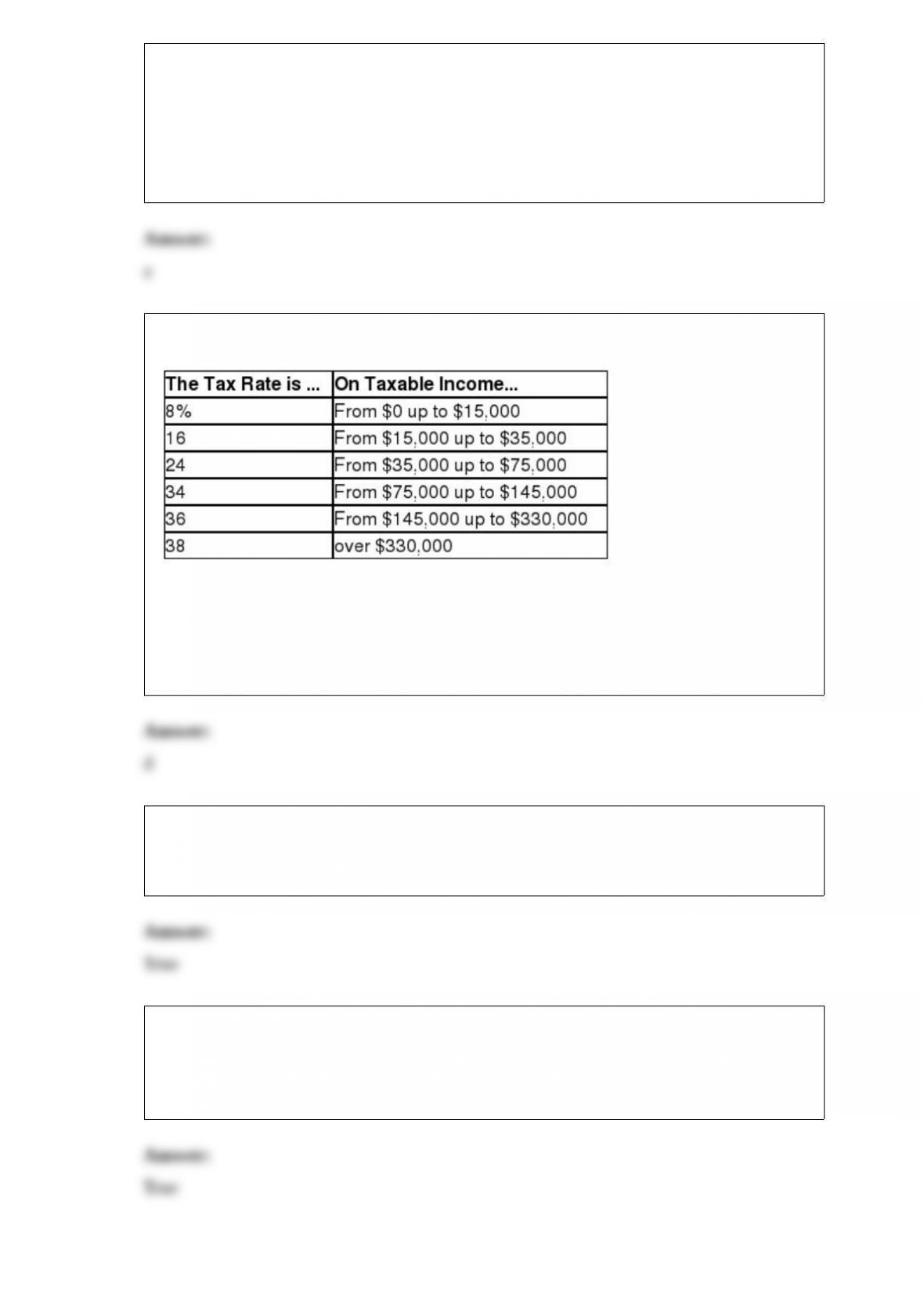
2) Table 12-11
If Bud has taxable income of $78,000, his tax liability is
a. $7,800.
b. $9,900.
c. $10,200.
d. $15,020.
3) A budget surplus occurs when government receipts exceed government spending.
a.True
b.False
4) Using income tax revenue to fund the welfare system illustrates the conflict between
efficiency and equality.
a.True
b.False

5) Consider a competitive market with a large number of identical firms. The firms in
this market do not use any resources that are available only in limited quantities. In this
market, an increase in demand will
a.increase price in the short run but not in the long run.
b.increase price in the long run but not in the short run.
c.increase price both in the short and the long run.
d.not affect price in either the short or the long run.
6)
Suppose you buy an iPod for $100. If your consumer surplus is $30, your willingness to
pay is $70.
a.True
b.False
7) The wage gap between skilled and unskilled worker has
a.risen; economists argue that this may be due in part to technological progress.
b.risen; economists argue that none of the rise is due to technological progress.
c.fallen; economists argue that this may be due in part to technological progress.
d.fallen; economists argue that none of the fall is due to technological progress.
8) If the government wanted to ensure that the market reaches the socially optimal
equilibrium in the presence of a technology spillover, it should
a.impose a corrective tax on any firm producing a technology spillover.
b.offer tax credits to consumers who are adversely affected by the new technology.
c.subsidize producers by an amount equal to the value of the technology spillover.
d.provide research grants to those firms not currently engaging in research to increase
competition in the industry.
9) At the profit-maximizing level of output,
a.marginal revenue equals average total cost.
b.marginal revenue equals average variable cost.
c.marginal revenue equals marginal cost.
d.average revenue equals average total cost.

10) The long-run average total cost curve is always
a.flatter than the short-run average total cost curve, but not necessarily horizontal.
b.horizontal.
c.falling as output increases.
d.rising as output increases.
11) A cost imposed on someone who is neither the consumer nor the producer is called
a
a.corrective tax.
b.command and control policy.
c.positive externality.
d.negative externality.
12) Government agencies, such as the National Science Foundation, subsidize basic
research because in the absence of a subsidy too little research would be conducted.
a.True
b.False
13) Figure 9-5
The figure illustrates the market for tricycles in a country.
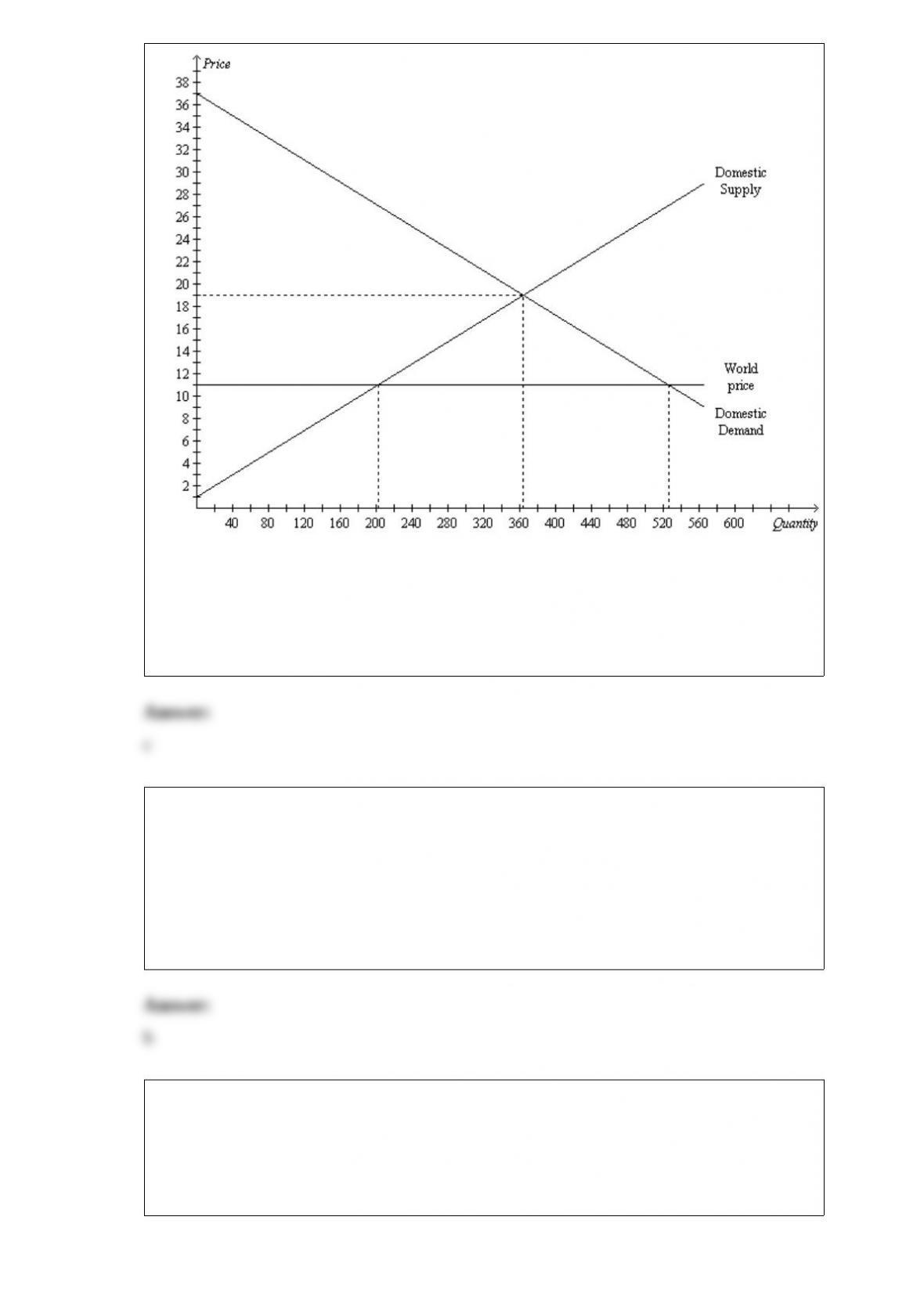
With trade, total surplus is
a. $3,240.
b. $6,480.
c. $7,760.
d. $15,520.
14) In determining wages, ability, effort, and chance
a.probably play no role whatsoever.
b.play a role, but their importance is hard to gauge since ability, effort, and chance are
hard to measure.
c.play a role, and that role is fully captured in easy-to-measure factors such as human
capital and age.
d.play a role, and it is fully explained within the context of compensating differentials.
15) Table 17-19
Consider a small town that has two grocery stores from which residents can choose to
buy a loaf of bread. The store owners each must make a decision to set a high bread
price or a low bread price. The payoff table, showing profit per week, is provided
below. The profit in each cell is shown as (Store 1, Store 2).
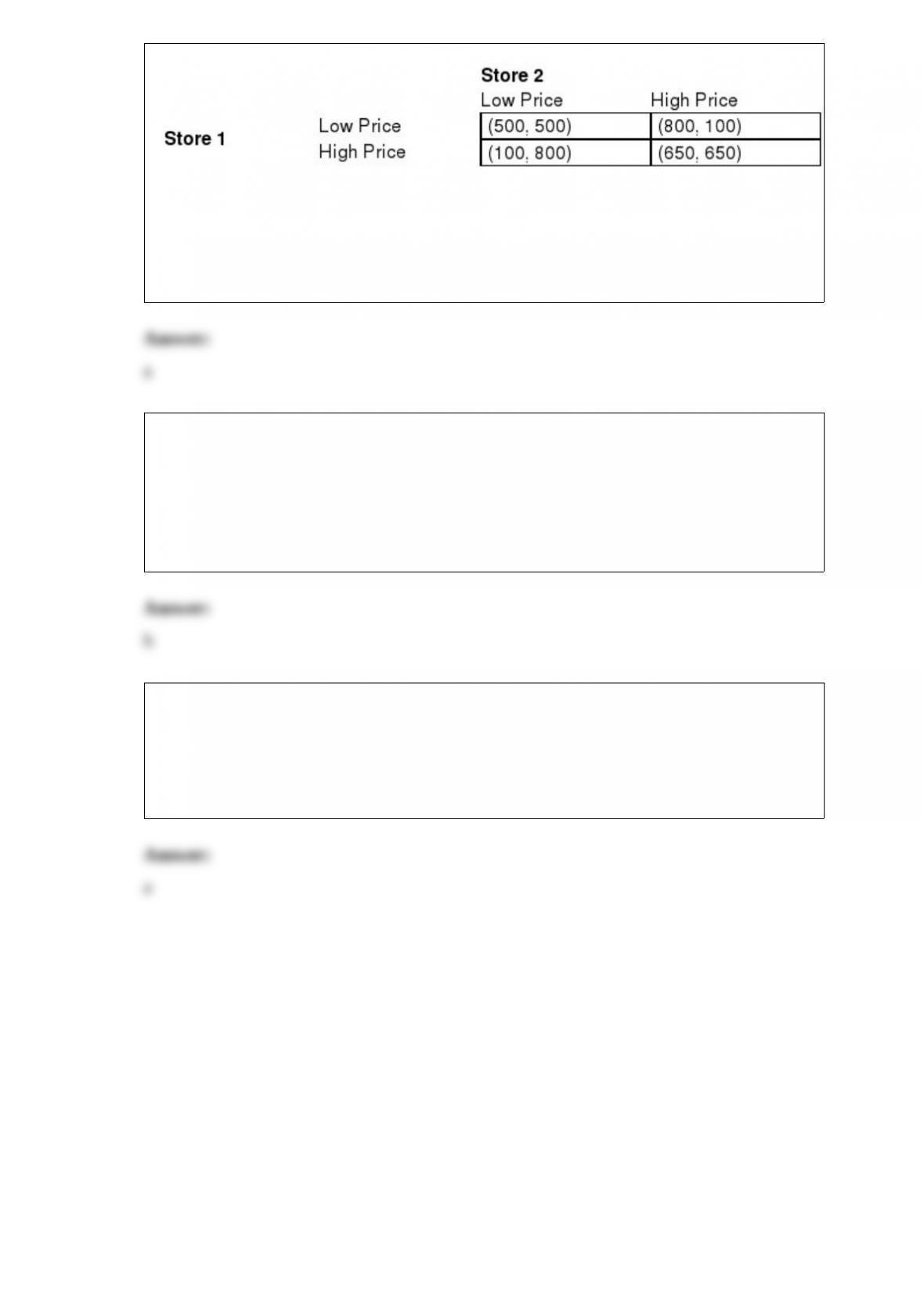
Refer to Table 17-19. What is the Nash Equilibrium of this price-setting game?
a.Grocery store 1: Low price Grocery store 2: Low price
b.Grocery store 1: Low price Grocery store 2: High price
c.Grocery store 1: High price Grocery store 2: How price
d.Grocery store 1: High price Grocery store 2: High price
16) Economists who study economic mobility have found that, if a father earns 20
percent above his generation’s average income, his son will most likely earn
a.an income equal to his generation’s average income.
b.8 percent above his generation’s average income.
c.5 percent below his generation’s average income.
d.3 percent above his generation’s average income.
17) The marginal rate of substitution between two goods always equals the
a.marginal utility of one divided by the marginal utility of the other.
b.marginal utility of one times the marginal utility of the other.
c.price of one good divided by the price of the other.
d.Both a and c are correct.