One can determine producers’ surplus if the minimum selling price and the
_____________ are known.
a. price received
b. price paid
c. tax paid
d. tax received
e. a and c
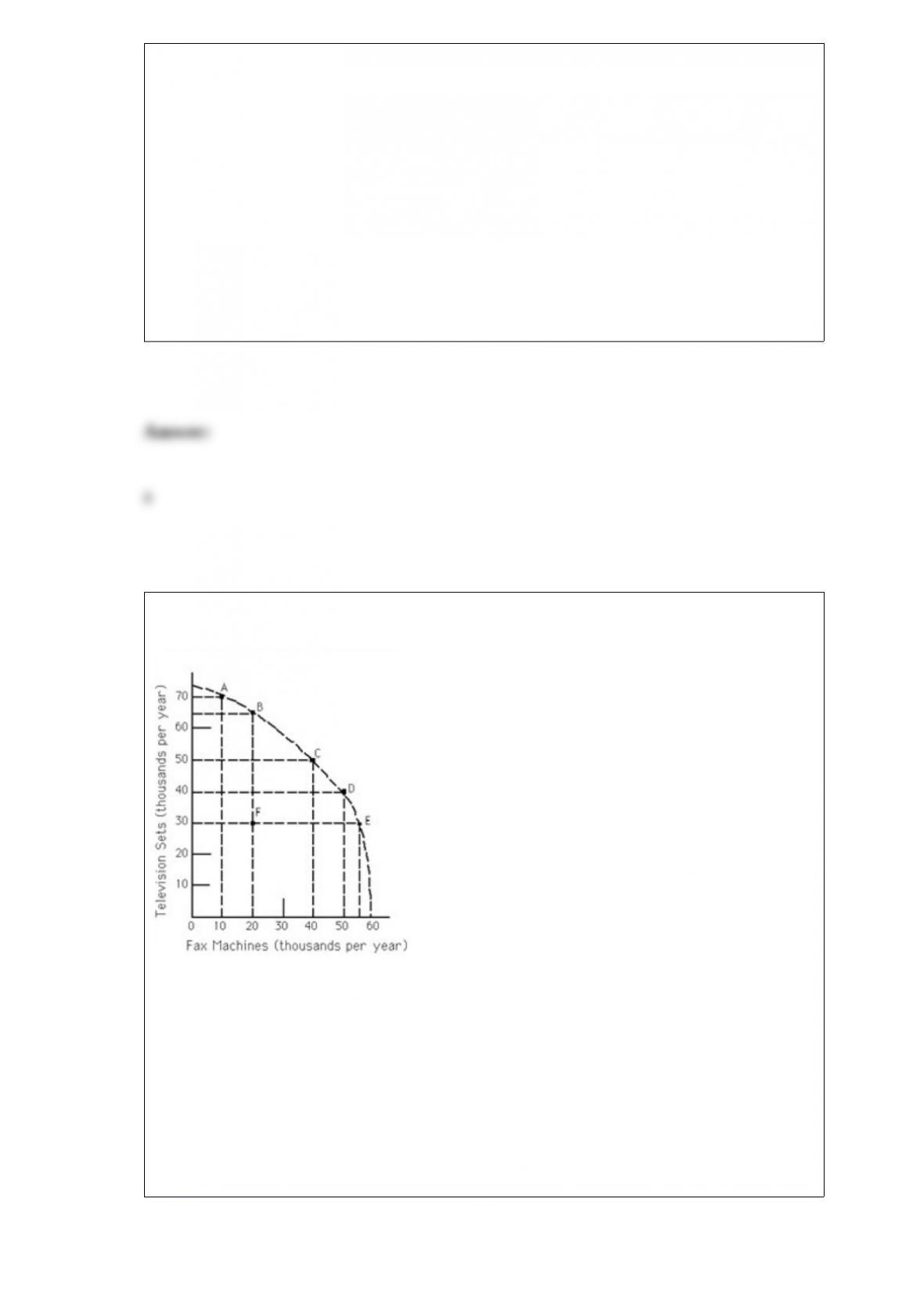
Exhibit 2-5
The opportunity cost of moving from point C to point B is
a. 15,000 televisions.
b. 15,000 fax machines.
c. 10,000 televisions.
d. 20,000 fax machines.
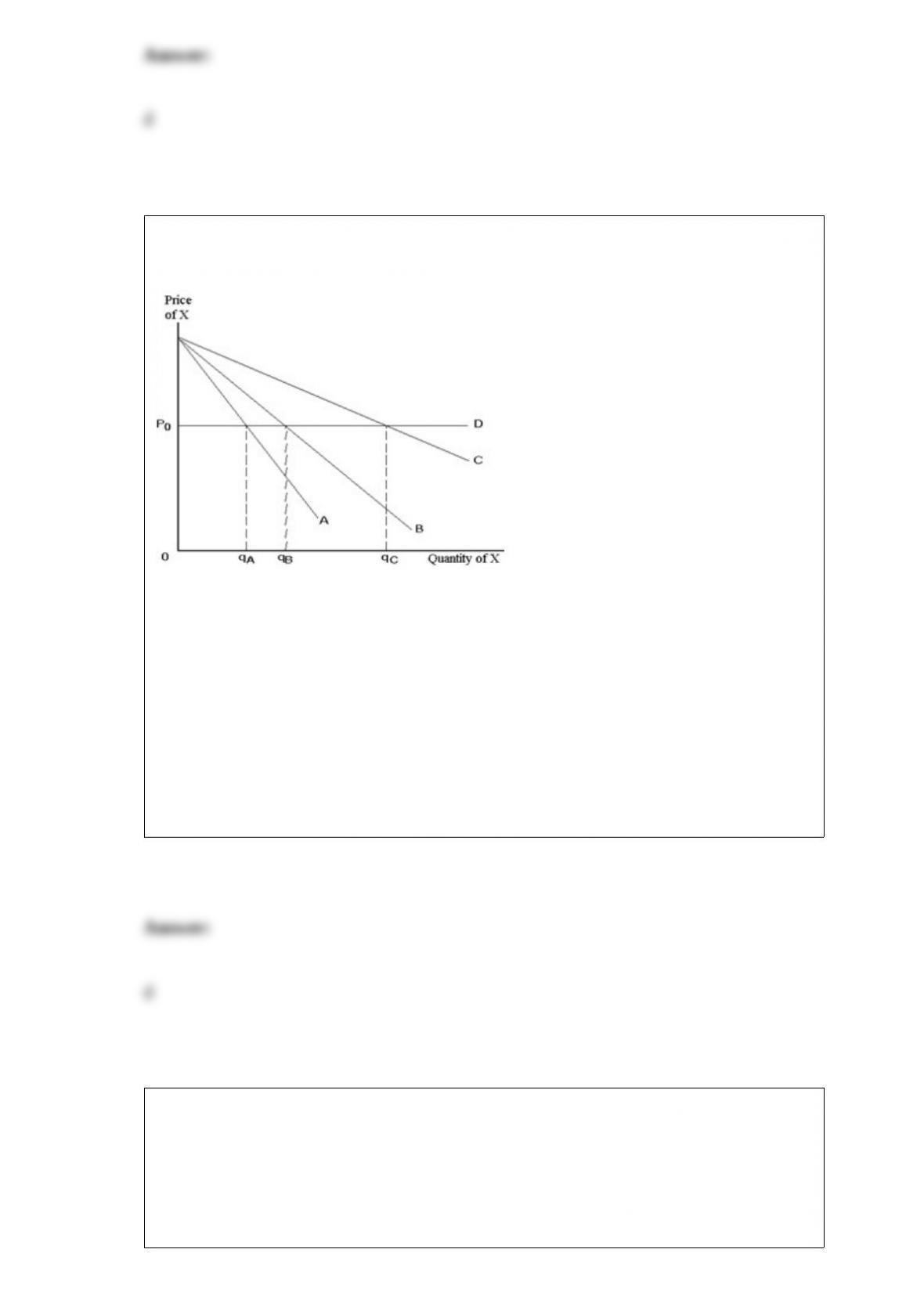
Exhibit 24-6
The marginal revenue curve of a perfectly competitive firm producing X and selling it
at the price P0 is represented by
a. A.
b. B.
c. C.
d. D.
A person’s labor income is equal to the __________ times __________. The return on
savings that a person receives is referred to as __________.
a. wage rate a person earns; number of hours the person works; transfer income
b. wage rate a person earns; number of hours the person works; asset income
c. price divided by number of units sold; number of hours worked; liabilities income
d. wage rate a person earns; number of hours the person works; labor income
e. annual salary a person earns; number of days a year the person works; asset income
Which of the following industries is the best real-world example of monopolistic
competition?
a. soft drinks
b. electricity generation
c. automobiles
d. computer software
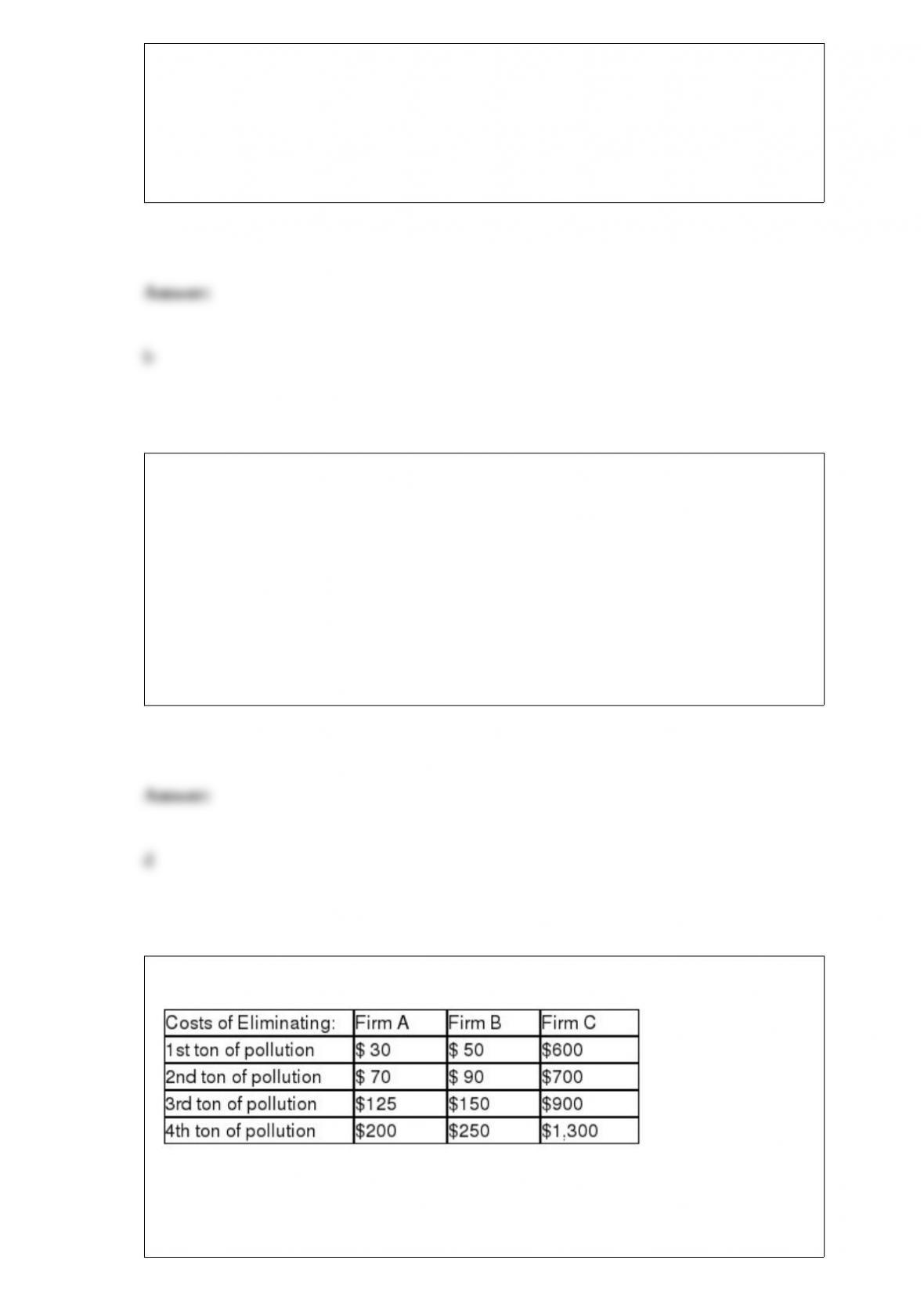
Exhibit 31-3
What is the cost to Firm A of eliminating 2 tons of pollution?
a. $100

b. $200
c. $700
d. $425
e. $1,500
Which of the following statements is false?
a. A positive externality is internalized if the person that generated the externality
incorporates into his or her own private cost-benefit calculations the external benefits
that third parties receive.
b. Internalizing externalities is not the same as adjusting for externalities.
c. An externality has been completely internalized if the socially optimal output
emerges.
d. Assigning property rights is one way to internalize externalities.
If output rises from 150 units per hour to 170 units per hour as another worker is hired
and the additional worker receives $25 in wages per hour, it follows that marginal cost
is
a. $1.25
b. $500
c. $1.33
d. $0.75
e. $0.80
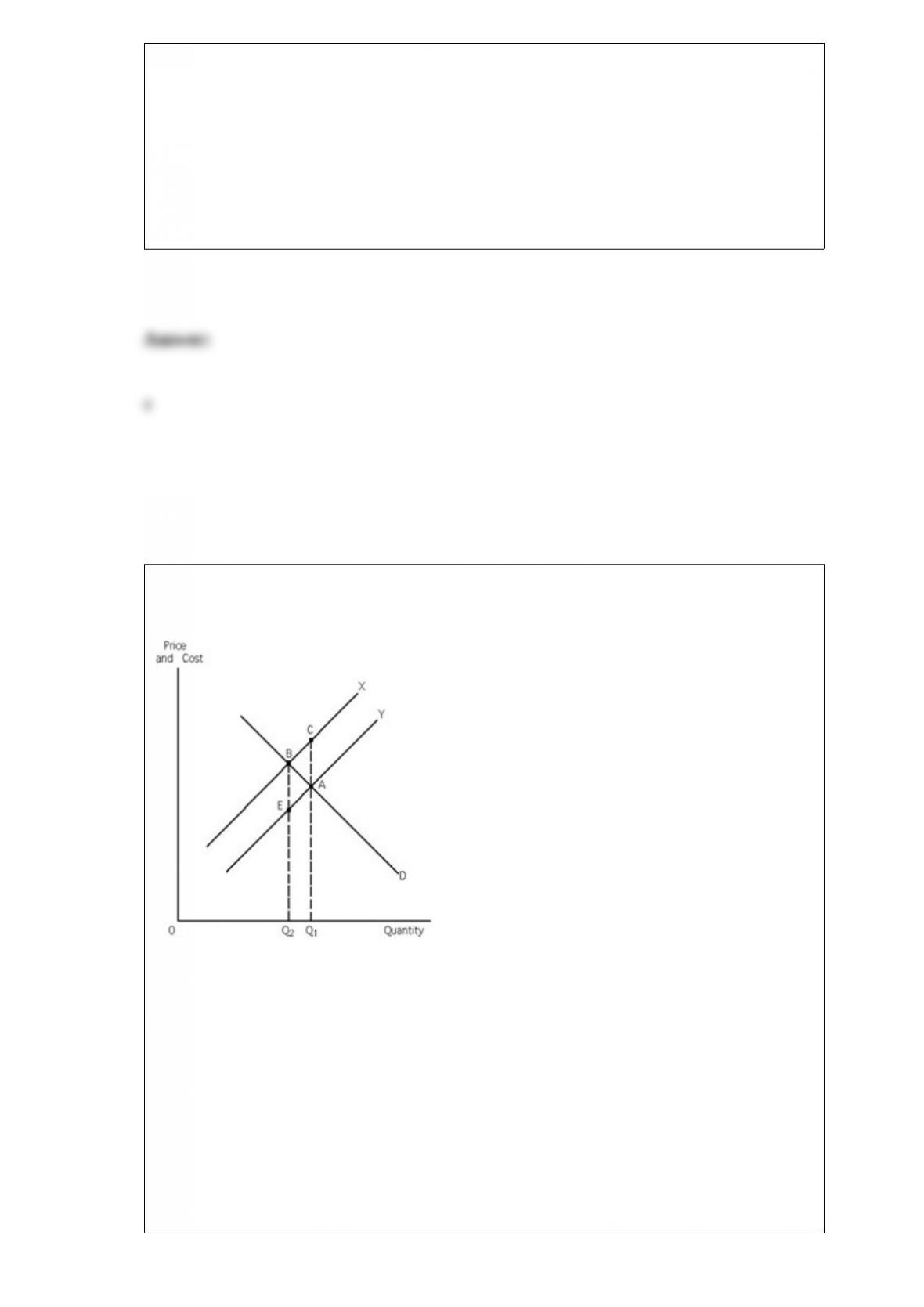
Exhibit 31-1
If the exhibit represents a negative externality situation, the benefit of expanding output
from Q2 to Q1 is the area of
a. ABC.
b. Q2BCQ1.
c. Q2BAQ1.
d. Q2EAQ1.
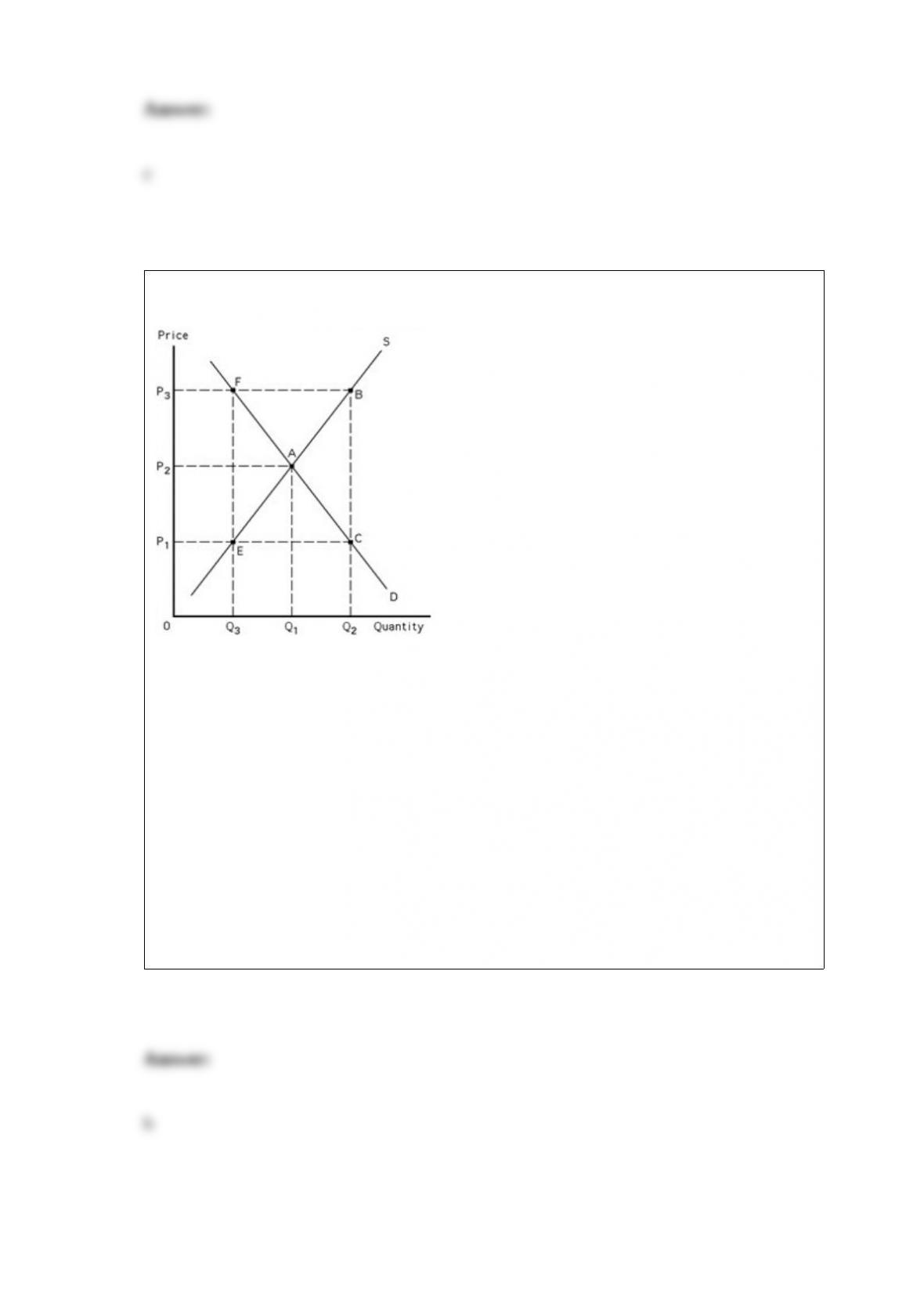
Exhibit 39-3
If P3 is a target price, the quantity supplied is
a. Q1.
b. Q2.
c. Q3.
d. Q2 – Q3.
e. Q1 – Q3.
Equilibrium price is $22 in a perfectly competitive market. For a perfectly competitive
firm, MR = MC at 200 units of output. At 200 units, ATC is $23, and AVC is $18. The
best policy for this firm is to __________ in the short run. Also, this firm earns
__________ of __________ if it produces and sells 200 units. Finally, the difference
between total variable cost and total fixed cost for this firm is __________.
a. continue to produce, profits, $1800, $3,600
b. shut down, losses, $200, $3,600
c. continue to produce, losses, $200, $2,600
d. shut down, profits, $200, $1,800
e. none of the above
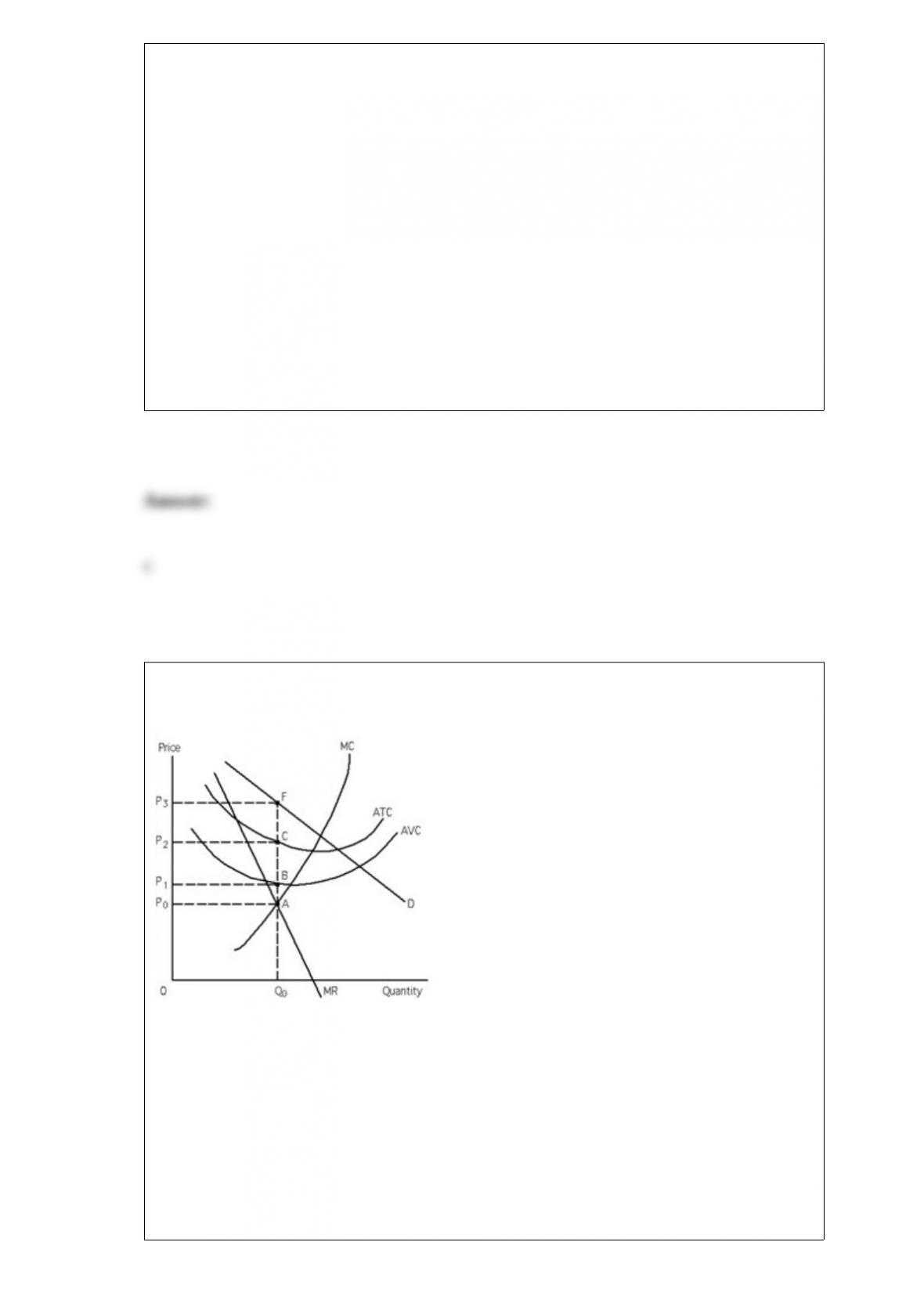
Exhibit 24-2
This monopolist is earning
a. an economic loss of area P0P3FA.
b. an economic loss of area P0P2CA.
c. an economic profit of area P2P3FC.

d. an economic profit of area P0P2CA.
For a product price taker, VMP equals MR.
a. True
b. False
In the case of a negative externality,
a. marginal external costs are greater than marginal private costs.
b. marginal external costs are less than marginal private costs.
c. marginal external benefits are greater than marginal private benefits.
d. marginal external benefits are equal to marginal private costs.
e. none of the above