1) roughly what portion of u.s. total health spending is paid for by private and public
insurance?
a.one-tenth
b.one-fourth
c.four-fifths
d.one-half
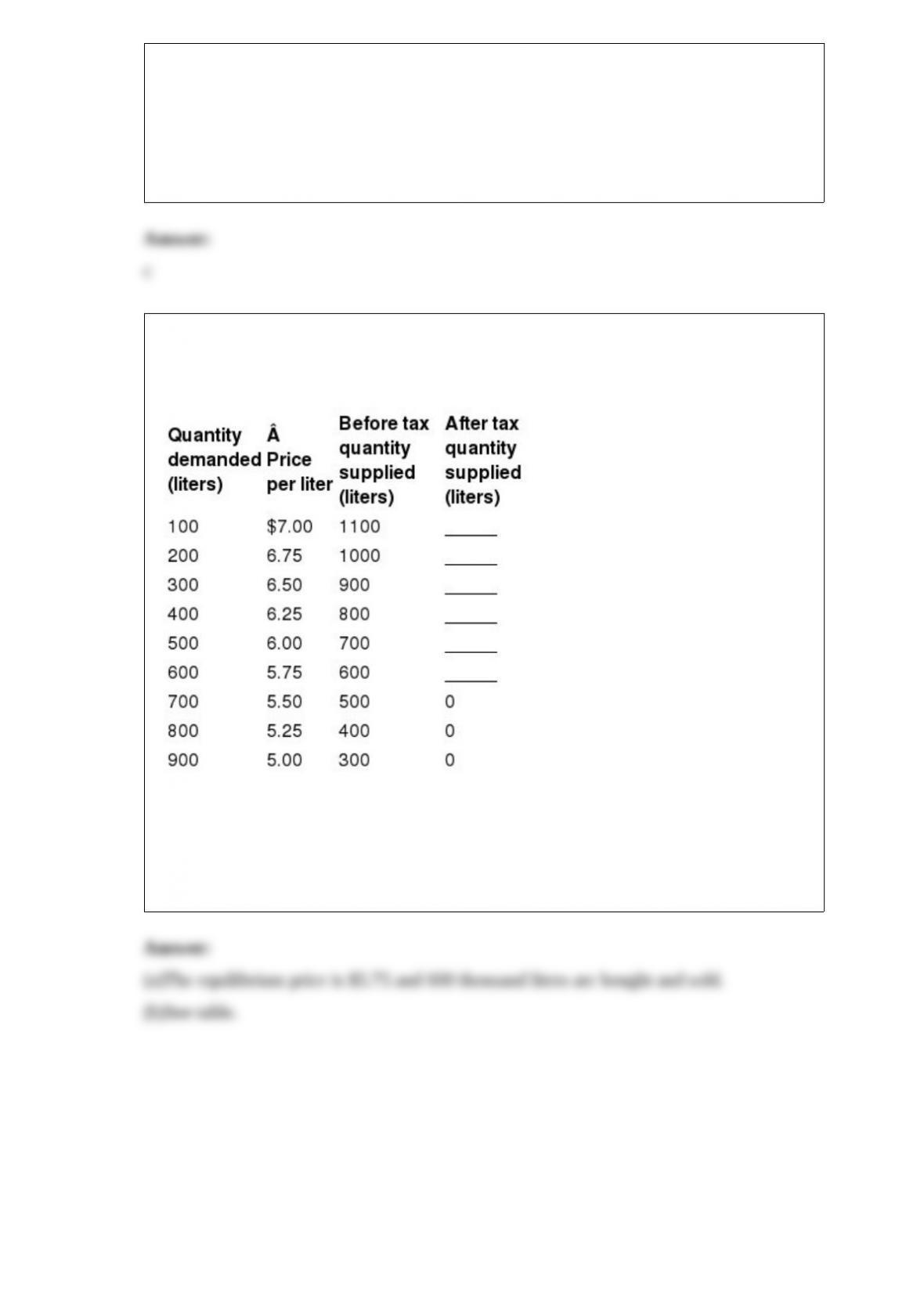
2) In the table below are the demand and supply schedules for rum in thousands of liters
in a state.
(a)What is the equilibrium price and quantity before a tax is imposed?
(b)If state government now imposes an excise tax of $1.00 per liter of rum, what is the
after-tax supply schedule?
(c)What is the equilibrium price of rum after the tax is imposed? How much of the
$1.00 is borne by the buyer and how much by the seller?
3)
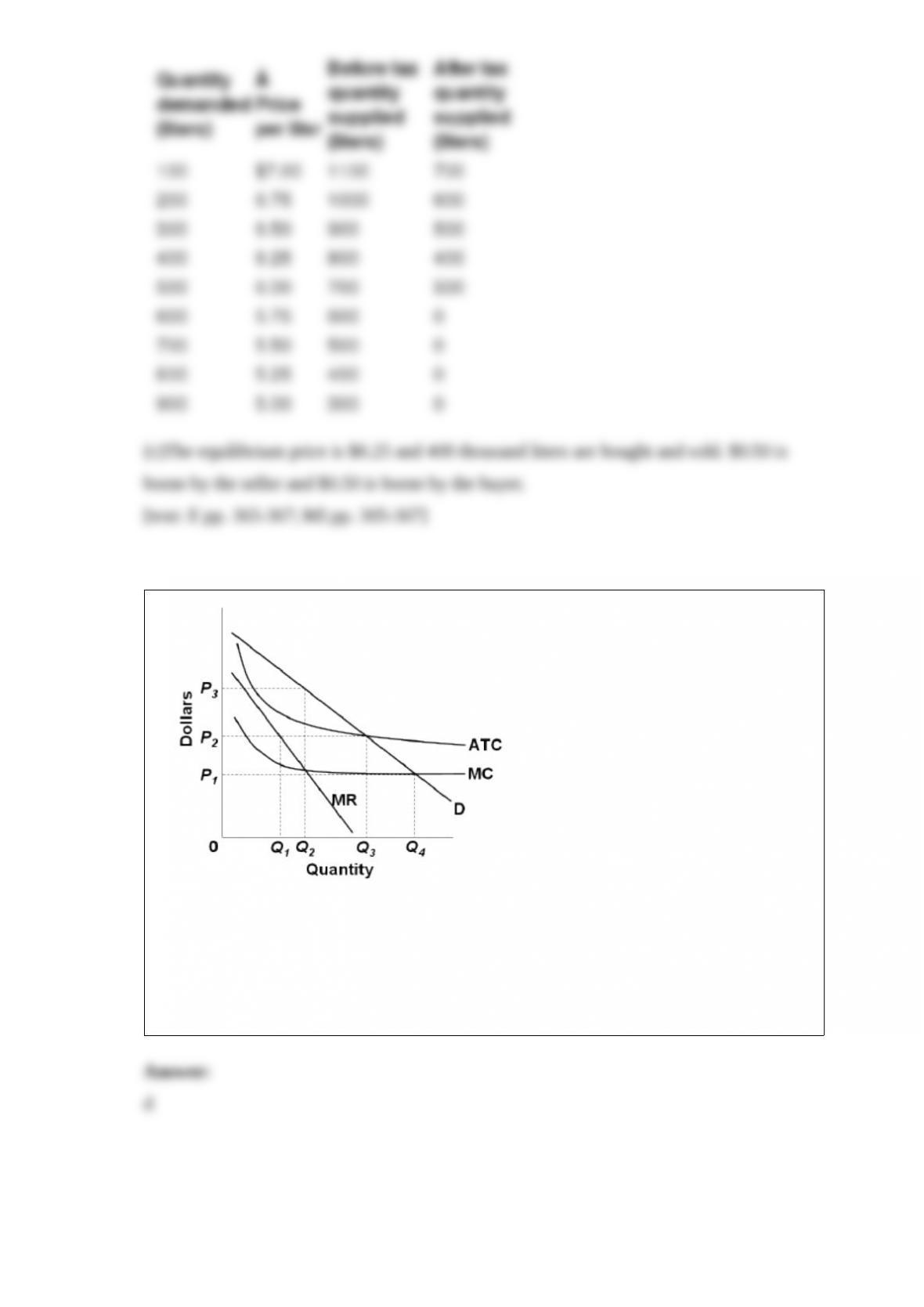
refer to the above diagram for a natural monopolist. if a regulatory commission set a
maximum price of p1, the monopolist would produce output:
a.q2 and realize a normal profit.
b.q4 and realize a normal profit.
c.q3 and realize an economic profit.
d.q4 and realize a loss.
4)
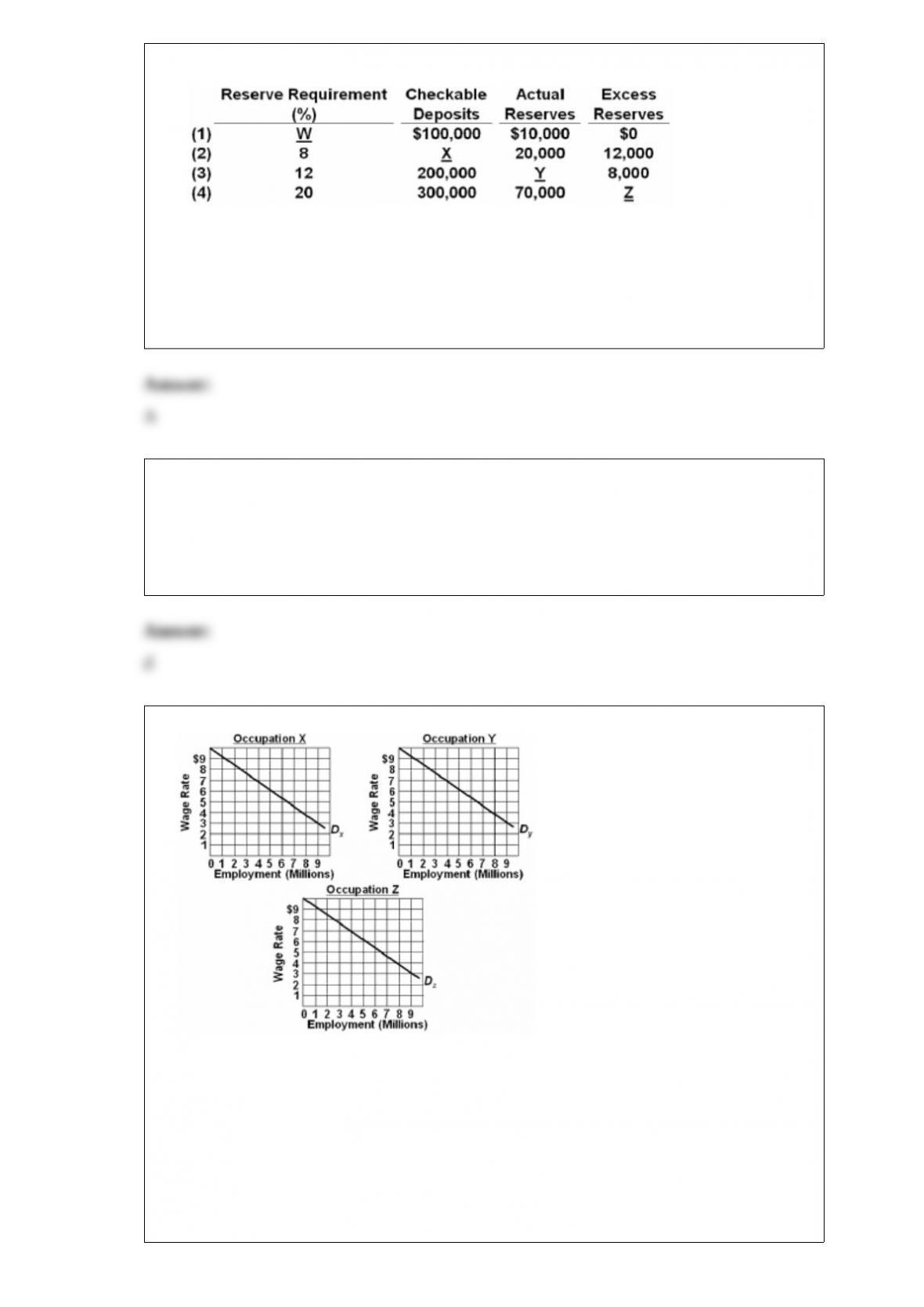
Refer to row 4 in the above table. The number appropriate for space Z is:
A.$10,000.
B.$70,000.
C.$48,000.
D.zero.
5) externalities weaken the efficiency of the market system because they:
a.are a major source of inflation.
b.mean that certain essential goods and services do not get produced at all.
c.are a major source of employment.
d.cause certain goods to be overproduced or underproduced.
6)
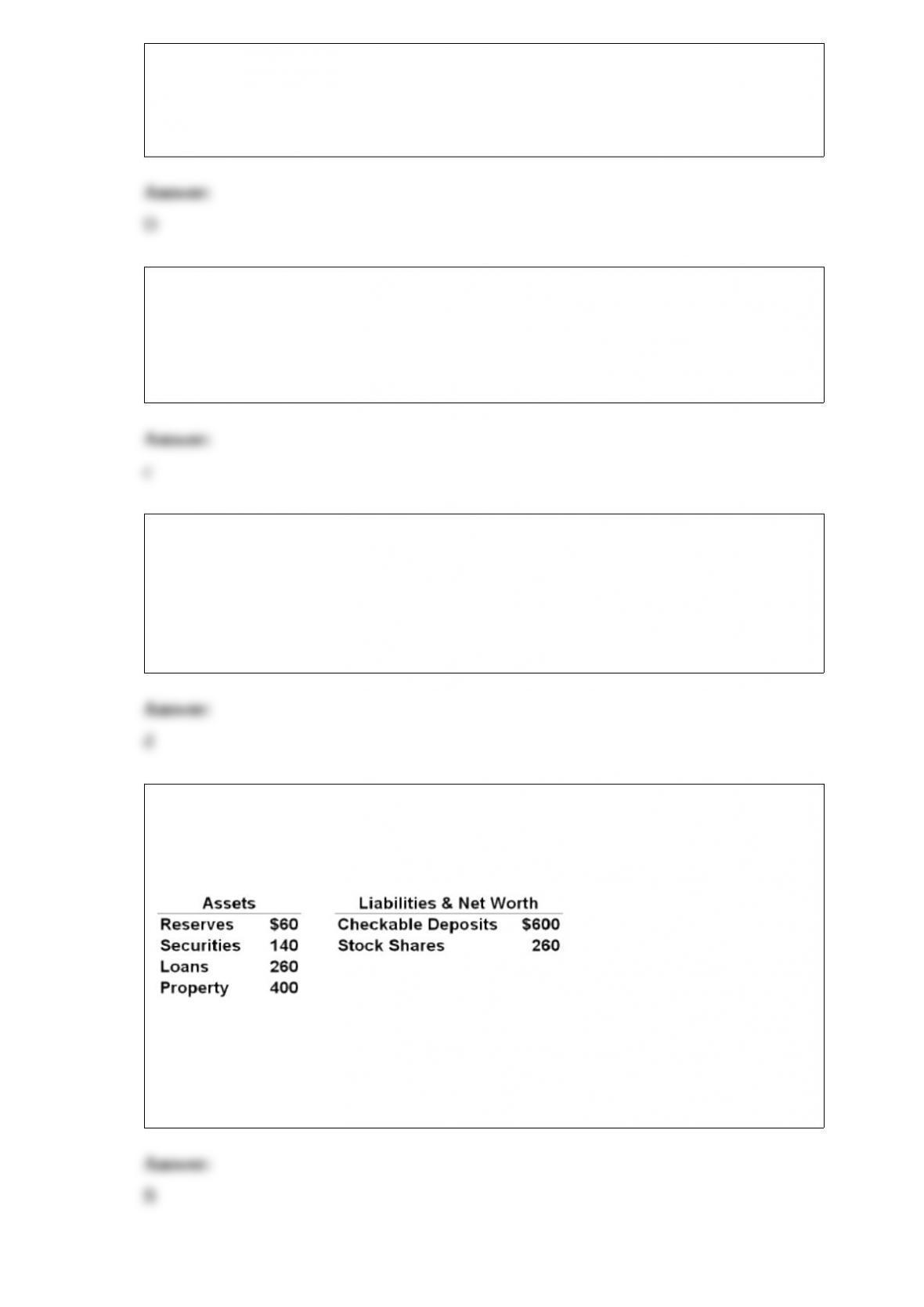
Assumptions: (1) the labor force is comprised of 9 million men and 9 million women
workers; (2) the economy has 3 occupations, X, Y, and Z, each having identical demand
curves for labor; (3) men and women workers are homogeneous with respect to their
labor-market capabilities; (4) women are discriminated against by being excluded from
occupations X and Y and are confined to Z; and (5) aside from discrimination, the
economy is competitive.
Refer to the above diagram and list of assumptions. Under these circumstances 9
million women will be employed in occupation Z:
A.5 million men in X, and 4 million men in Y.
B.3 million men in XD, and 6 million men in Y.
C.6 million men in X, and 3 million men in Y.
D.and 4.5 million men each in occupations X and Y.
7) the sherman act of 1890 is an example of:
a.transfer payments.
b.government attempting to redistribute income.
c.government attempting to maintain competition.
d.government providing public goods.
8) the three most important sources of federal tax revenue in order of descending
importance are:
a.sales, payroll, and personal income taxes.
b.personal income, corporate income, and sales taxes.
c.personal income, corporate income, and payroll taxes.
d.personal income, payroll, and corporate income taxes.
9) The following consolidated balance sheet of the commercial banking system.
Assume that the reserve requirement is 10 percent. All figures are in billions and each
question should be answered independently of changes specified in any preceding ones.
Refer to the above data. The monetary multiplier for the commercial banking system is:
A.5.
B.10.
C.12.5.
D.20.
10) The growing importance of export demand for American agriculture has:
A.reduced the international value of the dollar.
B.had no significant effect on the stability of the demand for farm products.
C.destabilized the total demand for farm products.
D.stabilized the total demand for farm products.
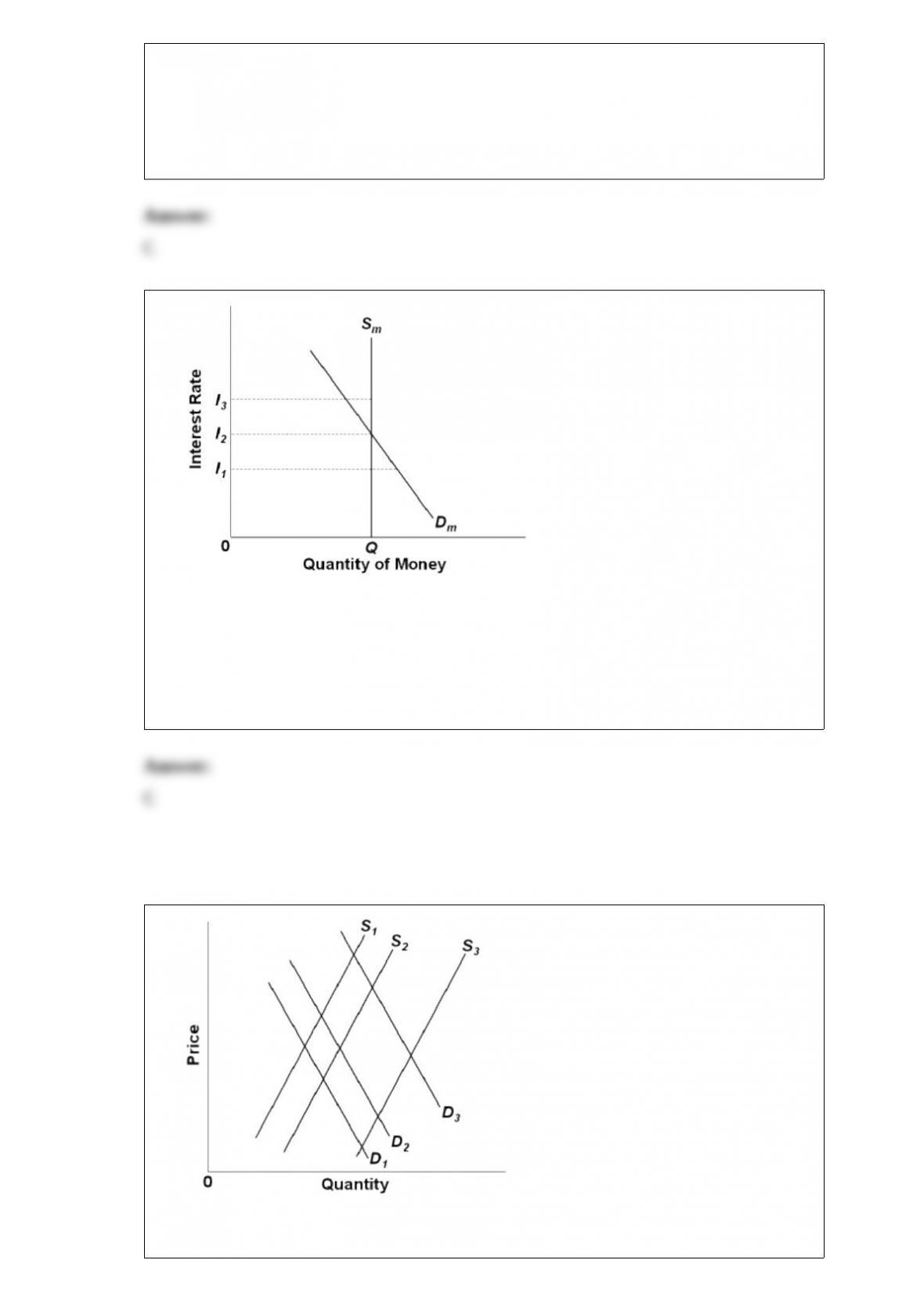
11)
Refer to the above diagram of the market for money. Other things equal, the money
demand curve in the diagram would shift leftward if:
A.the asset demand for money increased.
B.the transactions demand for money increased.
C.nominal GDP decreased.
D.the overall price level rose.
12)
refer to the above figure that shows the market for u.s. health care. other things equal,
which of the following would shift the demand curve for medical care from d2 to d1?

a.an aging population.
b.loss of medical insurance benefits by part-time workers and early retirees.
c.expansion of the medicaid program.
d.higher medical malpractice premiums.
13) The crowding of women and minorities into a restricted number of occupations:
A.has no impact on the size of the domestic output or its distribution in the long run.
B.will increase the size of the domestic output and make its distribution more equal.
C.will decrease the size of the domestic output and make its distribution less equal.
D.will increase the size of the domestic output, but make its distribution less equal.
14) to the economist, total cost includes:
a.explicit and implicit costs, including a normal profit.
b.neither implicit nor explicit costs.
c.implicit, but not explicit, costs.
d.explicit, but not implicit, costs.
15) the economic function of profits and losses is to:
a.bring about a more equal distribution of income.
b.signal that resources should be reallocated.
c.eliminate small firms and reduce competition.
d.tell government which industries need to be subsidized.
16) in which one of the following market models is x-inefficiency least likely to be
present?
a.pure competition
b.oligopoly
c.monopolistic competition
d.pure monopoly
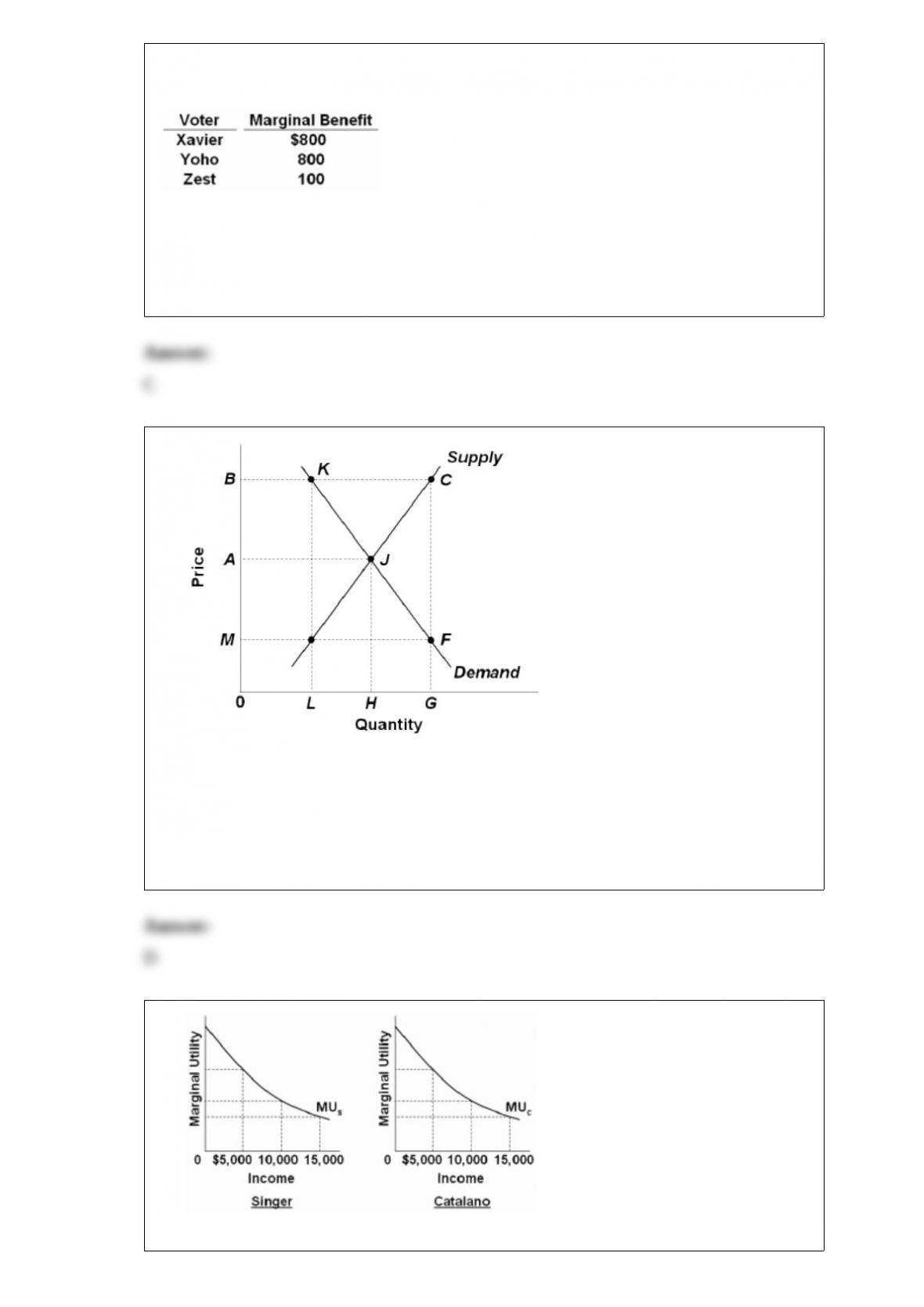
17) The following table shows the marginal benefit a particular public project will
provide to each of the three members of a community. No vote trading is allowed.
If the tax cost of this proposed project is $600 per person, a majority vote will:
A.defeat this project and resources will be underallocated to it.
B.pass this project and resources will be allocated efficiently.
C.pass this project and resources will be overallocated to it.
D.pass this project and resources will be underallocated to it.
18)
Refer to the above diagram for the corn market. A price support of B will cause a
transfer from taxpayers to farmers of:
A.0BKL.
B.MAFG.
C.0MFG.
D.LKCG.
19)
Refer to the above diagrams that show identical marginal utility from income curves for

Singer and Catalano. If a given income of $20,000 is initially distributed so that Singer
receives $15,000 and Catalano $5,000:
A.no judgment can be made as to the effect of a redistribution of income on total utility.
B.this initial distribution of income is maximizing the combined total utility of the two
consumers.
C.the combined total utility of the two consumers can be increased by redistributing
income from Catalano to Singer.
D.the combined total utility of the two consumers can be increased by redistributing
income from Singer to Catalano.
20) Suppose interest rates fall sharply in the United States but are unchanged in Great
Britain. Other things equal, under a system of freely floating exchange rates we can
expect the demand for pounds in the United States to:
A.decrease, the supply of pounds to increase, and the dollar to appreciate relative to the
pound.
B.increase, the supply of pounds to increase, and the dollar may either appreciate or
depreciate relative to the pound.
C.increase, the supply of pounds to decrease, and the dollar to depreciate relative to the
pound.
D.decrease, the supply of pounds to increase, and the dollar to depreciate relative to the
pound.