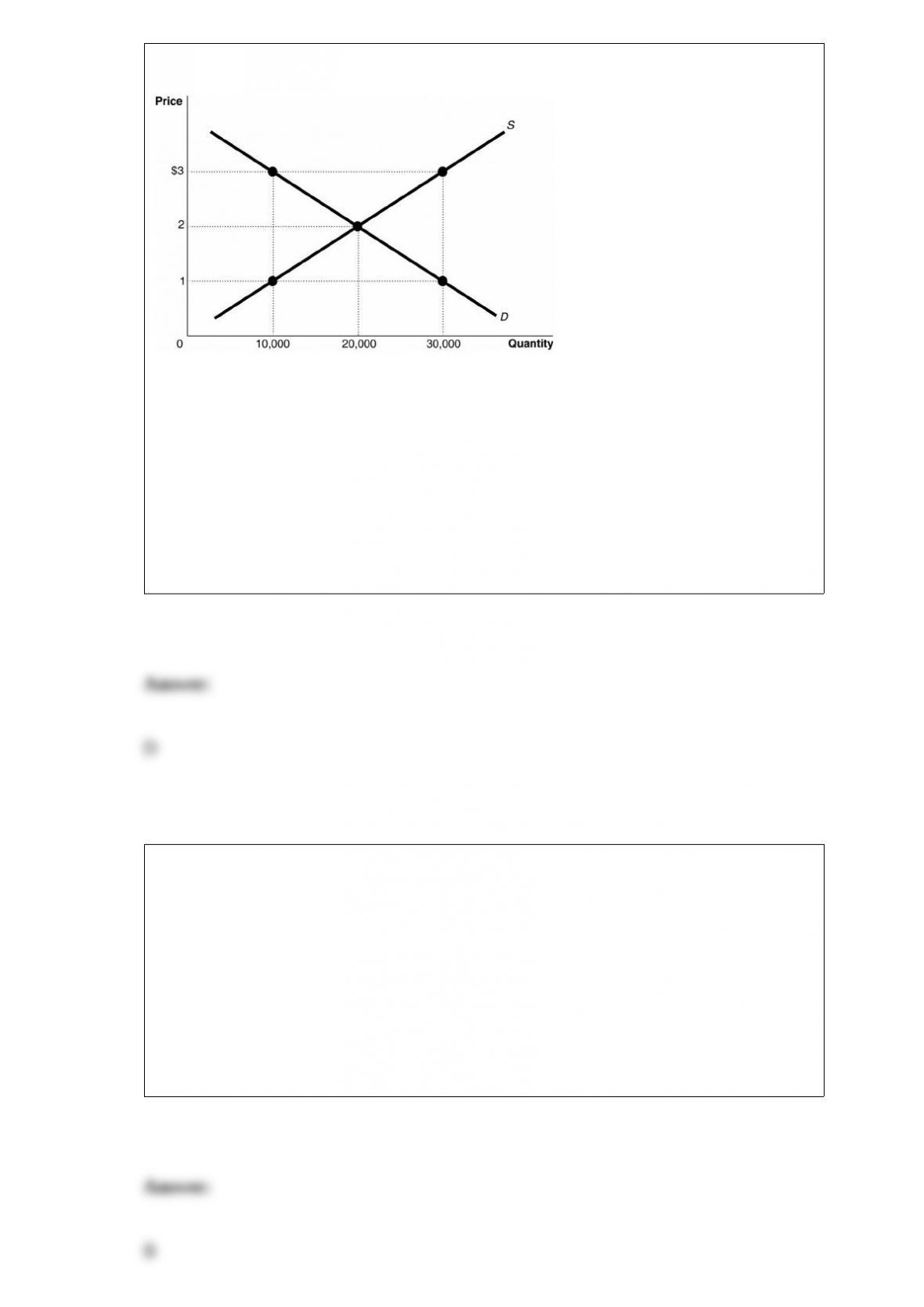
Figure 4-4
Refer to Figure 4-4. The figure above represents the market for iced tea. Assume that
this is a competitive market. If 20,000 units of iced tea are sold
A) the deadweight loss is equal to economic surplus.
B) producer surplus equals consumer surplus.
C) the marginal benefit of each of the 20,000 units of iced tea equals $3.
D) marginal benefit is equal to marginal cost.
If a country sets a pegged exchange rate that is below the equilibrium exchange rate,
how can the country maintain the peg?
A) by purchasing surplus domestic currency at the pegged rate
B) by selling surplus domestic currency at the pegged rate
C) by purchasing surplus domestic currency at the equilibrium exchange rate
D) by decreasing the pegged exchange rate
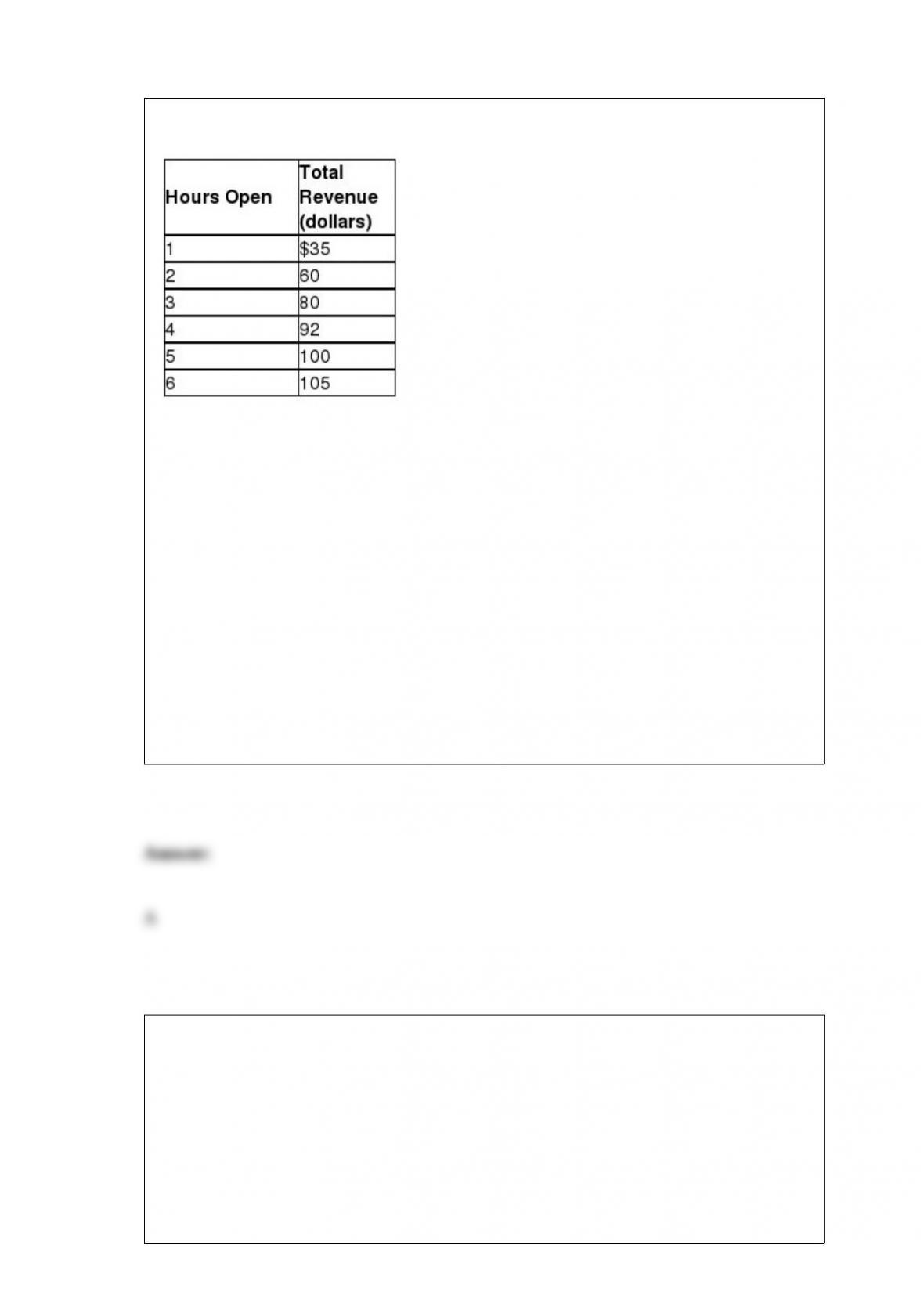
Table 1-1
Eva runs a small bakery in the village of Roggerli. She is debating whether she should
extend her hours of operation. Eva figures that her sales revenue will depend on the
number of hours the bakery is open as shown in the table above. She would have to hire
a worker for those hours at a wage rate of $12 per hour.
Refer to Table 1-1. What is Eva’s marginal benefit if she decides to stay open for two
hours instead of one hour?
A) $25
B) $36
C) $60
D) $95
A bank will consider a car loan to a customer ________ and a customer’s checking
account to be ________.
A) a liability; an asset
B) an asset; a liability
C) a liability; a liability
D) an asset; an asset
E) an asset; net worth
An example of assets that are included in ________ would be stocks, bonds, and
savings accounts.
A) household wealth
B) household income
C) planned investment
D) consumer purchases
If the federal government’s expenditures are less than its tax revenues, then
A) a budget surplus results.
B) a budget deficit results.
C) the budget is balanced.
D) No conclusion can be drawn here regarding the budget surplus or deficit without
information regarding government purchases versus other outlays.
The currency adopted by most countries in Western Europe is referred to as the
A) euro.
B) Eurodollar.
C) yen.
D) pound.
The Smoot-Hawley Tariff
A) lowered U.S. tariffs by 50 percent following World War II.
B) was passed by the U.S. Congress following the Civil War as a means of increasing
government revenue.
C) was passed by the U.S. Congress upon a recommendation made by the General
Agreement on Tariffs and Trade (GATT) in 1948.
D) raised average tariff rates by over 50 percent in the United States in 1930.
Figure 4-5
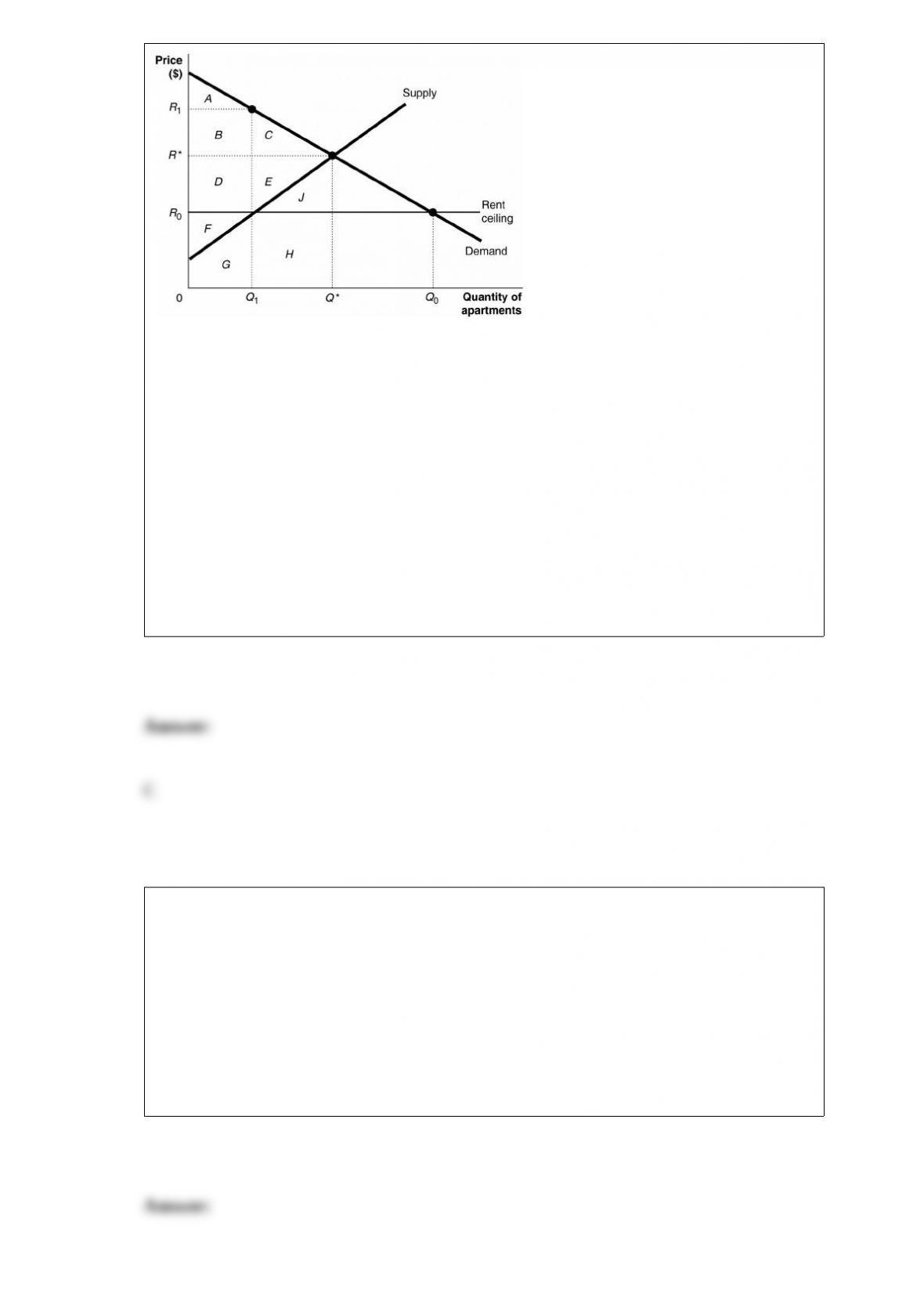
Figure 4-5 shows the market for apartments in Bay City. Recently, the government
imposed a rent ceiling at R0.
Refer to Figure 4-5. What is the area that represents the portion of producer surplus
transferred to consumers as a result of the rent ceiling?
A) D + E
B) D + F
C) D
D) F
Decreases in the price level will
A) lower consumption because goods and services are less affordable.
B) raise consumption because goods and services are more affordable.
C) raise consumption because real wealth increases.
D) lower consumption because real wealth decreases.
An asset is
A) anything of value owned by a person or a firm.
B) a payment by a corporation to its shareholders.
C) a nonmonetary opportunity cost.
D) anything owed by a person or a firm.
Hurricane Katrina damaged a large portion of refining and pipeline capacity when it
swept through the Gulf coast states in August 2005. As a result of this, many gasoline
distributors were not able to maintain normal deliveries. At the pre-hurricane
equilibrium price (i.e., at the initial equilibrium price), we would expect to see
A) a surplus of gasoline.
B) the quantity demanded equal to the quantity supplied.
C) a shortage of gasoline.
D) an increase in the demand for gasoline.
The easiest way for a country to obtain access to technology is through
A) subsidizing education and training.
B) promoting foreign direct investment.
C) promoting policies to enhance saving.
D) enacting policies to promote property rights.
Scenario 10-1
Consider the following data for a closed economy:
Y = $12 trillion
C = $8 trillion
I= $2 trillion
G = $2 trillion
TR = $2 trillion
T = $3 trillion
Refer to Scenario 10-1. Based on the information above, what is the level of public
saving?
A) $0
B) $1 trillion
C) $2 trillion
D) negative $1 trillion (a deficit of $1 trillion)
Fiscal policy is defined as changes in federal ________ and ________ to achieve
macroeconomic objectives such as price stability, high rates of economic growth, and

high employment.
A) taxes; interest rates
B) taxes; the money supply
C) interest rates; money supply
D) taxes; expenditures
Traditionally, Wall Street investment banks had been organized as partnerships, but by
2000 they had converted to being publicly traded companies. As partnerships, the
principal-agent problem is ________ because there is ________ separation of
ownership from control.
A) reduced; much
B) reduced; little
C) increased; much
D) increased; little
Which of the following is not “crowded out” by higher interest rates as a result of
expansionary fiscal policy?
A) consumption
B) private investment
C) net exports
D) government spending
Which of the following is true about the Federal Reserve and its ability to prevent
recessions? The Federal Reserve
A) does not try to eliminate recessions, but instead focuses on preventing inflation.
B) can fine tune the economy and realistically hope to keep the economy from
experiencing recessions.
C) cannot realistically fine tune the economy, but seeks to keep recessions shorter and
milder than they would otherwise be.
D) cannot realistically fine tune the economy and has little to no effect on the
magnitude and length of recessions.
A decrease in the price level results in a(n) ________ in household consumption
spending and a(n) ________ in investment spending.
A) increase; decrease
B) increase; increase
C) decrease; decrease
D) decrease; increase