1) Refer to the above diagrams. A decline in aggregate expenditures from AE2 to AE1
resulting from the real-balances, interest-rate effect, and foreign purchases effects
would be depicted as:
A.a movement from A to C along aggregate demand curve AD1.
B.a movement from C to A along aggregate demand curve AD1.
C.a shift of aggregate demand from AD1 to AD2.
D.a shift of aggregate demand from AD2 to AD1.
2)
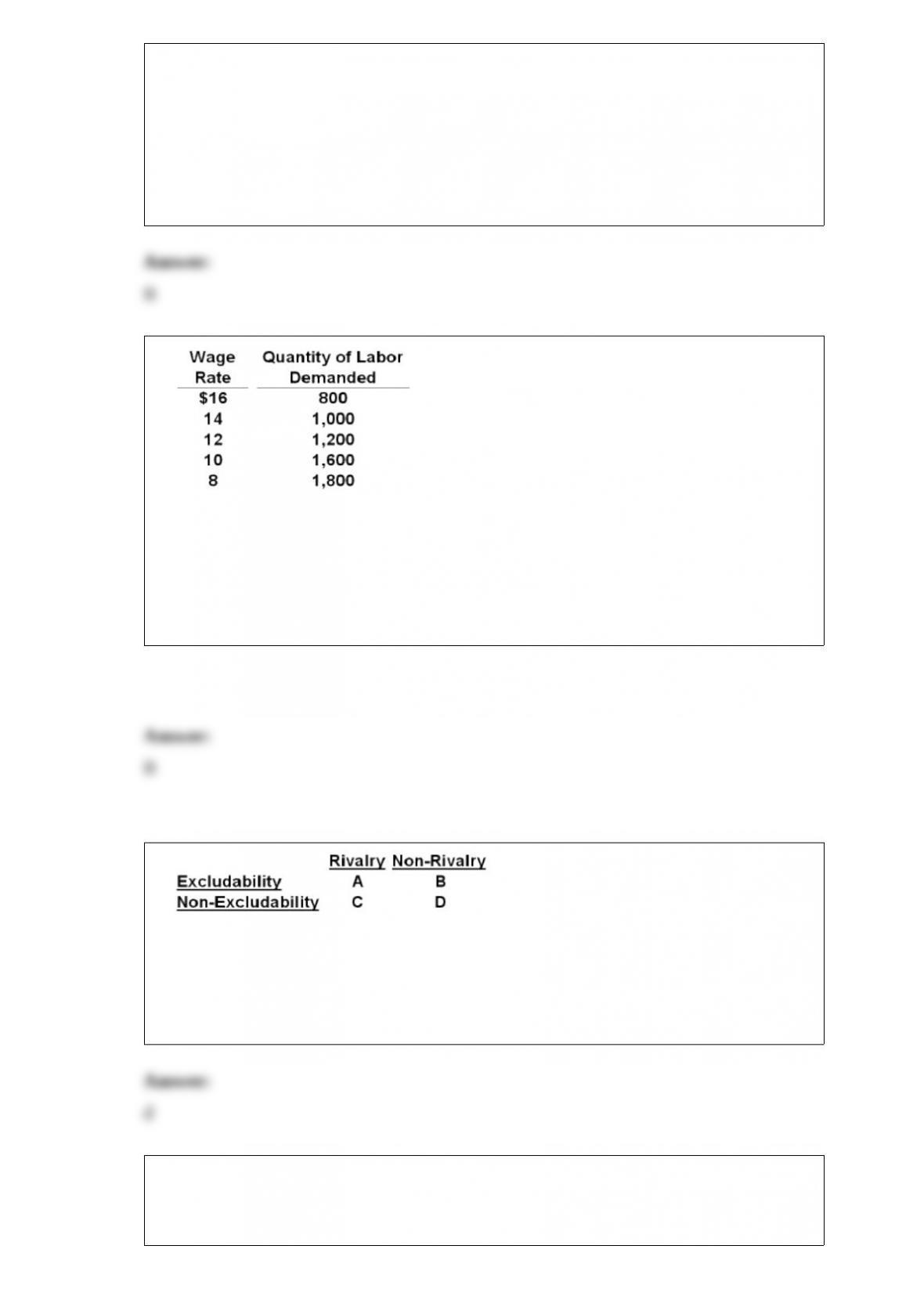
Refer to the above data. Suppose that the union that provides labor to firms in this
market successfully negotiates an increase in the wage rate from $8 to $10. As a result
of the wage increase, firms will hire:
A.fewer workers and the total paid out for wages will decline.
B.fewer workers, but the total paid out for wages will increase.
C.fewer workers, but the total paid out for wages will remain unchanged.
D.more capital, if capital and labor are used in fixed proportions in production.
3)
refer to the above matrix. a public good is characterized by combination:
a.a.
b.b.
c.c.
d.d.
4) Which of the following pairs help explain why self-correction from a decline in
aggregate demand in the economy may be slow rather than rapid?
A.theory of compensation wage differentials; theory of derived demand for labor.

B.efficiency wage theory; insider-outsider theory.
C.insider-outsider theory; principle-agent problem.
D.externalities; efficiency wage theory.
5) the purchase by an american firm of the right to produce a prescription drug patented
in germany best illustrates a:
a.trade flow.
b.capital flow.
c.goods and services flow.
d.technology flow.
6) Assume that you pay $5,000 of tax on a taxable income of $20,000. If your taxable
income were $40,000, your tax payment would be $12,000. This suggests the tax is:
A.progressive.
B.proportional.
C.regressive.
D.discriminatory.
7) Reserves must be deposited in the Federal Reserve Banks by:
A.only commercial banks which are members of the Federal Reserve System.
B.all depository institutions, that is, all commercial banks and thrift institutions.
C.state chartered commercial banks only.
D.federally chartered commercial banks only.
8) Interest is the:
A.price paid for the use of money.
B.opportunity cost of time.
C.expectation of a future return on investment.
D.reward for consuming rather than saving.
9) in 1996 mcdonald’s introduced its arch deluxe hamburger, which failed to catch on
with the public and was subsequently dropped from the menu. this failure illustrates the
idea of:
a.consumer sovereignty.
b.technological change.
c.downsloping demand.
d.specialization.
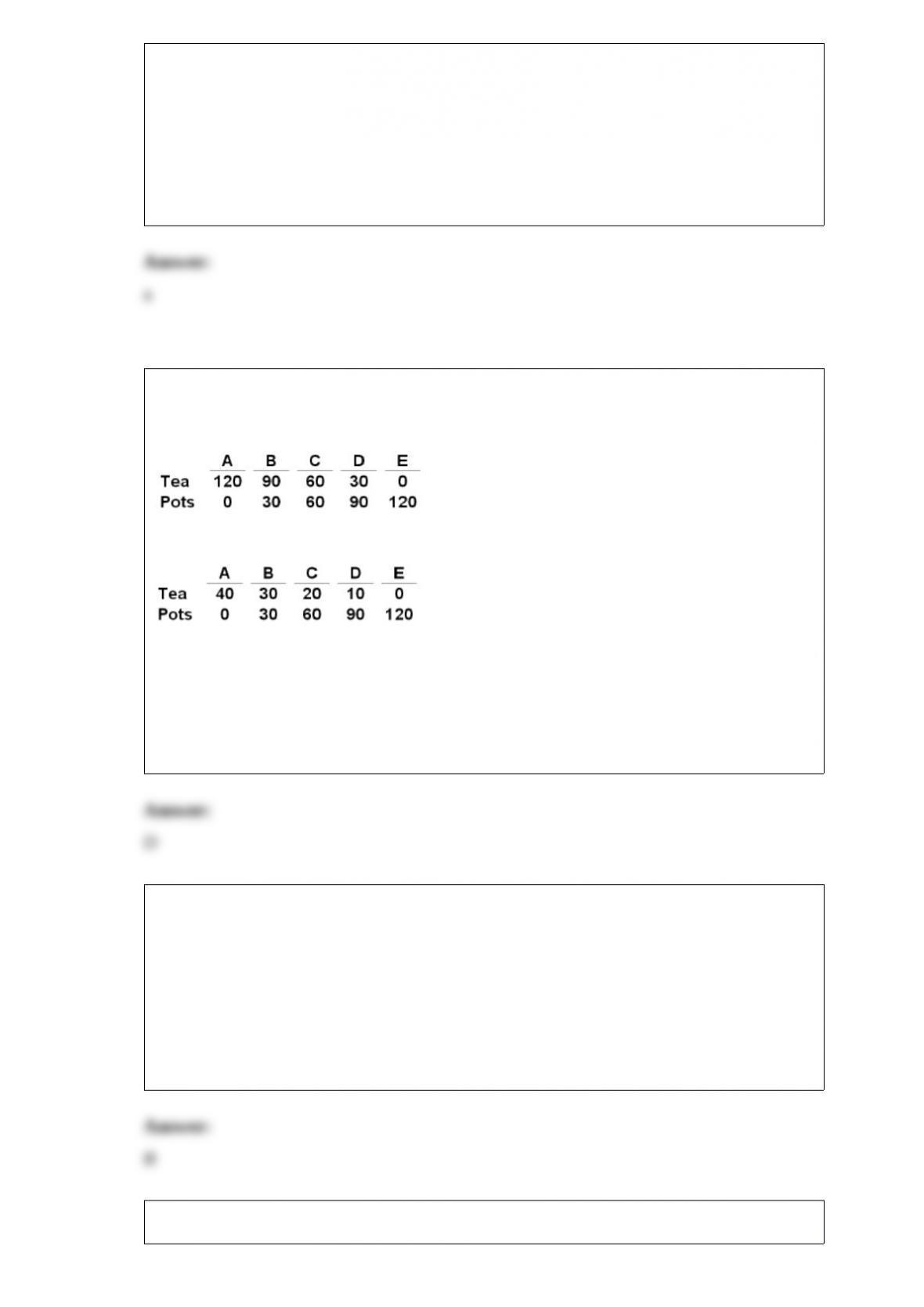
10) The following production possibilities data for Gamma and Sigma. All data are in
tons.
Gamma production possibilities:
Sigma production possibilities:
Refer to the above data. What are the limits of the terms of trade between Gamma and
Sigma?
A.1 tea = 2 pots to 1 tea = 6 pots
B.1 tea = 3 pots to 1 tea = 6 pots
C.1 tea = 2 pots to 1 tea = 3.5 pots
D.1 tea = 1 pot to 1 tea = 3 pots
11) In the U.S. Steel case, the court ruled that:
A.even though a firm’s behavior might be legal, the mere possession of monopoly
power was in violation of the Sherman Act.
B.only monopolies that unreasonably restrain trade are subject to antitrust action under
the Sherman Act.
C.when made by dominant firms, tying contracts are illegal, per se.
D.the company violated the Clayton Act and therefore should be dissolved into several
competing firms.
12) suppose a nation’s 2008 nominal gdp was $972 billion and the general price index
was 90. to make the 2008 gdp comparable with the base year gdp, the 2008 gdp must
be:
a.adjusted downward to $678 billion.
b.deflated to $896 billion.
c.inflated to $1080 billion.
d.deflated to $1080 billion.
13) Suppose that in some year nominal interest rates are less than the rate of inflation.
This means that:
A.money demand exceeds money supply.
B.real interest rates are negative.
C.real interest rates are positive and unusually high.
D.real interest rates exceed nominal interest rates.
14)
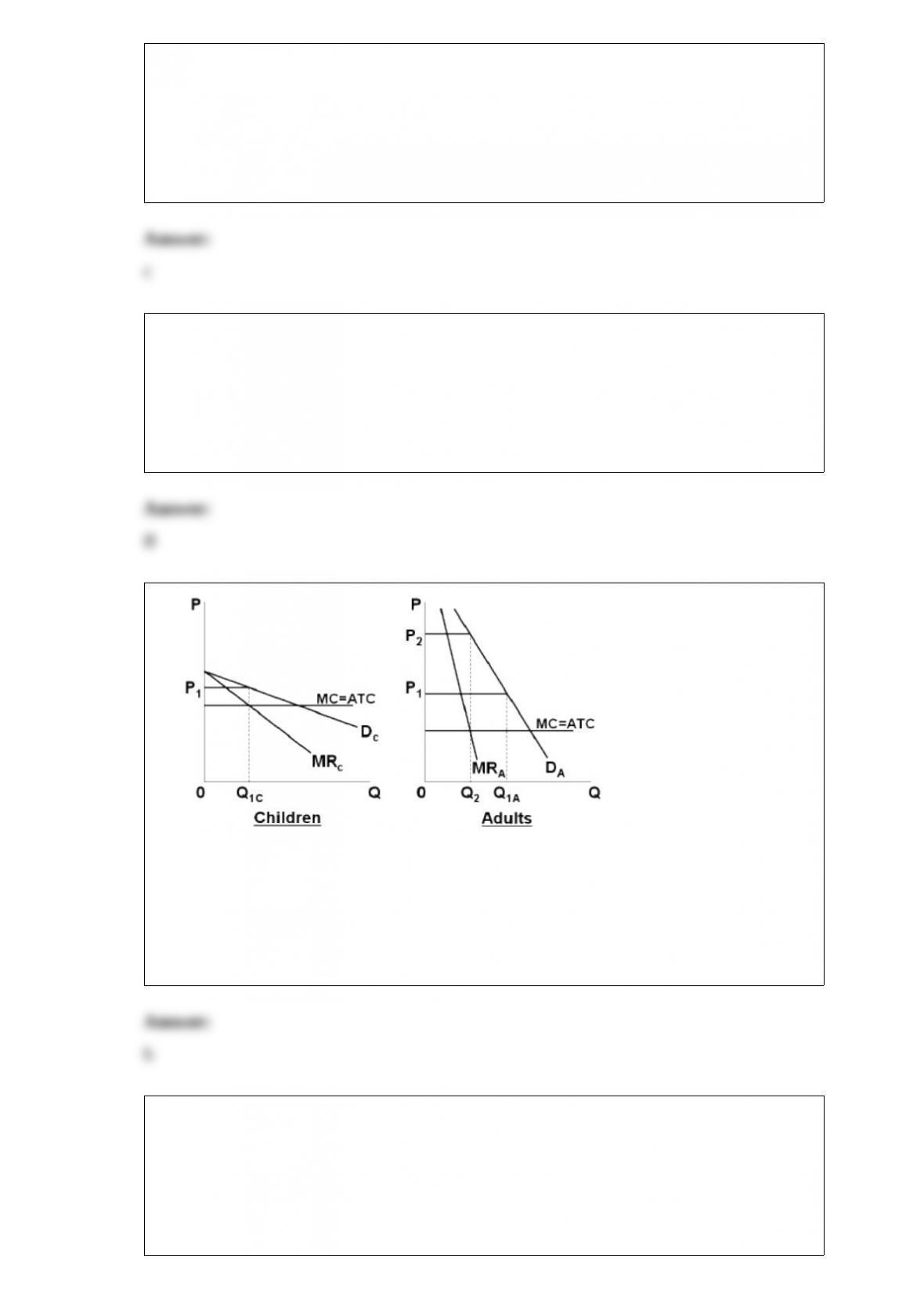
assume the above figure applies to a pure monopolist. if this firm is able to price
discriminate between children and adults, its profit-maximizing level of output will be:
a.q1a + q1c.
b.q1c + q2.
c.q1a + q2.
d.q1a + q1c + q2.
15) When economists say that money serves as a medium of exchange, they mean that
it is:
A.a way to keep wealth in a readily spendable form for future use.
B.a means of payment.
C.a monetary unit for measuring and comparing the relative values of goods.
D.declared as legal tender by the government.
16) positive externalities refer to:
a.benefits that accrue to parties other than the producer and buyer of a good.
b.the benefits that resource suppliers obtain from the production and sale of a good.
c.the benefit that a consumer receives from buying a good.
d.the combined benefits that buyer and seller receive from a voluntary market
transaction.
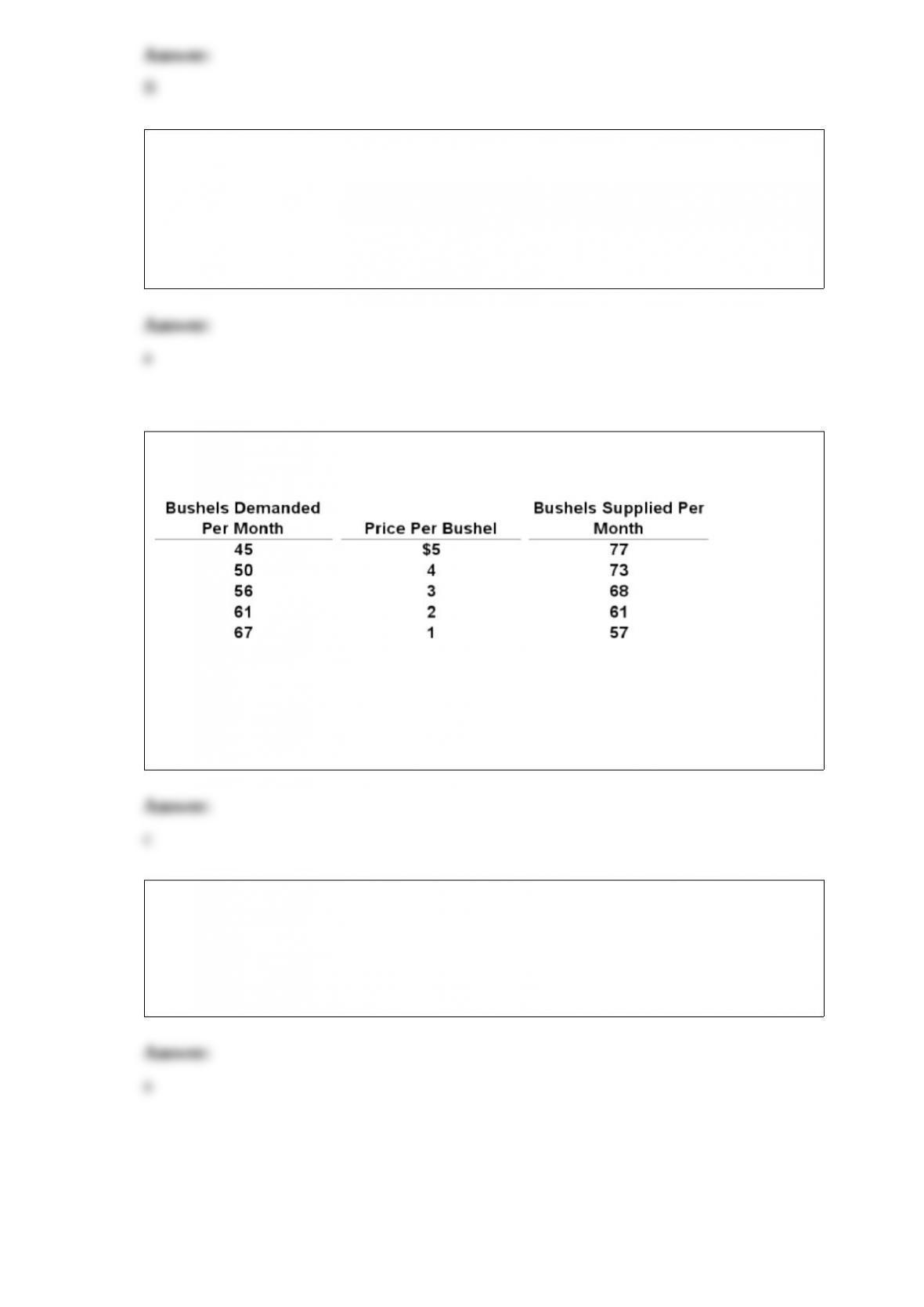
17) the given supply and demand data for wheat:
refer to the above data. if the price in this market was $4:
a.the market would clear; quantity demanded would equal quantity supplied.
b.buyers would want to purchase more wheat than is currently being supplied.
c.farmers would not be able to sell all their wheat.
d.there would be a shortage of wheat.
18) corporate bonds are:
a.promises by a corporation to repay a loan.
b.also known as stocks.
c.illegal in the united states.
d.shares of ownership of a corporation.