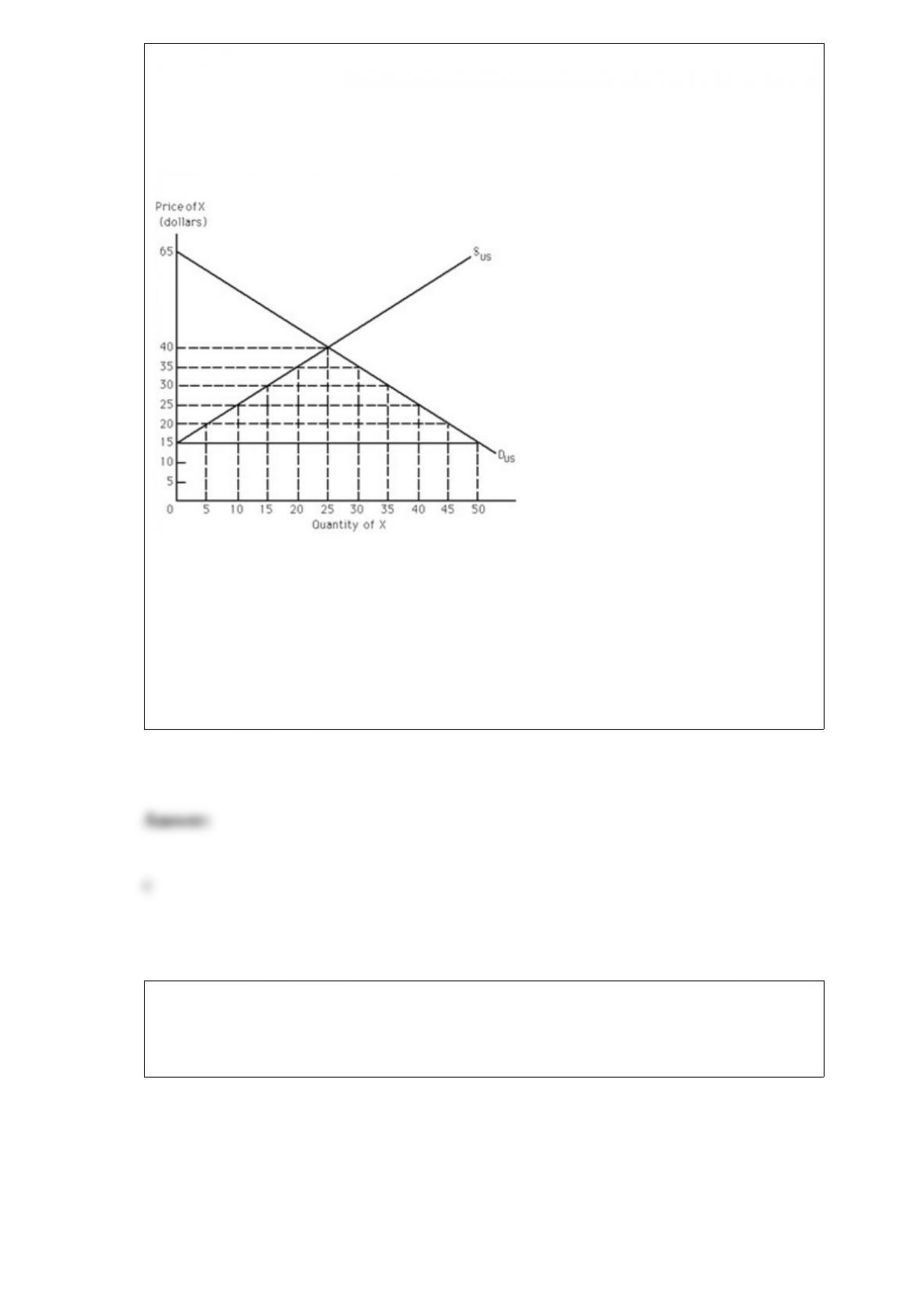
Refer to Exhibit 34-7.Assume that the current price of good X is $25 (which includes a
$10 tariff on imports of good X).Americans purchase ______ units of good X from U.S.
producers and import _______ units of good X from abroad.
Exhibit 34-7
a. 0; 50
b. 20; 25
c. 10; 30
d. 10; 40
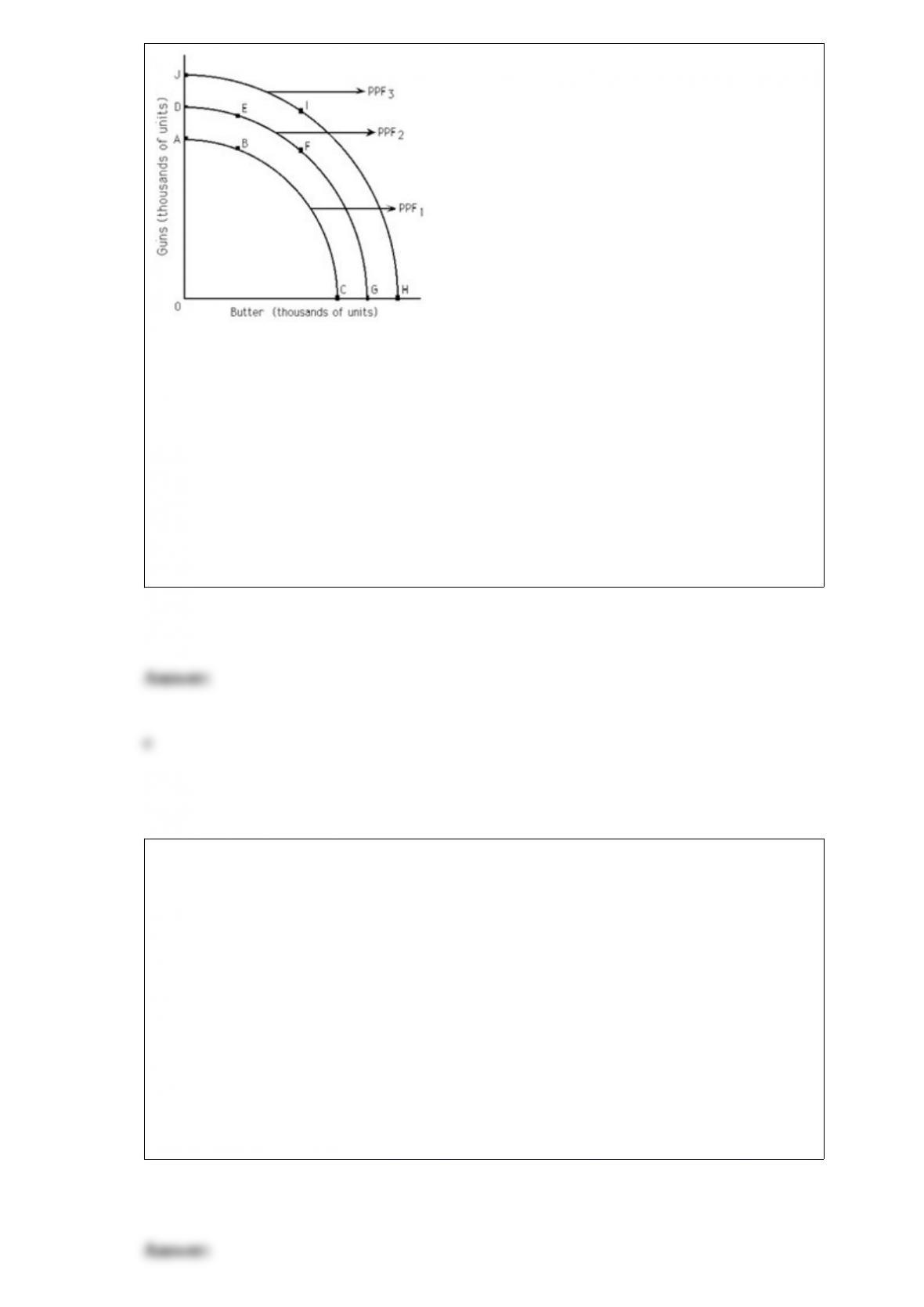
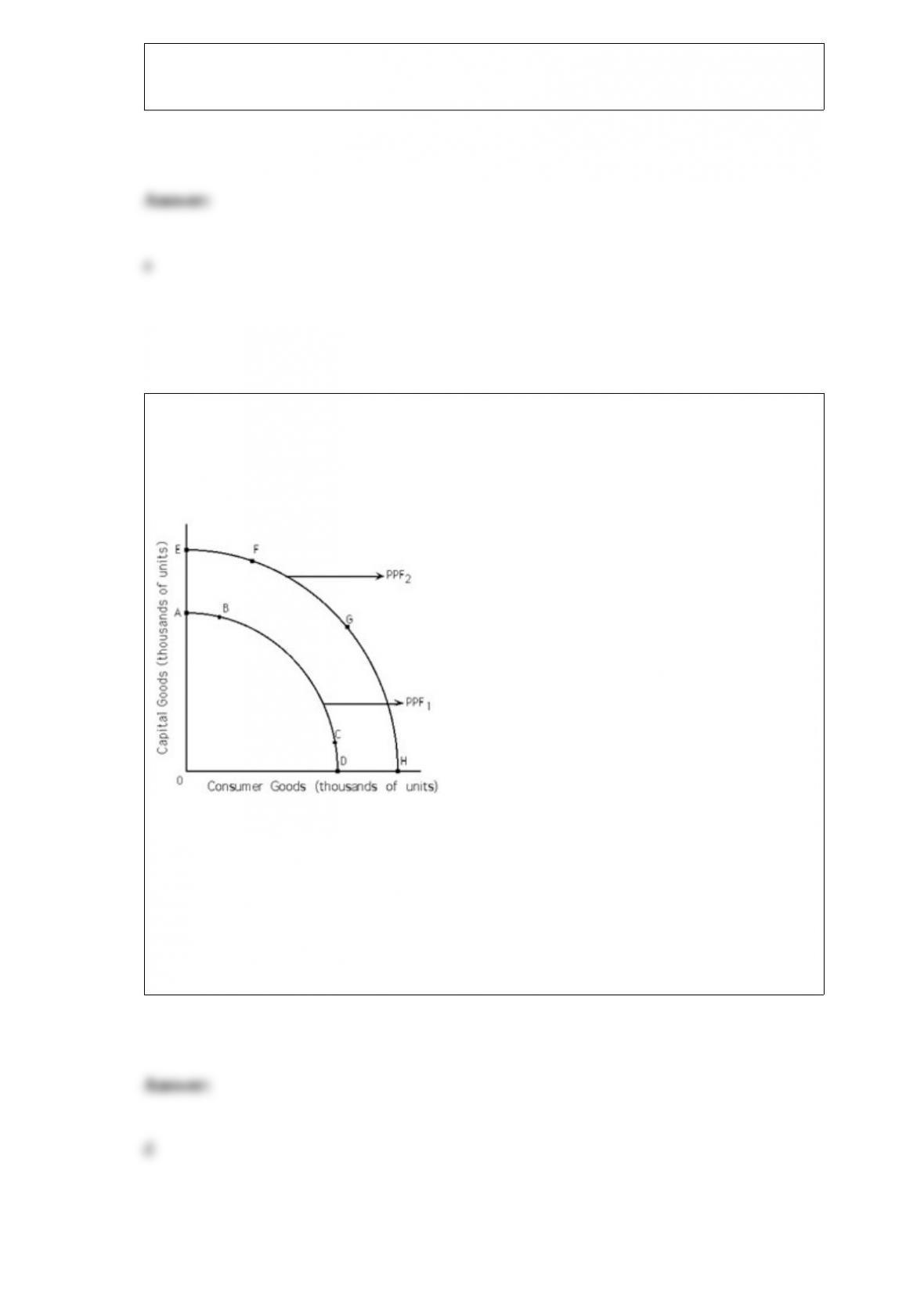
Refer to Exhibit 2-2. If PPF2 is the relevant production possibilities frontier, then point
__________ is productive efficient.
Exhibit 2-2
a. B
b. D
c. I
d. F
e. both b and d
Some economists contend that a monopolistic competitor tends to produce too
__________ output, charges a price that is too __________ and __________ its present
plant size.
a. little; low; underutilizes
b. little; high; underutilizes
c. much; low; overutilizes
d. much; high; overutilizes
e. much; low; underutilizes

For a firm that perfectly price discriminates,
a. price is less than marginal revenue.
b. price is greater than marginal revenue.
c. price equals marginal revenue.
d. price has no definite relationship with marginal revenue.
The demand curve for good X is generally highly inelastic at and around the current
price. If we assume that the supply curve is neither perfectly elastic nor perfectly
inelastic, then who will pay the greater share of a tax placed on the production of good
X?
a. The buyers will pay the greater share.
b. The sellers will pay the greater share.
c. The buyers and the sellers will pay equal shares.
d. There is not enough information to answer the question.

The opportunity cost of attending college
a. consists of the tuition costs only.
b. consists of the tuition costs plus the costs of room and board and other expenses.
c. is zero, if the student receives a scholarship that covers the costs of tuition, room and
board, and other expenses.
d. varies from person to person.
e. both b and c
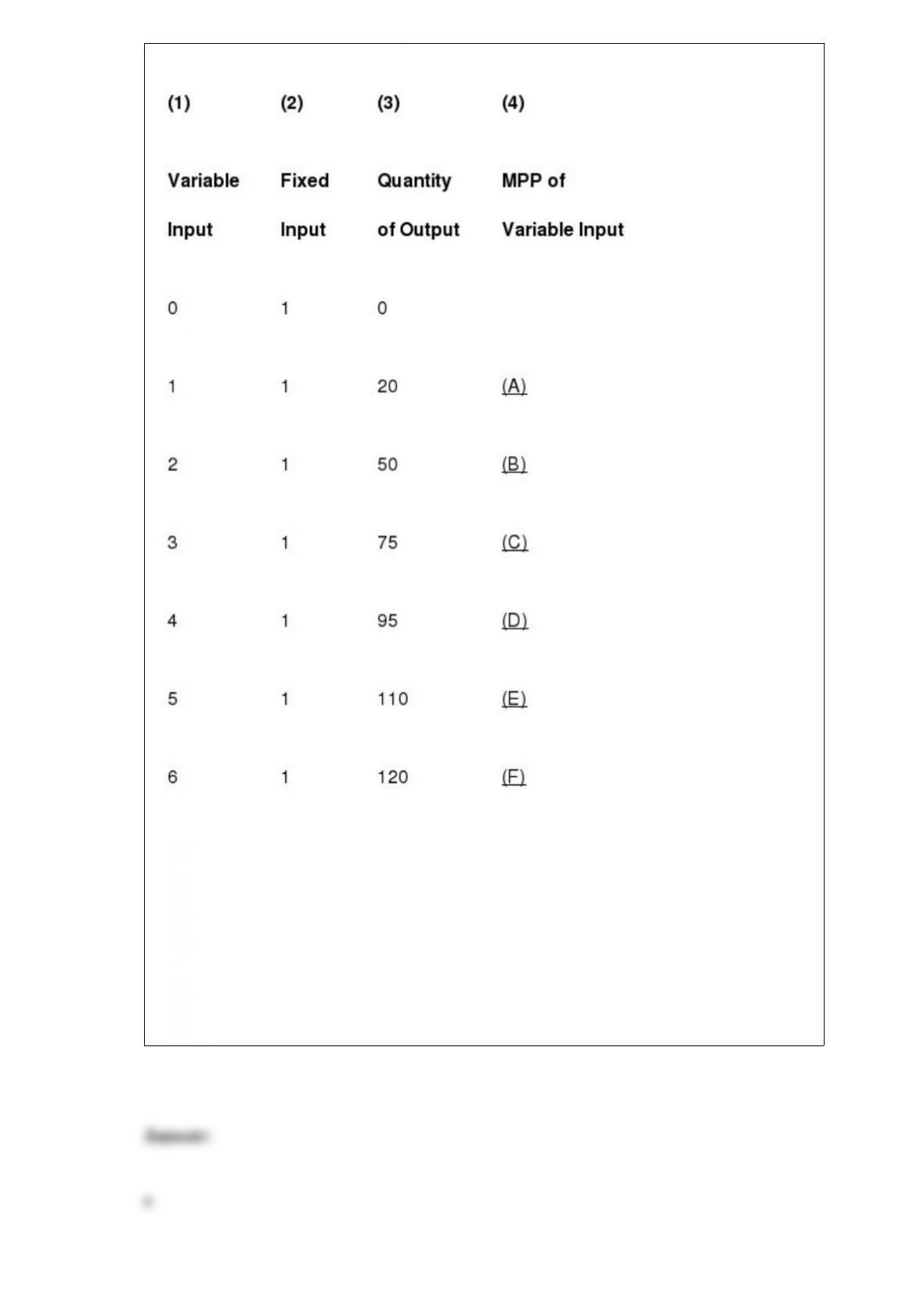
Refer to Exhibit 22-1. The numbers that go in blanks (A) and (B) are, respectively,
Exhibit 22-1
a. 20 and 30.
b. 0 and 21.
c. 20 and 25
d. 1 and 2.
e. 20 and 21.
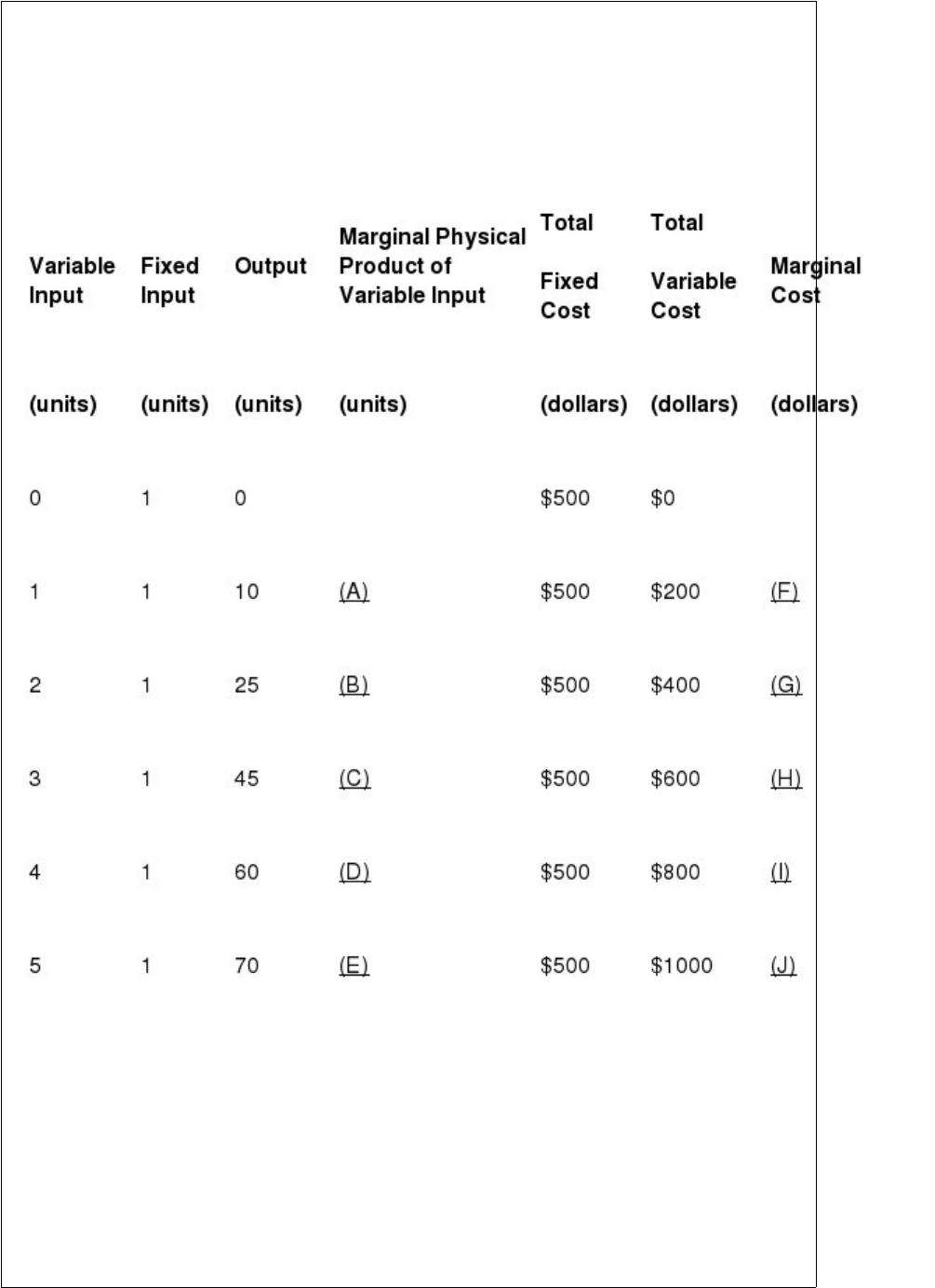
Refer to Exhibit 22-3. Diminishing marginal returns set in with the addition of the
__________ unit of the variable input.
Exhibit 22-3
a. first
b. second
c. third
d. fourth
e. fifth
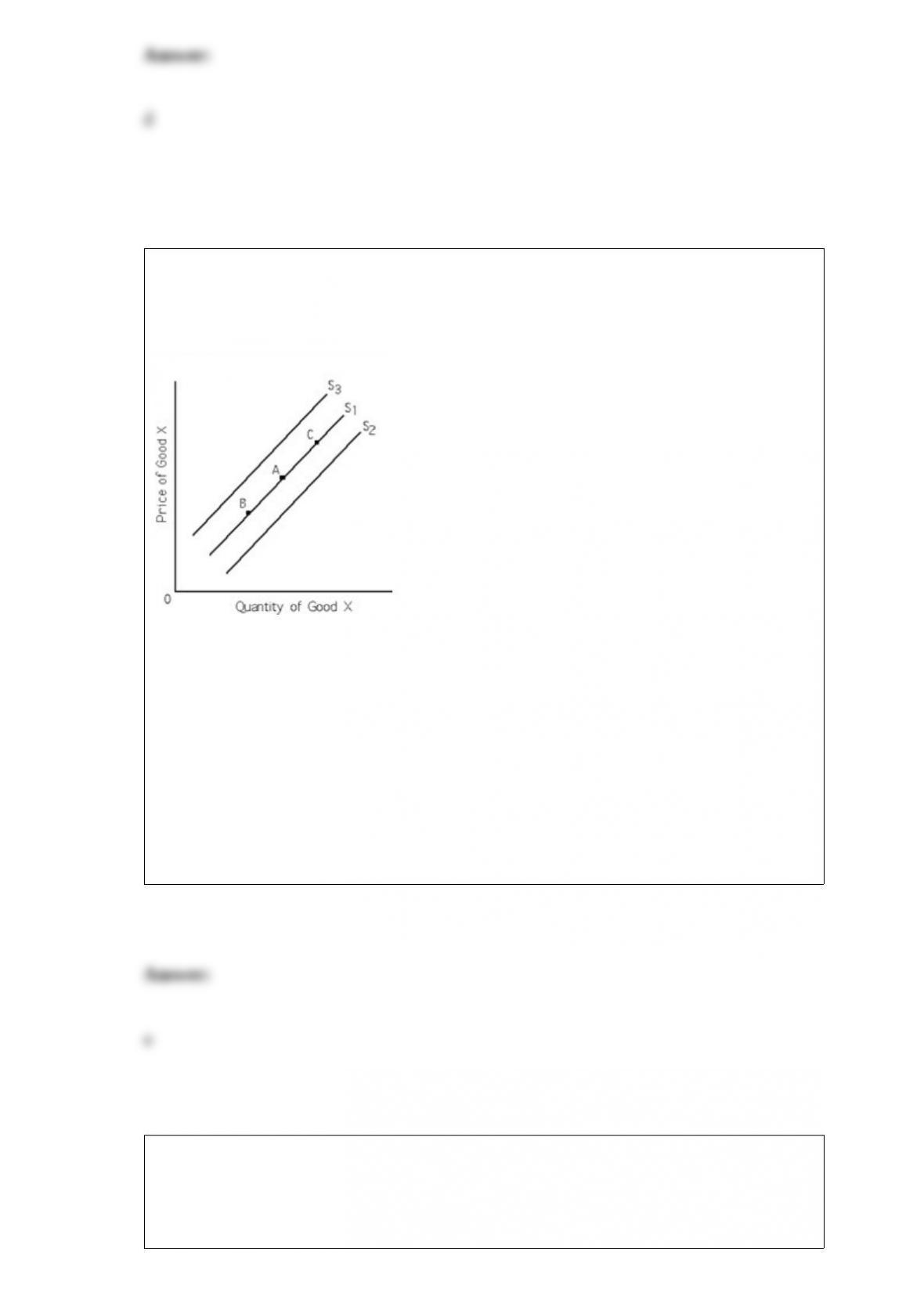
Refer to Exhibit 3-7. If S1 is the relevant supply curve, a decrease in the price of a
resource that is necessary for the production of good X causes
Exhibit 3-7
a. the supply of good X to shift from S1 to S2
b. the supply of good X to shift from S1 to S3.
c. a movement along S1 perhaps from point A to point B.
d. a movement along S1 perhaps from point A to point C.
e. no change in the supply of good X.
Pure economic rent can exist only when the factor under consideration
a. is something other than land.

b. has a supply curve that is perfectly elastic.
c. has a demand curve that is perfectly elastic.
d. has a supply curve that is perfectly inelastic.
e. a and d
The demand curve facing a monopolistic competitor will be more elastic than the
demand curve facing a monopolist because
a. there are barriers to exit for the monopolist, but not for the monopolistic competitor.
b. the monopolistic competitor attains resource-allocative efficiency, but the monopolist
does not.
c. there are substitute goods for what the monopolistic competitor produces, but not for
what the monopolist produces.
d. the monopolist is a price searcher, but the monopolistic competitor is not.
The coordinates of point A are 400 units of X and 40 units of Y. The coordinates of
point B are 480 units of X and 60 units of Y. With X on the horizontal axis and Y on the
vertical axis, the slope of the line between points A and B is
a. + 0.25

b. + 4.00
c. + 0.33
d. – 4.00
e. – 0.25
Which of the following curves should one look at to observe the law of diminishing
marginal returns?
a. the average fixed cost curve
b. the total fixed cost curve
c. the marginal physical product curve
d. the long run average total cost curve
Good Z is income unit elastic. This means that the percentage change in income is
a. equal to the percentage change in the quantity demanded of good Z.
b. greater than the percentage change in the demand for good Z.
c. less than the percentage change in the quantity demanded of good Z.
d. equal to the percentage change in the price of good Z.
e. greater than the percentage change in the price of good Z.
Refer to Exhibit 2-3. If PPF1 is the relevant production possibilities frontier, society
may move to PPF2 as a result of
Exhibit 2-3
a. an increase in resources.
b. a decrease in resources.
c. an increase in technology.
d. both a and c
e. both b and c

A PPF is bowed outward as a result of
a. constant opportunity costs.
b. increasing opportunity costs.
c. decreasing opportunity costs.
d. scarcity.
e. choice.
A right granted to a firm by government that permits the firm to provide a particular
good or service and excludes others from doing the same is called
a. a natural monopoly.
b. a comparative advantage.
c. an economy of scale.
d. a public franchise.
Suppose that prices in Japan increase by 8 percent while prices in the United States
remain stable. We would expect that the result would be that in the foreign exchange
market ___________________________,ceteris paribus.
a. the dollar will appreciate and the yen will depreciate
b. the dollar will depreciate and the yen will appreciate
c. both the dollar and the yen will appreciate
d. both the dollar and the yen will depreciate
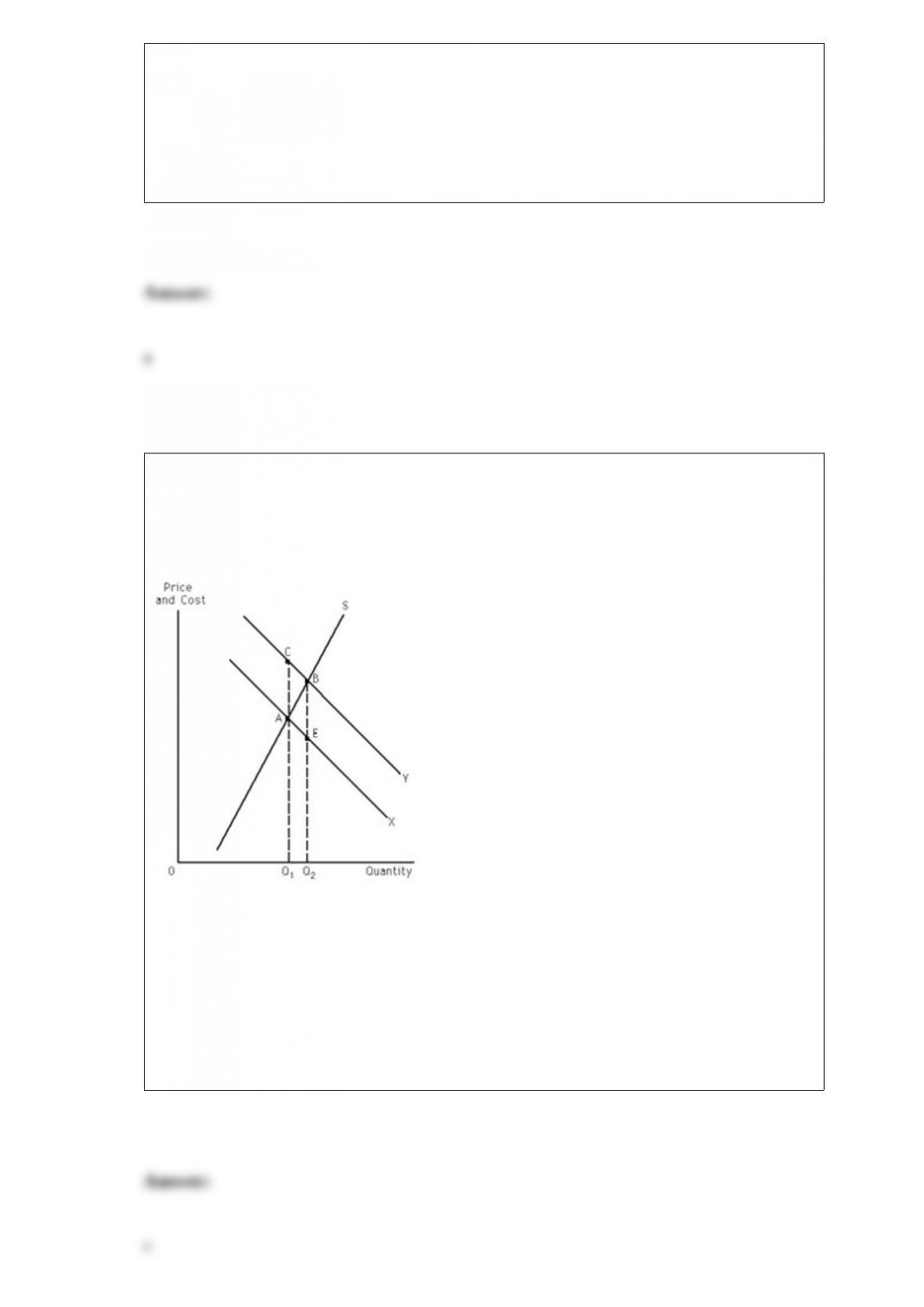
Refer to Exhibit 31-2. If the exhibit represents a positive externality situation, the net
social benefit of expanding output from Q1 to Q2 is the area of
Exhibit 31-2
a. Q1ABQ2.
b. Q1AEQ2.
c. CBA.
d. ABE.

Equilibrium and disequilibrium
a. are real world states.
b. are mental constructs used by economists.
c. foreshadow what is about to happen in a market.
d. a and b
e. a, b and c
For economic imperialists, economics is more of a method of analysis than a specific
field of study.
a. True
b. False