
1) import quotas are taxes or duties on imported products.
2) real gdp = worker-hours labor productivity.
3) purposeful behavior implies that everyone will make identical choices.
4) The economic benefits of forests include provision of wildlife habitats, erosion
prevention, and oxygen production.
5) follower countries achieve high rates of growth by adopting technologies developed
by leader countries.
6) There is no tradeoff between unemployment and inflation in the long run.
7) The equation of exchange is MV = PQ.
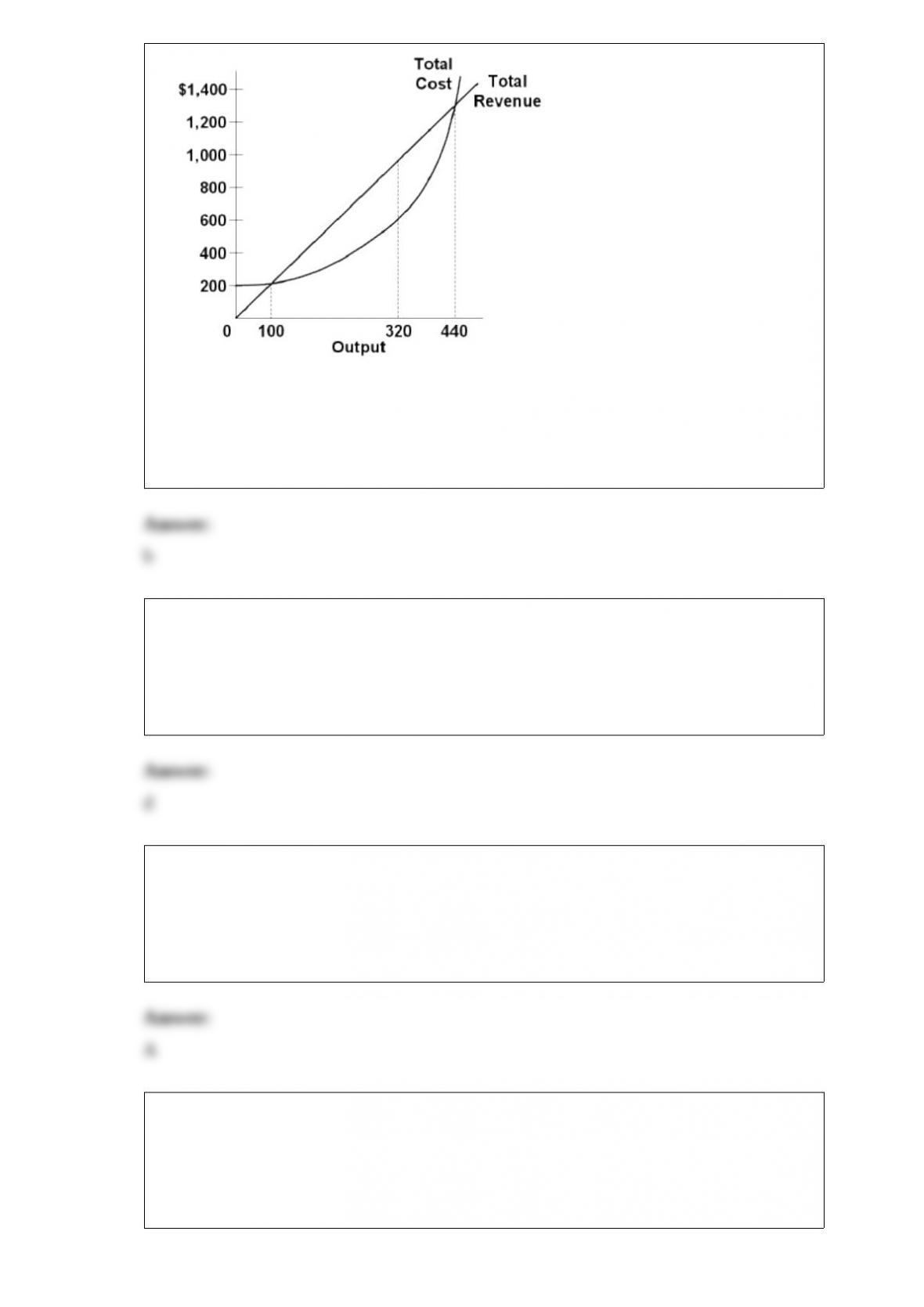
8)
refer to the above short-run data. which of the following is correct?
a.this firm will maximize its profit at 440 units of output.
b.any level of output between 100 and 440 units will yield an economic profit.
c.this firm’s marginal revenue rises with output.
d.any level of output less than 100 units or greater than 440 units is profitable.
9) the largest contributor to increases in the productivity of american labor is:
a.the reallocation of labor from agriculture to manufacturing.
b.improvements in labor quality.
c.increases in the quantity of capital.
d.technological advance.
10) The labor supply curve for a particular occupation is upsloping because:
A.higher wages will be needed to attract workers from other occupations.
B.lower wages will be needed to increase employment.
C.higher wages will enable some workers to afford more leisure.
D.the labor demand curve is downsloping.
11) if a pure monopolist is producing more output than the mr = mc output:
a.the firm may, or may not, be maximizing profits.
b.it will be in the interest of the firm, but not necessarily of society, to reduce output.
c.it will be in the interest of the firm and society to increase output.
d.it will be in the interest of the firm and society to reduce output.
12) amanda buys a ruby for $330 for which she was willing to pay $340. the minimum
acceptable price to the seller, tony, was $140. amanda experiences:
a.a consumer surplus of $10 and tony experiences a producer surplus of $190.
b.a producer surplus of $200 and tony experiences a consumer surplus of $10.
c.a consumer surplus of $770 and tony experiences a producer surplus of $480.
d.a producer surplus of $10 and tony experiences a consumer surplus of $190.
13) (last word) which of the following statements is false?
a.stock prices are one clue as to the future direction of the economy.
b.research has shown that changes in stock prices have a relatively modest impact on
the economy.
c.black monday (1987) was followed immediately by a severe recession.
d.a rise in stock prices increases consumer wealth and therefore slightly boosts
consumption spending.
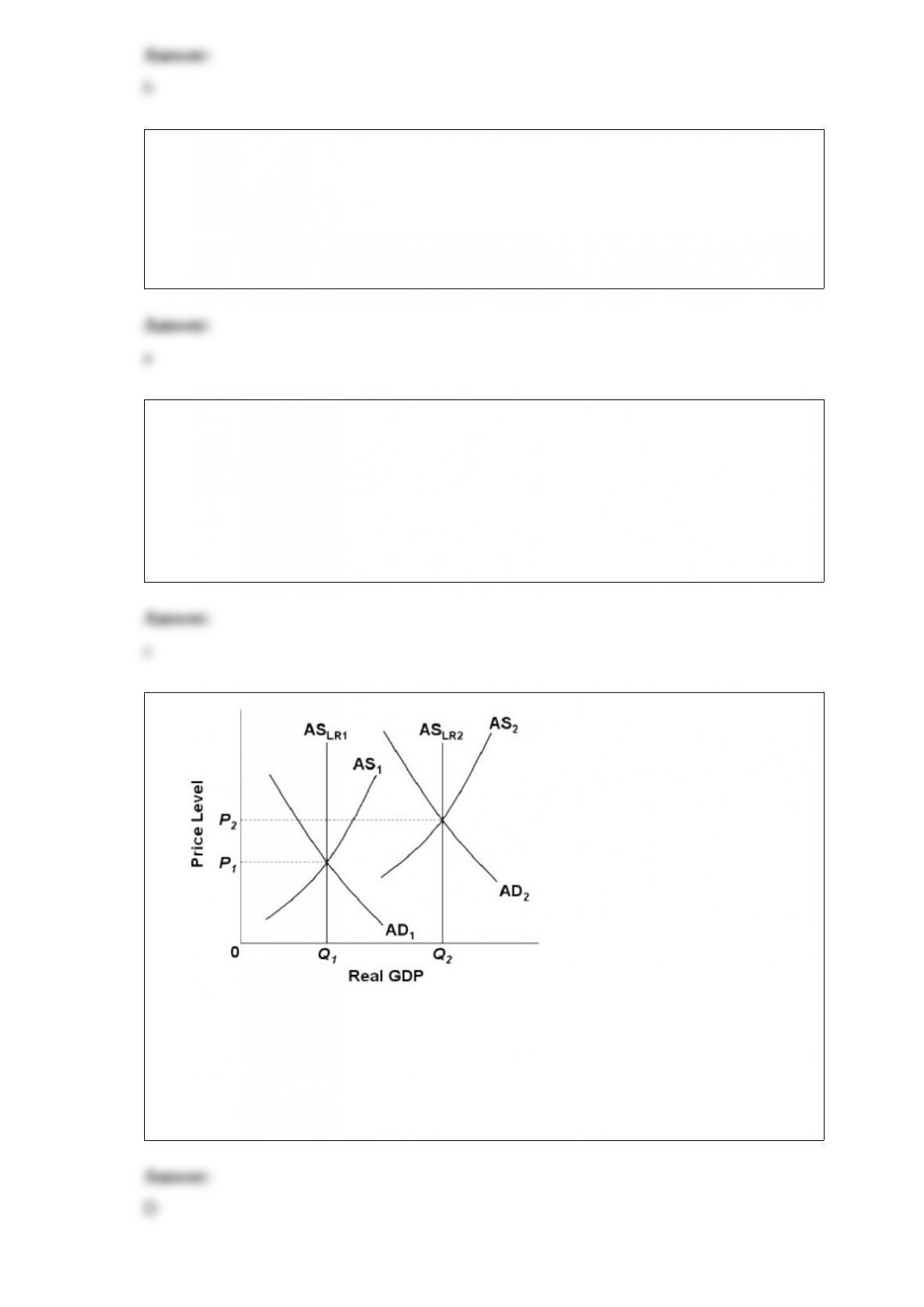
14)
Refer to the above graphs, where the subscripts on the labels denote years 1 and 2.
From the graphs we can clearly conclude that the economy:
A.is not at full employment in either year.
B.is at full employment in year 1, but not in year 2
C.is at full employment in year 2, but not in year 1
D.is at full employment in both years.

15) In a labor market generally biased against African-Americans, a reduction in the
collective discrimination coefficients of employers will:
A.reduce the African-American wage rate, increase African-American employment, and
lower the actual African-American-white wage ratio.
B.reduce the African-American wage rate, decrease African-American employment,
and lower the actual African-American-white wage ratio.
C.increase the African-American wage rate, increase African-American employment,
and increase the actual African-American-white wage ratio.
D.increase the African-American wage rate, reduce African-American employment, and
increase the actual African-American-white wage ratio.
16) Which of the following ideas of the rational expectations theory has been absorbed
into mainstream macroeconomics?
A.the monetary rule
B.the idea that “money doesn’t matter”
C.the monetary multiplier
D.the idea that “expectations are important”
17) which of the following goods (with their respective income elasticity coefficients in
parentheses) will most likely suffer a decline in demand during a recession?
a.dinner at a nice restaurant (+1.8)
b.chicken purchased at the grocery store for preparation at home (+0.25)
c.facial tissue (+0.6)
d.plasma screen and lcd tvs (+4.2)
18) price discrimination refers to:
a.selling a given product for different prices at two different points in time.
b.any price above that which is equal to a minimum average total cost.
c.the selling of a given product at different prices that do not reflect cost differences.
d.the difference between the prices a purely competitive seller and a purely
monopolistic seller would charge.
19) Explain the crowding-out effect.
20) How can the degree of income inequality be shown by a Lorenz curve?
21) What are the consequences of price discrimination for the producer, the consumer,
and for society?
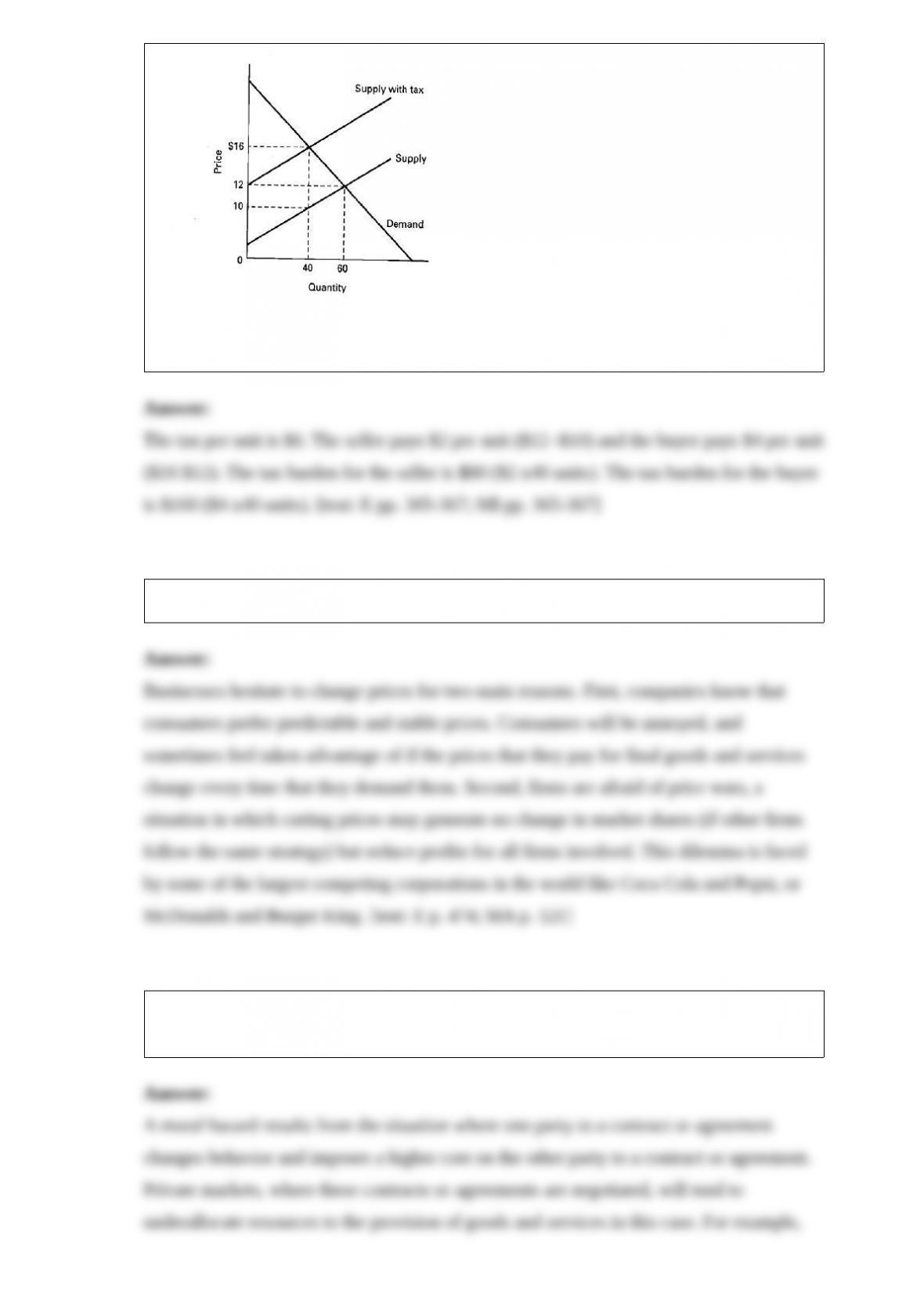
22)
In the graph below, if the government imposes an excise tax as shown, what is the tax
burden to the seller? And to the buyer? Explain.
23) Describe two reasons why businesses hesitate to change prices.
24) What is meant by the term moral hazard? What is an example of a moral hazard
problem?
25) What are conflict diamonds and what do they illustrate about resource use?
26) A witness told a congressional committee that if the United States doubled its real
GDP, it would be a much less livable society than it is today. Explain this view.
27) Describe the legal protections and potential advantages of taking the lead in
innovation.