If an employment situation is characterized by adverse selection,
a. there are too many applicants for each job
b. there are too few applicants for each job
c. there are exactly the right number of applicants for each job
d. there is an excess supply of overqualified applicants for each job
e. there is an excess supply of underqualified applicants for each job
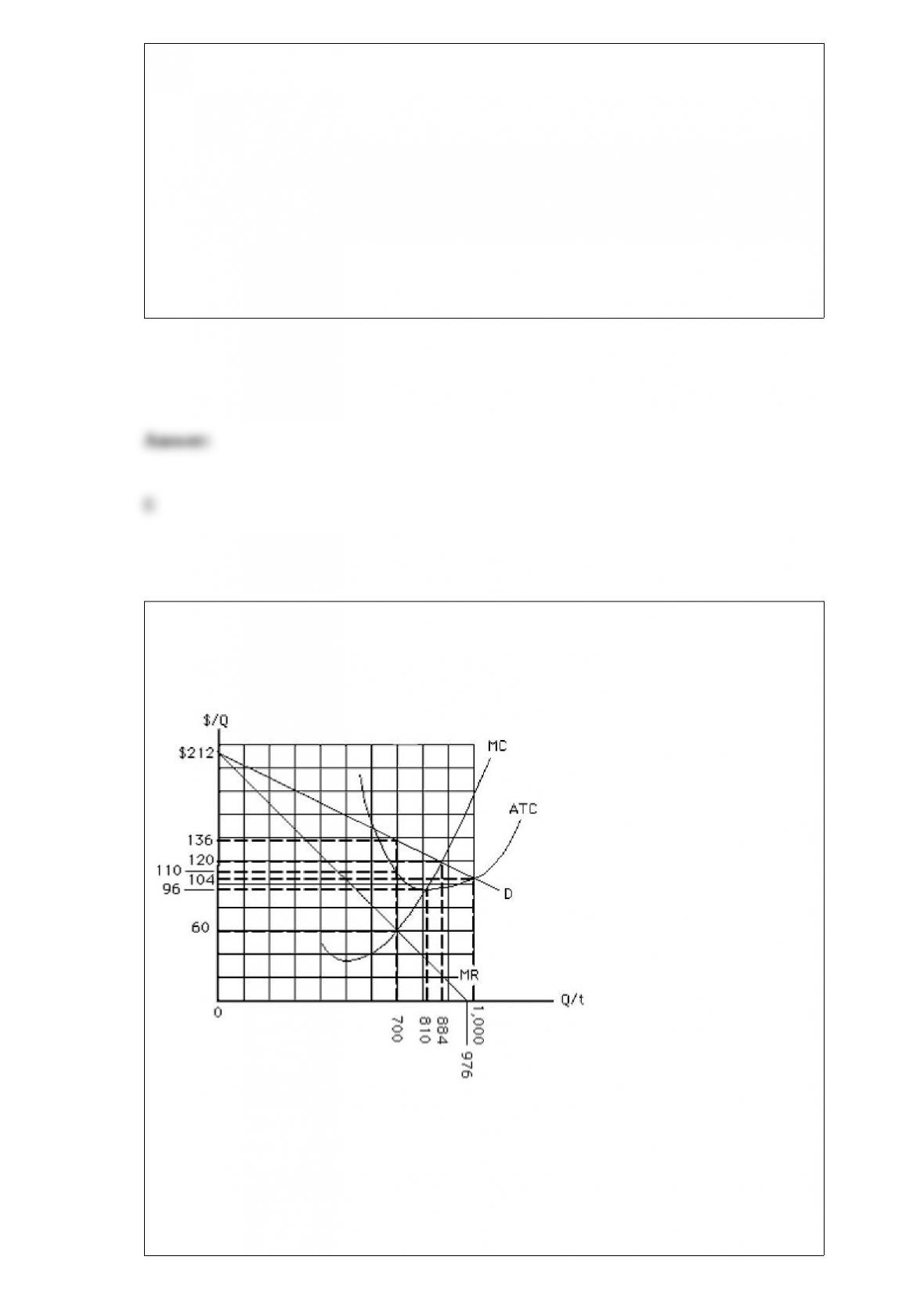
Exhibit 9-11
If the monopolist in Exhibit 9-11 chooses to produce 1,000 units and does not price
discriminate, its profit will be
a. $0
b. $104,000
c. $212,000
d. maximized
e. negative

Total revenue is the same for every price-quantity combination along a unit elastic
demand curve.
a. True
b. False
All of the following are sources of negative externalities except one. Which is the
exception?
a. a paper mill that pollutes a river
b. a person who throws a beer can out the window of a moving car
c. cars, which emit carbon monoxide
d. a solar water heater which is outside and obscure from view
e. products that contribute to the greenhouse effect
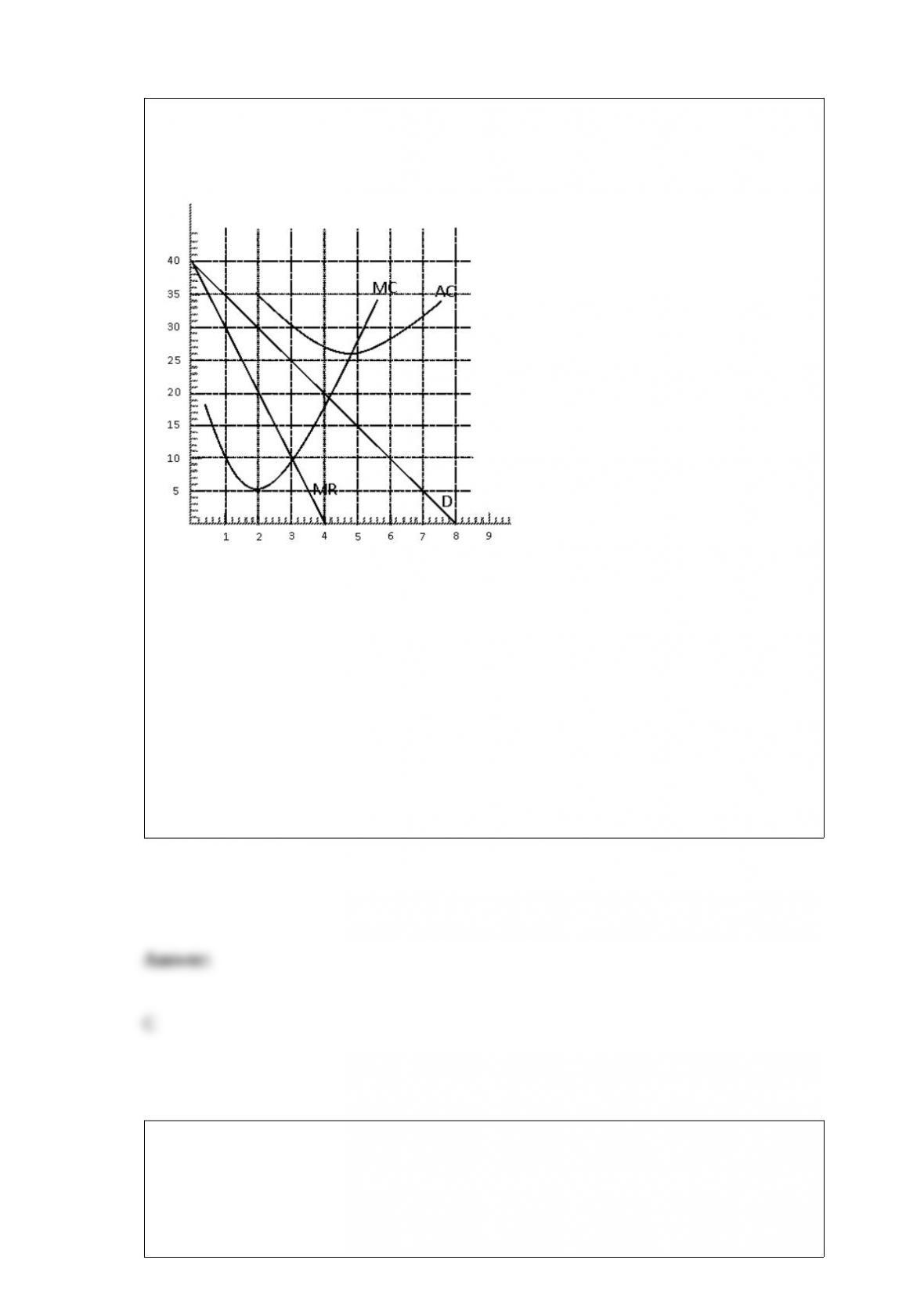
Exhibit 10-17
In Exhibit 10-17, the monopolistic competitor’s profit-maximizing level of output is
a. 1 unit
b. 2 units
c. 3 units
d. 4 units
e. 5 units
A technological breakthrough that increases the marginal productivity of capital would
increase the
a. demand for loanable funds, leading to a lower equilibrium market interest rate
b. supply of loanable funds, leading to a lower equilibrium market interest rate

c. demand for loanable funds, leading to a higher equilibrium market interest rate
d. supply of loanable funds, leading to a higher equilibrium market interest rate
e. supply of loanable funds but have no impact on the equilibrium market interest rate
The Coase solution to the externality problem only works when bargaining costs are
high.
a. True
b. False
If its value of cross-price elasticity is negative, a good must be a necessity.
a. True
b. False

“The marginal utility received from each additional unit of a good consumed declines,
other things constant.” This is a statement of the law of
a. increasing marginal returns
b. marginal rate of substitution
c. supply
d. diminishing marginal utility
e. demand
Perfectly competitive firms that earn an economic profit in the short run choose the
output that
a. maximizes total revenue
b. minimizes total cost
c. maximizes the difference between total revenue and total cost
d. maximizes the difference between total revenue and explicit cost
e. maximizes the difference between total revenue and implicit cost
The slope of the isocost line is constant.
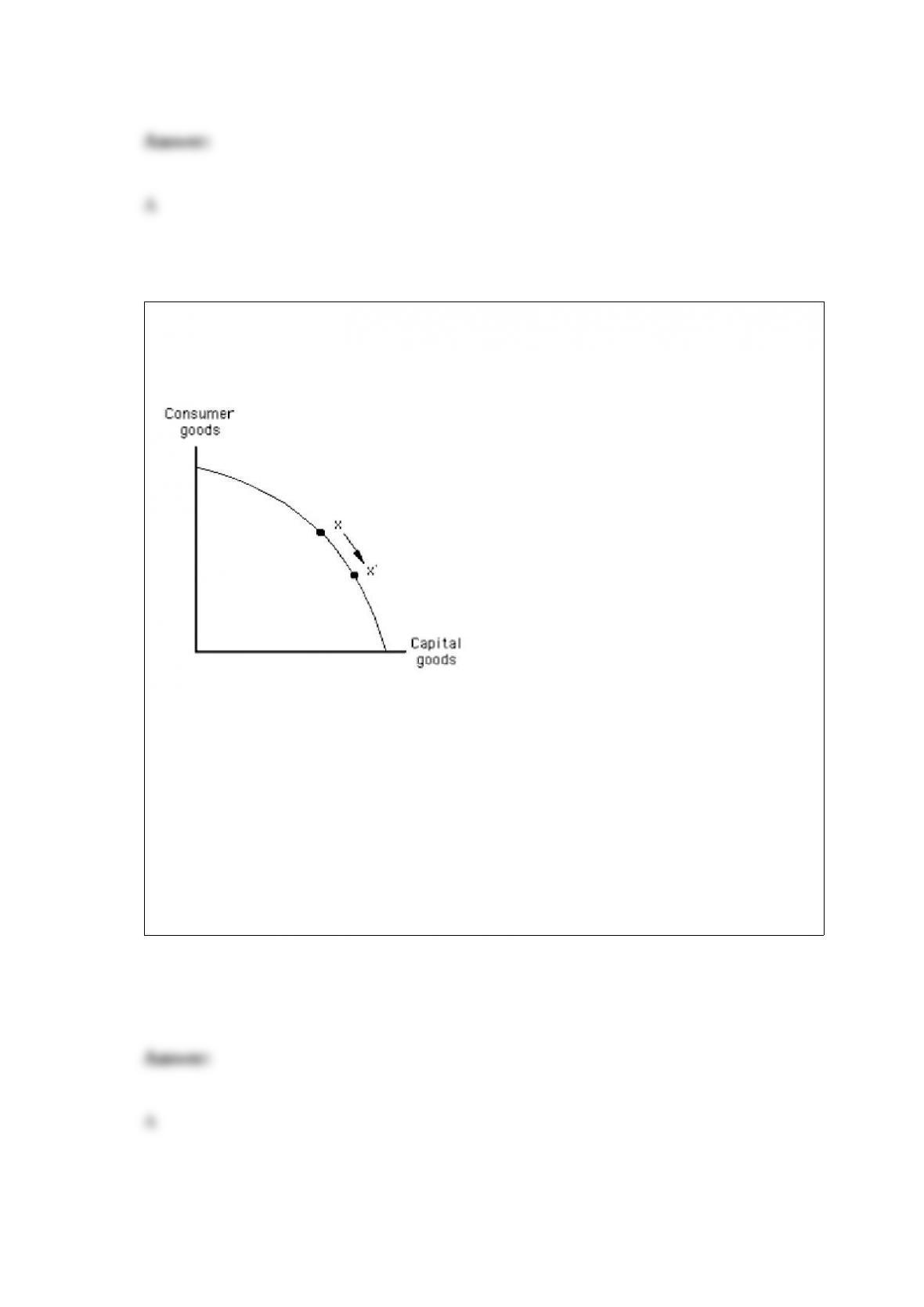
Exhibit 13-1
The movement from x to x’ in Exhibit 13-1 represents a(n)
a. increase in roundabout production; future ability to produce consumer goods will be
higher as a result
b. increase in roundabout production; future ability to produce consumer goods will be
lower as a result
c. decrease in roundabout production; future ability to produce consumer goods will be
higher as a result
d. decrease in roundabout production; future ability to produce consumer goods will be
lower as a result
e. decrease in roundabout production but one that does not have an effect on future
ability to produce consumer goods
Profit maximization depends upon demand conditions, as well as upon productivity and
costs.
a. True
b. False
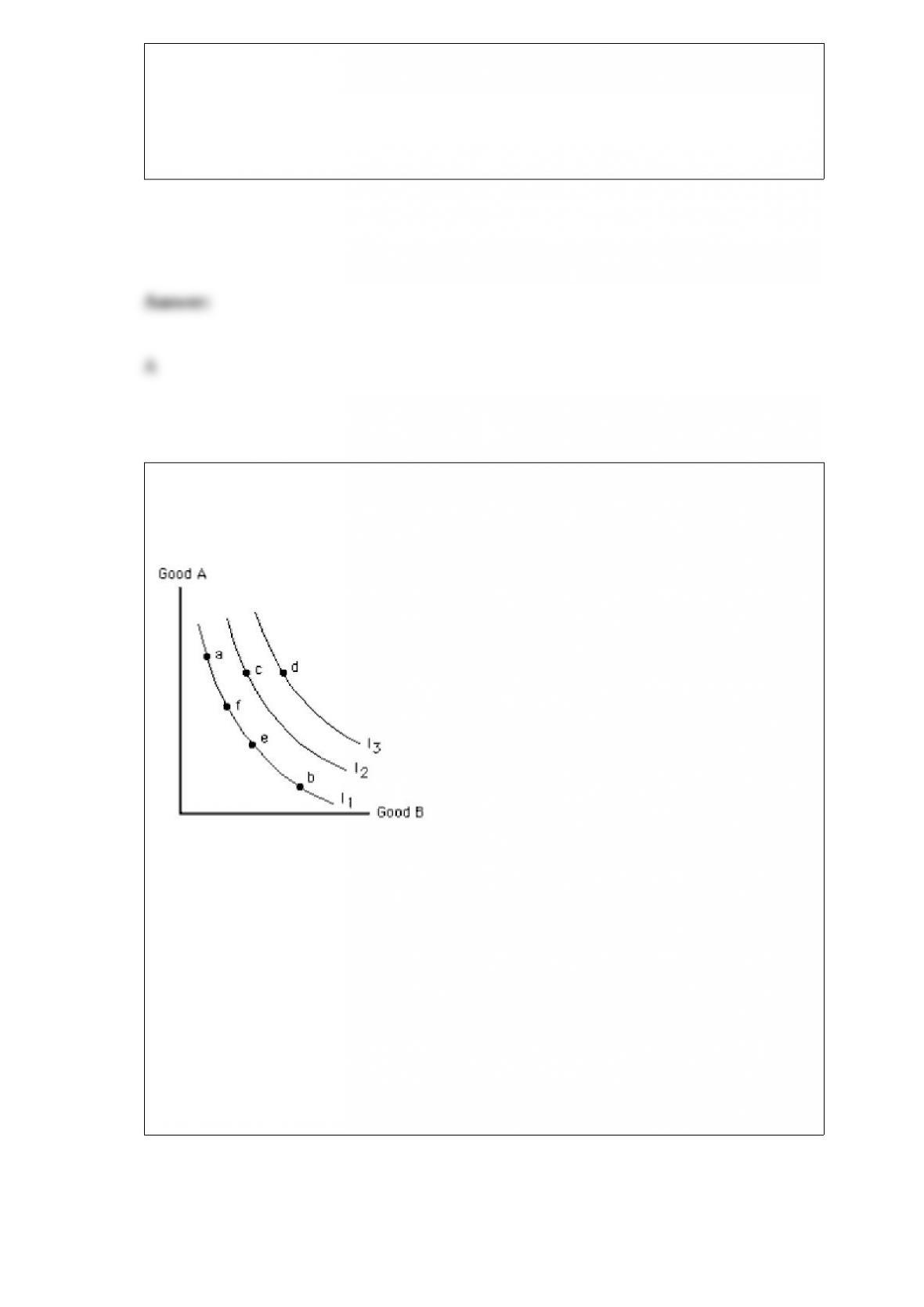
Exhibit 6-24
Which of the combinations of Good A and Good B in Exhibit 6-24 would an individual
prefer?
a. point a
b. point b
c. point d
d. point e
e. point f
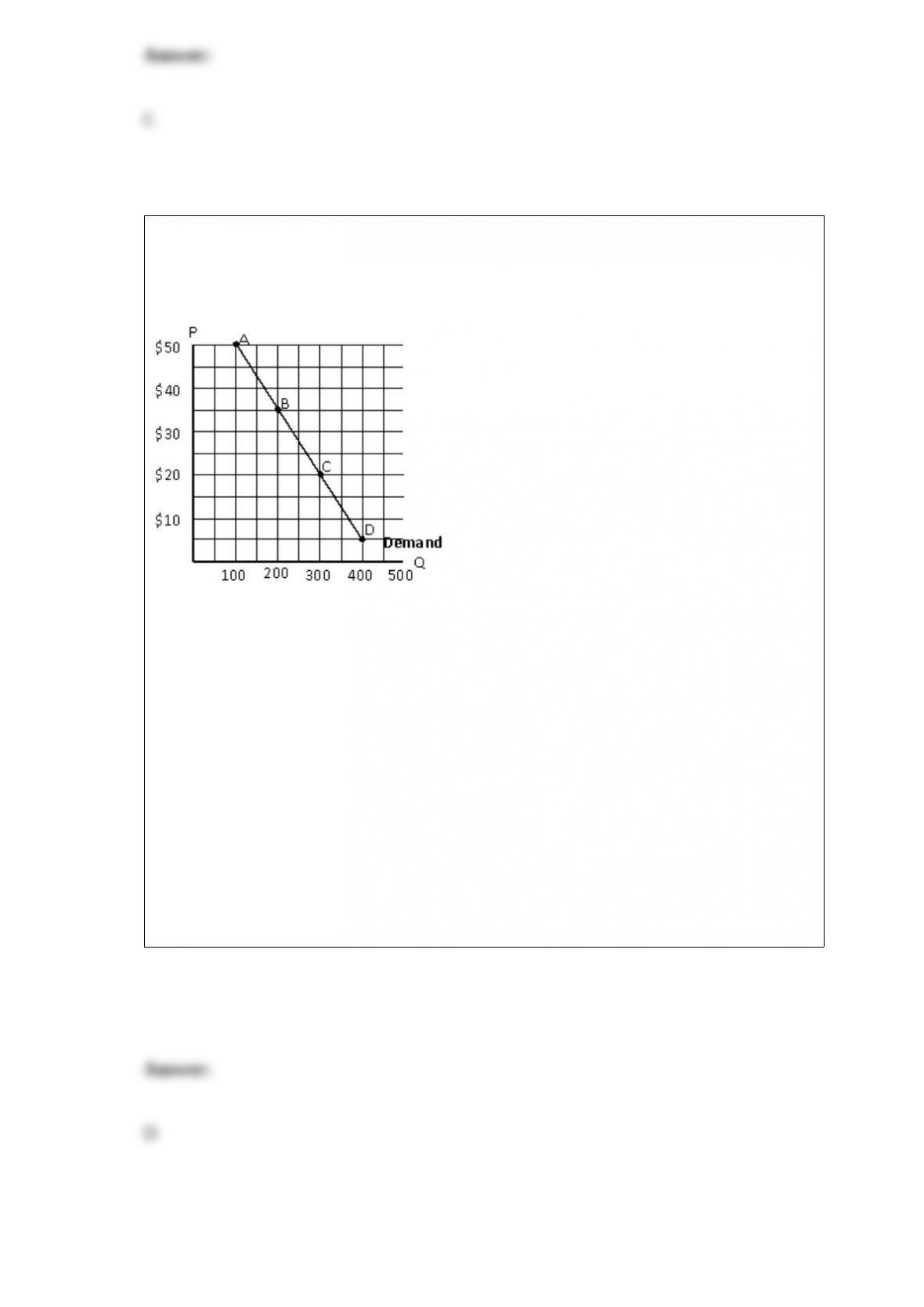
Exhibit 5-26
Refer to Exhibit 5-26. As you move down the demand curve from A to B to C to D,
which of the following describes what happens to the price elasticity of demand?
a. nothing
b. goes from elastic at A and gets increasingly inelastic as you go to B and C and D
c. goes from perfectly inelastic at A and gets increasingly elastic as you go to B and C
and D
d. goes from inelastic at A and gets increasingly elastic as you go to B and C and D
e. goes from inelastic at A and gets increasingly elastic as you go to B but then gets
increasingly inelastic as you go to C and D
Although some tastes do change over time, economists believe that tastes are relatively
stable. If tastes were not mostly stable, then we
a. could not even draw a supply curve
b. could not reasonably make the other-things-constant assumption required for demand
analysis
c. would not have any concerns about still drawing demand curves
d. could no longer eat food
e. would be basing economic models on real life instead of making impossible
assumptions
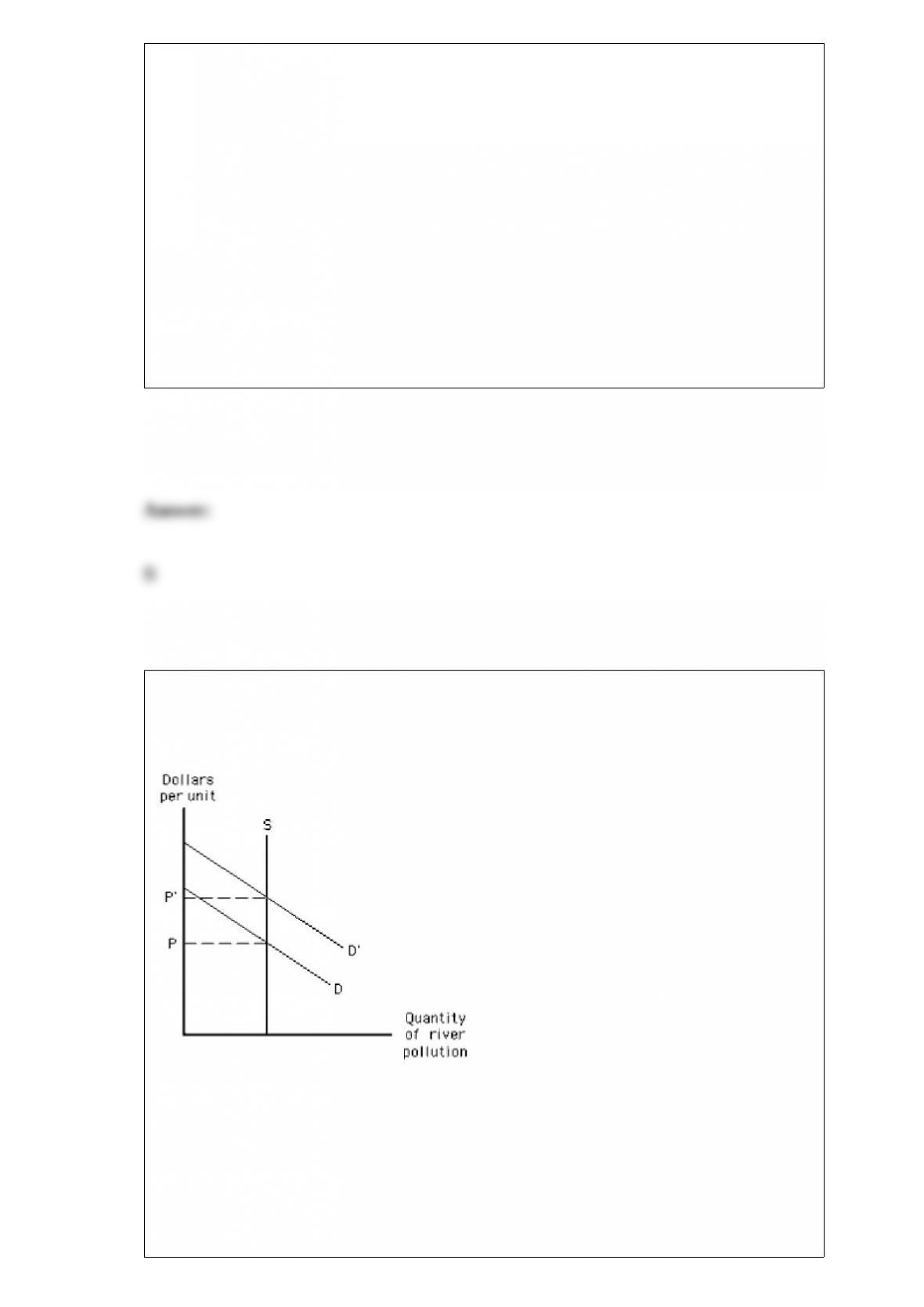
Exhibit 17-4
In Exhibit 17-4, as demand increases,
a. pollution increases
b. the economic damage done by pollution increases
c. the pollution level is the same, but the price of the right to pollute increases

d. the pollution level is the same, but the benefit of cleaning up the pollution increases
e. the cost of cleaning up the rivers increases
Cross-price elasticity of demand is used to determine whether
a. a product is an inferior or normal good
b. a product is a necessity or a luxury
c. two products are substitutes or complements
d. price and total revenue are directly or inversely related
e. the product’s demand curve is linear
The short run is a period of time
a. equal to or less than six months
b. during which all resources may be varied
c. during which all resources are fixed
d. during which at least one resource is fixed

e. during which at least one resource may be varied
The historical trend in the video rental industry
a. has been one of increasing economic profits
b. has been cyclical in the sense that profits decrease, then increase
c. reflects the trend toward market concentration in all oligopolies
d. has been one of increasing market concentration
e. suggests the need for government regulation to eliminate price discrimination
In the long run, a perfectly competitive industry is allocatively efficient because
a. the opportunity cost of resources needed to produce the last unit of output just equals
the marginal value to consumers of the last unit
b. it maximizes producer surplus
c. consumer surplus could be larger if the price were lower
d. production occurs at the lowest average total cost
e. marginal costs are low

If a firm facing a perfectly elastic demand curve raises its price,
a. it will still sell exactly the same amount of output as it did at the lower price
b. it will lose some, but not all, of its sales
c. its sales will decrease to zero
d. its sales will increase
e. it is impossible to predict what will happen to its sales
Consumer preferences
a. do not vary from one consumer to another
b. have little to do with personal tastes and income
c. are not influenced by the utility of goods
d. are individual evaluations of goods and services
e. can be objectively measured and compared across individuals
Price elasticity of demand and price elasticity of supply are both influenced by
a. the availability of close substitutes for the product
b. the proportion of the consumer’s budget spend on the product
c. the length of the adjustment period considered
d. technological conditions such as the additional costs of increasing production
e. none of the above
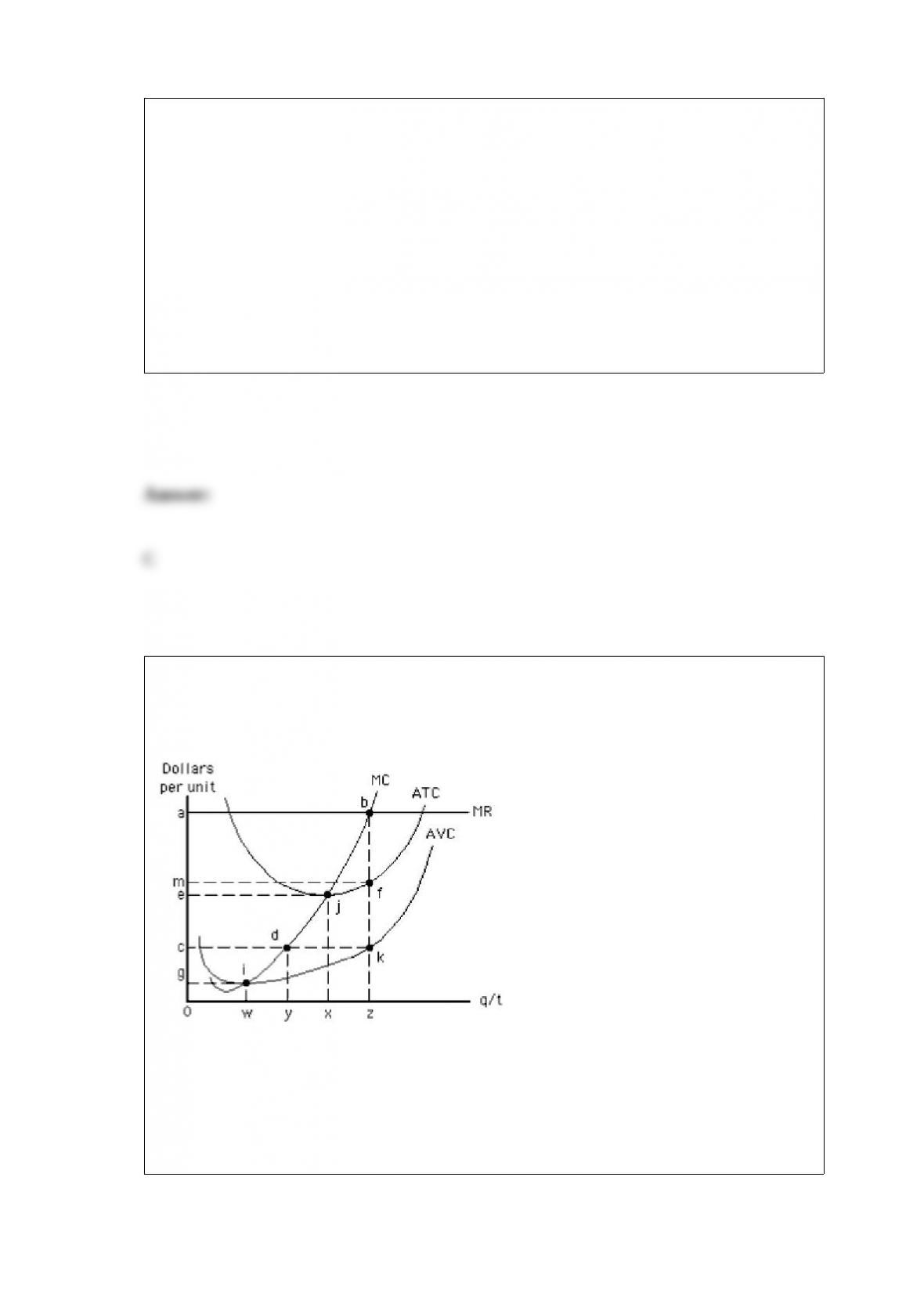
Exhibit 8-11
In Exhibit 8-11, the profit-maximizing output is
a. 0
b. w
c. x
d. y
e. z

Exhibit 1-1
In Exhibit 1-1 the movement from point a to point b represents
a. an increase in x of 30 units and an increase in y of 10 units
b. an increase in x of 10 units and an increase in y of 30 units
c. an increase in x of 60 units and a decrease in y of 20 units
d. an increase in x of 20 units and a decrease in y of 60 units
e. an increase in x of 20 units and a decrease in y of 30 units
Export promotion has been more successful than import substitution.
a. True

b. False
The major social insurance program in the United States is
a. Social Security
b. Temporary Assistance for Needy Families
c. Medicare
d. Medicaid
e. food stamps
Which of the following is not a reason why residents of other countries desire to acquire
dollars?
a. foreigners need dollars to purchase U.S. goods and services
b. dollars can be used as a safe way of storing value when the foreigner’s own currency
is unstable
c. dollars are accepted as an international medium of exchange
d. dollars can be used for cash gifts from foreigners to U.S. friends and relatives
e. dollars are the only currency accepted in international transactions
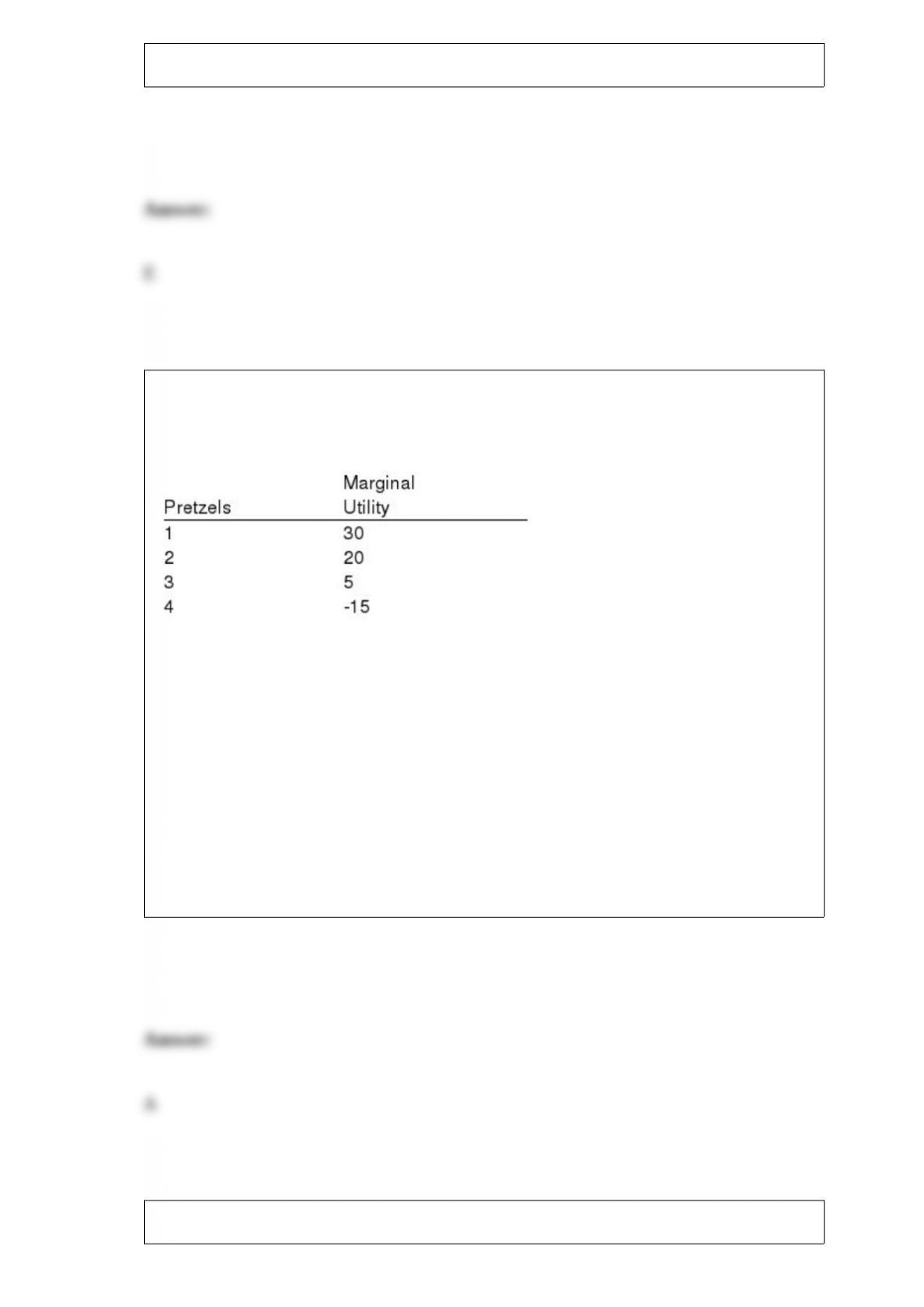
Exhibit 6-3
In Exhibit 6-3, what is the marginal utility of the third pretzel?
a. 5
b. 10
c. 15
d. -0.15
e. 55
Under the Bretton Woods agreement,

a. nations could not adjust their exchange rates relative to the dollar for any reason
b. currency values were based on a market basket of European currencies plus the dollar
c. the world monetary system operated exactly like the gold standard of pre-World War
II years
d. the dollar was selected as the key reserve currency
e. gold played no role
If the exchange rate changes from 20 cents per franc to 18 cents per franc, the U.S.
dollar has
a. appreciated, since its value has increased
b. appreciated, since its value has declined
c. depreciated, making French goods more expensive in U.S. dollars
d. depreciated, since its value has declined
e. depreciated, since its value has increased
Which of the following is most likely to be a fixed resource for Paul’s Country Fresh
Pies, Inc.?

a. berries
b. flour
c. bakers
d. eggs
e. ovens