
Economics, according to its definition, studies how people:
a. earn and spend money. c. make choices in the face of scarcity.
b. invest in the stock and bond markets. d. supply goods in response to demand.
In economics, investment refers to the process of accumulating:
a. capital goods. c. money.
b. consumer goods. d. stocks and bonds.
A lawyer once said, “I could paint my house and fix my plumbing if I just had some
technical training and good tools. But, I would rather hire a painter and a plumber.”
When it comes to fixing a leaking sink, the plumber:
a. d and e.
b. charges more per hour than the lawyer does.
c. charges less per hour than the lawyer does.
d. is more efficient.
e. has a comparative advantage.
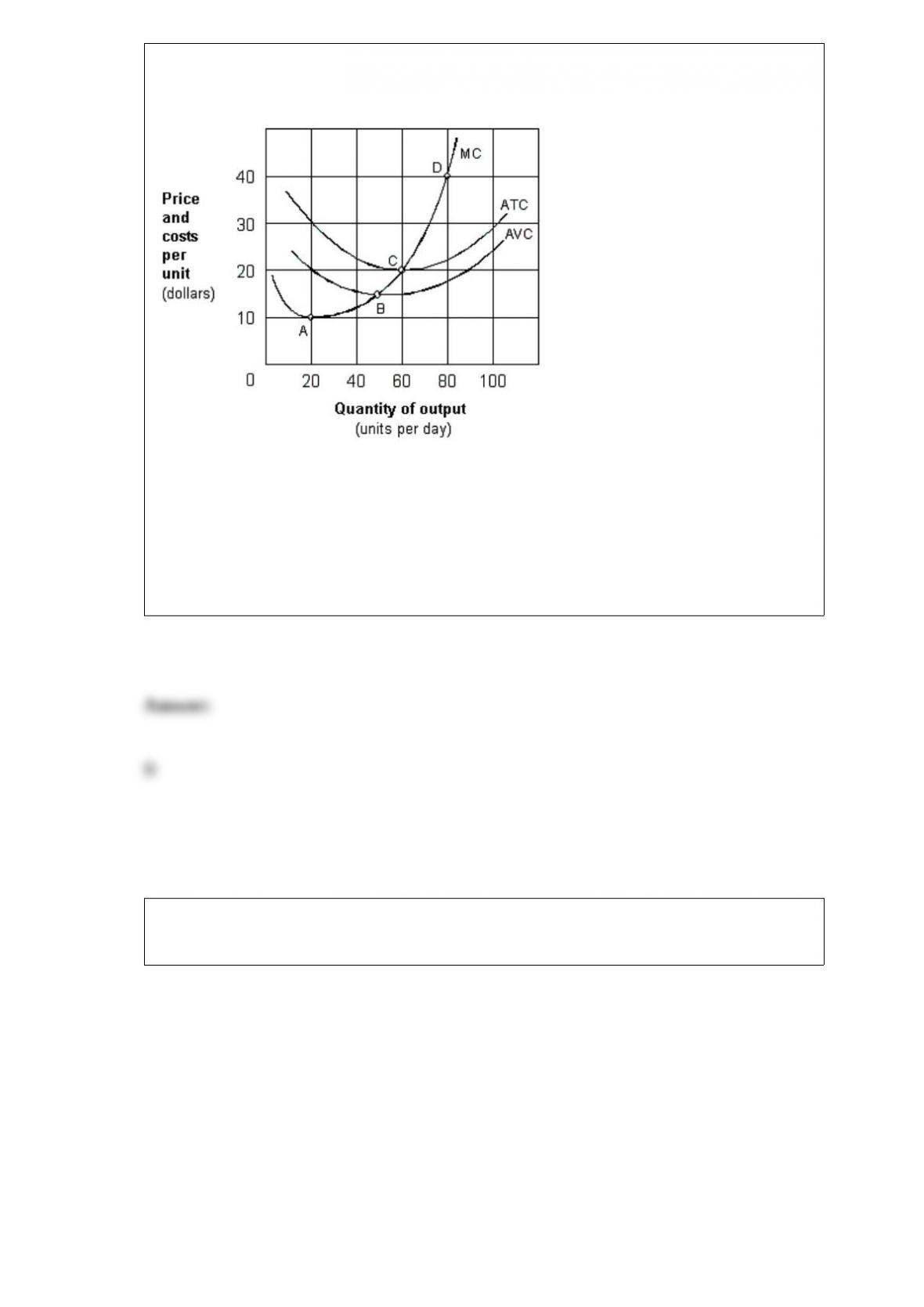
Exhibit 8-17 Marginal revenue and cost per unit curves
As shown in Exhibit 8-17, the short-run supply curve for the firm corresponds to which
segment of its marginal cost curve?
a. C and all points above.
b. B and all points above.
c. A and all points above.
d. A to C only.
e. B to D only.
Exhibit 8-7 A firm’s cost and MR curves
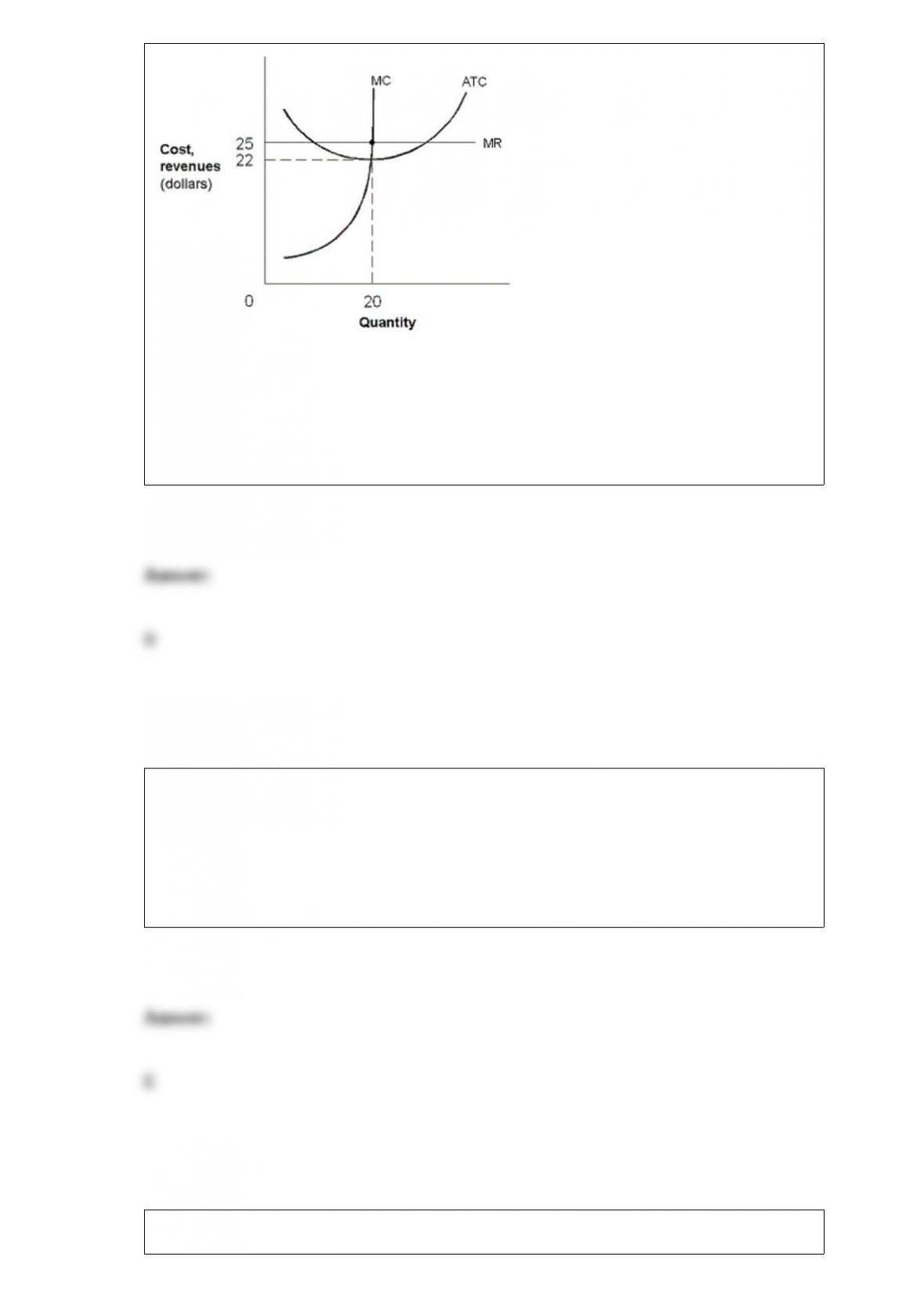
In Exhibit 8-7, if this firm is currently producing 20 units of output, this firm:
a. is at its profit-maximizing point.
b. is earning a $3 profit on each item sold.
c. is losing $3 on each item sold.
d. should shut down.
e. is earning a total profit of $3.
The profit-maximizing output level for a monopolist is where the:
a. price is maximized.
b. output sold is maximized.
c. ATC curve is minimized.
d. maximum efficiency is achieved.
e. MR = MC.
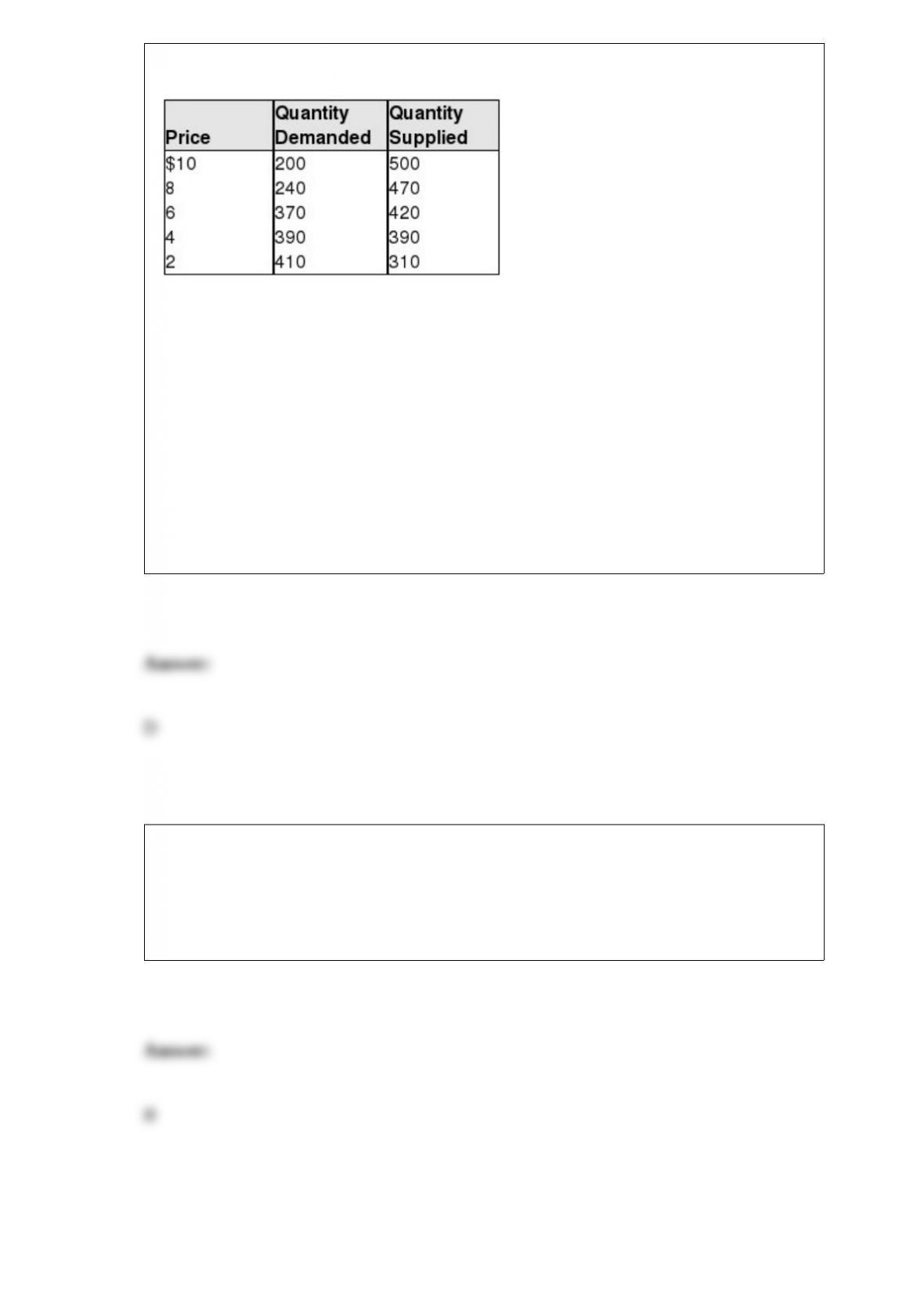
Exhibit 4-7 Demand and supply schedules for movie tickets
In Exhibit 4-7, the equilibrium price of a movie ticket is:
a. $10.
b. $8.
c. $6.
d. $4.
e. $2.
When there is a surplus of a product in a market the:
a. price will rise.
b. price must be above the equilibrium price.
c. producers will expand output and sales will rise.
d. price must be below the equilibrium price.
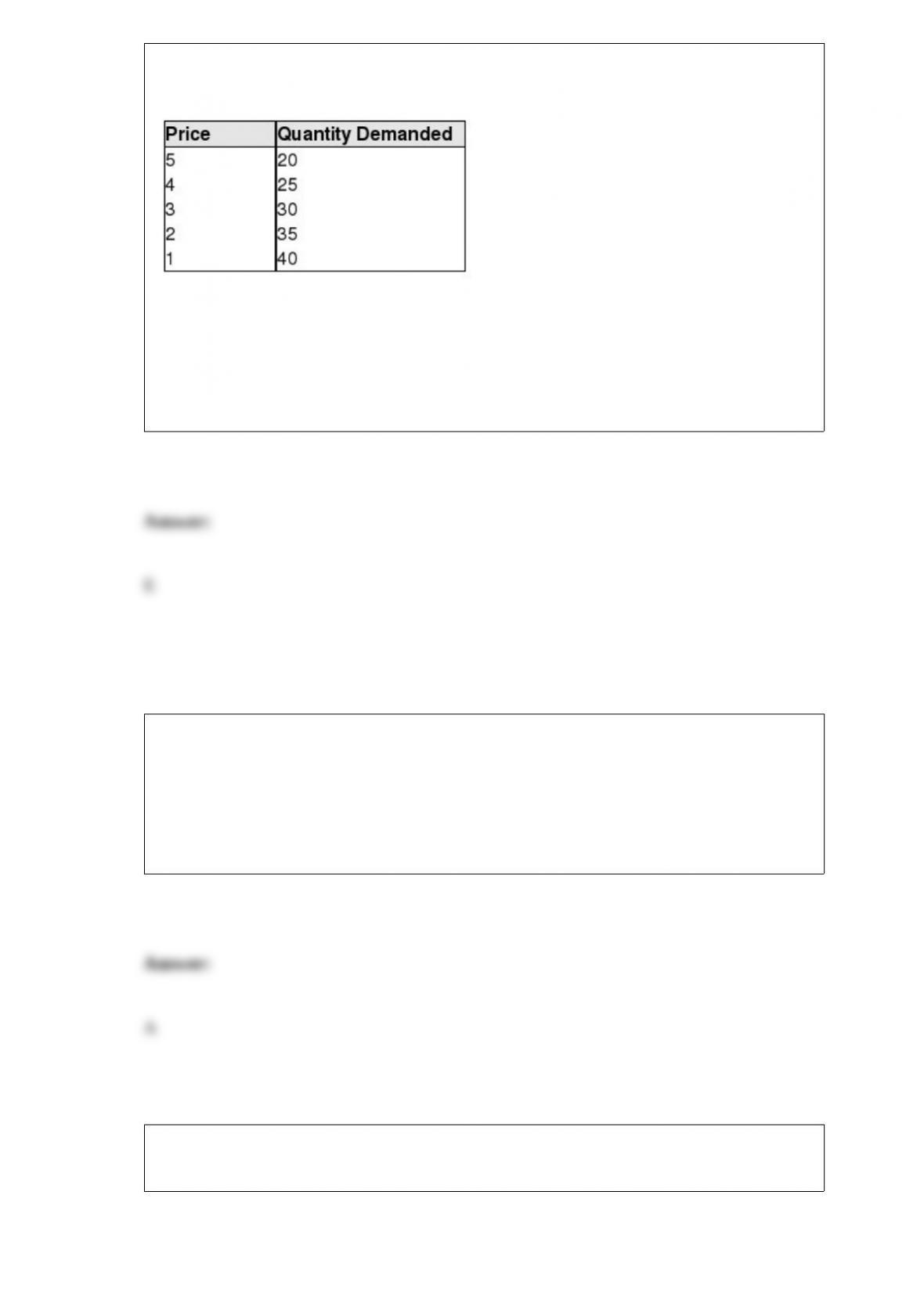
Exhibit 5-2 Price and quantity demanded data
The data in Exhibit 5-2 shows that price elasticity of demand is:
a. increasing as the price decreases.
b. decreasing as the price increases.
c. increasing as the quantity increases.
d. decreasing as the quantity decreases.
e. decreasing as the quantity increases.
The theory of comparative advantage suggests that nations should produce a good if
they:
a. have the lowest opportunity cost.
b. have the lowest wages.
c. have the most resources.
d. can produce more of the good than any other nation.
Exhibit 6-6 Marginal utility for data for clothes and amusement
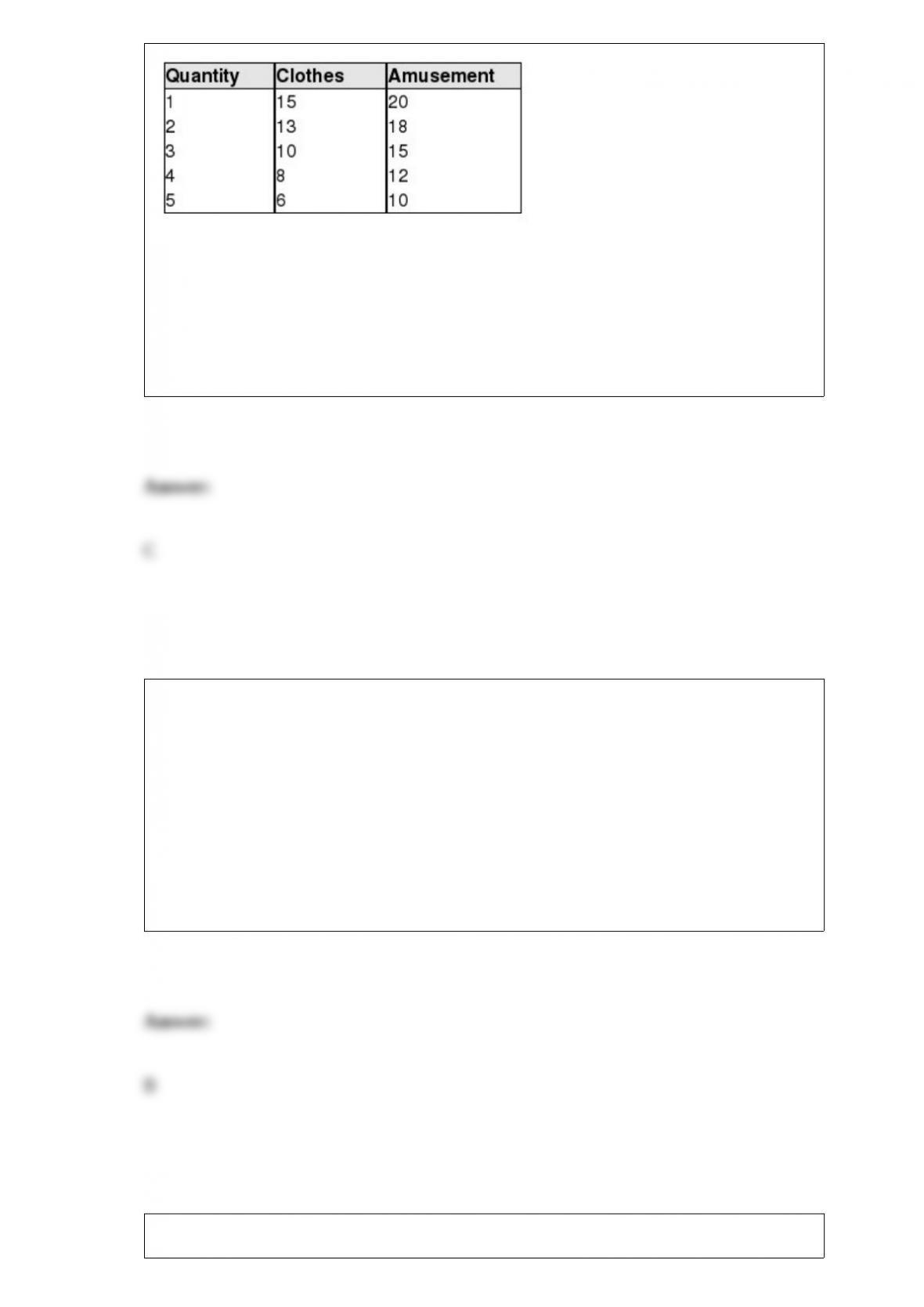
Refer to Exhibit 6-6. Clothes and amusements are priced at $10 each. If you had a
budget of $50, which of the following combinations of goods would you buy?
a. 4 units of clothes and 1 unit of amusement.
b. 3 units of clothes and 2 units of amusement.
c. 2 units of clothes and 3 units of amusement.
d. 1 unit of clothes and 4 units of amusement.
e. 5 units of clothes and 5 units of amusement.
Which of the following correctly explains why sellers in a perfectly competitive market
are price takers?
a. There are few sellers, and so they have the power to take whatever price they want.
b. There are many sellers, and so the market process generates an equilibrium price that
cannot be influenced by any one seller. Thus they have no choice but to take the price
generated by the market process.
c. Sellers in a competitive market have the power to influence price by colluding with
one another and using quotas to limit overall market output and thus raise price.
d. Individual buyers in a competitive market have the power to influence price, and thus
can impose prices and other conditions on powerless sellers.
Which of the following best illustrates perfect competition?
a. Wheat farming.
b. Orange growers setting quotas under the Sunkist cooperative.
c. General Motors advertising campaign for its cars.
d. All of these.
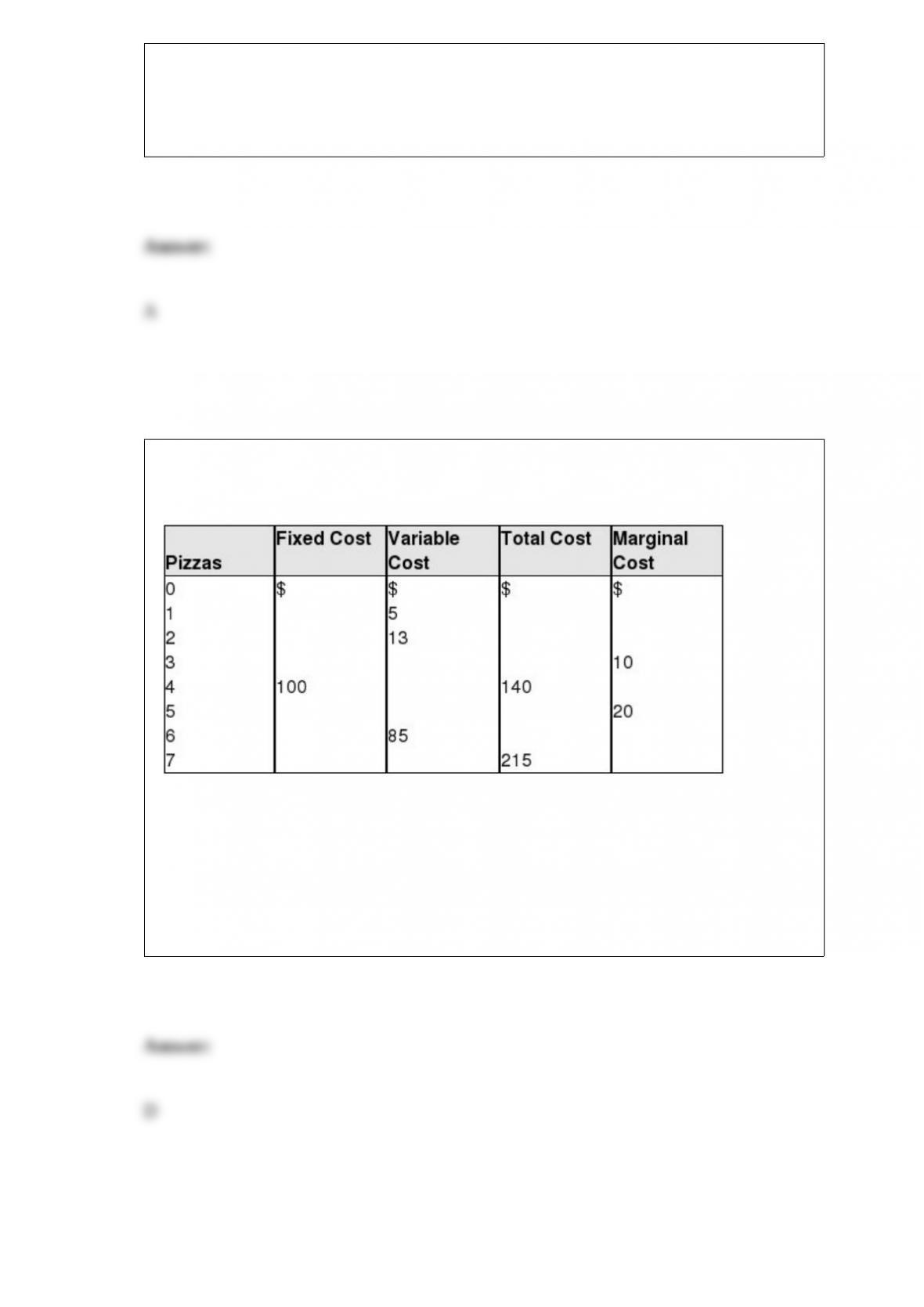
Exhibit 7-8 Costs schedules for producing pizza
By filling in the blanks in Exhibit 7-8, the marginal cost of the sixth pizza is shown to
be equal to:
a. $10.
b. $15.
c. $20.
d. $25.
e. $85.
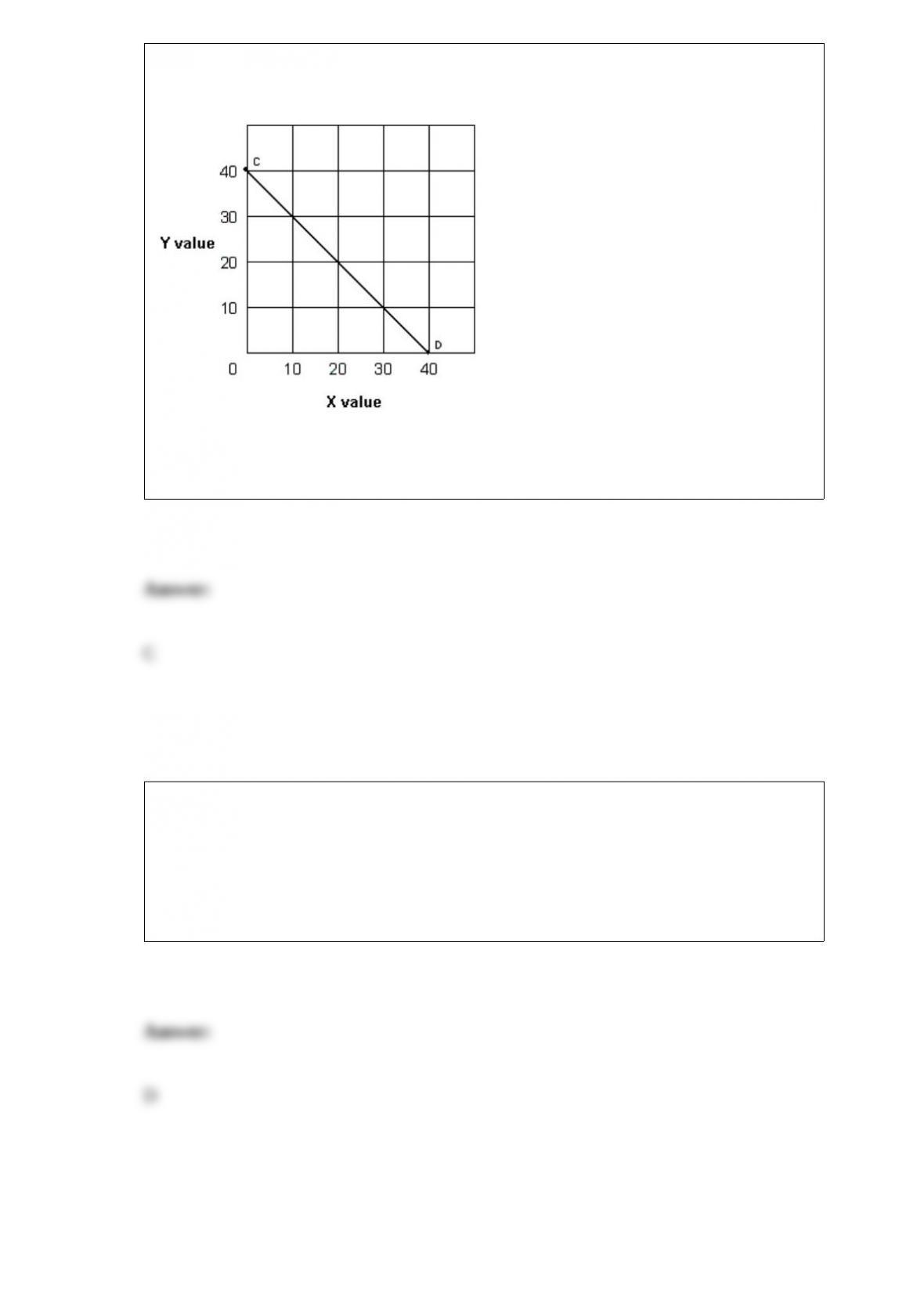
Exhibit 1A-5 Straight line
In Exhibit 1A-5, the slope of straight line CD is:
a. positive. c. negative.
b. zero. d. variable.
A baby boom will have what immediate effect on the disposable diaper market?
a. Supply decreases.
b. Supply increases.
c. Demand decreases.
d. Demand increases.
e. Supply and demand remains the same.

Which of the following statements is true?
a. Specialization and trade along the lines of comparative advantage allows nations to
consume more than if they were to produce just for themselves.
b. Free trade theory suggests that when trade takes place any gains made by one nation
comes at the expense of another.
c. According to the theory of comparative advantage, a nation should specialize in the
production of those goods for which it has an absolute advantage.
d. All of these.