
Which of the following is not an example of an efficiency-equity trade-off faced by
economic agents?
A) According to an article by in the American Journal of Public Health by Edward
Kaplan and Michael Merson of Yale University School of Medicine, the federal
government’s current method of allocating HIV-prevention resources is not
cost-effective. Instead of allocating resources to states in proportion to reported AIDS
cases, resources should flow first to those activities that prevent more infections per
dollar and then to less and less effective combinations of programs and populations
until funds are exhausted, even if it means that some populations would be left without
any prevention services.
B) Concerned about the falling birth rate, the French government has pledged more
money for families with three children, in an effort to encourage working women to
have more babies.
C) The growing demand for corn by ethanol producers has led to a surge in the price of
tortillas, a staple in the Mexican diet. To quell public outcry over rising tortilla prices,
the Mexican government released government corn stocks at prices well below the
market, and pressured states to impose price ceilings on tortillas.
D) Some U.S. colleges cut back on merit scholarships since these programs siphon
money from need-based programs, thus harming lower-income students with greater
financial need.
A firm’s accounting profit is also its
A) economic profit.
B) income statement.
C) net income.
D) statement of liabilities.
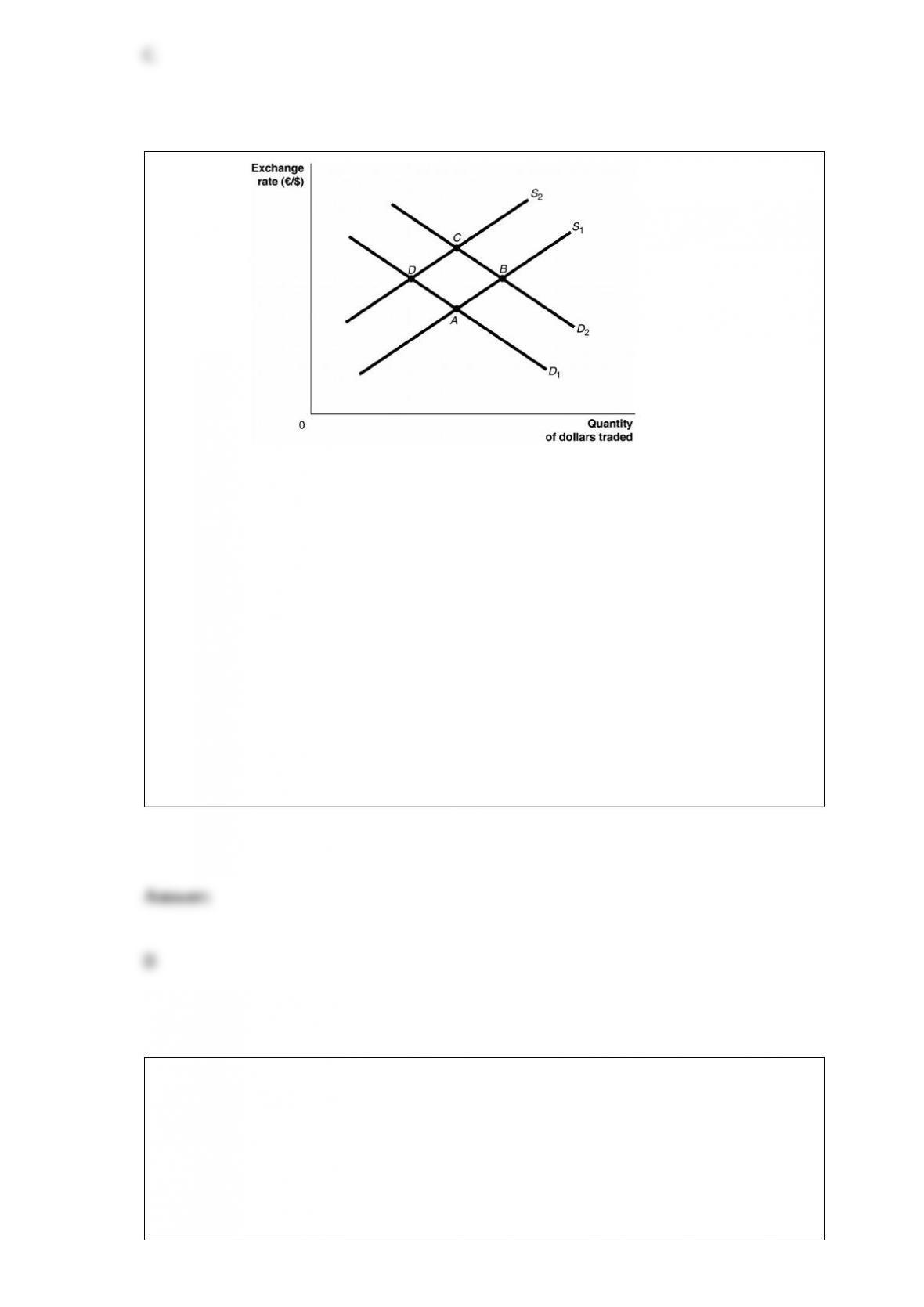
Figure 18-1
Currency speculators believe that the value of the euro will increase relative to the
dollar. Assuming all else remains constant, how would this be represented?
A) Supply would decrease, demand would decrease and the economy moves from B to
C to D.
B) Supply would increase, demand would decrease and the economy moves from C to
B to A.
C) Supply would decrease, demand would increase and the economy moves from A to
D to C.
D) Supply would increase, demand would increase and the economy moves from D to
A to B.
All games share three characteristics. Two of these characteristics are rule and
strategies. What is the third characteristic called?
A) competition
B) collusion

C) results
D) payoffs
Private costs
A) are borne by producers of a good, while social costs are borne by government.
B) are borne by consumers of a good, while social costs are borne by government.
C) are borne by producers of a good, while social costs are borne by society at large.
D) are borne by producers of a good, while social costs are borne by those who cannot
afford to purchase the good.
The Bretton Woods system confronted severe problems in the 1960s, problems which
included
A) some countries with overvalued currencies refused to devalue their currencies.
B) dollars held by foreign central banks exceeded gold reserves held by the United
States.
C) the increased demand for gold brought about by lifting the prohibition against U.S.
citizens owning gold.
D) all of the above
Which of the following is evidence of a surplus of bananas?
A) Firms raise the price of bananas.
B) The price of bananas is lowered in order to increase sales.
C) The equilibrium price of bananas rises due to an increase in demand.
D) The quantity demanded of bananas is greater than the quantity supplied.
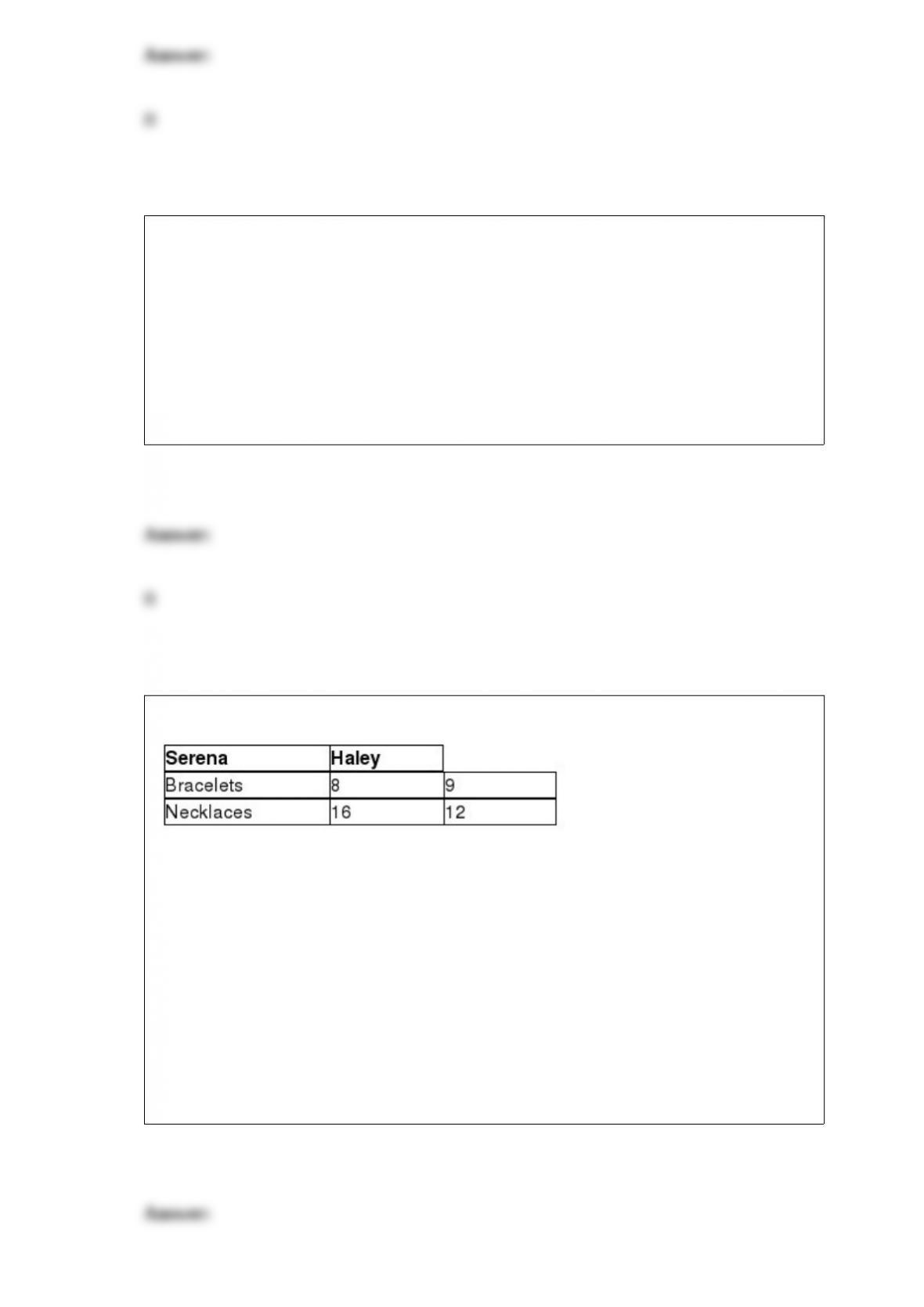
Table 2-6
Table 2-6 shows the output per week of two jewelers, Serena and Haley. They can either
devote their time to making bracelets or making necklaces.
What is Haley’s opportunity cost of making a bracelet?
A) 3/4 of a bracelet
B) 3 bracelets
C) 1 1/3 necklaces
D) 2 necklaces
The De Beers Company blocked competition
A) in the diamond market by controlling the output of most of the world’s diamond
mines.
B) by controlling the supply of most of the world’s high-quality bauxite, the mineral
used to produce aluminum.
C) in the market for fresh and frozen cranberries because it controls about 80 percent of
the cranberry crop.
D) because it has lower costs of producing than other department stores due to
economies of scale.
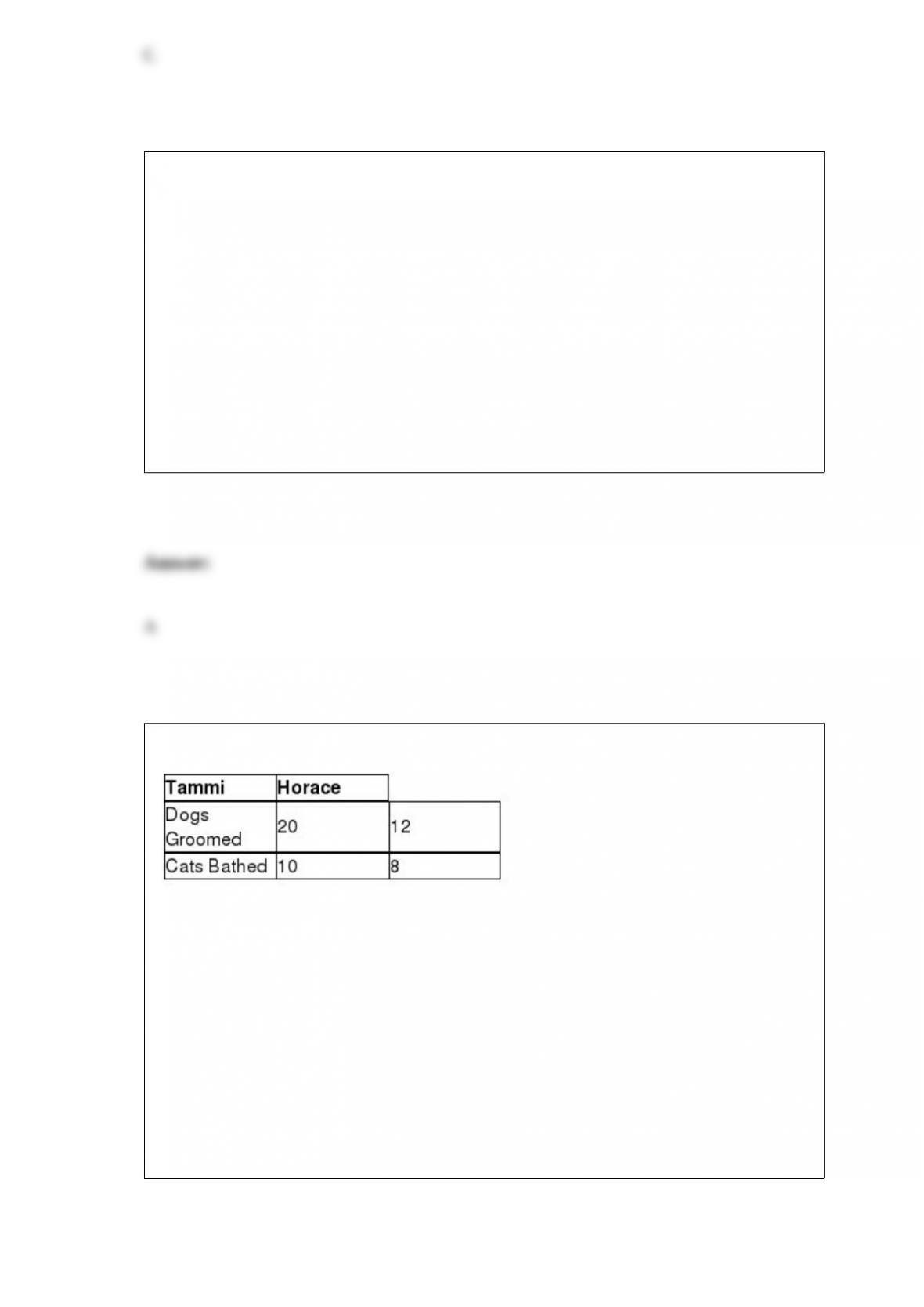
Table 2-10
Table 2-10 shows the output per day of two pet groomers, Tammi and Horace. They can
either devote their time to grooming dogs or bathing cats.
Which of the following statements istrue?
A) Horace has an absolute advantage in both tasks.
B) Tammi has an absolute advantage in both tasks.
C) Horace has an absolute advantage in dog grooming and Tammi in cat bathing.
D) Horace has an absolute advantage in cat bathing and Tammi in dog grooming.
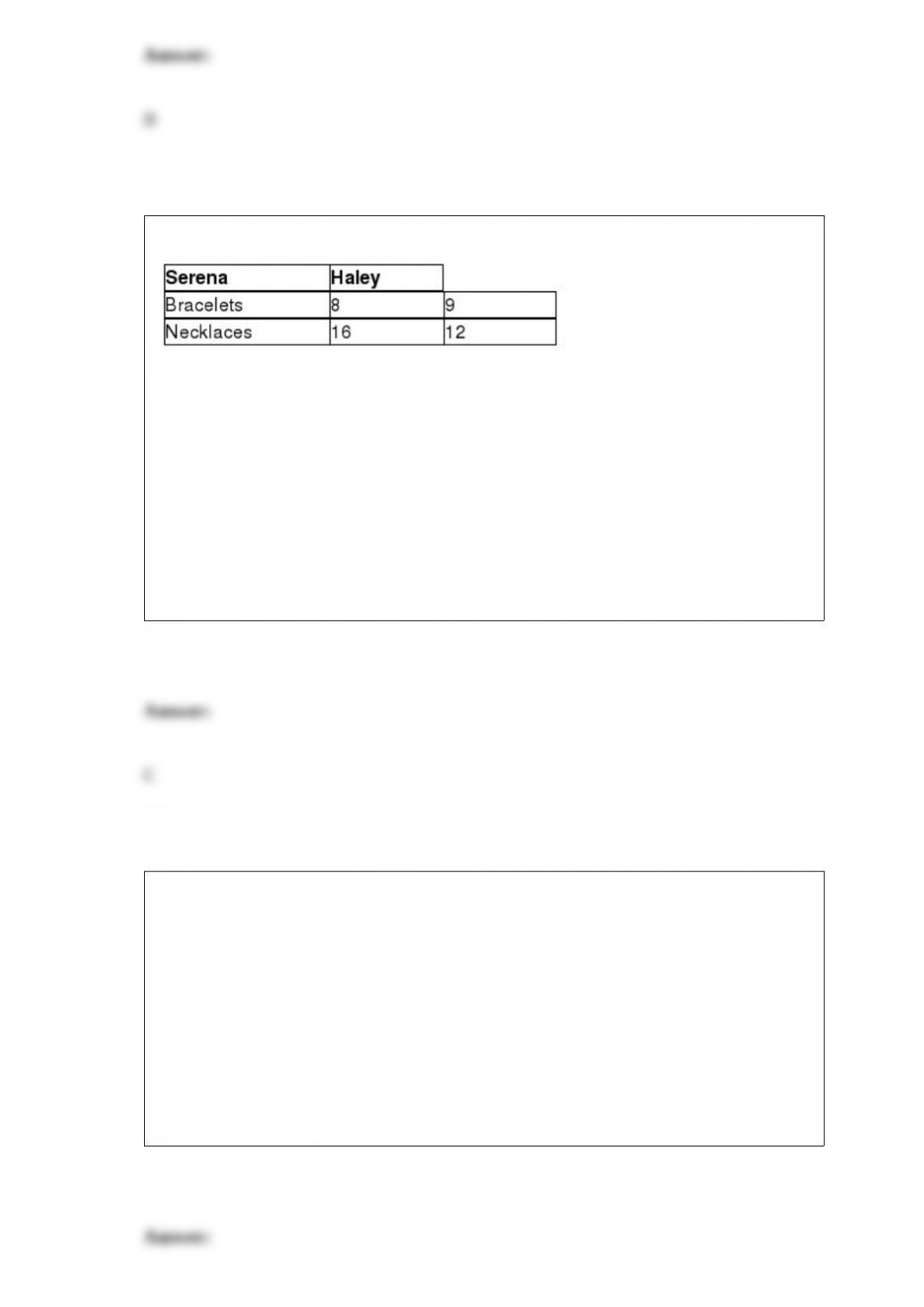
Table 2-9
Table 2-9 shows the output per week of two jewelers, Serena and Haley. They can either
devote their time to making bracelets or making necklaces. What is Haley’s opportunity
cost of making a bracelet?
A) 3/4 of a bracelet
B) 3 bracelets
C) 1 1/3 necklaces
D) 2 necklaces
In 2008, the Treasury and Federal Reserve took several actions in response to the
deepening financial crisis. One action was the Treasury’s move to have the federal
government take control of
A) the Federal Deposit Insurance Corporation (FDIC).
B) Fannie Mae and Freddie Mac.
C) JPMorgan Chase.
D) Lehman Brothers.
In the long run
A) the firm’s fixed costs are greater than its fixed costs in the short run.
B) all of the firm’s costs are explicit costs; there are no implicit costs of production.
C) the firm is more profitable than it is in the short run.
D) all of the firm’s costs are variable costs.
Figure 28-7
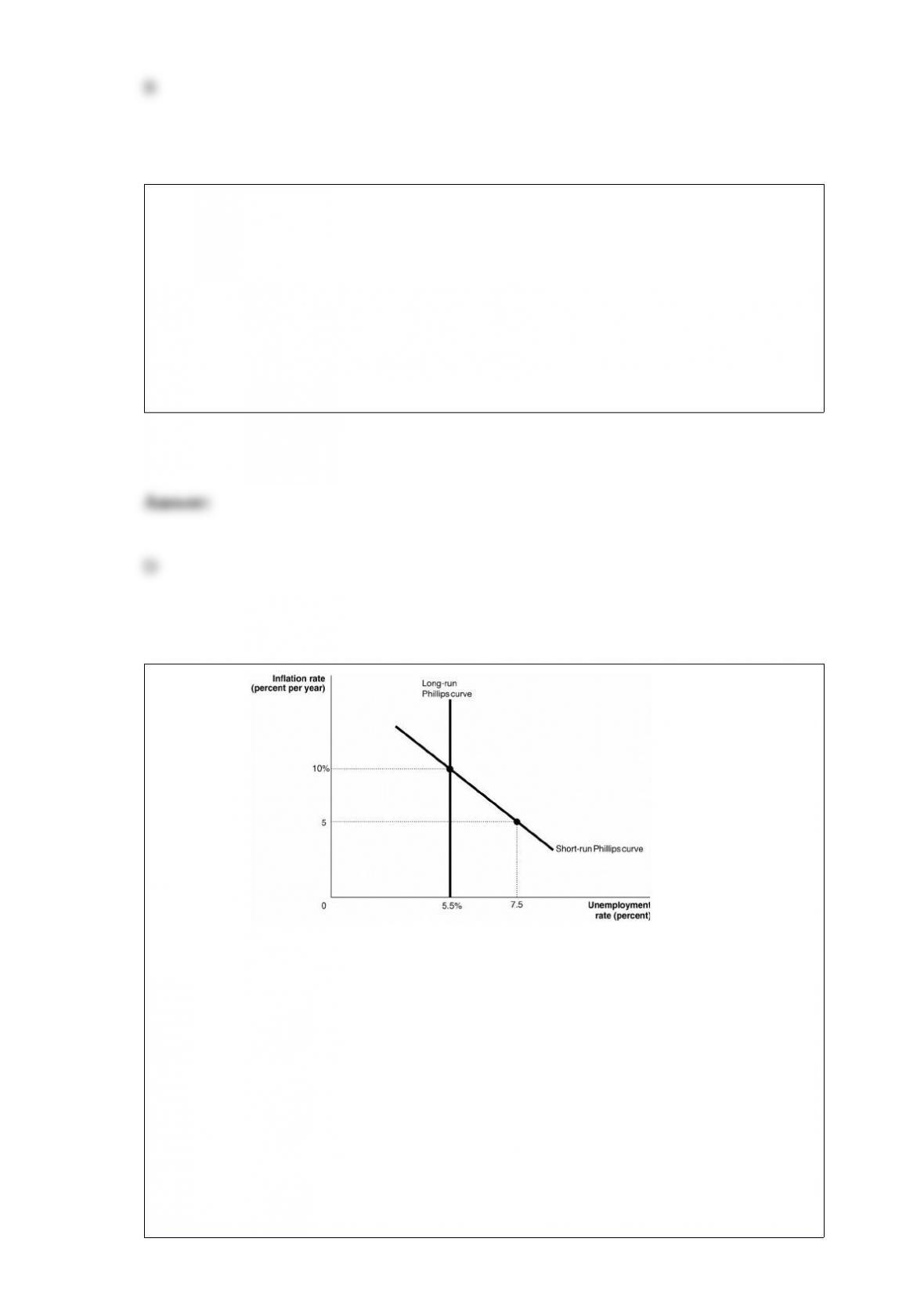
Consider the Phillips curves depicted in the graph above. The Fed announces its
intention to decrease inflation from 10 percent to 5 percent per year, and it succeeds. If
expectations of inflation are not altered by the Fed’s announcement, the rate of
unemployment will be ________ in the short run.
A) less than 5.5 percent
B) 5.5 percent
C) between 5.5 and 7.5 percent
D) 7.5 percent
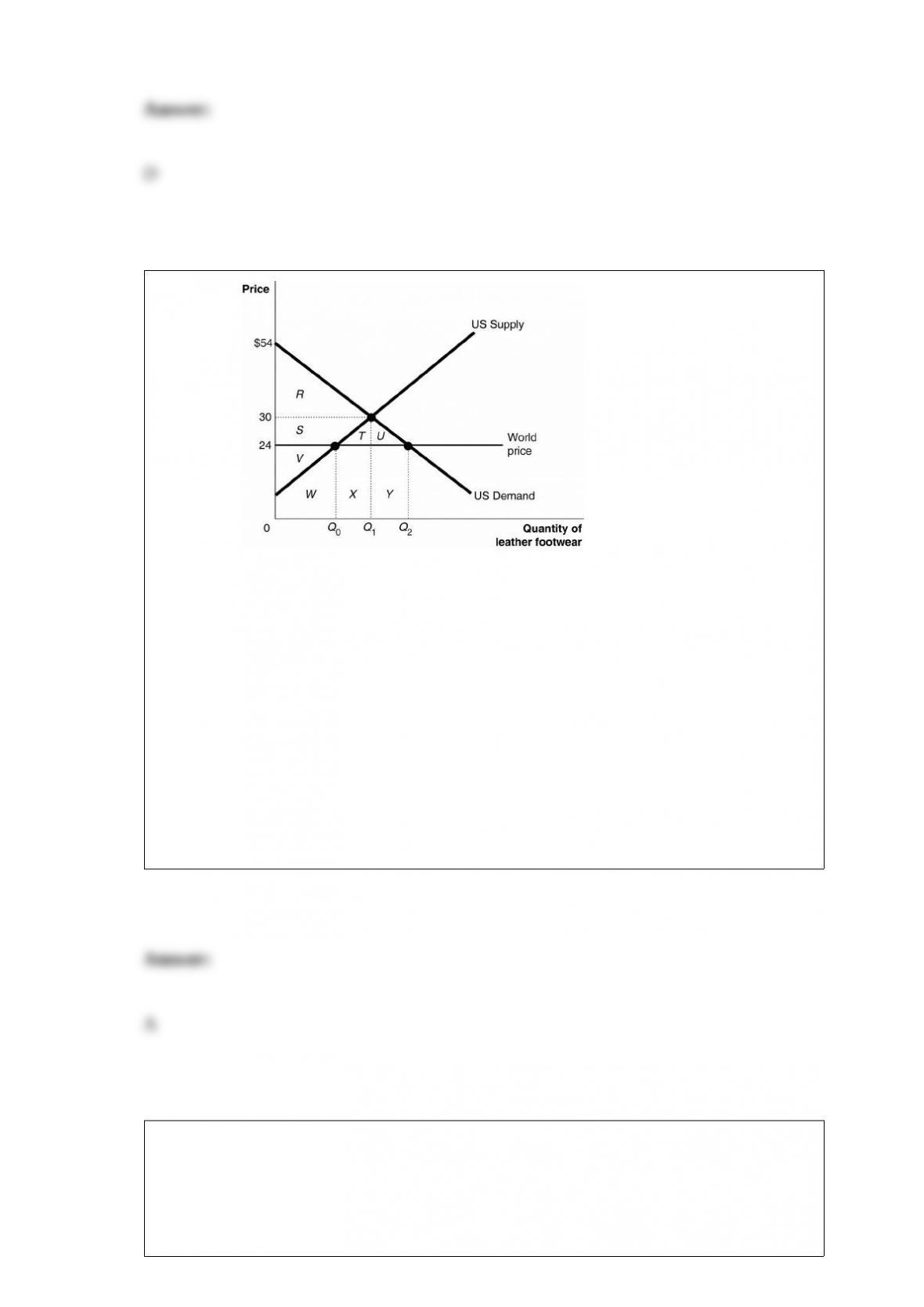
Figure 9-4 Figure 9-4 shows the U.S.
demand and supply for leather footwear.
Suppose the government allows imports of leather footwear into the United States.
What will be the domestic quantity supplied?
A) Q0
B) Q1
C) Q2
D) Q2 – Q0
During the Chinese experience with pegging the yuan to the dollar, the yuan was
undervalued. As a result,
A) there was a surplus of yuan on the market that the Chinese government had to
purchase to maintain the peg, depleting China’s reserves of dollars.
B) there was a surplus of dollars on the market that the Chinese government had to
purchase to maintain the peg.
C) the prices of Chinese exports were higher than they would have been without the
peg.
D) the equilibrium value of the yuan was below the pegged value of the yuan.
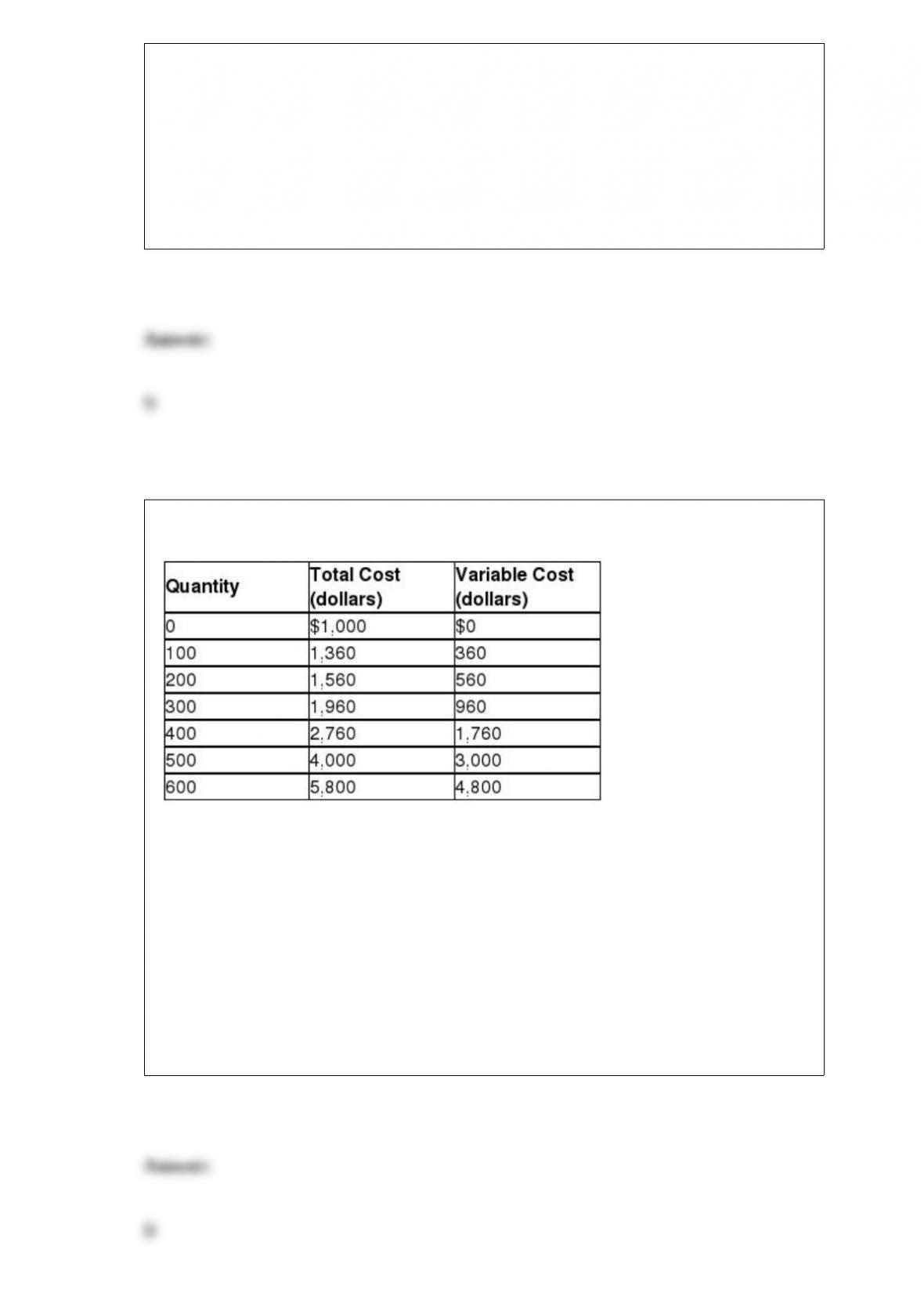
Table 12-1
Table 12-1 shows the short-run cost data of a perfectly competitive firm that produces
plastic camera cases. Assume that output can only be increased in batches of 100 units.
If the market price of each camera case is $8, what is the firm’s total revenue?
A) $2,400
B) $3,200
C) $4000
D) $4,800

If the consumption function is defined as C = 5,500 + 0.9Y, what is the value of the
multiplier?
A) 0.1
B) 0.9
C) 9
D) 10