1) to justify the subsidies it has received from european governments, the airbus
company has used all of the following arguments except:
a.its subsidies have prevented u.s. aircraft firms from holding a world-wide monopoly
b.u.s. aircraft firms have benefited from military-sponsored programs of the u.s.
government
c.airbus’ subsidies were totally repaid as the firm realized profits on its aircraft sales
d.without subsidies to airbus, europe would be dependent on the united states as a
supplier of aircraft
2) a trade policy designed to alleviate some domestic economic problem by exporting it
to foreign countries is known as a (an):
a.international dumping policy
b.trade adjustment assistance policy
c.most-favored-nation policy
d.beggar-thy-neighbor policy
3) a (an) ____ is an arrangement by which two parties exchange one currency for
another and agree that the exchange will be reversed at a stipulated date in the future:
a.arbitrage
b.swap
c.option
d.hedge
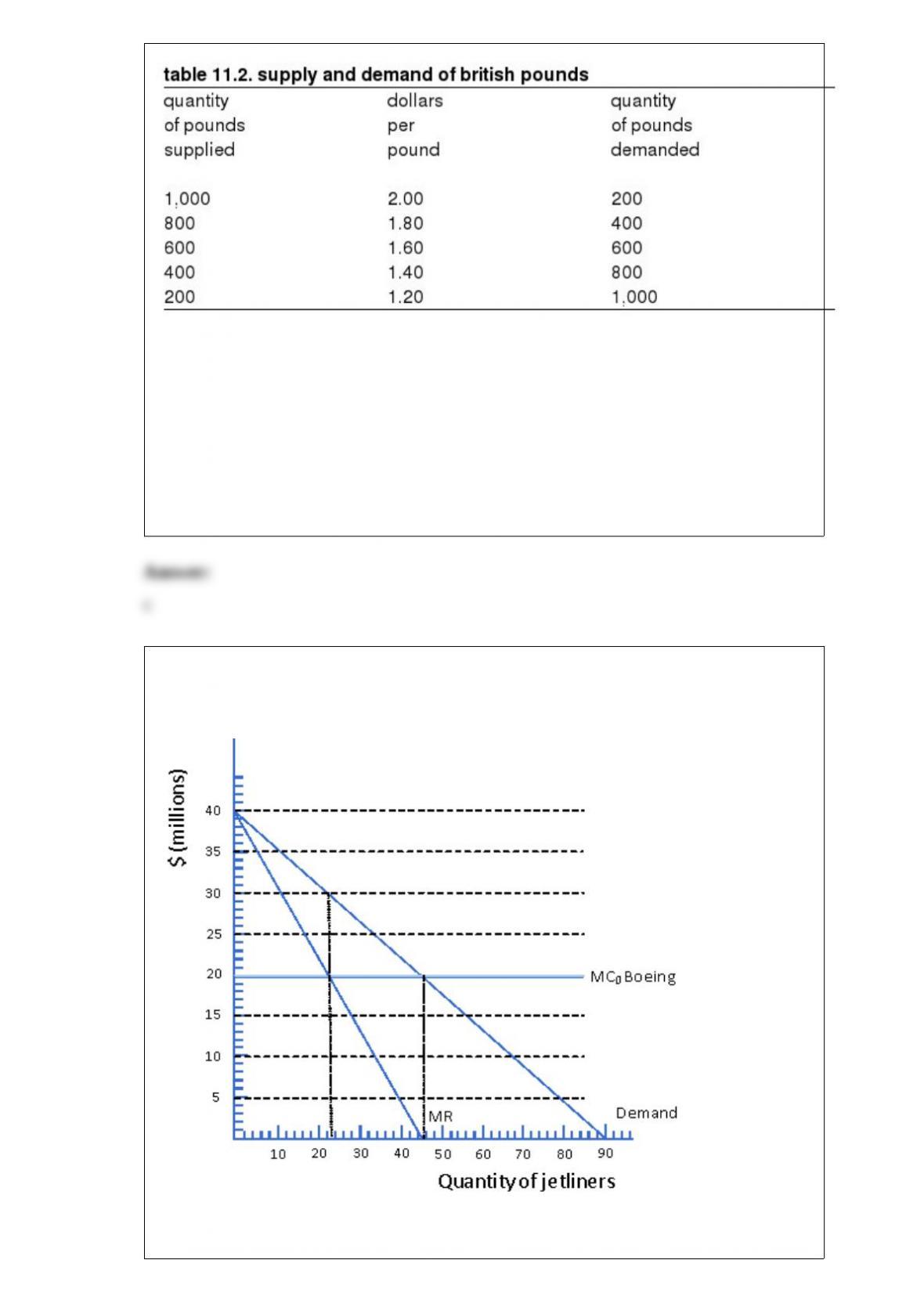
4) refer to table 11.2. at the exchange rate of $1.40 per pound, there is an ____ for
pounds. this imbalance causes ____ in the price of the pound, which leads to ____ in
the quantity of pounds supplied and ____ in the quantity of pounds demanded.
a.excess supply, a decrease, an increase, a decrease
b.excess supply, an increase, a decrease, an increase
c.excess demand, an increase, an increase, a decrease
d.excess demand, an increase, a decrease, an increase
5) figure 6.4japanese market for jetliners
consider the japanese market for jetliners as depicted in figure 6.4.suppose lone
producer of jetliners in the world is boeing and boeing faces a constant marginal cost of
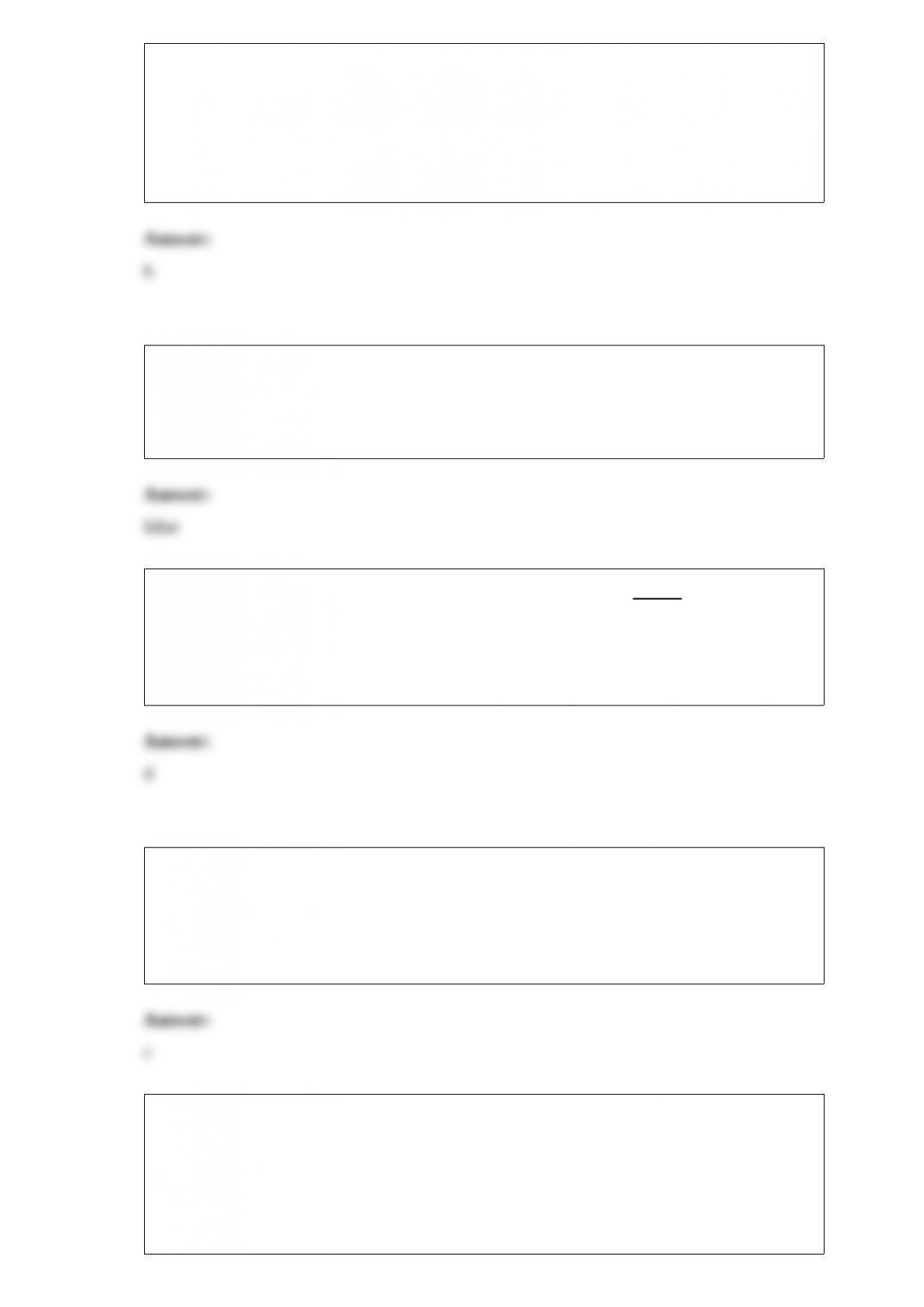
$20 million per jetliner.how much consumer surplus will the japanese airlines who
purchase the jetliners earn from their transactions with boeing?
a.0
b.$115 million
c.$230 million
d.$250 million
6) as of 1992, the european union had achieved the monetary union stage of economic
integration.
a.true
b.false
7) the world trade organization provides for all of the following except:
a.the usage of the normal-trade-relation (most-favored-nation) clause
b.assistance in the settlement of trade disagreements
c.multilateral tariff reductions
d.bilateral tariff reductions
8) by 1992 the european union had become a full-fledged:
a.economic union
b.monetary union
c.common market
d.fiscal union
9) the figure below depicts the steel market for portugal, a small nation that is unable to
affect the world price. assume that germany and france can supply steel to portugal at a
price of $200 and $300 respectively.
figure 8.2. portugal’s steel market
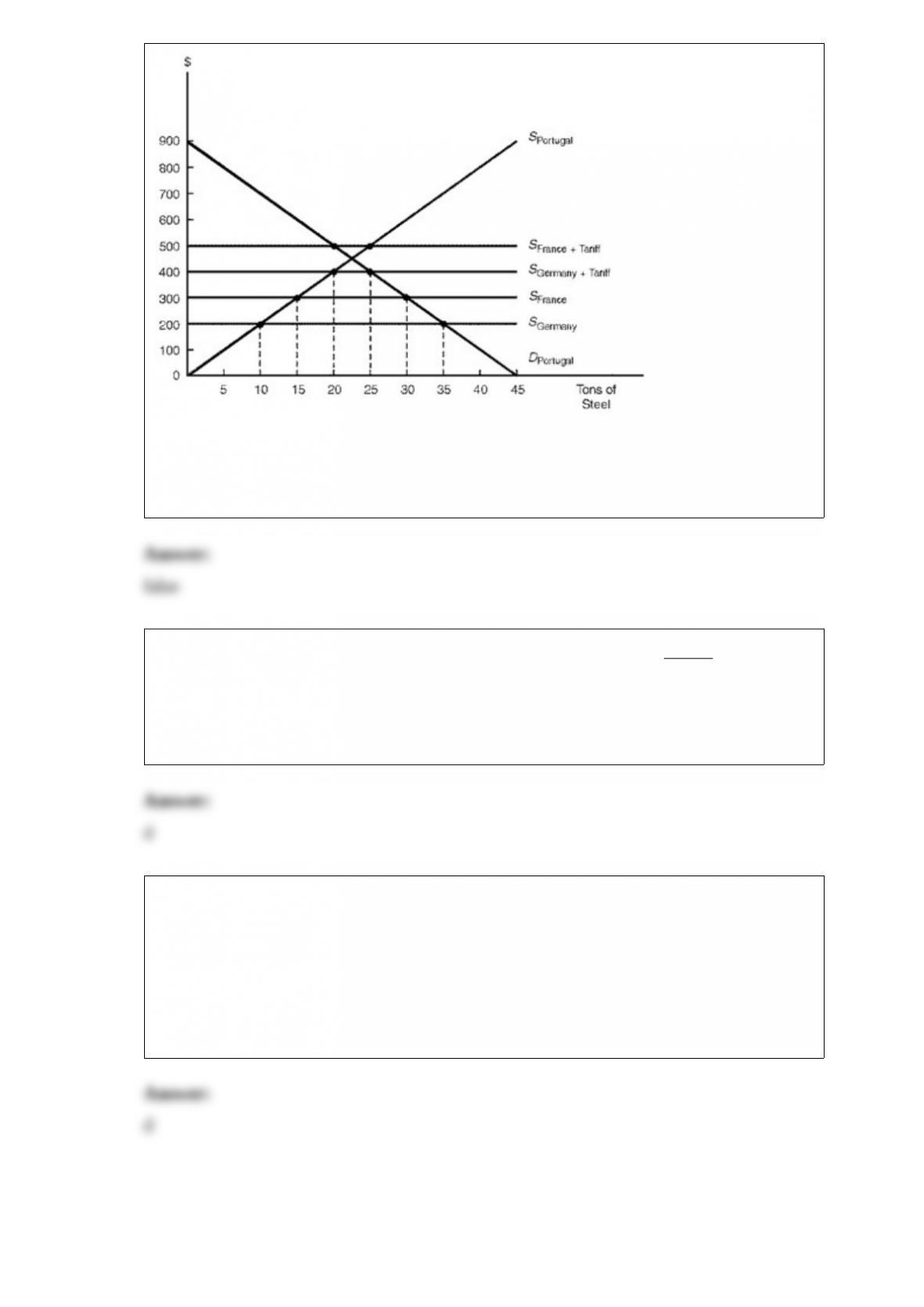
consider figure 8.2. with free trade, portugal produces 15 tons of steel, consumes 30
tons of steel, and imports 15 tons of steel.
a.true
b.false
10) the u.s. “trade-remedy laws” could establish all of the following except:
a.import tariffs to protect u.s. firms seriously injured by foreign competition
b.countervailing duties which neutralize foreign export subsidies
c.antidumping duties which protect u.s. firms from imports sold at less-than-fair-value
d.economic sanctions levied against hostile nations
11) in the presence of purchasing-power parity, if one dollar exchanges for 2 british
pounds and if a vcr costs $400 in the united states, then in great britain the vcr should
cost:
a.200 pounds
b.400 pounds
c.600 pounds
d.800 pounds
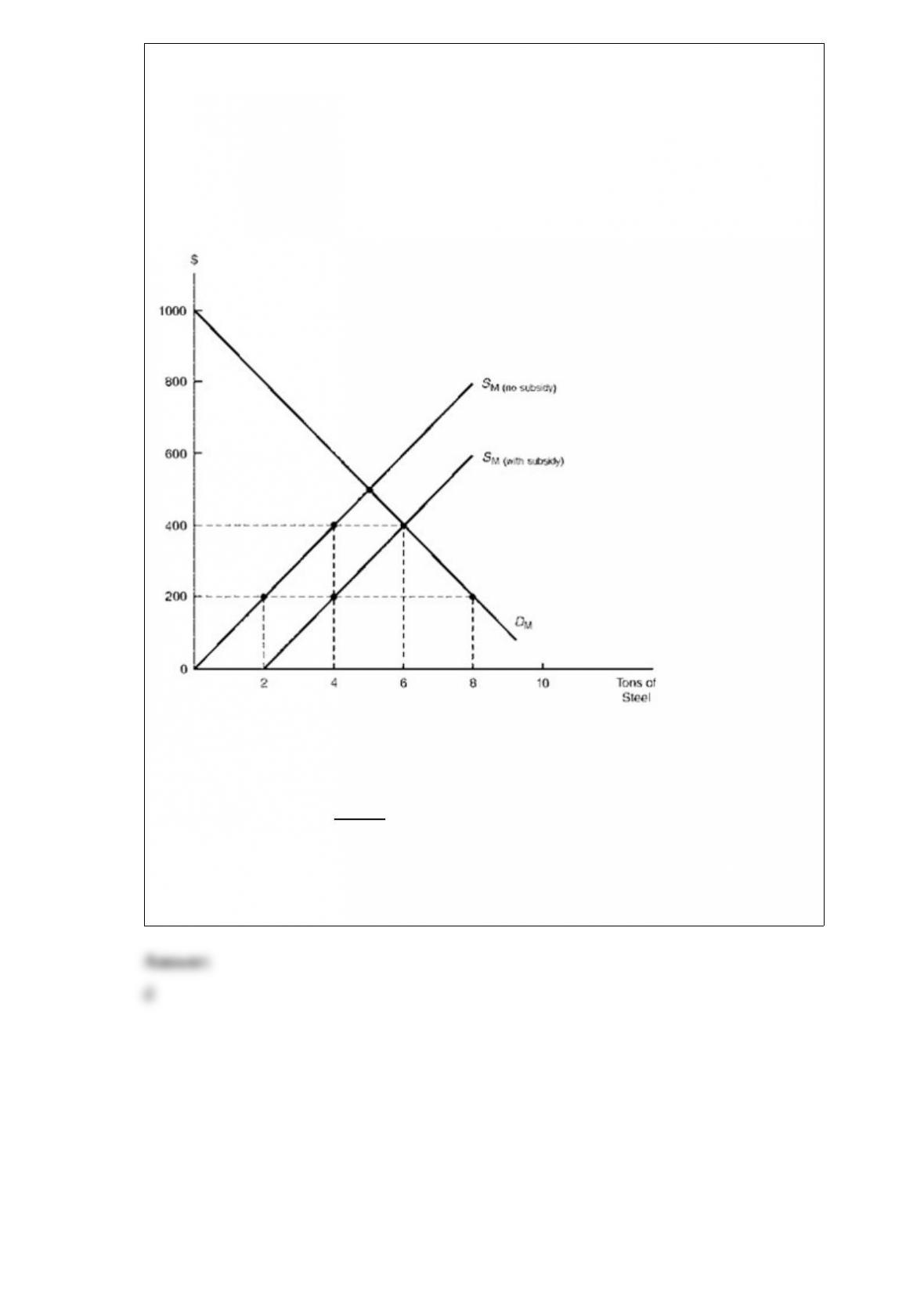
12) figure 5.1 illustrates the steel market for mexico, assumed to be a ‘small” country
that is unable to affect the world price. suppose the world price of steel is given and
constant at $200 per ton. now suppose the mexican steel industry is able to obtain trade
protection.
figure 5.1. alternative nontariff trade barriers levied by a ‘small” country
referring to figure 5.1, suppose the mexican government imposes an import quota equal
to 2 tons of steel.
if foreign exporters behave as monopoly sellers, and mexican importers behave as
competitive buyers, the overall welfare loss of the quota to mexico equals:
a.$200
b.$400
c.$600
d.$800