
If the demand for jelly decreases, and the price of grapes (used to make jelly) rises:
A) the equilibrium price of jelly rises and the equilibrium quantity of jelly might rise or
fall.
B) the equilibrium price of jelly falls and the equilibrium quantity of jelly might rise or
fall.
C) the equilibrium price of jelly might rise or fall, and the equilibrium quantity of jelly
falls.
D) the equilibrium price of jelly might rise or fall, and the equilibrium quantity of jelly
rises.
Coordination problems in large firms might lead to:
A) horizontal marginal cost curves.
B) downward-sloping marginal cost curves.
C) upward-sloping short-run average cost curves.
D) upward-sloping long-run average cost curves.
Holding real income constant, the change in quantity consumed that is caused by a
change in the relative price of the good describes the:
A) law of diminishing returns.
B) substitution effect.
C) income effect.
D) law of supply.
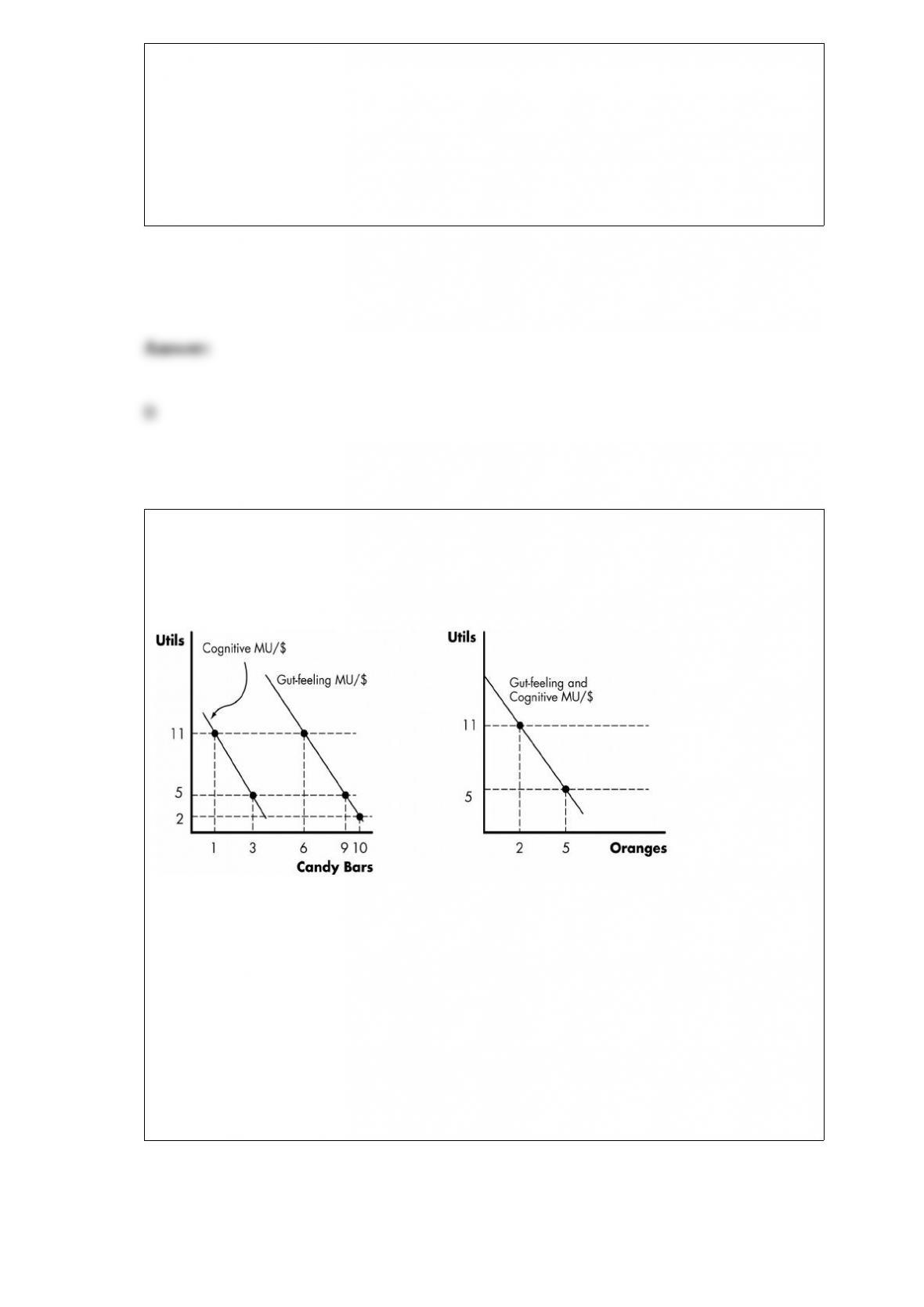
Refer to Figure 7.4. If Sophia relies solely on gut feelings, she will maximize utility at a
marginal utility per dollar of ________ utils for candy bars and ________ utils for
oranges.
Figure 7.4
The above figure represents the marginal utility per dollar for candy bars and
oranges for Sophia. The price of each product is $0.50, and Sophia has a budget of
$4.
A) 5; 11
B) 11; 5
C) 5; 5
D) 11; 11

At the market equilibrium, resources are allocated efficiently because:
A) the marginal cost of producing another unit is equal to zero.
B) the price buyers pay accurately reflects the marginal cost of the resources used to
produce the good.
C) the price buyers pay is greater than sellers’ willingness to sell.
D) all of the above
Additional Application
For many years North Carolina-based Krispy Kreme Doughnuts have been the choice
of many Southerners. But now rival Dunkin’ Donuts is working on changing the way
Southerners expect a doughnut to taste. The Northeastern-based Dunkin’ Donuts has
plans to become a national brand in the next 15 years by tripling the number of stores in
the U.S. The difference is in the doughnut itself. Krispy Kreme offers a glazed, hot,
lighter doughnut while the product of Dunkin’ Donuts can be described as “thicker and
cakier.” Do consumers notice the difference? Rosemary Evans from Alabama states,
“Dunkin’ Donuts just don’t have much flavor.” And Jack Lehnhart from Ohio says
Krispy Kremes are “wax doughnuts.” As the size of the industry grows the efforts to
differentiate each product remain strong. Dunkin’ Donuts focuses on coffee and baked
goods as important components in its long term business plan. When discussing the two
companies and their approaches to success, the brand officer at Dunkin’ Donuts
succinctly said, “We’re very different.” Just take note of the different ways they spell the
product they produce!
Source: Beth Rucker, “Dunkin’ Donuts Raids Krispy Kreme’s Turf,” October 22, 2006,
http://hosted.ap.org/dynamic/stories/D/DONUT_WARS, accessed 10/30/2006.

Why would Dunkin’ Donuts want to keep their product different from Krispy Kreme?
A) They do not want Southerners confusing the two doughnuts.
B) They want to maintain a specific brand identity.
C) They do not have the level of technology to produce a Krispy Kreme-like doughnut.
D) They do not want customers to accuse them of stealing trade secrets.
Goods that are nonrival in consumption and that have benefits that are nonexcludable
are:
A) private goods.
B) neighbor effects.
C) public goods.
D) none of the above.
Wheat is produced in a perfectly competitive market. Market demand for wheat
increases. This will cause the individual wheat farmer’s marginal revenue to ________
and their profit maximizing level of output to ________.
A) increase; increase

B) increase; decrease
C) decrease; increase
D) decrease; decrease
Which of the following is a problem of subsidizing an industry to help it establish a
world monopoly?
A) All monopolies create deadweight losses.
B) A nation may pick the wrong industry to subsidize.
C) If both the domestic firm and the foreign firm enter the market, nations might end up
subsidizing two money losing firms.
D) both B and C
Suppose it is that time of the year for the National Public radio station to invite every
listener to pledge and support the station. Donna is a daily listener and decides to wait
for others to contribute and support the station. Meanwhile she continues to get the
benefit of public broadcasting. This is an example of the:
A) public good problem.
B) free-rider problem.

C) rival in consumption problem.
D) drop-in-the-bucket problem.
If the quantity demanded of restaurant meals increases by 20% when income increases
by 10%, the demand for restaurant meals is:
A) price sensitive.
B) income-inelastic.
C) income-elastic.
D) price insensitive.
Under the conditions of monopolistic competition:
A) firm profits are higher in the long run than in the short run.
B) average costs of production are the same in the short run as they are in the long run.
C) economic profit is zero in the long run.
D) price equals marginal cost.
The example of the VCRs from Korea illustrates dumping due to:
A) predatory pricing.
B) avoidance of environmental laws.
C) price discrimination.
D) retaliatory trade practices.
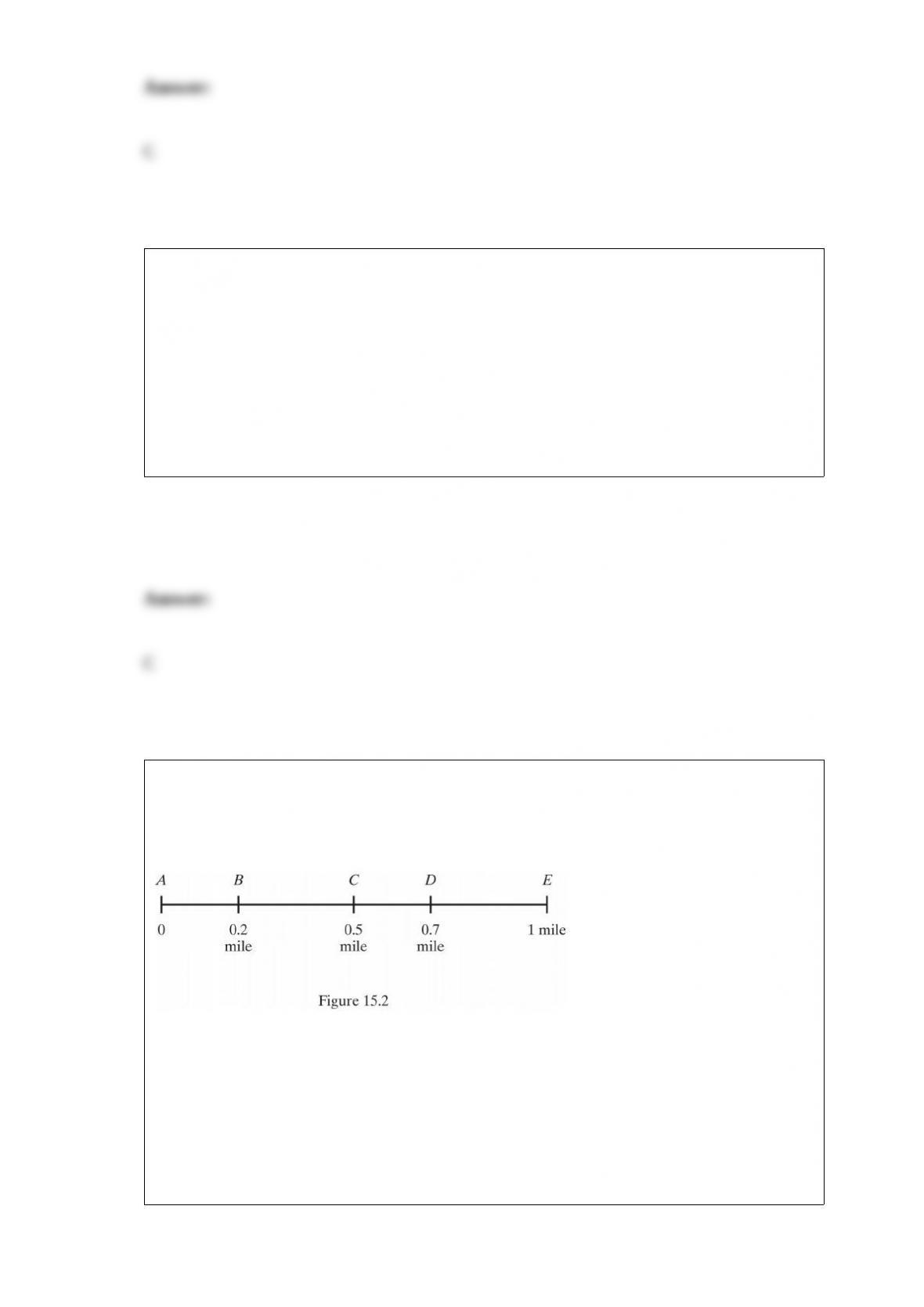
Figure 15.2 depicts a one-mile stretch of beach with 100 swimmers distributed evenly
along the beach. There are two ice cream vendors – 1 and 2 – on the beach selling an
identical product. If swimmers prefer to buy ice cream from a nearer vendor, what is the
median location?
A) A
B) B
C) C
D) D
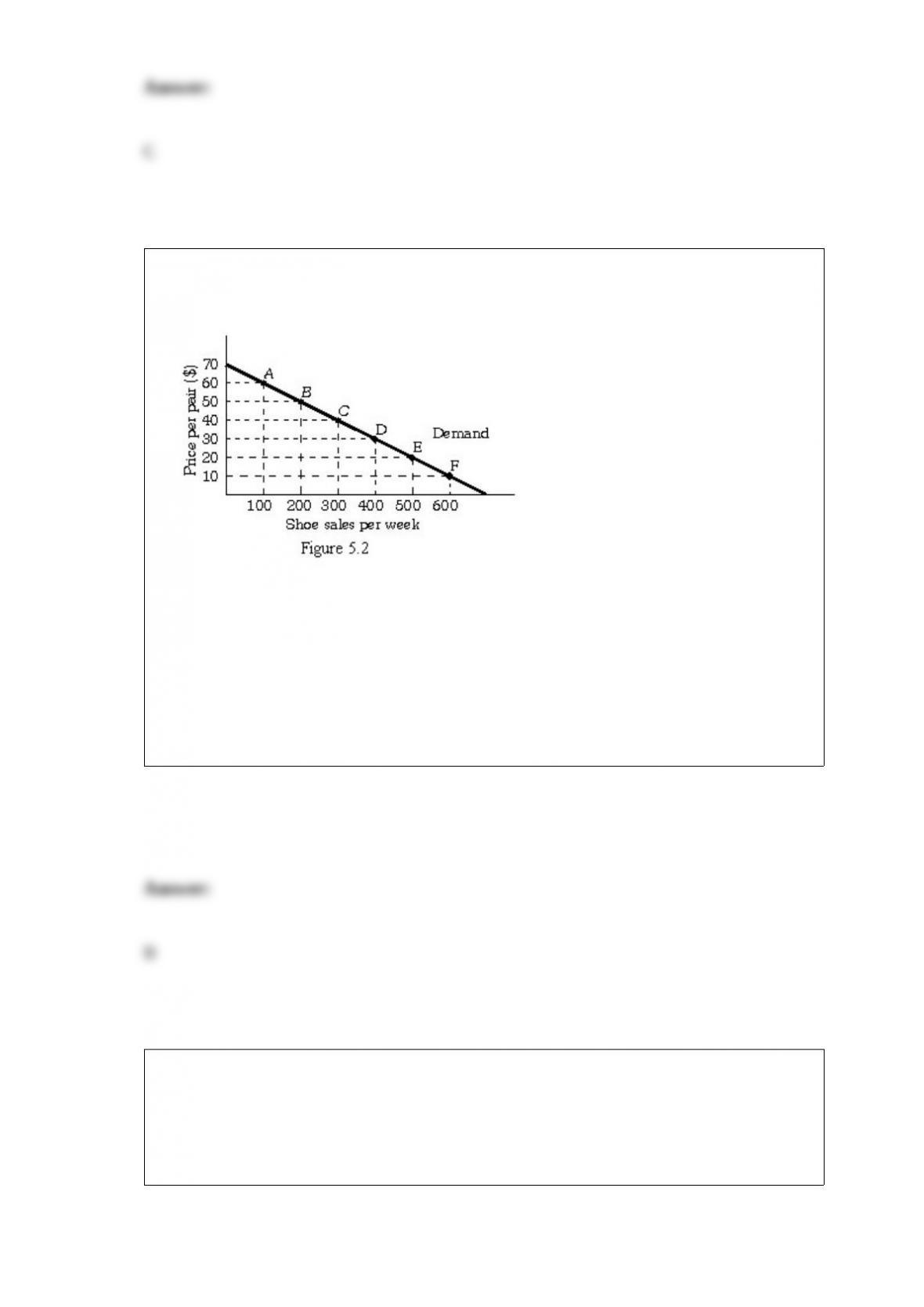
Refer to Figure 5.2. Using the initial-value method, the value of the price elasticity of
demand from point E to point F can be described as:
A) elastic.
B) inelastic.
C) unitary.
D) zero.
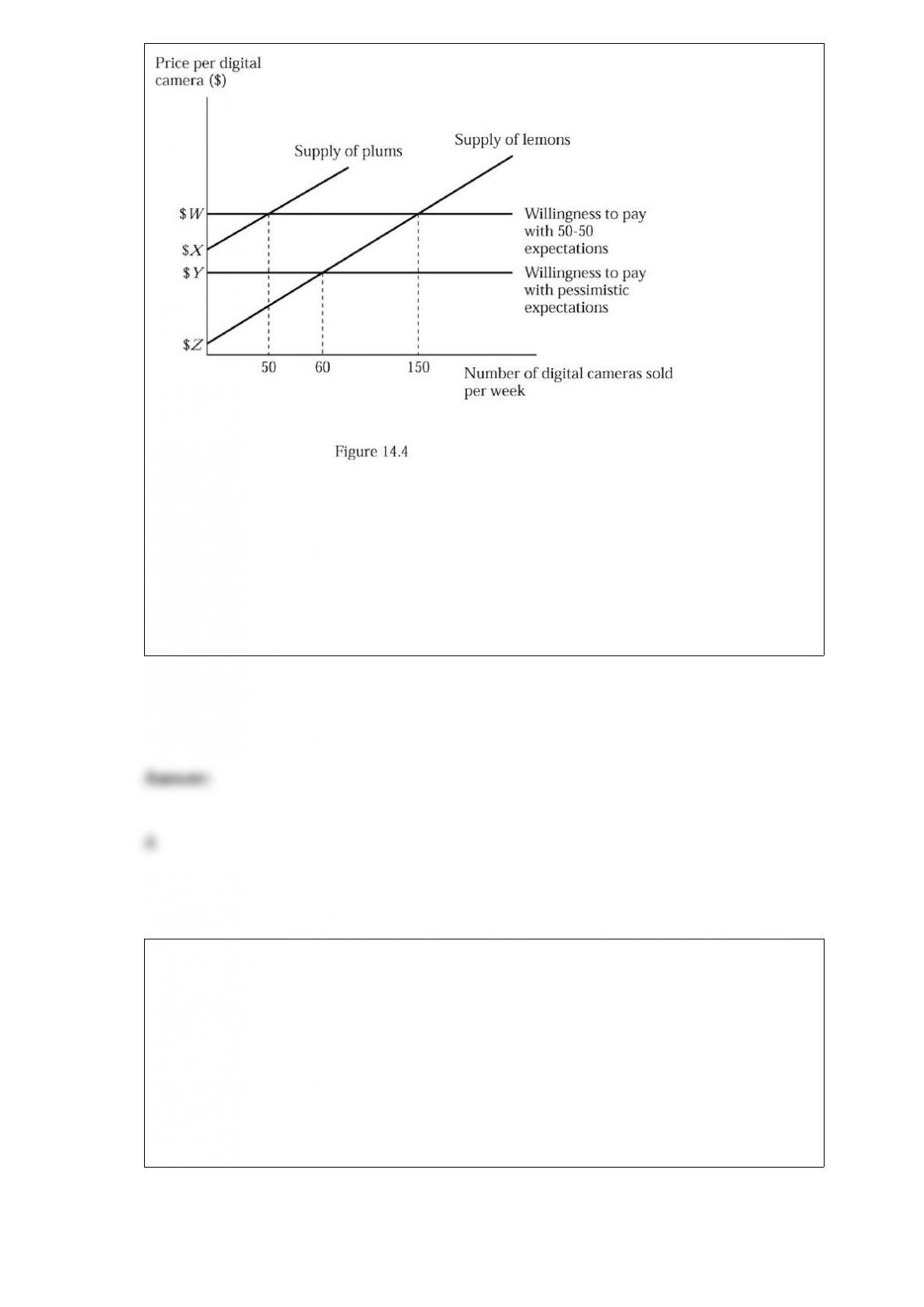
Figure 14.4 represents the market for used 12 megapixel digital cameras. Suppose
buyers are willing to pay $400 for a plum (high-quality) used digital camera and $200
for a lemon (low-quality) used digital camera. If buyers believe that 50% of used digital
cameras in the market are lemons (low quality), how many plums will be supplied by
sellers?
A) 50
B) 60
C) 150
D) 200
The market supply curve is:
A) negatively sloped.
B) upward sloping.
C) always vertical.
D) always horizontal.

When El Guapo’s Mexican Restaurant hires one waiter, 5 tables can be served in an
hour. When El Guapo’s Mexican Restaurant hires two waiters, 12 tables can be served
in an hour. The marginal product of labor of the second waiter is ________ tables
served per hour.
A) 5
B) 7
C) 12
D) 17
Natural monopoly is characterized by:
A) decreasing average total cost and a long-run average cost curve being positively
sloped and steep.
B) decreasing average total cost and low and increasing marginal cost.
C) decreasing average total cost and a long-run average cost curve being negatively
sloped and steep.
D) increasing average total cost and large and increasing marginal cost.
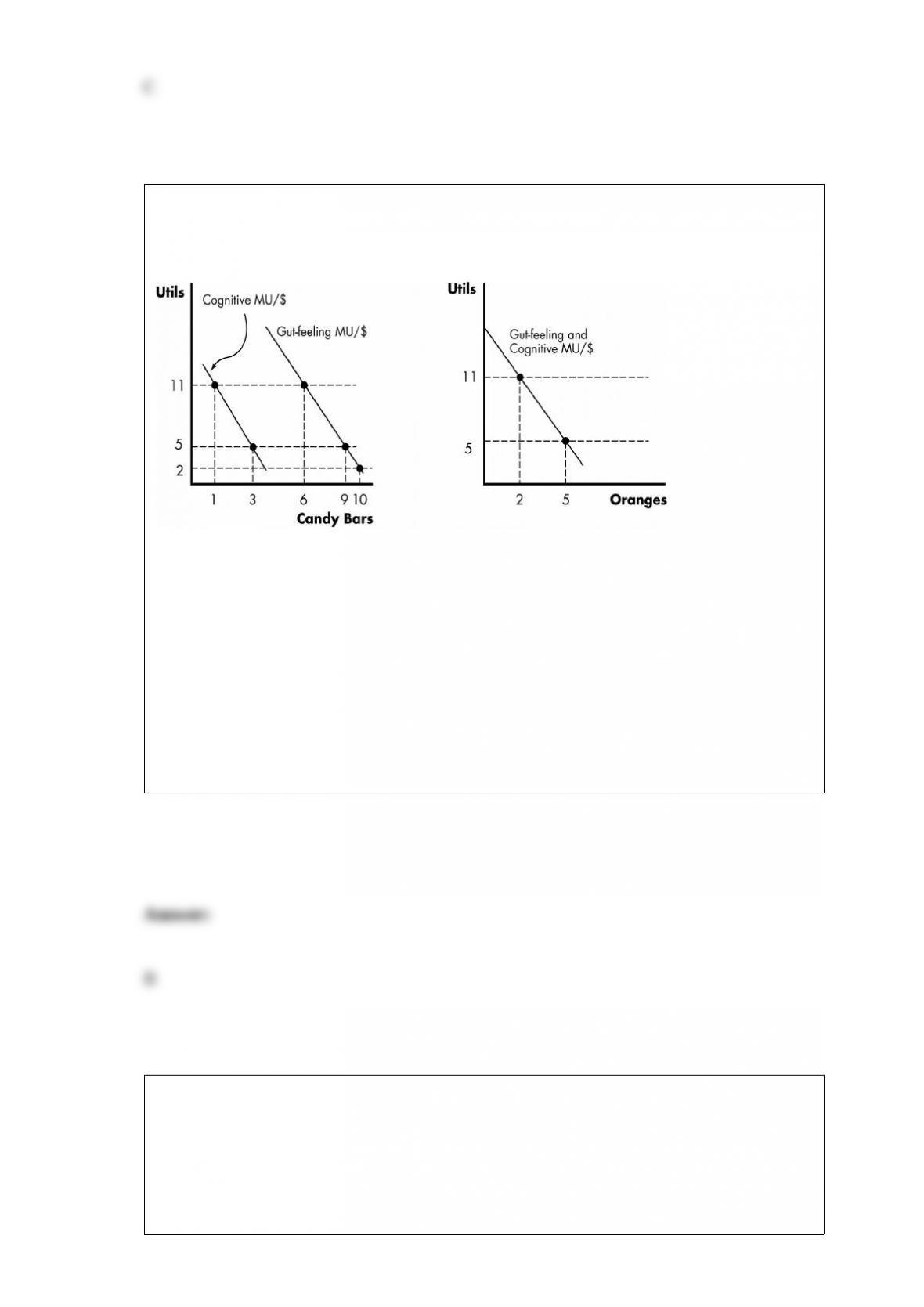
Refer to Figure 7.4. If Sophia relies solely on gut feelings, she will purchase ________
candy bars and ________ oranges to maximize utility.
Figure 7.4
The above figure represents the marginal utility per dollar for candy bars and
oranges for Sophia. The price of each product is $0.50, and Sophia has a budget of
$4.
A) 3; 5
B) 6; 2
C) 9; 0
D) 1; 5
Figure 15.2 depicts a one-mile stretch of beach with 100 swimmers distributed evenly
along the beach. There are two ice cream vendors – 1 and 2 – on the beach selling an
identical product. Assume that each swimmer buys only one ice cream cone and that
they prefer to buy ice cream from the nearer vendor. If vendor 1 is at A while vendor 2
is at C, vendor 1 will sell ________ ice cream cones while vendor 2 sells ________ ice
cream cones.

A) 20; 80
B) 25; 75
C) 75; 25
D) 80; 20
What is the real value of money?
A) its face value
B) its compounded earnings in banks
C) the quantity of goods it can buy
D) the ability of shop at market prices
Between 1992 and 1999, the employment rate for single mothers in the United States:

A) increased by 15 percentage points.
B) decreased by 19 percentage points.
C) remained fairly constant.
D) more than doubled.
The added revenue that a firm earns from selling an additional unit of output is:
A) total revenue.
B) marginal revenue.
C) variable revenue.
D) fixed revenue.
The firm in Figure 10.3 will charge:
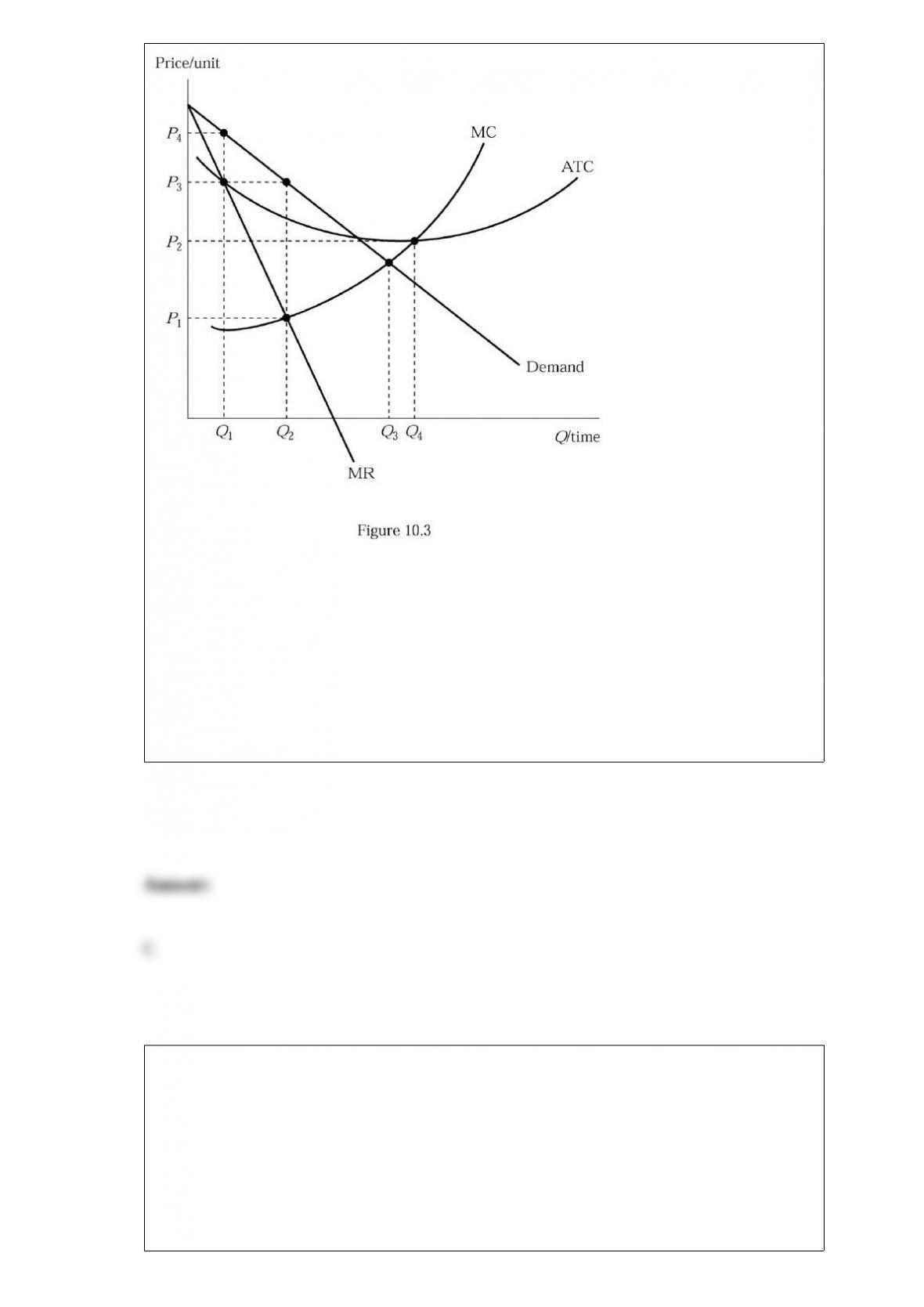
A) P1.
B) P2.
C) P3.
D) P4.
Which of the following is NOT an example of a public good?
A) a two tiered deck.
B) an urban park
C) a lighthouse.
D) clean air
Suppose that steak is a normal good. When income increases, the equilibrium quantity
of steak will ________ and the equilibrium price of steak will ________.
A) rise; rise
B) rise; fall
C) fall; rise
D) fall; fall
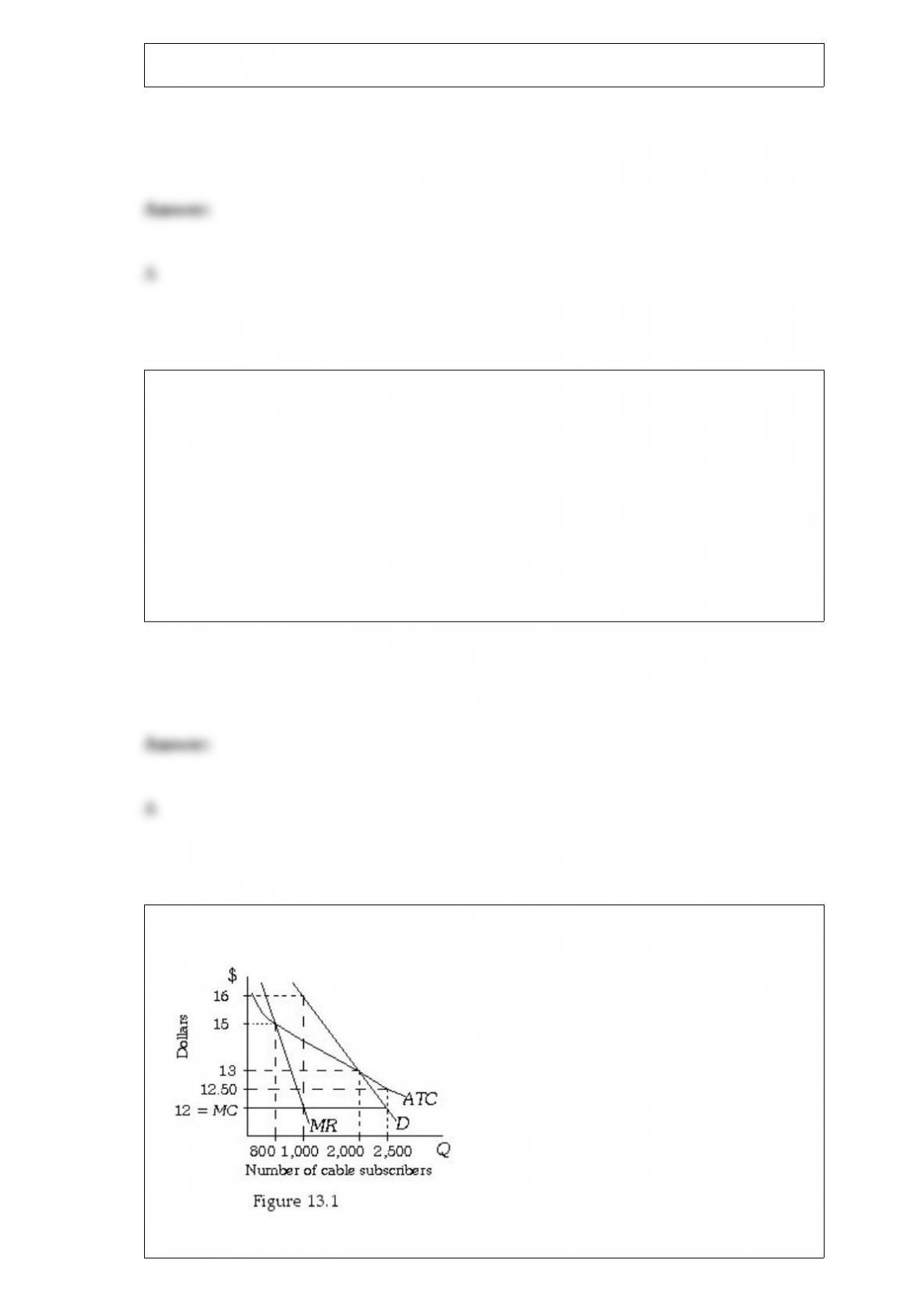
Refer to Figure 13.1. The type of firm pictured is a:

A) patent monopoly.
B) natural monopoly.
C) strategic resource monopoly.
D) government franchise monopoly.
According to this Application, after the government deceased cigarette taxes in several
Canadian provinces in 1994, the price of cigarettes in these provinces decreased by
roughly ________ percent.
A) 8
B) 17
C) 50
D) 88
A tax on an imported good is known as a(n):
A) import ban.
B) tariff.
C) voluntary export restraint.
D) import quota.
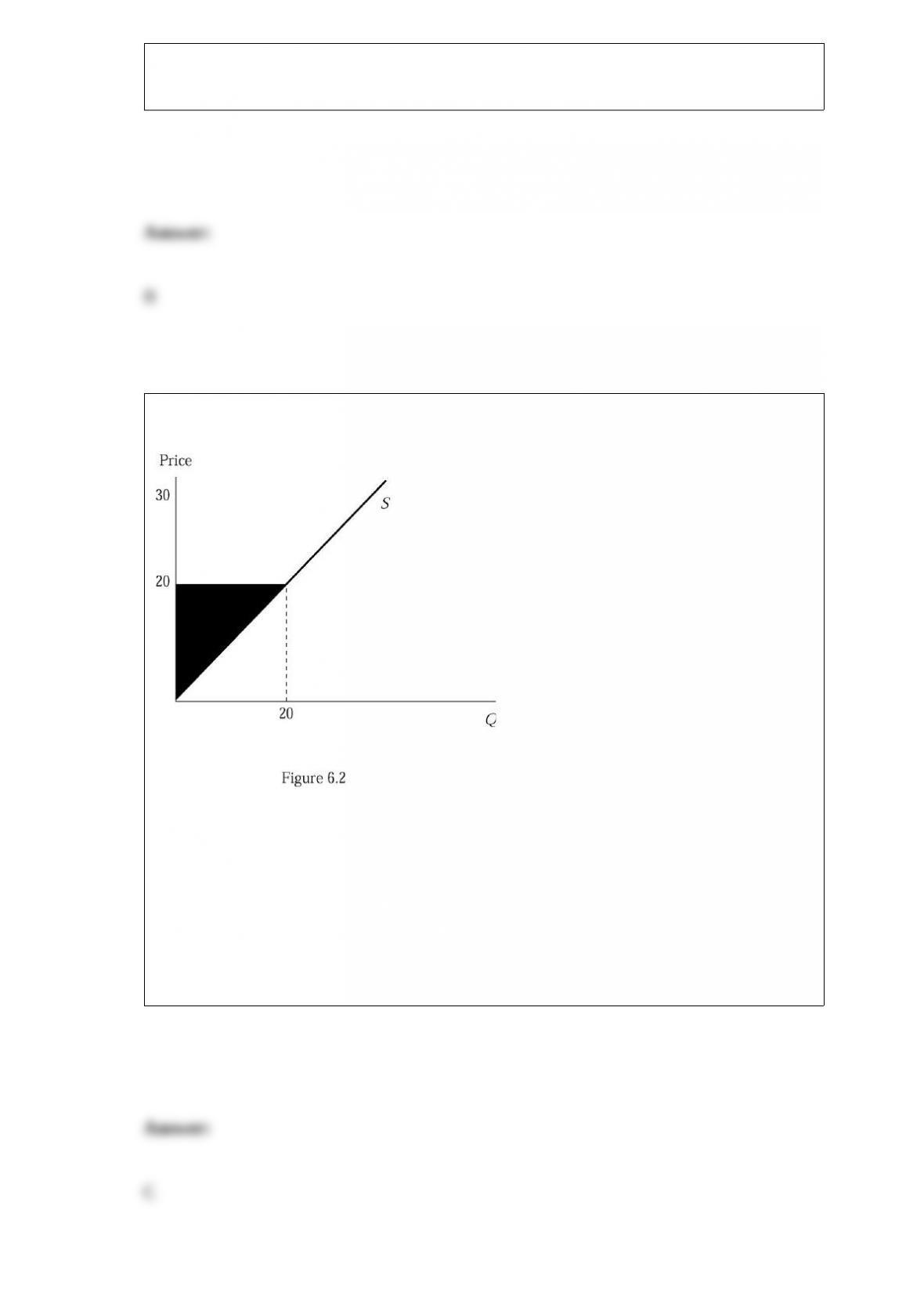
If the good in Figure 6.2 were free:
A) producer surplus would not change but consumer expenditure would be minimized.
B) producer surplus and consumer expenditure would both be maximized.
C) producer surplus and consumer expenditure would both be zero.
D) producer surplus would be maximized but consumer expenditure would be
minimized.
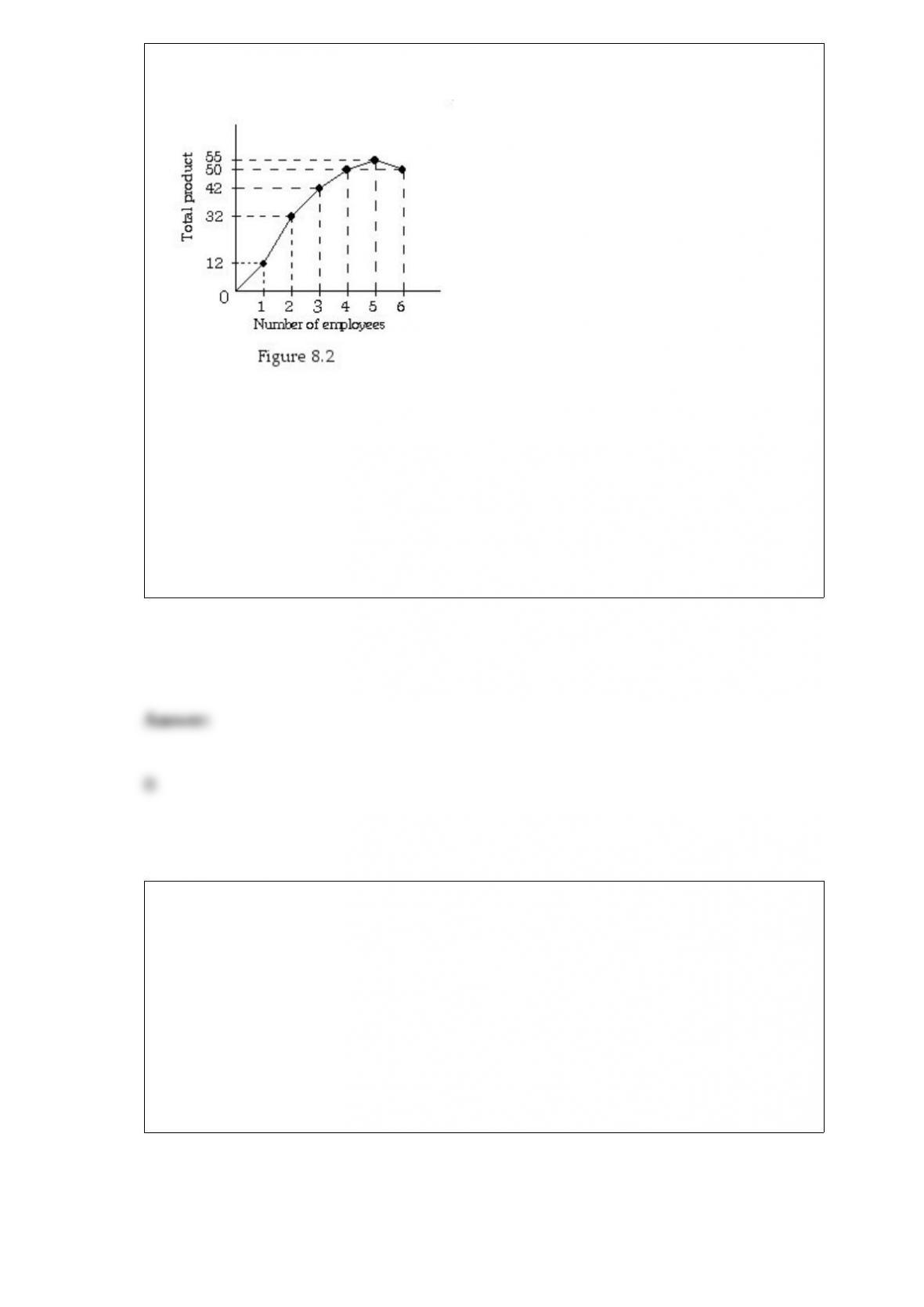
Refer to Figure 8.2. The marginal product of the fifth worker is ________.
A) one
B) five
C) eight
D) ten
The market demand curve:
A) shows the relationship between the price of a good and the quantity that all
consumers together are willing to buy.
B) is drawn assuming that variables such as income and tastes are variable.
C) is drawn assuming that the number of consumers is variable.
D) is drawn assuming that the selling price is fixed.
The quantity of pencils sold is 1000 at the unit price $0.5. Suppose the price elasticity
of demand for pencils by the initial value method is 2, and you would like to increase
the quantity sold to 1200. Then the new price for pencils must be:
A) $0.05.
B) $0.25.
C) $0.30.
D) $0.45.
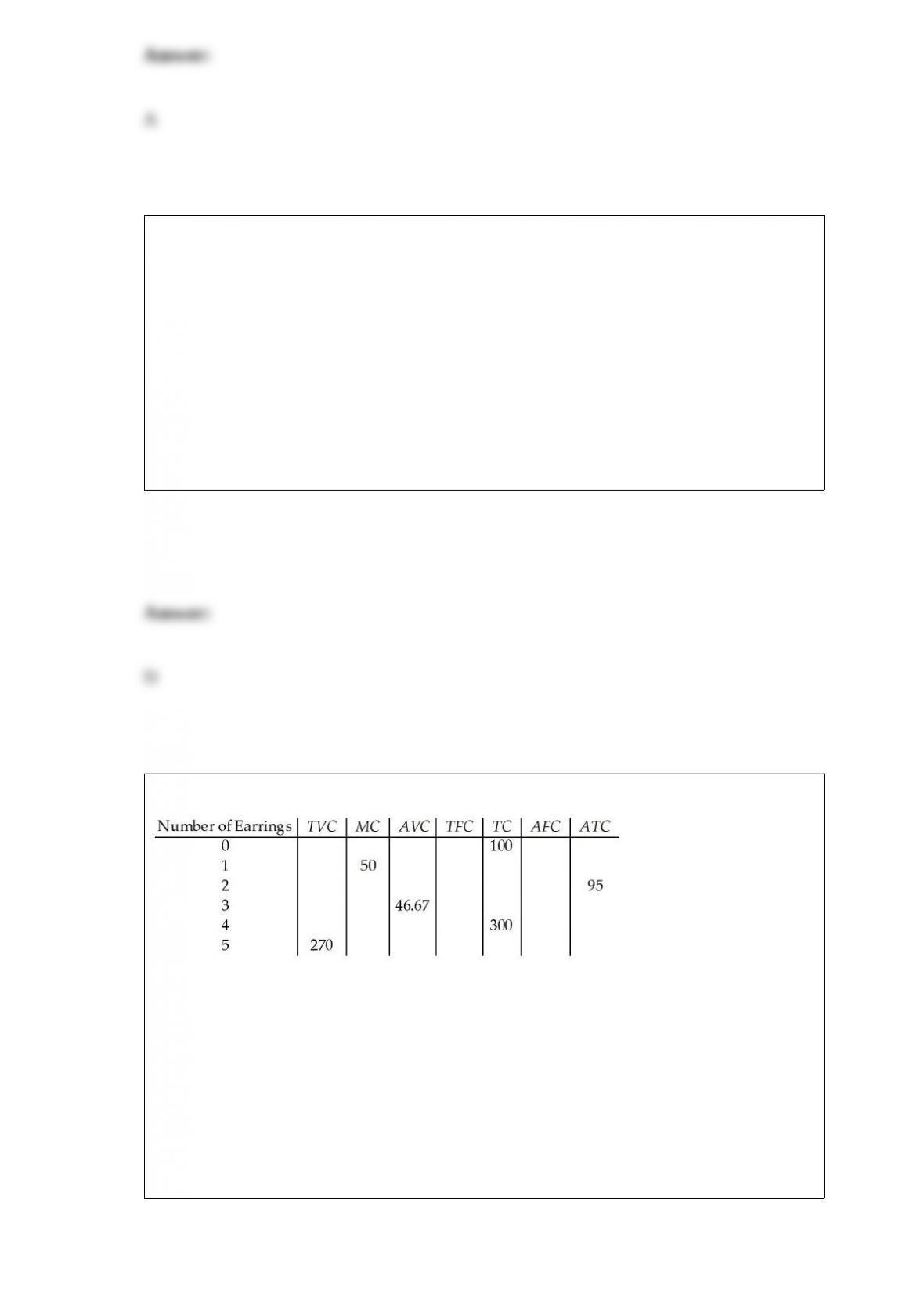
Refer to Table 8.5. If Sherry produces two pair of earrings, her marginal cost is:
Table 8.5
A) $40.
B) $45.
C) $72.50.
D) $122.50.