
The short-run labor demand curve is:
A) more elastic than the long-run labor demand curve.
B) less elastic than the long-run labor demand curve.
C) either more or less elastic than the long-run labor demand curve.
D) perfectly elastic (horizontal).
The demand for labor:
A) is a derived demand.
B) depends on the demand for the output the labor can be used to produce.
C) is affected by the value placed by the market on the output produced by labor.
D) all of the above
Jimbo has a comparative advantage over Ned in producing a good if:
A) Jimbo can produce more of the good than Ned can in a given time period.
B) Jimbo has a lower opportunity cost of producing the good than does Ned.
C) Jimbo has to trade off more than Ned does to produce the good.
D) Jimbo has a higher opportunity cost of producing the good than does Ned.
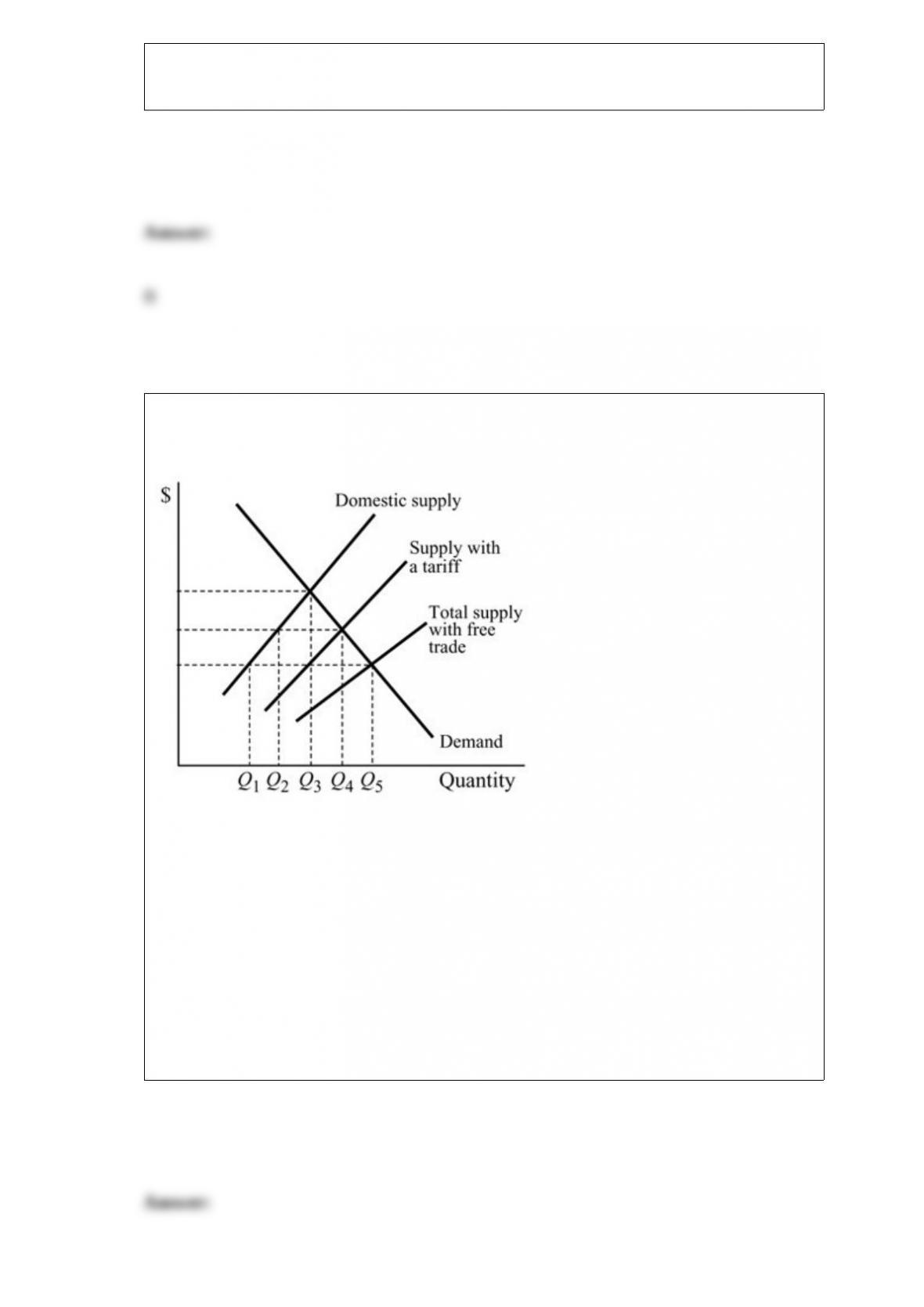
Figure 18.5
For the good in Figure 18.5, with free trade, the people in the country will buy:
A) Q2.
B) Q3.
C) Q4.
D) Q5.
Under which conditions might diseconomies of scale result?
A) improved coordination brought about by bureaucracy
B) increasing price of inputs
C) increasing output prices
D) usage of a large amount of indivisible inputs by the firm
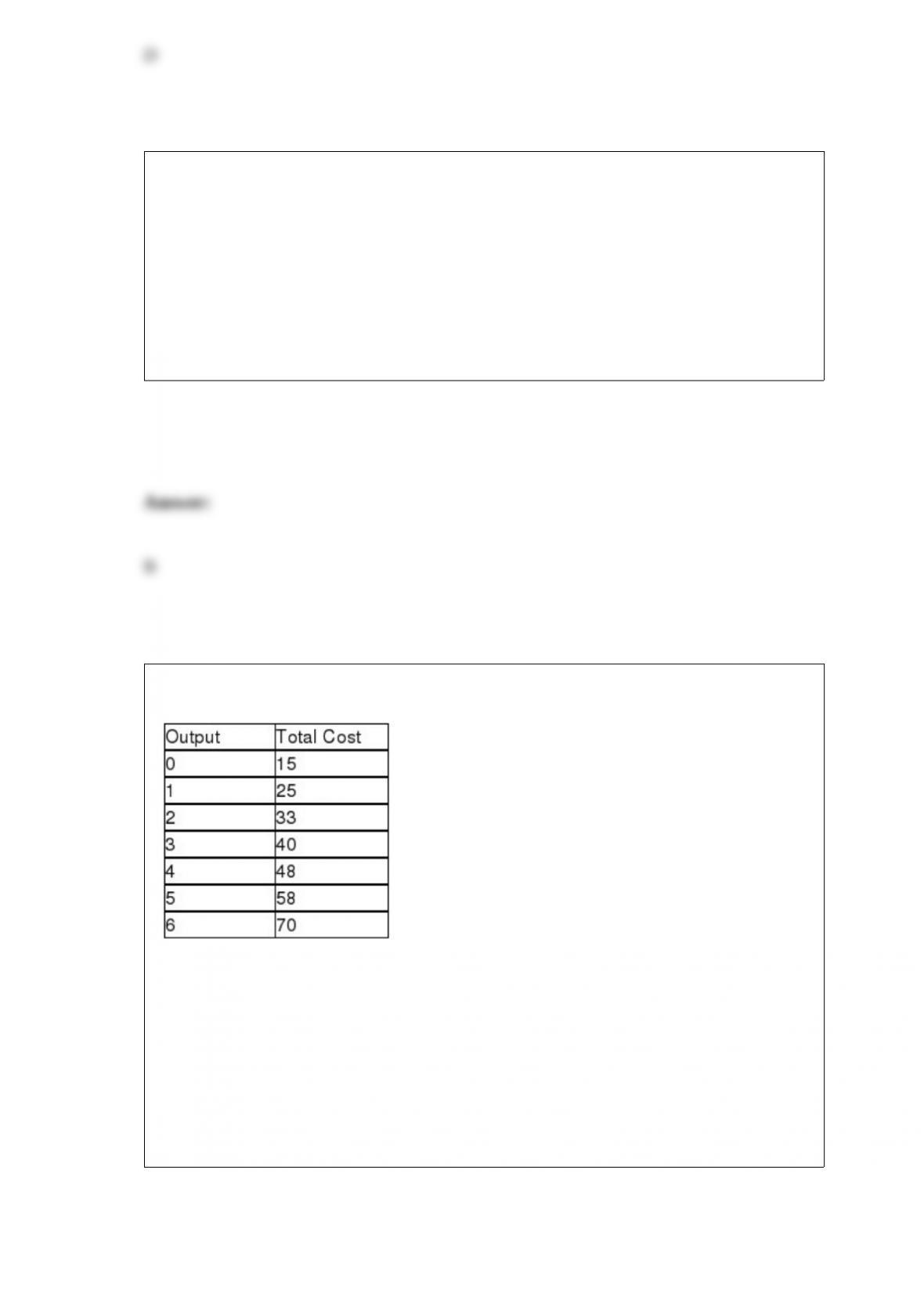
Refer to Table 8.5. The total fixed cost of producing two units is:
Table 8.5
A) $0.
B) $8.
C) $11.
D) $15.

Which of the following statements about marginal utility is CORRECT?
A) It is the change in total utility resulting from getting one additional unit of a good.
B) As consumption of a particular good increases, marginal utility decreases.
C) It is the satisfaction experienced from consuming a good.
D) A and B are correct.
Suppose that the percentage change in demand is 20%, the price elasticity of demand is
3, and the percentage change in the equilibrium price is 4%. What is the price elasticity
of supply?
A) 0
B) 2
C) 4
D) 5
According to the application, examples of non-durable goods include:
A) toys.
B) cars.
C) massages.
D) televisions.
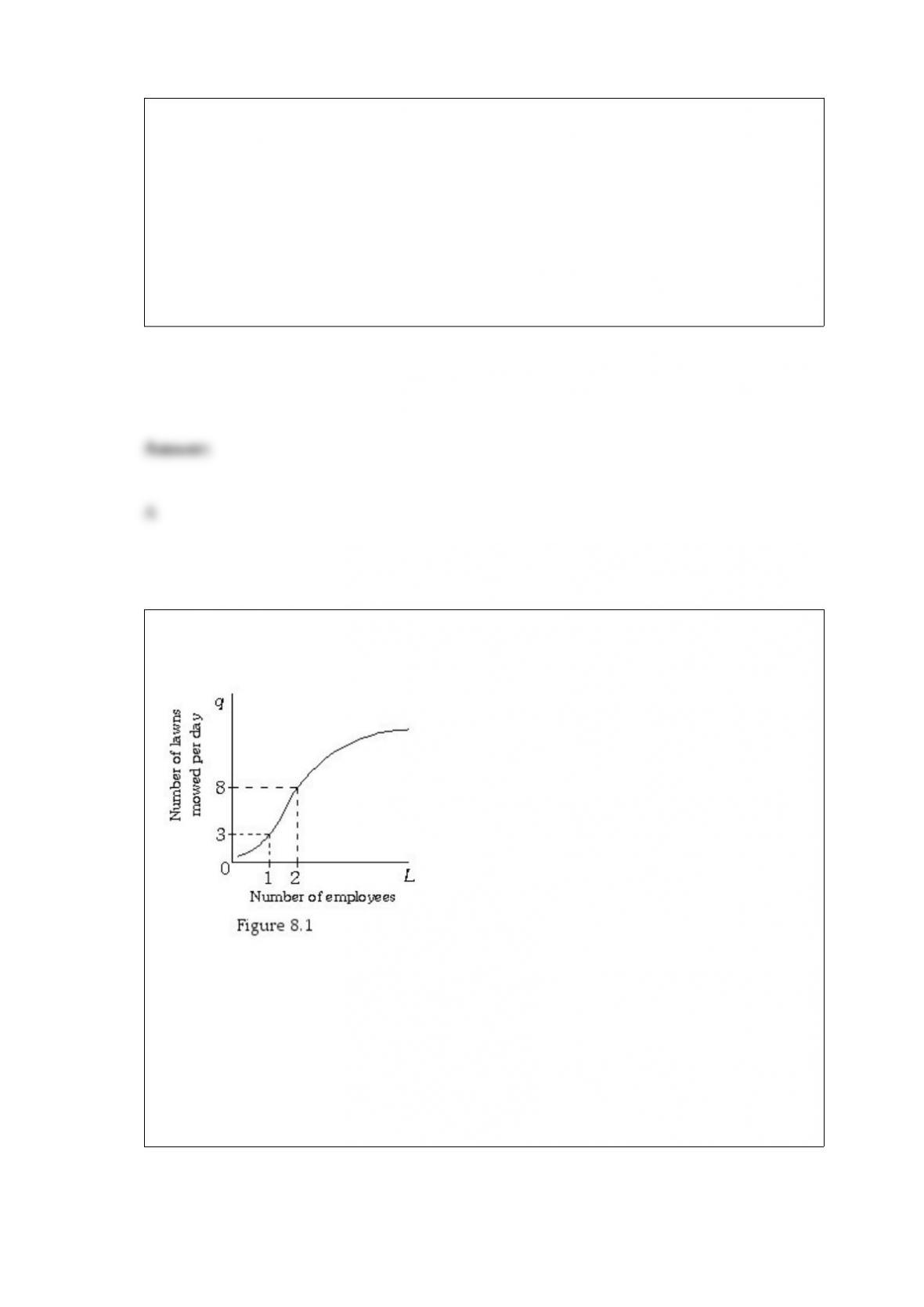
Refer to Figure 8.1. The lawn mower company’s total-product curve shows the
following:
A) the effects of labor specialization.
B) the effects of diminishing returns.
C) the effects of labor specialization and diminishing returns.
D) none of the above.

If a firm in a perfectly competitive market is currently producing the output where price
= marginal cost > average total cost, the firm is:
A) earning a positive profit.
B) earning a zero profit.
C) suffering an economic loss.
D) all of the above
Recall the Application about the impact Chinese imports have on U.S. labor
markets to answer the following question(s).
This Application addresses the idea that:
A) imports are only beneficial to a community if they are equally matched by exports
from that community.
B) imports ultimately have a positive impact on all communities.
C) imports have an equal impact on all communities.
D) imports have a bigger impact on some communities than on others.
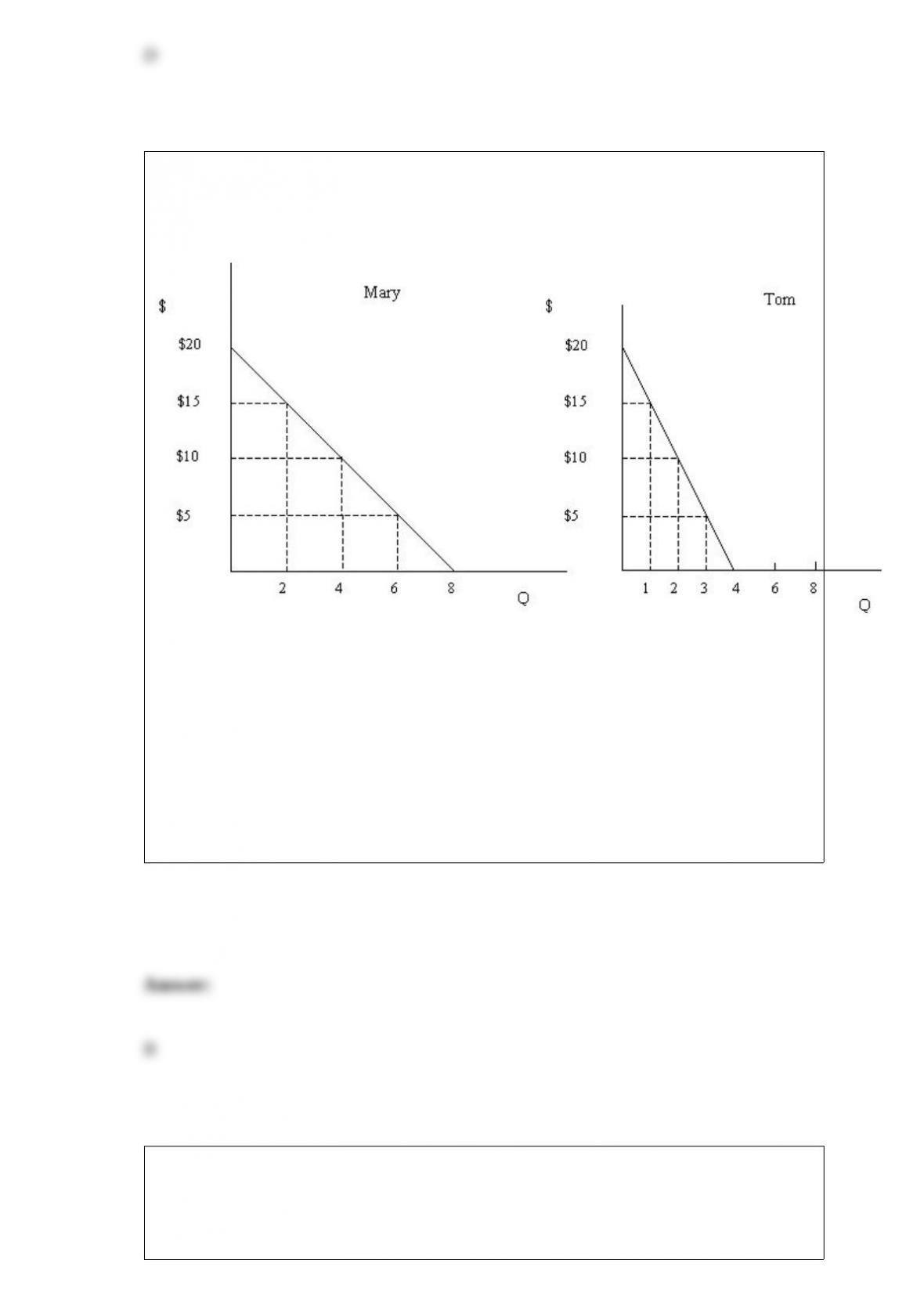
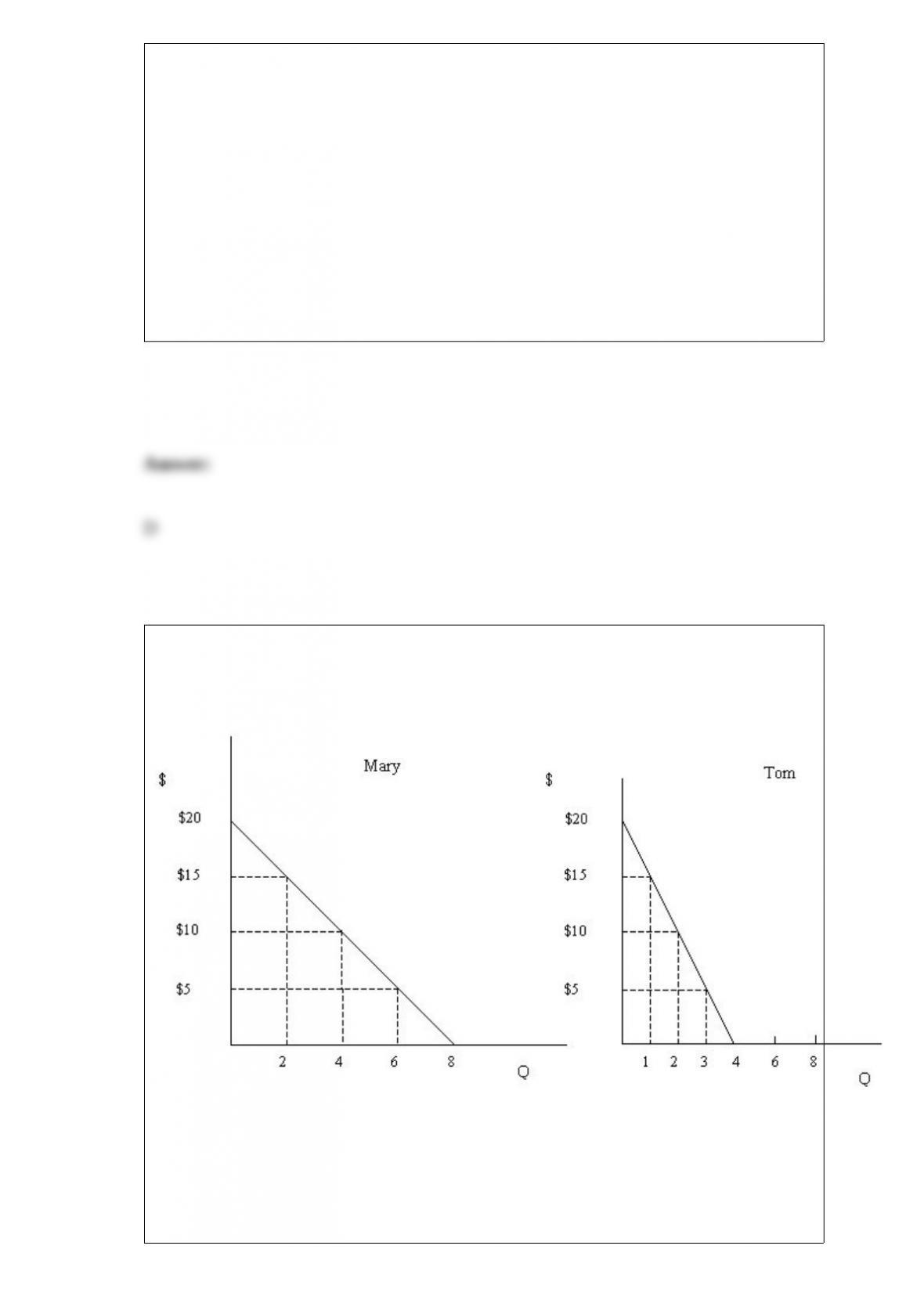
Refer to Figure 4.1 that shows Mary and Tom’s individual demand curves for meals per
week at Fratelli’s Italian Restaurant. Assuming Mary and Tom are the only consumers in
the market, if the market quantity demanded is 6, the price must be:
Figure 4.1
A) $5.
B) $10.
C) $15.
D) $20.
If the first copy cost of a music video is $223,000 and the marginal cost is $0, then how
many copies should the firm sell in order to break even if the price was $10 each?
A) zero

B) 2,230
C) 22,300
D) 223,000
If a local government gives out water filters to low-income families free of charge, they
are:
A) public goods.
B) private goods.
C) external goods.
D) spillover goods.
Refer to Table 7.8. Jessy spends no more than $75 per month on movies and meals out.
Movies cost $8 each and a meal out costs $15. If Jessy wants to maximize her utility
she should choose ________ movies and ________ meals out.
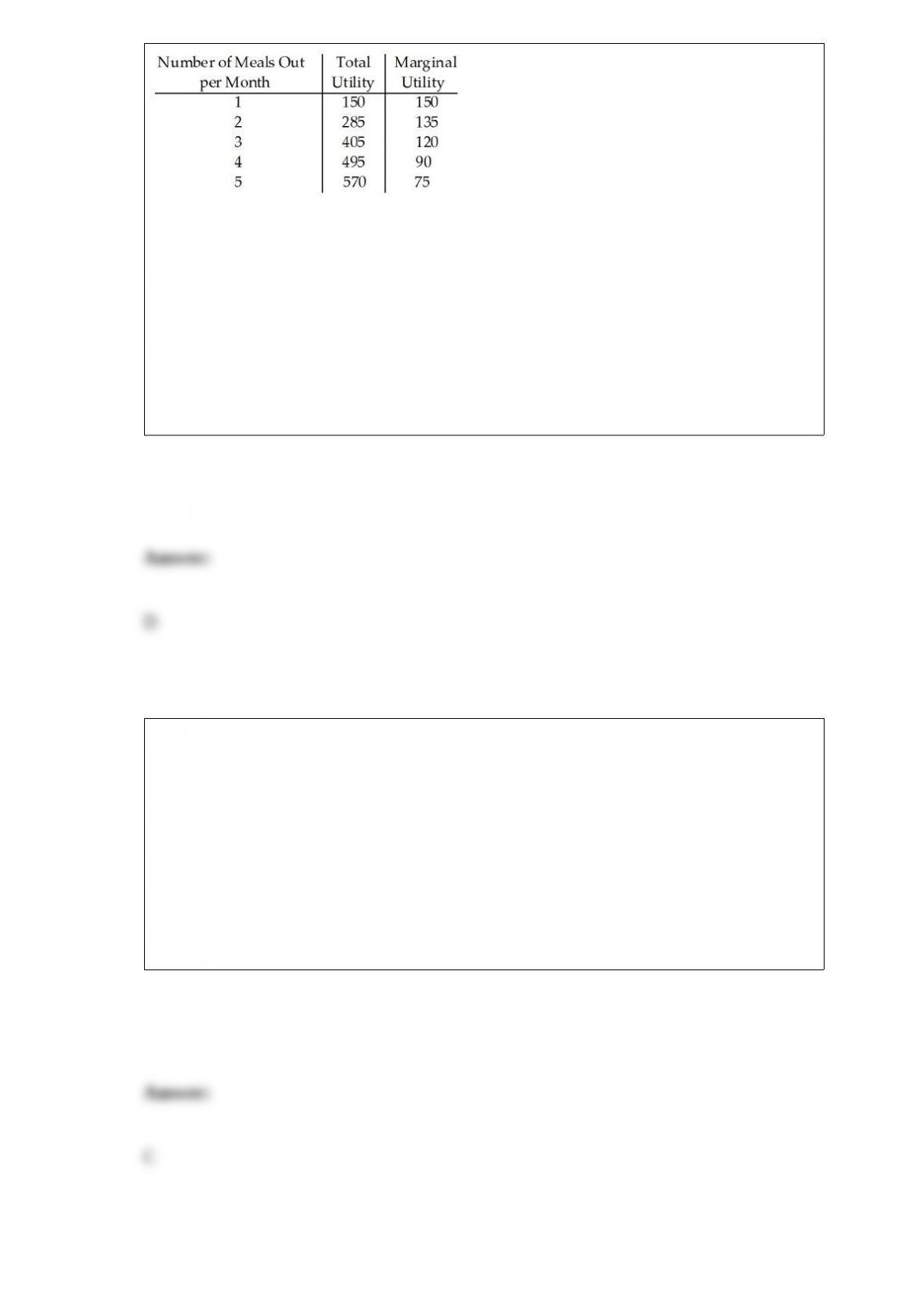
Table 7.8
A) 0; 5
B) 1; 4
C) 4; 2
D) 3; 3
If the government sets a maximum price for a natural monopolistic firm then a change
in production cost will:
A) increase the firm’s profits.
B) decrease the firm’s profits.
C) have little effect on the firm’s profit.
D) prevent the firm to earn economic profit in the short run.
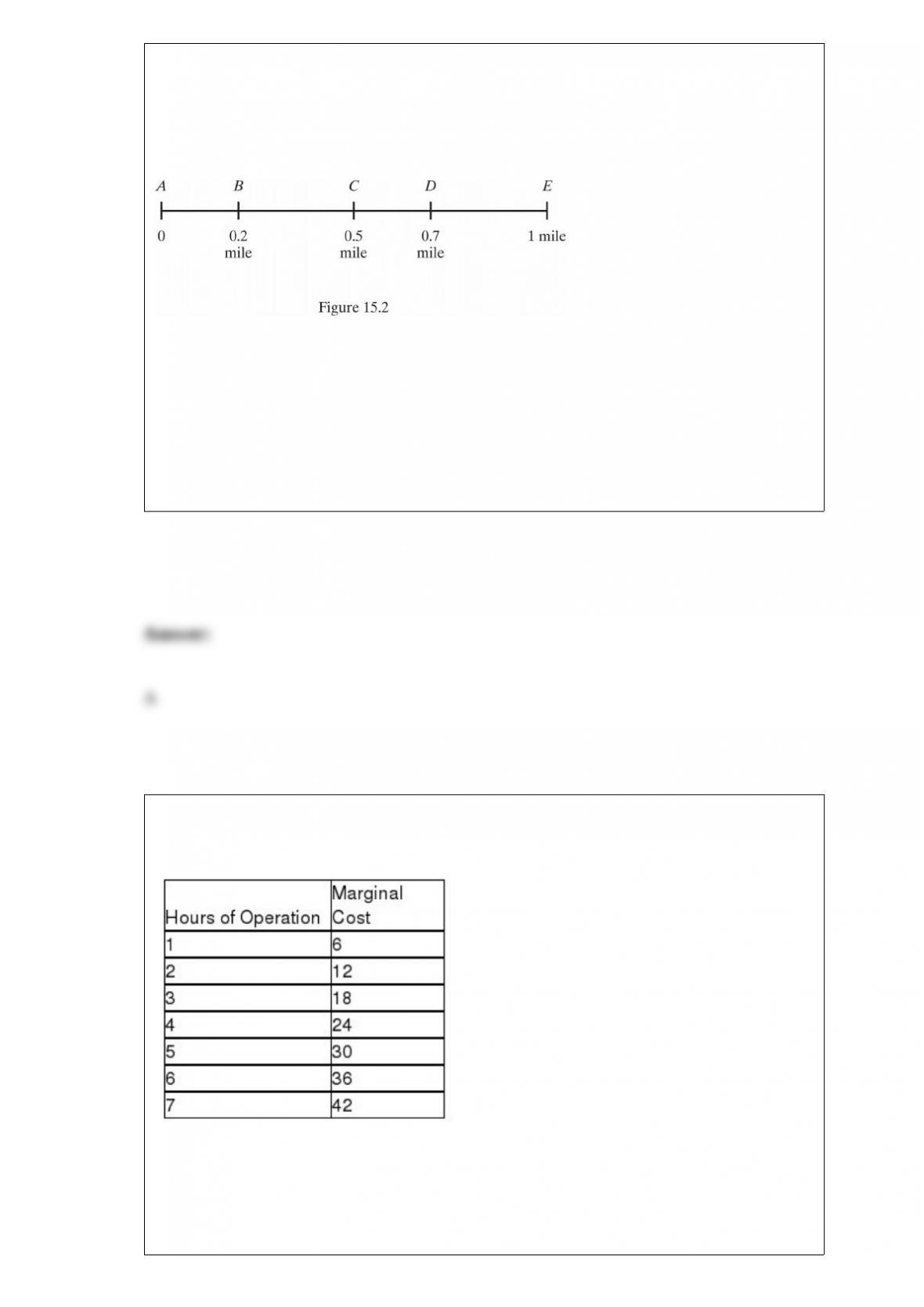
Figure 15.2 depicts a one-mile stretch of beach with 100 swimmers distributed evenly
along the beach. There are two ice cream vendors – 1 and 2 – on the beach selling an
identical product. Assume that each swimmer buys only one ice cream cone and that
they prefer to buy ice cream from the nearest vendor. If vendor 1 is at A, and vendor 2 is
at E, vendor 2 will gain the most customers by moving to:
A) a spot between A and B.
B) B.
C) C.
D) D.
Krystal runs a nail salon and needs to decide how many hours to stay open. Table 2.2
illustrates her marginal costs of staying open for each additional hour.
Table 2.2
Suppose that Krystal’s marginal benefit of staying open per hour is $18. If she is
following the marginal principle, how many hours should Krystal stay open?

A) 3 hours
B) 4 hours
C) 6 hours
D) 7 hours
A wheat farmer sells wheat in a perfectly competitive market and hires labor in a
perfectly competitive market. The market price of wheat is $2 a bushel, the wage rate is
$10, the farmer employs five workers and the marginal product of the fifth worker is
10. What would you advise this farmer to do?
A) Do nothing because the wage rate and the marginal product of the last worker hired
are equal.
B) Reduce employment because the wage paid is less than the marginal revenue
product.
C) Increase employment because the wage paid is less than the marginal revenue
product.
D) Reduce the product price so that the wage and marginal revenue product will be
equal.
If price is less than average variable cost at a level of output where marginal revenue is
equal to marginal cost, then in the short run the firm:

A) should shut down.
B) should produce the level of output where marginal revenue equals marginal cost.
C) should gather more data to determine whether to shut down.
D) will produce only if they can decrease their fixed costs.
Scenario 8.1: Ana used to work for a Advertising agency where she earned a yearly
salary of $60,000. She got tired of working for another company so she opened his own
Advertising company. Ana now pays her designer $40,000 per year and spends $25,000
for rent and utilities. She earns $120,000 in annual revenue.
Refer to Scenario 8.1. What is Ana’s explicit cost?
A) $65,000
B) $55,000
C) $45,000
D) $35,000
If two firms pollute, and the increase in costs to Firm A from decreasing pollution is
equal to the decrease in costs to Firm B from increasing pollution:
A) the firms cannot benefit from trading the right to pollute.
B) the firms can benefit by trading the right to pollute.
C) while both firms can benefit from trading, there is no way for them to determine an
agreeable price.
D) both firms will stop polluting.
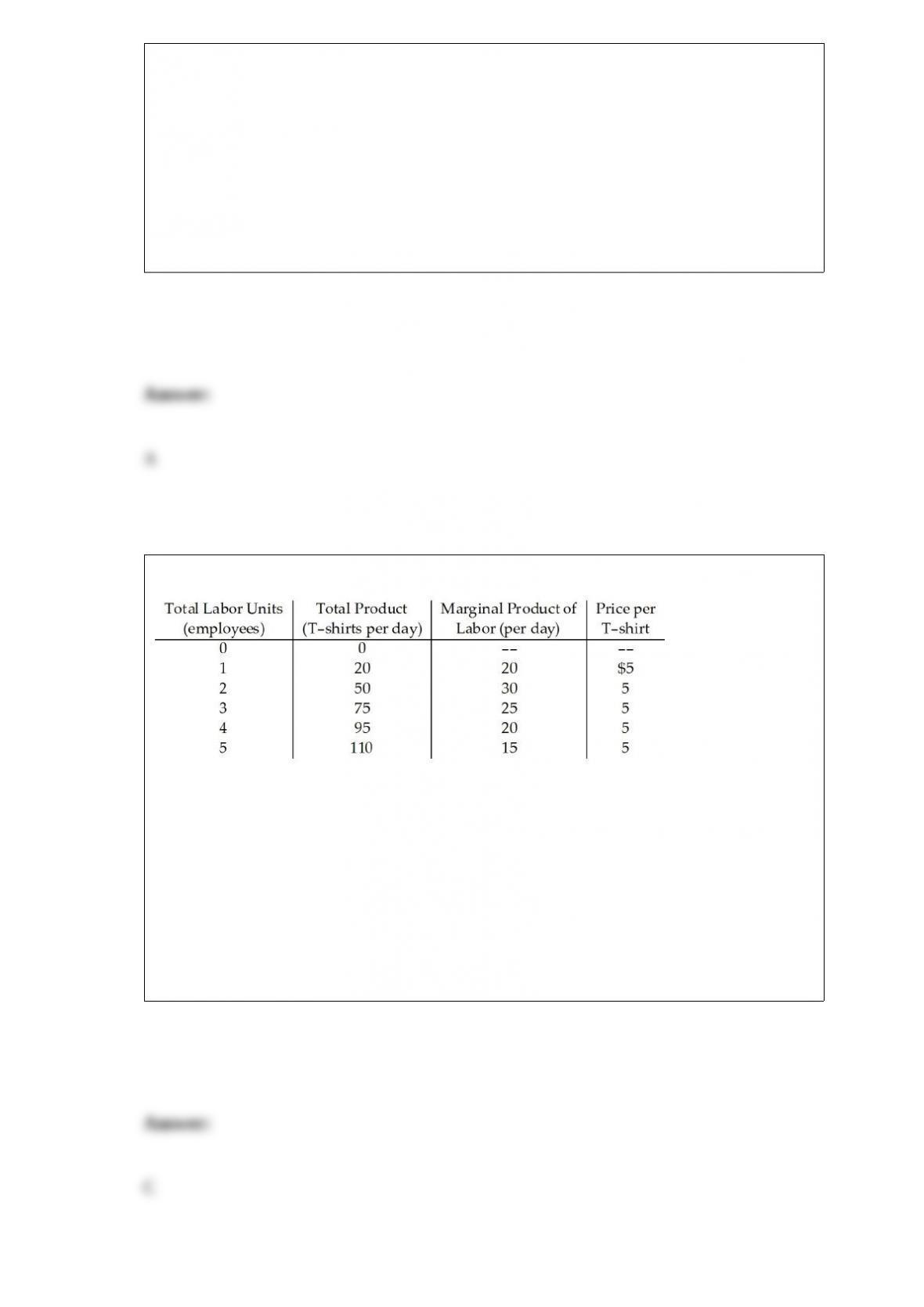
Refer to Table 17.2. The marginal revenue product of the fourth worker is:
Table 17.2
A) $5.
B) $20.
C) $100.
D) $475.
Suppose there is a great article online on a major news page about the great career path
of being a community college instructor and this encourages a lot of people to seek that
path. This causes the supply of community college instructors to increase, shifting the
supply curve to:
A) the left, the equilibrium wage to decrease and the equilibrium quantity to increase.
B) the left, the equilibrium wage to increase and the equilibrium quantity to decrease.
C) the right, the equilibrium wage to decrease and the equilibrium quantity to decrease.
D) the right, the equilibrium wage to decrease and the equilibrium quantity to increase.
Refer to Figure 4.1 that shows Mary and Tom’s individual demand curves for meals per
week at Fratelli’s Italian Restaurant. Assuming Mary and Tom are the only consumers in
the market, what is the market quantity demanded at a price of $15?
Figure 4.1
A) 1
B) 2

C) 3
D) 9
Recall the Application. If the selling price of zinc falls below the shutdown price for
half of the world’s zinc mines, the output produced from these mines will:
A) decrease by 50 percent.
B) still remain constant.
C) increase by 50 percent.
D) fall to zero.
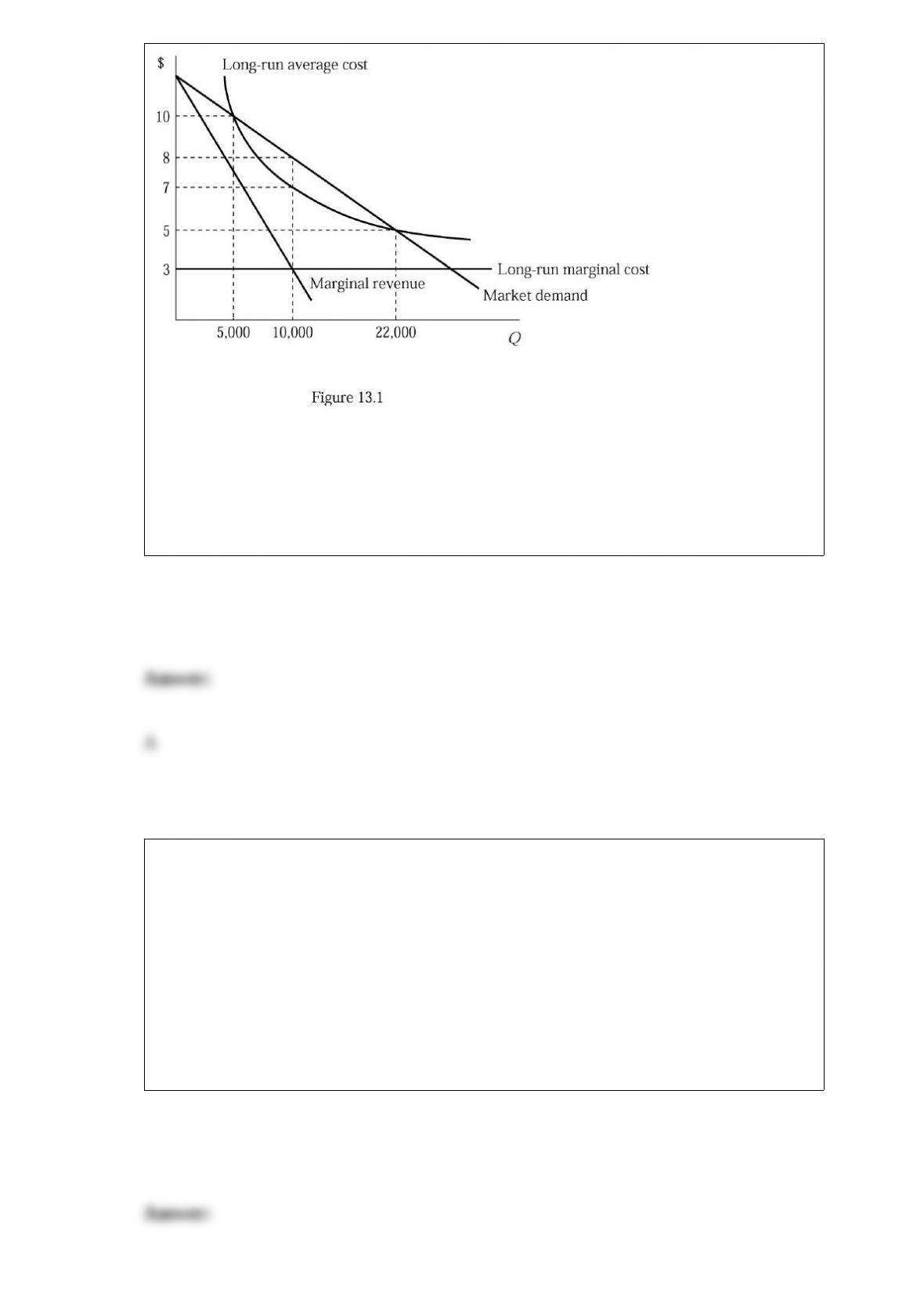
Figure 13.1 shows a demand and costs of an unregulated monopoly. This firm must:
A) be a natural monopoly.
B) have an exclusive government license.
C) be a monopoly because it has a patent.
D) be operating in a contestable market.
An arrangement between firms whereby decision-making is controlled by a board of
trustees is known as:
A) a trust.
B) a compact between industry and government.
C) predatory pricing.
D) a merger.

If the price elasticity of supply is equal to infinity and the price were to fall, the quantity
supplied would:
A) decrease slightly.
B) fall to zero.
C) not change.
D) increase.
Brandon eats four tacos a on a Sunday night but admits each slice of pizza doesn’t taste
as delicious as the previous one. This suggests that for Brandon:
A) the marginal utility of a slice of pizza is positive but decreasing.
B) the marginal utility of a slice of pizza is negative but increasing.
C) the total utility of slice of pizza is declining by larger and larger increments.
D) the total utility of slice of pizza is increasing by larger and larger increments.
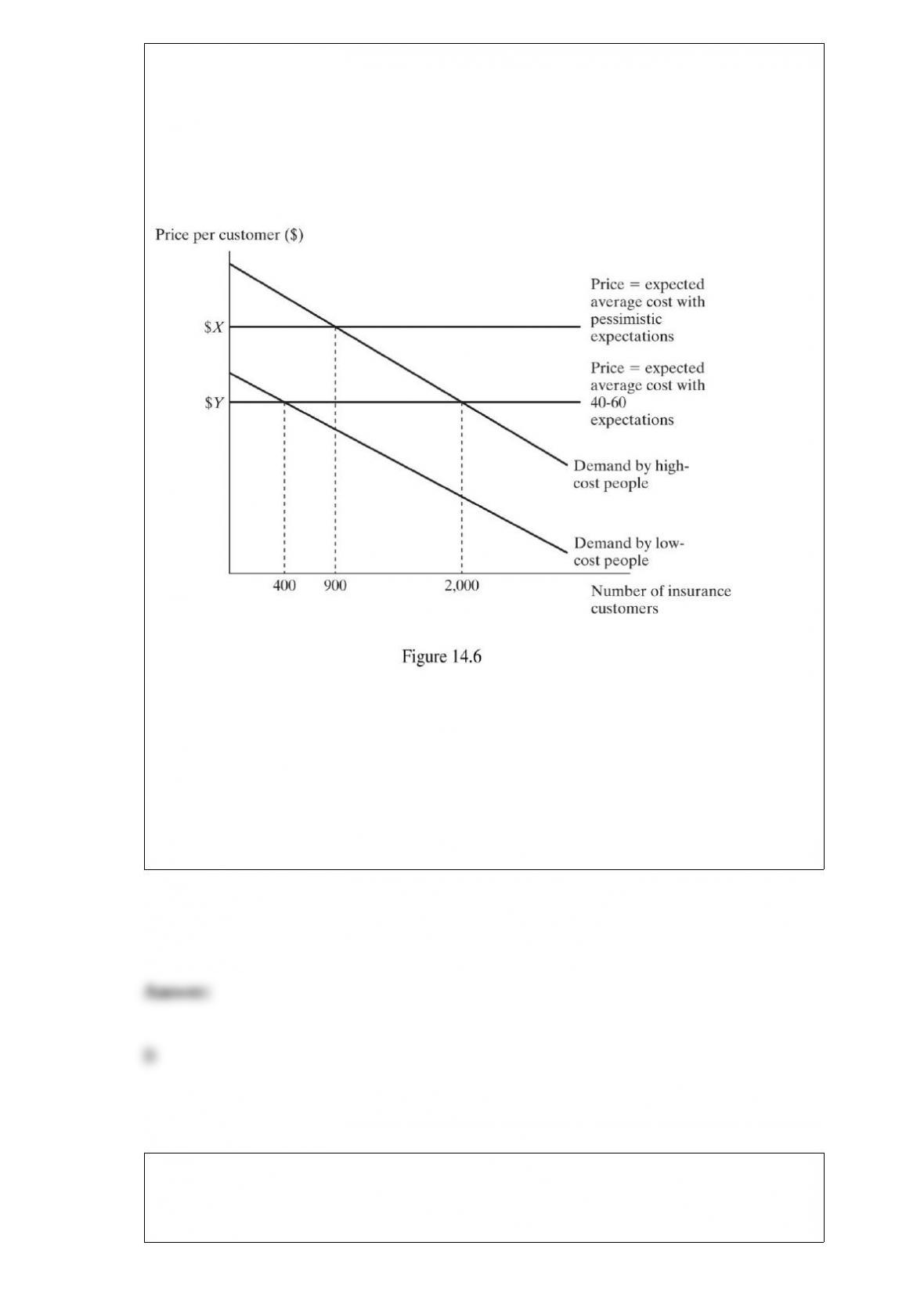
Figure 14.6 represents the market for health insurance. Suppose there are two types of
consumers, low-cost consumers with $2,000 average medical expenses per year, and
high-cost customers with $4,000 average medical expenses per year. The insurance
companies estimate that 40% of its customers are high-cost type. If the insurance
companies set the price equal to their average cost per customer, what type of customers
will dominate the market?
A) low-cost customers
B) high-cost customers
C) both types equally split the market
D) There is not sufficient information.
Beth is a college student looking for summer employment. She has two options. Firm X
is employing lifeguards to patrol the beaches at an exclusive resort in Cancun, Mexico,
while Firm Y offers her a job working in an office filing paper work and assist with the

ordering of office supplies. Given this information:
A) Firm X may pay a wage that is higher than that of Firm Y because the work at Firm
X is not very interesting.
B) Firm X may pay a wage that is lower than that of Firm Y because the job at Firm X
has more desirable working conditions.
C) Firm Y will pay a wage that is higher than that of Firm X because more individuals
will apply for jobs at Firm Y.
D) none of the above
Public goods:
A) have nonexcludable benefits.
B) are not subject to the free-rider problem.
C) are rival goods.
D) all of the above
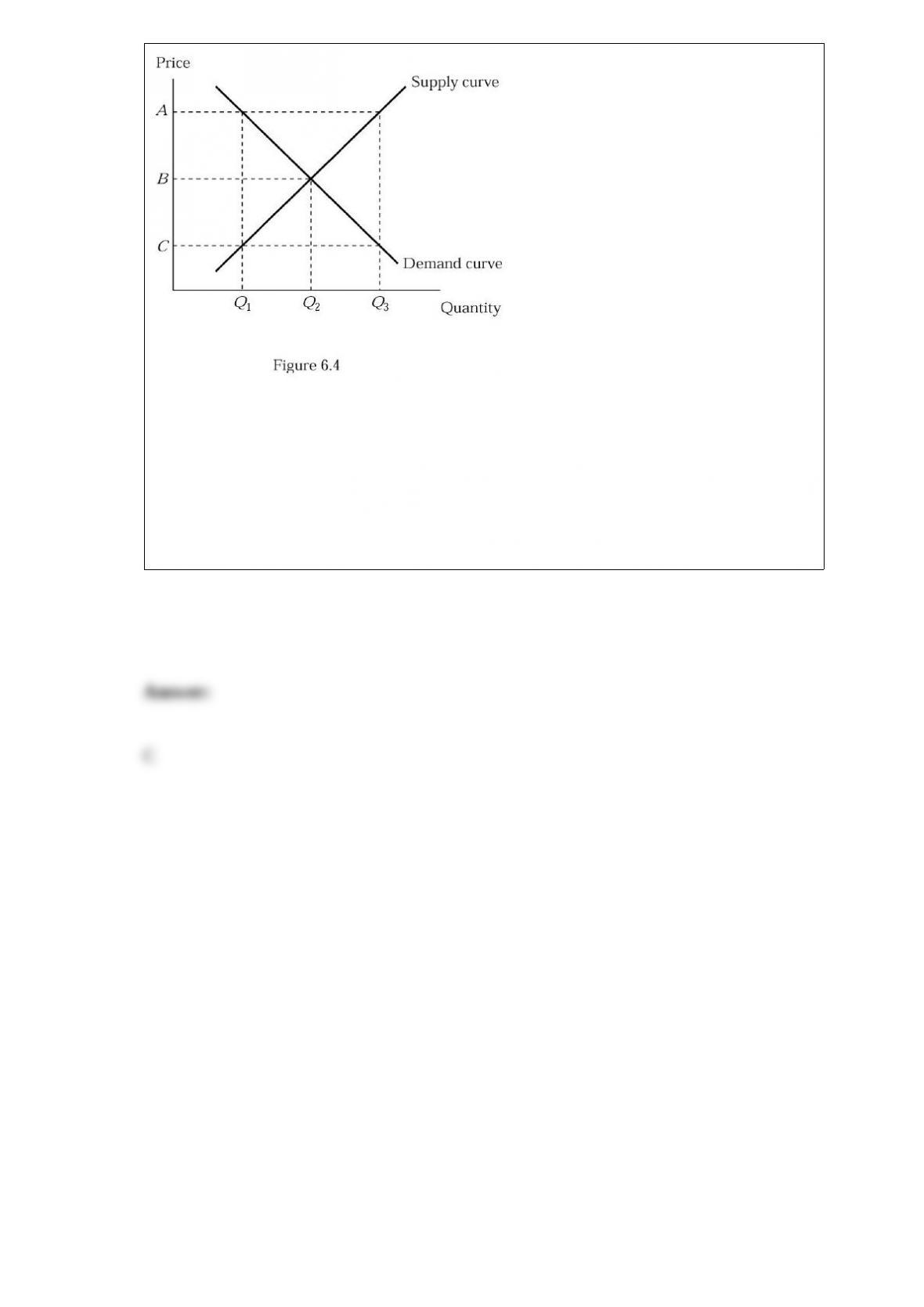
Refer to Figure 6.4. Suppose that the current price is set at B and units of a good are
traded. Which of the following statements is INCORRECT?
A) The current market transaction is efficient.
B) Total surplus would decrease should the price fall.
C) Total surplus would increase should the price rise.
D) The quantity demanded equals the quantity supplied.