
Scenario 1-1 Suppose a cell phone manufacturer currently sells 20,000 cell phones per
week and makes a profit of $5,000 per week. A manager at the plant observes,
“Although the last 3,000 cell phones we produced and sold increased our revenue by
$6,000 and our costs by $6,700, we are still making an overall profit of $5,000 per
week so I think we’re on the right track. We are producing the optimal number of cell
phones.”
Using marginal analysis terminology, what is another economic term for the
incremental cost of producing the last 3,000 cell phones?
A) marginal cost
B) operating cost
C) explicit cost
D) Any of the above terms are correct.
In the short run, why does a production function eventually display diminishing returns
to labor?
A) As the number of workers increases it becomes difficult to monitor them.
B) As a firm hires more workers the skills and the work ethic of the additional workers
will eventually decline.
C) As the number of workers increases eventually the gains from the division of labor
and specialization are used up.
D) The opportunity cost of hiring additional workers must eventually rise.
If the consumption function is defined as C = 5,500 + 0.9Y, what is the multiplier?
A) 0.l
B) 0.9
C) 6.1
D) 10
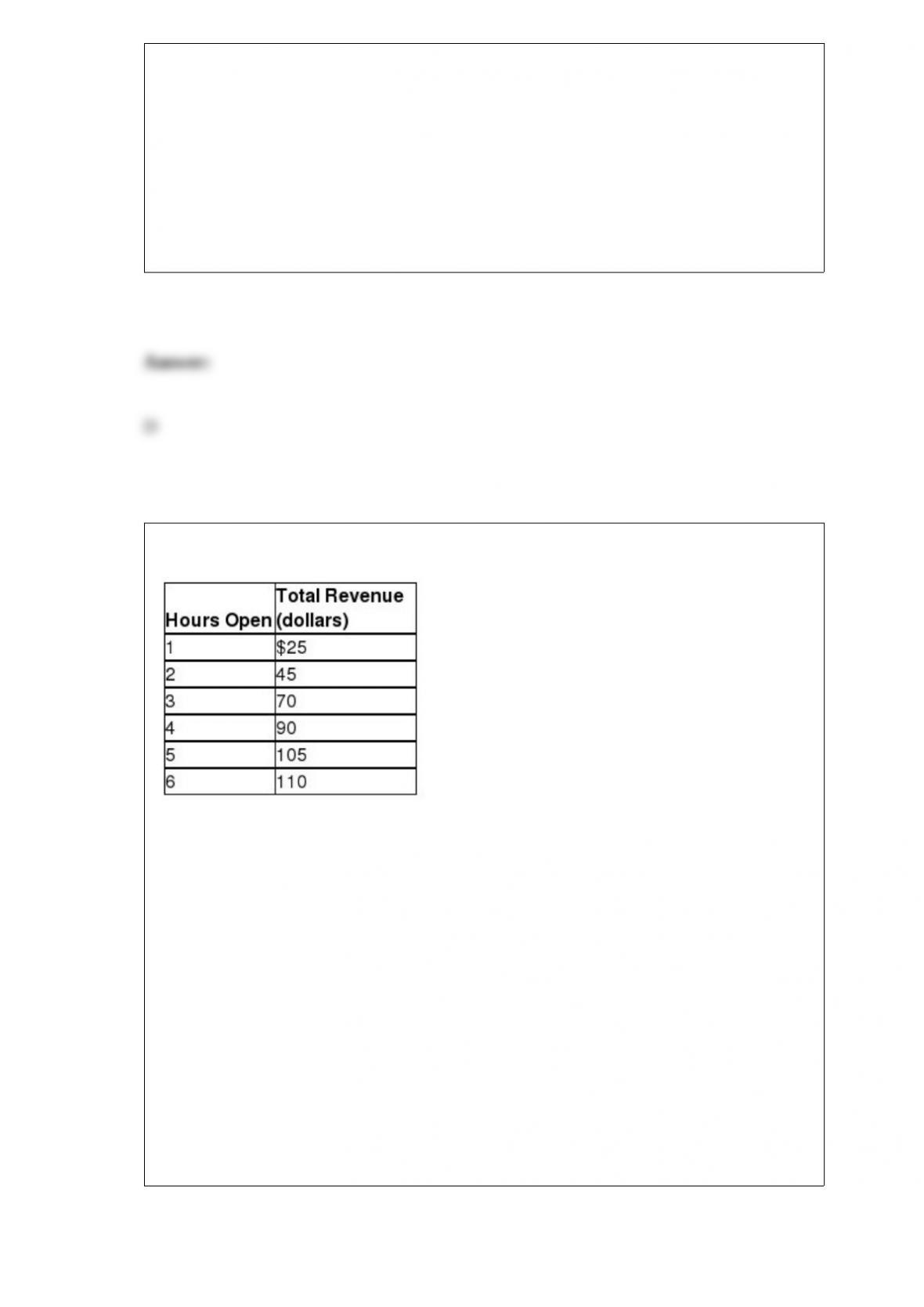
Table 1-2
Thuy Anh runs a small flower shop in the town of Florabunda. She is debating whether
she should extend her hours of operation. Thuy Anh figures that her sales revenue will
depend on the number of hours the flower shop is open as shown in the table above.
She would have to hire a worker for those hours at a wage rate of $16 per hour.
. What is Thuy Anh’s marginal cost if she decides to stay open for three hours instead of
two hours?
A) $0
B) $16
C) $25
D) $32
E) $45

Between 1981 and 2011, deaths from kidney disease increased largely due to the effects
of
A) increasing obesity.
B) increasing alcohol consumption.
C) increased smoking.
D) increased pollution.
The marginal product of labor is defined as
A) the additional sales revenue that results when one more worker is hired.
B) the additional output that results when one more worker is hired, holding all other
resources constant.
C) the additional number of workers required to produce one more unit of output.
D) the cost of hiring one more worker.
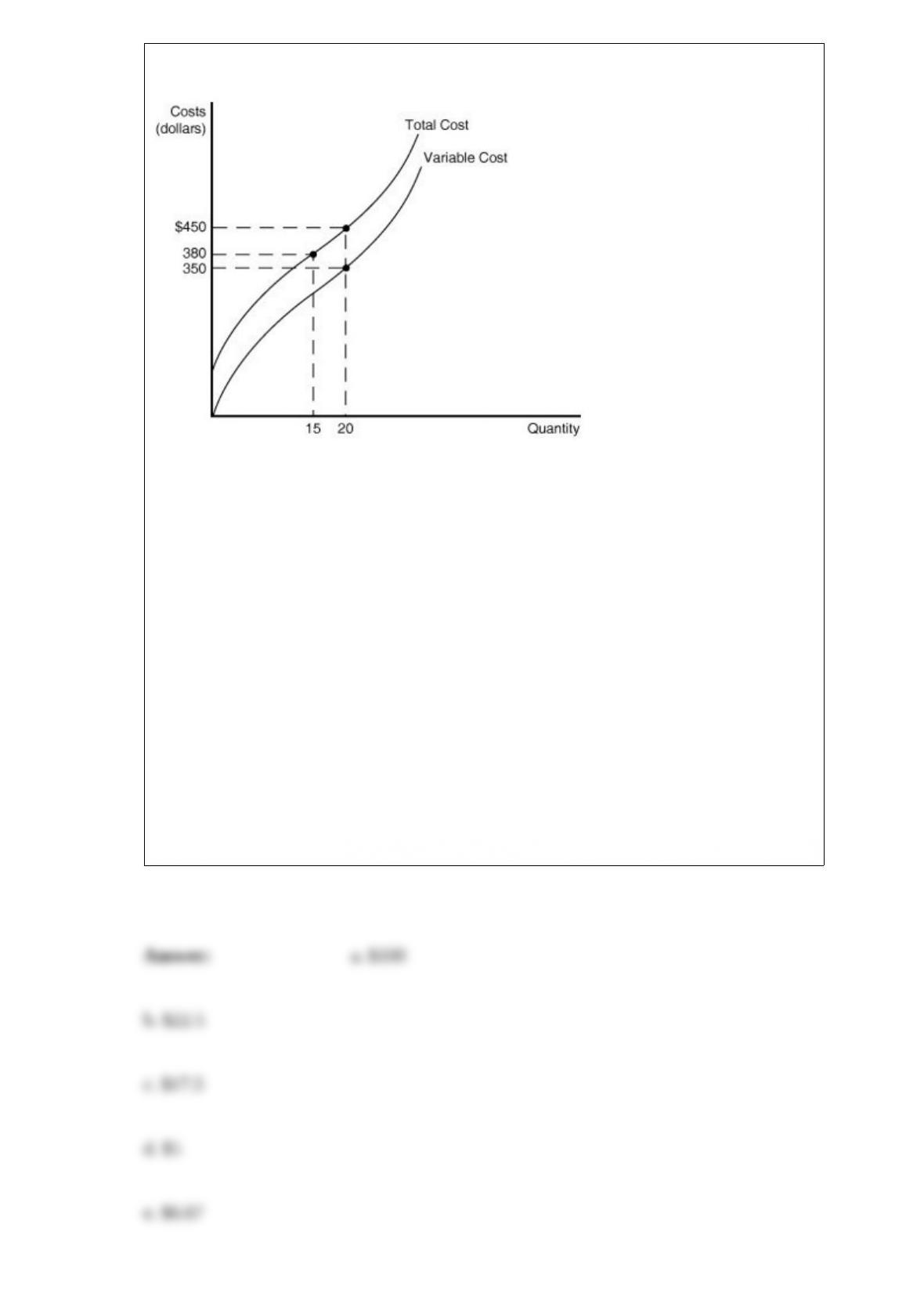
Figure 11-9
above to solve the following problems.
a. Calculate the fixed cost of production.
b. Calculate the average total cost of production when the firm produces 20 units of
output.
c. Calculate the average variable cost of production when the firm produces 20 units of
output.
d. Calculate the average fixed cost of production when the firm produces 20 units of
output.
e. Calculate the average fixed cost of production when the firm produces 15 units of
output.
f. If the firm increases output from 15 to 20 units what is the marginal cost of output?

Apple’s decision in 2002 to focus on developing a smartphone rather than a tablet
computer exemplifies the
A) refusal of firms to invest in more than one project where unlimited resources are
involved.
B) refusal of firms to invest in more than one project where limited resources are
involved.
C) trade-off that firms face due to unlimited resources.
D) trade-off that firms face due to limited resources.
Figure 5-2
Figure 5-2 shows a market with a negative externality.
The marginal benefit of the last unit produced is represented by the price
A) Pa.
B) P.

C) Pc.
D) Pf.
A “long-run exploitable Phillips curve” refers to a Phillips curve that in the long run is
________ rather than ________.
A) vertical; horizontal
B) upward sloping; vertical
C) horizontal; upward sloping
D) downward sloping; vertical
The natural rate of unemployment is the amount of unemployment
A) associated with the business cycle.
B) equal to frictional plus structural unemployment.
C) that exists when the economy goes into recession.
D) that exists when the economy is in an expansion.
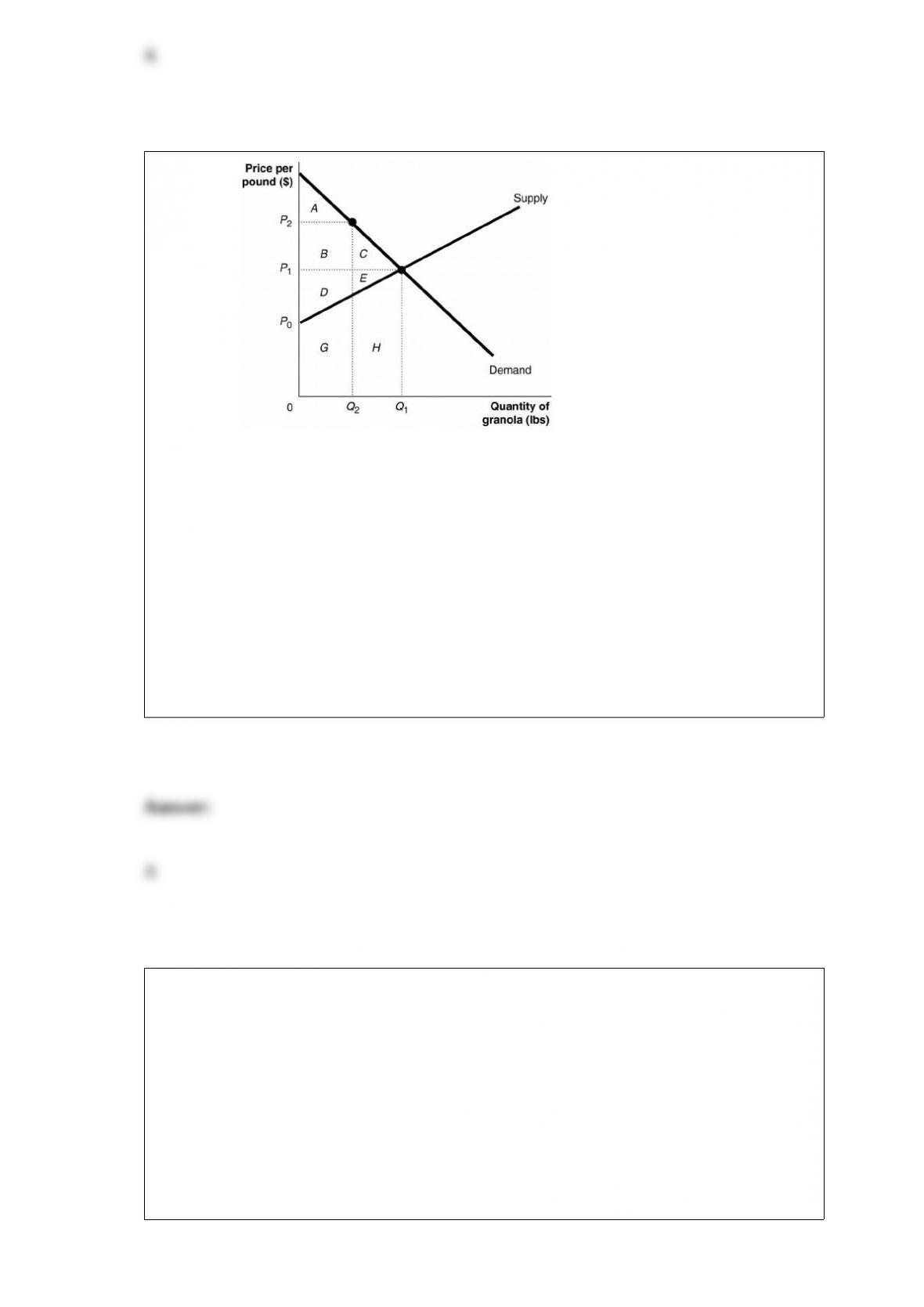
Figure 4-3 Figure 4-3 shows the market for
granola. The market is initially in equilibrium at a price of P1 and a quantity of Q1. Now
suppose producers decide to cut output to Q2 in order to raise the price to P2.What area
represents consumer surplus at P2?
A) A
B) A + B
C) B + C
D) A + B + D + E
If you pay $2,000 in taxes on an income of $20,000, and a tax of $2,700 on an income
of $30,000, then over this range of income the tax is
A) regressive.
B) proportional.
C) progressive.
D) There is insufficient information to answer the question.

In 2012, which component of GDP had a negative value?
A) consumption
B) investment
C) government spending
D) net exports
The quantity theory of money implies that the price level will be stable (no inflation or
deflation) when the growth rate of the money supply equals
A) 0.
B) the growth rate of the price level.
C) the growth rate of the velocity of money.
D) the growth rate of real GDP.

Alan Krueger conducted a survey of fans at the 2001 Super Bowl who purchased tickets
to the game for $325 or $400. Krueger found that (a) 94 percent of those surveyed
would not have paid $3,000 for their tickets, and (b) 92 percent of those surveyed
would not have sold their tickets for $3,000. These results are an example of
A) rational consumer behavior.
B) the endowment effect.
C) the fallacy of composition.
D) the failure to ignore sunk costs.