
High-income countries have ________ and ________ as compared to developing
countries.
A) low rates of savings; high rates of growth
B) low rates of savings; low rates of growth
C) high rates of savings; high rates of growth
D) high rates of savings; low rates of growth
Even when the demand for one good is high, the price of the good is also affected by
supply. The textbook illustrates this by comparing the price of two items that were
auctioned on the same day. Which of the following describes the results of the auction?
A) A letter written by Abraham Lincoln sold for a higher price than a letter written by
John Wilkes Booth.
B) A letter written by Abraham Lincoln was sold for a higher price than a letter written
by Adam Smith.
C) A letter written by John Wilkes Booth sold for a higher price than a letter written by
Lee Harvey Oswald.
D) A letter written by John Wilkes Booth sold for a higher price than a letter written by
Abraham Lincoln.
Figure 15-11
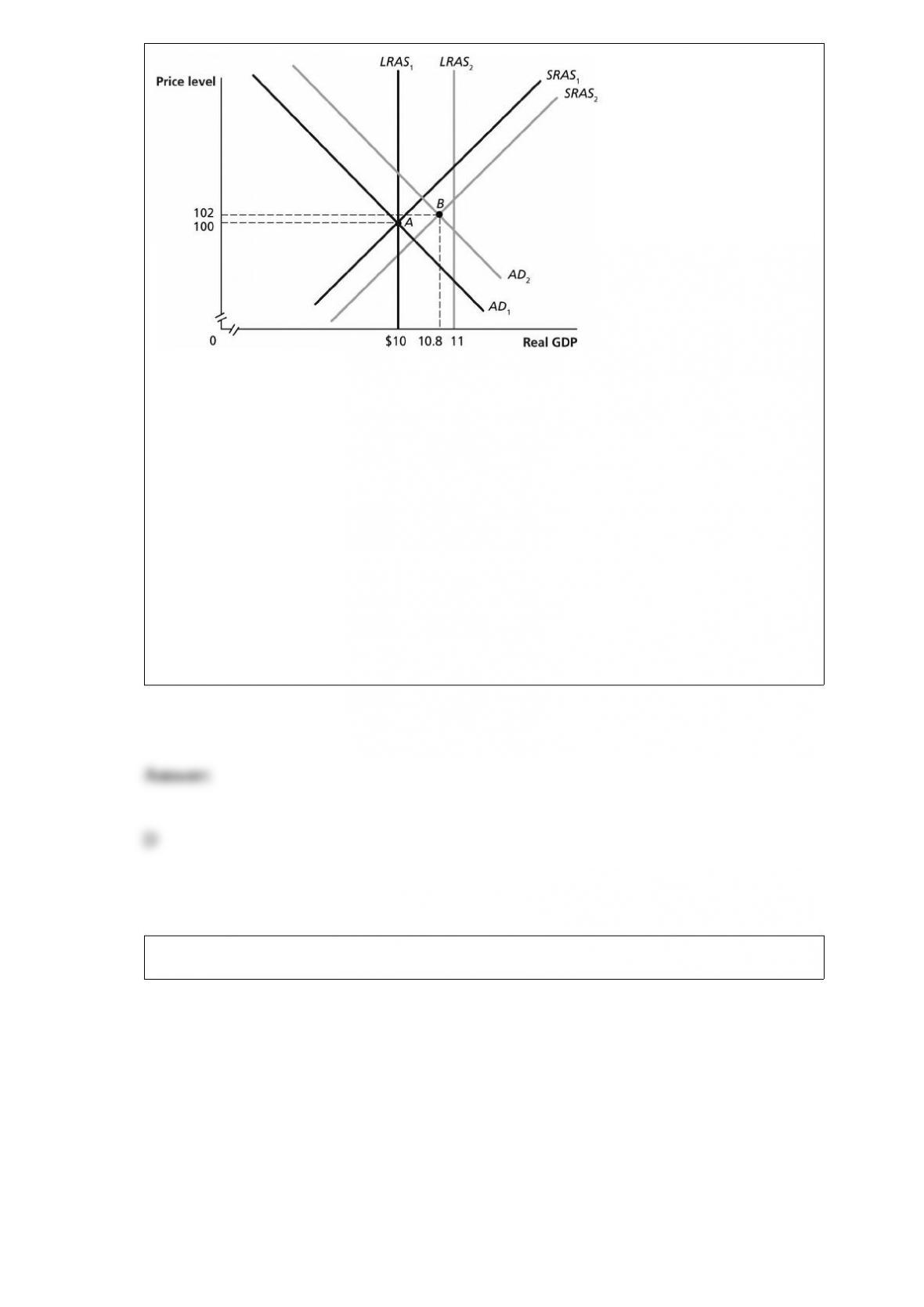
In the dynamic model of AD–AS in the figure above, if the economy is at point A in year
1 and is expected to go to point B in year 2, and the Federal Reserve pursues no policy,
then at point B
A) there is pressure on wages and prices to rise.
B) the unemployment rate is very, very low.
C) firms are operating above their normal capacity.
D) the economy is below full employment.
E) incomes and profits are rising.
Figure 15-3
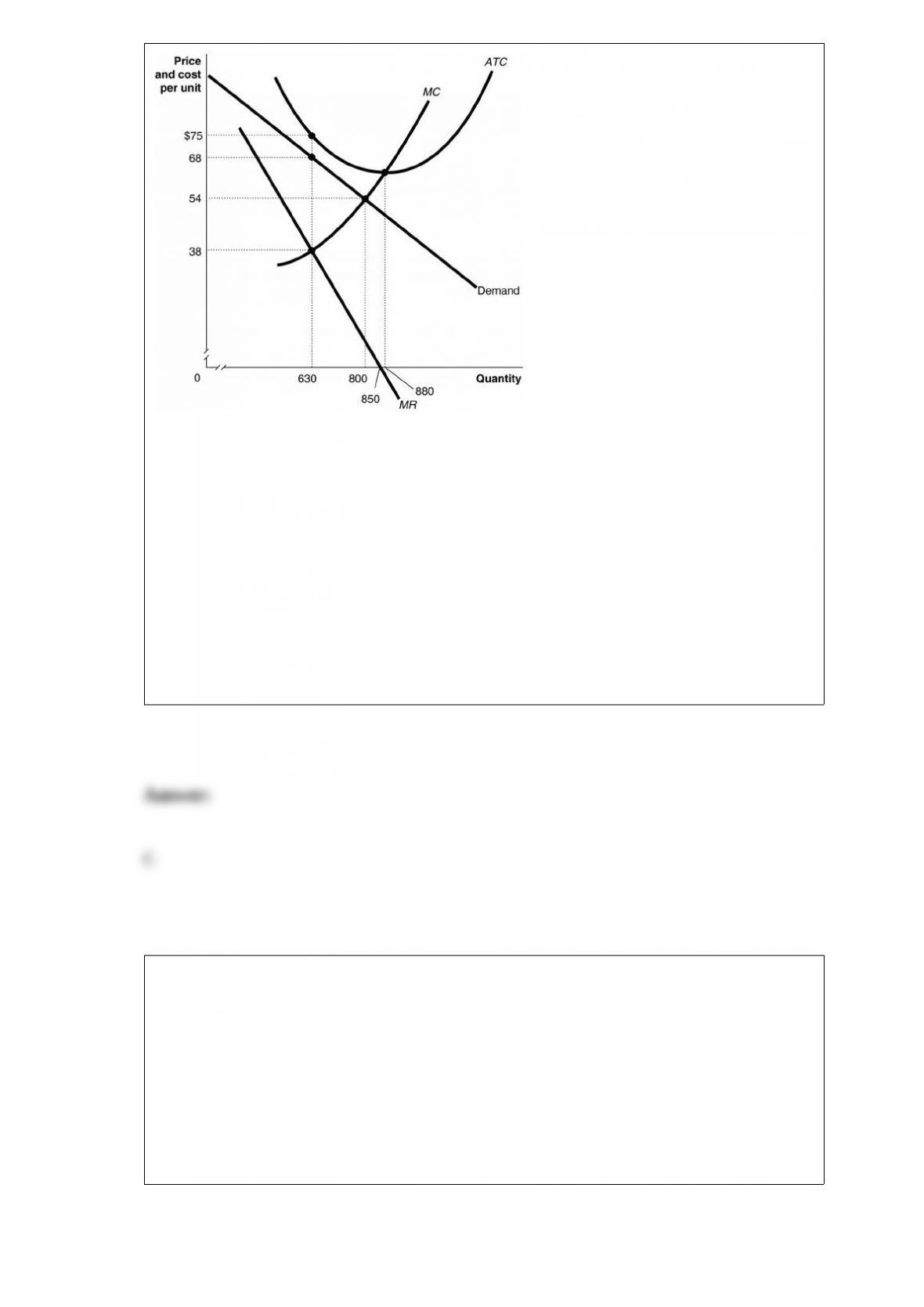
Figure 15-3 above shows the demand
and cost curves facing a monopolist.
Suppose the monopolist represented in the diagram above produces positive output.
What is the price charged at the profit-maximizing/loss-minimizing output level?
A) $38
B) $54
C) $68
D) $75
The volatility of a stock’s market price is indicated by
A) the highest stock price and the lowest stock price over the previous year.
B) the price of newly issued shares compared to the price of previously issued shares.
C) the difference between the stock’s selling price and its asking price.
D) the stock’s price-earnings ratio.
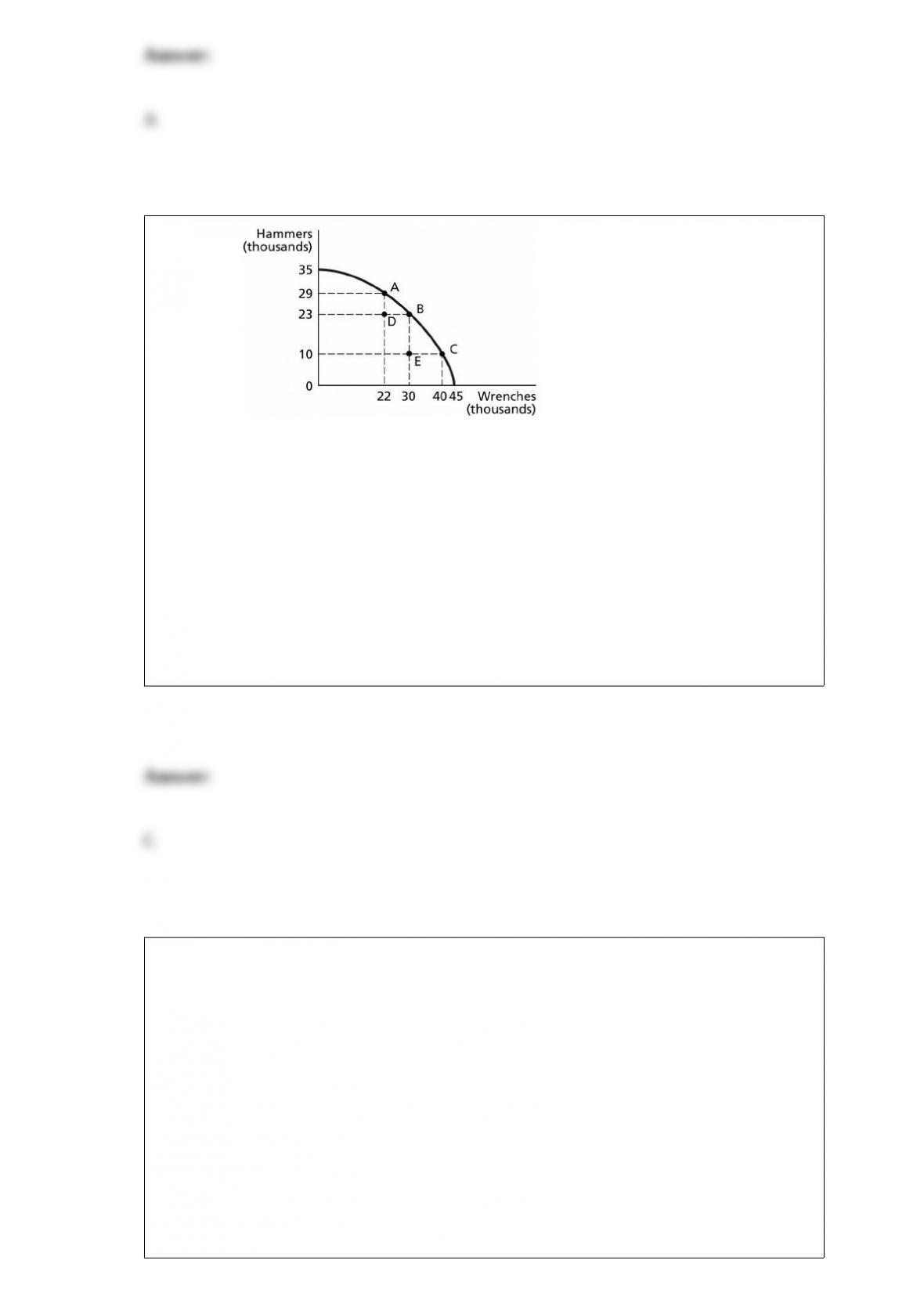
Figure 2-6
If the economy is currently producing at point E, what is the opportunity cost of moving
to point D?
A) 13 thousand hammers
B) 10 thousand hammers
C) 8 thousand wrenches
D) 0 wrenches
In the ultimatum game, allocators usually offer recipients at least a 40 percent share of
the money, and recipients almost always reject offers of less than a 10 percent share.
Which of the following does not explain why allocators offer recipients a relatively
generous share and why recipients reject meager offers?
A) Fear of arousing outrage and abhorrence could influence economic decisions.
B) People can and often do reject offers that offend their sense of fairness even if doing
so means taking a monetary loss.
C) Some people are careful not to engage in economic behavior that might offend and
alienate others.
D) Allocators can count on recipients to ignore all considerations except financial
benefit.
Suppose President Obama is successful in passing a $10 billion tax increase. Assume
that taxes are fixed, the economy is closed, and the marginal propensity to consume is
0.8. What happens to equilibrium GDP?
A) There is a $50 billion increase in equilibrium GDP.
B) There is a $50 billion decrease in equilibrium GDP.
C) There is a $40 billion increase in equilibrium GDP.
D) There is a $40 billion decrease in equilibrium GDP.
How will the exchange rate (foreign currency per dollar) respond to a decrease in the
relative rate of productivity growth in the United States in the long run?
A) Exchange rates will rise.
B) Exchange rates will fall.
C) Exchange rates will be unaffected by changes in the relative rate of productivity
growth in the United States, both in the short run and in the long run.
D) The exchange rate will be affected in the short run, but not in the long run.
International trade
A) harms consumers but helps exporting firms.
B) helps consumers but harms exporting firms and their workers.
C) helps consumers but hurts firms that are less efficient than their foreign competitors.
D) helps consumers and firms that compete with their foreign competitors.
Which of the following is counted as a liability for a bank?
A) customer deposits
B) bank reserves
C) securities
D) bank loans
Producing a differentiated product occurs in which of the following industries?
A) oligopoly, monopolistic competition and perfect competition

B) monopolistic competition only
C) oligopoly only
D) monopolistic competition and oligopoly
If a commercial dairy farm wants to raise funds to purchase feeding troughs, it does so
in the
A) output market.
B) product market.
C) factor market.
D) dairy products market.
An increase in government purchases, ceteris paribus, will
A) increase public saving.
B) increase the supply of loanable funds.
C) reduce investment.
D) reduce real GDP.
The purchase of $1 million of Treasury securities by the Federal Reserve, if there is no
change in the quantity of currency, will cause reserves at banks to
A) increase by $1 million.
B) increase by less than $1 million.
C) decrease by $1 million.
D) decrease by less than $1 million.
In the United States, private health insurance companies
A) are all for-profit firms.
B) are all not-for-profit firms.
C) can be either for-profit or not-for-profit firms.
D) are all government-run firms.
Which of the following is true at the output level where average total cost is at its
minimum?
A) Marginal cost equals average total cost.
B) Average variable cost equals fixed cost.
C) Marginal cost equals average variable cost.
D) Average total cost equals average fixed cost.
Figure 7-4
Suppose the U.S. government imposes a $0.25 per pound tariff on rice imports. Figure
7-4 shows the demand and supply curves for rice and the impact of this tariff. Use the
figure to answer questions a-i.
a. Following the imposition of the tariff, what is the price that domestic consumers must
now pay and what is the quantity purchased?
b. Calculate the value of consumer surplus with the tariff in place.
c. What is the quantity supplied by domestic rice growers with the tariff in place?
d. Calculate the value of producer surplus received by U.S. rice growers with the tariff
in place.
e. What is the quantity of rice imported with the tariff in place?
f. What is the amount of tariff revenue collected by the government?
g. The tariff has reduced consumer surplus. Calculate the loss in consumer surplus due
to the tariff.
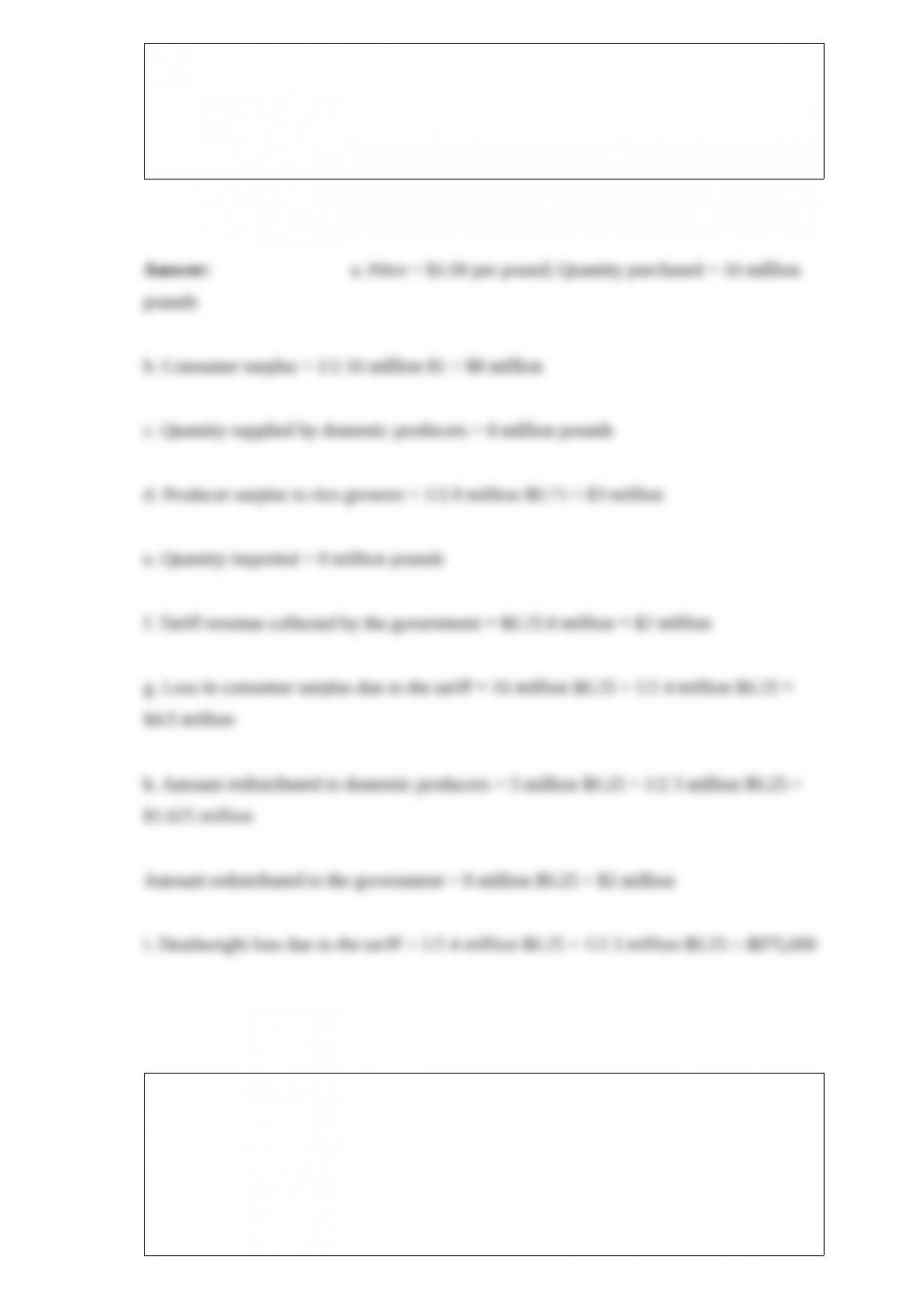
h. What portion of the consumer surplus loss is redistributed to domestic producers? To
the government?
i. Calculate the deadweight loss due to the tariff.
Which of the following are represented by the same flow in the circular flow model?
A) the flow of goods and the flow of factors of production
B) the flow of costs and the flow of revenue
C) the flow of income earned from the sale of resources and the flow of expenditures on
goods and services
D) the flow of income received by households and the flow of tax revenues paid by
firms
A decrease in the price level in the United States will have what effect on the aggregate
expenditure line?
A) Aggregate expenditure will shift downward.
B) Aggregate expenditure will become steeper.
C) Aggregate expenditure will shift upward.
D) Aggregate expenditure will not be affected by an increase in the price level in the
United States.