Which of the following is not a necessary condition for price discrimination to hold?
a. The seller must be a price searcher.
b. The seller must be able to distinguish between customers willing to pay different
prices.
c. It must cost the seller more to service some customers than others.
d. Reselling the product must be extremely costly or must not be possible
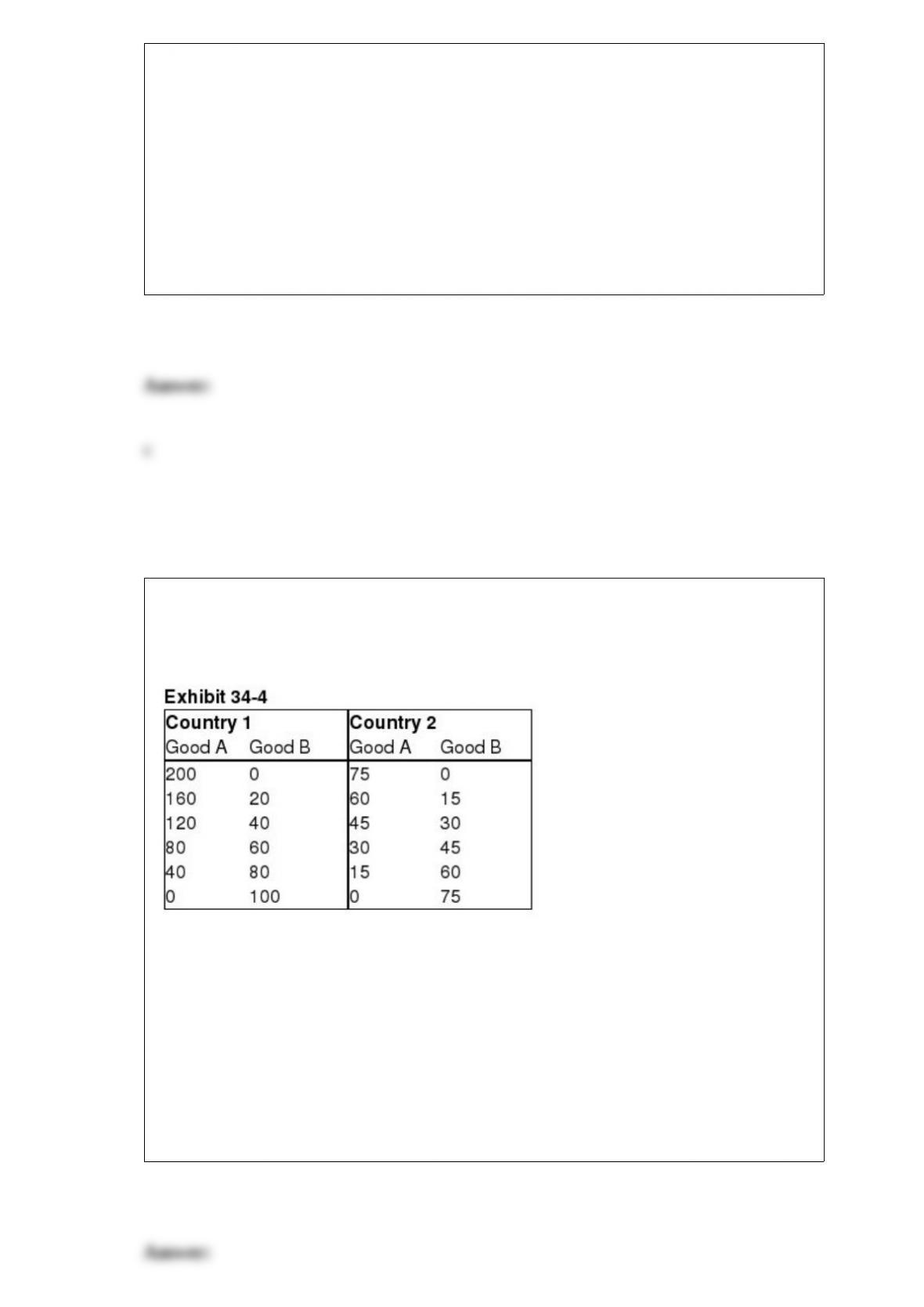
Refer to Exhibit 34-4. The opportunity cost of one unit of good A is __________ for
country 1 and __________ for country 2.
a. 20B; 15B
b. 2B; 1B
c. 40B; 15B
d. 1/2B; 1B
e. 1/20B; 1/15B
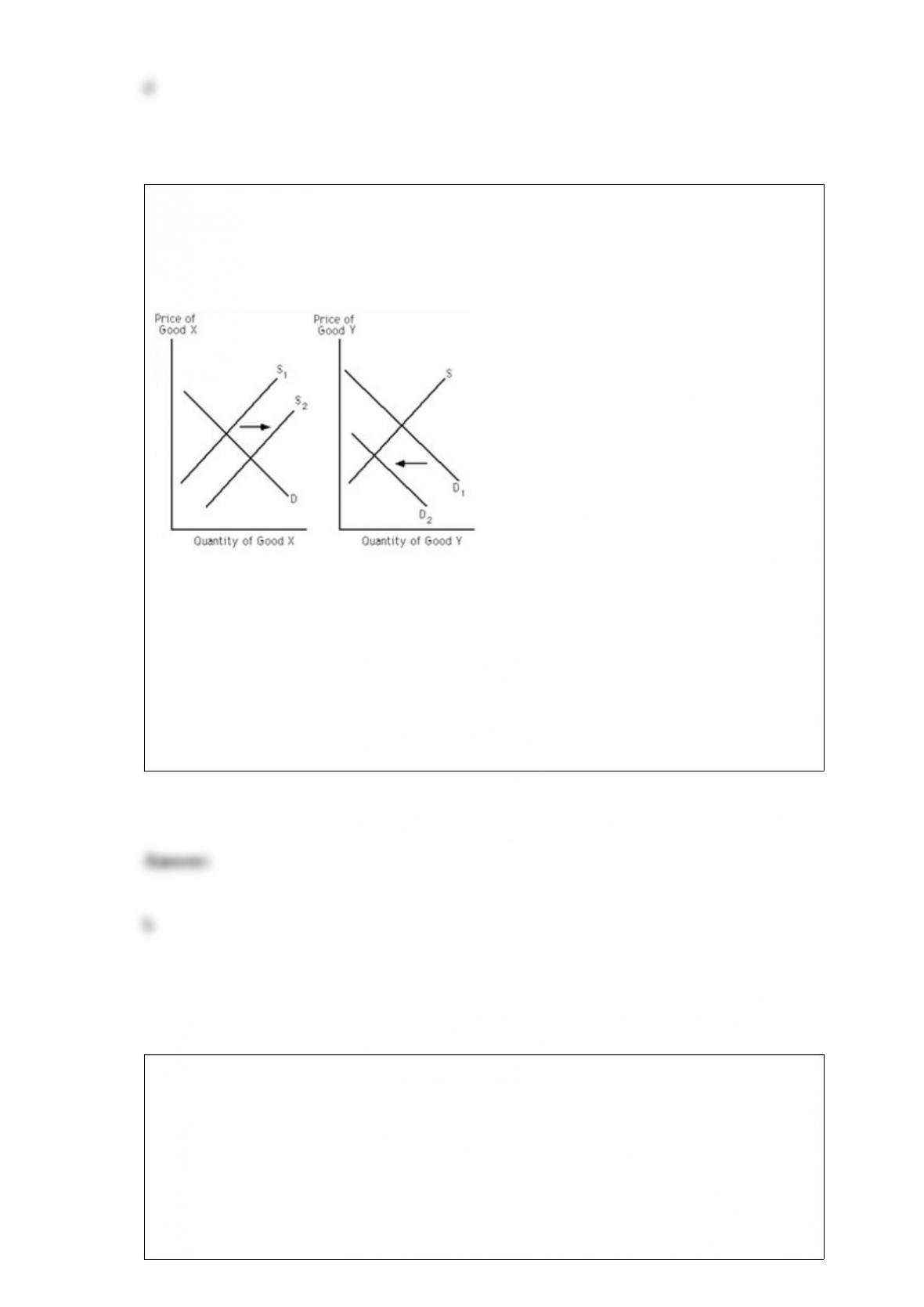
Refer to Exhibit 20-4. As a consequence of the depicted change in the supply of X, the
demand curve for Y shifted from D1 to D2. Which of the following pairs of goods are
most likely represented by X and Y?
Exhibit 20-4
a. cars and gasoline
b. brand A peanut butter and brand B peanut butter
c. water and diamonds
d. milk and cereal
e. a and d
The law of diminishing marginal utility
a. allows us to make interpersonal utility comparisons.
b. tells us that an additional dollar is worth less to a millionaire than to a poor person.
c. tells us the worth of an additional dollar of income.
d. tells us that an additional dollar of income is worth less than the preceding dollar of
income.
e. a, b, and d
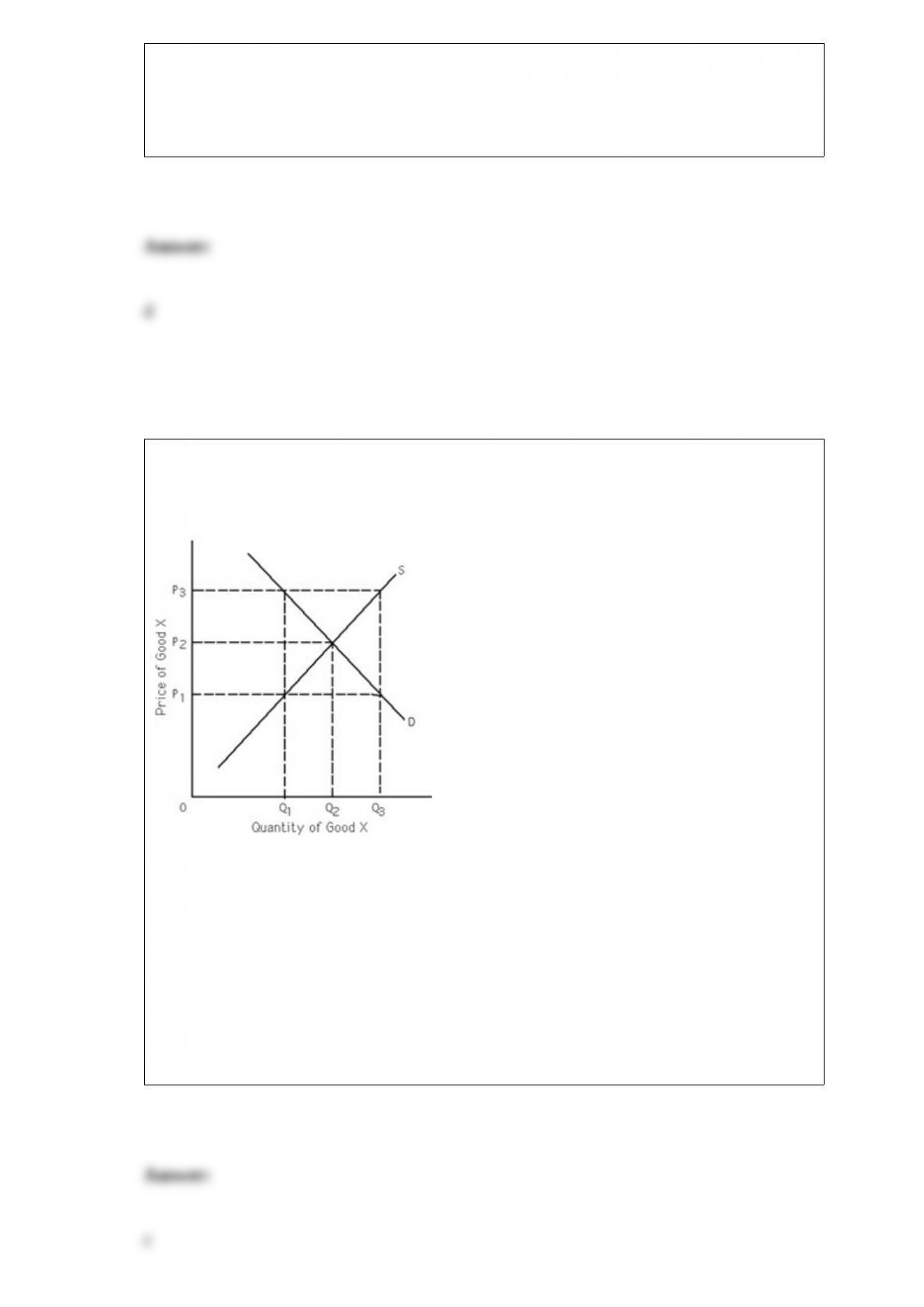
Refer to Exhibit 4-3. If price P1 is a price floor, then
Exhibit 4-3
a. the quantity exchanged is Q1.
b. there is a surplus in the market for good X.
c. it is the lowest price that can legally be charged in the market for good X.
d. both b and c
e. all of the above

Rational ignorance exists because voters are apathetic.
a. True
b. False
If, for a perfectly competitive firm, marginal cost is greater than marginal revenue for
the 100th unit, then it follows that
a. producing the 100th unit adds more to total revenue than it does to total cost.
b. producing the 100th unit adds more to total cost than it does to total revenue.
c. marginal cost equals marginal revenue for the 99th unit.
d. the firm is not maximizing profit, or minimizing losses, if it produces the 100th unit.
e. b and d
The “prisoner’s dilemma” game illustrates a case in which
a. individually rational behavior leads to a collectively inefficient outcome.
b. what is irrational individual behavior turns out to be ultra-irrational group behavior.
c. the whole is greater than the sum of the parts.

d. none of the above
Attempts to determine “what is” are part of __________ economics.
a. positive
b. normative
c. positive and normative
d. neither positive nor normative
If the cross elasticity of demand is +2.0, this means that
a. the percentage change in quantity demanded of a product is 2 times the percentage
change in price of some other product.
b. if quantity demanded of a product fell by 1 percent, price of another product would
fall by 2 percent.
c. if price of one product was raised by 2 percent, quantity demanded of another product
would fall by 2 percent.
d. if price of one product was raised 2 percent, quantity demanded of another product
would rise 2 percent.
e. the percentage change in quantity demanded of a product is 2 times the percentage

change in the price of that product.
Smith says she gets 5 utils from consuming the fifth unit of a good whereas Jones says
he gets 10 utils from consuming the fifth unit of a good. It follows that
a. the fifth unit of the good means more to Jones than Smith.
b. the fifth unit of the good means more to Smith than Jones.
c. the fifth unit of the good means twice as much to Jones as it means to Smith.
d. if the law of diminishing marginal utility holds, both Smith and Jones will get less
utility from the sixth unit of the good than the fifth.
e. a and d
Consider two options: (A) you receive a guaranteed payment of $100; (B) a coin is
tossed and if heads comes up, you win nothing; if tails comes up, you win $200. The
expected payoff for option A is:
a. $200
b. $100
c. $300
d. $75
e. There is not enough information to answer the question.
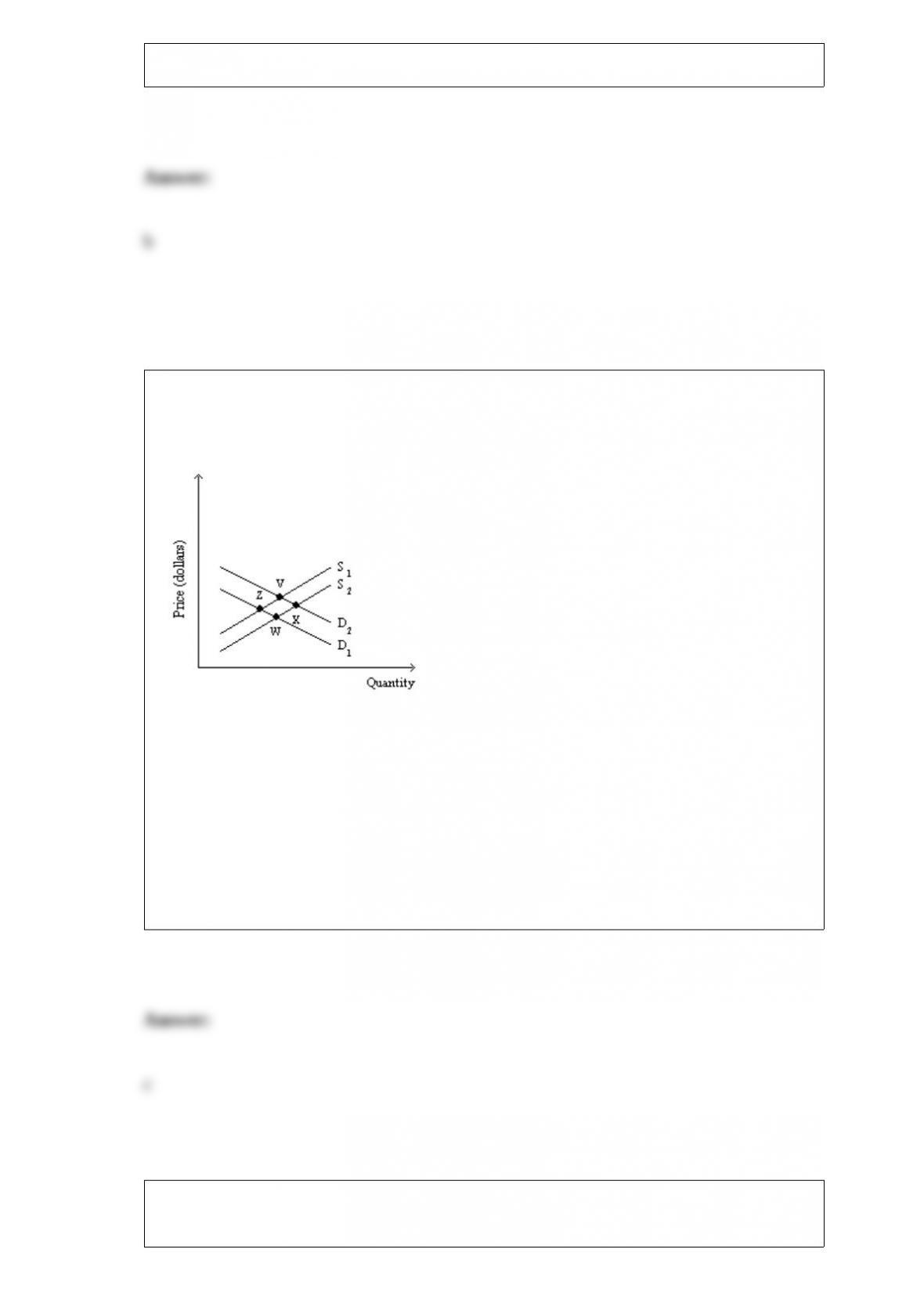
Refer to Exhibit 3-5.In the market shown, a rightward shift in demand from D1 to D2
could have been caused by
Exhibit 3-5
a. an increase in the number of sellers in the market.
b. an improvement in technology in the production of this good.
c. a decrease in buyers’ income (assuming the good is an inferior good).
d. a decrease in buyers’ income (assuming the good is a normal good).
e. a and b
Which of the following is an example of a negative externality?
a. Bad weather reduces the size of the wheat crop.
b. A reduction in the size of the wheat crop causes the income of wheat farmers to fall.
c. Smoking harms the health of nonsmokers who are nearby.
d. Smoking harms the health of the smoker.
e. all of the above
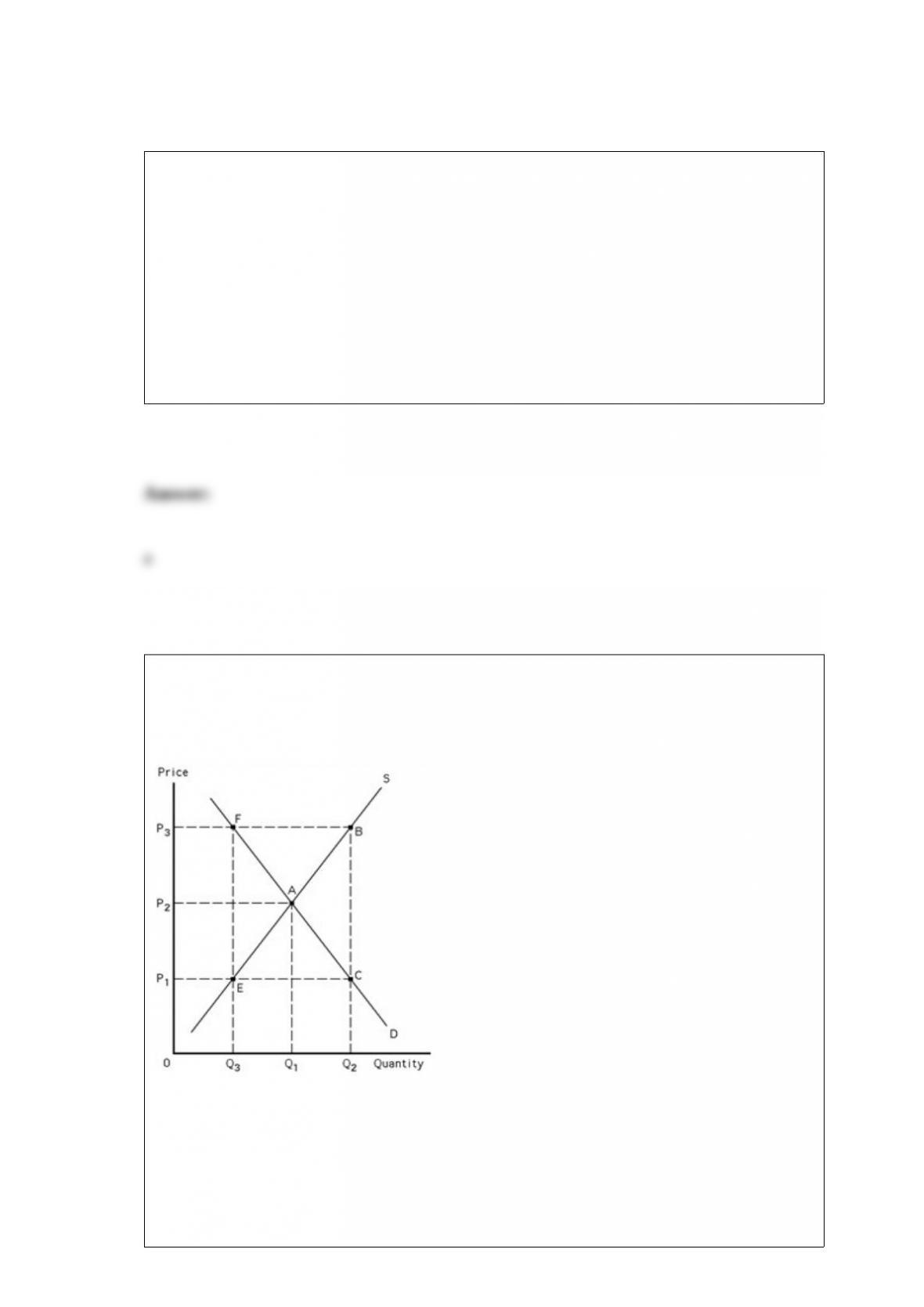
Refer to Exhibit 24-8. The marginal cost of the last unit produced at the
profit-maximizing output level equals
a. $8.
b. $31.
c. $60.
d. $15.
Grown children fawning over an elderly parent in order to try to secure a larger
inheritance is an example of
a. rent seeking.
b. logrolling.
c. rational ignorance.
d. public choice.
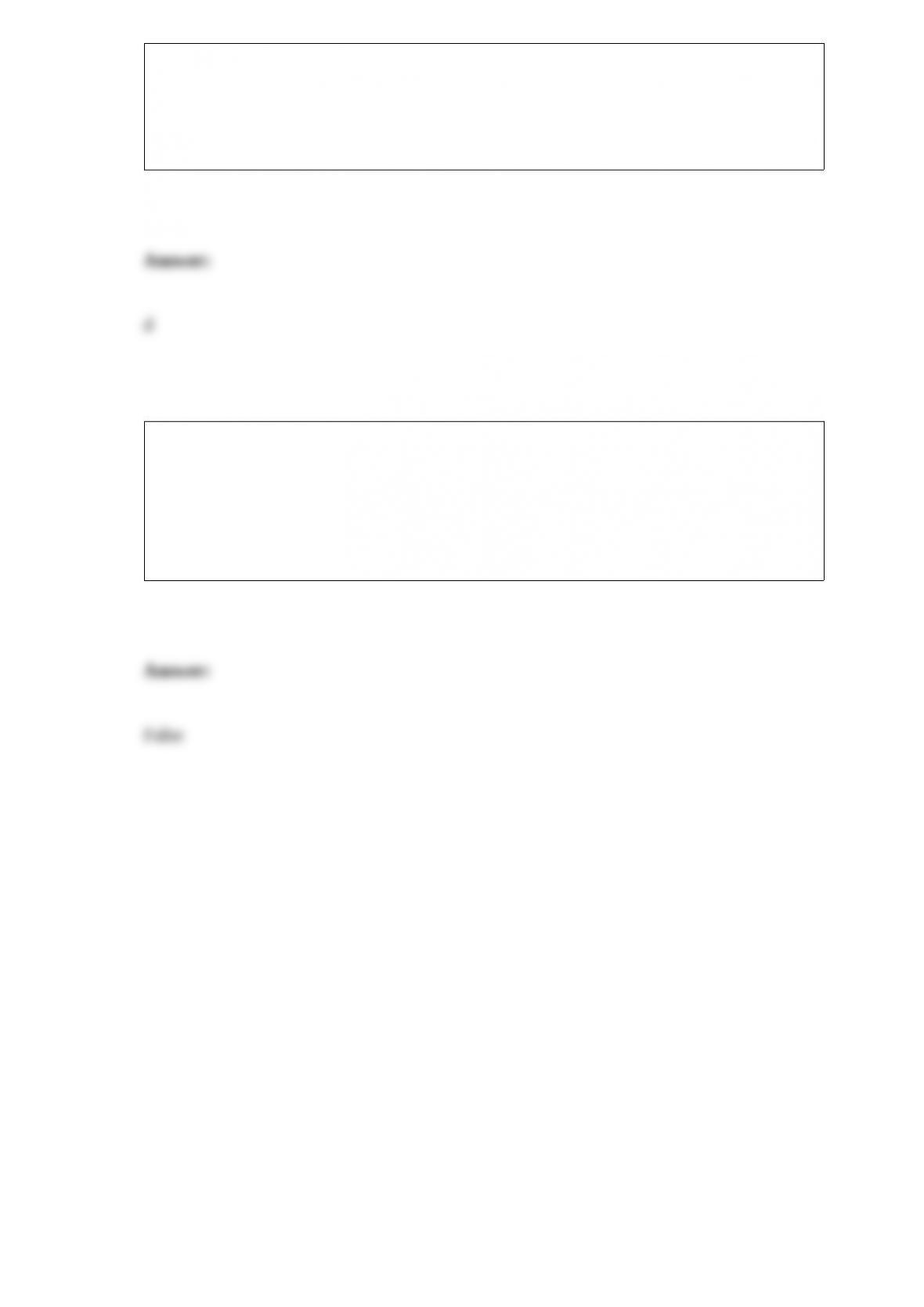
Refer to Exhibit 39-3. If P3 is a target price, the total deficiency payment that
government makes to farmers is
Exhibit 39-3
a. P2 x Q3.
b. P3 x Q3.
c. (P3 – P1) x Q1.
d. (P3 – P1) x Q2.
e. (P3 – P2) x Q3.
Research presented in the text shows that people are more concerned with their absolute
income position in a group than their relative income position in the group.
a. True
b. False