1)
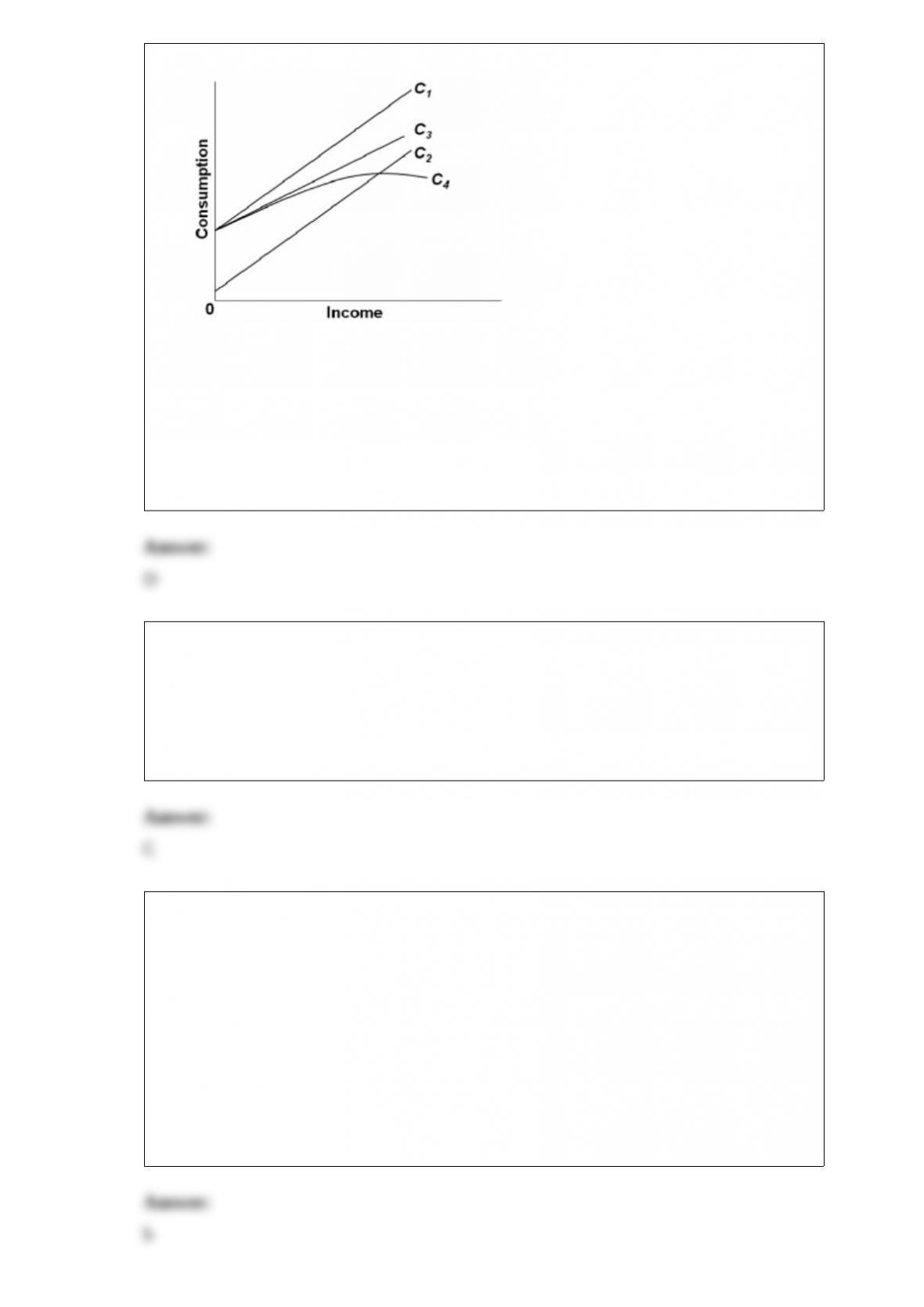
(Advanced analysis) Refer to the above diagram, in which C1 is the before-tax
consumption schedule. Other things being equal, the economy would enjoy the greatest
built-in stability with consumption schedule:
A.C1.
B.C2.
C.C3.
D.C4.
2) In which of the following situations is it certain that the quantity of money demanded
by the public will decrease?
A.nominal GDP decreases and the interest rate decreases
B.nominal GDP increases and the interest rate decreases
C.nominal GDP decreases and the interest rate increases
D.nominal GDP increases and the interest rate increases
3) renee earns $500 per hour in the courtroom as a trial lawyer; she can type up her
legal documents at a rate of 80 words per minute. christopher has no training as a trial
lawyer, but can type legal documents at a rate of 50 words per minute for a wage of $30
per hour. based on the theory of comparative advantage:
a.renee should do all of her own typing.
b.renee should specialize in courtroom trials and hire christopher to type her legal
documents.
c.renee should only hire christopher if he can raise his typing speed to faster than 80
words per minute.
d.comparative advantage doesn’t apply to this case because it does not involve
international trade.
4) from the 1970s to 1998, immigrants’ use of the u.s. welfare system was greater
proportionately than the use by natives. this occurred primarily because:
a.the mix of immigrants shifted from relatively skilled to relatively unskilled workers.
b.funding for the u.s. welfare system increased dramatically.
c.changes in u.s. welfare law expanded the availability of welfare to immigrants.
d.immigration from non-english speaking countries increased significantly.
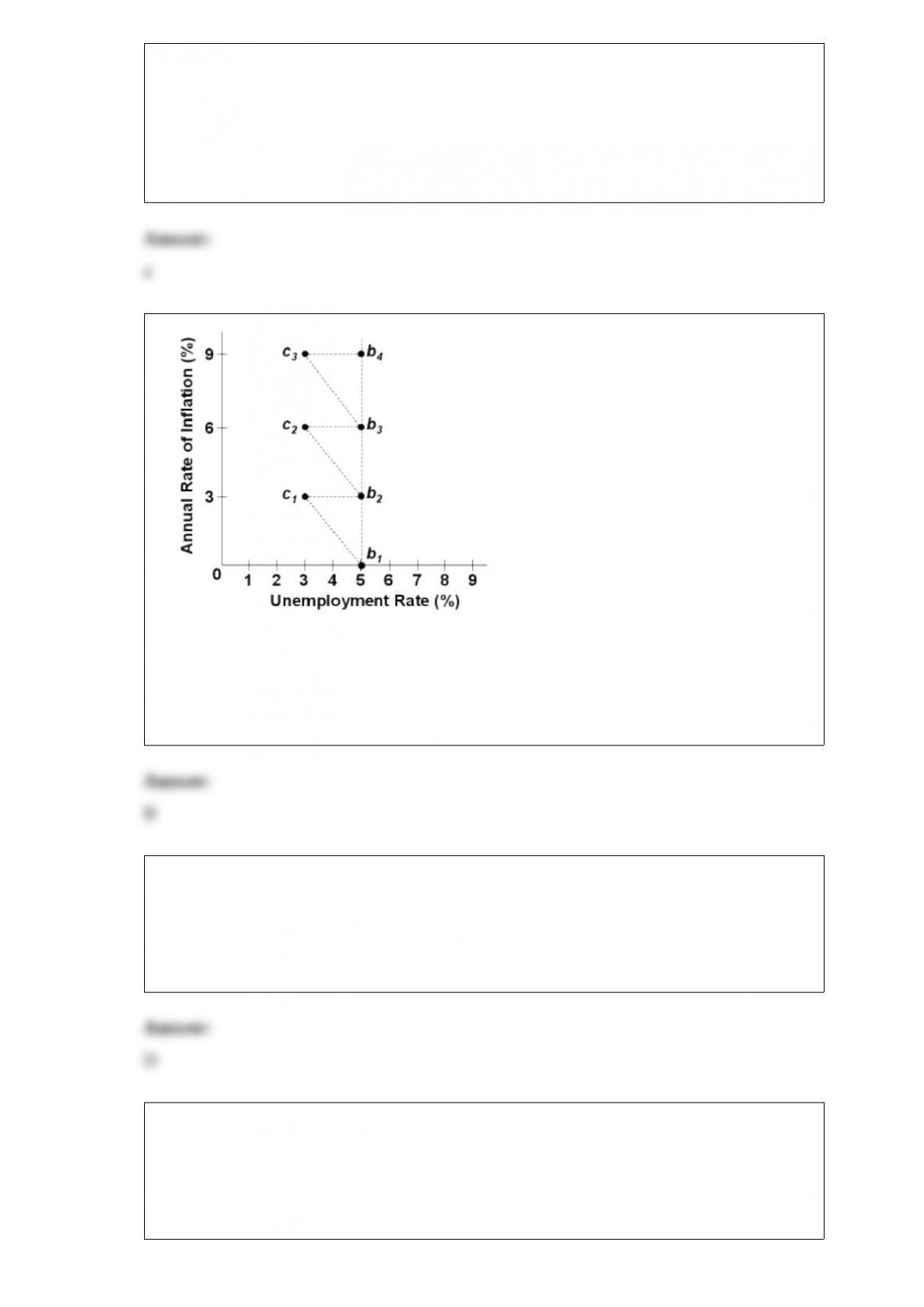
5)
Refer to the above diagram. The natural rate of unemployment for this economy is:
A.3 percent.
B.5 percent.
C.6 percent.
D.4 percent.
6) The extended AD-AS model:
A.distinguishes between short-run and long-run aggregate demand.
B.explains inflation but not recession.
C.includes G and Xn whereas the simple AD-AD model does not.
D.distinguishes between short-run and long-run aggregate supply.
7) The Lorenz curve shows the:
A.progressiveness of the Federal tax system.
B.degree of inequality in the distribution of income.
C.degree of discrimination against African-Americans and other minorities.
D.percentage of the population that is below the poverty line.
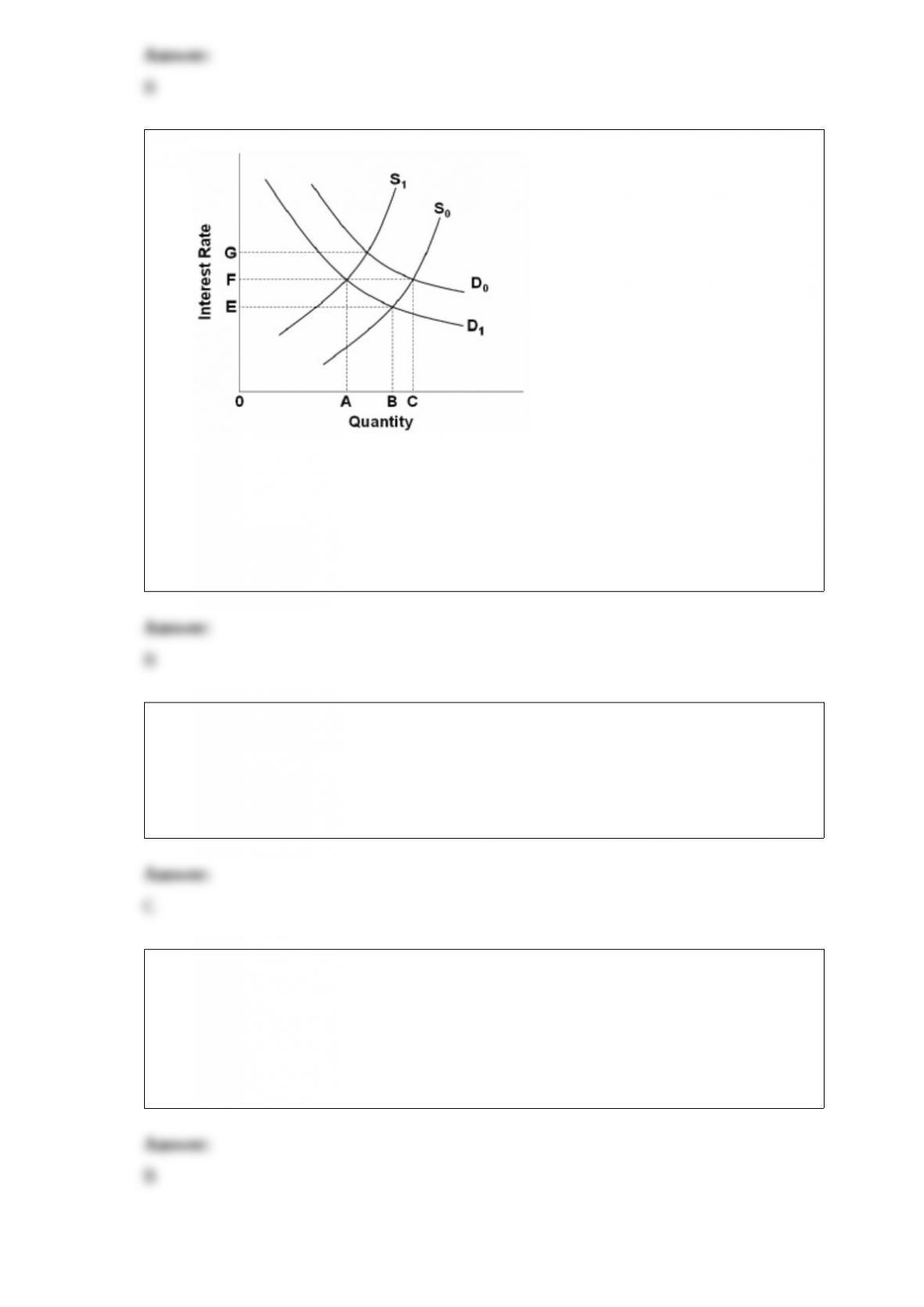
8)
Refer to the above diagram. The supply of loanable funds curve S1 slopes upward
because:
A.business will borrow more funds at lower interest rates than at higher ones.
B.at higher interest rates households will make more funds available for lending.
C.at lower interest rates, households will consume less and save more.
D.business will borrow more funds at higher interest rates than at lower ones.
9) The possible asymmetry of monetary policy is the central idea of the:
A.invisible hand concept.
B.ratchet analogy.
C.pushing-on-a-string analogy.
D.bandwagon effect.
10) Creative destruction is:
A.the process by which large firms buy up small firms.
B.the process by which new firms and new products replace existing dominant firms
and products.
C.a term coined many years ago by Adam Smith.
D.is applicable to planned economies, but not to market economies.