1) suppose that, when producing 10 units of output, a firm’s avc is $22, its afc is $5, and
its mc is $30. this:
a.firm’s atc is $35.
b.firm’s atc is $57.
c.firm’s total cost is $270.
d.firm’s total cost is $30.
2) How would the following situations affect the equilibrium interest rate in the
loanable funds market?
(a)The states agree to abolish sales taxes.
(b)The government reduces the budget deficit.
(c)Technological improvements are made to increase expected rates of return.
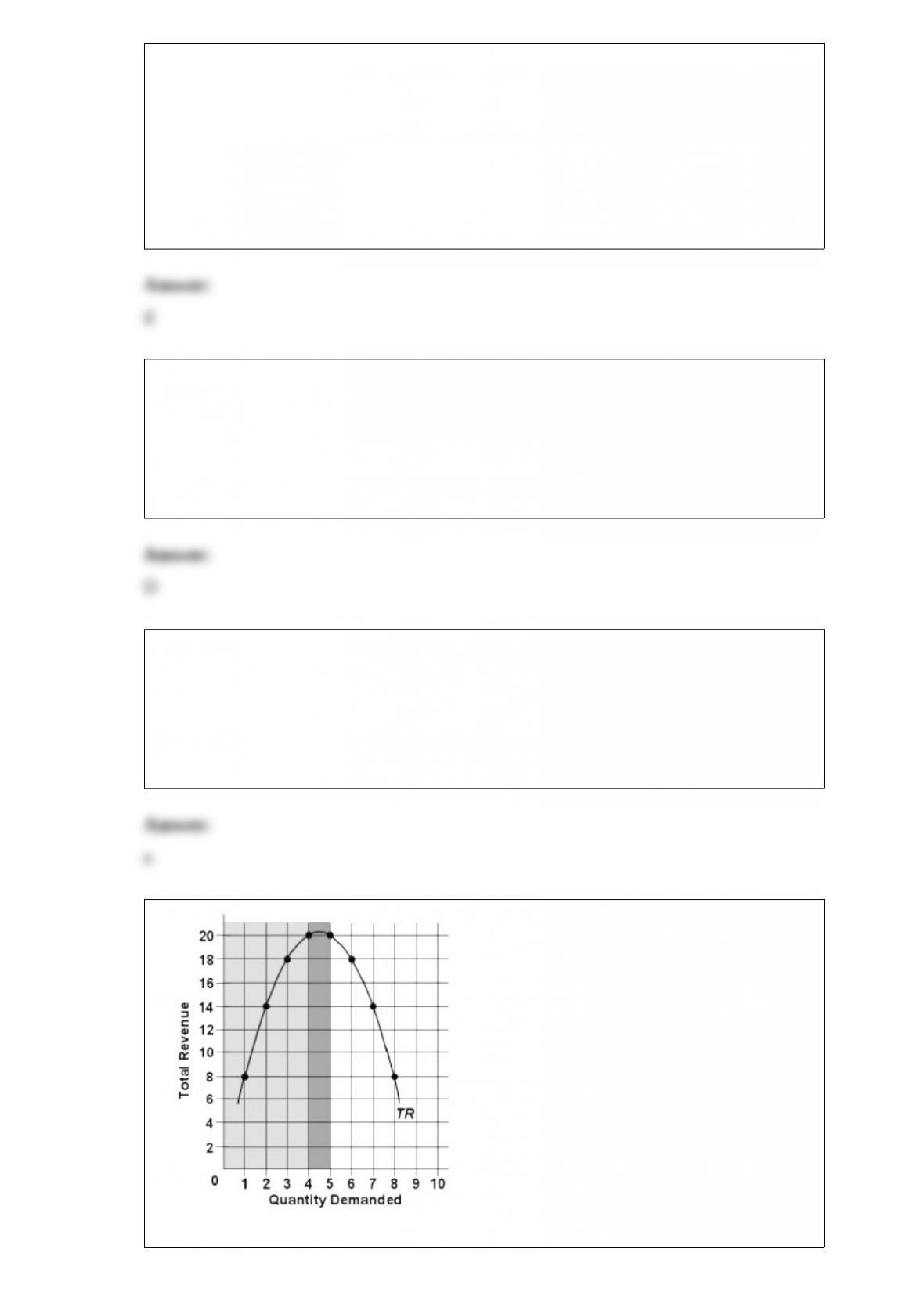
3)
refer to the above diagram. which of the following is a positive statement?
a.a point inside the production possibilities curve is superior to a point on the curve
because the former requires less work effort.
b.because any society should stress economic growth as its major goal, point d is
superior to point c.
c.point b is preferable to point c because the ultimate goal of economic activity is to
maximize consumption.
d.given its resources and technology, this society is incapable of simultaneously
producing 3 units of tractors and 15 units of bread.
4) Professional buyers of antiques often have more information about the value of
antique objects than do the sellers. This illustrates:
A.the Coase theorem.
B.the moral hazard problem.
C.the free-rider problem.
D.asymmetric information.
5) the percentage of the working-age population in the labor force (= employed +
officially unemployed) is called the:
a.labor force participation rate.
b.employment-population ratio.
c.work-activity rate.
d.work-nonwork ratio.
6)
suppose that the above total revenue curve is derived from a particular linear demand
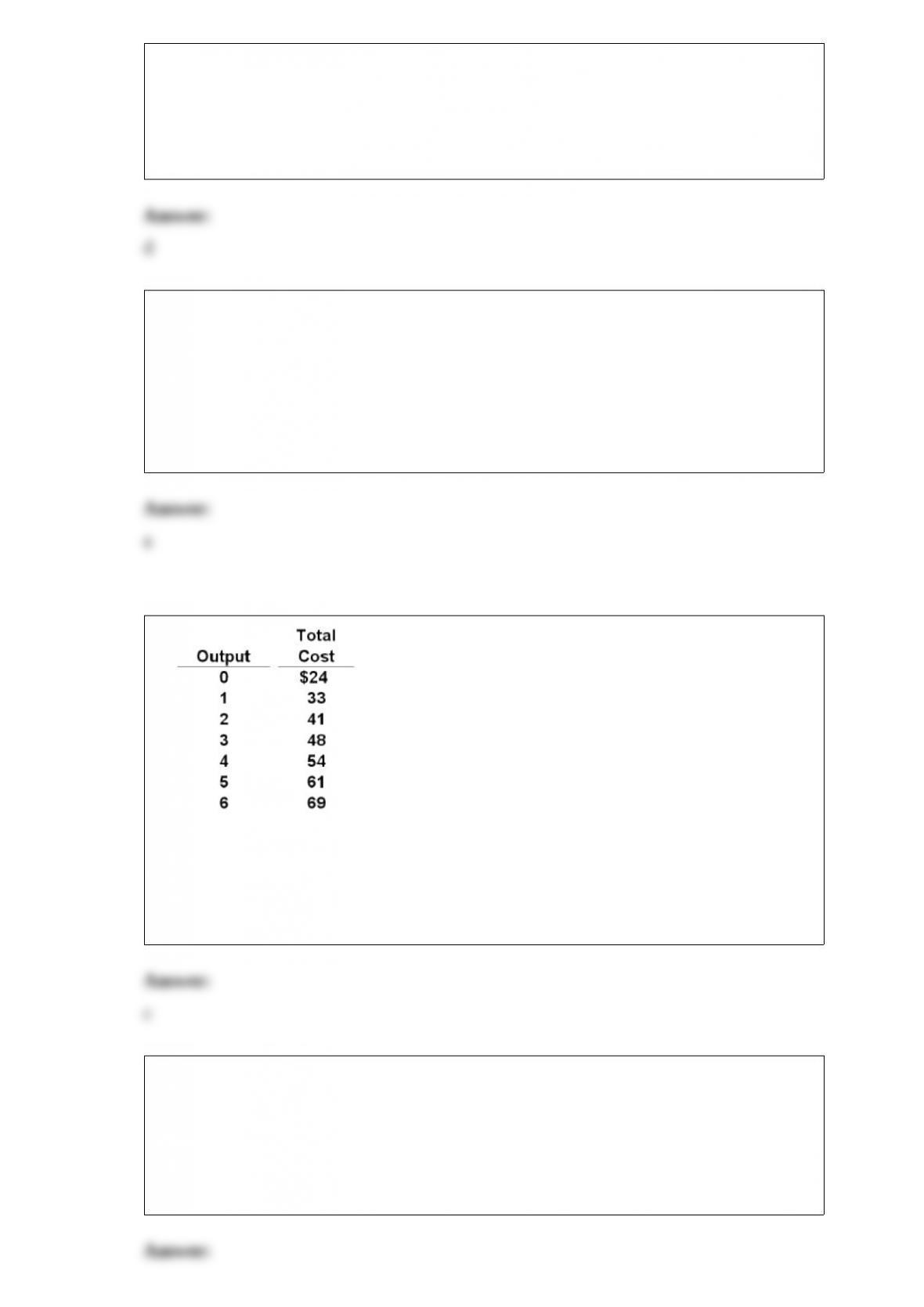
curve. that demand curve must be:
a.inelastic for price declines that increase quantity demanded from 2 units to 3 units.
b.elastic for price declines that increase quantity demanded from 5 units to 6 units.
c.inelastic for price increases that reduce quantity demanded from 4 units to 3 units.
d.elastic for price increases that reduce quantity demanded from 4 units to 3 units.
7) assume that a 3 percent increase in income in the economy produces a 1 percent
decline in the quantity demanded of good x. the coefficient of income elasticity of
demand for good x is:
a.negative and therefore x is an inferior good.
b.negative and therefore x is a normal good.
c.positive and therefore x is an inferior good.
d.positive and therefore x is a normal good.
8)
refer to the above data. the total variable cost of producing 5 units is:
a.$61.
b.$48.
c.$37.
d.$24.
9) Which of the following does not explain what backs the money supply in the United
States?
A.It is back by gold.
B.It is widely accepted in transactions.
C.It is designated “legal tender” by the Federal government.
D.It is relatively scarce.

10)
Refer to the above diagram in which S is the before-tax supply curve and St is the
supply curve after an excise tax is imposed. The total tax payment to government is
shown by area(s):
A.A only.
B.A + B + C + E + F.
C.A + B + C.
D.E + F.
11) The mainstream view of macro instability is that:
A.changes in the money supply directly cause changes in aggregate demand and thus
cause changes in real GDP.
B.changes in investment shift the aggregate demand curve and thus cause changes in
real GDP.
C.bursts of innovation put the economy on an unsustainable growth path, eventually
producing recession.
D.changes in technology and resource availability are the two main sources of
fluctuations of real GDP.
12) Assume that the quantity of a certain type of farmland is 400,000 acres and the
demand for this land is that given in the table below.
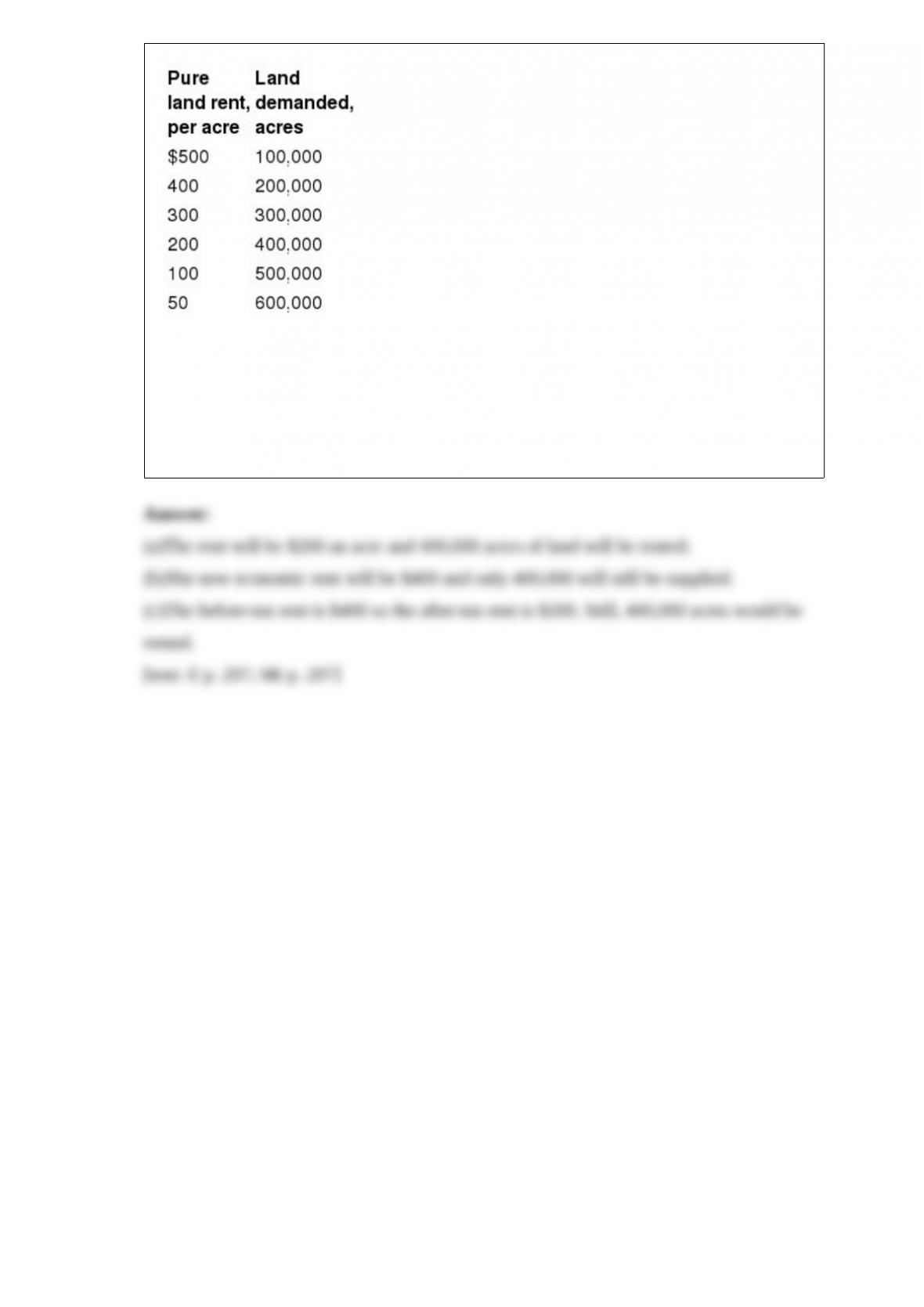
(a)What will be the economic rent and how much land will be rented?
(b)If the productivity of the land increases such that 200,000 more acres are demanded
at each price, what will the economic rent be and how much land will be supplied?
(c)Given the new demand schedule in (b), if landowners were taxed at a rate of $200
per acre for their land, what would be the economic rent on this land after taxes and
how many acres would be rented?