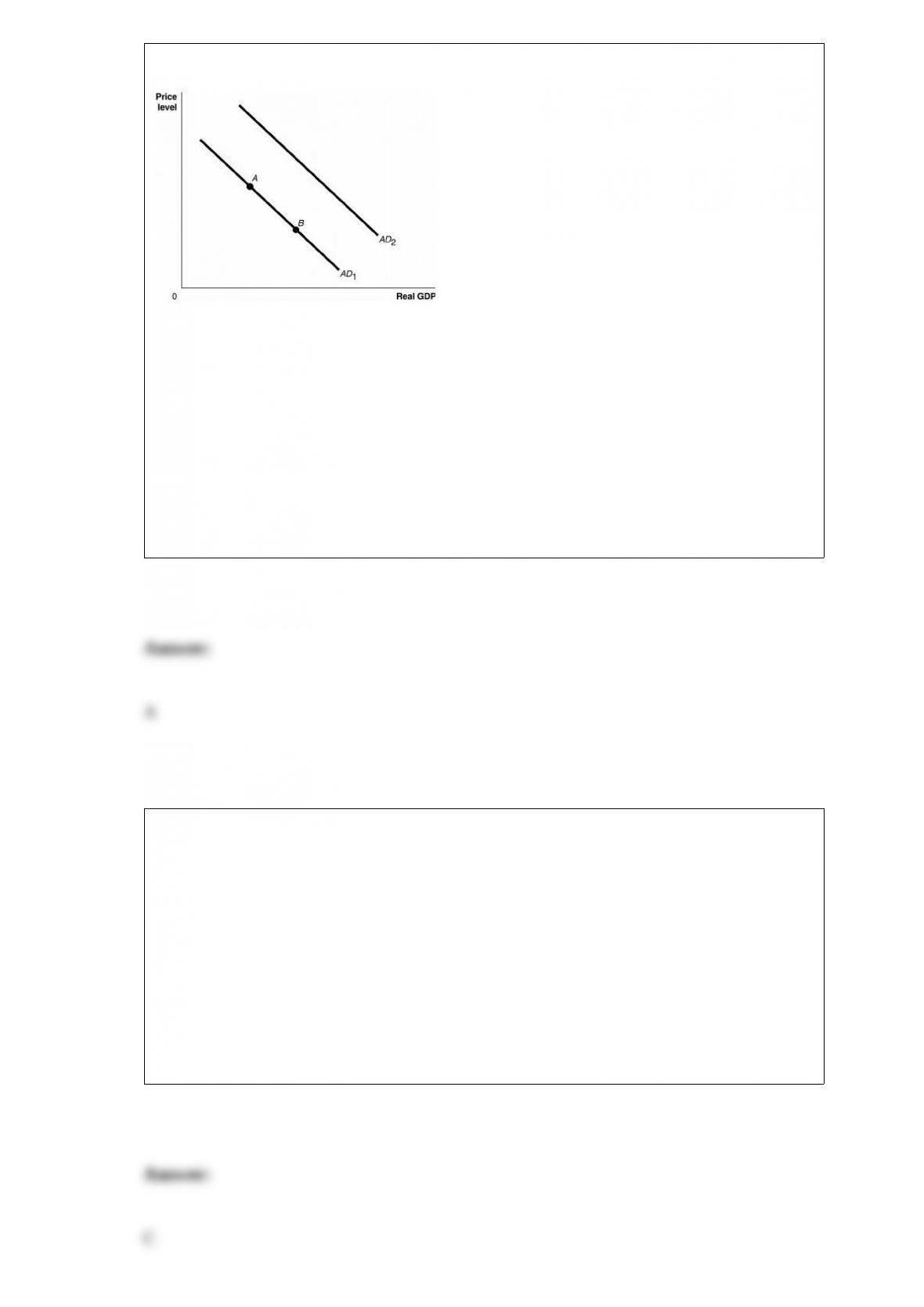
Figure 13-1
Refer to Figure 13-1. Ceteris paribus, a decrease in personal income taxes would be
represented by a movement from
A) AD1 to AD2.
B) AD2 to AD1.
C) point A to point B.
D) point B to point A.
Which of the following is one of the most important benefits of money in an economy?
A) Money allows for the exchange of goods and services.
B) Money allows for the accumulation of wealth.
C) Money makes exchange easier, leading to more specialization and higher
productivity.
D) Money encourages people to produce all of their own goods (self-sufficiency) and
therefore increases economic stability.

According to the “Rule of 70,” it will take 4 years for real GDP per capita to double
when the growth rate of real GDP per capita is
A) 4 percent.
B) 12.25 percent.
C) 17.5 percent.
D) 28 percent.
Some economists argue that the productivity slowdown from mid-1970s to mid-1990s
actually didn’t happen, but just “appeared” to happen because
A) services were becoming a more important part of the economy, and it was hard to
measure increases of output from services.
B) new environmental laws had passed and forced firms to spend to reduce pollution,
and this spending did not raise output.
C) increased spending on health and safety raised worker productivity.
D) A and B
E) B and C
Figure 17-2
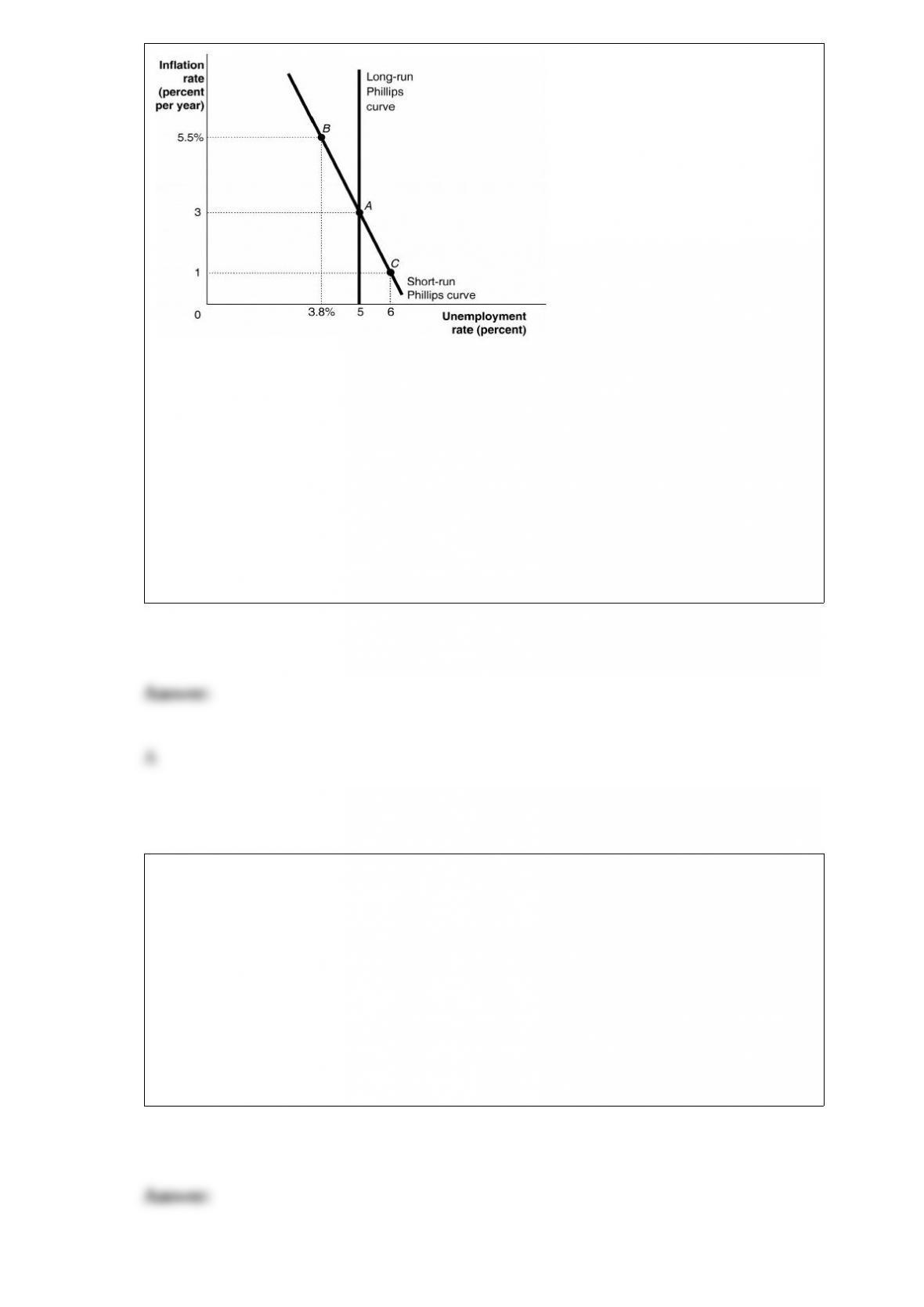
Refer to Figure 17-2. Suppose the economy is at point B. If the Fed increases the
money supply so that inflation increases, the economy will ________ in the short run,
holding all else constant.
A) eventually move to point A
B) stay at point B
C) eventually move to point C
D) move to point A and then back to point B
Under the Bretton Woods system, a fixed exchange rate supported by central banks was
known as a(n) ________ exchange rate.
A) par
B) equilibrium
C) fundamental
D) target

If a country’s currency is determined only by the demand and supply for that country’s
currency, the country is said to have a
A) floating exchange rate.
B) fixed exchange rate.
C) gold standard.
D) managed float.
In 1913, Congress established the Federal Reserve system with the intention of putting
an end to
A) high interest rates.
B) high unemployment rates.
C) inflation.
D) bank panics.
When the price level rises from 110 to 115, the aggregate level of GDP supplied rises
from $80 billion to $120 billion. This ________ relationship represents the ________
relationship between the quantity of real GDP firms are willing to supply and the price

level.
A) negative; short-run
B) positive; short-run
C) negative; long-run
D) positive; long-run
Using the Taylor rule, if the current inflation rate equals the target inflation rate and real
GDP is greater than potential GDP, then the federal funds target rate ________ the sum
of the current inflation rate plus the real equilibrium federal funds rate.
A) will be greater than
B) will be less than
C) will be the same as
D) may be greater than or less than
Purchases of Huggies diapers should
A) remain fairly constant over the business cycle.
B) increase in recessions and decrease in expansions.
C) decrease in recessions and increase in expansions.

D) increase in recessions and remain constant in expansions.
Which of the following is not a function of the Federal Reserve System, or the “Fed”?
A) acting as a lender of last resort
B) acting as a banker’s bank
C) performing check clearing services
D) insuring deposits in the banking system
E) taking actions to control the money supply
A study conducted by Alberto Alesina and Lawrence Summers concluded that countries
with ________ had lower inflation rates than countries with ________.
A) low rates of unemployment; high rates of unemployment
B) a large government debt; little to no government debt
C) no private banking system; an independent banking system
D) highly independent central banks; central banks that have little independence
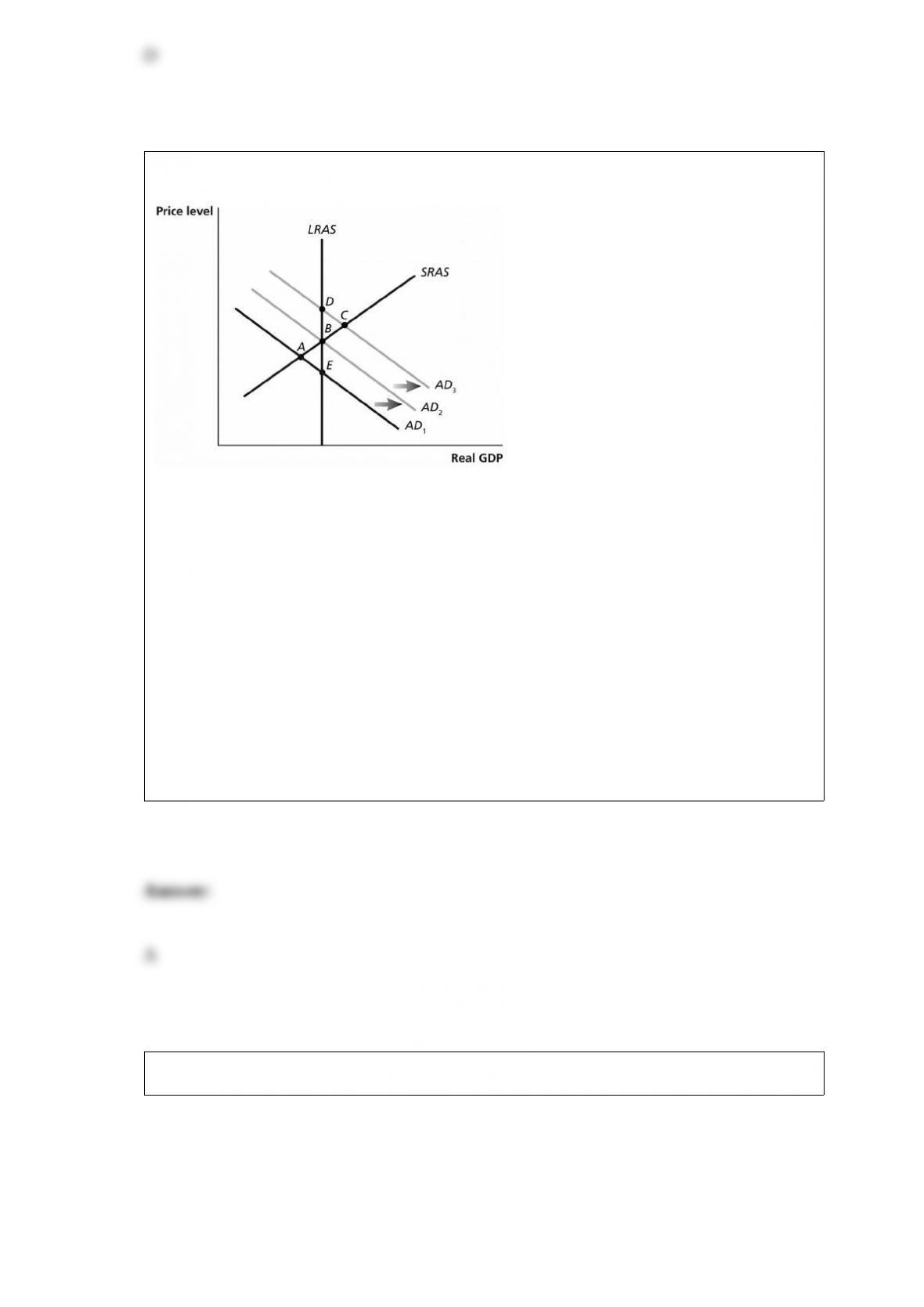
Figure 16-1
Refer to Figure 16-1. Suppose the economy is in short-run equilibrium below potential
GDP and Congress and the president lower taxes to move the economy back to long-run
equilibrium. Using the static AD–AS model in the figure above, this would be depicted
as a movement from
A) A to B.
B) B to C.
C) C to B.
D) B to A.
E) A to E.
Figure 13-2
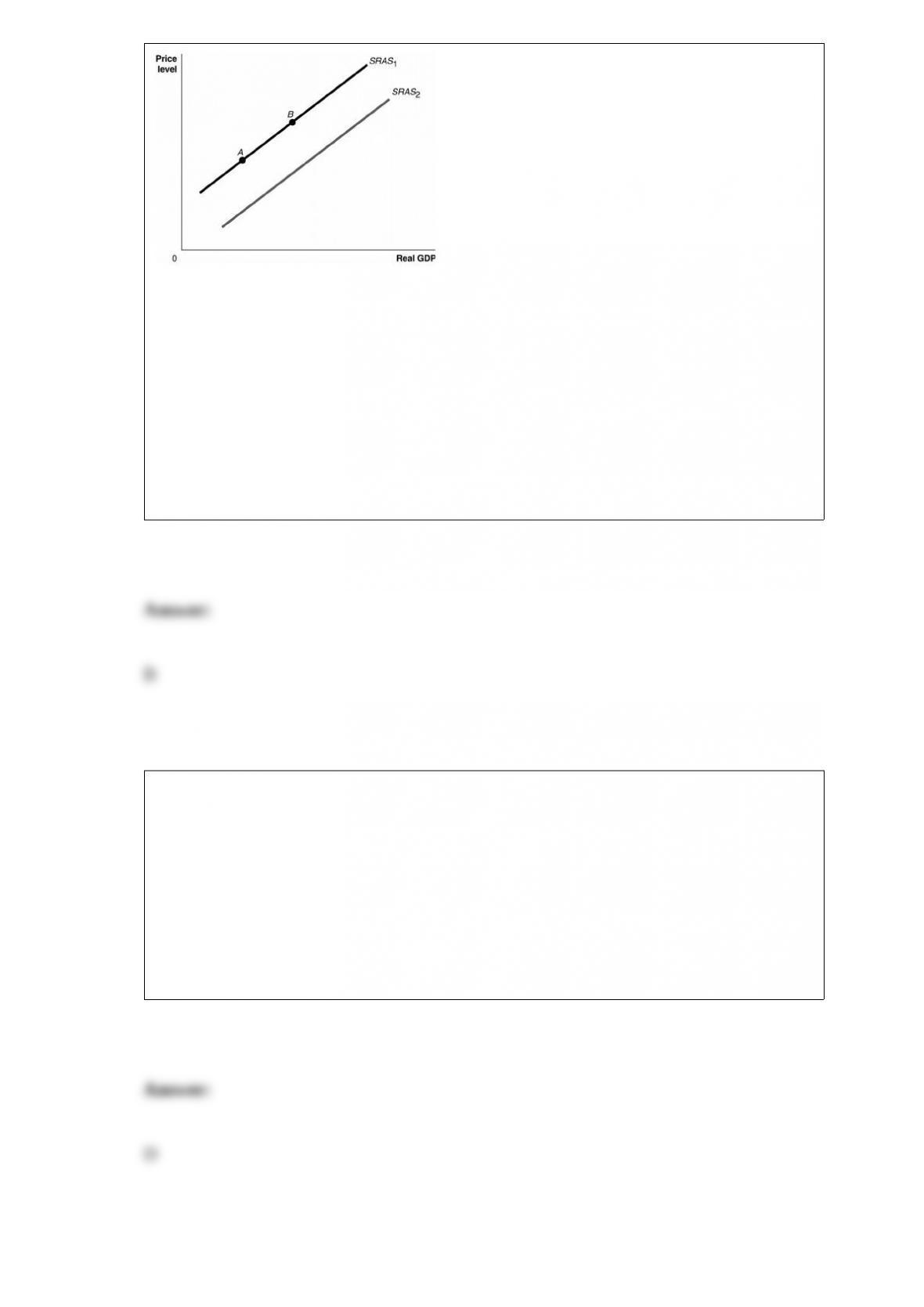
Refer to Figure 13-2. Ceteris paribus, a decrease in productivity would be represented
by a movement from
A) SRAS1 to SRAS2.
B) SRAS2 to SRAS1.
C) point A to point B.
D) point B to point A.
Which of the following is the most liquid asset?
A) a Renoir painting
B) bonds
C) a car
D) money
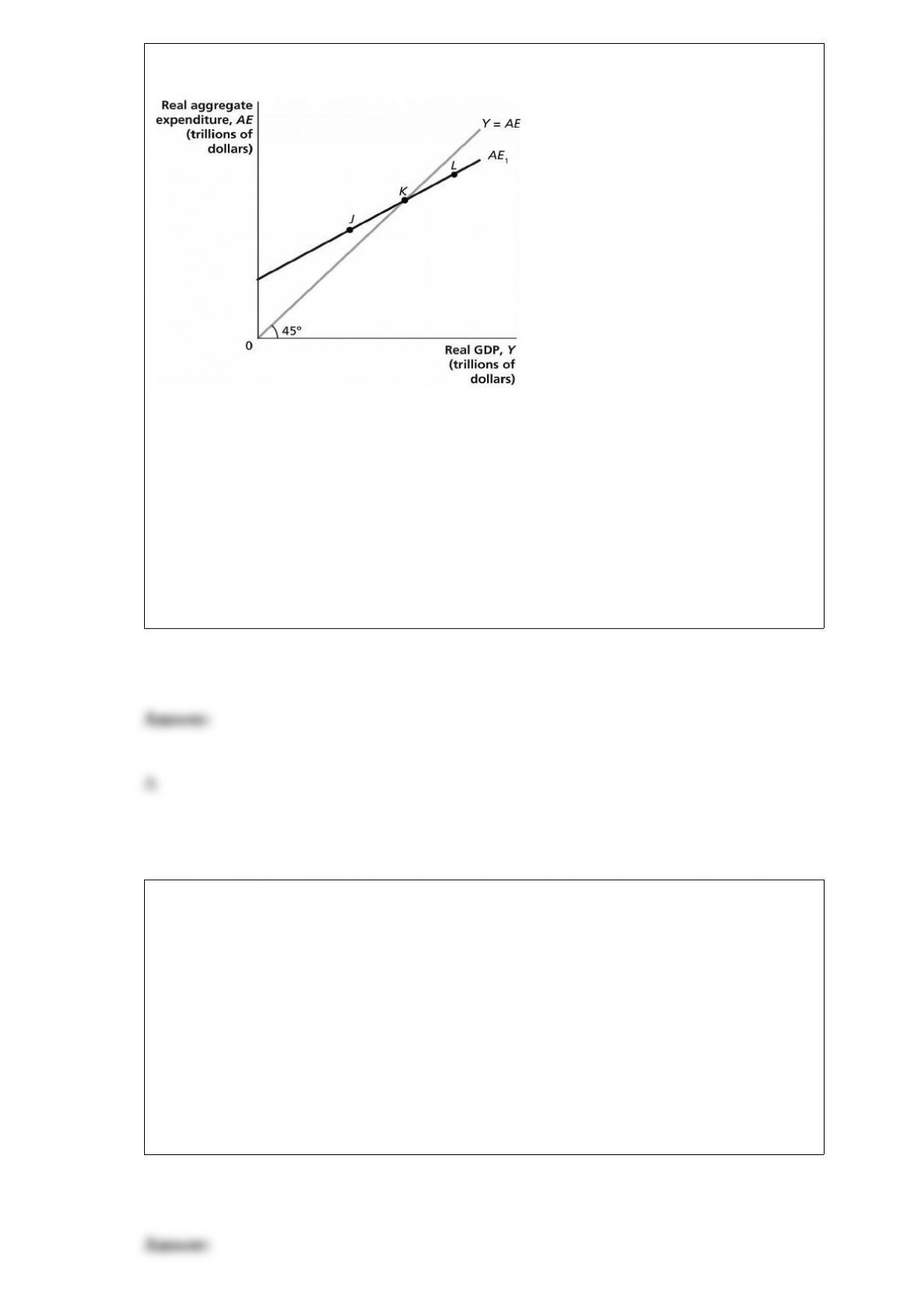
Figure 12-1
Refer to Figure 12-1. If the economy is at a level of aggregate expenditure given by
point K,
A) the economy is in equilibrium.
B) production is greater than spending.
C) production is less than spending.
D) inventories will increase above their desired level.
If net foreign investment in the United States is positive, how must national saving and
domestic investment be related? (Assume that the capital account is zero and net
transfers are zero.)
A) Domestic investment and national saving must also be positive.
B) Domestic investment must be less than national saving.
C) Domestic investment must be greater than national saving.
D) Domestic investment can be greater than or less than national saving.

Which of the following is a true statement?
A) excess reserves = actual reserves – required reserves
B) excess reserves = deposits – required reserves
C) excess reserves = deposits – loans
D) excess reserves = loans – required reserves
Which of the following is the best example of a voluntary export restraint?
A) a limit set by the Japanese government on the number of sports utility vehicles that
the United States can import from Japan
B) a subsidy granted by the U.S. government to domestic garment manufacturers so
they can compete more effectively with foreign garment manufacturers
C) a tax placed on all sports utility vehicles sold in the domestic market
D) a $5,000 per-car fee imposed on all sports utility vehicles imported into the United
States