Which of the following best describes the income effect of a price increase?
A) The price of bacon increases, so Michelle buys more sausage.
B) The price of corn chips increases, so Michelle buys potato chips.
C) The tuition at the public university increases, so Michelle attends a community
college.
D) Michelle’s apartment rent increases, so she cancels her subscription to a monthly
magazine.
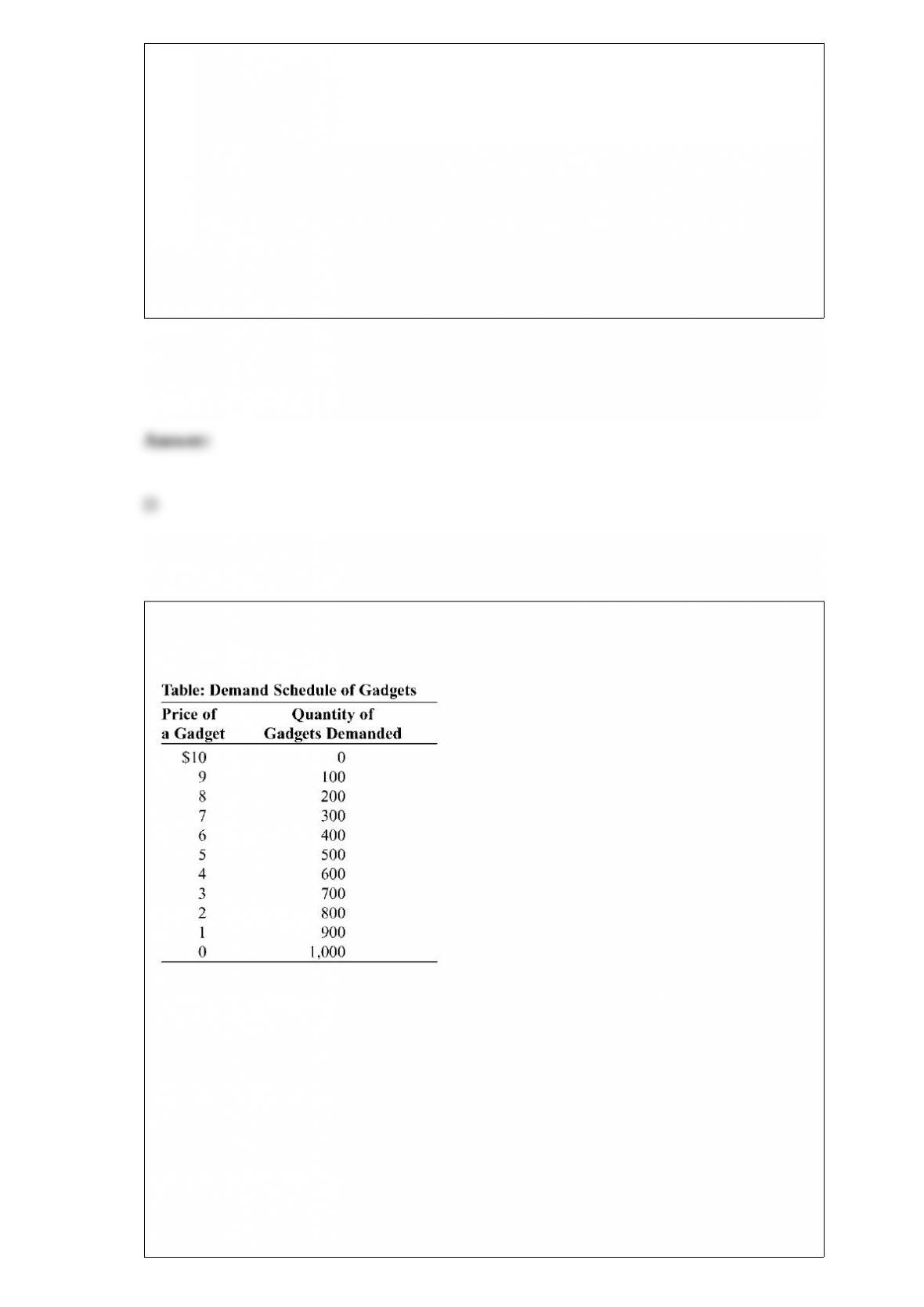
(Table: Demand Schedule for Gadgets) Look at the table Demand Schedule for
Gadgets. The market for gadgets consists of two producers, Margaret and Ray. Each
firm can produce gadgets with no marginal cost or fixed cost. Suppose that these two
producers have formed a cartel, agreed to split production of output evenly and are
maximizing total industry profits. If Margaret decides to cheat on the agreement and
sell 100 more gadgets, Margaret’s quantity effect will be a(n) _____ in profit of _____.
A) decrease; $250
B) increase; $150
C) increase; $400
D) decrease; $400
If a union is able to bargain for a wage that is higher than the equilibrium:
A) all workers will earn a wage equal to their value of marginal product.
B) some excess supply of labor or unemployment will result.
C) compensating differentials will be erased.
D) diminishing returns will not exist.
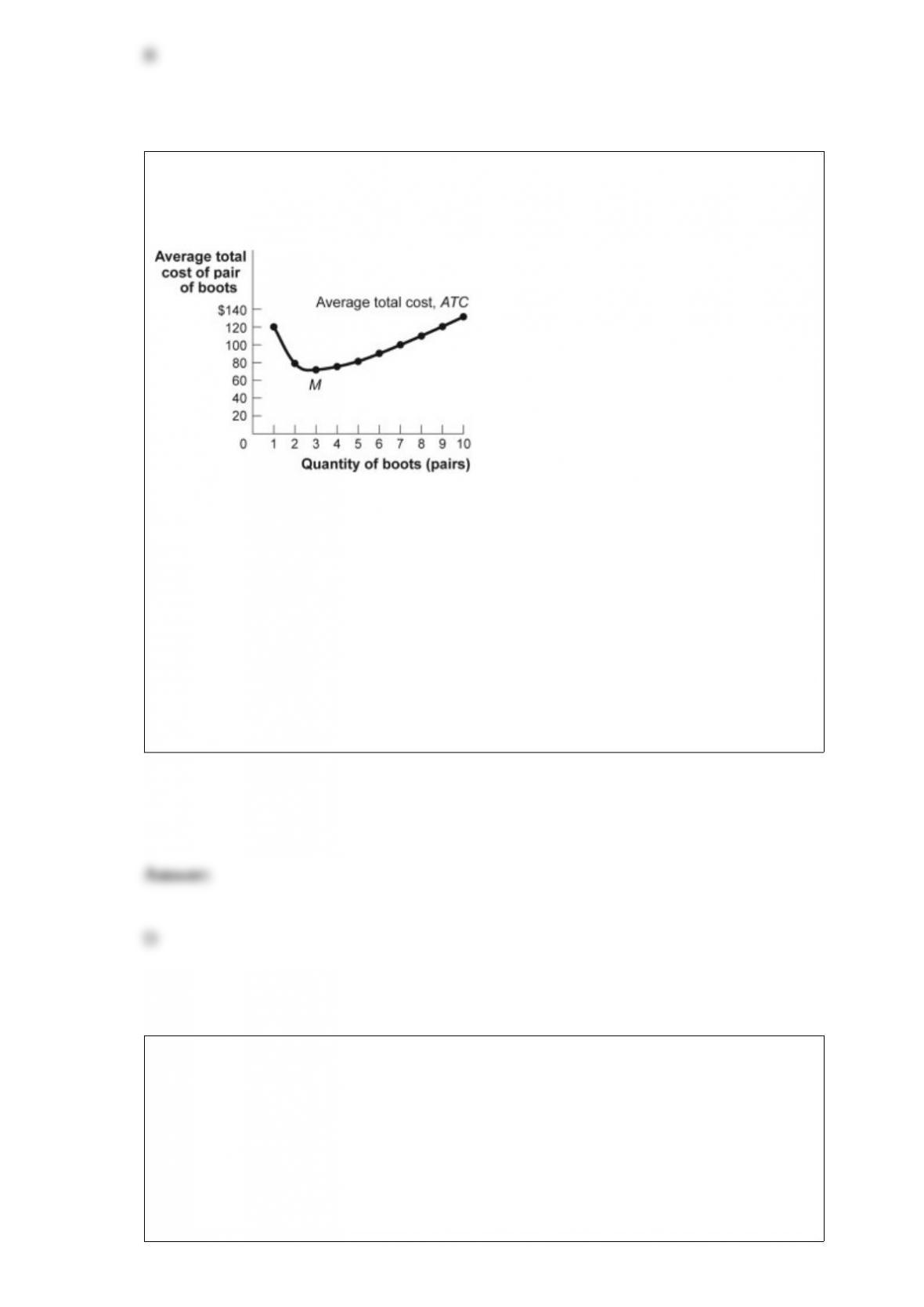
Figure: The Average Total Cost Curve
(Figure: The Average Total Cost Curve) Look at the figure The Average Total Cost
Curve. The total cost of producing five pairs of boots is approximately:
A) $408.
B) $82.
C) $108.
D) $17.
Given any upward-sloping supply curve for a good, the more inelastic the demand
curve, the _____ equilibrium output will fall and the _____ will be the deadweight loss
when the government imposes an excise tax.
A) more; smaller
B) more; larger

C) less; smaller
D) less; larger
If the number of available tradable emissions permits increases, the equilibrium price of
the permits _____ and the equilibrium quantity _____.
A) increases; does not change
B) increases; increases
C) decreases; does not change
D) decreases; increases
As the quantity of pollution rises, its marginal social cost:
A) remains constant.
B) falls.
C) rises.
D) rises at first but eventually falls.
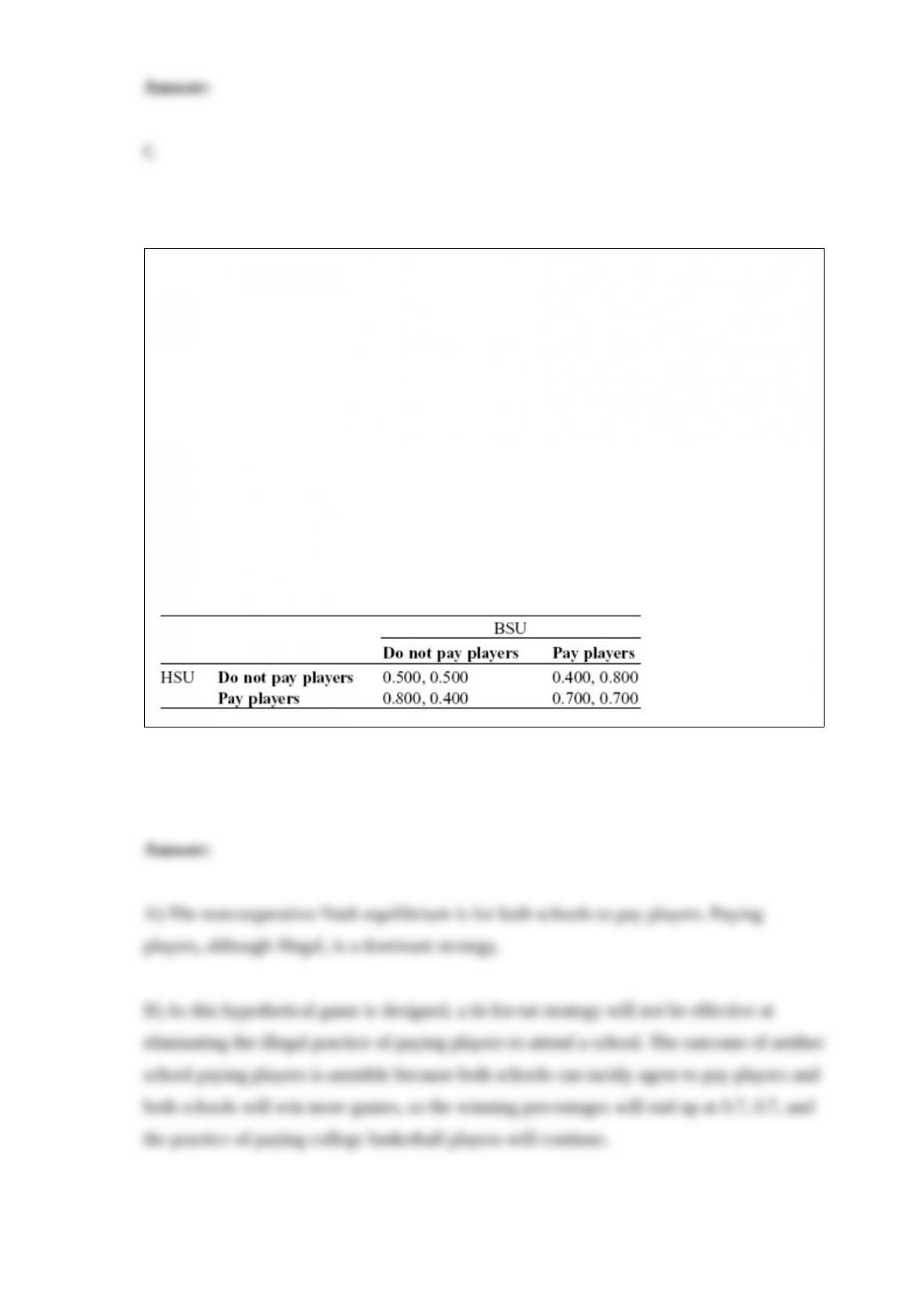
Two large universities, Humongous State (HSU) and Behemoth State (BSU), dominate
college basketball. Each basketball program aggressively recruits the best athletes to
attend the university, but the best athletes can skip college and jump immediately to
professional basketball. Each school can illegally pay top players to enroll and thus
increase the winning percentage of the team, or each program can follow the rules and
lose the top players to the professional ranks. The table shows the payoff matrix of
winning percentages that each school would receive from its recruiting decision, given
the recruiting decision of its rival. Winning percentages in each cell of the payoff matrix
are given as (HSU, BSU). A) What is the noncooperative Nash equilibrium? B)
Suppose each school considers the future and devises a tit-for-tat strategy. Neither
school will pay players to play basketball so long as the other does not. If one school
breaks the agreement and pays players, the other school will do the same until the first
school stops paying players. If both schools adopt the tit-for-tat strategy, what are the
winning percentages every year? Will this be effective at eliminating the illegal practice
of paying college athletes to play basketball?

The _____ apples will decrease when apple prices rise.
A) demand for
B) quantity demanded of
C) supply of
D) equilibrium of
General Snacks is a typical firm in a market characterized by monopolistic competition.
Initially, the market is in long-run equilibrium, and then there is an increase in the
market demand for snacks. In the short run the price of snacks will _____ and the
output of snacks will _____.
A) fall; fall
B) remain unchanged; remain unchanged
C) rise; fall.
D) rise; rise
Figure: Market for Hotel Rooms
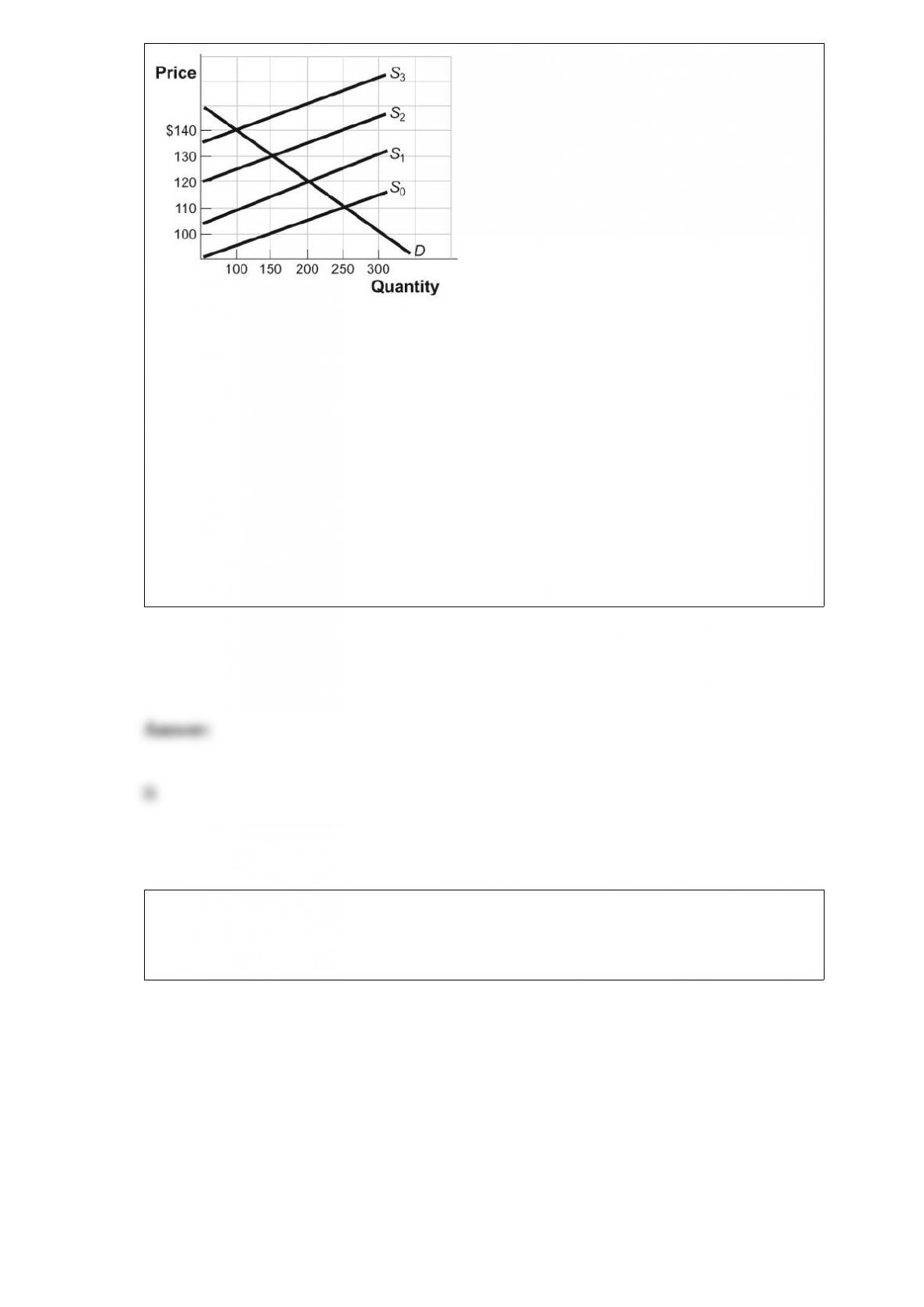
(Figure: The Market for Hotel Rooms) Look at the figure The Market for Hotel Rooms.
Suppose with no tax the equilibrium price is $110 and the equilibrium quantity is 250.
If the local government levies a tax of $30 per night on each hotel room rented, the new
equilibrium price will equal _____ and the new equilibrium quantity will equal _____.
A) $140; 100
B) $130; 150
C) $120; 200
D) $110; 250
Figure: The Market for Melons in Russia II
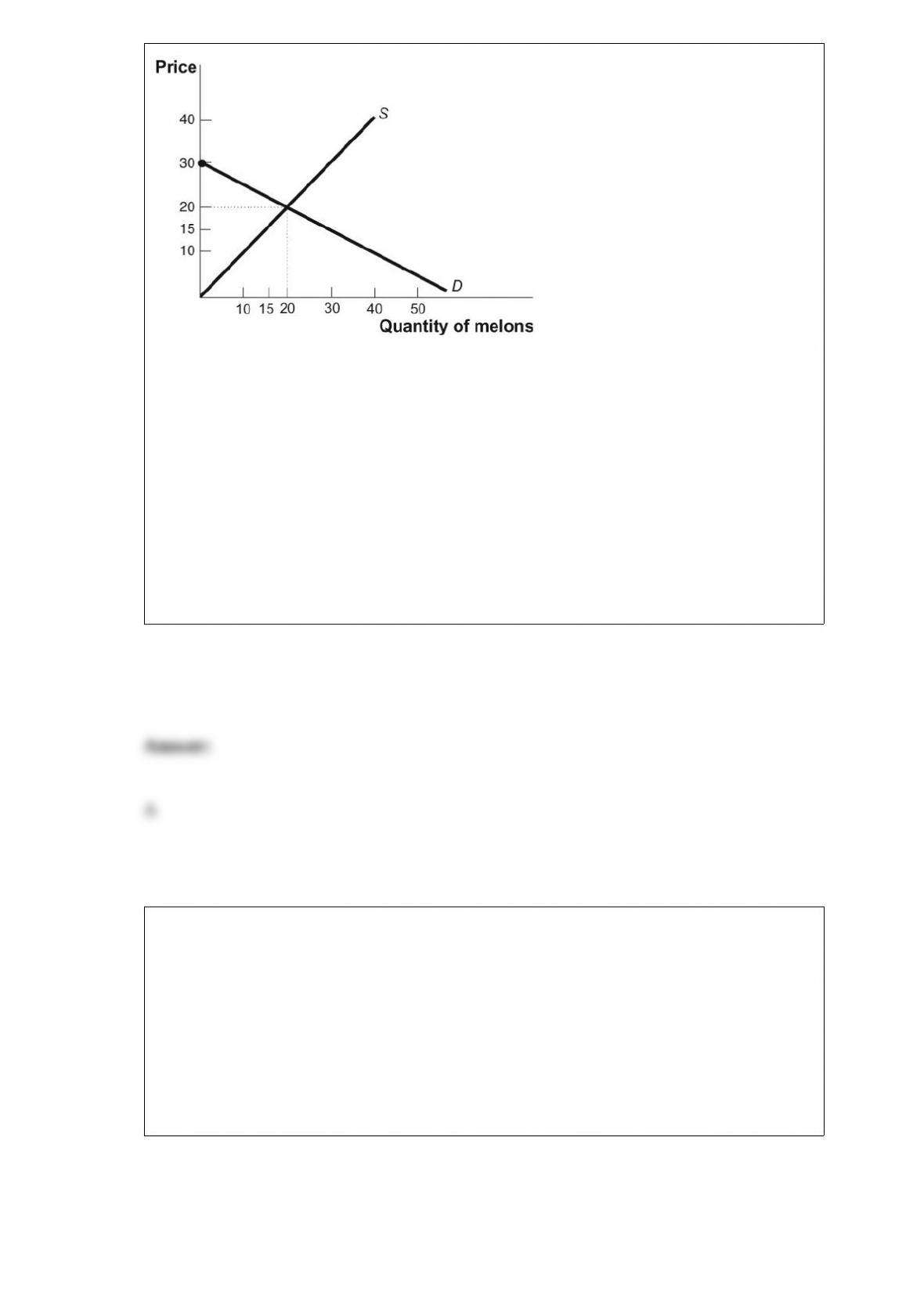
(Figure: The Markets for Melons in Russia II) Look at the figure The Market for
Melons in Russia II. Suppose Russia opens to trade and finds the world price to be $10.
Russia will:
A) import 30 units of melons.
B) export 30 units of melons.
C) not find it beneficial to trade.
D) import 40 units of melons.
The amount by which an additional unit of an activity increases total cost is:
A) net benefit.
B) marginal benefit.
C) negative benefit.
D) marginal cost.
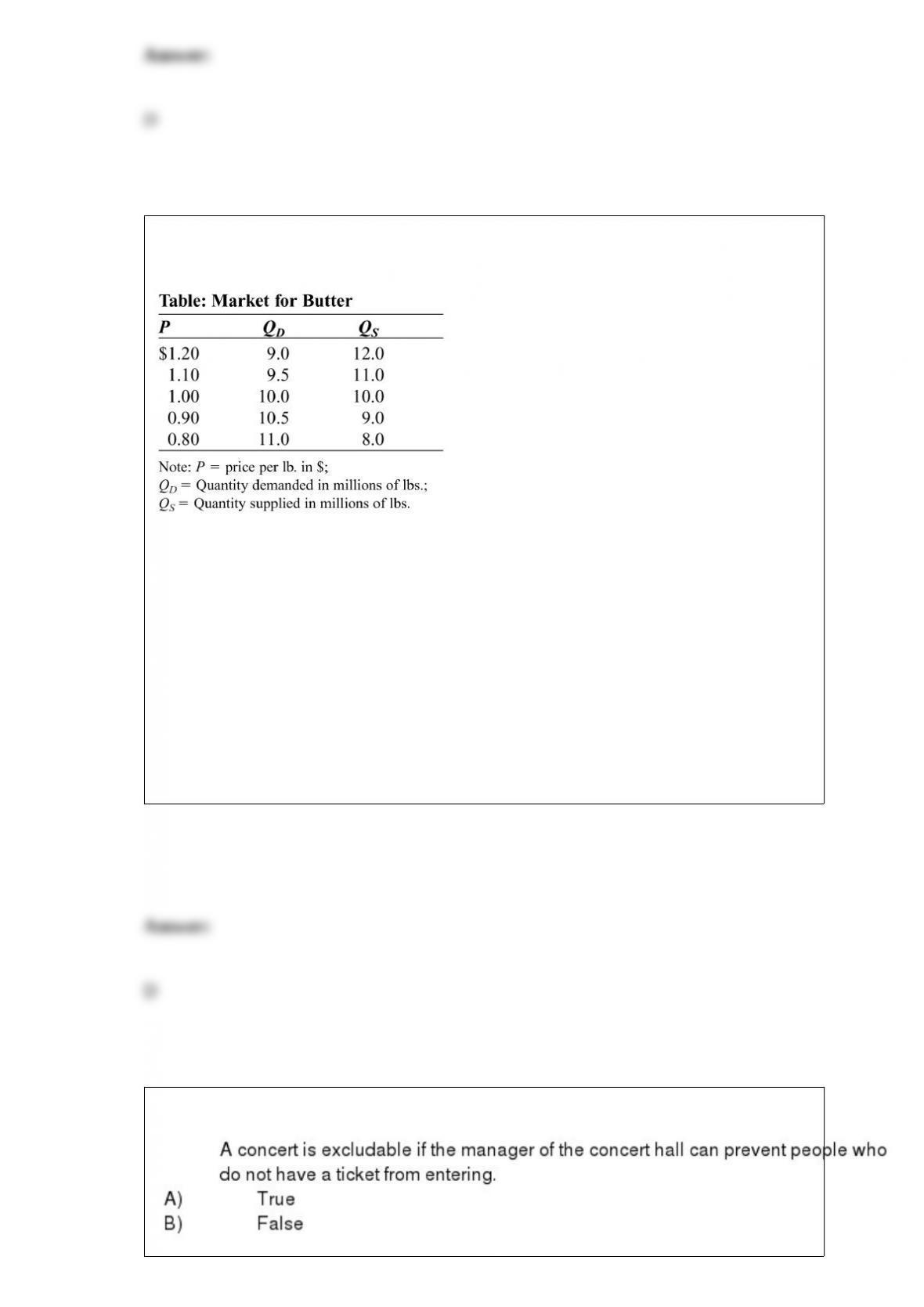
(Table: Market for Butter) Look at the figure Market for Butter. If the government
imposes a price floor of $0.90 per pound of butter, the quantity of butter actually
purchased will be _____ million pounds.
A) 10.5
B) 9.0
C) 1.5
D) 10.0

Nikos and Camila are working on a team project for a course. They will receive the
same grade for the project. They have done a great job, but they have not kept track of
their bibliography sources very well, although they both have all of the information.
Camila knows that Nikos will eventually do the bibliography, since Nikos does not like
to turn in incomplete work. As a result:
A) Camila will free-ride on Nikos’s labor.
B) Nikos will free-ride on Camila’s labor.
C) neither will free-ride, since they both earn the same grade.
D) free-riding is not relevant to this issue, since no money is involved.
Figure: Traffic Lights in Plymouth
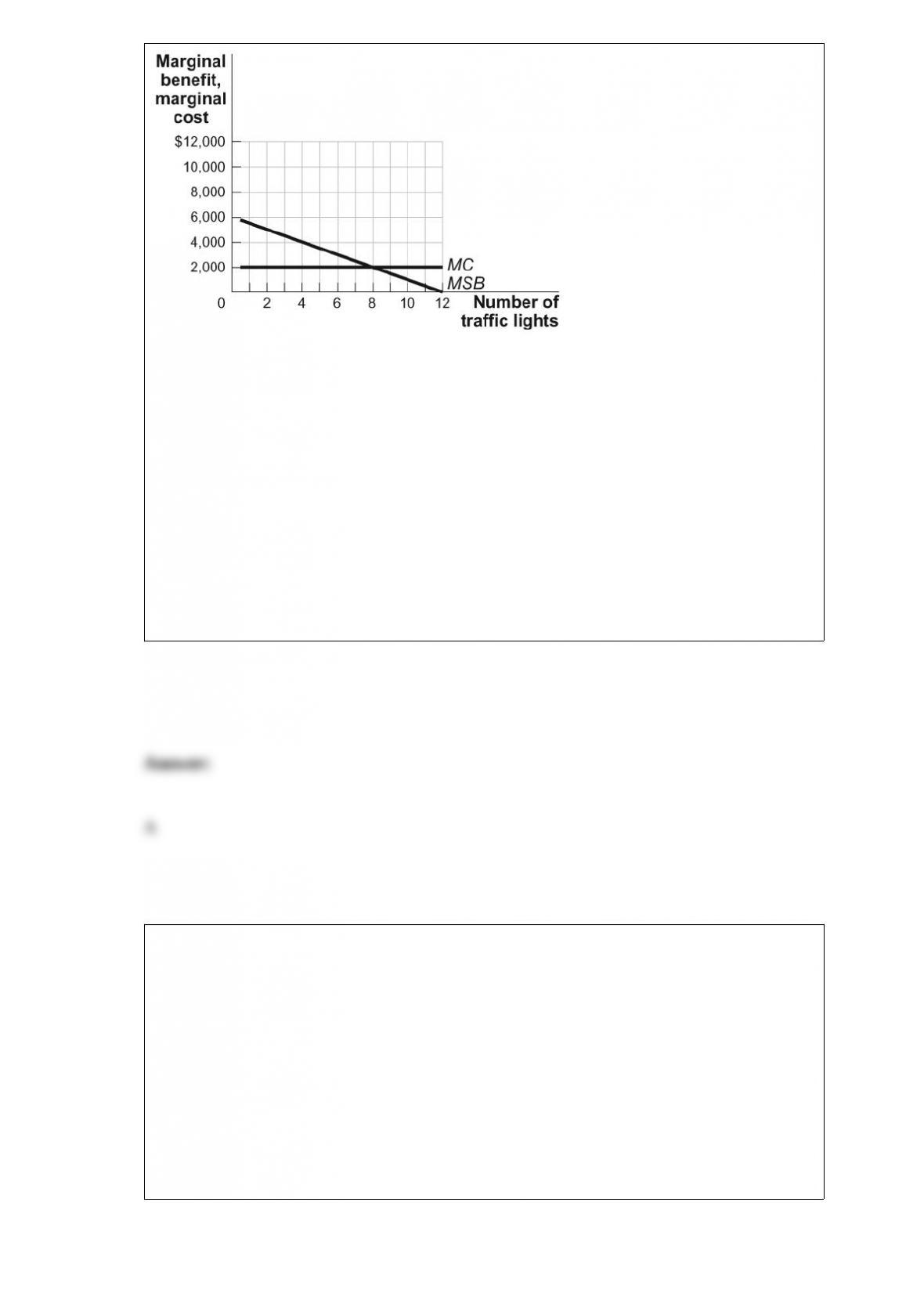
(Figure: Traffic Lights in Plymouth) Look at the figure Traffic Lights in Plymouth.
Plymouth has 1,000 residents. Each of the residents has the same individual marginal
benefit per traffic light. Without government intervention, the town will have _____
traffic lights.
A) 0
B) 4
C) 8
D) 12
Assuming that diminishing marginal utility applies to both goods, if a consumer buys
more plastic bins and fewer door hooks, the _____ of plastic bins will _____, and the
_____ of door hooks will _____.
A) marginal utility; fall; marginal utility; rise
B) marginal utility; rise; marginal utility; fall
C) total utility; fall; marginal utility; rise
D) marginal utility; rise; total utility; rise
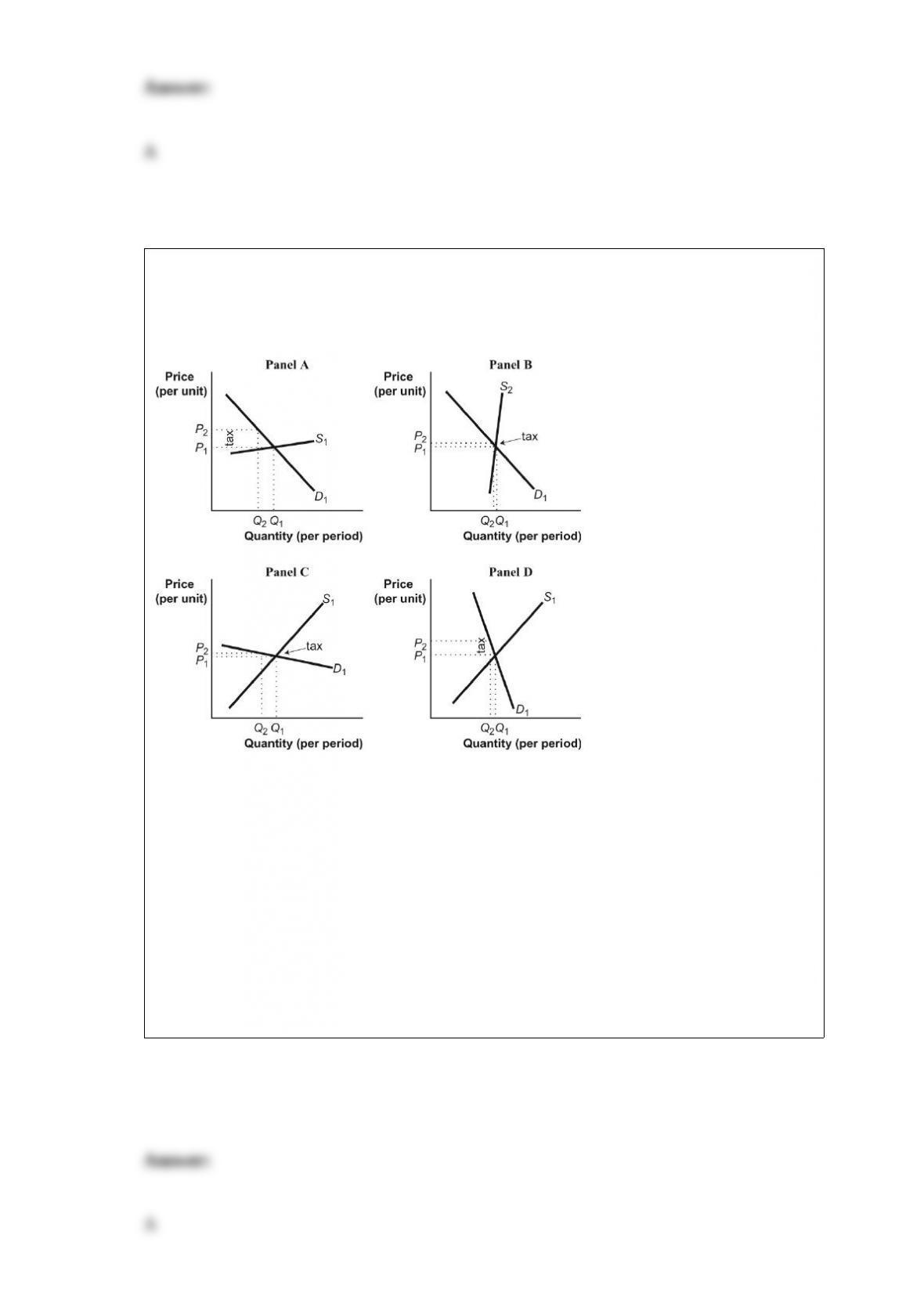
Figure: Tax Incidence
(Figure: Tax Incidence) Look at the figure Tax Incidence. All other things unchanged,
when a good or service is characterized by a relatively elastic supply, as shown in panel
_____, a greater share of the burden of an excise tax is borne by _____.
A) A; buyers
B) B; sellers
C) B; buyers
D) A; sellers
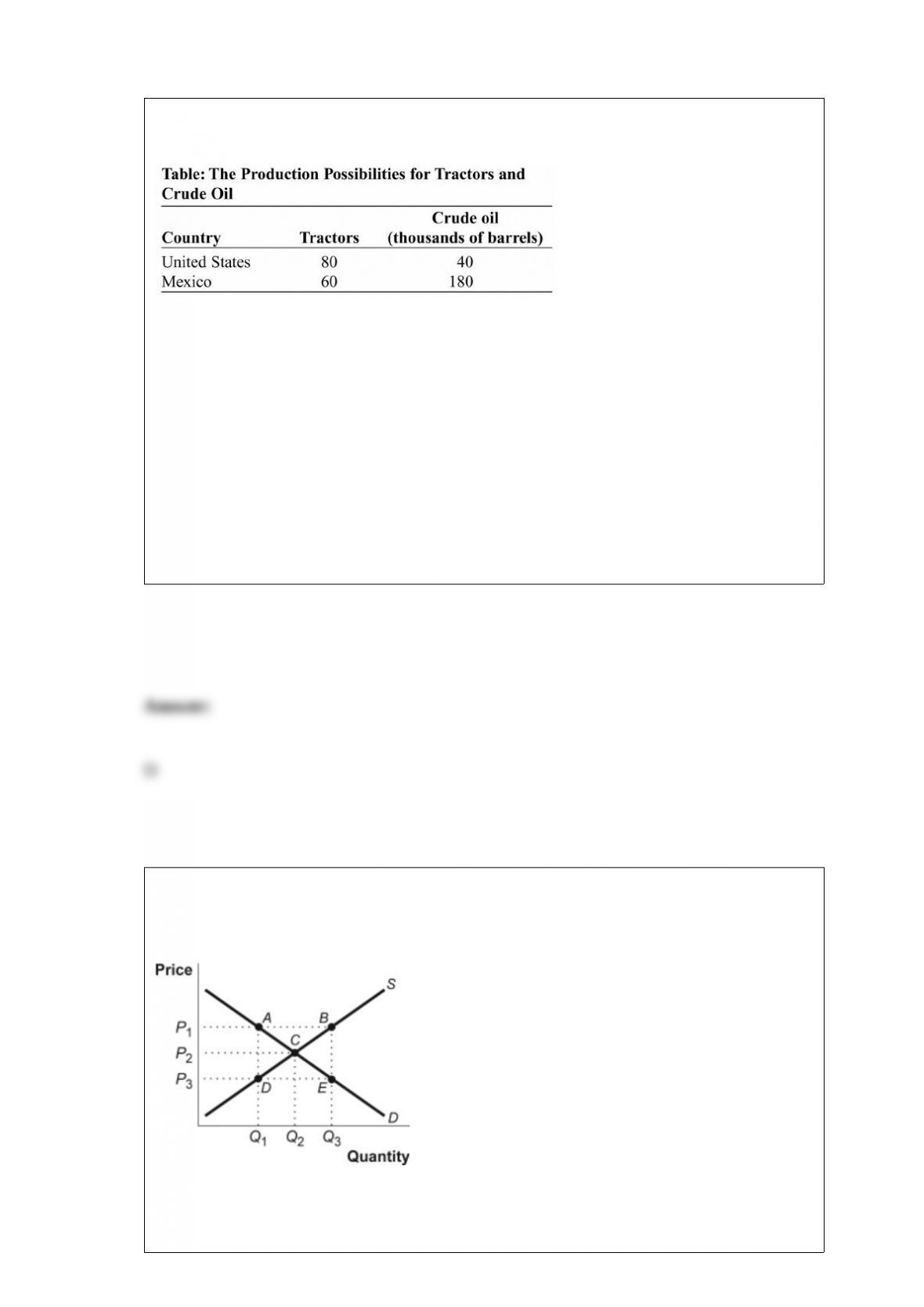
(Table: The Production Possibilities for Tractors and Crude Oil) Look at the table The
Production Possibilities for Tractors and Crude Oil. In the United States the opportunity
cost of producing 40 tractors is _____ barrels of crude oil.
A) 80,000
B) 60,000
C) 40,000
D) 20,000
Figure: Supply and Demand
(Figure: Supply and Demand) Look at the figure Supply and Demand. A price ceiling of
P3 causes:

A) a shortage equal to the distance AB.
B) a surplus equal to the distance AB.
C) a shortage equal to the distance DE.
D) no change to the market.
Programs that are not means-tested:
A) provide benefits for people regardless of income level.
B) specifically help those with low incomes.
C) provide benefits only for households that earn below the mean household income in
the United States for a given year.
D) provide only in-kind benefits.
Toby operates a small deli downtown. The deli industry is monopolistically
competitive. Toby is producing the quantity that minimizes his average total cost.
Assuming that Toby is maximizing profits, his:
A) marginal cost is less than his average total cost.
B) marginal cost is less than his marginal revenue.

C) price equals his average total cost.
D) price is more than his average total cost.
If two goods are substitutes, their cross-price elasticity of demand should be:
A) less than 0.
B) negative but almost equal to 0.
C) equal to 0.
D) greater than 0.
In the circular-flow diagram households receive money for _____ in the _____ market.
A) producing and selling goods and services; product
B) selling resources; product
C) selling resources; factor
D) selling goods and services; factor
Sandy has a monthly income of $4,000. She spends her income on business suits and
prepared organic meals. The price of a business suit is $1,000 and the price of a
prepared meal is $50. If we plot business suits on the vertical axis and organic meals on
the horizontal axis, the slope of Sandy’s budget line is:
A) 20.
B) “0.05.
C) “20.
D) 1,000.
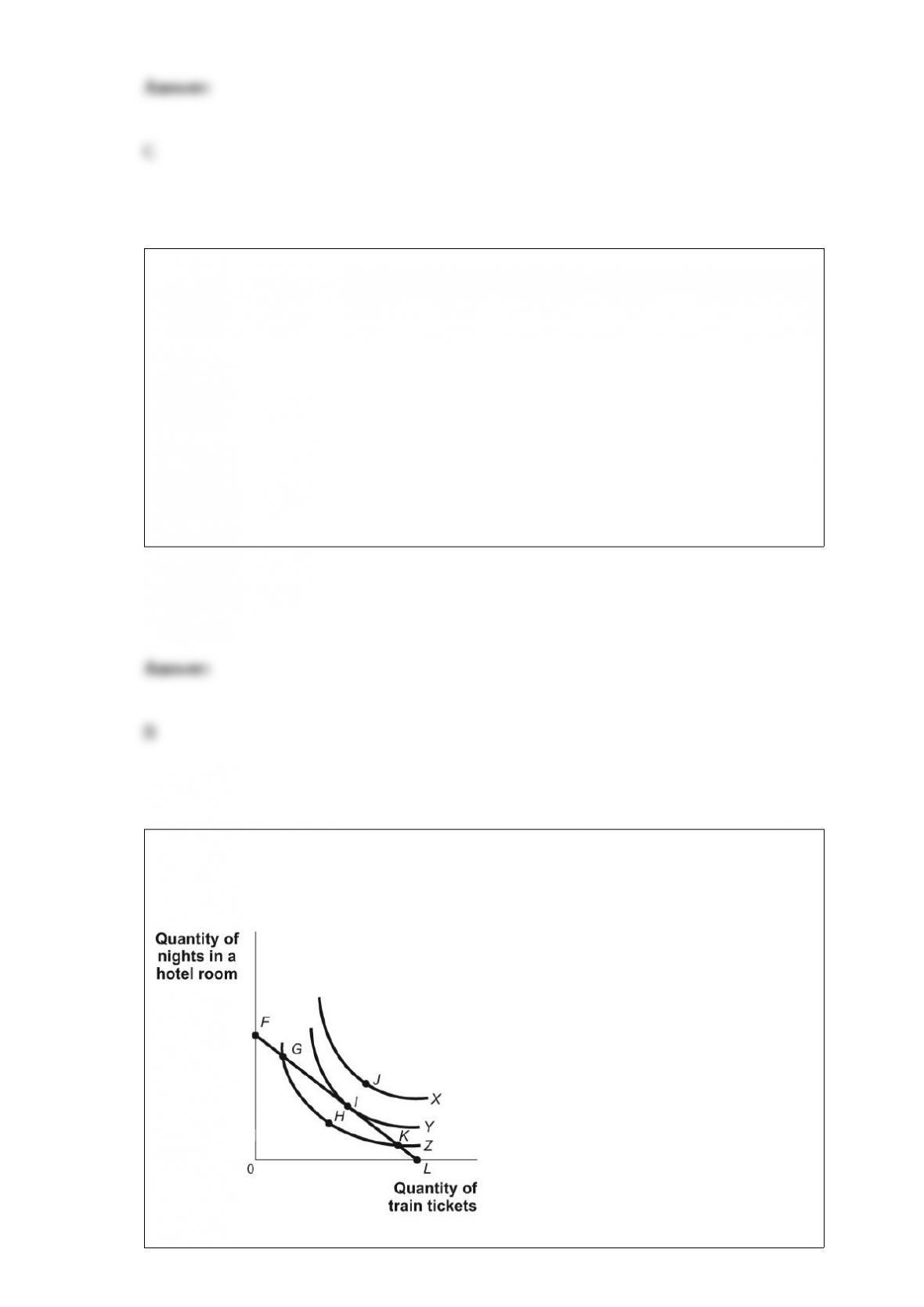
Figure: Consumer Equilibrium IV

(Figure: Consumer Equilibrium IV) Look at the figure Consumer Equilibrium IV. The
highest level of utility is at point:
A) G.
B) H.
C) I.
D) J.
If a monopolistically competitive firm is in long-run equilibrium, price:
A) equals average total cost.
B) equals marginal cost.
C) equals marginal revenue.
D) is greater than average total cost.
A firm that has economies of scale:
A) at low output and but diseconomies of scale at high output is a natural monopoly.
B) over the entire range of output demanded is a natural monopoly.
C) at any particular level of output is a natural monopoly.
D) has a continually rising long-run average cost curve.
Figure: Estimating Price Elasticity
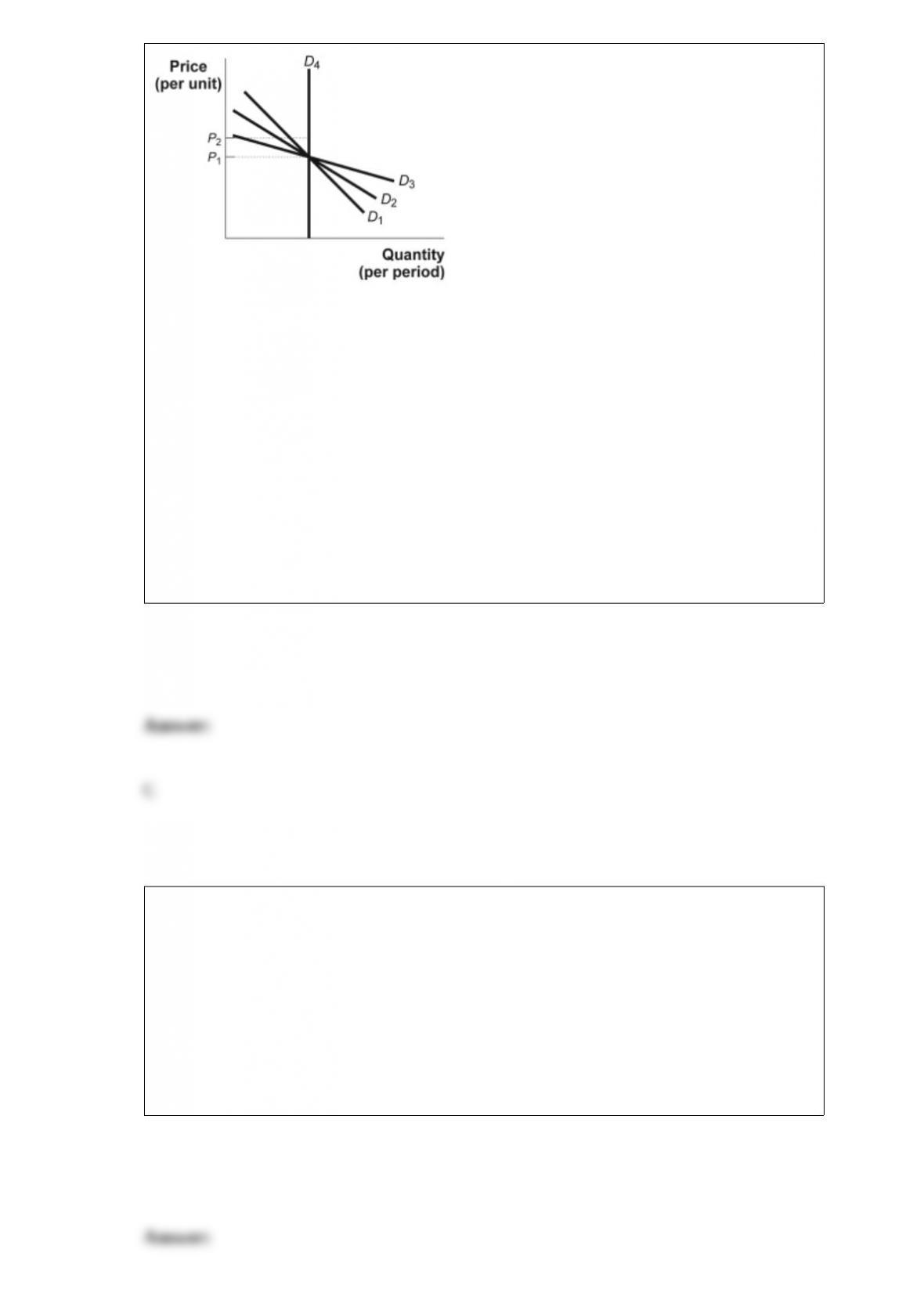
(Figure: Estimating Price Elasticity) Look at the figure Estimating Price Elasticity.
Between the two prices, P1 and P2, which demand curve has the highest price
elasticity?
A) D1
B) D2
C) D3
D) D4
Public policies toward monopoly in the United States often consist of:
A) laws outlawing all of them.
B) the regulation of natural monopolies.
C) government takeover if monopoly profit exceeds a certain level.
D) forcing monopoly industries to become perfectly competitive.
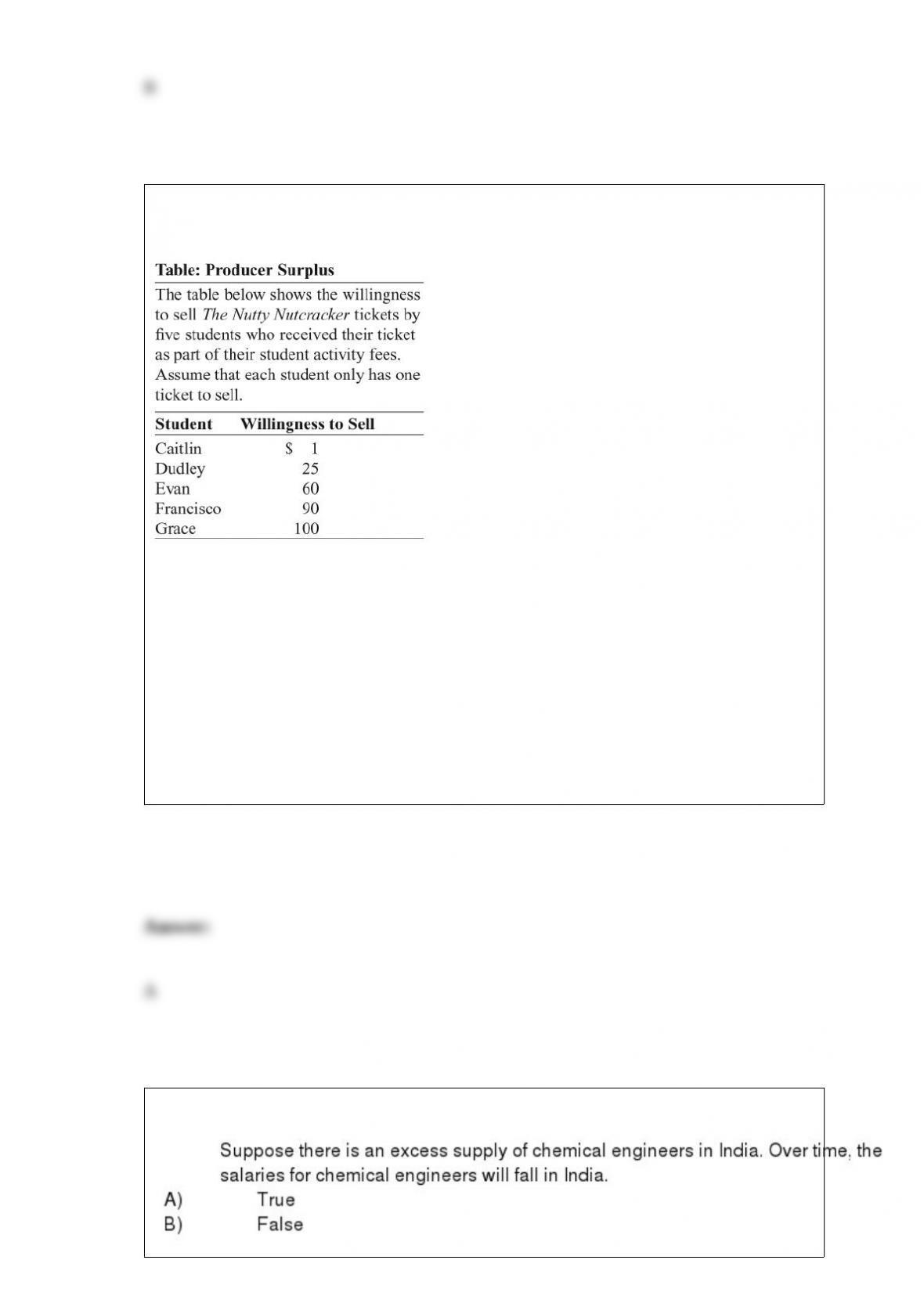
(Table: Producer Surplus) Look at the table Producer Surplus. If the price of a ticket to
see The Nutty Nutcracker is $50, then Francisco’s producer surplus is:
A) $0.
B) $40.
C) $90.
D) $240.