
Most states have instituted mandatory seatbelt laws to reduce traffic fatalities. An
economist may point out that an unintended effect of these laws is
a. an increase in the price of automobiles, further reducing fatalities.
b. an increase in driving speed, reducing the number of accidents.
c. a decrease in driving speed, further reducing fatalities.
d. an increase in risky driving behavior, increasing fatalities.
Studies show that as real income has been rising in the United States, the per-capita
demand for food has been increasing by
a. much less, which means the demand for food is income inelastic.
b. much more, which means the demand for food is income elastic.
c. much more, which means the demand for food is income inelastic.
d. as much, which means the demand for food is unit elastic.
e. none of the above
Compared to a monopolistic competitor, a monopolist produces a good with
__________ substitutes and so has a __________ elastic demand curve.
a. fewer; more
b. fewer; less
c. more; more
d. more; less
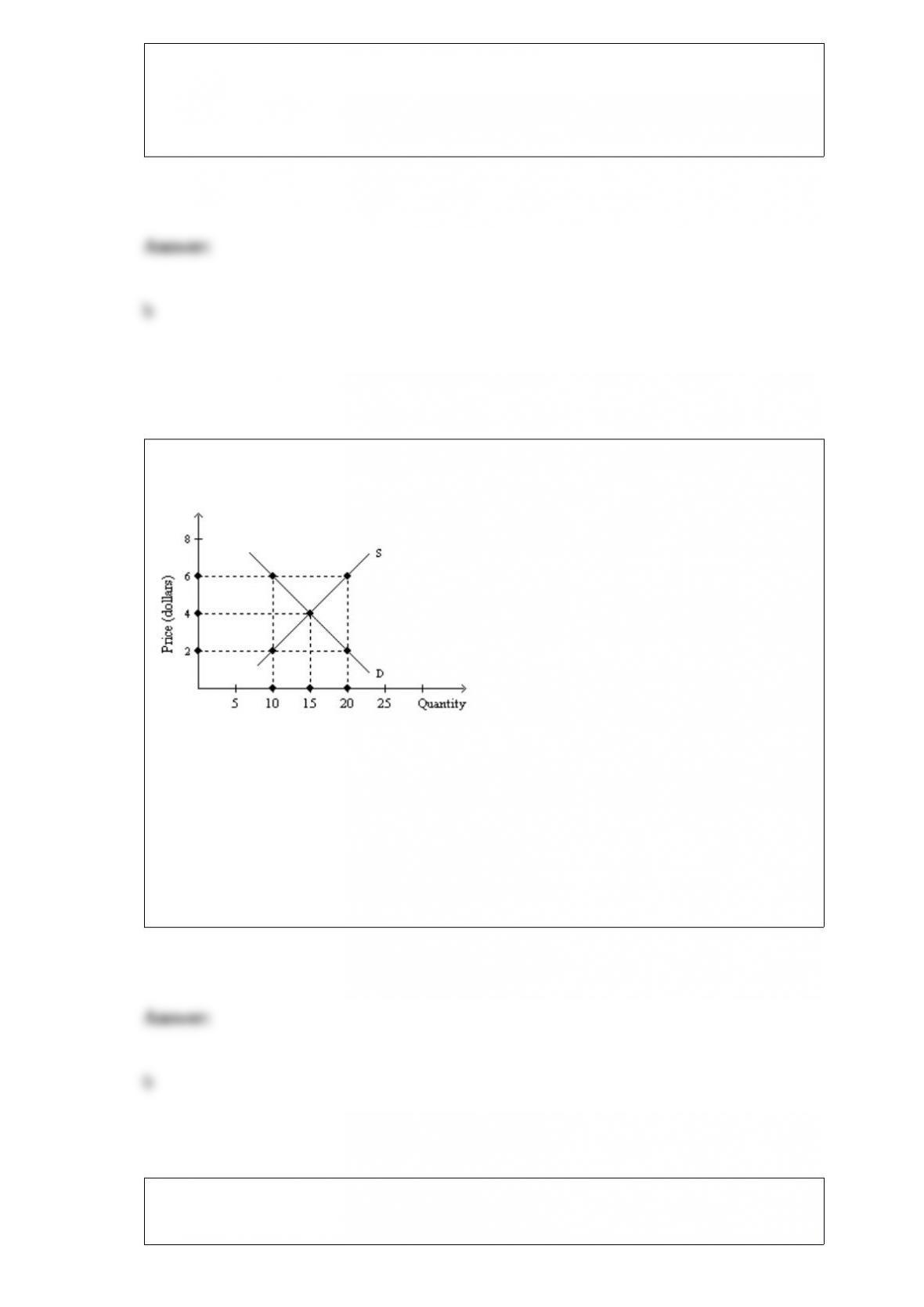
Refer to Exhibit 3-4. At a price of $6 _______________ units will be exchanged.
Exhibit 3-4
a. 5
b. 10
c. 15
d. 20
Suppose firm X is a monopolist and is receiving positive economic profits. What
prevents other firms from directly competing away the profits?

a. high barriers to entry
b. antitrust laws
c. low barriers to entry
d. diseconomies of scale
e. none of the above
If the government establishes a target price for particular agricultural products, then
a. the government sets a limit on the quantity of a product that a farmer is allowed to
bring to market.
b. farmers are paid to take part of their land out of cultivation, the intent being to reduce
supply and raise price to the target level.
c. farmers are given limits as to the number of acres that can be used to produce a
particular product, the intent being to reduce supply and raise price to the target level.
d. farmers are paid the difference between the market price of their product and a
government-determined price.
e. the government establishes a minimum price that farmers will be paid for their
product, which causes the farmers to cut back on the number of acres planted in certain
products, which, in turn, causes the price to rise to the target level.

A monopsonist’s wage rate is
a. the same as marginal factor cost.
b. greater than marginal factor cost.
c. less than marginal factor cost.
d. the same as marginal revenue product.
e. a and d
Advocates of a fixed exchange rate system argue that fixed exchange rates promote
international trade.
a. True
b. False
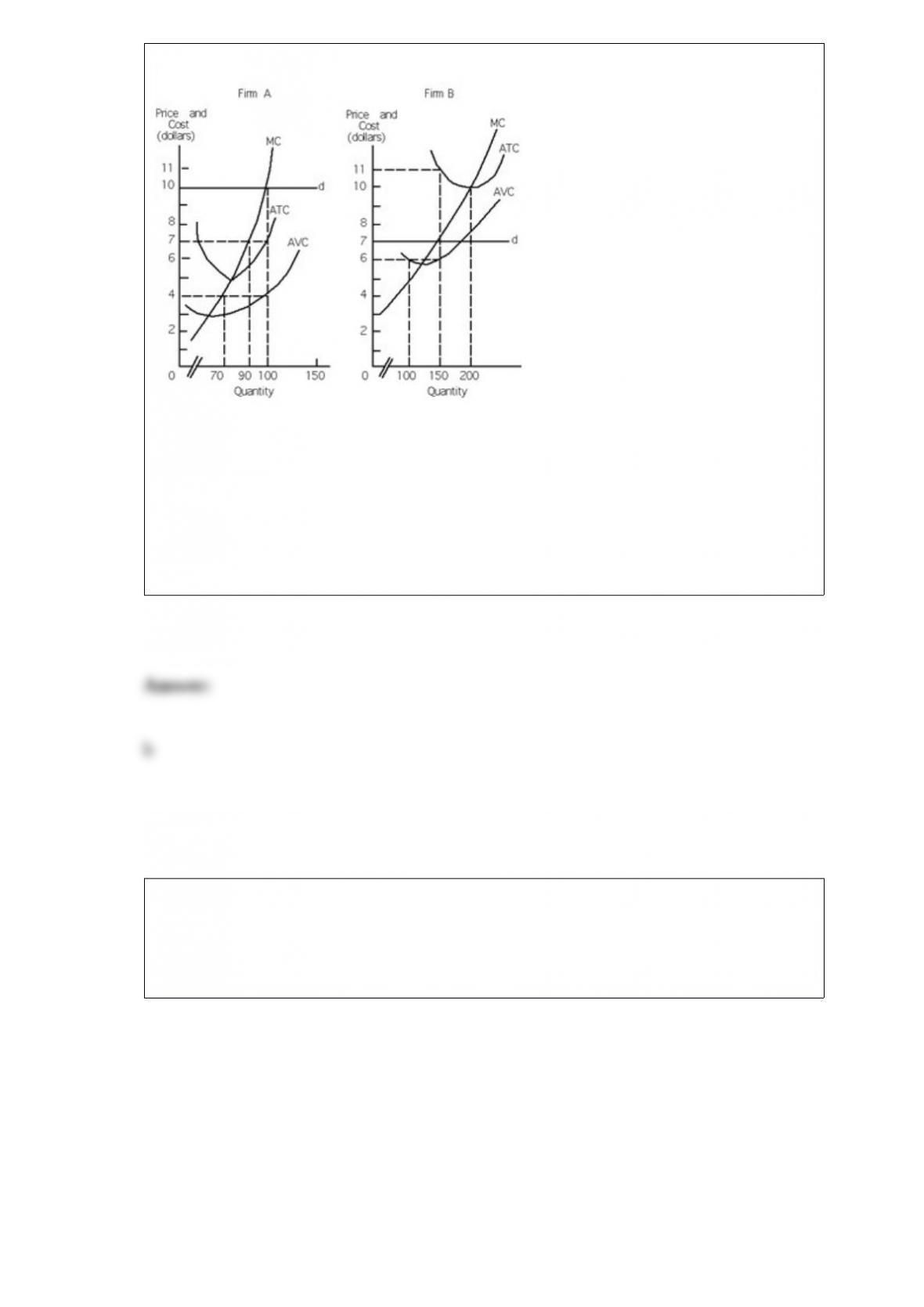
Refer to Exhibit 23-8. What is the total cost for firm A at the profit-maximizing (or
loss-minimizing) level of production?
Exhibit 23-8
a. $300
b. $700
c. $1,000
d. $400
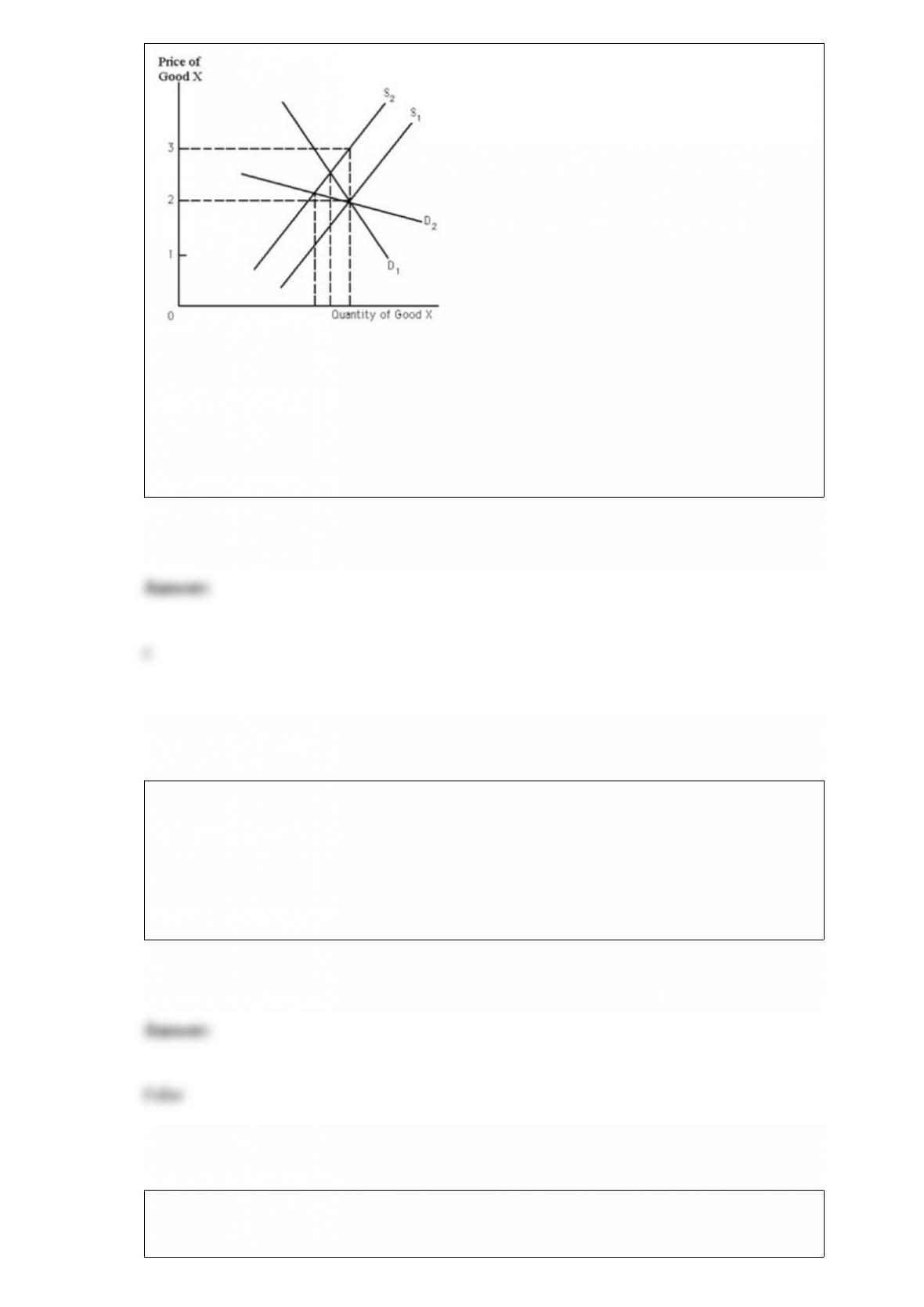
Refer to Exhibit 20-6. Suppose the three equilibrium quantities are 700, 800, and 900,
and the two equilibrium prices are $2.20 and $2.75. What is the tax revenue collected
from the tax that shifted S1 to S2 when D1 is the relevant demand curve?
Exhibit 20-6
a. $440
b. $600
c. $800
d. $900
As long as the maximum buying price of a good is less than the minimum selling price
of that good, an exchange will occur.
a. True
b. False
The supply of labor in a particular labor market can change as a result of changes in
wage rates in other labor markets.

a. True
b. False
If computers and software are complements, then
a. a fall in the price of computers will increase the demand for software and, ceteris
paribus, the price of software will rise.
b. a rise in the price of computers will decrease the demand for software and, ceteris
paribus, the price of software will rise.
c. a fall in the price of computers will decrease the demand for software and, ceteris
paribus, the price of software will fall.
d. a rise in the price of software will increase the demand for computers and, ceteris
paribus, the price of computers will rise.
e. a fall in the price of software will decrease the demand for computers and, ceteris
paribus, the price of computers will fall.
If the nominal interest rate is 4.2 percent and expected inflation rate is 3 percent, the
real interest rate equals
a. 7.2 percent.
b. 1.2 percent.

c. 3.6 percent.
d. 12.6 percent.
e. none of the above
In all cases, macroeconomics deals with
a. what is.
b. what should be.
c. relatively small units in the economy.
d. the entire economy.
In what sense are profit and loss signals?
a. They signal resources where to move.
b. They signal what goods consumers may want to buy and what goods they may not
want to buy.
c. They are important for government and business accounting procedures.
d. a and b

Another term for stocks is equity.
a. True
b. False