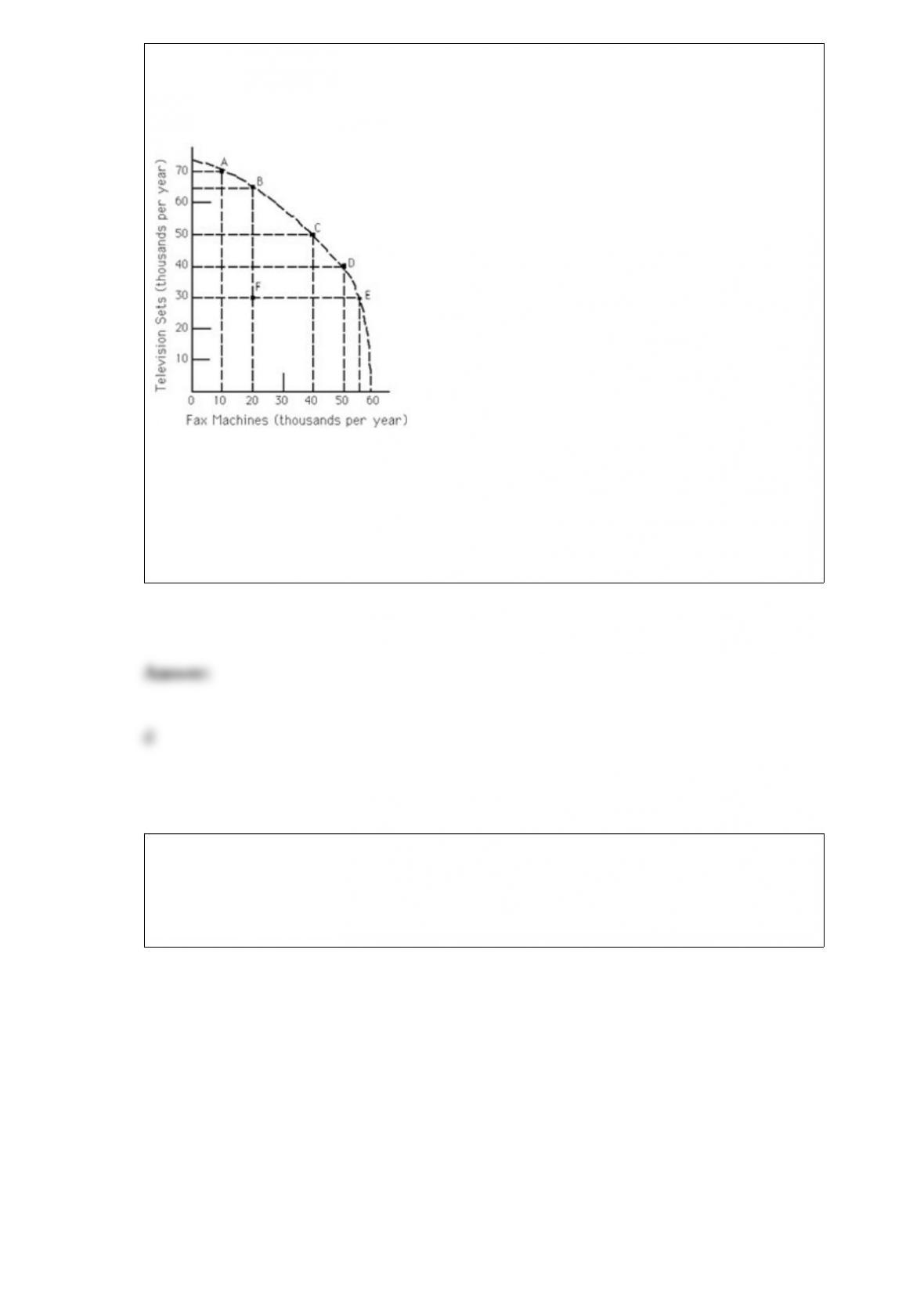
Refer to Exhibit 2-5. The opportunity cost of moving from point D to point C is
Exhibit 2-5
a. 5,000 televisions.
b. 5,000 fax machines.
c. 10,000 televisions.
d. 10,000 fax machines.
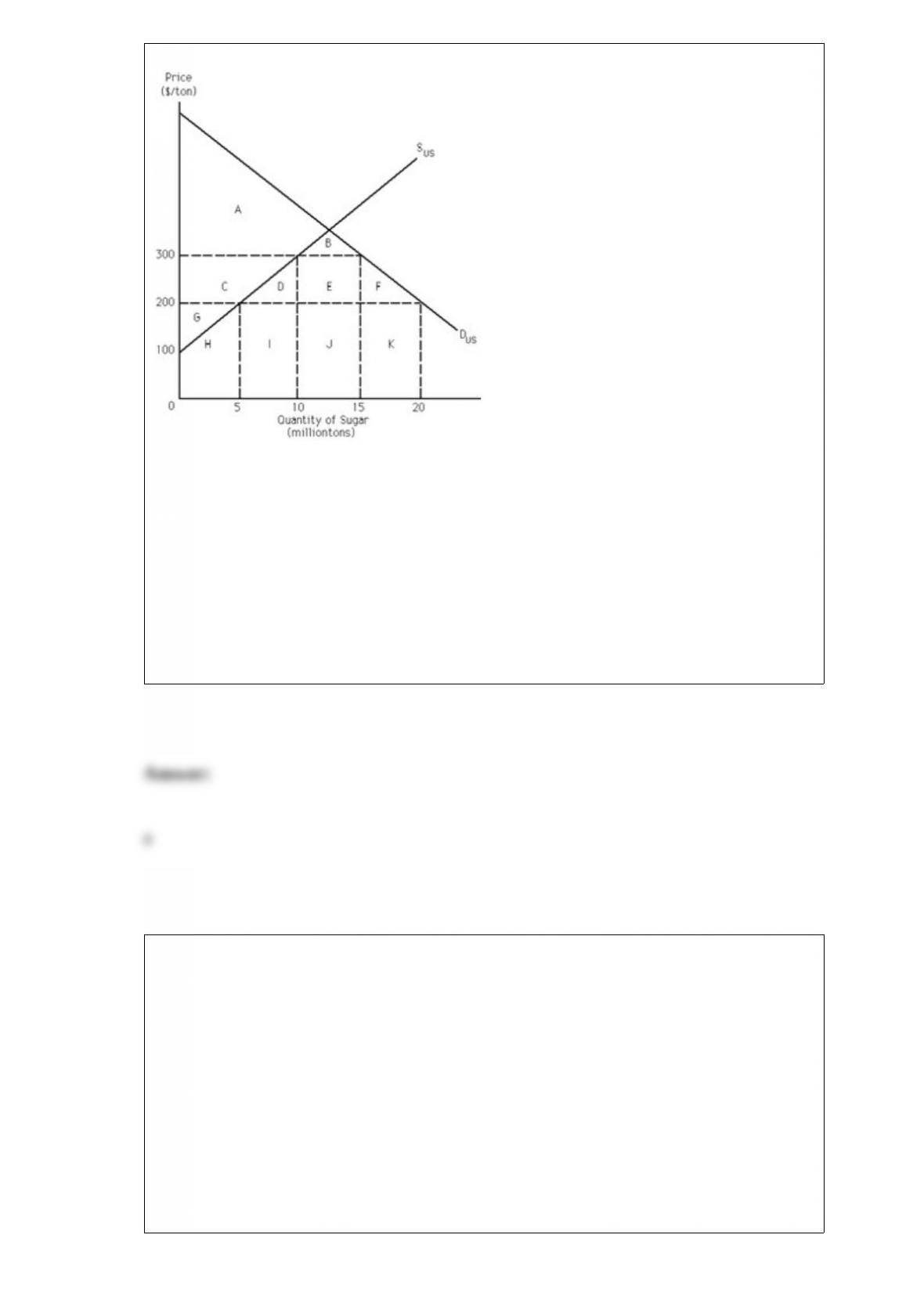
Refer to Exhibit 34-8. Assume that the current price of sugar in the United States is
$300 per ton (which includes a $100 per ton tariff on sugar imports). The government
collects tariff revenues on sugar imports in the amount of __________ million.
Exhibit 34-8
a. $500
b. $1,000
c. $1,500
d. $2,000
e. none of the above
The advantage of the Herfindahl index over the four- and eight-firm concentration
ratios is that it provides information
a. on the degree to which foreign firms impact domestic competition.
b. about the dispersion of firm size in an industry.
c. on the degree to which marginal revenue is greater than marginal cost (for a firm).
d. b and c
e. none of the above

Oil producers expect that oil prices next year will be lower than oil prices this year. As a
result, oil producers are most likely to
a. place more oil on the market this year, thus shifting the present supply curve of oil
rightward.
b. hold some oil off the market this year, thus shifting the present supply curve of oil
leftward.
c. place more oil on the market this year, thus increasing the quantity supplied of oil at
lower but not higher prices.
d. hold some oil off the market this year, thus decreasing the quantity supplied of oil at
lower but not higher prices.
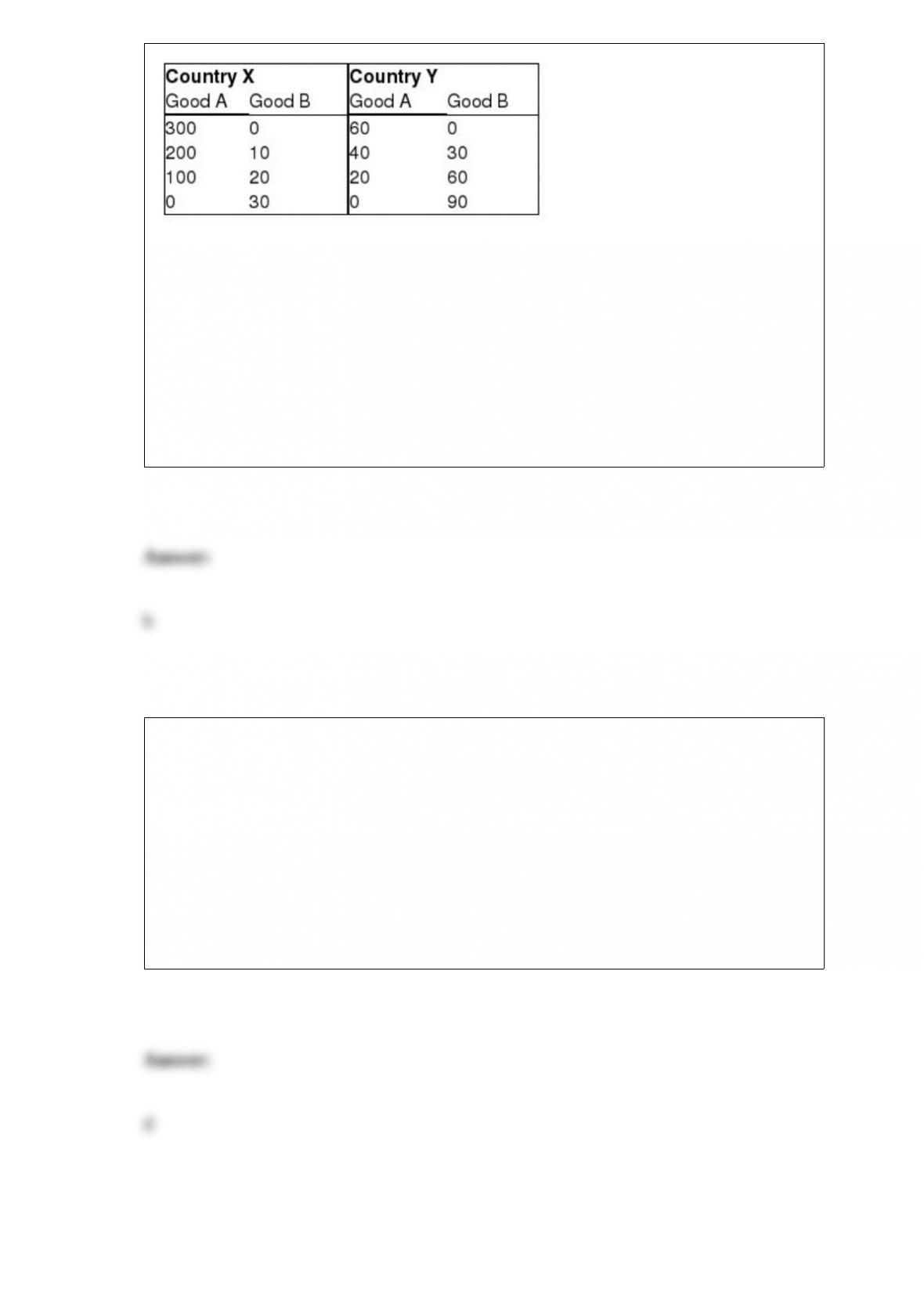
Refer to Exhibit 34-9. In the no specialization-no trade case, suppose country X
produces and consumes 100 units of good A and 20 units of good B. Country Y
produces and consumes 20 units of good A and 60 units of good B. If the two countries
specialize and trade, and the actual amounts traded are 125 units of good A for 25 units
of good B, how many more units of good B will country Y consume by specializing and
trading?
Exhibit 34-9
a. 75
b. 5
c. 15
d. 10
e. 50
A decrease in the expected price of corn would likely do the following to the current
supply and demand for corn:
a. increase both the demand and the supply.
b. decrease both the demand and the supply.
c. increase the demand, but decrease the supply.
d. increase the supply, but decrease the demand.

The price elasticity of demand tends to be higher for goods
a. for which the consumer spends a high percentage of his or her income.
b. for which the consumer spends a low percentage of his or her income.
c. that are in abundant supply.
d. that are in scarce supply.
A perfectly competitive firm faces a __________ demand curve.
a. nonlinear
b. downward-sloping
c. perfectly elastic
d. perfectly inelastic
e. unit-elastic
A characteristic of a 45-degree line is that
a. any point on the line is equidistant from the two axes.
b. it bisects a right angle.
c. its slope is 1.
d. a and c
e. a, b, and c
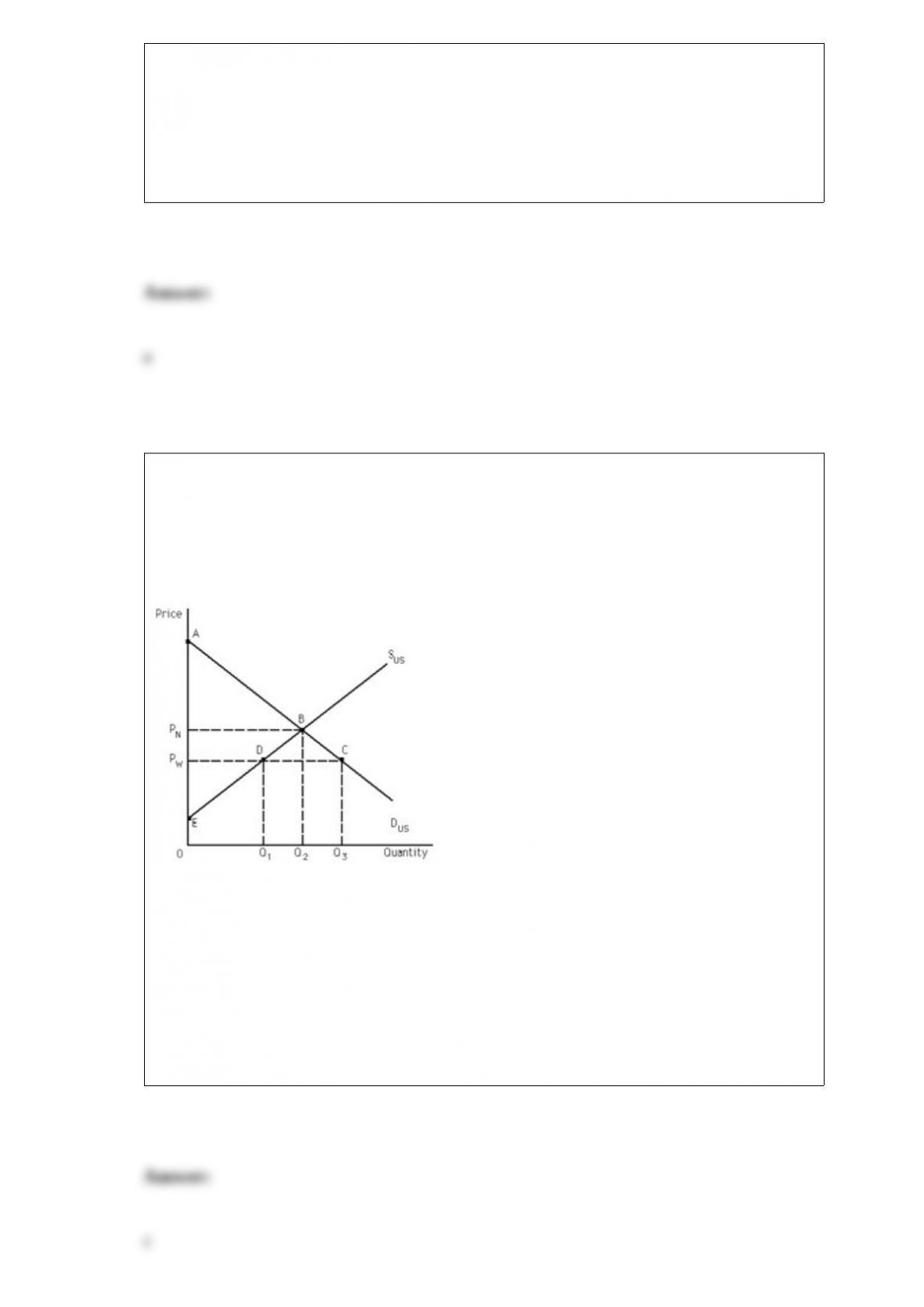
Refer to Exhibit 34-2. The U.S. demand and supply for a good are shown. Under a
policy of free trade, the world price is PW. At this price, consumers’ surplus equals the
area of
Exhibit 34-2
a. PW DE.
b. PW AB.
c. PW AC.
d. PW PNBD.

Suppose a particular production process results in a large amount of pollution and the
government decides to impose a tax to correct for this externality, such that the socially
optimal output will be produced. The tax will have the effect of shifting the
a. marginal private benefit curve to the right.
b. marginal social benefit curve to the right.
c. marginal private cost curve to the left.
d. marginal social cost curve to the left.
e. marginal private cost curve to the right.
Which of the following will not change the cost curves for good X?
a. a change in the price good X
b. a change in input prices necessary for the production of good X
c. a change in taxes paid by the producers of good X
d. a change in technology in the production of good X
e. b and d

In-kind transfer payments are transfer payments that are paid in
a. cash.
b. a specific good or service.
c. stocks and bonds.
d. a and b
e. all of the above
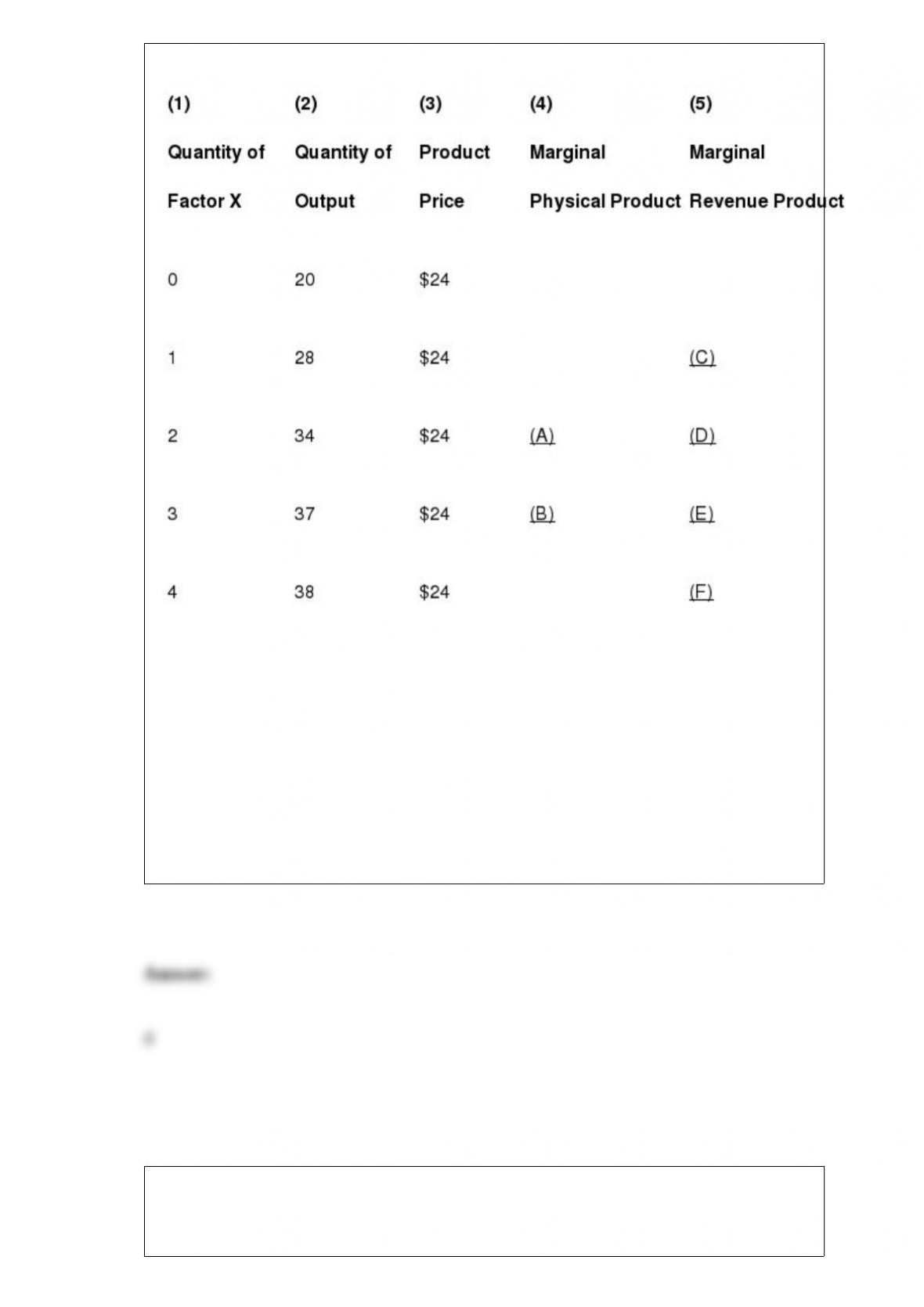
Refer to Exhibit 27-8. The dollar amounts that go in blanks (E) and (F) are,
respectively,
Exhibit 27-8
a. $6 and $6.
b. $70 and $60.
c. $84 and $72.
d. $72 and $24.
e. There is not enough information to answer the question.
A government agricultural policy in which a guaranteed price is set and no surplus is
created is the
a. marketing quota system.
b. acreage allotment program.
c. price support program.
d. target price system.
Global technologies, such as electronics, have made up a significant portion of the
recent wave of manufacturing offshoring.
a. True
b. False
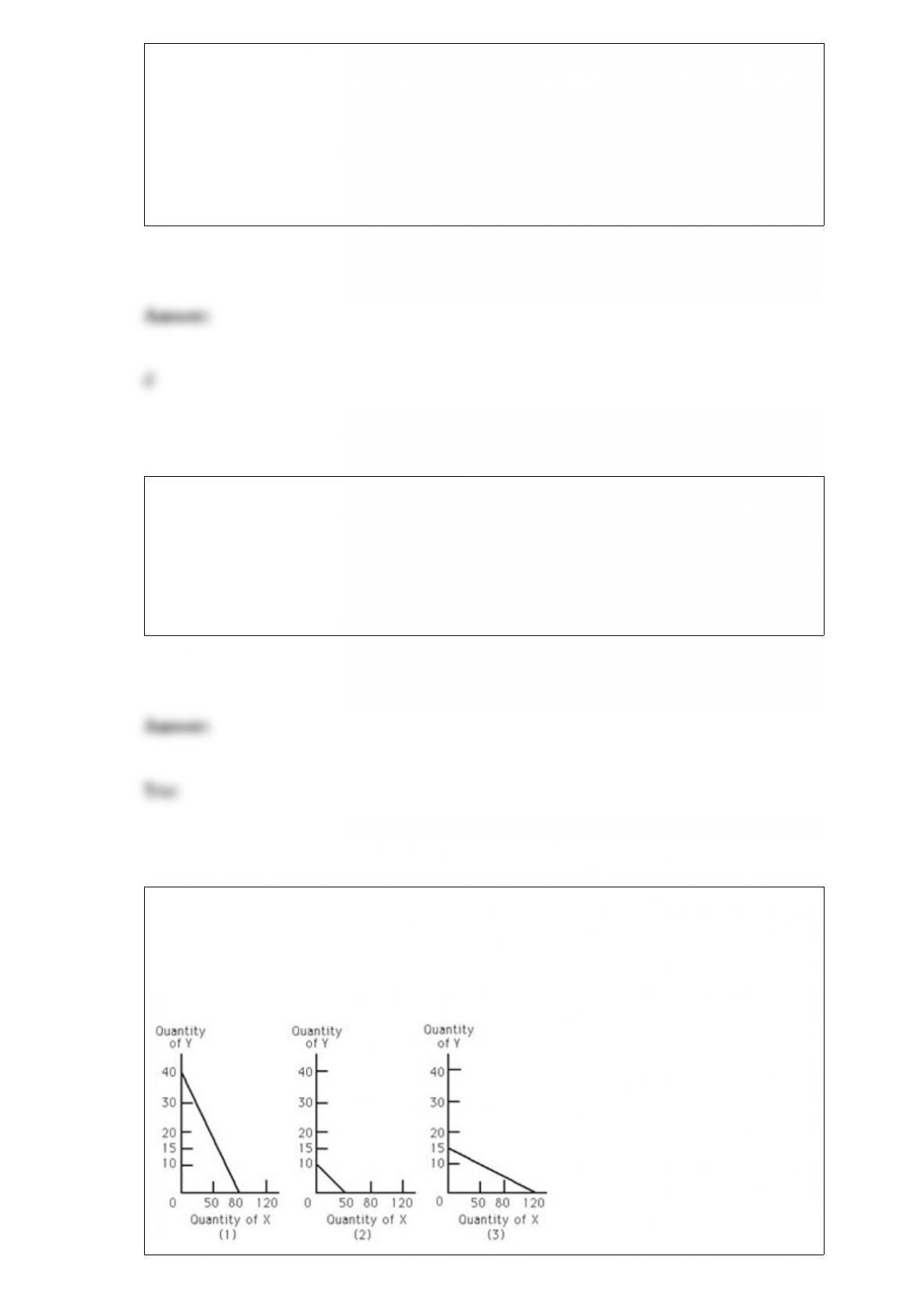
Refer to Exhibit 21-7. For graph (2), if the price of X is $60, what is the consumer’s
income?
Exhibit 21-7

a. $1,000
b. $2,000
c. $3,000
d. $6,000
e. This cannot be determined from the information provided.
According to economists Frank and Cook, one reason there are more winner-take-all
markets today than in the past is because
a. government has limited the choices that people can make when they are choosing
what to buy.
b. changes in technology, communications, and transportation costs have made it
possible for consumers to buy from a small handful of “the best” suppliers in the world.
c. changes in technology have lowered prices.
d. of the importance that today is placed on ideas instead of things.
e. a and b
Which of the following industries is the best real-world example of monopolistic
competition?

a. soft drinks
b. electricity generation
c. automobiles
d. computer software
If suddenly a 4 percent inflation rate (instead of a zero percent inflation rate) is
expected by both suppliers and demanders in the loanable funds market, then
a. the demand for loanable funds curve will shift rightward, and the supply of loanable
funds curve will shift leftward.
b. the demand for loanable funds curve will shift leftward, and the supply of loanable
funds curve will shift rightward.
c. both the demand for loanable funds curve and the supply of loanable funds curve will
shift leftward.
d. both the demand for loanable funds curve and the supply of loanable funds curve will
shift rightward.
In general, agricultural price supports
a. raise food prices.
b. have no impact on food prices.
c. are designed to lower food prices.
d. c and d
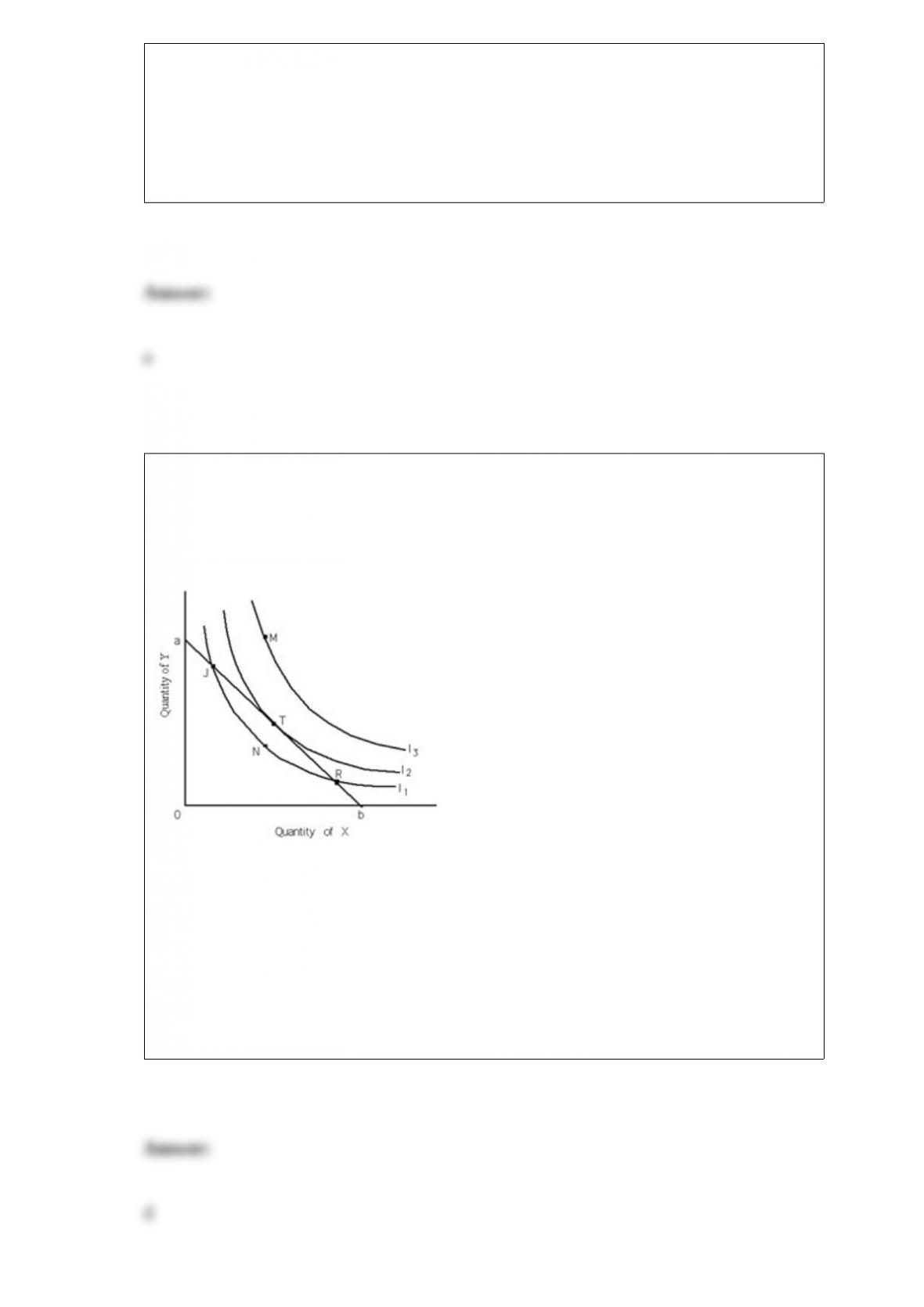
Refer to Exhibit 21-6. I1, I2 and I3 are indifference curves and line ab is the relevant
budget constraint. The equilibrium position for the consumer is at
Exhibit 21-6
a. any point on the budget constraint.
b. point M.
c. point J.
d. point T.
e. point R.

Resource X is necessary to the production of good Y. If the price of resource X rises,
a. the supply curve of Y shifts leftward.
b. the supply curve of Y shifts rightward.
c. the supply curve of Y is unaffected.
d. there is a movement down the supply curve of Y.
e. there is a movement up the supply curve of Y.
When an insurance company specifies certain precautions that an insured person must
take it is trying to control for moral hazard.
a. True
b. False