If the Fed buys bonds in an open market operation, which of the following is most
likely to occur?
a. the equilibrium level of GDP will decrease.
b. the money supply will decrease.
c. the aggregate demand curve will shift to the right.
d. the interest rate will rise.
e. the aggregate supply curve will shift to the left.
An economy’s production possibilities frontier is fixed in the long run.
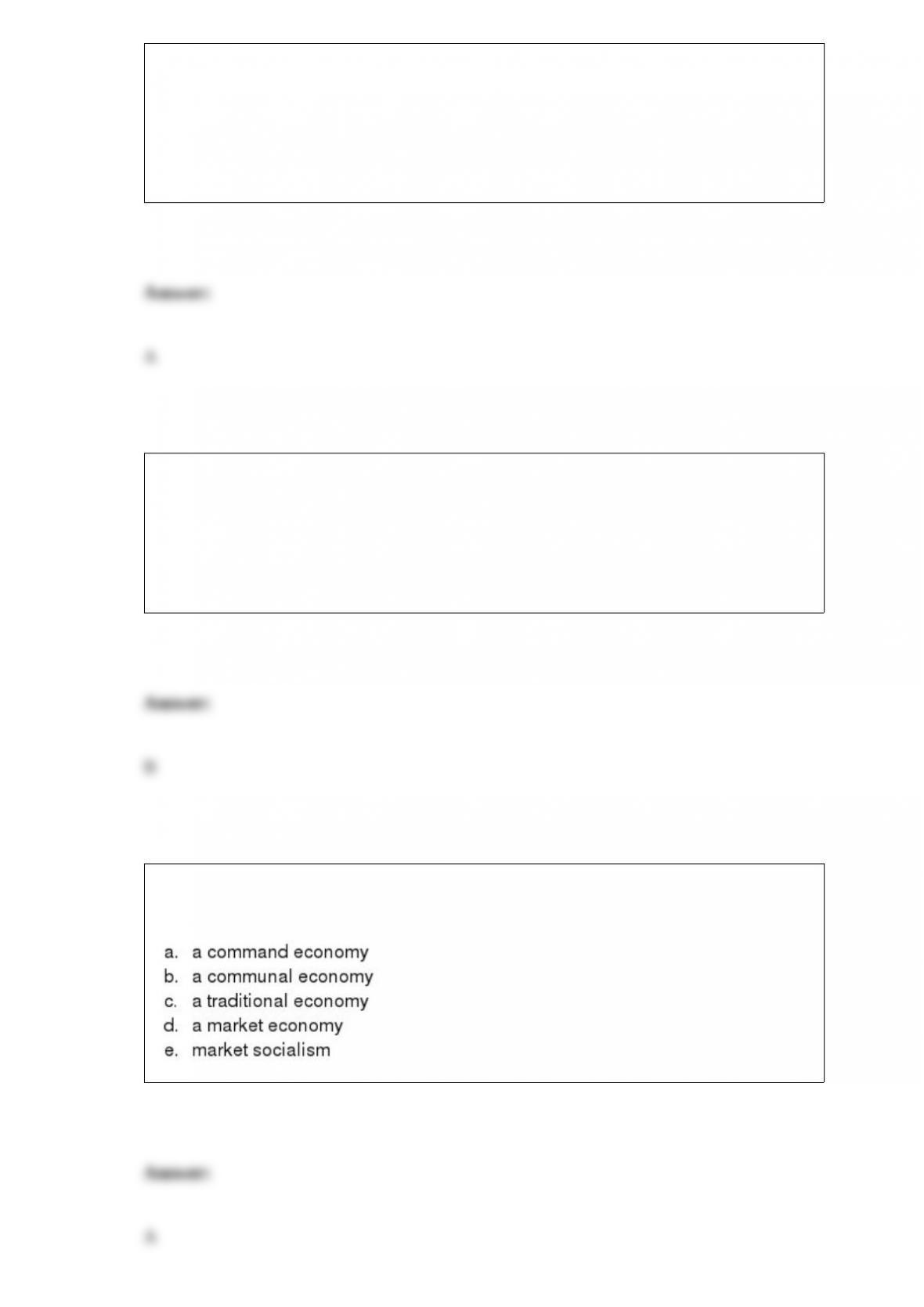
A firm’s total cost of production is
Protectionism is
a. the belief that a nation’s industries should be protected from foreign competition
b. the belief that a nation’s consumers should be protected from foreign competition
c. based on the idea that economies of scale are important
d. consistent with absolute advantage, but not with comparative advantage
e. the favored approach of pro-trade groups
Which of the following is the definition of a capital gain?
a. An increase in a firm’s capital stock
b. Profit earned from selling a financial asset
c. The dividend earned from a company’s stock
d. Taxes saved by selling a share of corporate stock
e. The profit earned by a corporation
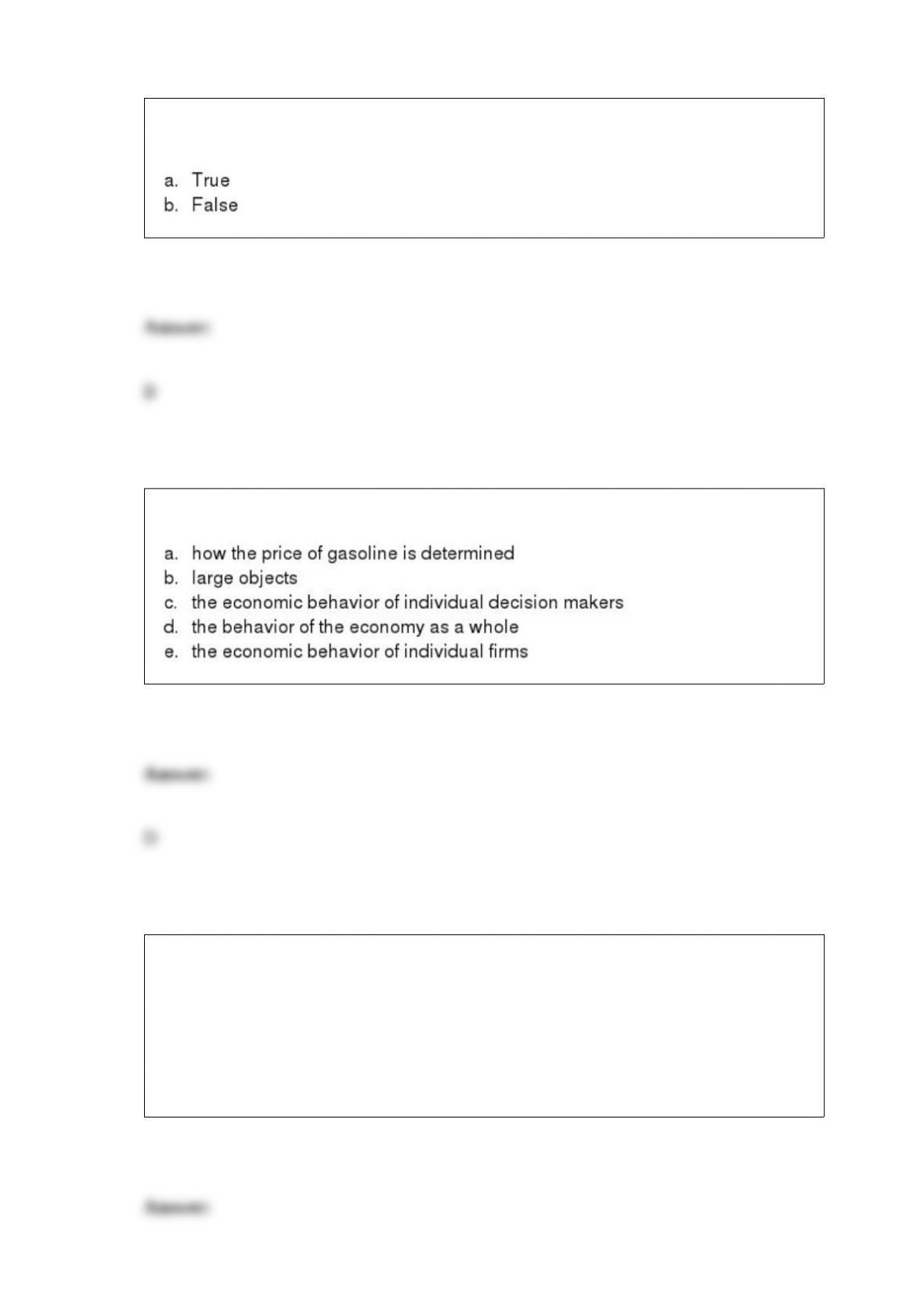
An economy with a government planning commission that provides explicit
instructions for resource allocation is an example of
If a 10 percent rise in the price of bananas leads to a 20 percent reduction in the
quantity of bananas demanded, then the price elasticity of demand is 0.50.
Macroeconomics is the study of
The Bureau of Labor Statistics complies two different types of market baskets, to reflect
the spending habits of two different types of people:
a. All Urban Workers (CPI-U) and All Farm Workers (CPI-F)
b. All Urban Workers (CPI-U) and Urban Low Wage Workers (CPI-LW)
c. All Urban Workers (CPI-U) and Urban Wage Earners and Clerical Workers (CPI-W)
d. All Urban Workers (CPI-U) and All Rural Workers (CPI-R)
e. All Urban Workers (CPI-U) and Urban Service Workers (CPI-S).

Open market sales of bonds by the Federal Reserve drain reserves from the banking
system and shift
a. the allocation of wealth between bonds and stocks
b. the economy toward a trough in the business cycle
c. the money supply curve leftward
d. reserves to nonmember banks
e. the demand for money curve leftward
Those who prefer that the Fed react to negative supply shocks by tolerating higher rates
of inflation as a means of moderating a recession are called
a. inflation doves
b. inflation hawks
c. monetarists
d. Keynesians
e. hard headed and soft hearted
A demand shock that increases real GDP above its full-employment level will, in the
long run,
a. lead to a higher wage rate and an upward shift of the aggregate supply curve
b. lead to a lower wage rate and a downward shift of the aggregate supply curve
c. lead to a higher wage rate and a rightward shift of the aggregate demand curve
d. lead to a lower wage rate and a leftward shift of the aggregate demand curve
e. cause no further shifts in the aggregate supply or aggregate demand curve
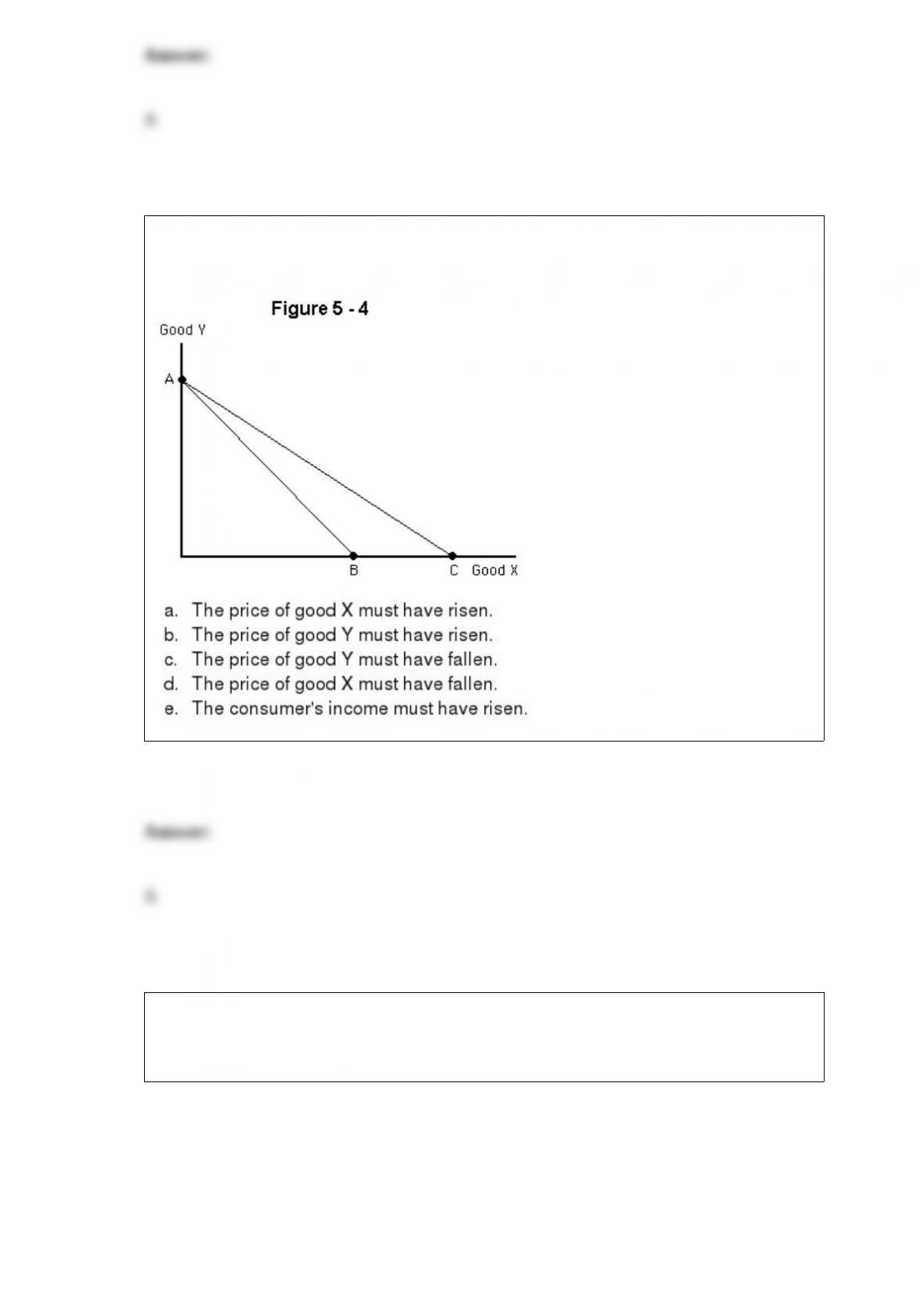
Suppose that a consumer’s original budget line was AC in Figure 5-4, but it has now
changed to line AB. Which of the following must have occurred?
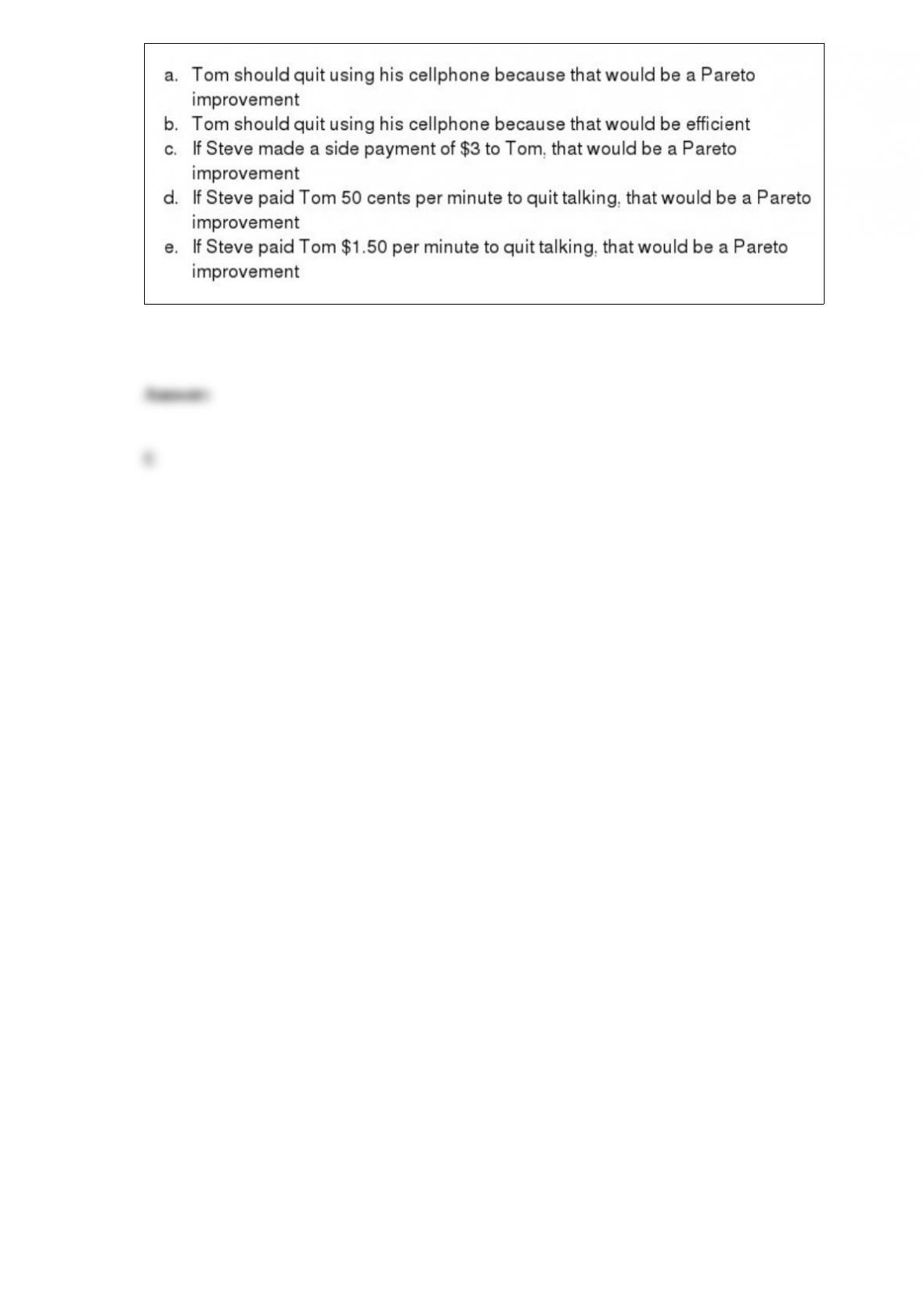
Tom carries on loud cellphone conversations in public places. He values such
conversations at $1 per minute. Steve prefers peace and quiet. He would pay $2 per
minute to avoid overhearing Tom’s conversations. In this situation