
The profit-maximizing monopolistic competitive firm produces a level of output at
which marginal revenue equals marginal cost.
a. True
b. False
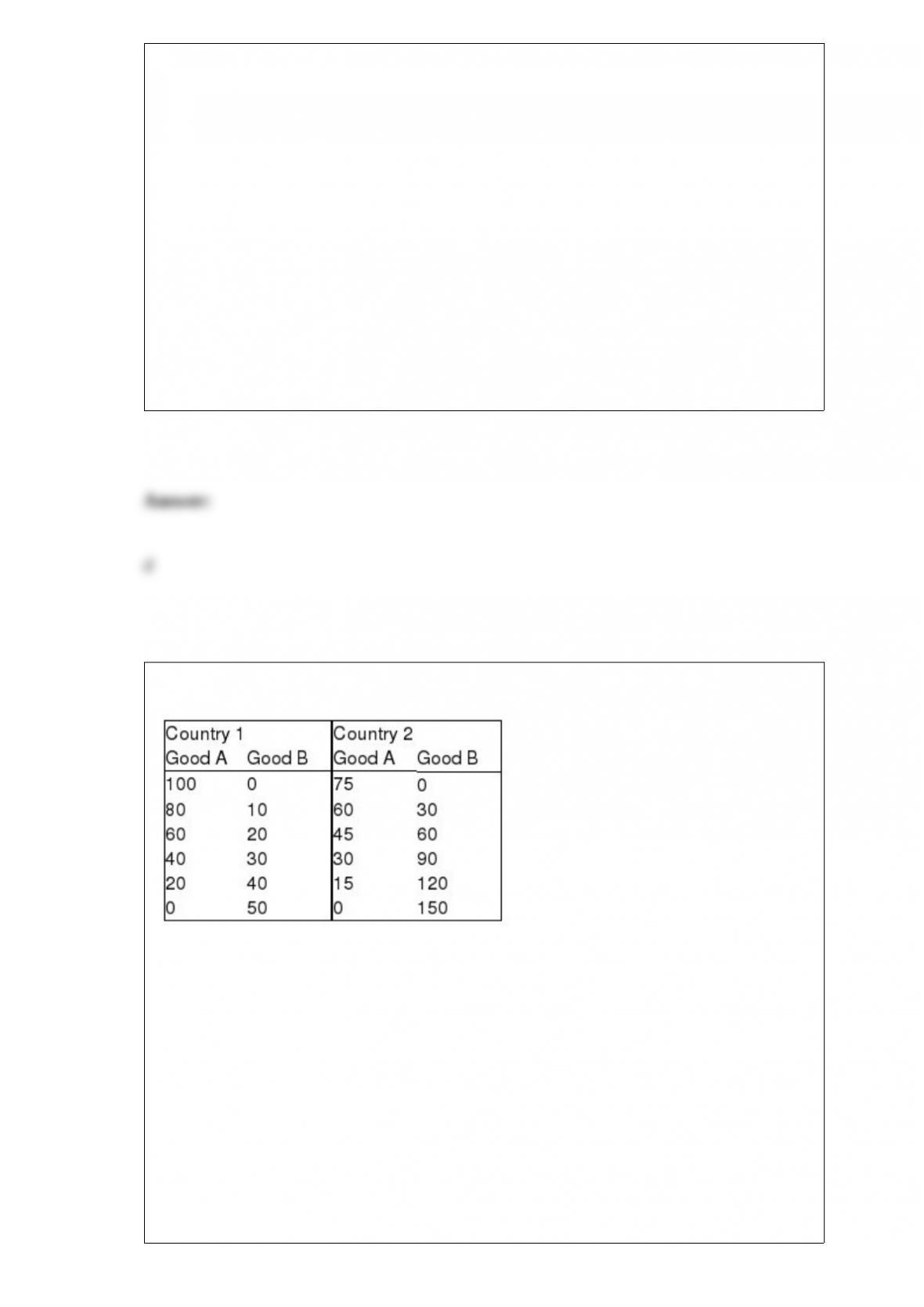
Based on the data provided in this table,if these data were plotted in a two-variable
diagram the result would be a ______________ sloping
a. downward; (nonlinear) curve.
b. downward; (straight) line.
c. upward; (nonlinear) curve.
d. upward; (straight) line.
e. none of the above
Assume a constant-cost industry that is initially in long-run competitive equilibrium. An
increase in demand will cause a(n) __________ in prices and profits, and as a result,
firms will __________ the industry, causing the market supply curve to shift
__________, which, in turn, will eventually cause the equilibrium price to be
__________ before.
a. decrease; exit; leftward; lower than
b. increase; enter; rightward; higher than
c. decrease; exit; rightward; higher than
d. increase; enter; rightward; the same as
e. increase; exit; leftward; lower than
Exhibit 34-5
The opportunity cost of one unit of good B is __________ for country 1 and
__________ for country 2.
a. 20A; 15A
b. 1/20A; 1/15A
c. 10A; 15A
d. 1/2A; 1A
e. 2A; 1/2A
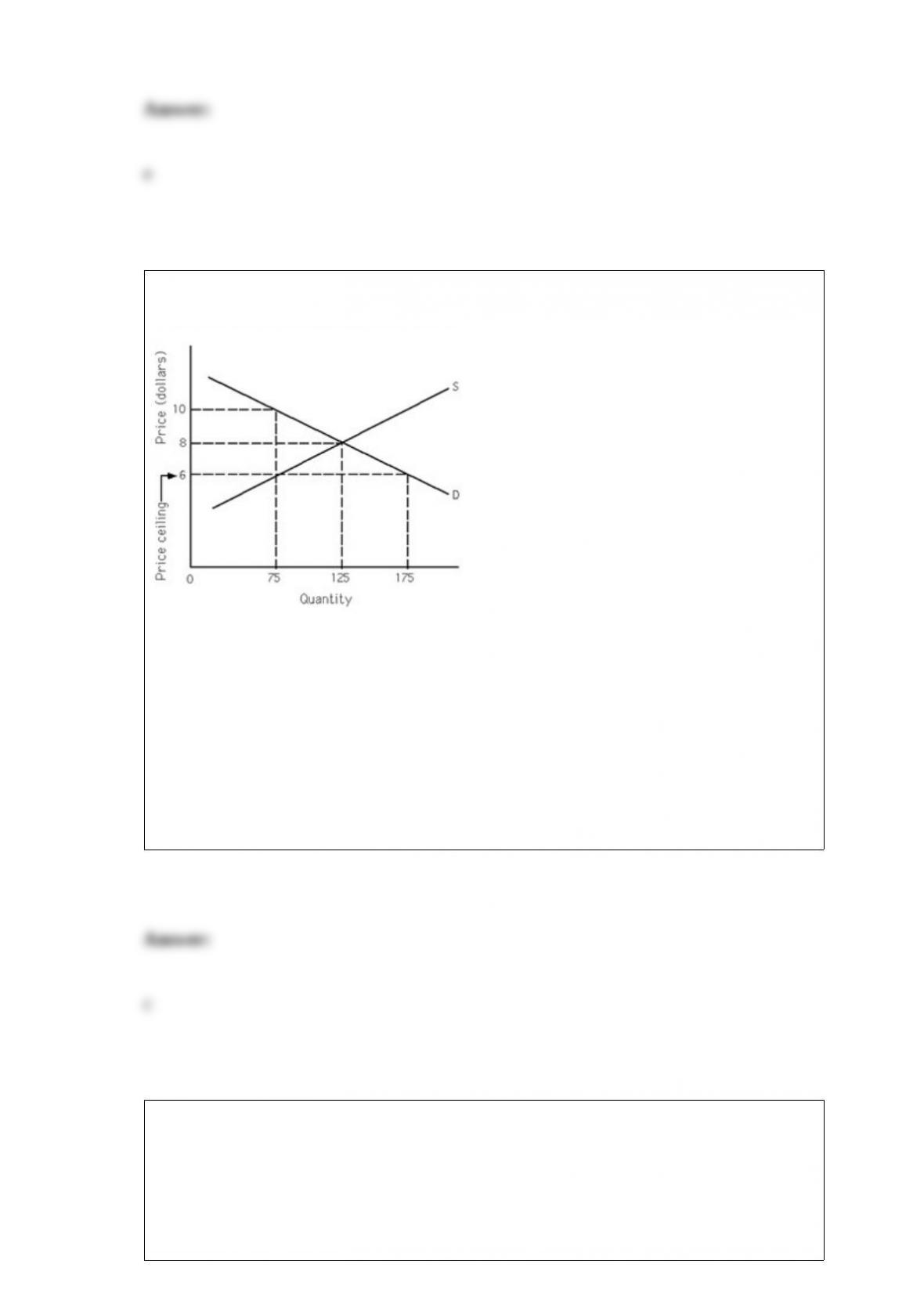
Exhibit 4-1
Some buyers will offer sellers $7 per unit instead of the $6 price ceiling because
a. $7 is closer to the equilibrium price and buyers prefer equilibrium prices to all others.
b. they think it is only fair for sellers to receive higher prices.
c. they want to increase their chances of buying a good for which there is a shortage.
d. it is customary to pay more than the price ceiling.
A firm is considering the purchase of a capital good that will generate an additional
$400 income each year for 4 years (after which time the capital good is useless and has
no scrap value). The capital good will cost $1,600. If the interest rate is 3 percent, it
follows that the firm should
a. purchase the capital good.

b. not purchase the capital good.
c. purchase the capital good only on the condition that the expected inflation rate is
greater than the nominal interest rate.
d. not purchase the capital good since the expected inflation rate is less than the real
interest rate.
e. There is not enough information to answer the question.
If the economy is on the production possibilities frontier (PPF), the economy is
a. productive inefficient.
b. operating with no unemployed resources.
c. productive efficient.
d. b and c
e. none of the above
In a perfectly competitive industry, do higher wages for labor union members diminish
profits?
a. Yes, in the short run, but not in the long run in which some firms exit the industry
because of higher costs.
b. Yes, in the long run, but not in the short run because profits are always fixed in the
short run.
c. No, higher wage costs can affect profits only if they affect labor productivity and this
doesn’t happen.
d. No, because higher labor costs usually bring more firms into the industry and this
effect dampens price rises.
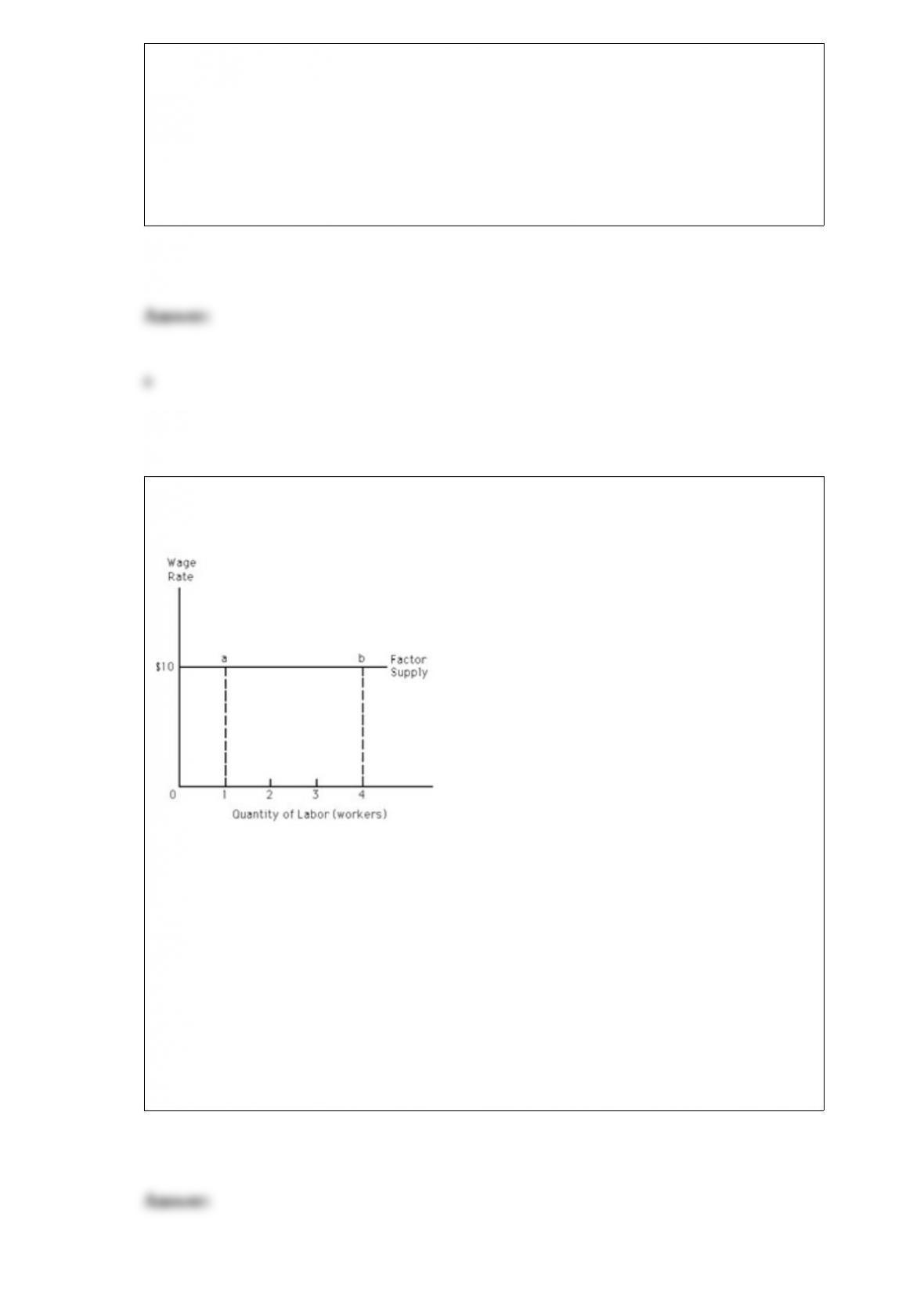
Exhibit 27-3
The firm must be a
a. price taker in the product market.
b. price searcher in the product market.
c. price taker in the factor market.
d. price searcher in the factor market.
e. a and c

If the rate of increase of total utility declines as the quantity consumed of a good
increases, it follows that marginal utility must be
a. declining.
b. rising.
c. staying constant.
d. negative.
e. There is not enough information to answer the question.
The traditional (or orthodox) view of labor unions is that they
a. positively impact productivity and efficiency.
b. negatively impact productivity and efficiency.
c. drive an artificial wedge between the wages of comparable labor in the union and
nonunion sectors of the labor market.
d. a and c
e. b and c