
1) which of the following will most likely cause backflows?
a.poor information that leads a migrant to overestimate the net benefits of migration.
b.high moving costs.
c.falling wages in a migrant’s origin nation.
d.high levels of skill transferability.
2) a change in the slope of a budget line can only result from a change in:
a.consumer preferences.
b.the price of one or both goods.
c.money income.
d.the marginal rate of substitution.
3) The Fed directly sets:
A.the prime interest rate but not the Federal funds rate.
B.both the Federal funds rate and the prime interest rate.
C.neither the Federal funds rate nor the prime interest rate.
D.the discount rate and the prime interest rate.
4) Suppose that two firms in an industry that has a Herfindahl index of 1,000 announce
a merger. The U.S. Justice Department concludes the merger will boost the index to
1,050. The antitrust authorities will most likely:
A.ignore this merger because of the relatively small size of, and increase in, the
Herfindahl index.
B.prevent the merger, contending that it violates the Clayton Act.
C.allow the merger if foreign entry to the industry is possible.
D.allow the merger but watch the new firm carefully for future violations of the
antitrust laws.
5) Answer the next three questions on the basis of the following data:
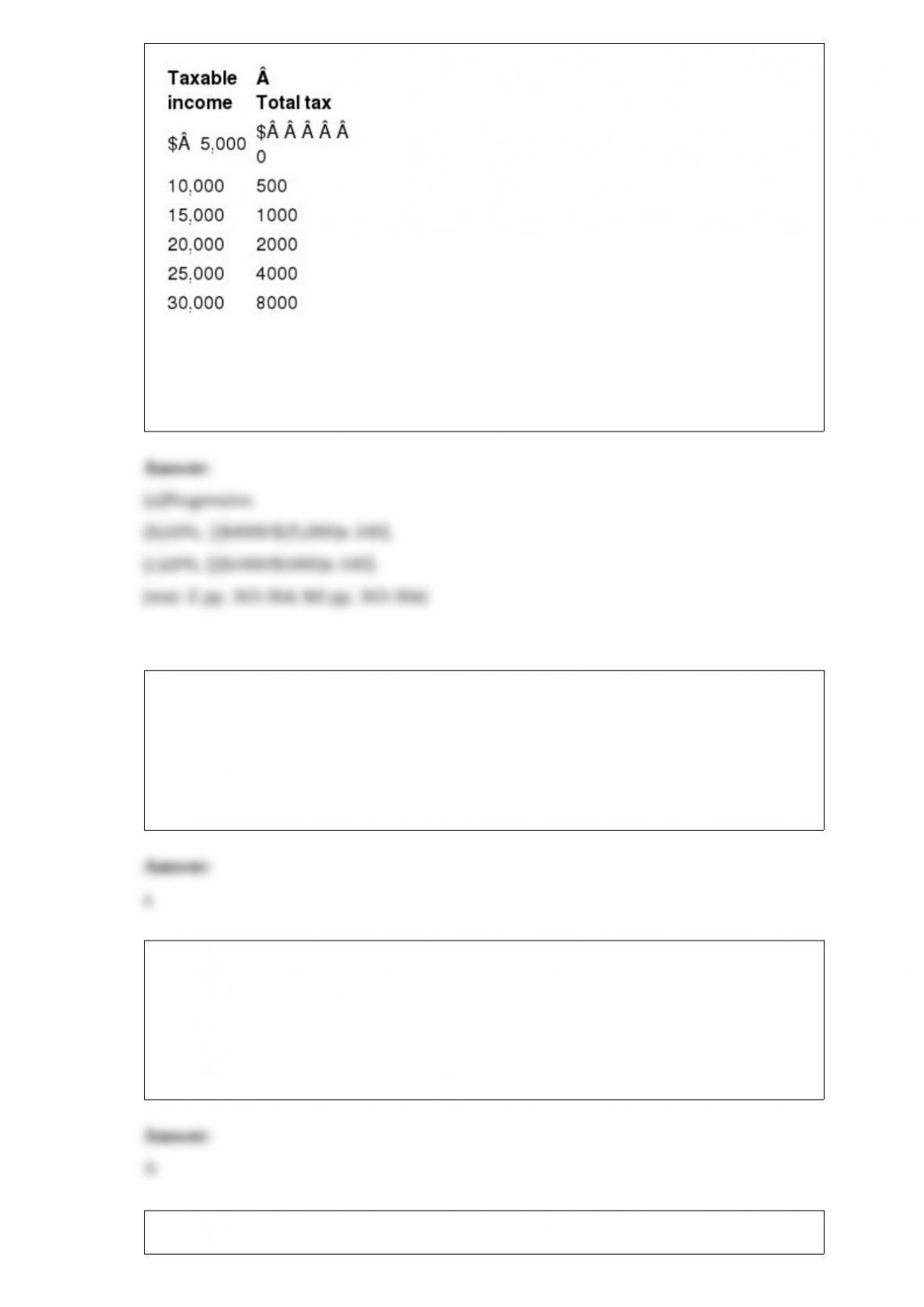
(a)What type of tax is represented by the tax schedule?
(b)What will your average tax rate be if your taxable income is $25,000?
(c)If your taxable income increases from $15,000 to $20,000, what will your marginal
tax rate be?
6) (last word) which of the following is a source of data for the consumption component
of the u.s. gdp?
a.the census bureau’s retail trade survey
b.the census bureau’s survey of government finance
c.the conference board’s index of leading indicators
d.the bureau of labor statistics consumer price index
7) If investment decreases by $20 billion and the economy’s MPC is .5, the aggregate
demand curve will shift:
A.leftward by $40 billion at each price level.
B.rightward by $20 billion at each price level.
C.rightward by $40 billion at each price level.
D.leftward by $20 billion at each price level.
8) a large underground economy results in an:
a.understated gdp.
b.overstated gdp.
c.understated gdp price index.
d.overstated gdp price index.
9) A profit-maximizing company should extract a non-renewable resource in the present
up to the quantity where the:
A.selling price of the resource equals the extraction cost plus the user cost of the
resource.
B.selling price of the resource equals the total cost plus the user cost of the resource.
C.selling price of the resource equals the extraction cost of the resource.
D.extraction cost of the resource equals the user cost of the resource.
10) if the demand for a product is elastic, then total revenue will:
a.increase whether price increases or decreases.
b.be constant in response to a price change.
c.fall as price falls.
d.rise as price falls.
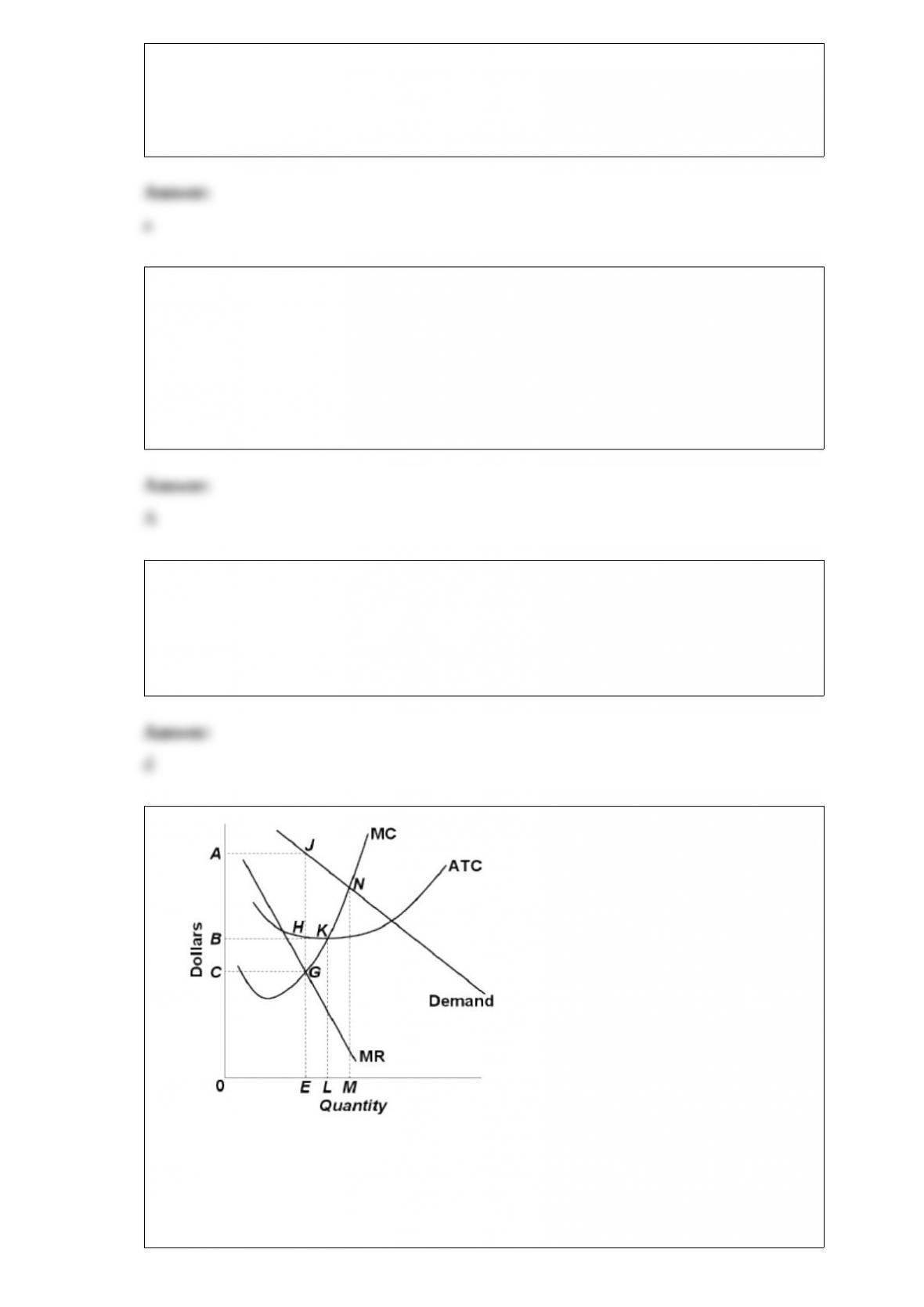
11)
refer to the above diagram. to maximize profits or minimize losses this firm should
produce:
a.e units and charge price c
b.e units and charge price a
c.m units and charge price n
d.l units and charge price lk
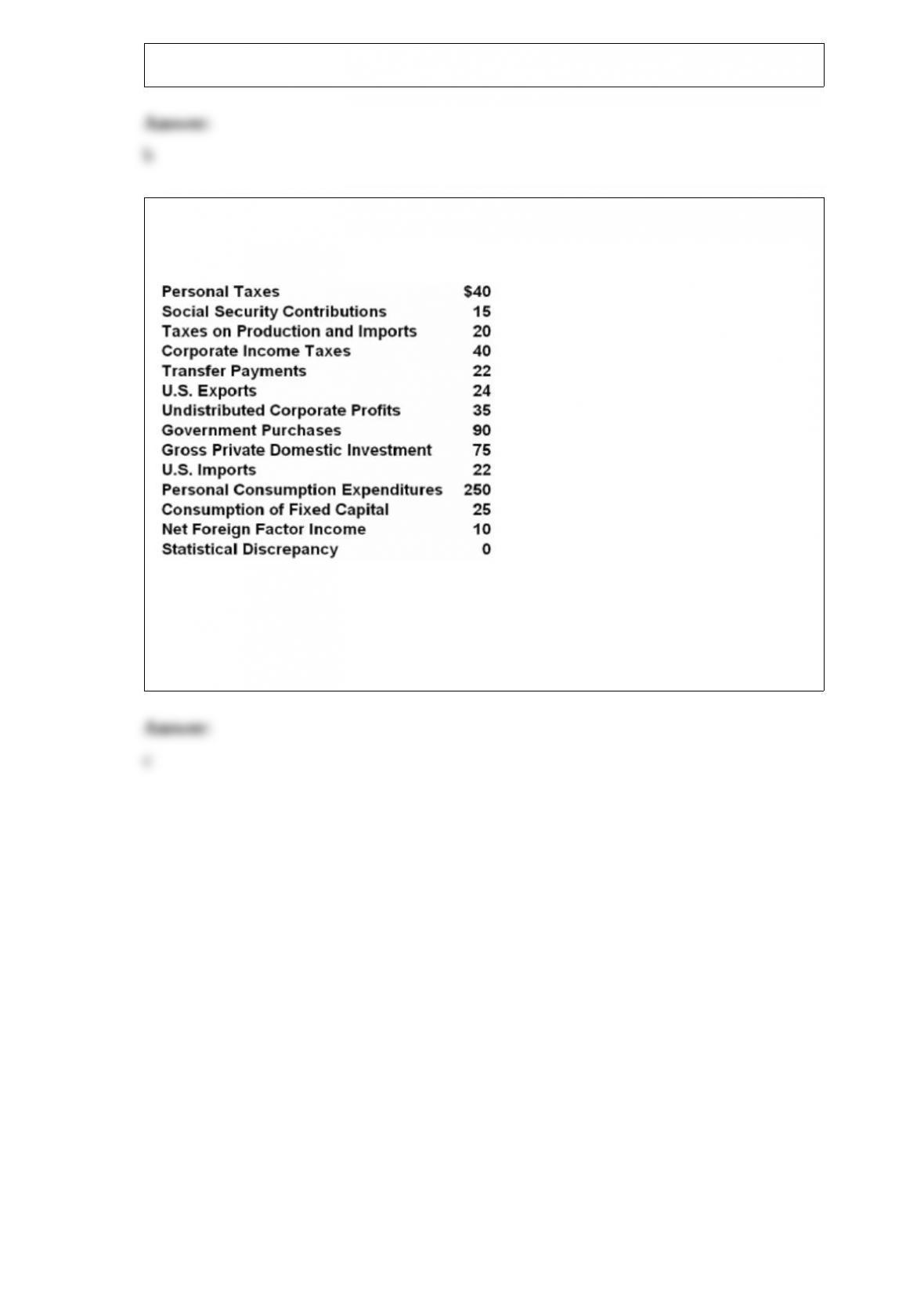
12) answer the next question(s) on the basis of the following data. all figures are in
billions of dollars.
refer to the above data. ndp is:
a.$370.
b.$402.
c.$392.
d.$467.