The poorest regions in the world, as measured by GDP per capita, are:
a. Latin America and the Caribbean. c. Sub-Saharan Africa and South Asia.
b. the Middle East and North Africa. d. Australia and New Zealand.
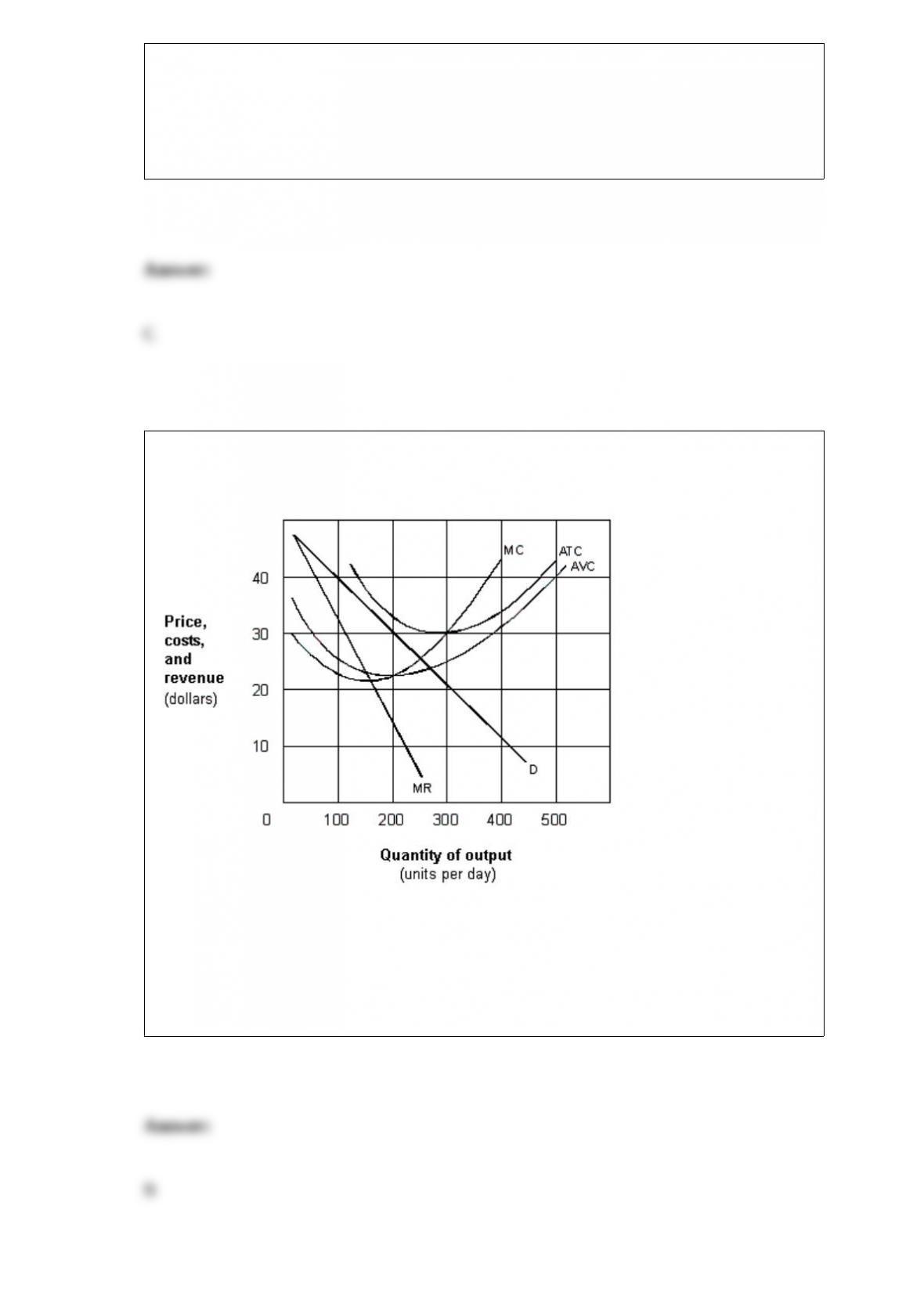
Exhibit 9-10 A monopolist
In Exhibit 9-10, at the profit-maximizing or loss-minimizing output, the monopolist’s
total economic profit is:
a. positive.
b. negative.
c. zero.
d. minimum.

Using supply and demand curve analysis, the triangular area above the equilibrium
price and under the demand curve is:
a. consumer surplus.
b. producer surplus.
c. marginal cost.
d. deadweight loss.
Capital accounts are a measure of how much ____ have invested ____.
a. c and d
b. d and e
c. U.S. stockholders; in the market
d. foreign stockholders; in foreign firms
e. U.S. firms; in foreign nations
Which of the following is used to illustrate an independent relationship between two
variables?
a. An upward-sloping curve c. A hill-shaped curve
b. A downward-sloping curve d. A horizontal or vertical line
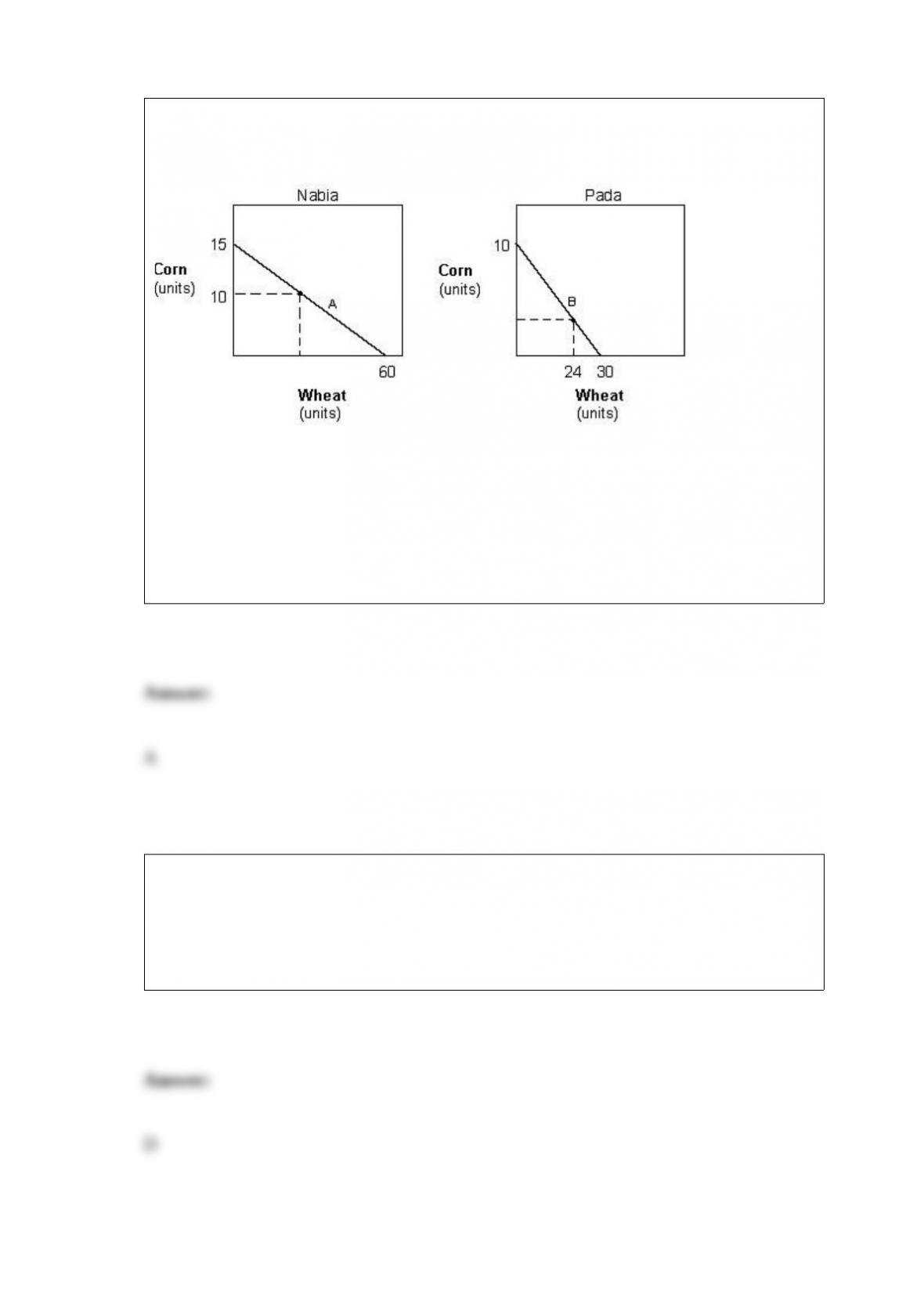
Exhibit 15-1 Production possibilities curves
In Exhibit 15-1, the production possibilities curves of wheat and corn for Nabia and
Pada are presented. In Nabia the cost of producing one more unit of corn is equal to:
a. 4 units of wheat.
b. 4 units of corn.
c. 1/4 unit of wheat.
d. 15 units of wheat.
e. 60 units of wheat.
A monopolist always faces a demand curve that is:
a. perfectly inelastic.
b. perfectly elastic.
c. unit elastic.
d. the same as the entire market demand curve.

Just before class, Jim tells Stuart, “Stuart, you shouldn’t skip class today because you
have paid tuition to enroll in the class.” Stuart ignores Jim’s advice, and instead makes
the decision of whether to attend based on the importance to his grade that he feels he’d
be missing that day in class relative to his value of the extra time he could have to finish
the video game he is playing. To an economist, Stuart is:
a. using marginal analysis.
b. ignoring the total value of attending class.
c. ignoring the concept of opportunity cost.
d. irresponsible.
The existence of an externality is proof that there is a(n):
a. market failure.
b. undervaluation of a good.
c. undervaluation of a cost.
d. property dispute.
e. free-rider problem
If a country has a comparative advantage in oil, then this means that the opportunity
cost of producing oil is:
a. high.
b. low.

c. zero.
d. infinite.
e. equal to all other goods.
If John purchases 10 percent more compact discs when his income increases 5 percent,
then:
a. his total expenditure on compact discs will fall as his income increases.
b. compact discs would be classified as an inferior good.
c. compact discs would be price elastic.
d. compact discs would be income inelastic.
e. compact discs would be income elastic.
The level of money income below which a family is considered poor is called the:
a. bottom 20 percent of the income distribution.
b. poverty income level.
c. guaranteed income level.
d. subsistence income level.
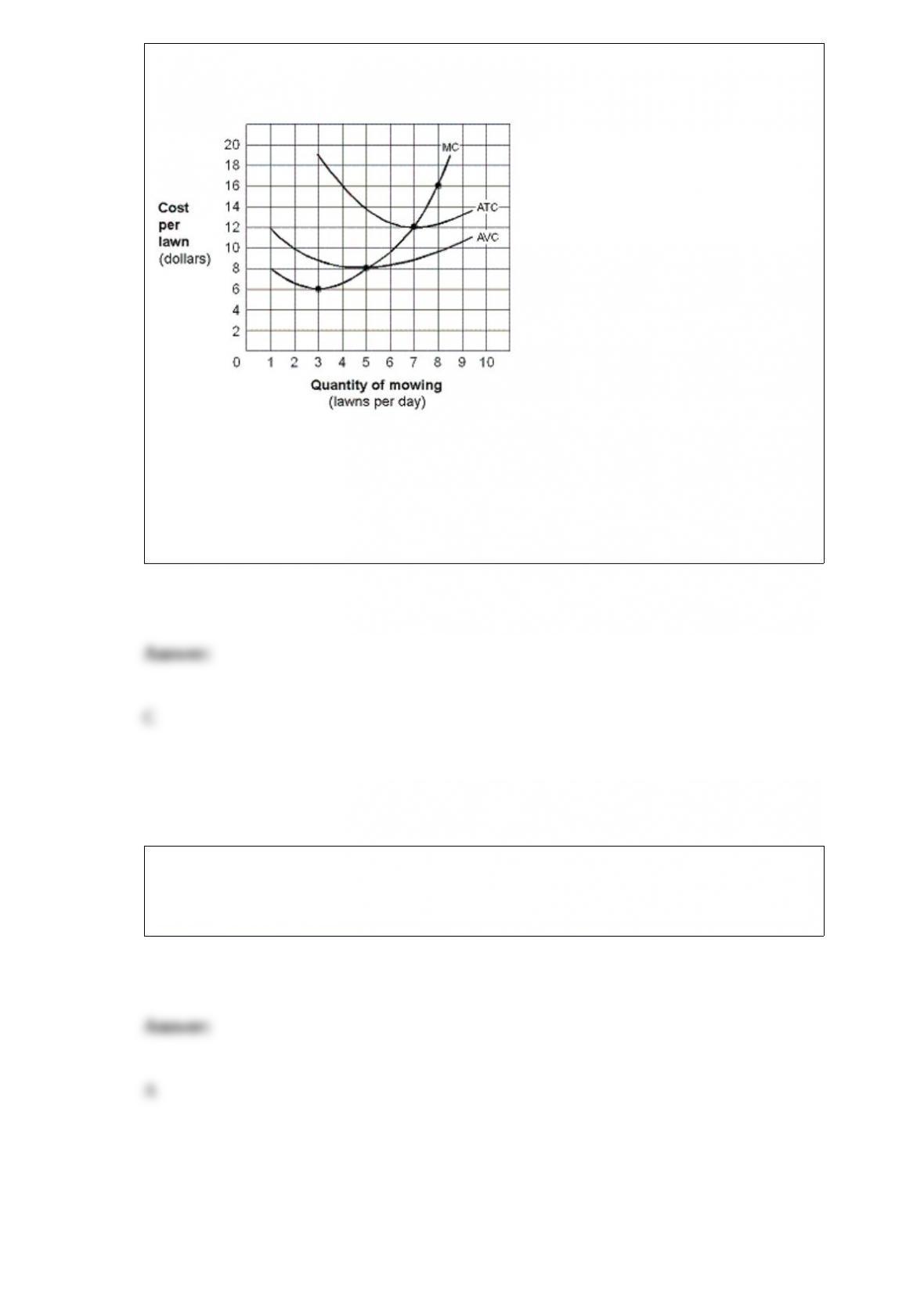
Exhibit 8-15 Short-run cost curves for E-Z Care lawn mowing company
In Exhibit 8-15, suppose the market price of mowing lawns falls to $10 per lawn. In this
situation, E-Z-Care will:
a. permanently exit the industry.
b. shut down its operations, at least in the short run.
c. continue to mow lawns despite its economic losses.
d. earn a normal profit.
The sun is an example of:
a. a natural resource. c. labor.
b. capital. d. none of these.
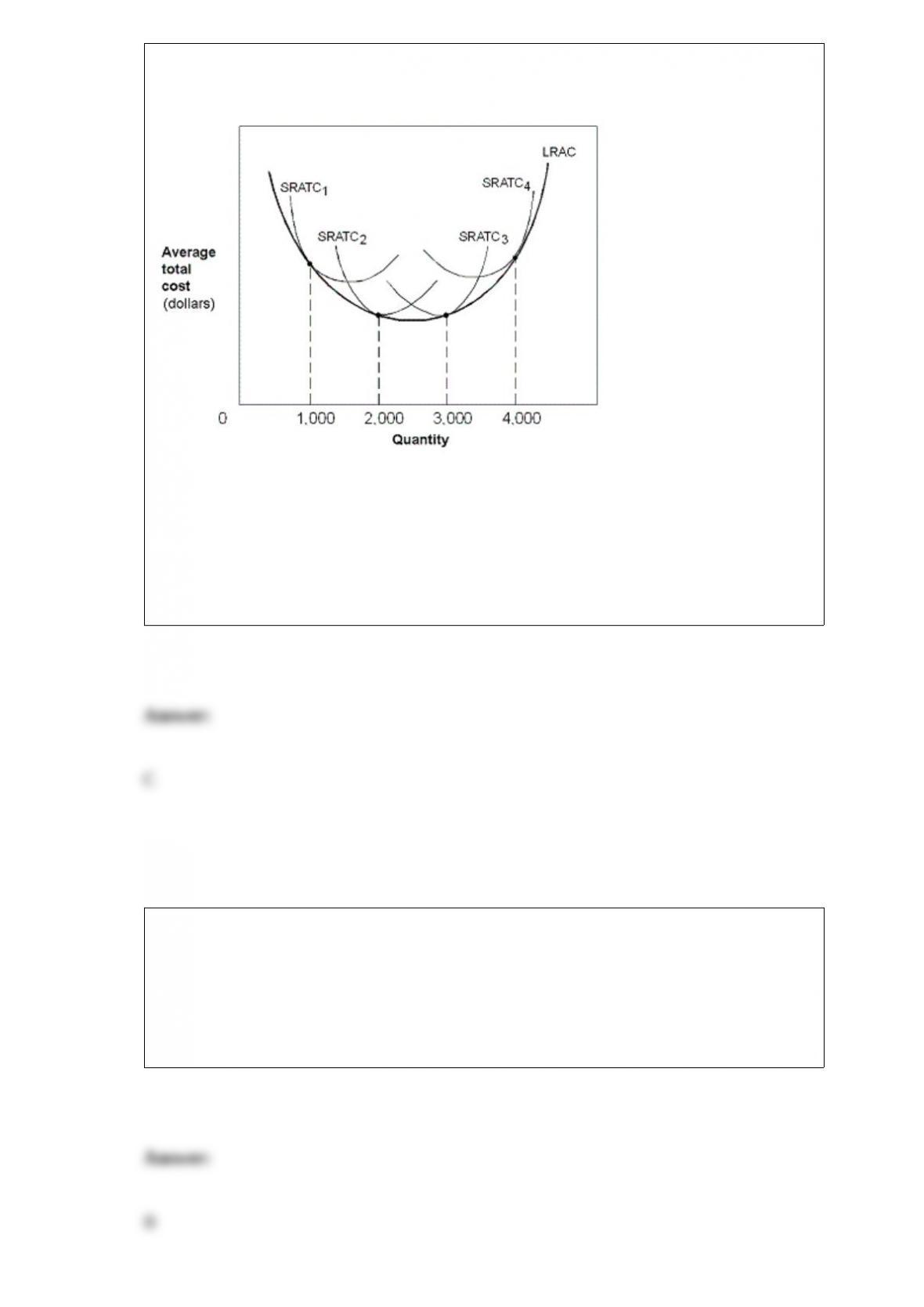
Exhibit 7-14 Cost curves
In Exhibit 7-14, the U-shaped LRAC curve indicates which of the following as quantity
increases from 0 to 4,000?
a. Diseconomies of scale; constant returns to scale; economies of scale.
b. Constant returns to scale; economies of scale; diseconomies of scale.
c. Economies of scale; constant returns to scale; diseconomies of scale.
d. Diseconomies of scale; economies of scale; constant returns to scale.
e. Economies of scale; diseconomies of scale; constant returns to scale.
The increase in a firm’s total revenues resulting from hiring an additional unit of labor is
known as the marginal:
a. product.
b. revenue product.
c. cost.
d. none of these.
The theory of oligopolistic interdependence means that the outcome is uncertain
because price and output decisions depend on responses of rivals.
Describe the decision for a perfectly competitive employer in determining the profit
maximizing quantity of labor to employ.
A monopoly earns the most profit by charging a price where demand is inelastic.

A major cartel problem is that member firms cheat by attempting to steal customers
from one another.
A budget line represents all the combinations of two good a consumer can buy with a
given amount of money and fixed prices for the goods.
Assume a ceiling price is set above the equilibrium price. The final result is the
equilibrium price.
A perfectly competitive industry always has a perfectly elastic (flat) long-run supply
curve.

An increase in the value of the dollar in international exchange rate markets will cause
the relative price of U.S. produced goods to foreigners to rise, the relative price of
foreign produced goods to Americans to fall, causing U.S. exports to fall and U.S.
imports to rise.
Economists can illustrate an uneven distribution of income by sketching a Lorenz curve
that lies above the diagonal.