
1) in an open trading system, a country will import those commodities that it produces
at relatively low cost while exporting commodities that can be produced at relatively
high cost.
a.true
b.false
2) the implementation of the european union has:
a.made it harder for americans to compete against the germans in the british market
b.made it easier for americans to compete against the germans in the british market
c.made it harder for americans to compete against the japanese in the british market
d.made it easier for americans to compete against the japanese in the british market
3) compared to ricardian trade theory, modern trade theory provides a more general
view of comparative advantage since it is based on all factors of production rather than
just labor.
a.true
b.false
4) figure 12.3market for british pounds
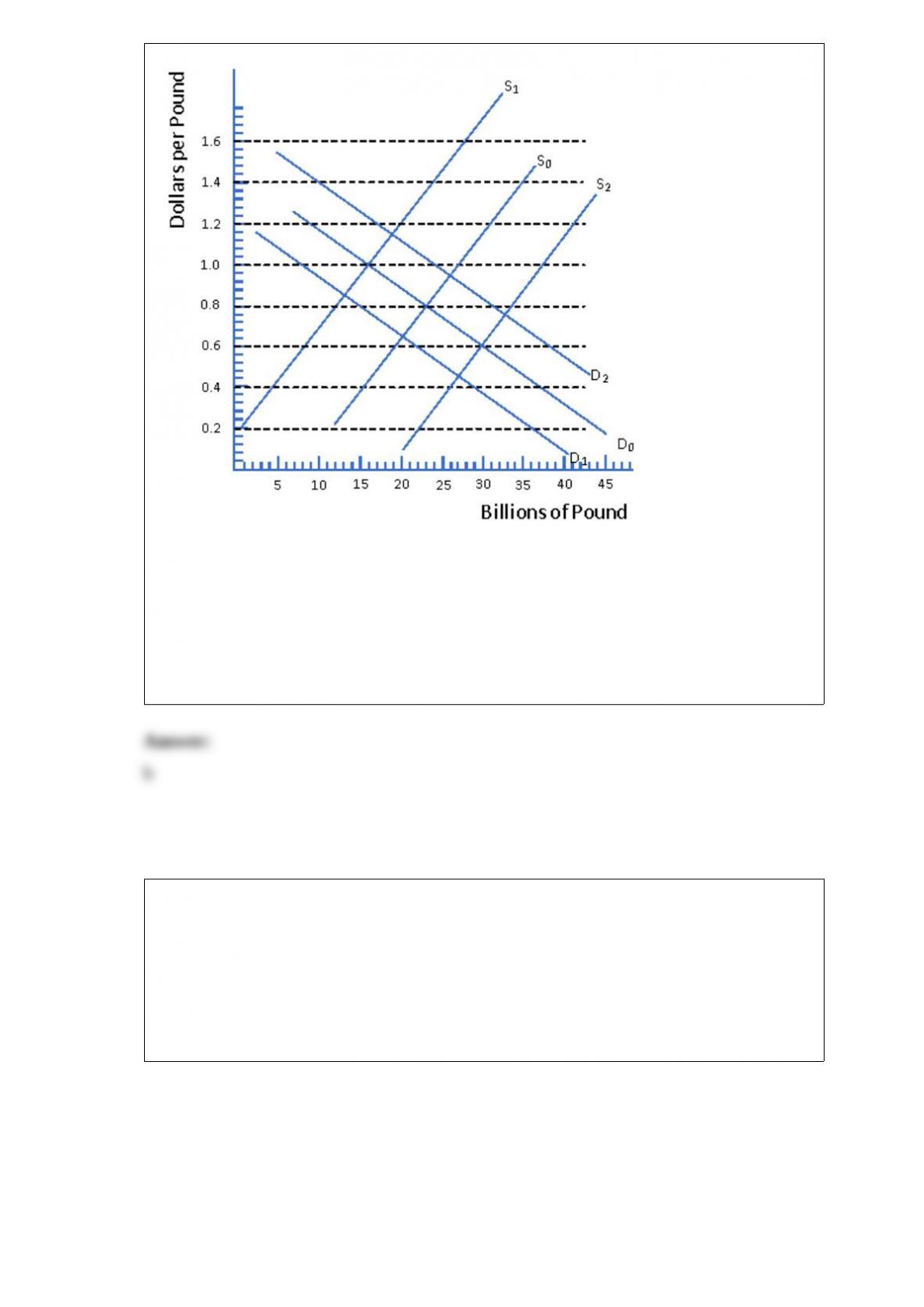
consider figure 12.3.the market is initially governed by demand curve d0 and supply
curve s0.suppose us productivity growth is faster than the uk, which supply and demand
curves depict the new situation?
a.s1 and d2
b.s2 and d1
c.s0 and d2
d.s0 and d1
5) figure 5.1 illustrates the steel market for mexico, assumed to be a ‘small” country that
is unable to affect the world price. suppose the world price of steel is given and constant
at $200 per ton. now suppose the mexican steel industry is able to obtain trade
protection.
figure 5.1. alternative nontariff trade barriers levied by a ‘small” country
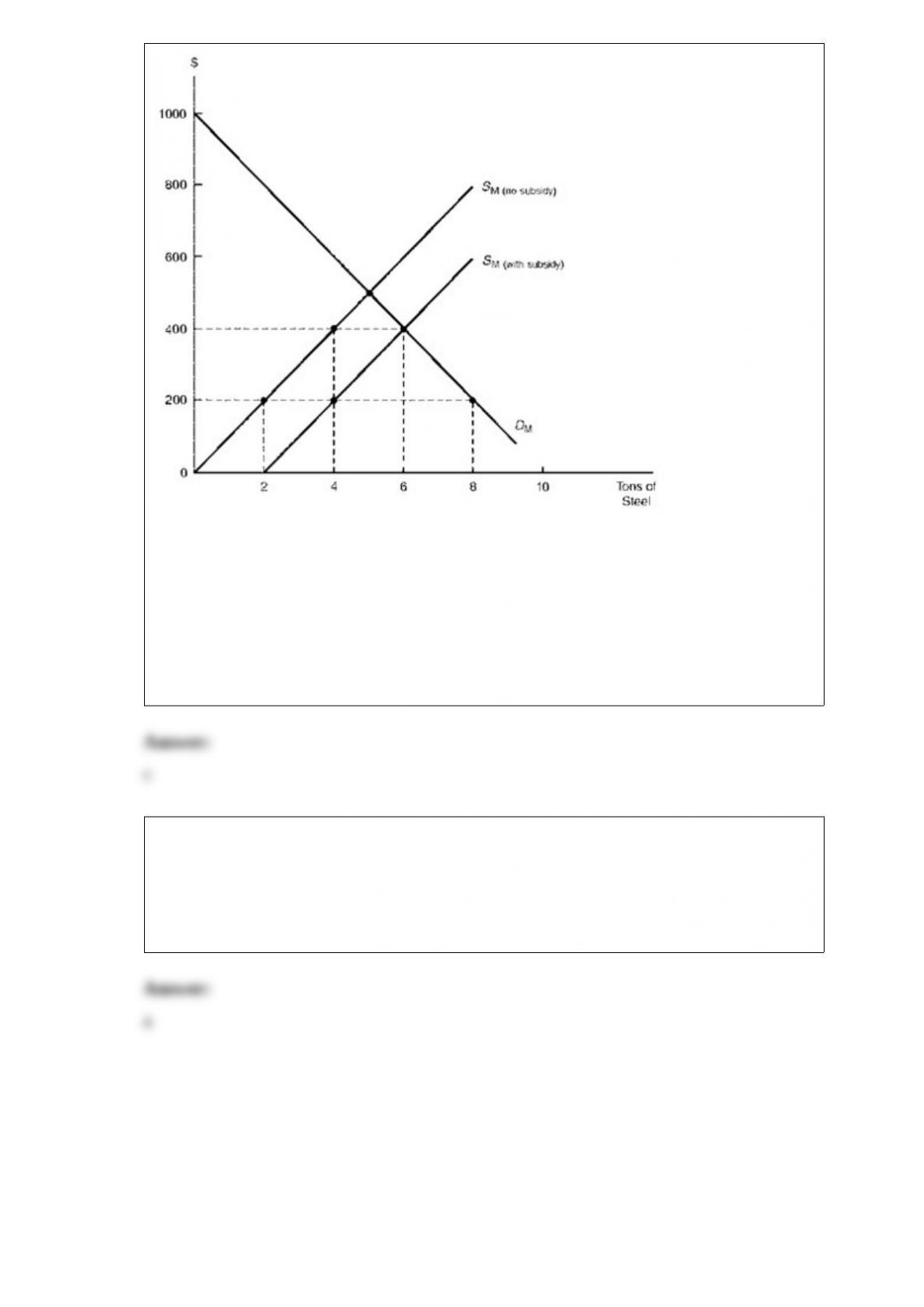
consider figure 5.1. suppose the mexican government provides a subsidy of $200 per
ton to its steel producers, as indicated by the supply schedule sm (with subsidy).
as a result of the subsidy mexican steel producers gain ____ of producer surplus.
a.$200
b.$400
c.$600
d.$800
6) the simultaneous import and export of computers by germany is an example of:
a.intra-industry trade
b.inter-industry trade
c.perfect competition
d.imperfect competition
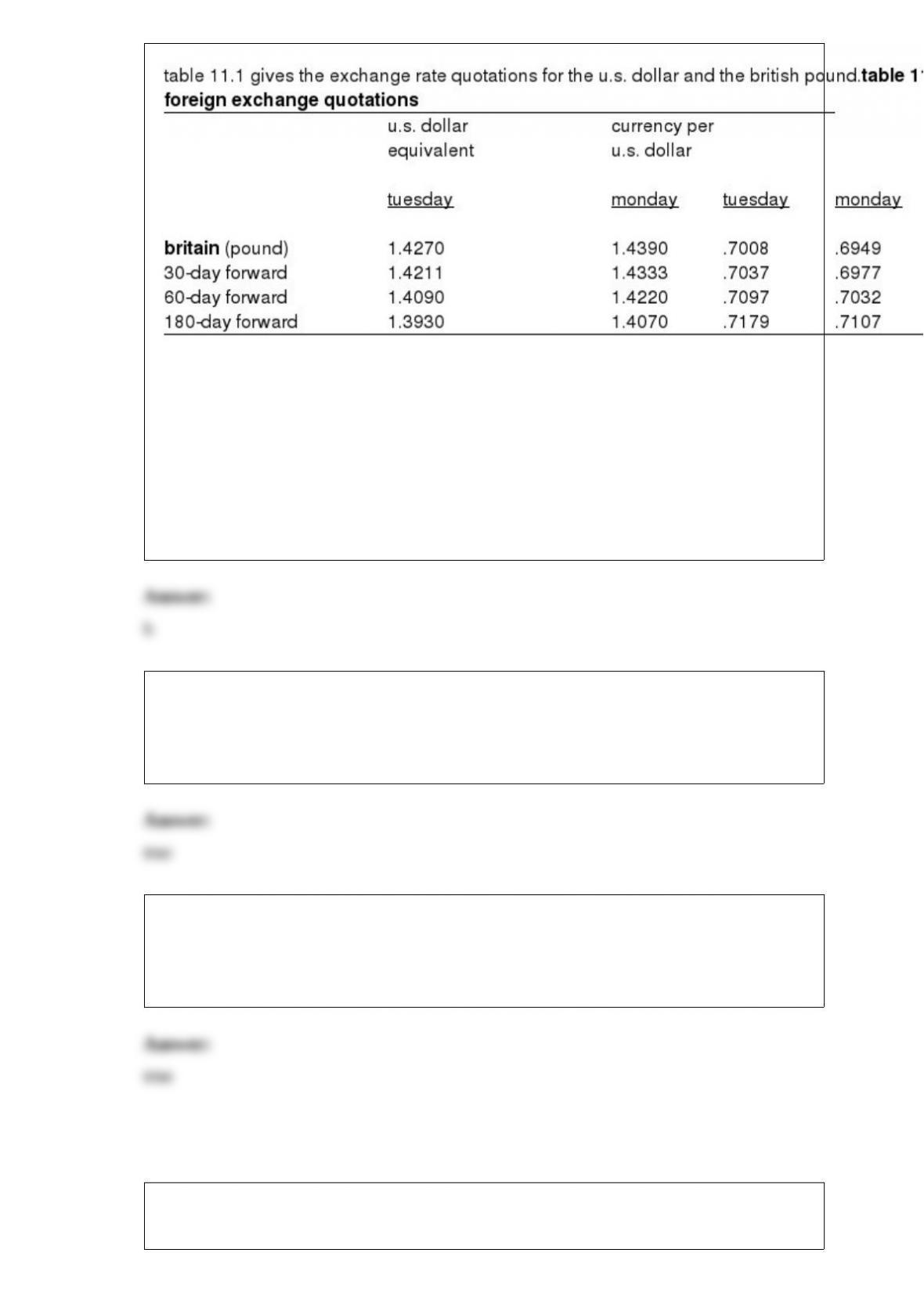
7) consider table 11.1. concerning the tuesday quotations: compared to the cost of
buying 100 pounds on the spot market, if 100 pounds were bought for future delivery in
180 days the dollar cost of the pounds would be:
a.$3.40 higher
b.$3.40 lower
c.$6.80 higher
d.$6.80 lower
8) prices, interest rates, and income are the automatic adjustment variables that help
restore current-account equilibrium under a system of fixed exchange rates.
a.true
b.false
9) economies with relatively high growth rates in labor productivity tend to find their
currencies’ exchange values appreciating under a floating exchange-rate system.
a.true
b.false
10) lower tariffs on u.s. agricultural imports cause the dollar to ____ in the ____.
a.appreciate, long run
b.depreciate, long run
c.appreciate, short run
d.depreciate, short run
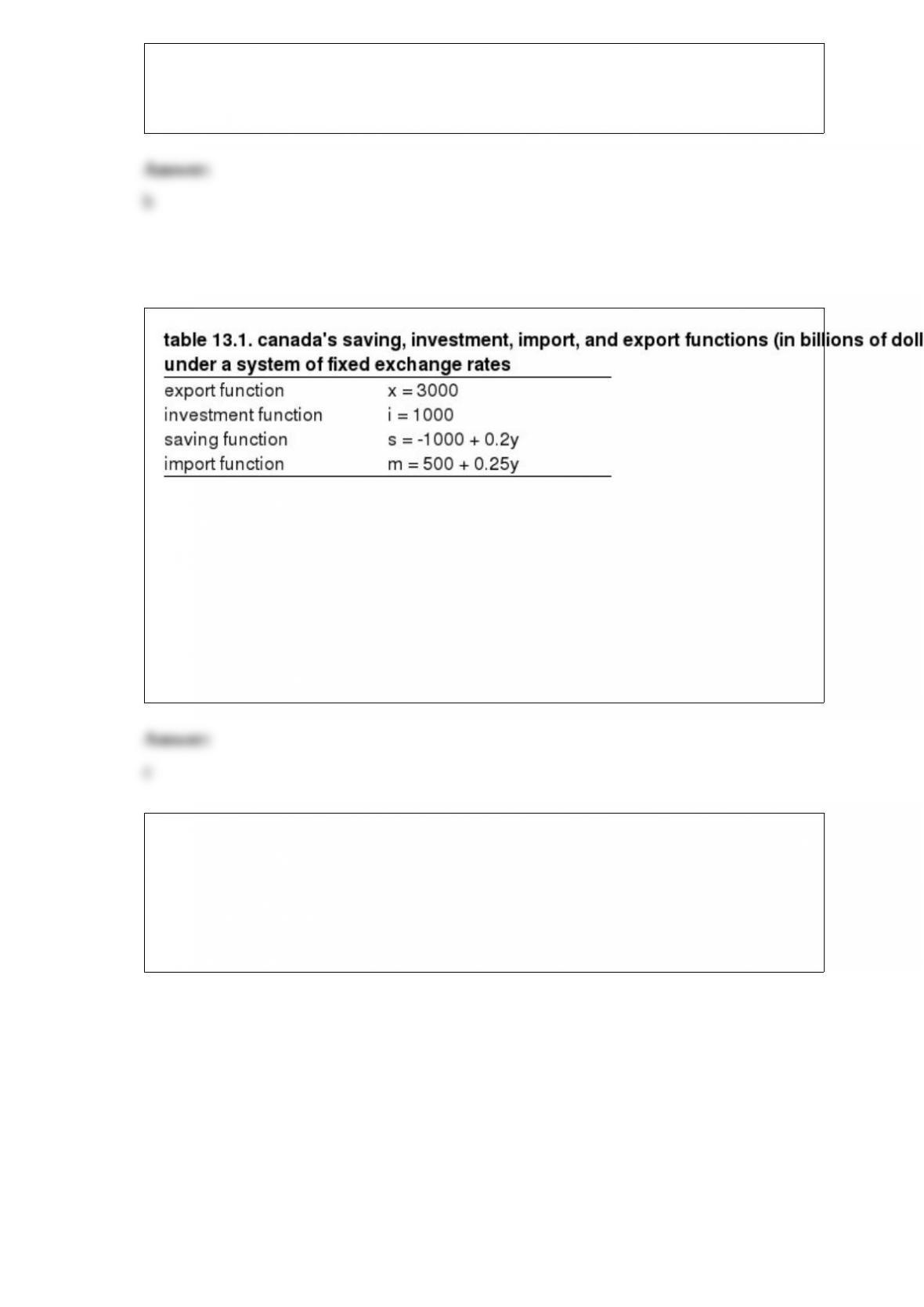
11) refer to table 13.1. if weak economic conditions abroad result in canada’s exports
falling from $3000 billion to $2500 billion, canada’s equilibrium income falls by
approximately:
a.$888 billion
b.$990 billion
c.$1110 billion
d.$1220 billion
12) the diagram below illustrates the international tin market. assume that the producing
and consuming countries establish an international commodity agreement under which
the target price of tin is $5 per pound.
figure 7.2. defending the target price in face of changing supply conditions
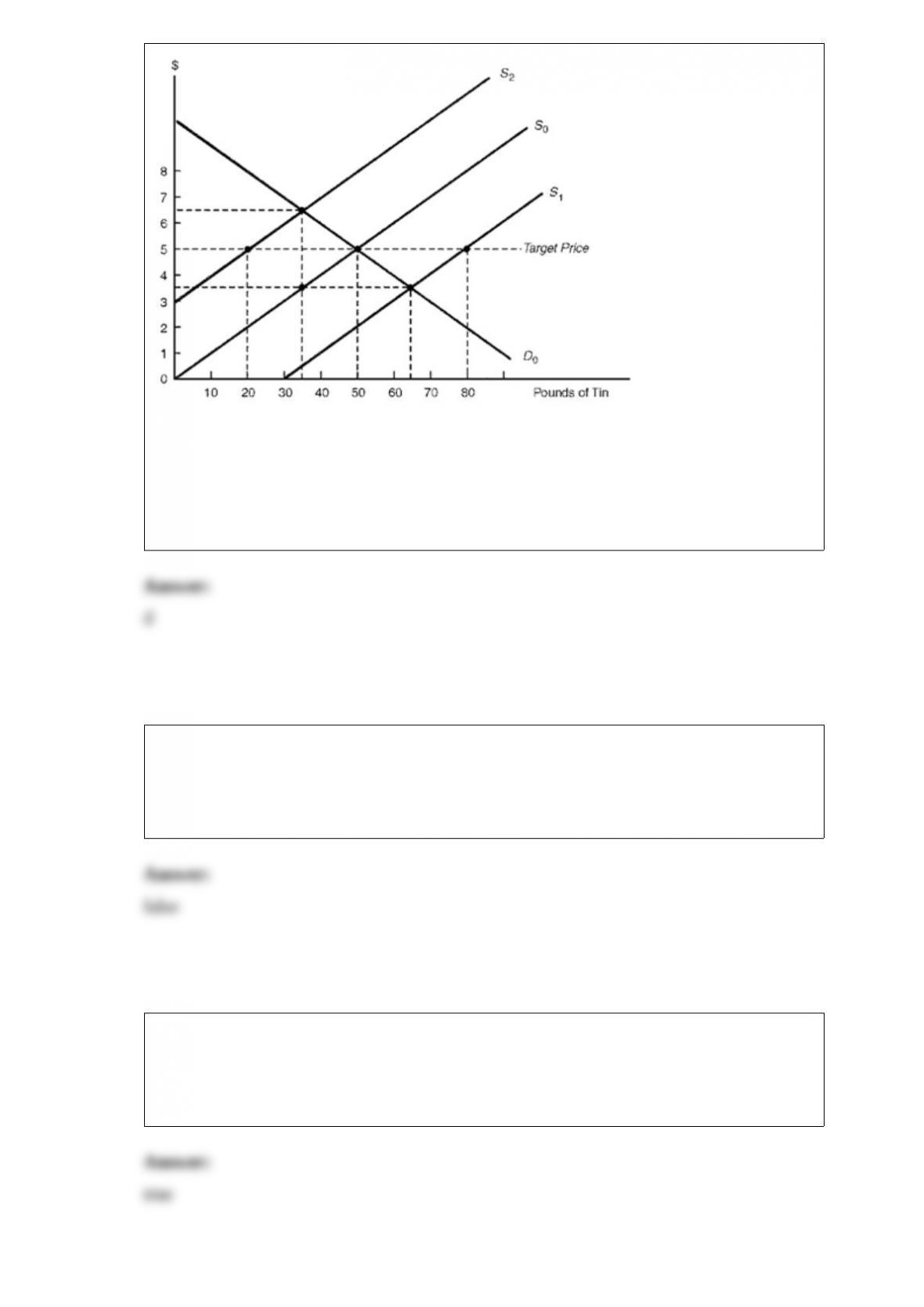
consider figure 7.2. suppose the supply of tin decreases from s0 to s2. under a buffer
stock system, the buffer-stock manager could maintain the target price by:
a.purchasing 15 pounds of tin
b.purchasing 30 pounds of tin
c.selling 15 pounds of tin
d.selling 30 pounds of tin
13) generally speaking, transportation costs are more important than production costs as
a source of comparative advantage.
a.true
b.false
14) the united states would be a “net creditor” if the value of u.s. assets abroad exceeded
the value of foreign assets in the united states.
a.true
b.false

15) when deciding between u.s. and british government securities, an american investor
typically considers:
a.u.s. and british interest rates and anticipated changes in the exchange rate
b.budget deficits of the u.s. government and british government
c.shifts in the demand for u.s. goods and british goods
d.u.s. and british inflation rates and anticipated changes in the exchange rate
16) the implicit industrial policies of the u.s. government have included:
a.formulating industry-specific economic policies designed to promote national
champions
b.nationalizing basic industries such as steel and autos
c.encouraging cartelization of aircraft and aluminum manufacturers
d.improving the setting for industry such as communications and infrastructure