The change in the price of a foodstuff will be greater,
a. the smaller the change in the supply of the foodstuff.
b. the greater the change in the supply of the foodstuff and the more inelastic the
demand curve for the foodstuff.
c. the lesser the change in the supply of the foodstuff and the more inelastic the demand
curve for the foodstuff.
d. the greater the change in the supply of the foodstuff and the more elastic the demand
curve for the foodstuff.
e. the lesser the change in the supply of the foodstuff and the more elastic the demand
curve for the foodstuff.
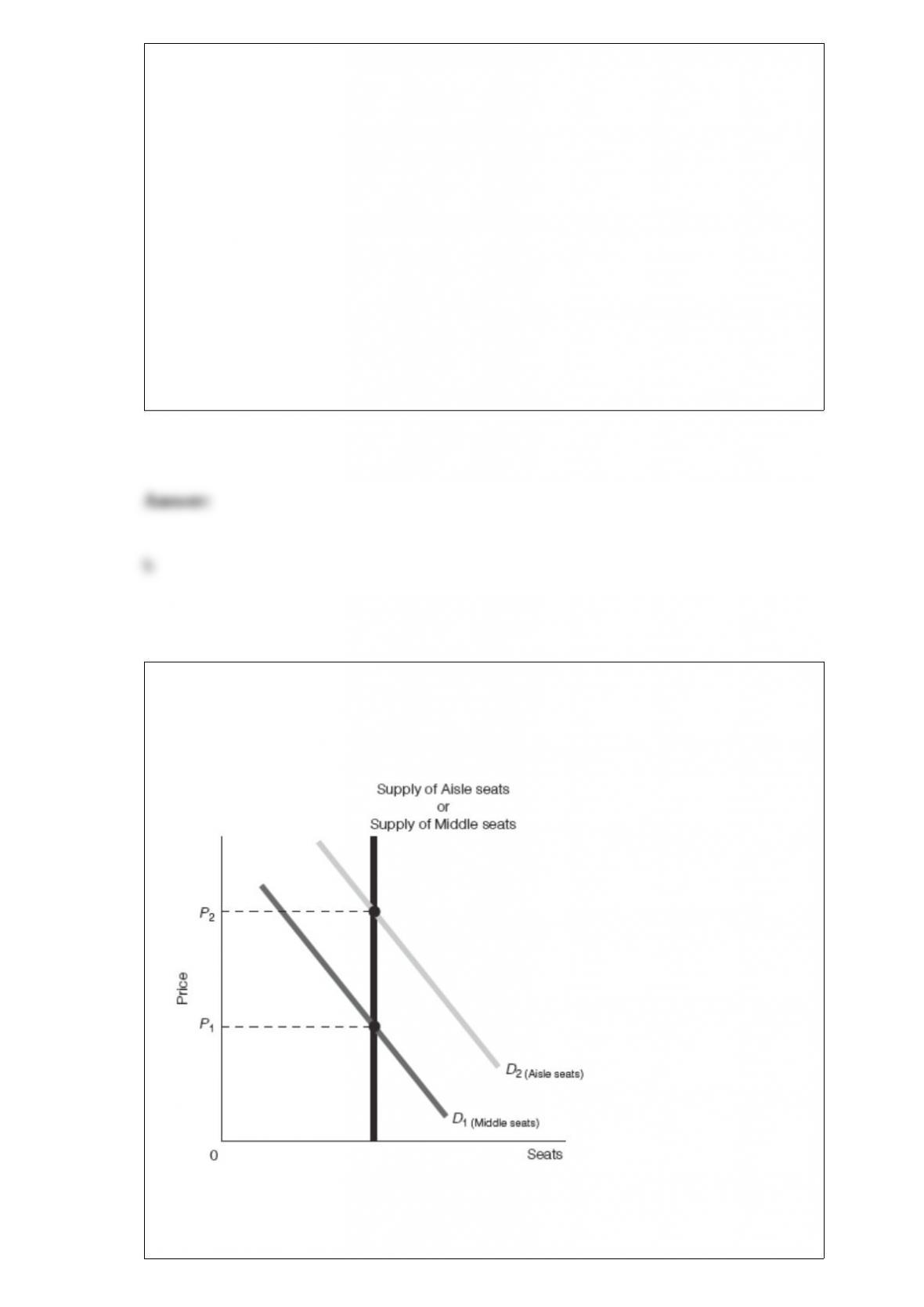
Refer to Exhibit 5-5. If the airline charges a price that is between P1 and P2 for both
aisle seats and middle seats, the result will be
Exhibit 5-5
a. a surplus of middle
seats and a shortage of aisle seats.
b. a surplus of aisle seats and a shortage of middle seats.
c. a shortage of middle seats and the equilibrium quantity of aisle seats.
d. a shortage of aisle seats and the equilibrium quantity of middle seats.
Rent seeking is the actions of
a. individuals and groups who spend resources to influence public policy in the hope of
redistributing income to themselves from others.
b. a subset of the population that hold intense preferences for a particular government
service.
c. some citizens who choose not to acquire information because the costs of acquiring
the information are greater than the benefits.
d. politicians who exchange votes to gain support for their own legislation.
Refer to Exhibit 24-6. Let C be the demand curve facing a perfectly
price-discriminating monopolist and P0 the price it charges for the last unit of X it sells.
The marginal cost of the last unit
Exhibit 24-6
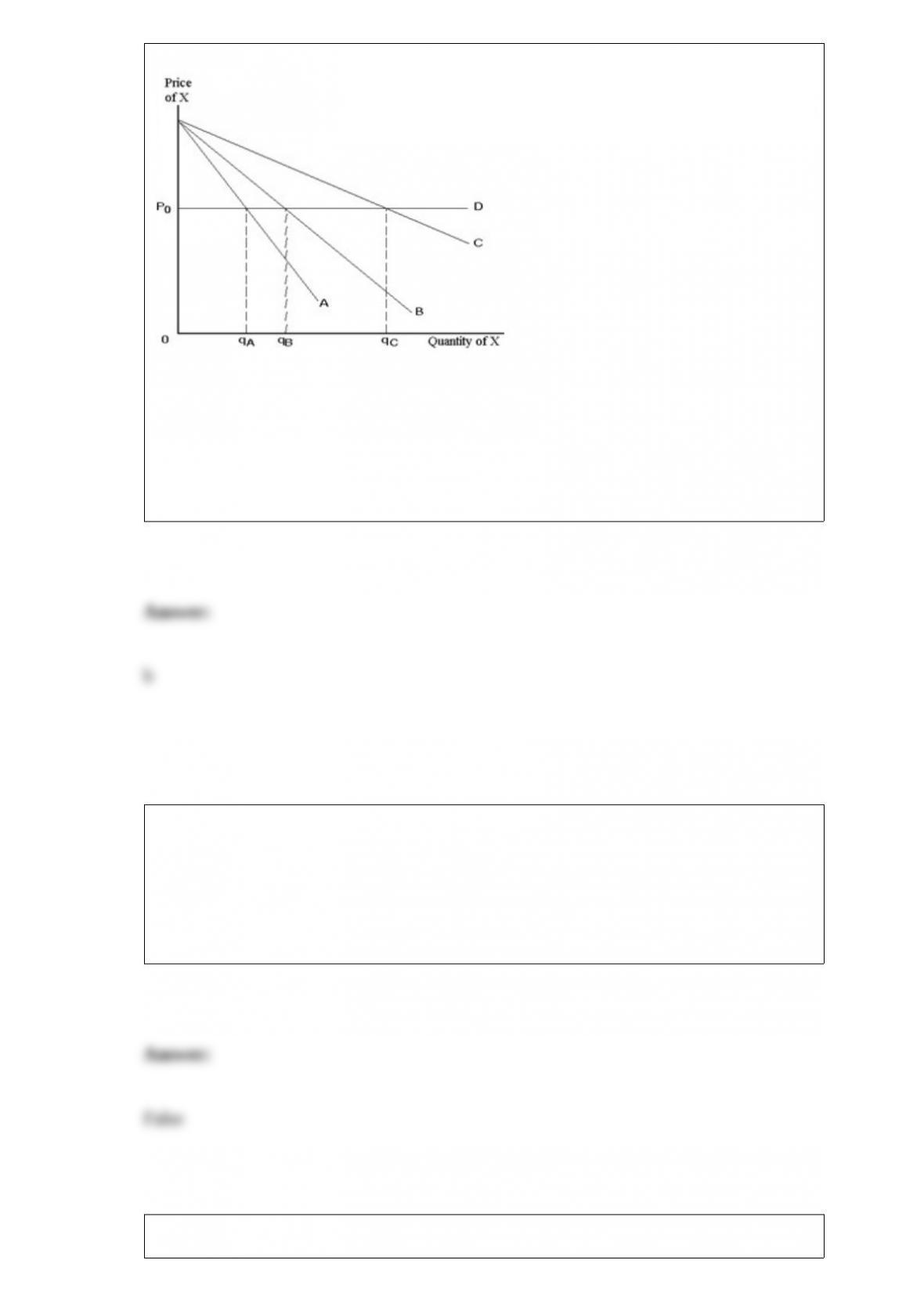
a. is less than P0.
b. equals P0.
c. is greater than P0.
d. could be any of the above, depending on the shape of the marginal cost curve.
The NCAA rule governing the limits on the amount of a scholarship a college can offer
an athlete is an effective price floor.
a. True
b. False
Refer to Exhibit 23-1. The marginal revenue curve represented by the information in
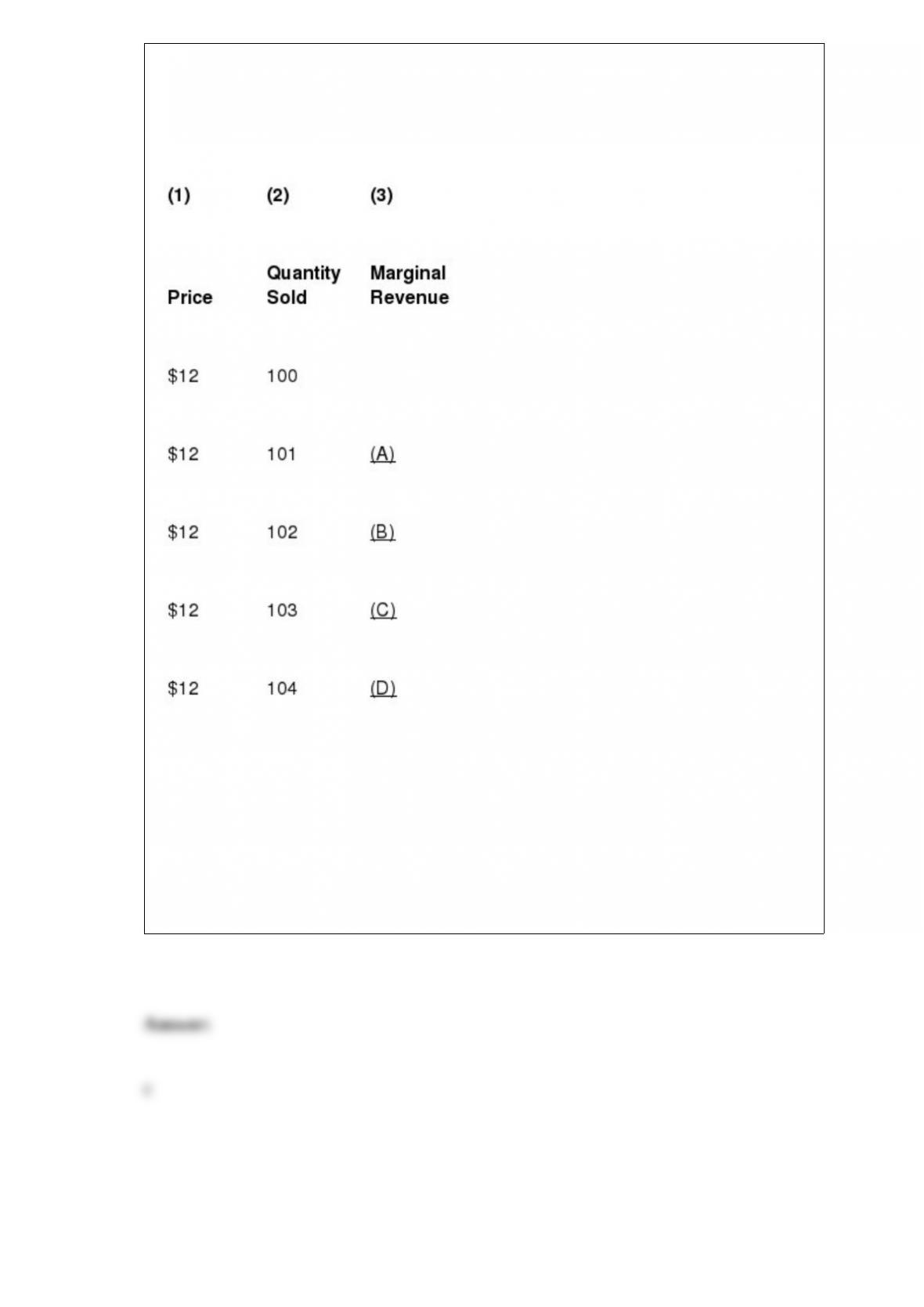
this table is
Exhibit 23-1 (1) (2) (3)
a. downward-sloping.
b. upward-sloping.
c. horizontal.
d. vertical.
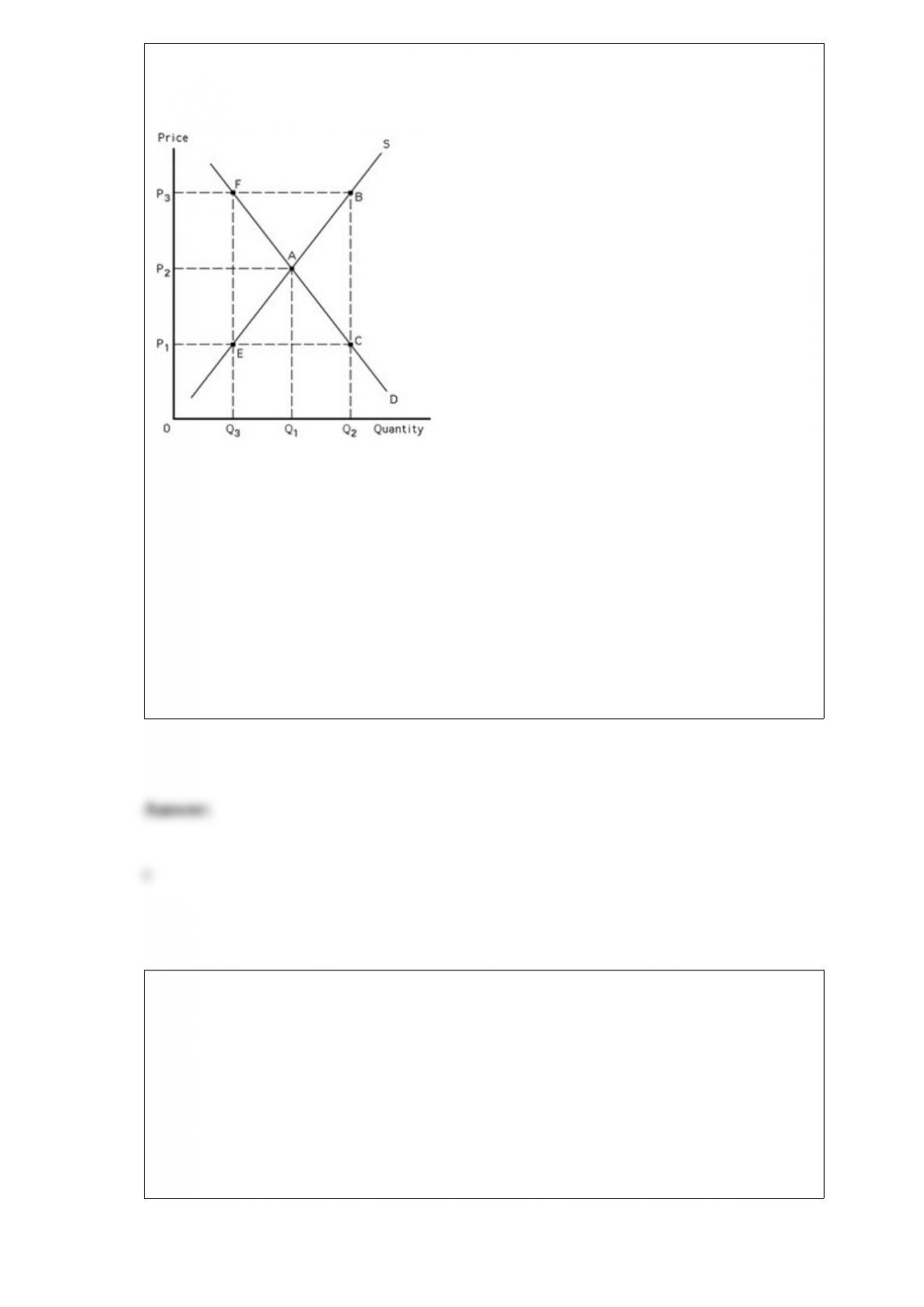
Refer to Exhibit 39-3. If P3 is a price support, the amount sold on private markets is
Exhibit 39-3
a. Q1.
b. Q2.
c. Q3.
d. Q2 – Q3.
e. Q1 – Q3.
The concept that relates how much one variable changes as another variable changes is
a. slope.
b. line.
c. curve.
d. graph.
Which of the following pairs of goods would be most likely to be substitutes?
a. pasta and pasta sauce
b. olive oil and vegetable oil
c. chips and salsa
d. tires and automobiles
e. all of the above
Which of the following statements is false?
a. The monopolistic competitor, like the perfectly competitive firm, is
resource-allocative efficient.
b. The monopolistic competitor produces that quantity of output at which price equals
marginal cost.
c. The monopolistic competitor produces the quantity of output with the lowest per-unit
costs.
d. a, b, and c
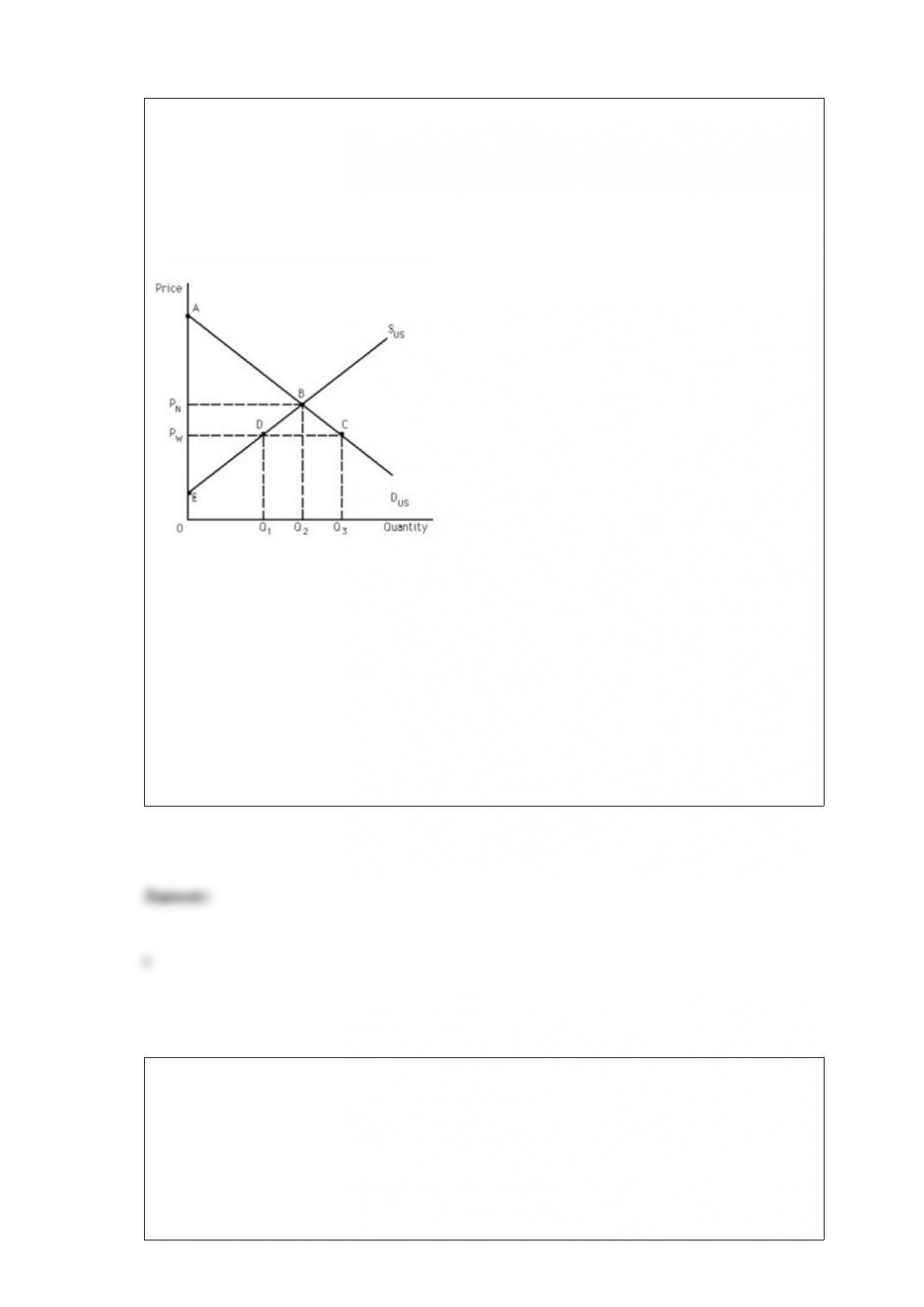
Refer to Exhibit 34-2. The U.S. demand and supply for a good are shown. Under a
policy of free trade, the world price is PW. If there is a policy change such that imports
are prohibited, the price becomes PN, U.S. consumers are worse off if imports are
__________; specifically, their consumers’ surplus changes by area __________.
Exhibit 34-2
a. prohibited; PWABD
b. permitted; PWDE
c. prohibited; PNBCPW
d. permitted; PN BDPW
e. none of the above
The larger the Gini coefficient, the
a. greater the degree of income inequality.
b. greater the degree of income equality.
c. smaller the population.

d. larger the population.
e. b and d
A shortage of kidneys (for transplants) results from
a. the legal price being set below the equilibrium price.
b. the legal price being set above the equilibrium price.
c. a price floor being set in the kidney market at P = $0, assuming the equilibrium price
is greater than $0.
d. a price ceiling being set in the kidney market at P = $0, assuming the equilibrium
price is greater than $0.
e. a and d
The strongest case for government with respect to a negative externality is that
government needs to set the
a. subsidy equal to the marginal private benefits.
b. tax equal to the marginal external costs plus $1.
c. tax slightly below the marginal external costs.
d. tax equal to the marginal external costs.
e. subsidy equal to the marginal social benefits.
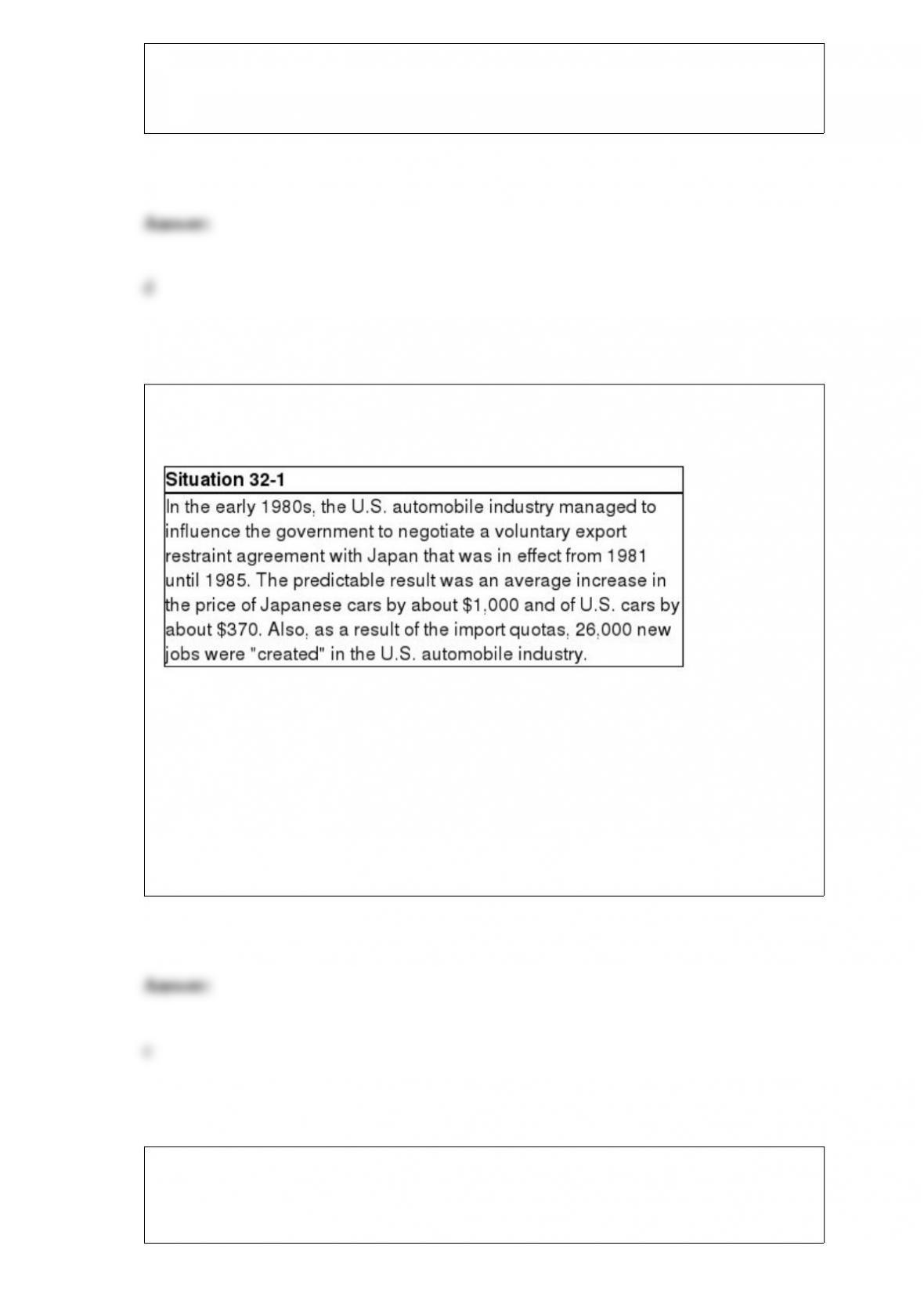
Refer to Situation 32-1. Which of the following arguments is least likely to have been
used by the U.S. auto industry to argue for import quotas?
a. If the quantity of low-priced import cars is not restricted, foreigners will overtake the
U.S. car market.
b. A healthy auto industry is vital to our national security.
c. If import quotas are in place, our profits will increase by about $300 per vehicle.
d. Japan is protecting its market, and so should we; all we want is a level playing field.
Refer to Exhibit 39-1. At the support price of PT, how many units of the good must the
government buy and store?
Exhibit 39-1
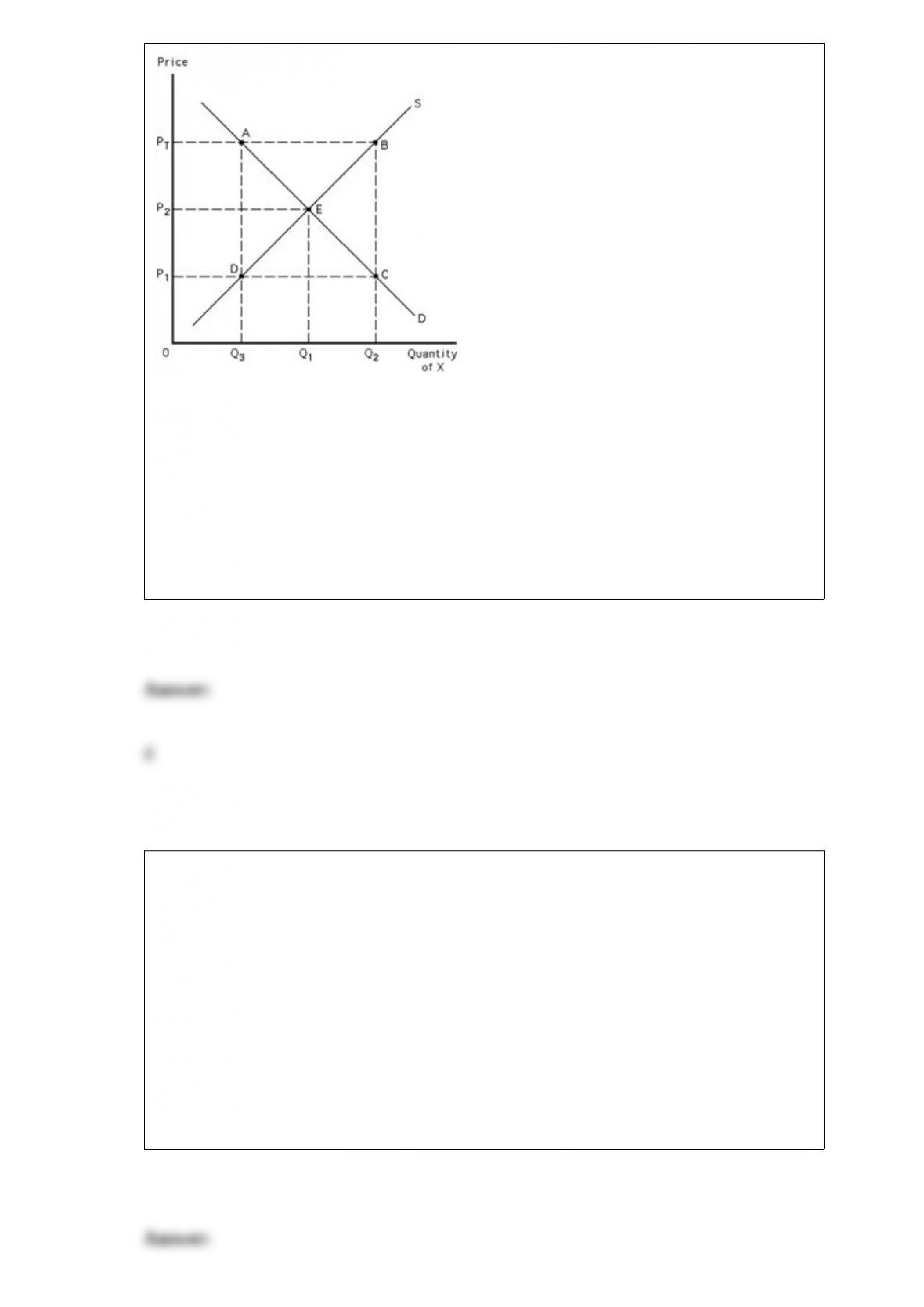
a. Q1
b. Q3
c. Q1 – Q3
d. Q2 – Q3
The law of demand states that price and ______________ are _____________
related,ceteris paribus.
a. demand; inversely
b. quantity demanded; inversely
c. demand; directly
d. quantity demanded; directly
e. quantity supplied; directly
Which of the following situations is descriptive of the existence of a negative
externality.
a. Vernon studies for his biology test late into the night and oversleeps the next
morning, thus missing the test.
b. Nancy is in the library looking for a book. She is talking to herself and consequently
disturbs a few people in the library.
c. Bob learns later that he could have purchased a pair of shoes for less than he paid.
d. Jackie has had the flu and has stayed in bed for a week.
e. none of the above
A price floor is a government-mandated
a. minimum price below which legal trades cannot be made.
b. maximum price above which legal trades cannot be made.
c. minimum price at which all units of the good must be legally sold.
d. minimum price below which legal trades can be made.