One example of an optimal currency area is the states within the United States.
a. True
b. False
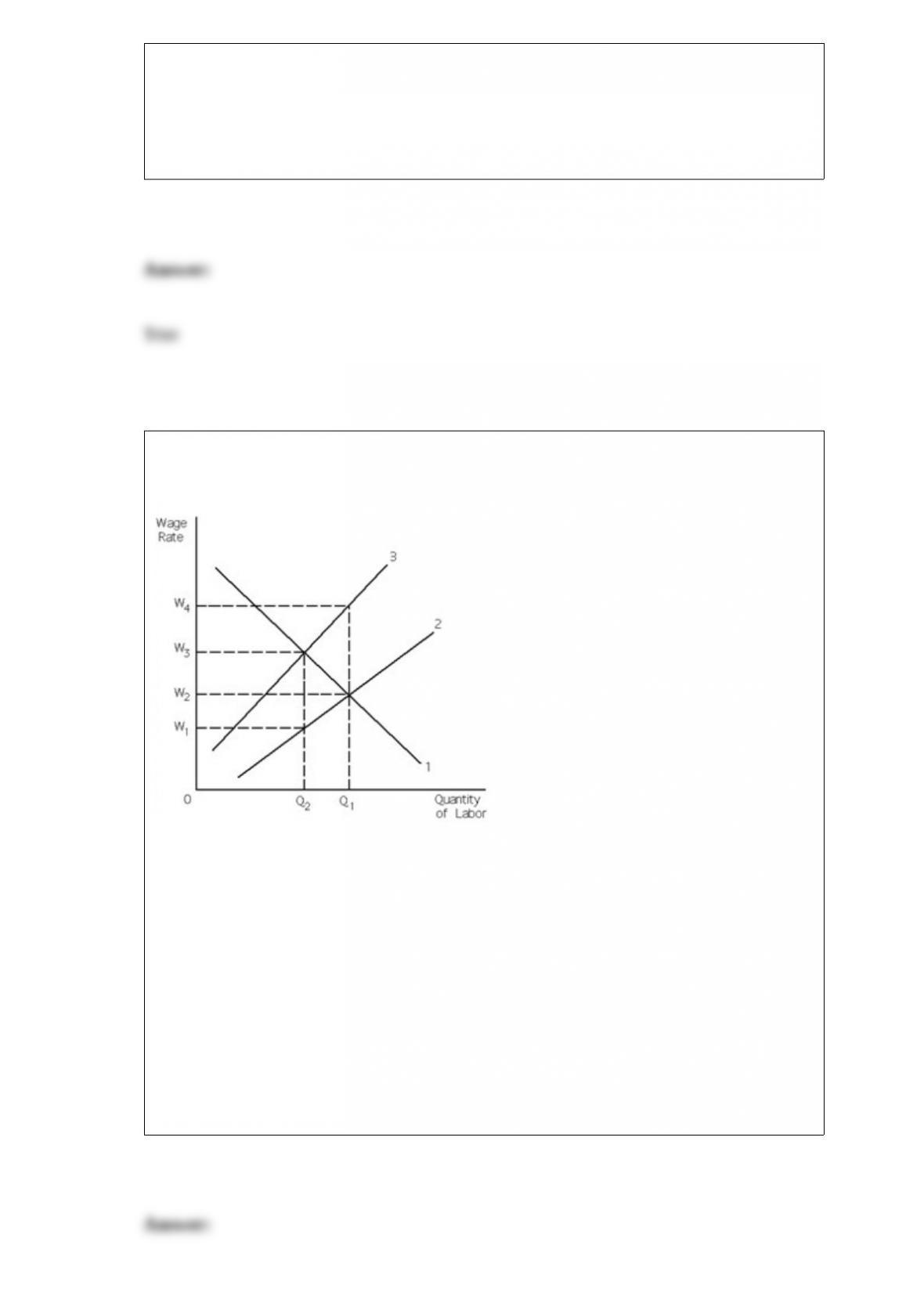
Exhibit 28-10
If the firm in the exhibit is a monopsony, then the curve represented by the number 1 is
its
a. factor supply curve.
b. marginal factor cost curve.
c. marginal revenue product curve.
d. marginal cost curve.
e. average fixed cost curve.

The lower the price of medical care in general, the higher the
____________________________ medical care and the ______________________
specific items that make up medical care (such as x-rays).
a. quantity demanded of; higher the demand for
b. demand for; higher the demand for
c. quantity demanded of; lower the demand for
d. demand for; higher the quantity demanded of
Suppose you are eating buffalo wings at a local happy hour. The total utils from doing
so after the fourth, fifth, sixth, and seventh wings are 80, 116, 136, 150, respectively.
The marginal utility of the sixth wing is __________ utils.
a. 14
b. 136
c. 20
d. 22.7
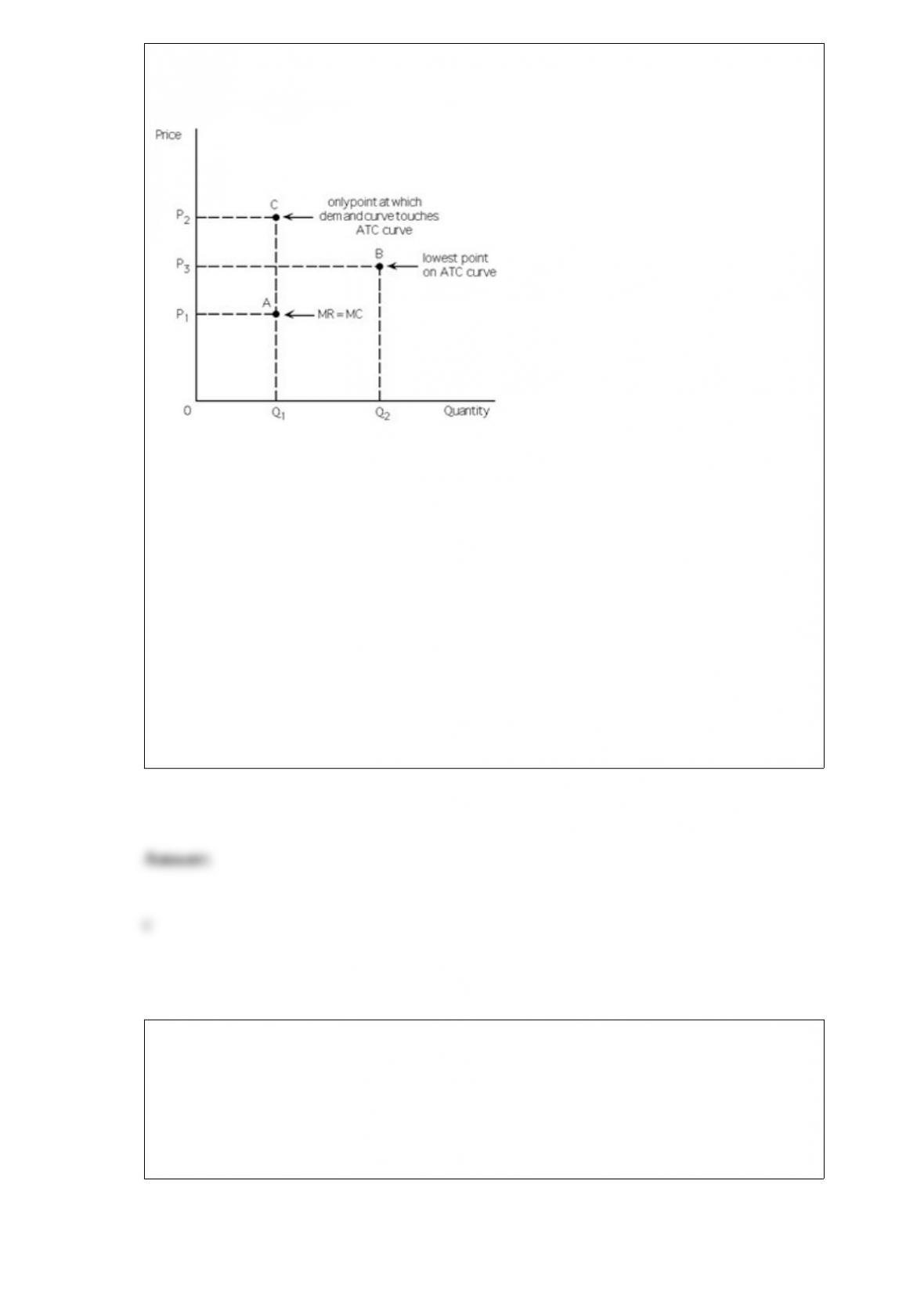
Exhibit 25-6
The monopolistic competitor is producing __________ quantity of output and charging
a price of __________.
a. Q1; P3
b. Q2; P3
c. Q1; P2
d. Q1; P1
e. Q2; P1
The national defense argumenthas been used in the past to justify trade restrictions by
firms in the peanut industry and the pottery industry.
a. True
b. False
The coupon rate is equal to the annual coupon payment
a. divided by the face value of the bond.
b. divided by the price paid for the bond.
c. multiplied by the price paid for the bond.
d. divided by the current market value of the bond.
Exhibit 20-9
What is the price elasticity of supply between $4 and $6?
a. 0.825
b. 0.833
c. 1.25
d. 1.20
Microeconomics is the branch of economics that deals with
a. highly aggregated markets or the entire economy.
b. the production side of the economy, exclusively.
c. the buying side of the economy, exclusively.
d. human behavior and choices as they relate to relatively small units — an individual, a
firm, an industry.
Which of the following statements is true?
a. If a consumer is in equilibrium, it does not necessarily follow that he or she is also
achieving the greatest total utility.
b. If a consumer is in equilibrium, it necessarily follows that he or she is also achieving
the greatest total utility.
c. If a consumer is attaining the greatest marginal utility, then it necessarily follows that
he or she is also achieving the greatest total utility.
d. If a consumer is attaining the greatest total utility, then it necessarily follows that he

or she is also achieving the greatest marginal utility.
A good provides __________ and a bad provides __________.
a. utility; satisfaction
b. disutility; utility
c. dissatisfaction; satisfaction
d. utility; disutility
e. satisfaction; utility