
If there are strong economies of scale and scope, then society
a. will not be able to prevent overt collusion.
b. will benefit from establishing a cartel.
c. cannot benefit from regulation of a natural monopoly.
d. will not be able to preserve free competition.
In utilizing unconventional monetary policy in 2009, the Federal Reserve purchased
a. real estate worth more than $2 trillion.
b. $800 billion in Treasury bills.
c. over $1 trillion in mortgage backed securities.
d. $600 billion in long-term Treasury bonds.
A natural monopoly is characterized by the fact that its average costs increase rather
than decrease when its output expands.
a. True
b. False

Why did the Bretton Woods system ultimately break down?
a. The refusal of OPEC countries to accept payment for oil in gold.
b. The refusal of surplus countries to devalue as required by law.
c. An inability to devalue the U.S. dollar despite chronic payments deficits.
d. An inability to adequately measure balance of payments surpluses and deficits.
When the price of penicillin tablets increases by $5 per dozen, the drug company’s
revenue increases by $6 million. Its elasticity of demand (in absolute terms) must be
a. zero.
b. greater than one.
c. less than one.
d. infinitely large.
The supply-side policies of the Reagan and Bush administrations led to high levels of
a. budget surpluses.
b. unemployment.
c. inflation.
d. budget deficits.
Define the following terms:
a. Recession
b. Mixed economy
c. Transfer payments
d. Progressive taxation

In most industries, deregulation has led to lower prices.
a. True
b. False
The production possibilities curve illustrates the basic principle that
a. an economy’s capacity to produce increases in proportion to its population.
b. if all resources of an economy are in use, more of one good can be produced only if
less of another is produced.
c. an economy will automatically seek that output at which all of its resources are
employed.
d. no opportunity cost exists in production.
America’s prosperity and economic growth is secure for the foreseeable future.
a. True

b. False
Unemployment rates in the U.S. are generally:
a. higher than in Europe
b. lower than in Europe
c. about the same asin Europe
d. there are no unemployed in Europe
The United States has relatively low tariffs.
a. True
b. False
Cannon Mills used to be virtually the only employer in Kannapolis, North Carolina.
What is the name for a single hirer of labor, and how do wages and the number of jobs
available compare to a competitive labor market?
Gross Domestic Product accurately measures the environmental costs of producing all
goods and services.
a. True
b. False
The excess burden of an excise tax is
a. greater the more inelastic the supply curve.
b. greater the more elastic the demand curve.
c. smaller the more elastic the supply curve.

d. greater the more inelastic the demand curve.
Which principle states that as the production of one good expands, the opportunity cost
of producing another unit of this good generally increases?
a. Principle of total cost
b. Principle of increasing cost
c. Principle of opportunity cost
d. Principle of increasing marginal utility
According to Baumol and Blinder, the real-world multiplier will be smaller than 1/(1 −
MPC) because the 1/(1 − MPC) measure is based on
a. a model that ignores inflation associated with the expansion of income.
b. a model that ignores taxes that tend to change as income changes.
c. a model that ignores the effects of international trade.
d. all of the above.
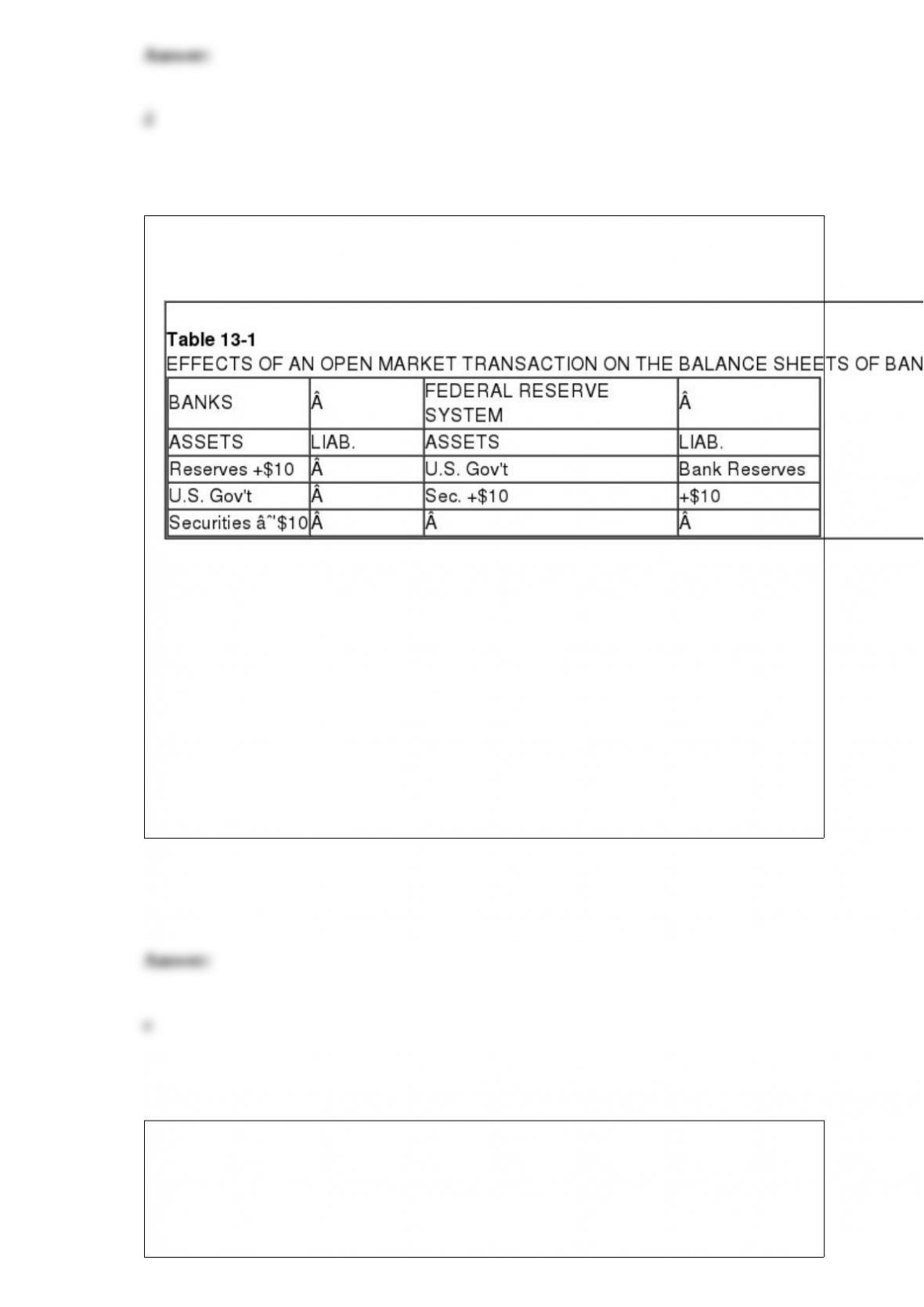
In Table 13-1, if the required reserve ratio is 10 percent, what will happen to the money
supply? Use the oversimplified money multiplier in your calculations.
a. The money supply will decrease by $100 million.
b. The money supply will decrease by $10 million.
c. The money supply will not change.
d. The money supply will increase by $10 million.
e. The money supply will increase by $100 million.
A recent study on enrollment at a liberal arts college concluded that demand elasticity is
0.91. The administration is considering a tuition increase to help balance the budget.
The revenue-maximizing decision is to
a. decrease tuition, which should boost enrollment enough to balance the budget.

b. decrease tuition, which would bring in more revenue.
c. leave tuition as is-an increase would not help balance the budget.
d. increase tuition, which would bring in more revenue.
Entrepreneurial profits are very low because entrepreneurs are generally
a. overly pessimistic and receive psychological rewards for their work.
b. overly pessimistic and incur psychological costs from their work.
c. overly optimistic and receive psychological rewards for their work.
d. overly optimistic and incur psychological costs from their work.
Figure 10-4
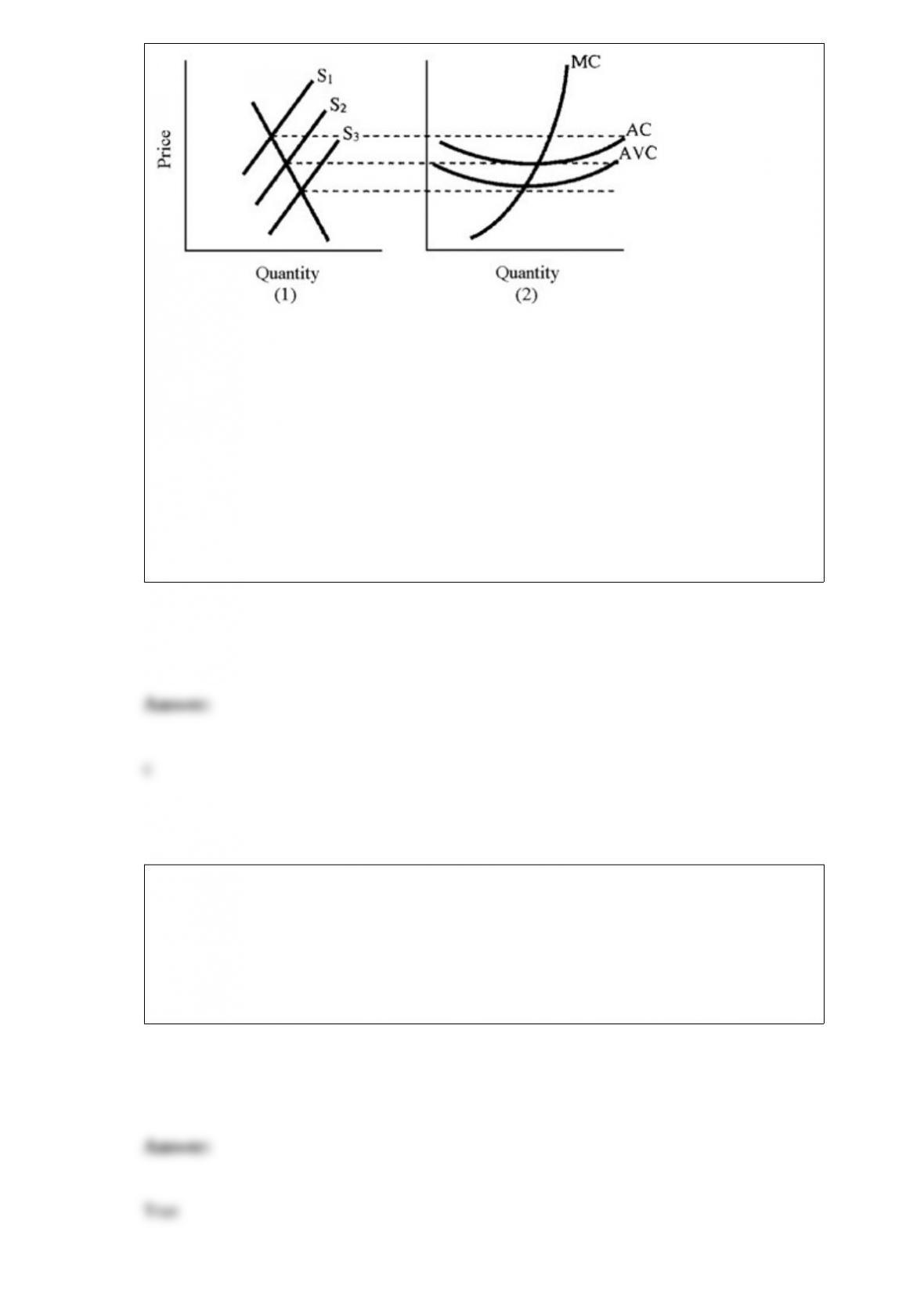
Figure 10-4 shows the industry’s supply and demand curves in panel (1) and the cost
curves of a firm in the industry in panel (2). At S2, the firm is
a. going to shut down.
b. incurring losses.
c. earning zero economic profits.
d. earning economic profit greater than zero.
An oligopoly can be characterized by production of either identical goods or different
goods.
a. True
b. False
The substantial fluctuations in velocity make the equation of exchange more useful in
predicting changes in nominal GDP.
a. True
b. False
If all countries produce the goods for which they have comparative advantages, all
countries benefit with the increased production of goods with no additional resources
being used.
a. True
b. False
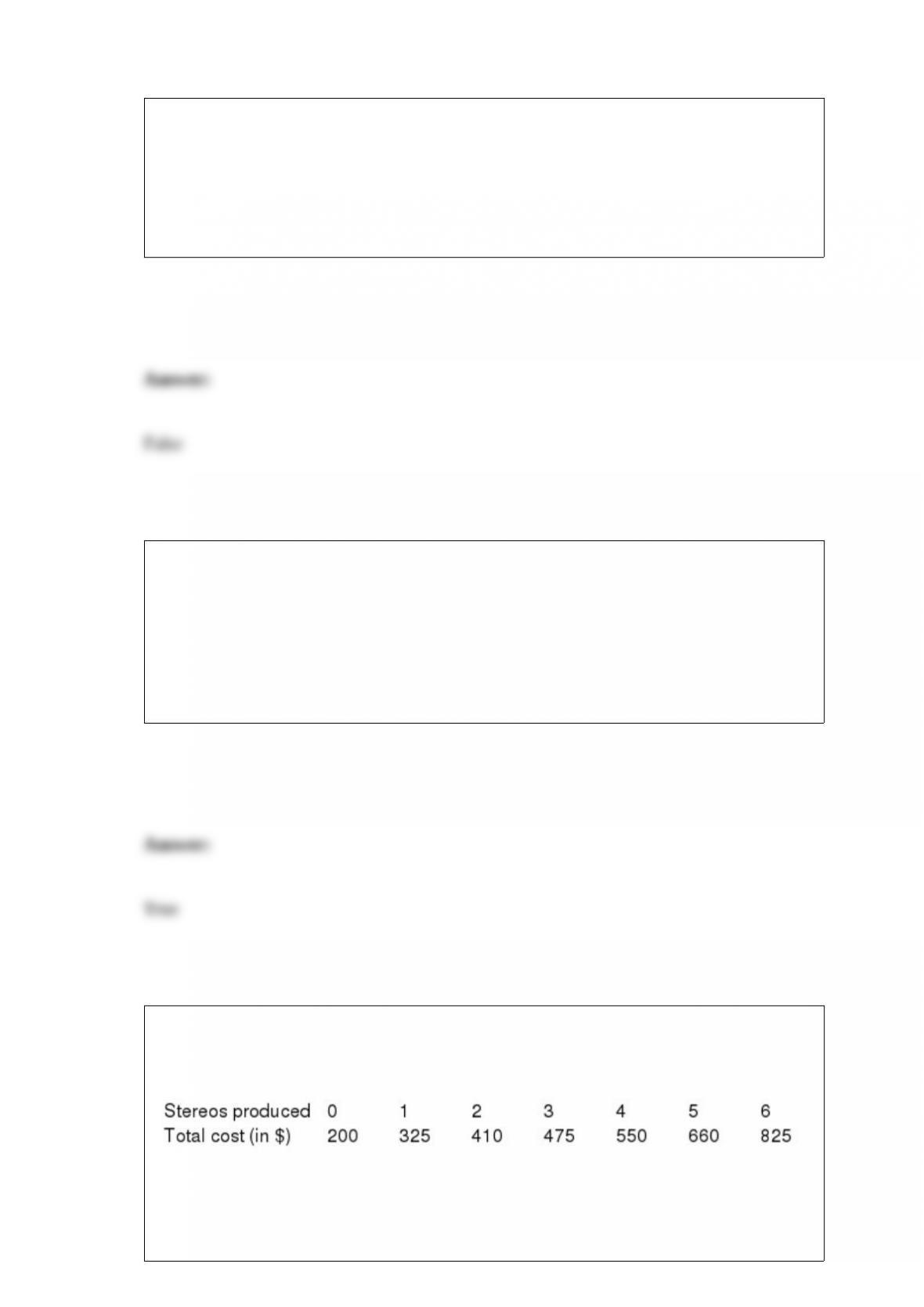
Table 7-5
Table 7-5 shows short-run total cost figures for a stereo manufacturer. The short-run
average variable cost of producing five stereos is
a. $92.
b. $110.
c. $132.
d. $460.
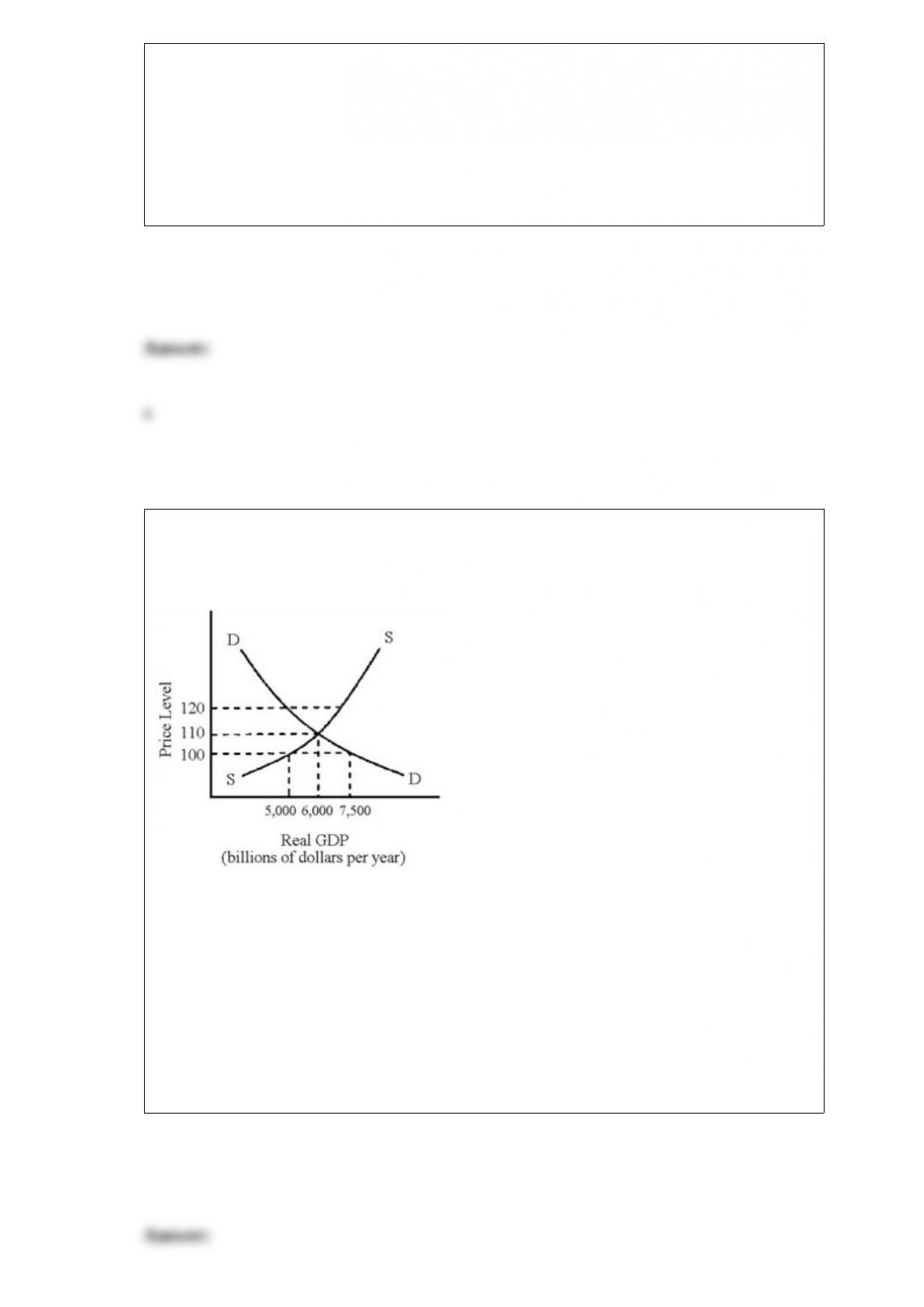
Figure 10-1
If the price level in Figure 10-1 were 110,
a. inventories would be accumulating.
b. firms would have to lower their prices.
c. aggregate quantity demanded would equal aggregate quantity supplied.
d. shortages of goods would exist.

In a free-market economy, prices coordinate society’s decisions about
a. how and for whom to produce.
b. what, how, and for whom to produce.
c. how and for whom to produce but not how much to produce.
d. how much and for whom to produce but not how to produce.
The budget line and the indifference curve are geometric devices used to provide a
closer look at consumer choice.
a. True
b. False
Figure 19-3
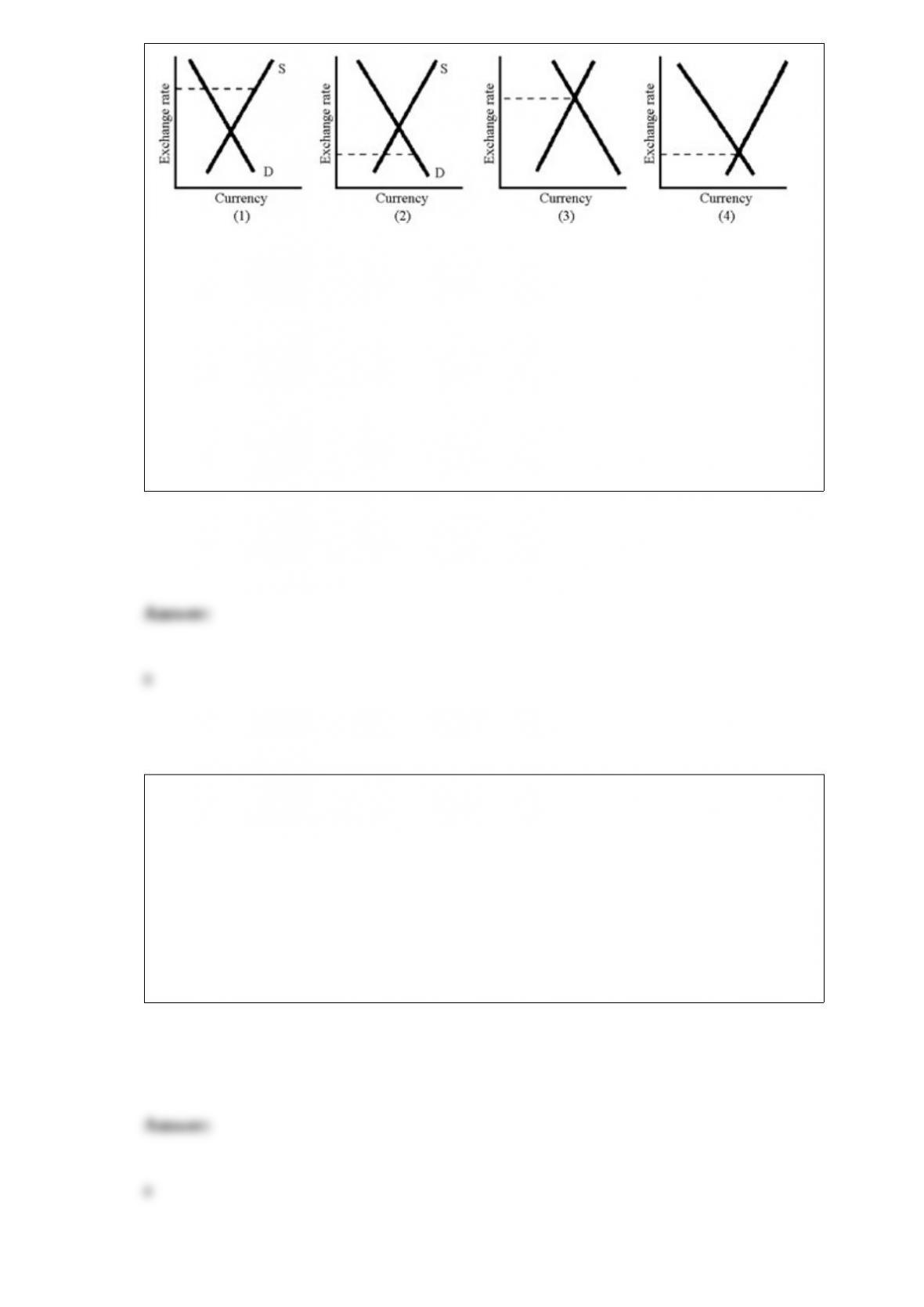
Of the graphs in Figure 19-3, where the dotted line shows the actual exchange rate,
which one shows a country with an overvalued currency and a balance of trade deficit?
a. 1
b. 2
c. 3
d. 4
If total spending is less than the value of total output, firms
a. may decide to cut prices.
b. may increase production levels.
c. will tend to raise prices.
d. will notice inventories falling.

Monopolistic competition is a market structure characterized by many small firms
selling a homogeneous product.
a. True
b. False
Many economists believe that if fiscal policy turns contractionary to reduce the deficit,
a. monetary policy can turn expansionary to counteract the effects on aggregate
demand.
b. monetary policy must be contractionary to reinforce the good effects of
contractionary fiscal policy.
c. foreign investment in the United States must be encouraged.
d. taxes on the earnings from stock market gains should be increased.
The Fed can drive up interest rates by selling government securities and decreasing the
money supply.
a. True
b. False