1)
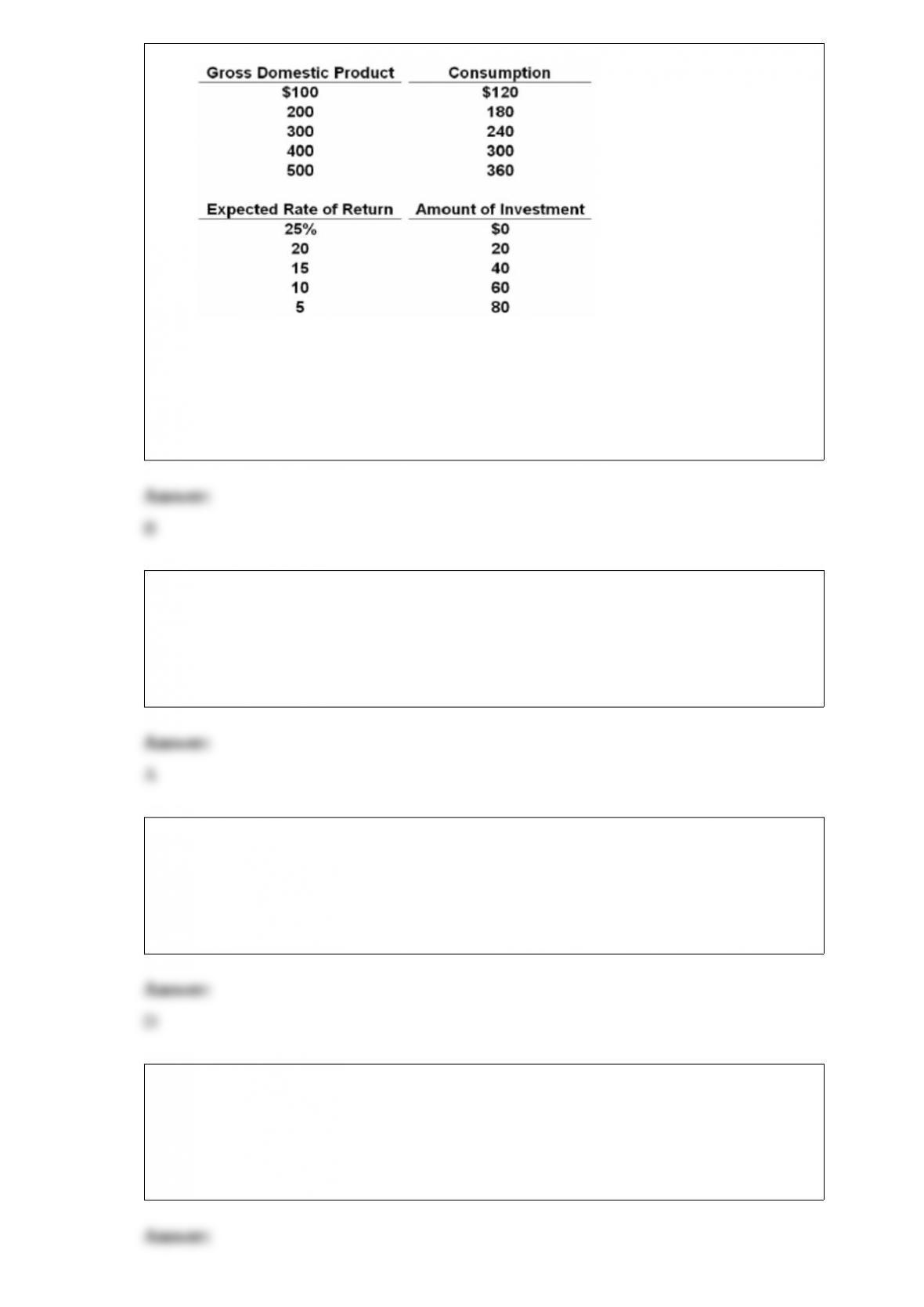
Refer to the above information. The multiplier for this economy is:
A.2.
B.2.5.
C.3.
D.4.
2) Productivity measures:
A.real output per unit of input.
B.per unit production costs.
C.the changes in real wealth caused by price level changes.
D.the amount of capital goods used per worker.
3) (Consider This) The U.S. government’s ethanol program:
A.imposed tariffs on imported ethanol.
B.provided subsidies to oil refineries to purchase ethanol.
C.mandated that U.S. industries increase their use of alternative fuels.
D.included all of these features.
4) ticket scalping refers to:
a.the surplus of tickets that occurs when price is set below equilibrium.
b.the shortage of tickets that occurs when price is set above equilibrium.
c.pricing tickets so high that an athletic or artistic event will not be sold out.
d.reselling a ticket at a price above its original purchase price.
5) susie lives in a dorm and likes to play loud music in her room. her neighbor kara
enjoys the same type of music and gets pleasure from susie turning up the music. her
other neighbor, alex, can’t stand susie’s music and gets mad when she turns it up for all
to hear. when susie plays her music loudly, she creates:
a.a positive externality for kara, and a negative externality for alex.
b.a negative externality for kara, and a positive externality for alex.
c.positive externalities for both kara and alex.
d.negative externalities for both kara and alex.
6) An increase in the money supply will:
A.lower interest rates and lower the equilibrium GDP.
B.lower interest rates and increase the equilibrium GDP.
C.increase interest rates and increase the equilibrium GDP.
D.increase interest rates and lower the equilibrium GDP.
7)
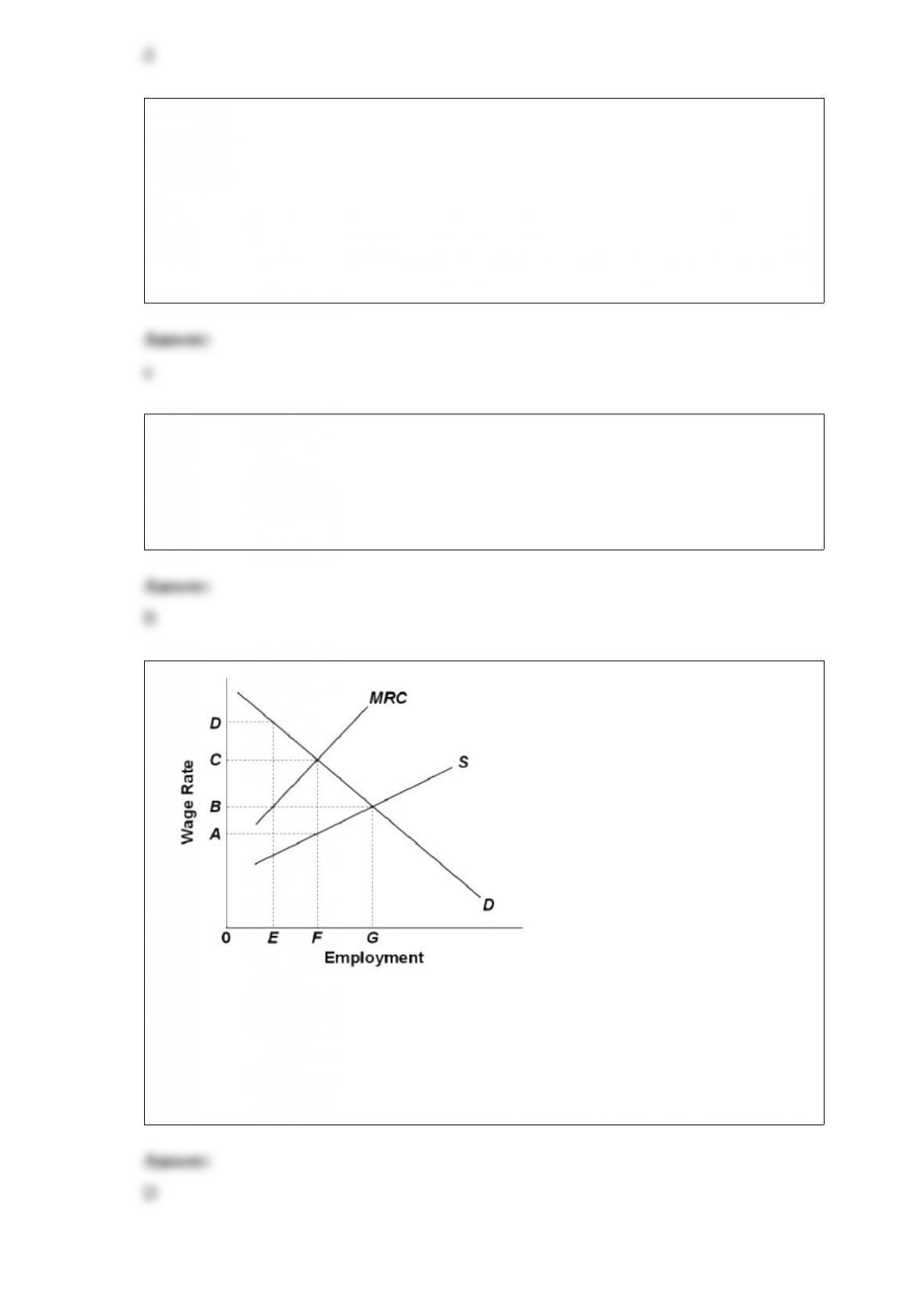
Refer to the above diagram. If an inclusive union seeks to maximize the number of jobs
available for its members, what wage rate will it seek to impose on the monopsonist?
A.D minus A
B.F
C.C
D.B
8) A nation’s official reserves:
A.compensates for differences in the current and capital and financial accounts.
B.consist of all domestic and foreign currency held by a nation’s central bank.
C.is always zero.
D.is always negative.
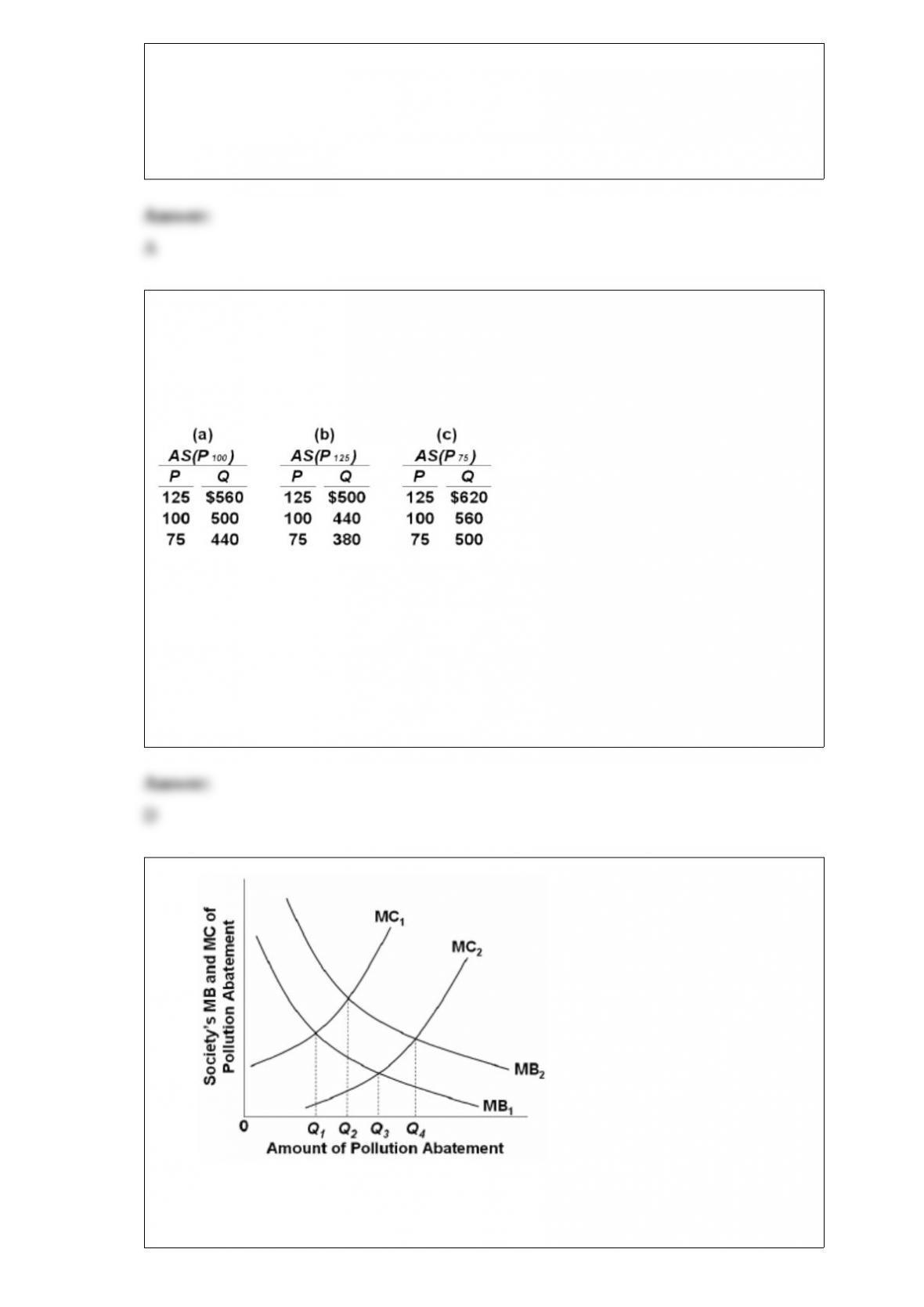
9) Suppose the full employment level of real output (Q) for a hypothetical economy is
$500, the price level (P) initially is 100, and that prices and wages are flexible both
upward and downward. Use the following short-run aggregate supply schedules to
answer the next question(s).
Refer to the information above. In the long run, an increase in the price level from 100
to 125 will:
A.increase real output from $500 to $560.
B.decrease real output from $500 to $440.
C.change the aggregate supply schedule from (a) to (c) and result in an equilibrium
level of real output of $560.
D.change the aggregate supply schedule from (a) to (b) and result in an equilibrium
level of real output of $500.
10)
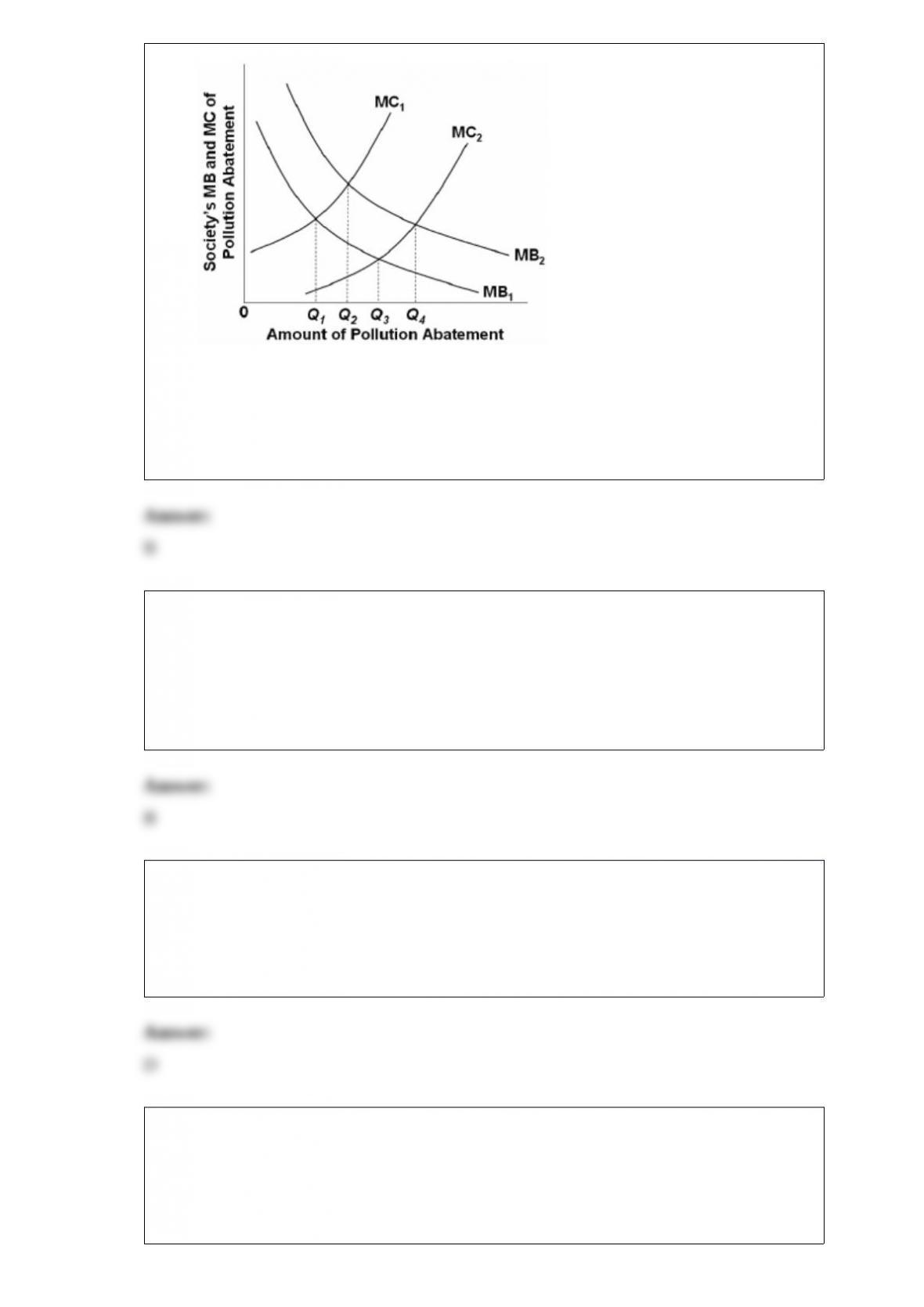
Refer to the above diagram. From society’s perspective, if MB1 and MC2 are relevant:
A.Q2 represents too little pollution abatement.
B.Q1 represents too much pollution abatement.
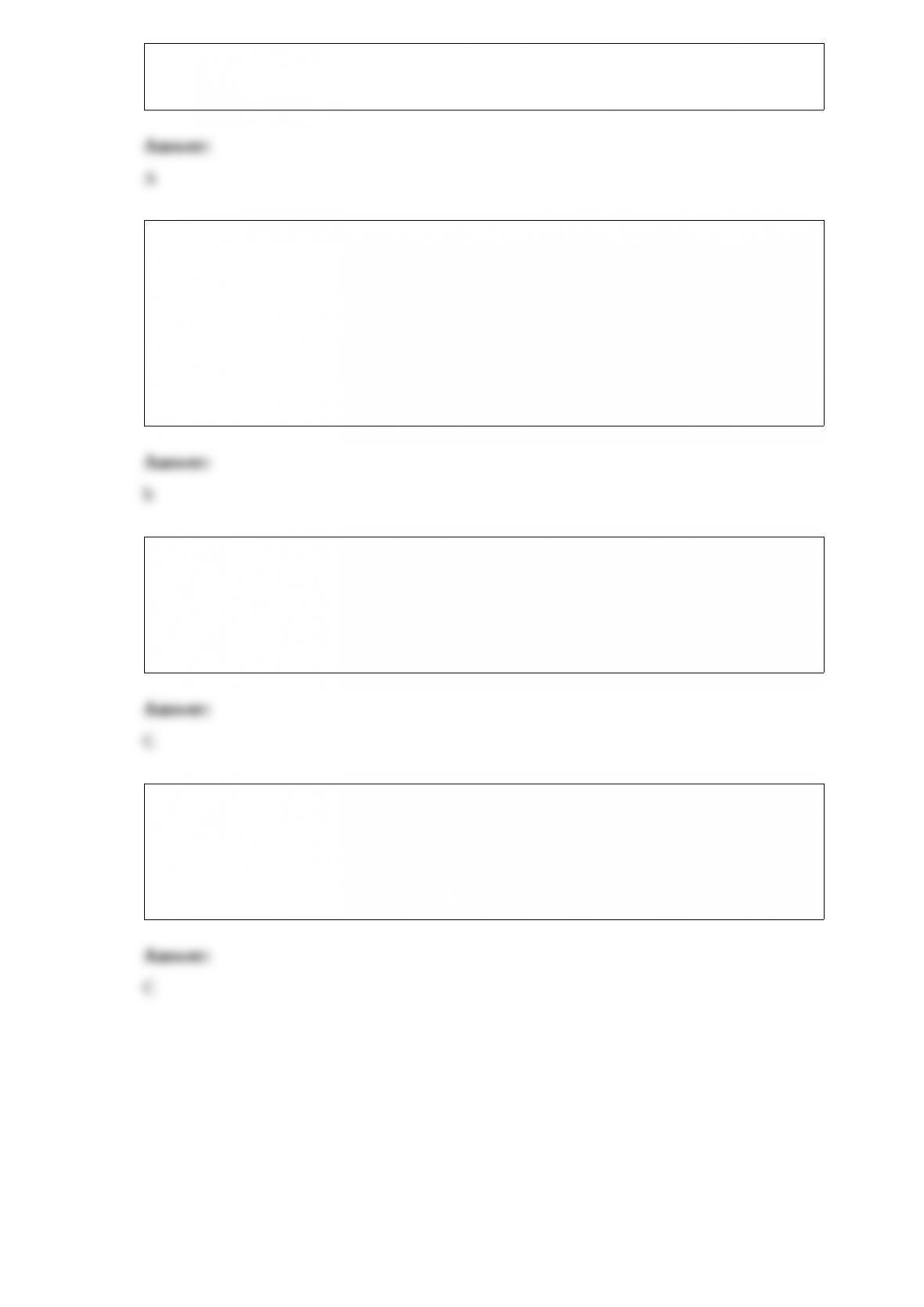
C.Q2 represents an optimal amount of pollution abatement.
D.Q4 represents too little pollution abatement.
11) a pure monopolist should never produce in the:
a.elastic segment of its demand curve because it can increase total revenue and reduce
total cost by lowering price.
b.inelastic segment of its demand curve because it can increase total revenue and reduce
total cost by increasing price.
c.inelastic segment of its demand curve because it can always increase total revenue by
more than it increases total cost by reducing price.
d.segment of its demand curve where the price elasticity coefficient is greater than one.
12) Which of the following would reduce the money supply?
A.Commercial banks use excess reserves to buy government bonds from the public.
B.Commercial banks loan out excess reserves.
C.Commercial banks sell government bonds to the public.
D.A check clears from Bank A to Bank B.
13) The largest component of the money supply (M1) is:
A.gold certificates.
B.checkable deposits.
C.currency in circulation.
D.travelers’ checks.
14)
Refer to the above diagram. From society’s perspective, if MB2 and MC1 are relevant:
A.Q4 represents too little pollution abatement.
B.Q1 represents too little pollution abatement.
C.Q3 represents an optimal amount of pollution abatement.
D.Q2 represents too little pollution abatement.
15) An efficiency wage is:
A.a below-market wage.
B.an above-market wage.
C.a “wage” that contains a profit-sharing component.
D.a wage that is free to rise or fall from day to day, depending on labor supply and
demand.
16) As used in strategic trade policy, tariffs are a variation of the:
A.military self-sufficiency argument for tariffs.
B.increased-domestic-employment argument for tariffs.
C.diversification-for-stability argument for tariffs.
D.infant-industry argument for tariffs.
17) Suppose laid off workers and other qualified unemployed workers offer to work for
less than the wages being paid existing employed workers, but employers do not hire
these workers for fear that existing workers will refuse to cooperate with them. This
situation best describes the:
A.efficiency wage theory.
B.theory of compensating wage differentials.
C.insider-outsider theory.
D.rational expectations theory.
18)
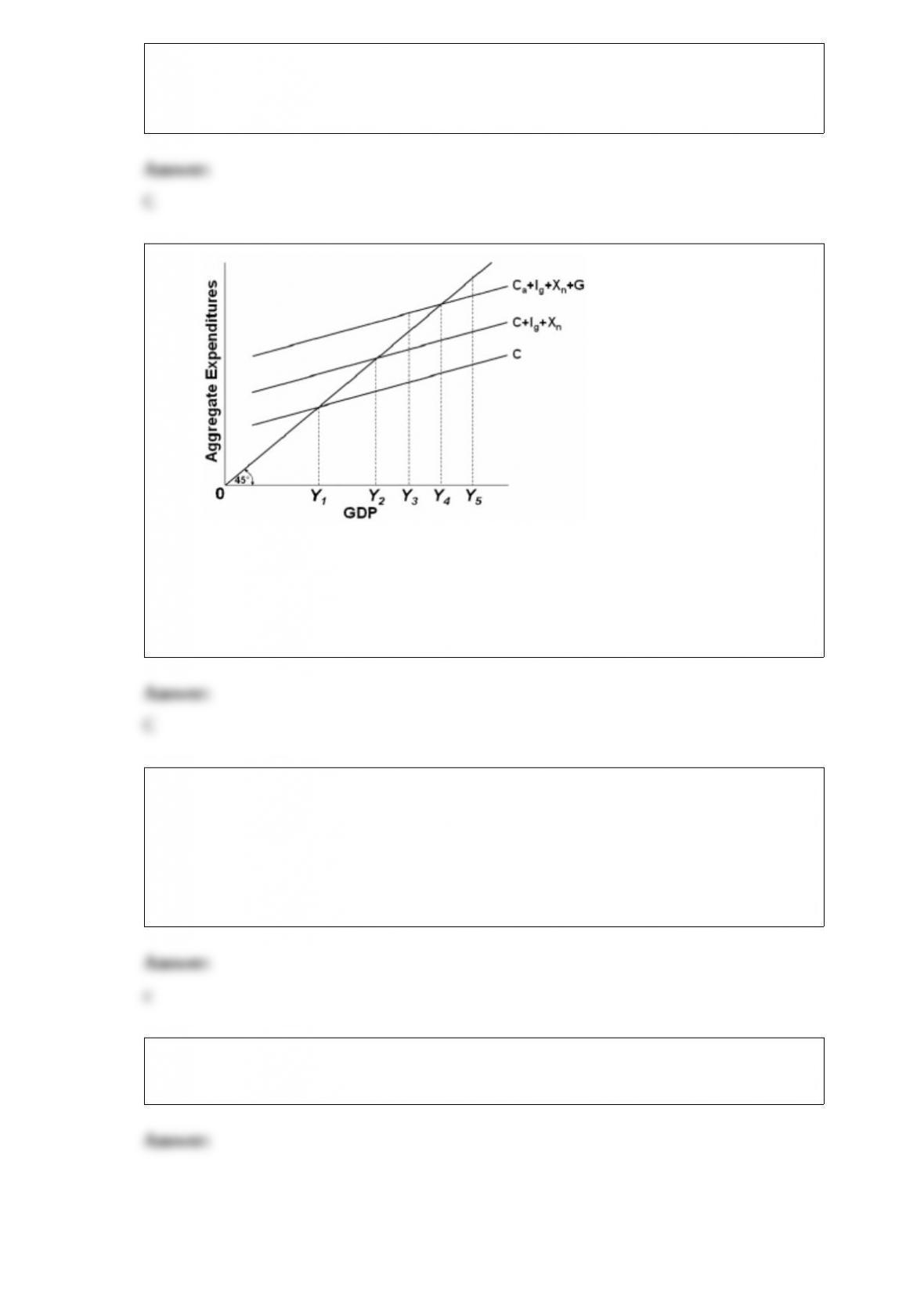
Refer to the above diagram. If the full-employment GDP is Y5, government should:
A.incur neither a deficit nor a surplus.
B.cut taxes and government spending by equal amounts.
C.reduce taxes and increase government spending.
D.increase taxes and reduce government spending.
19) jennifer buys a piece of costume jewelry for $33 for which she was willing to pay
$42. the minimum acceptable price to the seller, nathan, was $30. jennifer experiences:
a.a consumer surplus of $12 and nathan experiences a producer surplus of $3.
b.a producer surplus of $9 and nathan experiences a consumer surplus of $3.
c.a consumer surplus of $9 and nathan experiences a producer surplus of $3.
d.a producer surplus of $9 and nathan experiences a producer surplus of $12.
20) Draw a graph that illustrates X-inefficiency. Explain the concept of X-inefficiency
using the graph.
21) Explain the five problems, criticisms, or complications that arise in the
implementation of fiscal policy.
22) What are the likely trends for the demand for and the supply of resources in the
future?
23) If nominal GDP is $1344 billion, and velocity of money is 6, how much is the
money supply? If the GDP price index is 160, what is real GDP here?
24) Why is money not an economic resource? If it is not productive, then why do
businesses want to obtain or buy it?
25) Give three different examples of rent-seeking behavior.
26) Why has the natural rate of unemployment (NRU) declined since the 1980s?
27) How do supply-side economists see reducing taxes as a way to improve
productivity?