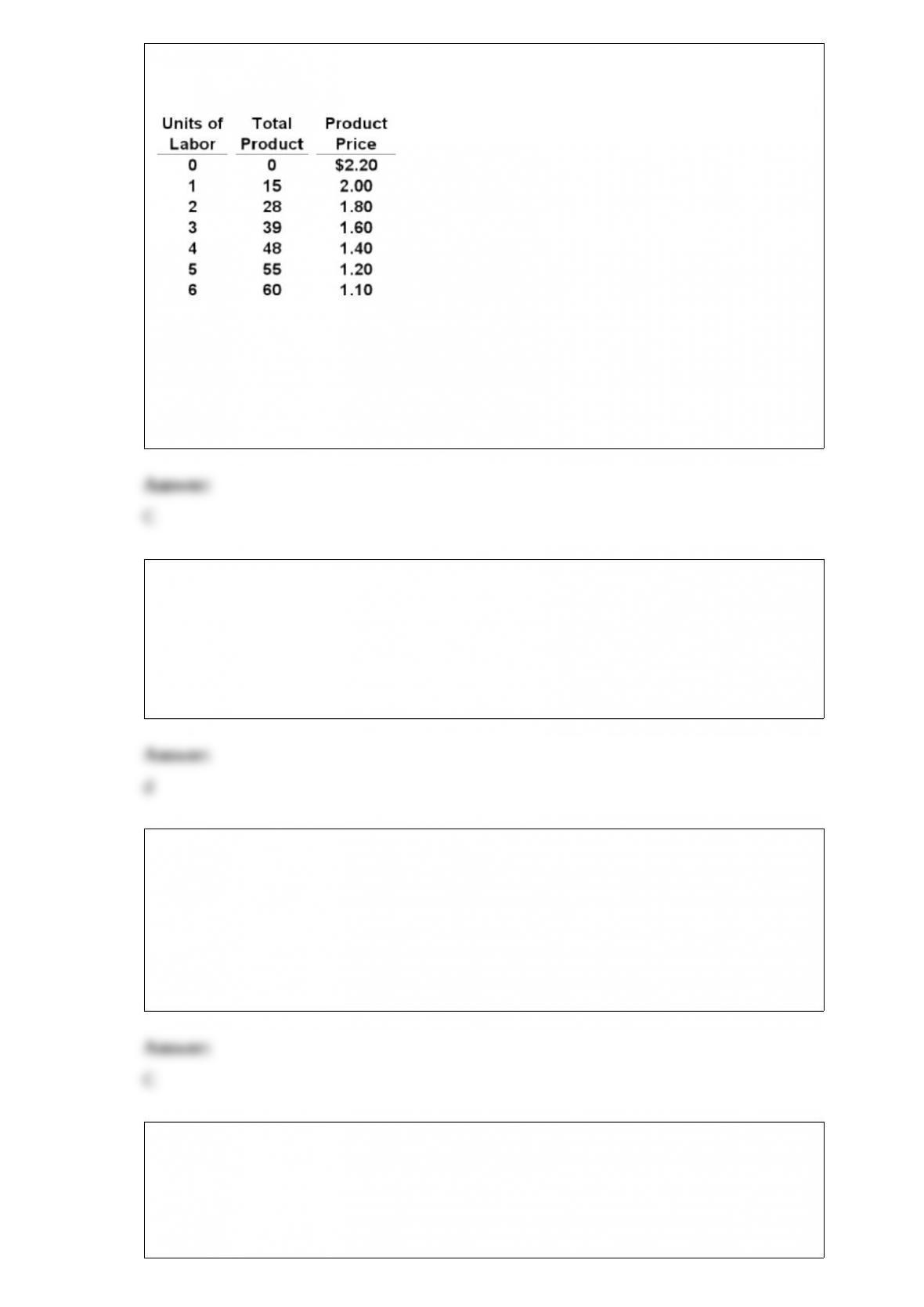
1) Assume that the firm is hiring labor in a purely competitive market.
Refer to the above data. If the wage rate is $11, how many workers will the firm choose
to employ?
A.5
B.4
C.3
D.2
2) a college graduate using the summer following graduation to search for a job would
best be classified as:
a.not officially a member of the labor force.
b.a part of structural unemployment.
c.a part of cyclical unemployment.
d.a part of frictional unemployment.
3) An implication of the taste-for-discrimination model is that:
A.discrimination can lower a firm’s production costs.
B.discrimination will move a firm along its declining average total cost curve.
C.other things equal, nondiscriminating firms will have lower production costs than
discriminating firms.
D.other things equal, discriminating firms will have lower production costs than
nondiscriminating firms.
4) Electronic money is:
A.closely associated with smart cards.
B.issued in real terms so that it is immune from the effects of inflation.
C.the money dispensed by automatic teller machines (ATMs).
D.also called share-draft money.
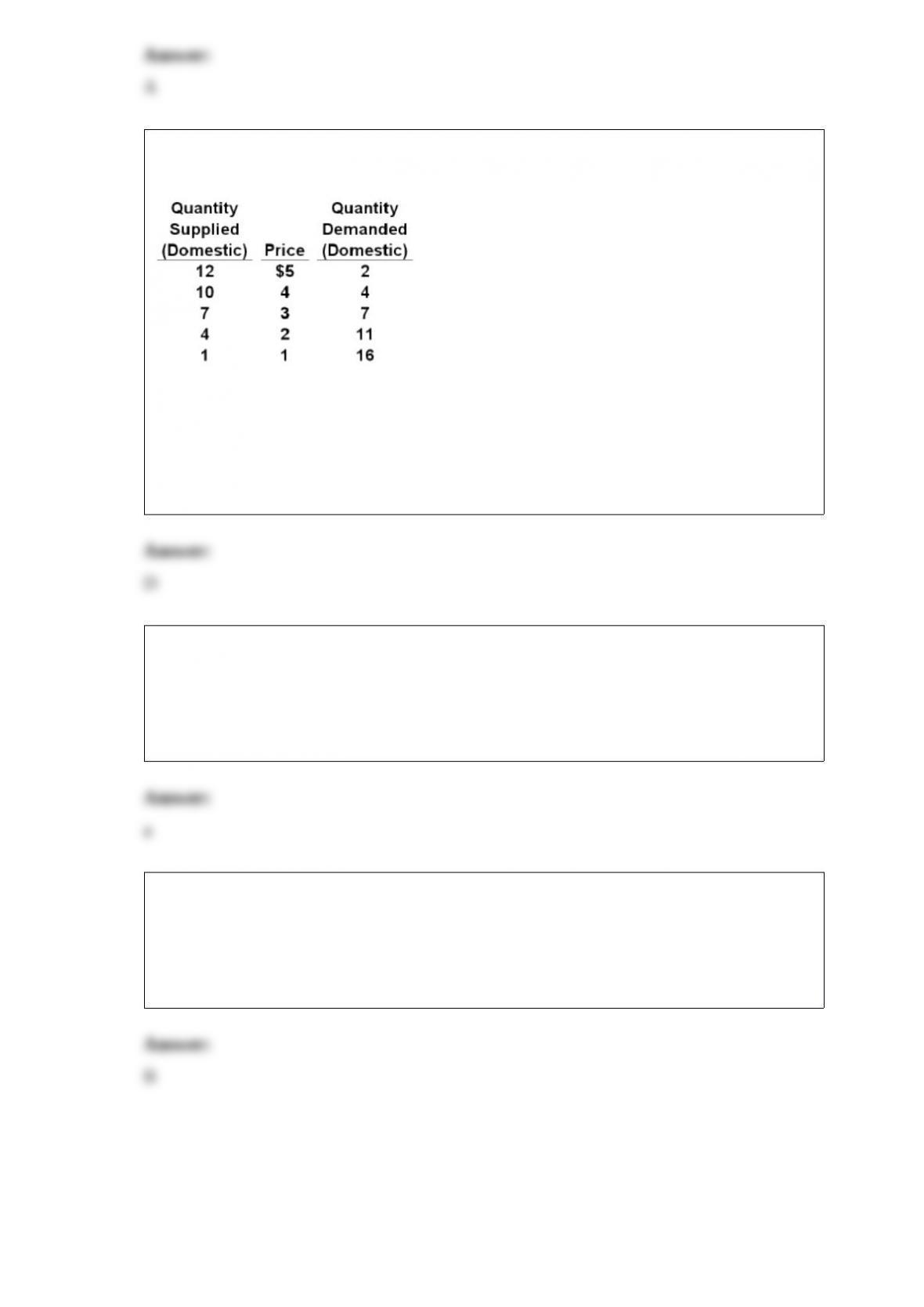
5) The following domestic supply and demand schedules for a product. Suppose that the
world price of the product is $1.
Refer to the above data. If this nation were entirely closed to international trade,
equilibrium price and quantity would be:
A.$5 and 2 units.
B.$1 and 1 unit.
C.$4 and 4 units.
D.$3 and 7 units.
6) the nondiscriminating monopolist’s demand curve:
a.is less elastic than a purely competitive firm’s demand curve.
b.is perfectly elastic.
c.coincides with its marginal revenue curve.
d.is perfectly inelastic.
7) Which of the following taxes is least likely to be shifted?
A.a state excise tax on the sellers of football tickets
B.a personal income tax
C.a general sales tax on retailers who sell foodstuffs and clothing
D.a Federal excise tax on the producers of whiskey
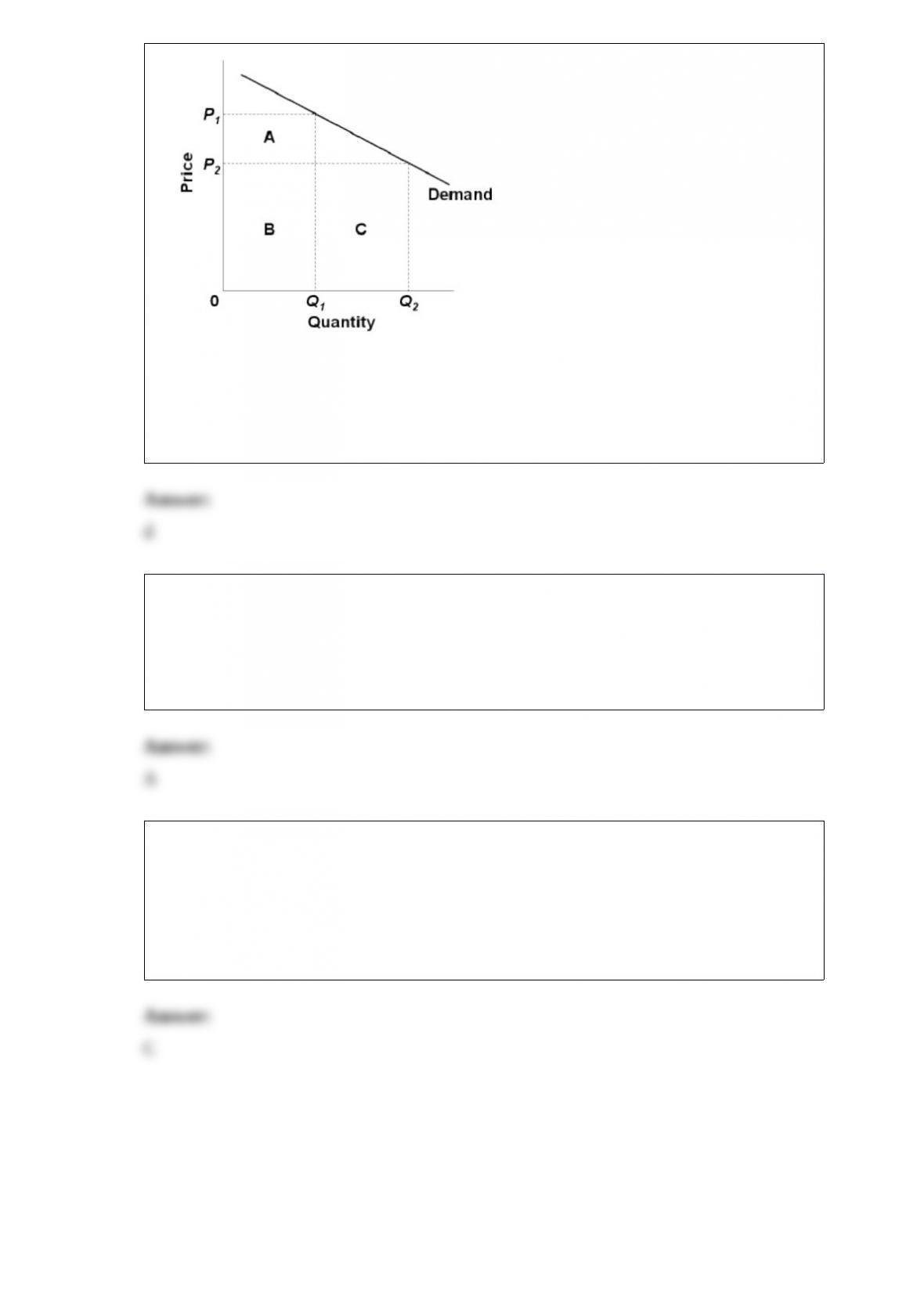
8)
the above diagram implies that whenever a firm’s demand curve is downsloping:
a.price discrimination is not possible.
b.monopolists will be more efficient than competitors.
c.the demand and marginal revenue curves will coincide.
d.marginal revenue is less than price.
9) If unintended increases in business inventories occur, we can expect:
A.a decline in GDP and rising unemployment.
B.inflation.
C.an increase in consumption.
D.an offsetting increase in planned investment.
10) For an employer biased against African-Americans, the discrimination coefficient d:
A.will decrease if the employer becomes more prejudiced against African-Americans.
B.must equal the actual ratio of African-American to white wage rates.
C.measures the amount an employer is willing to pay to hire a white rather than a
African-American worker.
D.varies inversely with the actual African-American-white wage ratio.
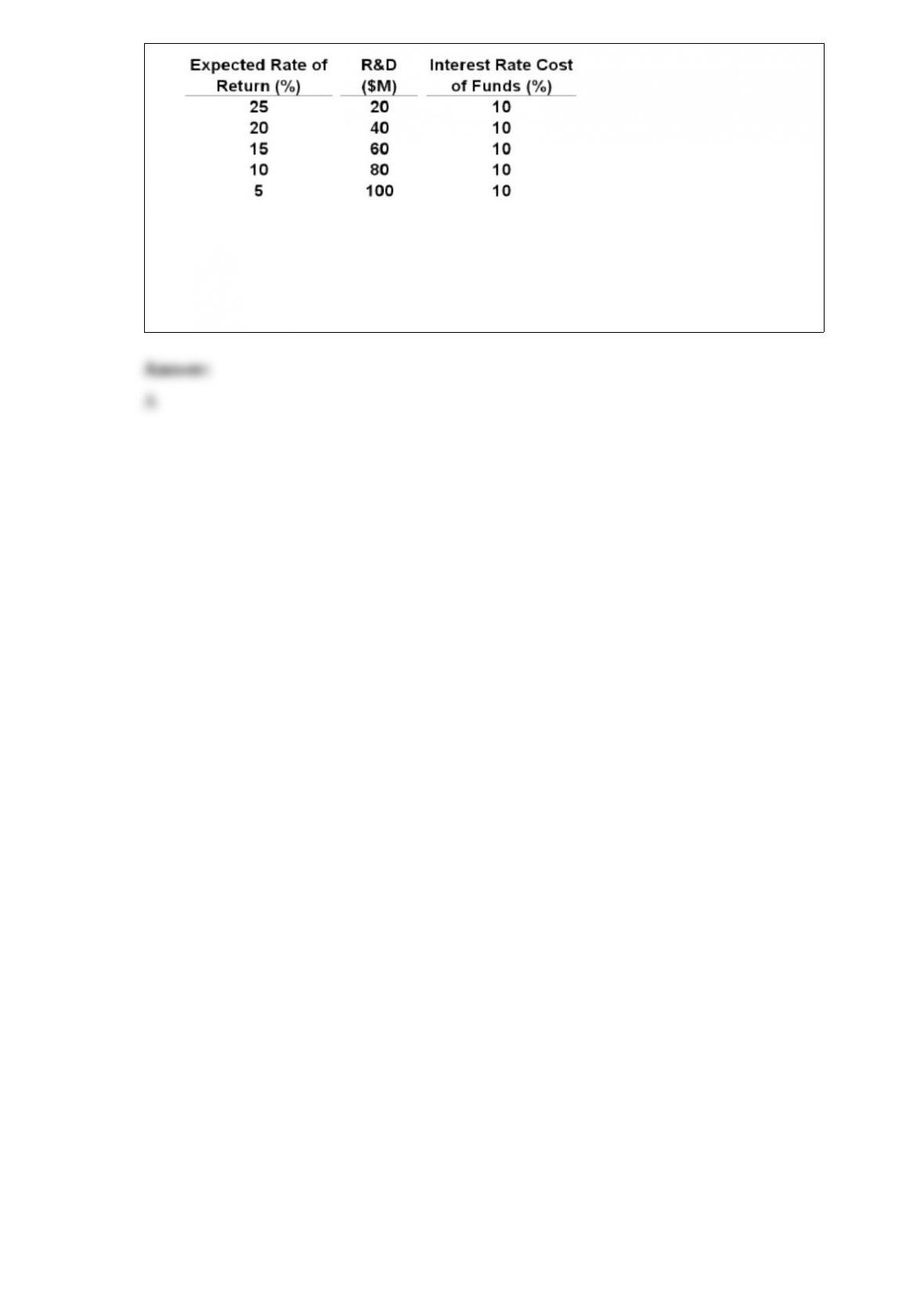
11)
Refer to the above data. At $100 million of R&D expenditures, the:
A.marginal cost of R&D exceeds the marginal benefit.
B.marginal benefit of R&D exceeds the marginal cost.
C.expected rate of return from R&D is negative.
D.firm has exceeded its affordable level of R&D.