1) in moving along a stable supply curve which of the following is not held constant?
a.the number of firms producing this good
b.expectations about the future price of the product
c.techniques used in producing this product
d.the price of the product for which the supply curve is relevant
2)
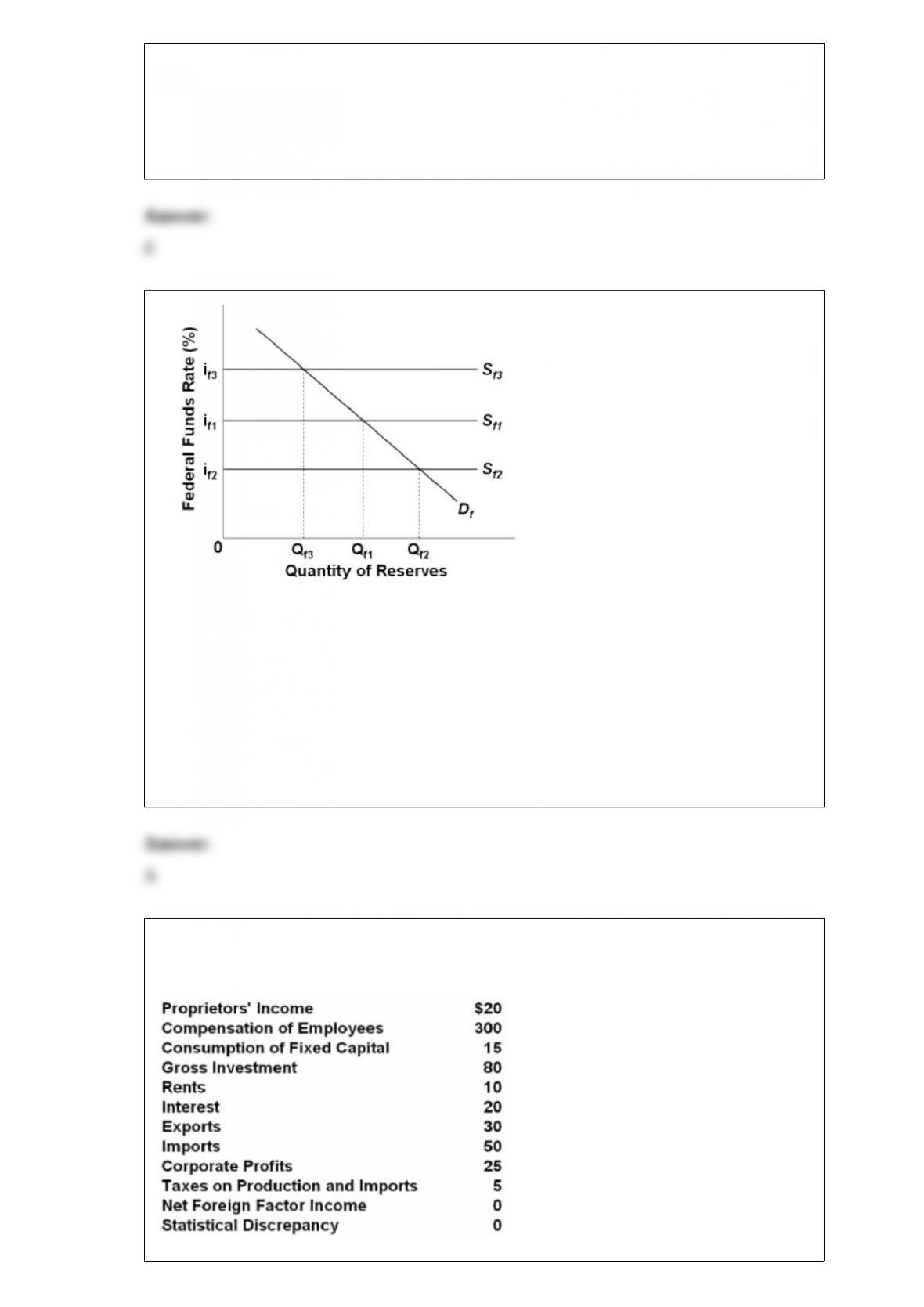
The demand for Federal funds is
A.downward sloping because higher interest rates discourage commercial banks from
borrowing Federal funds.
B.downward sloping because higher interest rate encourage commercial banks to
borrow Federal funds.
C.upward sloping because higher interest rate encourage commercial banks to lend
Federal funds.
D.upward sloping because higher interest rates discourage commercial banks from
lending Federal funds.
3) answer the next question(s) on the basis of the following data. all figures are in
billions of dollars.
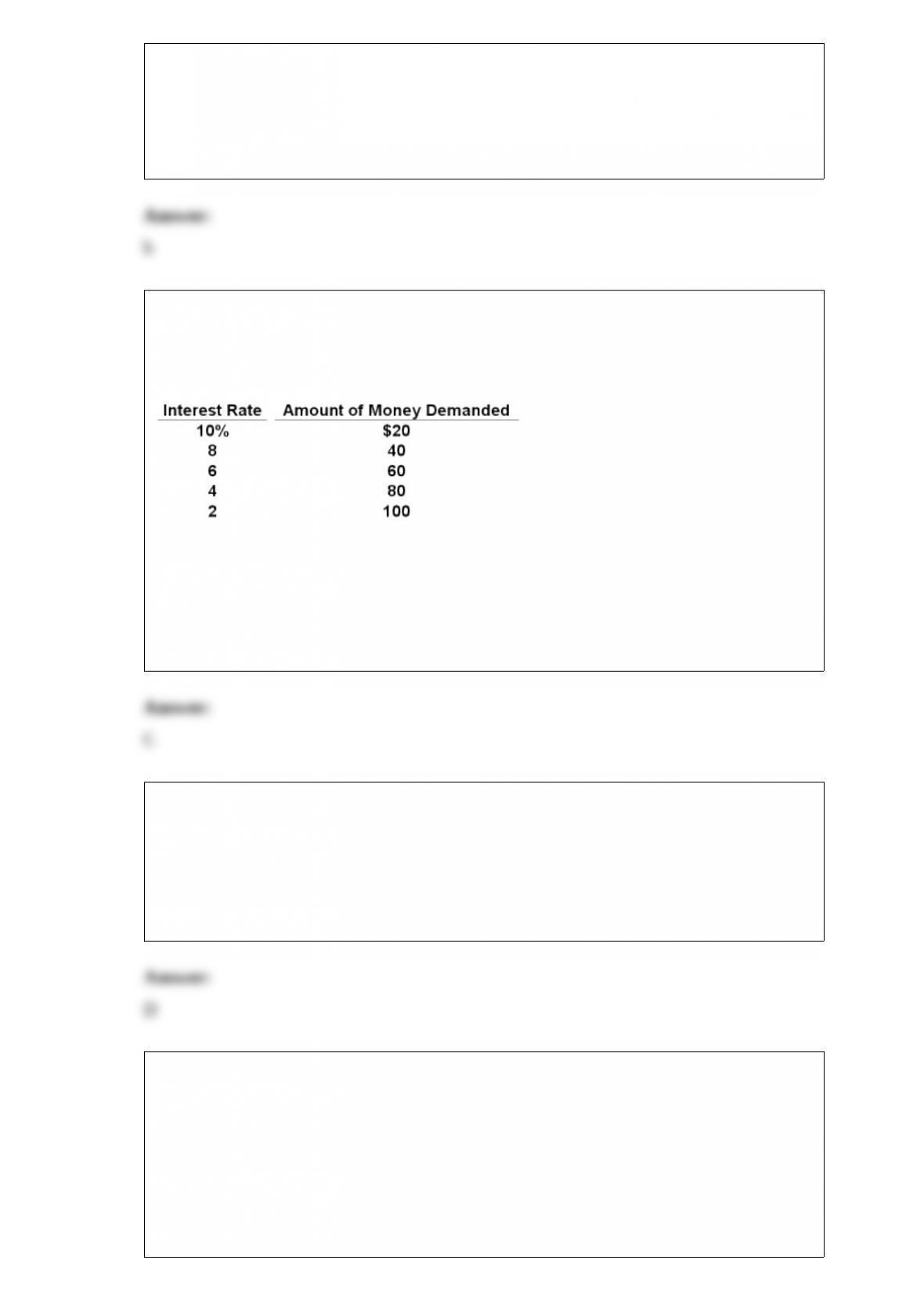
refer to the above data. net domestic product is:
a.$395.
b.$380.
c.$375.
d.$360.
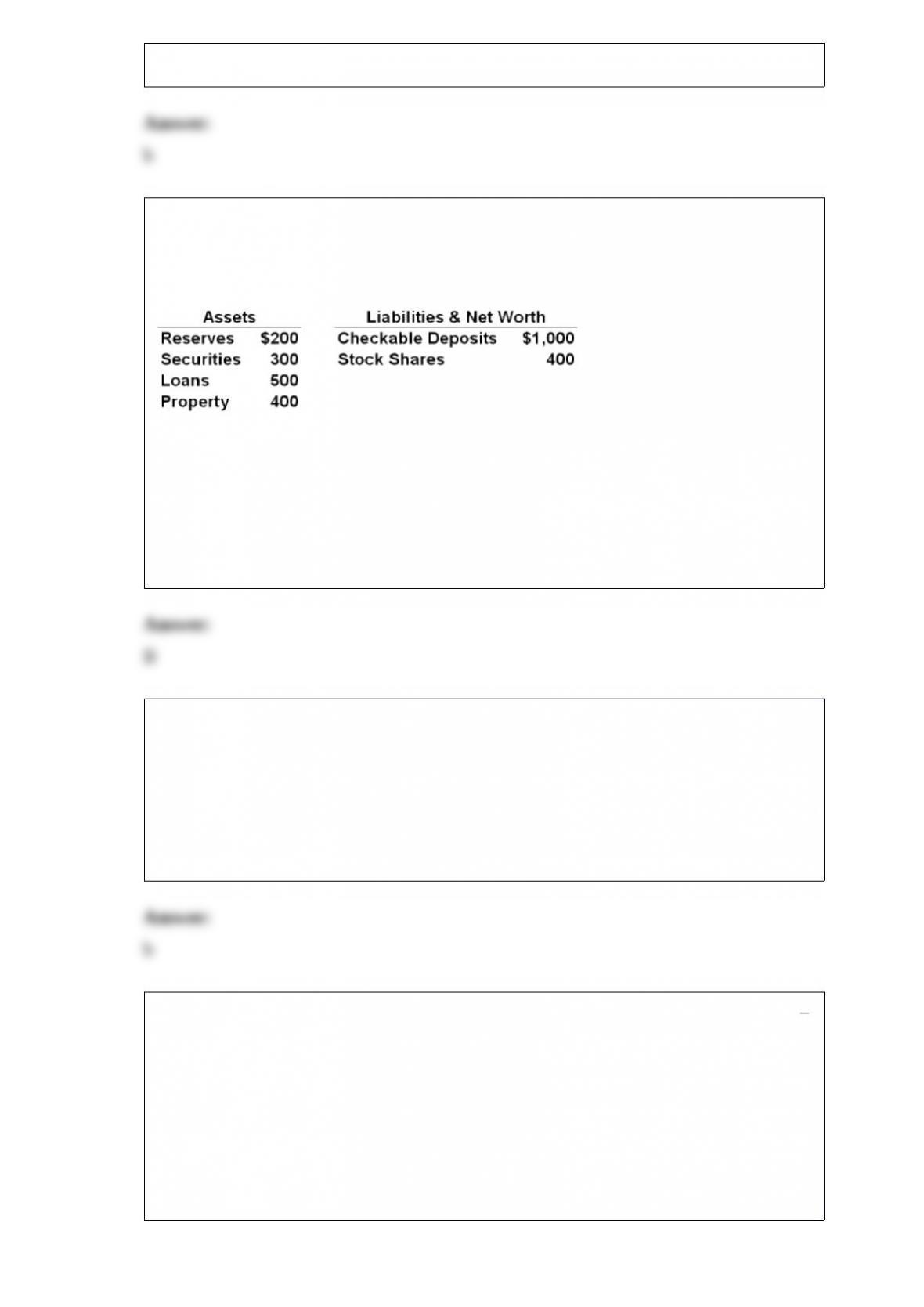
4) The following information. For transactions, households and businesses want to hold
an amount of money equal to one half of nominal GDP. The table shows the amounts of
money they want to hold as an asset at various interest rates.
Refer to the above information. If nominal GDP is $200 and the interest rate is 6
percent, the total amount of money that households and businesses will want to hold is:
A.$120.
B.$140.
C.$160.
D.$180.
5) The process by which new firms and new products replace existing dominant firms
and products is called:
A.monopolistic competition.
B.the inverted-U process.
C.process innovation.
D.creative destruction.
6) in which of the following statements are the terms “demand” and “quantity
demanded” used correctly?
a.when the price of ice cream rose, the demand for both ice cream and ice cream
toppings fell.
b.when the price of ice cream rose, the quantity demanded of ice cream fell, and the
demand for ice cream toppings fell.
c.when the price of ice cream rose, the demand for ice fell, and the quantity demanded
of ice cream toppings fell.
d.none of these statements use the terms correctly.
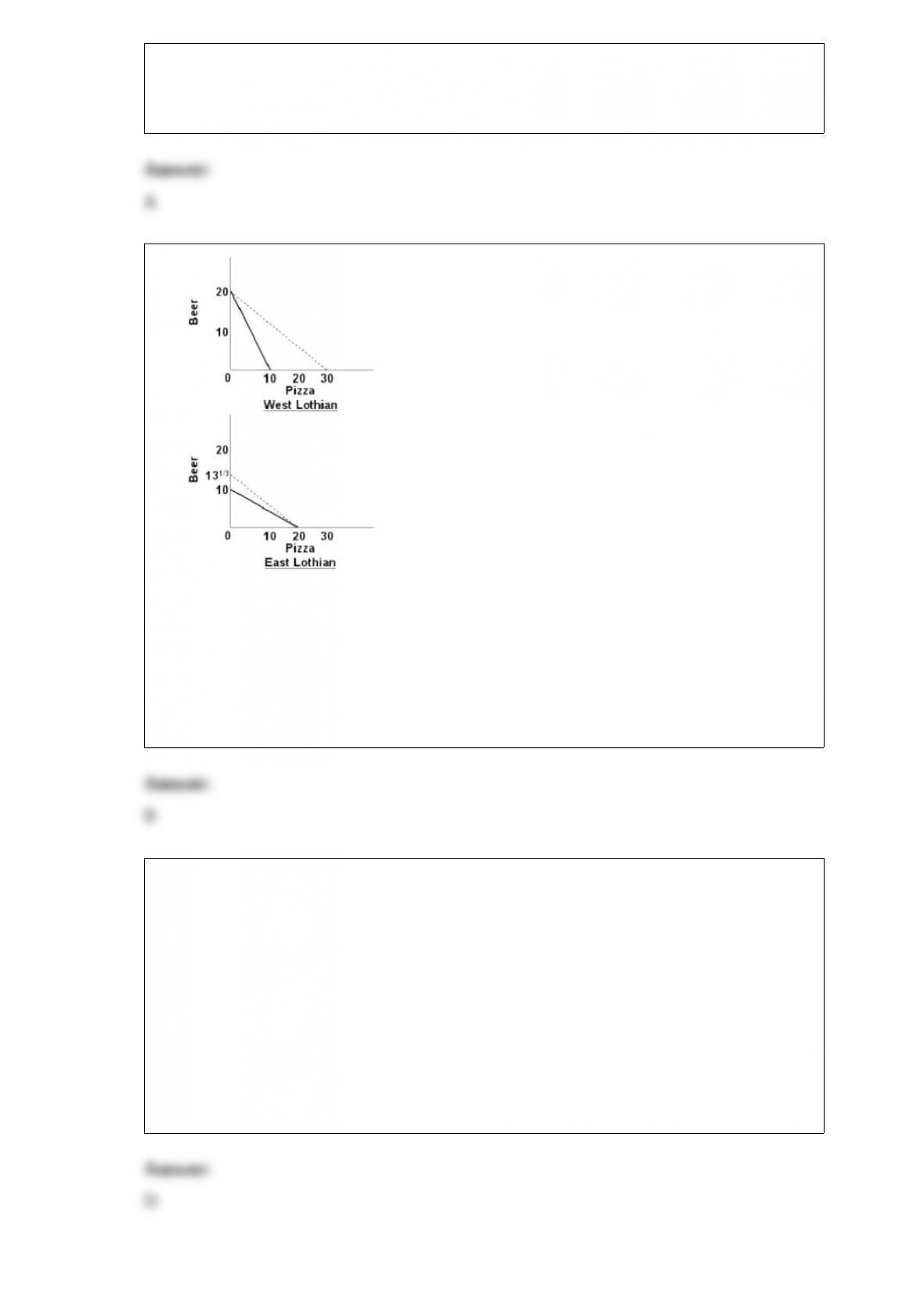
7) The following consolidated balance sheet of the commercial banking system.
Assume that the reserve requirement is 20 percent. All figures are in billions and each
question should be answered independently of changes specified in all preceding ones.
Refer to the above data. If the Fed reduced the reserve requirement from 20 percent to
16 percent, excess reserves in the commercial banking system would increase by _____
and the monetary multiplier would rise to ____.
A.$10 billion; 5
B.$40 billion; 6.25
C.$10 billion; 10
D.$40 billion; 12.5
8) government rather than private firms must provide economically desirable public
goods because:
a.high marginal costs preclude their production in the private sector.
b.public goods have characteristics that make it difficult or impossible for private firms
to produce them profitably.
c.public goods have marginal costs that exceed marginal benefits.
d.the law of increasing opportunity costs applies only to private goods.
9) The equations for the demand and supply curves for a particular product are P = 10
.4Q and P = 2 + .4Q, where P is price and Q is quantity expressed in units of 100. After
an excise tax is imposed on the product the supply equation is P = 3 + .4Q.
Refer to the above information. The equilibrium quantity after the excise tax is imposed
is:
A.750 units.
B.850 units.
C.875 units.
D.950 units.

10) the invisible-hand concept suggests that:
a.changes in product demands are only randomly reflected in changes in the demands
for resources.
b.profit maximization is inconsistent with an efficient allocation of resources.
c.government action is necessary to correct for market failures.
d.when firms maximize their profits, society’s output will also be maximized.
11) Each of the following contributes to income inequality except:
A.differences in ability and training.
B.differences in job tastes.
C.differences in wealth ownership.
D.government transfers.
12) Economists generally agree that the most significant cause of the recent increase in
income inequality in the United States is:
A.the failure of the legal minimum wage to keep pace with inflation.
B.increased international competition.
C.increased immigration.
D.increased demand for, and hence pay to, highly skilled workers.
13) which of the following is a short-run adjustment?
a.a local bakery hires two additional bakers.
b.six new firms enter the plastics industry.
c.the number of farms in the united states declines by 5 percent.
d.bmw constructs a new assembly plant in south carolina.
14) Farm programs such as those of the United States and the European Union cause a
misallocation of international agricultural resources primarily because:
A.they distort domestic and world agricultural prices.
B.they inhibit technological progress in agriculture.
C.production and trade occur on the basis of comparative advantage.
D.price supports are set below market-clearing levels.
15)
Refer to the above diagrams. The solid lines are production possibilities curves; the
dashed lines are trading possibilities curves. The data contained in the production
possibilities curves are based on the assumption of:
A.imperfect shiftability of resources between beer and pizza production.
B.constant costs.
C.decreasing costs.
D.increasing costs.
16) Assume the reserve ratio is 25 percent and Federal Reserve Banks buy $4 million of
U.S. securities from the public, which deposits this amount into checking accounts. As a
result of these transactions, the supply of money is:
A.not directly affected, but the money-creating potential of the commercial banking
system is increased by $12 million.
B.directly increased by $4 million and the money-creating potential of the commercial
banking system is increased by an additional $16 million.
C.directly reduced by $4 million and the money-creating potential of the commercial
banking system is decreased by an additional $12 million.
D.directly increased by $4 million and the money-creating potential of the commercial
banking system is increased by an additional $12 million.
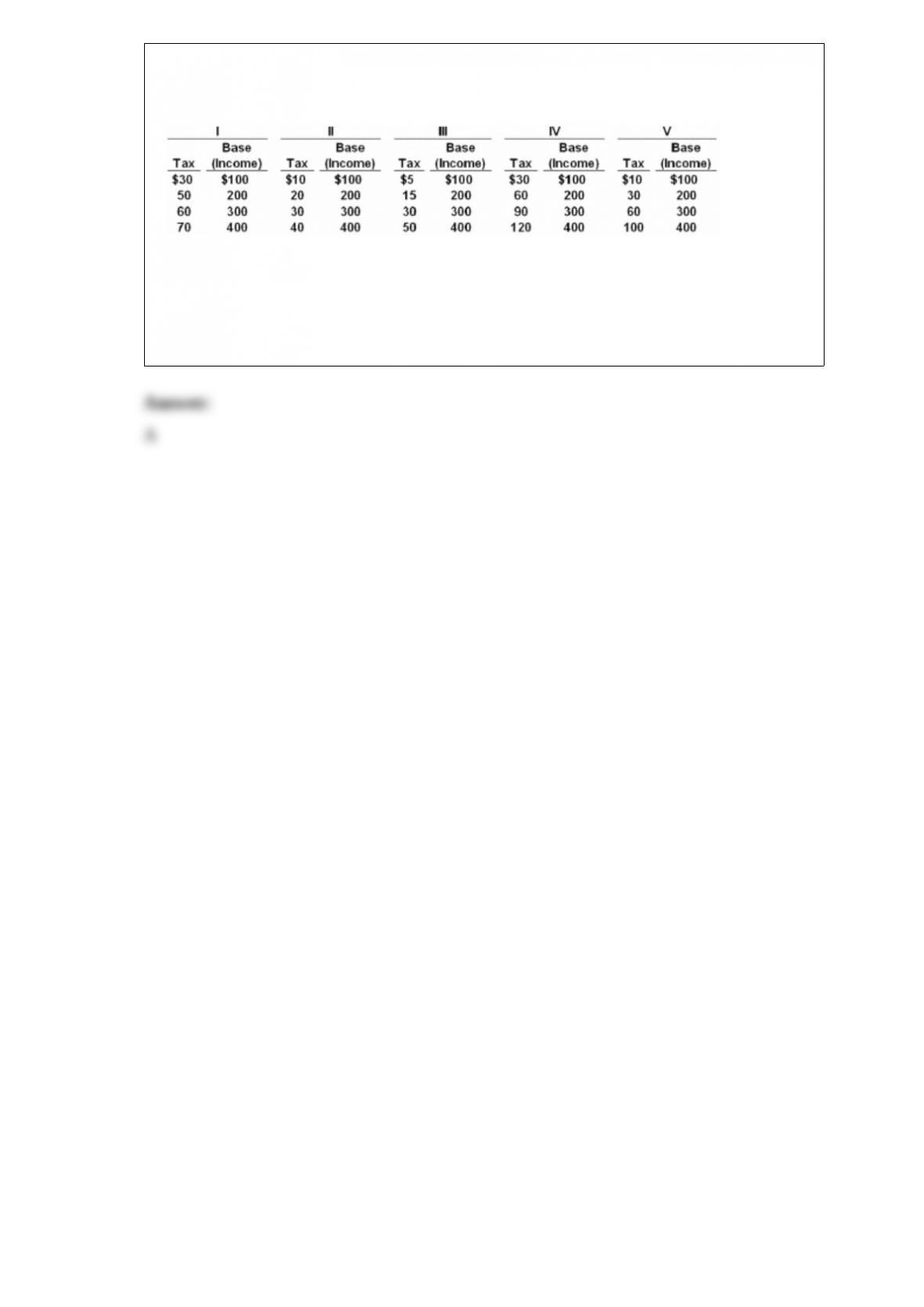
17) These five schedules represent income tax schedules for an economy. All figures are
in billions of dollars.
Which of the above schedules represent(s) a proportional tax?
A.II and IV
B.III and V
C.IV only
D.I only