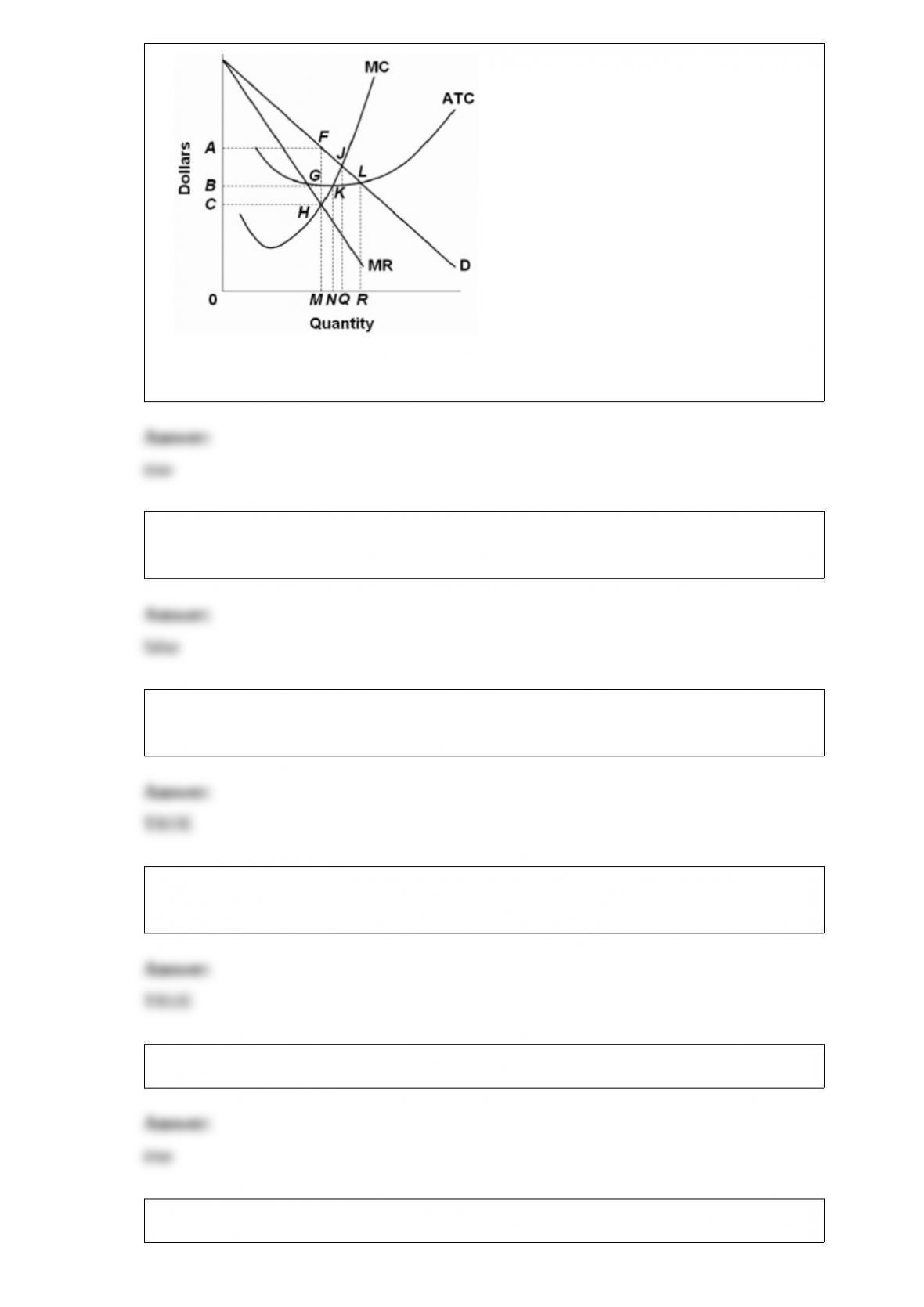
1)
refer to the above diagram for a nondiscriminating monopolist. at output r economic
profits will be zero.
2) the primary purpose of the “play or pay” reform proposal is to reduce aggregate
health care costs.
3) The rate of unionization is substantially higher for protective service workers than
for sales workers.
4) Piece-rates may not be appropriate pay in some situations because they might reduce
product quality.
5) at zero units of output a firm’s variable costs are zero.
6) if price changes and total revenue changes in the opposite direction, demand is
relatively elastic.
7) we would expect the coefficient of cross elasticity of demand for dvd players and
dvds to be positive.
8) the marginal revenue curve for a monopolist:
a.is a straight, upward sloping curve.
b.rises at first, reaches a maximum, and then declines.
c.becomes negative when output increases beyond some particular level.
d.is a straight line, parallel to the horizontal axis.
9) the full-employment unemployment rate means an unemployment rate of about:
a.15 percent.
b.10 percent.
c.4-5 percent.
d.2 percent.
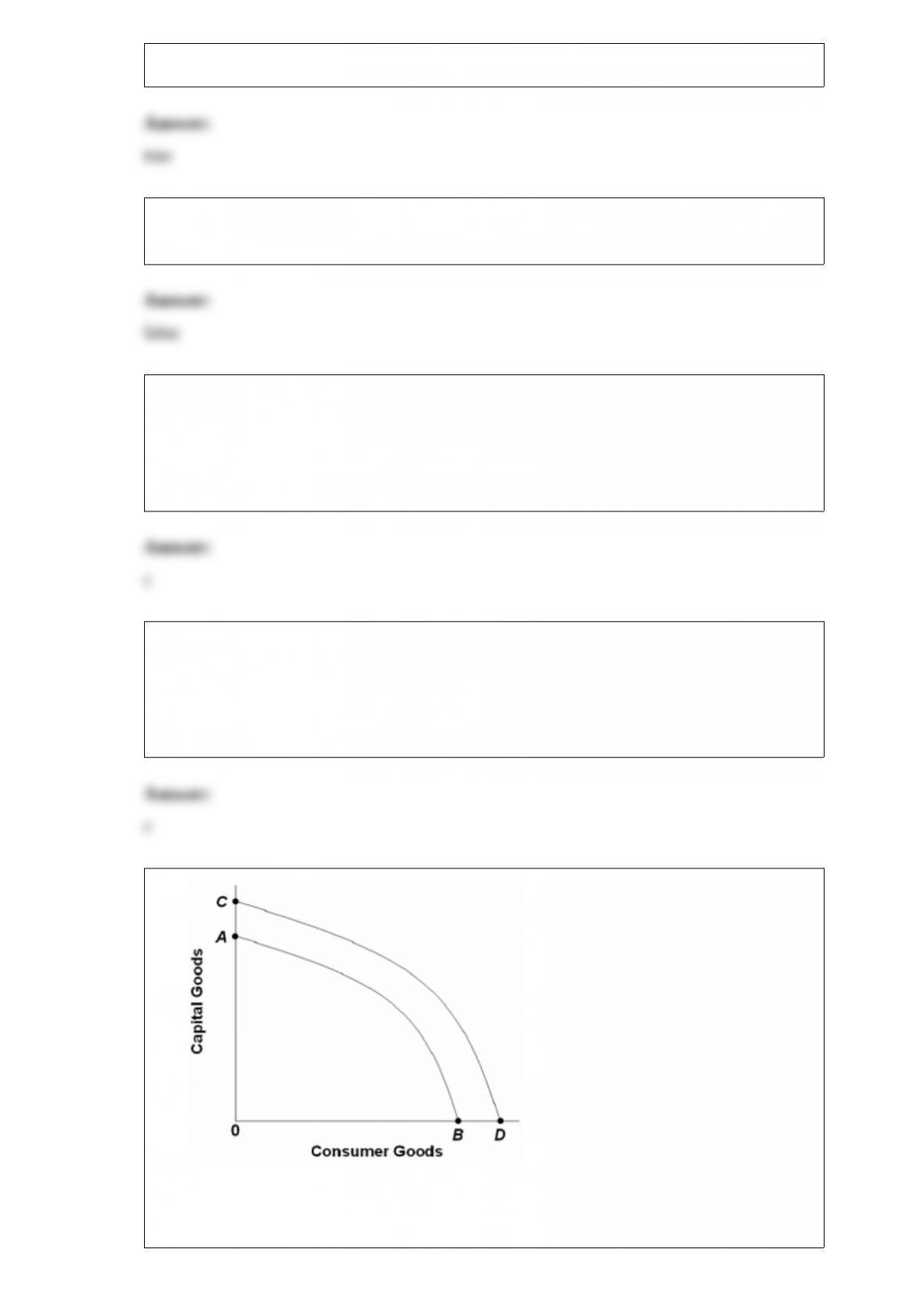
10)
curve ab is a:
a.production possibilities curve.
b.consumer demand curve.
c.market supply curve.
d.labor productivity curve.
11) which of the following is a macroeconomic statement?
a.the gross profits of all u.s. businesses were $182 billion last year.
b.the price of beef declined by 3 percent last year.
c.general motors’ profits increased last year.
d.the productivity of steelworkers increased by 1 percent last year.
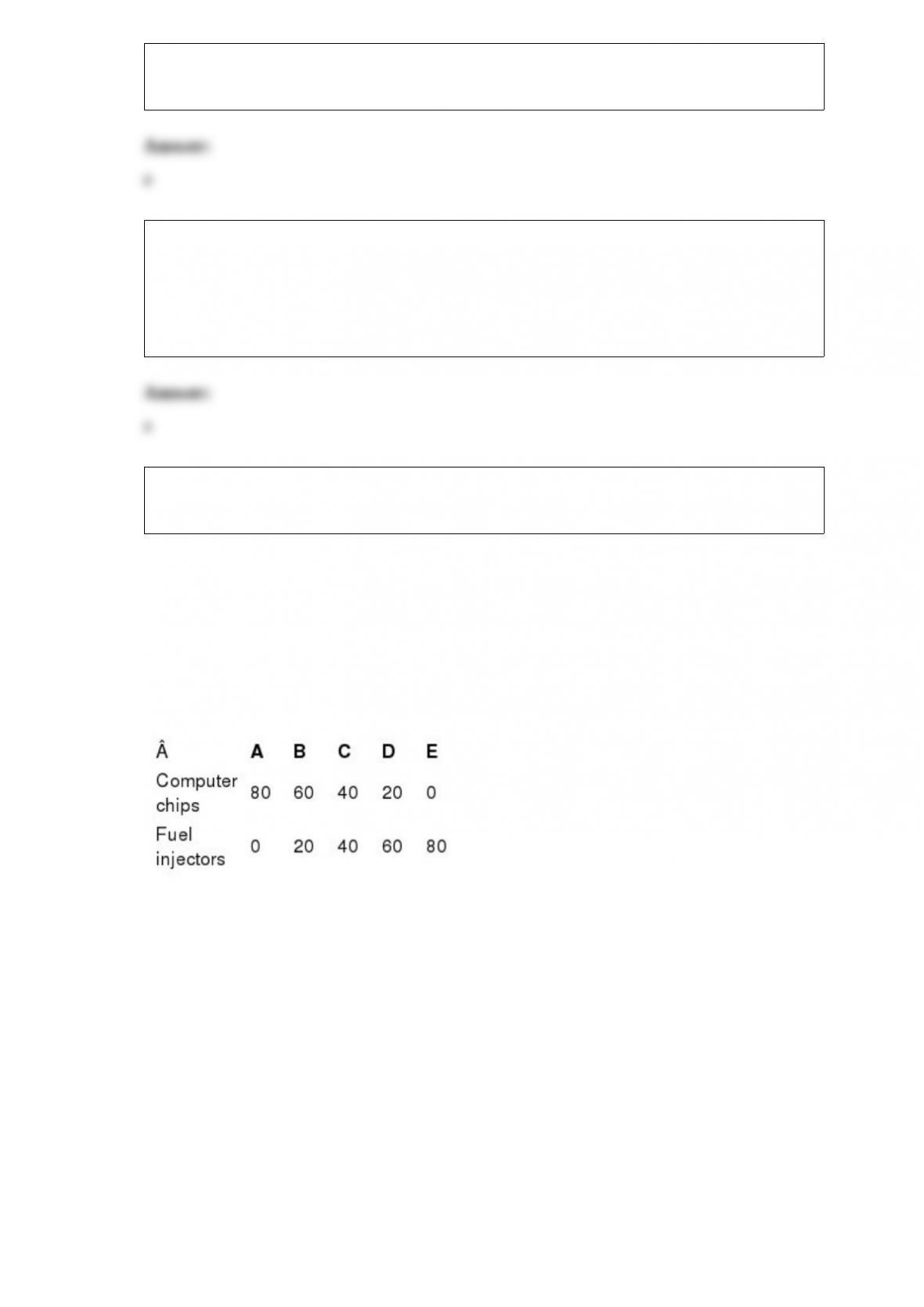
12) Answer the next three questions on the basis of the following production
possibilities data for Narnia and Somosa. All data are in 1000s.
NARNIA PRODUCTION
POSSIBILITIES:
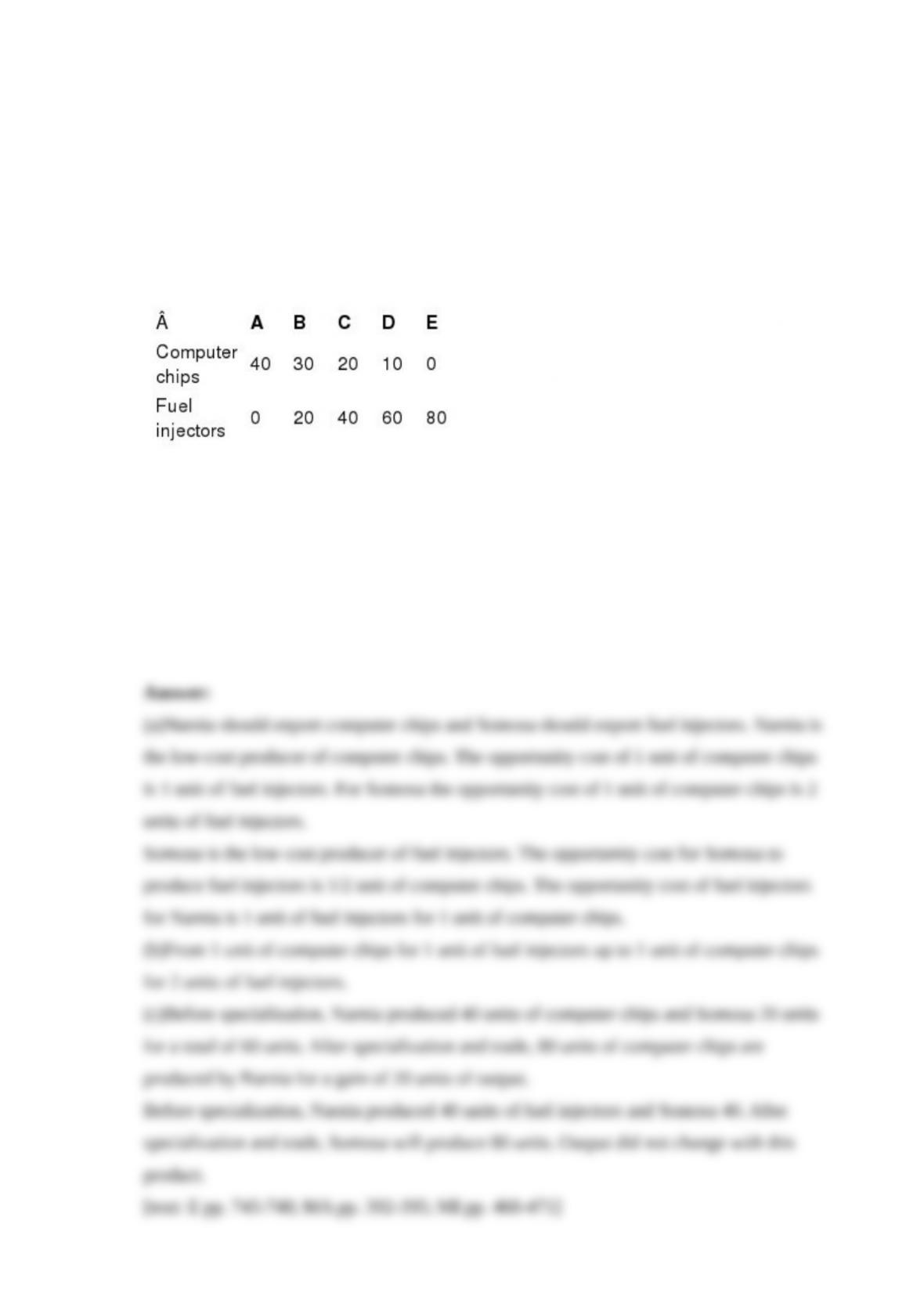
SOMOSA PRODUCTION
POSSIBILITIES:
(a)If trade occurs between Narnia and Somosa, which nation should export what product?
Why?
(b)What are the limits of the terms of trade between Narnia and Somosa?
(c)Assume that prior to specialization and trade, Narnia and Somosa chose production
possibility C. Now each specializes according to comparative advantage. What will be the
resulting gains from trade? Explain your answer.
13) (consider this) in terms of a reservoir analogy, the:
a.outflow below the dam is the stock of capital.
b.inflow from the river is gross investment.
c.level of water in the reservoir is depreciation.
d.level of water in the reservoir is net investment.
14)
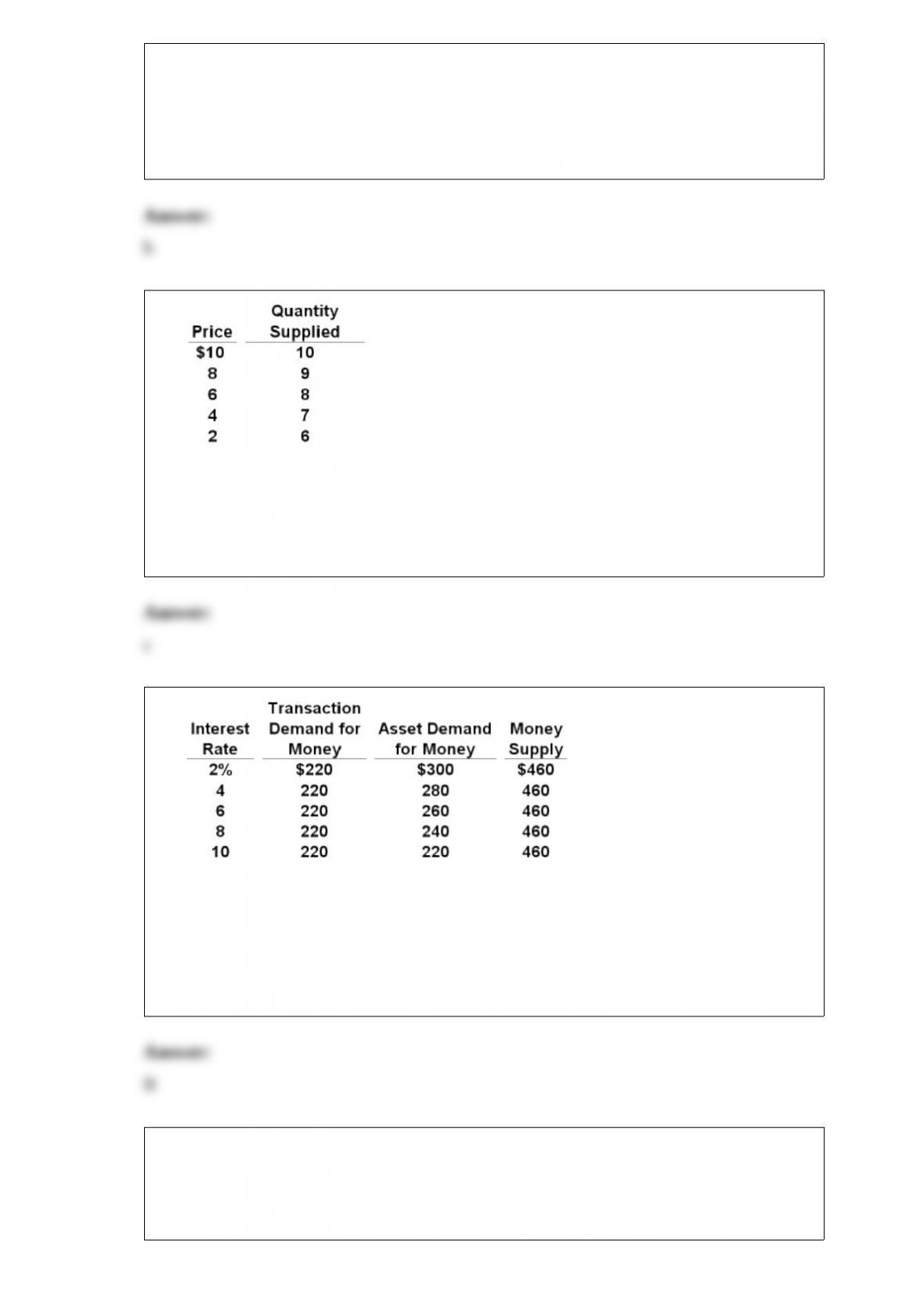
over the $4-$2 price range, the elasticity coefficient of supply is:
a.1
b.zero.
c.less than 1
d.greater than 1
15)
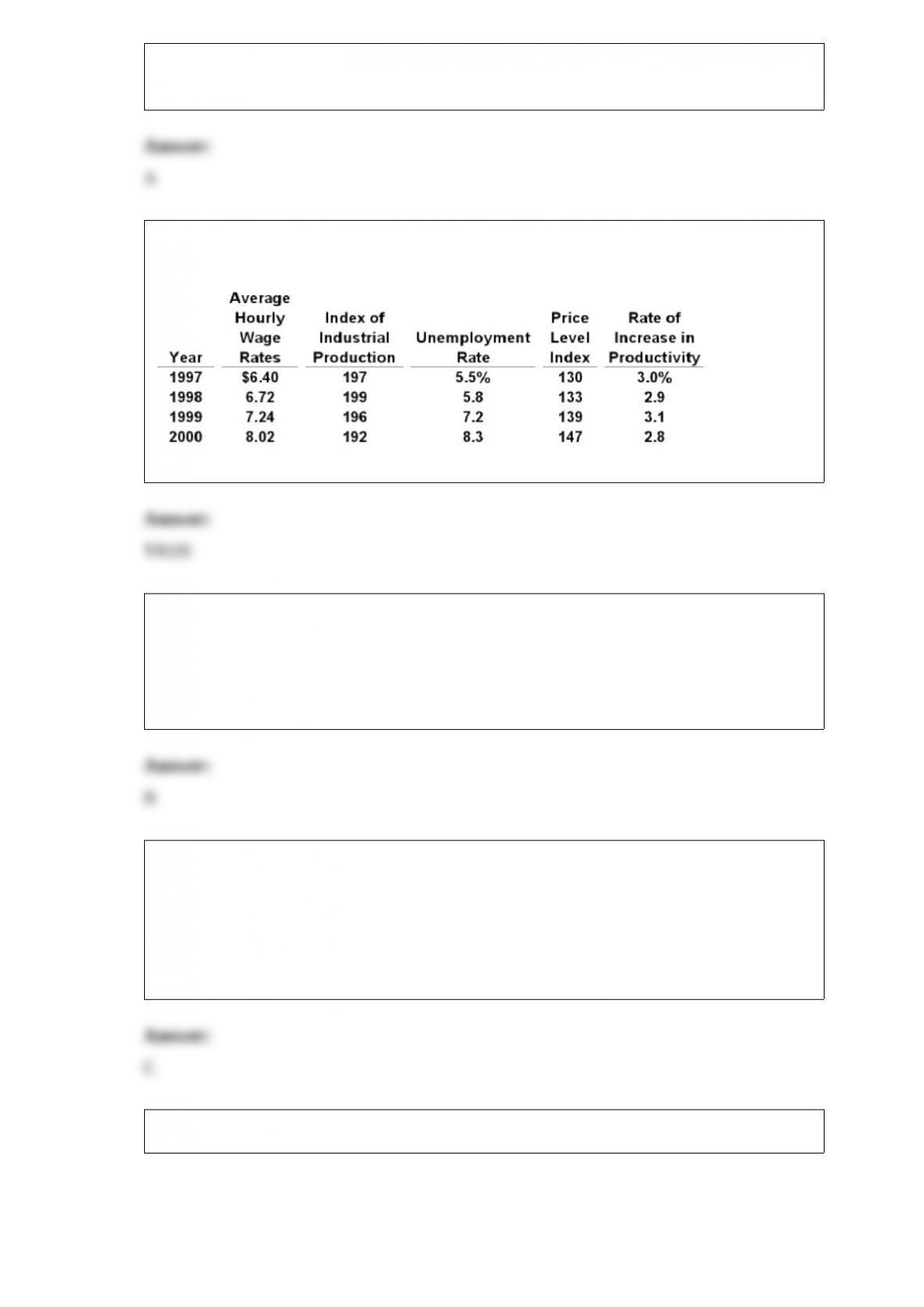
Refer to the above table. An increase in the money supply of $20 billion will cause the
equilibrium interest rate to:
A.fall by 4 percentage points.
B.fall by 2 percentage points.
C.rise by 4 percentage points.
D.rise by 2 percentage points.
16) If the prices paid by farmers increase and the prices received by farmers decrease,
then the parity ratio:
A.will necessarily decrease.
B.will necessarily increase.
C.may either increase or decrease.
D.will be unaffected.
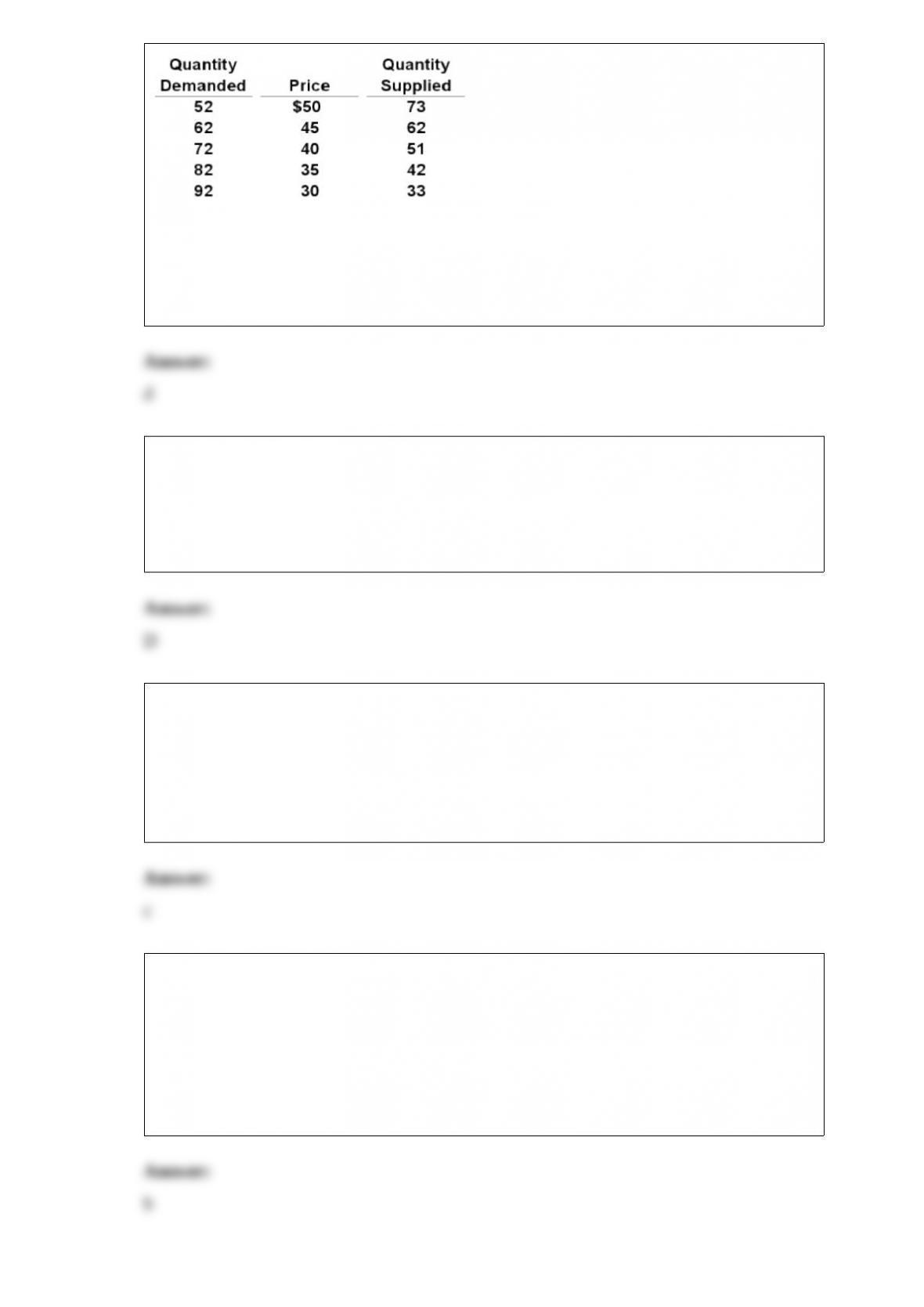
17) The following economic data for a hypothetical economy:
Refer to the above data. This economy has encountered stagflation.
18) Checkable deposits include:
A.both large and small time deposits.
B.the deposits of banks and thrifts on which checks can be written.
C.only the checkable deposits of commercial banks.
D.only the checkable deposits of thrift institutions.
19) Between March 2001 and November 2002, the Fed reduced the Federal funds rate
from 5 percent to just above 1 percent. The Fed’s purpose was to:
A.prevent rising inflation.
B.reduce the public debt.
C.promote recovery from recession.
D.strengthen the international value of the dollar.
20) government-set prices
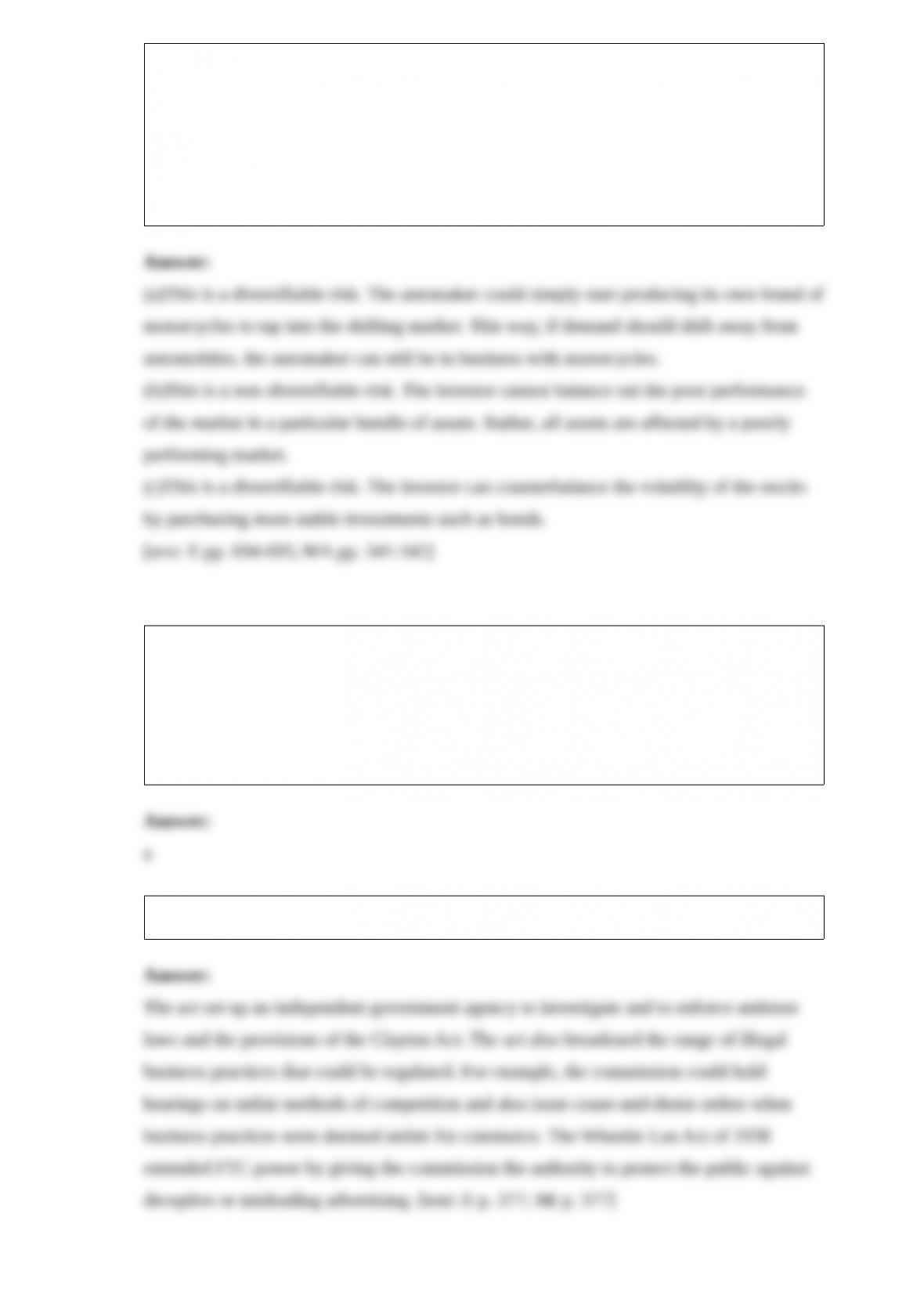
if government set a maximum price of $45 in the above market:
a.a shortage of 21 units would arise.
b.a surplus of 21 units would arise.
c.a surplus of 40 units would arise.
d.it would create neither a shortage nor a surplus.
21) Which of the following employers is the most prejudiced? Employer:
A.A whose d is $0.
B.B whose d is $2.
C.C whose d is $4.
D.D whose d is $6.
22) which of the following is an economic explanation for why most college-aged
movie stars do not attend college.
a.they are too dumb to get into college
b.they would find college life boring
c.the opportunity cost in terms of reduced income is too great
d.they cannot afford the room, board, and tuition fees most colleges charge
23) which of the following statements is correct?
a.limited access to the health care system is a major cause of rising health care costs.
b.rising health care costs are a major cause of limited access to the health care system.
c.rising health care costs have forced employers to raise real wages above labor
productivity.
d.the tax subsidy which government provides for health care causes health care to be
underconsumed.
24) Consider the following situations and decide whether they represent diversifiable
risk or non-diversifiable risk. Explain your answer.
(a)An automobile maker is concerned about the rising demand for motorcycles.
(b)An investor is considering developing a portfolio, but is concerned with the troubled
state of the market.
(c)An investor wants to purchase stock to add to their portfolio but is concerned it will
increase the volatility of their portfolios return.
25) a topographical map shows successively higher equal-elevation lines, whereas an
indifference map shows successively higher levels of total:
a.utility.
b.revenue.
c.profit.
d.cost.
26) What was the importance of the Federal Trade Commission Act of 1914?
27) Explain how changes in relative income affect the value of a nations currency.
28) How do U.S. exports of agricultural products affect the demand for agricultural
products?
29) Distinguish among a stock, a bond, and a mutual fund.
30) What reasons do monetarists give for downgrading the importance of fiscal policy
relative to monetary policy?
31) (Last Word) What is the purpose of the Conference Boards index of leading
economic indicators?
32) How can discrimination be viewed as resulting from a preference or taste for which
the prejudiced employer is willing to pay? What will determine whether the prejudiced
employer hires nonpreferred workers in this model?
33) Provide three reasons why Mexico generally opposes stronger border enforcement
by the United States.
34) Distinguish between a balance-of-payments surplus and a balance-of-payments
deficit in terms of payments of official reserves.
35) Which is the most volatile component of total spending? What four factors
contribute to the volatility of this component of total spending?