
Assuming zero transaction cost, if your local grocer buys oranges at a low price from an
orchard and resells them to you at a higher price, then the grocer’s revenue minus costs
is known as
A) arbitrage profits.
B) transactions profits.
C) pure profits.
D) excess profits.
Which is the least common type of business?
A) corporation
B) partnership
C) sole proprietorship
D) impossible to determine without further information
Figure 15-6
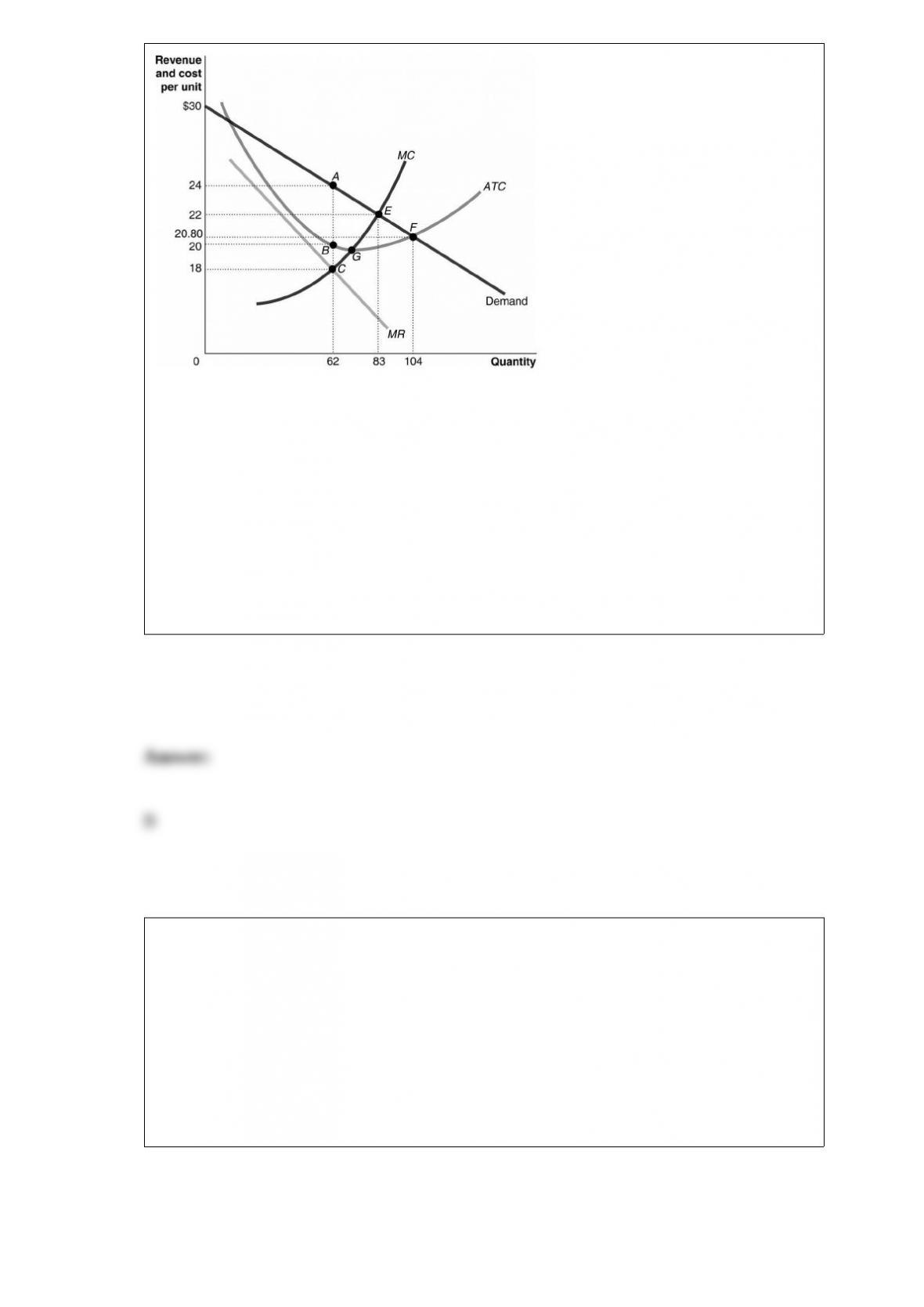
Figure 15-6 shows the cost and demand curves for a monopolist.
Refer to Figure 15-6. The monopolist’s total revenue is
A) $1,116.
B) $1,488.
C) $1,726.40
D) $1,826.
Because producers do not bear the external cost of pollution
A) the economically efficient level of production is achieved.
B) private production is below the economically efficient level.
C) private production exceeds the economically efficient level.
D) the market price is too high.
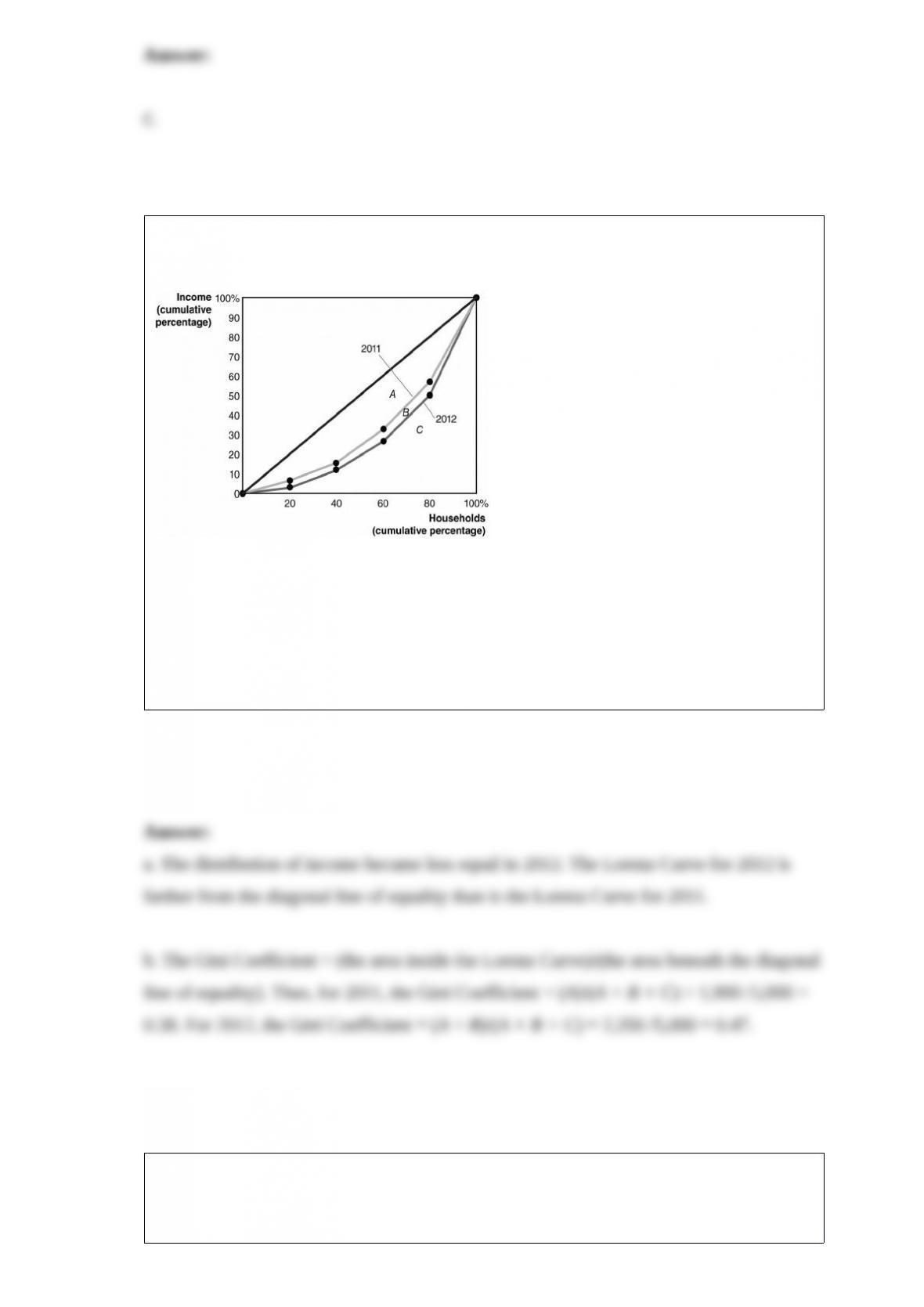
Figure 18-8
Refer to Figure 18-8 to answer the following questions.
a. Did the distribution of income become more equal in 2012 than it was in 2011, or did
it become less equal? Explain.
b. If area A = 1,900, area B = 450, and area C = 2,650, calculate the Gini coefficient for
2011 and the Gini coefficient for 2012.
Terence has $50 per week to spend on Subway sandwiches and milkshakes. The price
of a Subway sandwich is $5 and the price of a milkshake is $4. He buys 6 sandwiches
and 5 milkshakes. The marginal utility of the 6th sandwich = 25 and the marginal utility
of the 5th milkshake = 24. Which of the following is true?
A) He is not maximizing his utility and should buy more milkshakes.
B) He is maximizing his utility.
C) He is not maximizing his utility and should buy more Subway sandwiches.
D) He is not maximizing his utility because he is not spending all of his income.
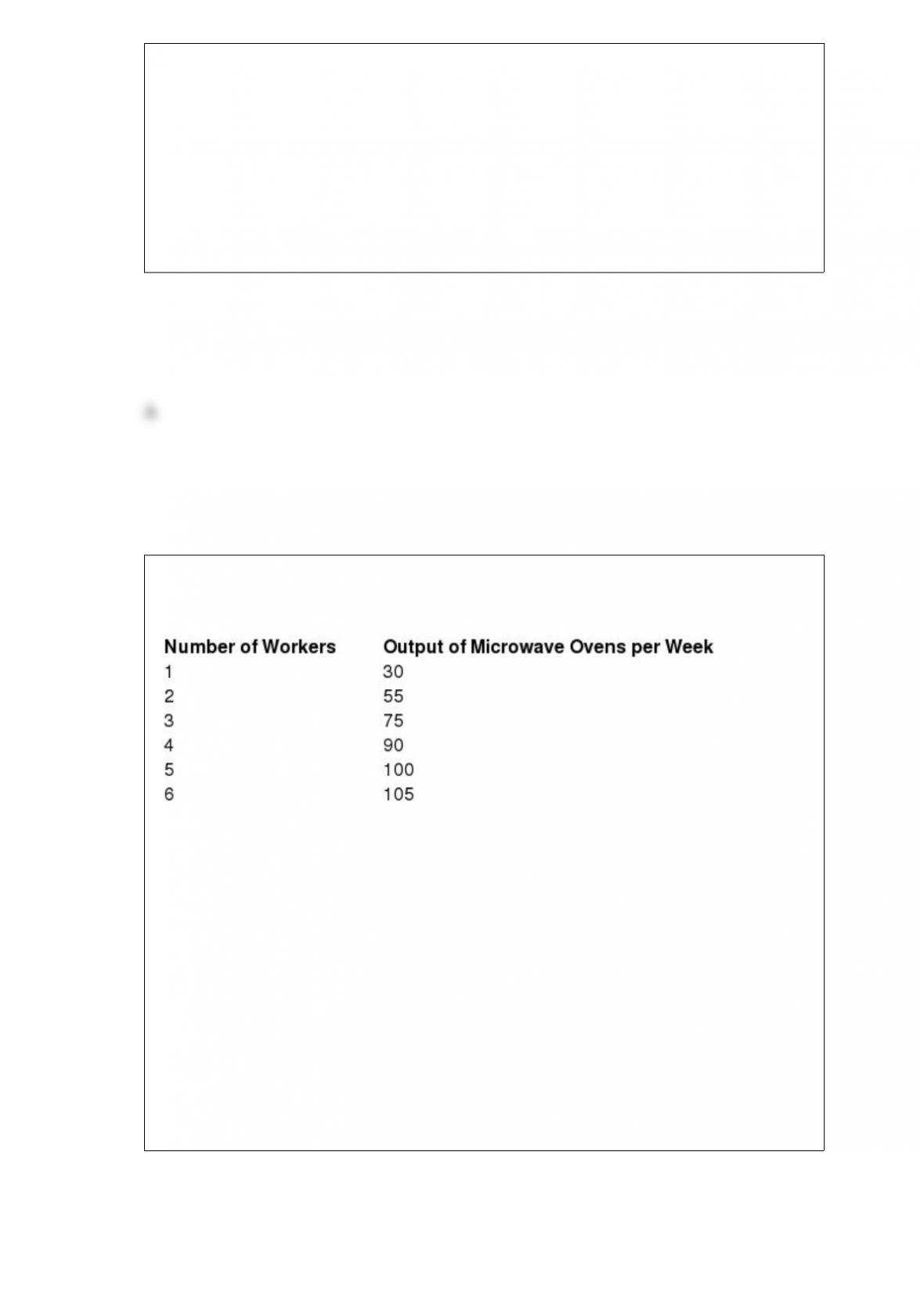
Table 17-3
Hotspur Incorporated, a manufacturer of microwave ovens, is a price taker in its input
and output markets. The firm hires labor at a constant wage rate of $800 per week and
sells microwave ovens at a constant price of $80. Table 17-3 shows the relationship
between the quantity of labor it hires and the quantity of microwave ovens it produces.
Refer to Table 17-3. What is Hotspur’s profit maximizing quantity of labor?
A) 2 workers
B) 3 workers
C) 5 workers
D) 6 workers

Which of the following is the largest source of revenue for the U.S. federal
government?
A) the individual income tax
B) social insurance taxes
C) sales taxes
D) property taxes
Firms pay famous individuals to endorse their products because
A) apparently demand is affected not just by the number of people who use a product
but also by the type of person that uses the product.
B) the firms are irrational and are wasting advertising expenditures.
C) famous people obviously know what are the best goods and services.
D) famous people only consume high quality products.

Firms in perfectly competitive industries are unable to control the prices of the products
they sell and earn a profit in the long run. Which of the following is one reason for this?
A) Owners of perfectly competitive firms realize that their short-run profits are
temporary. Therefore, they either sell their businesses or develop other products that
will earn short-run profits.
B) Firms in perfectly competitive industries can use advertising in the short run to
persuade consumers that their products are better than those of other firms. But
eventually consumers realize that all of the firms sell virtually identical products.
C) Firms from other countries are able to produce similar products at lower costs.
D) Firms in these industries sell identical products.
The International Nickel Company of Canada is often cited as an example of monopoly.
What was the source of the barrier to entry that gave this firm monopoly power?
A) It was a public enterprise; therefore, the Canadian government blocked entry into the
market for nickel.
B) There were important network externalities in the production of nickel.
C) Economies of scale resulted in the company becoming a natural monopoly.
D) control of a key resource

Relative to a perfectly competitive market, a monopoly results in
A) a gain in producer surplus equal to the gain in consumer surplus.
B) a gain in producer surplus equal to the loss in consumer surplus.
C) a gain in producer surplus less than the loss in consumer surplus.
D) greater economic efficiency.
The price a perfectly competitive firm receives for its output
A) is determined by the interaction of the firm and all of the consumers who buy from
the firm.
B) is determined by the interaction of all sellers and all buyers in the firm’s market.
C) will not change in response to changes in market demand and supply because the
firm is a price taker.
D) will be lowered by the firm in order to sell more output.
Figure 12-5
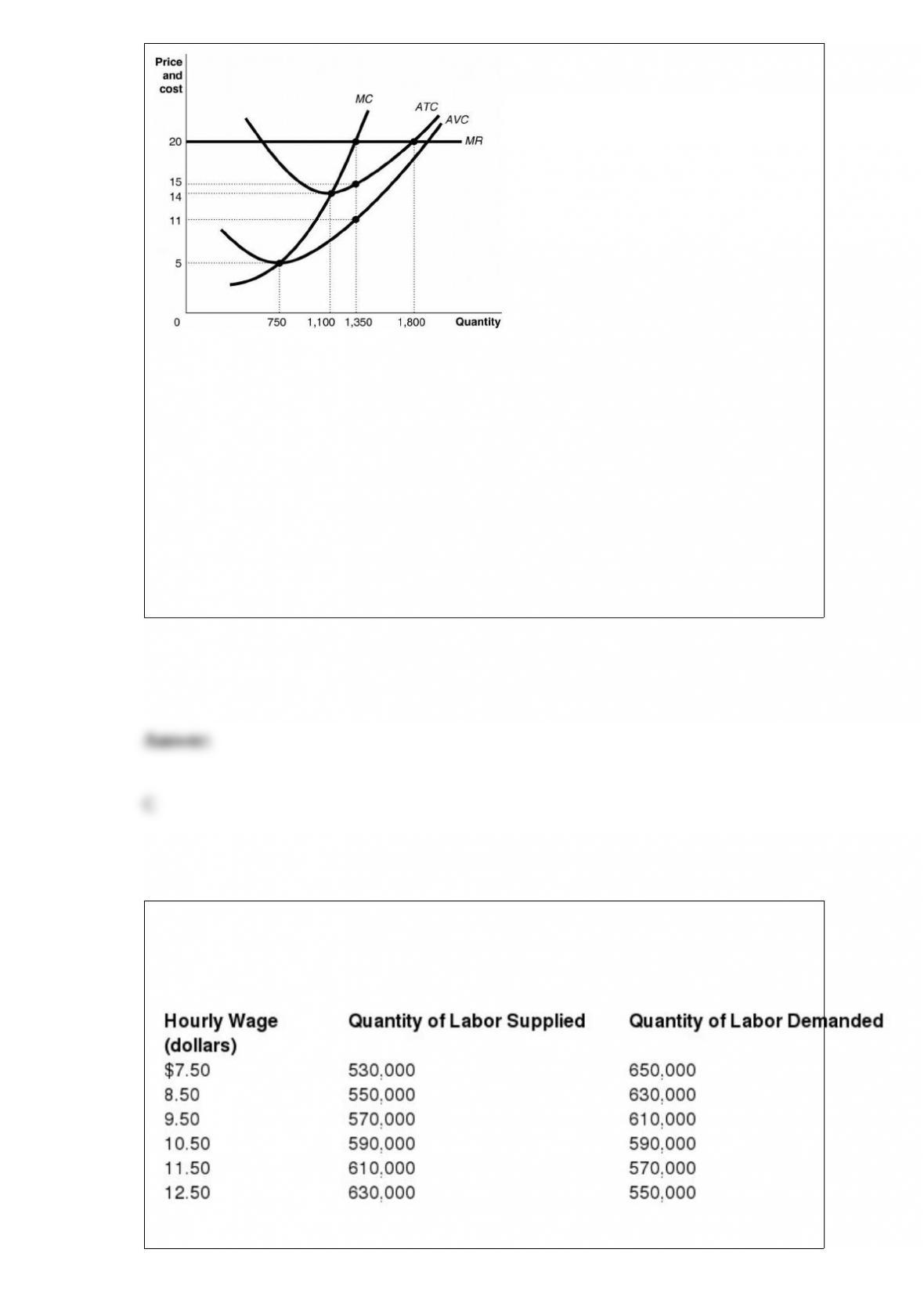
Figure 12-5 shows cost and demand curves facing a typical firm in a constant-cost,
perfectly competitive industry.
Refer to Figure 12-5. What is the minimum price the firm requires to produce output?
A) $20
B) $14
C) $5
D) It cannot be determined
Table 4-4

Table 4-4 shows the demand and supply schedules for labor market in the city of Pixley.
Refer to Table 4-4. What is the equilibrium hourly wage (W*) and the equilibrium
quantity of labor (Q*)?
A) W* = $10.50; Q* = 590,000
B) W* = $11.50; Q* = 570,000
C) W* = $9.50; Q* = 570,000
D) W* = $10.50; Q* = 1,200,000
Any commercial transaction that crosses the borders of two or more nations is known as
________.
A) domestic marketing
B) market segmentation
C) international business
D) global manufacturing
Figure 11-2
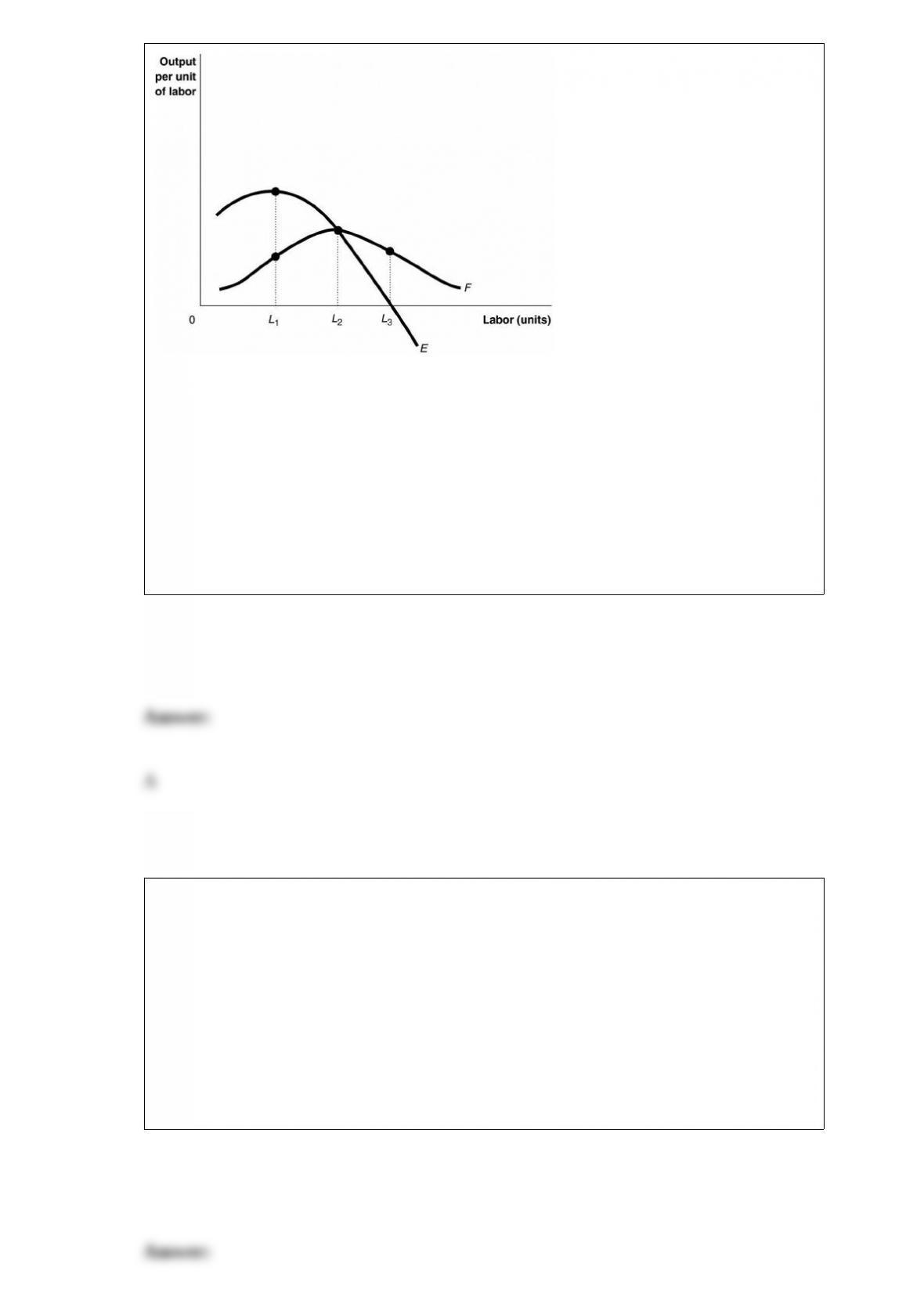
Refer to Figure 11-2. Diminishing returns to labor set in
A) after L1.
B) after L2.
C) after L3.
D) immediately.
Total dividend payments plus retained earnings divided by outstanding stock shares
equals
A) the price-earnings ratio.
B) earnings per share.
C) the dividend yield.
D) the year-to-date percentage change.
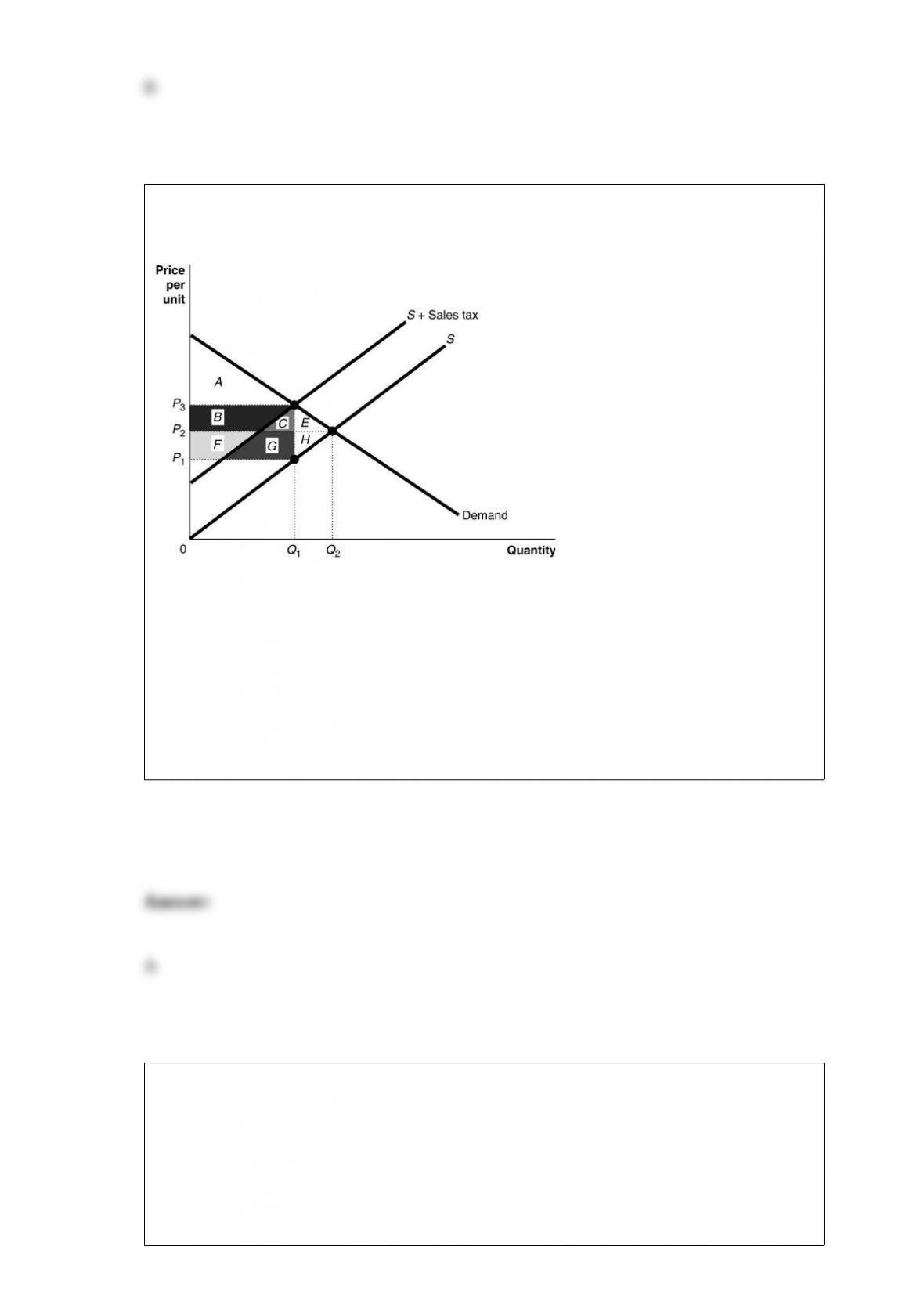
Figure 18-1
Refer to Figure 18-1. Area B+C represents
A) the portion of sales tax revenue borne by consumers.
B) the portion of sales tax revenue borne by producers.
C) the excess burden of the sales tax.
D) sales tax revenue collected by the government.
Which of the following is a disadvantage of trademarking a firm’s product?
A) A trademark differentiates a firm’s product.
B) A trademark conveys information about the product to the public.
C) A trademark may become so widely used to denote a particular type of product that

the trademark may no longer be a legally protected brand name.
D) A trademark does not affect demand for the firm’s product.
The first important federal law passed to regulate monopolies in the United States was
the
A) Cellar-Kefauver Act.
B) Clayton Act.
C) Federal Trade Commission Act.
D) Sherman Act.
Classifying a good as excludable means
A) that someone can be barred from consuming the good based on race, creed or some
other irrelevant characteristic.
B) that anyone who does not pay for the good cannot consume it.
C) that consumption of the good causes no externalities.
D) that a producer with patent or copyright protection can exclude any other producer
from selling his product.

Of all barriers to entry, the most important are those that are due to
A) ownership of a key input.
B) economies of scale.
C) government-imposed barriers.
D) the Herfindahl-Hirschman Index.
Average fixed costs of production
A) remain constant.
B) will rise at a fixed rate as more is produced.
C) graph as a U-shaped curve.
D) fall as long as output is increased.
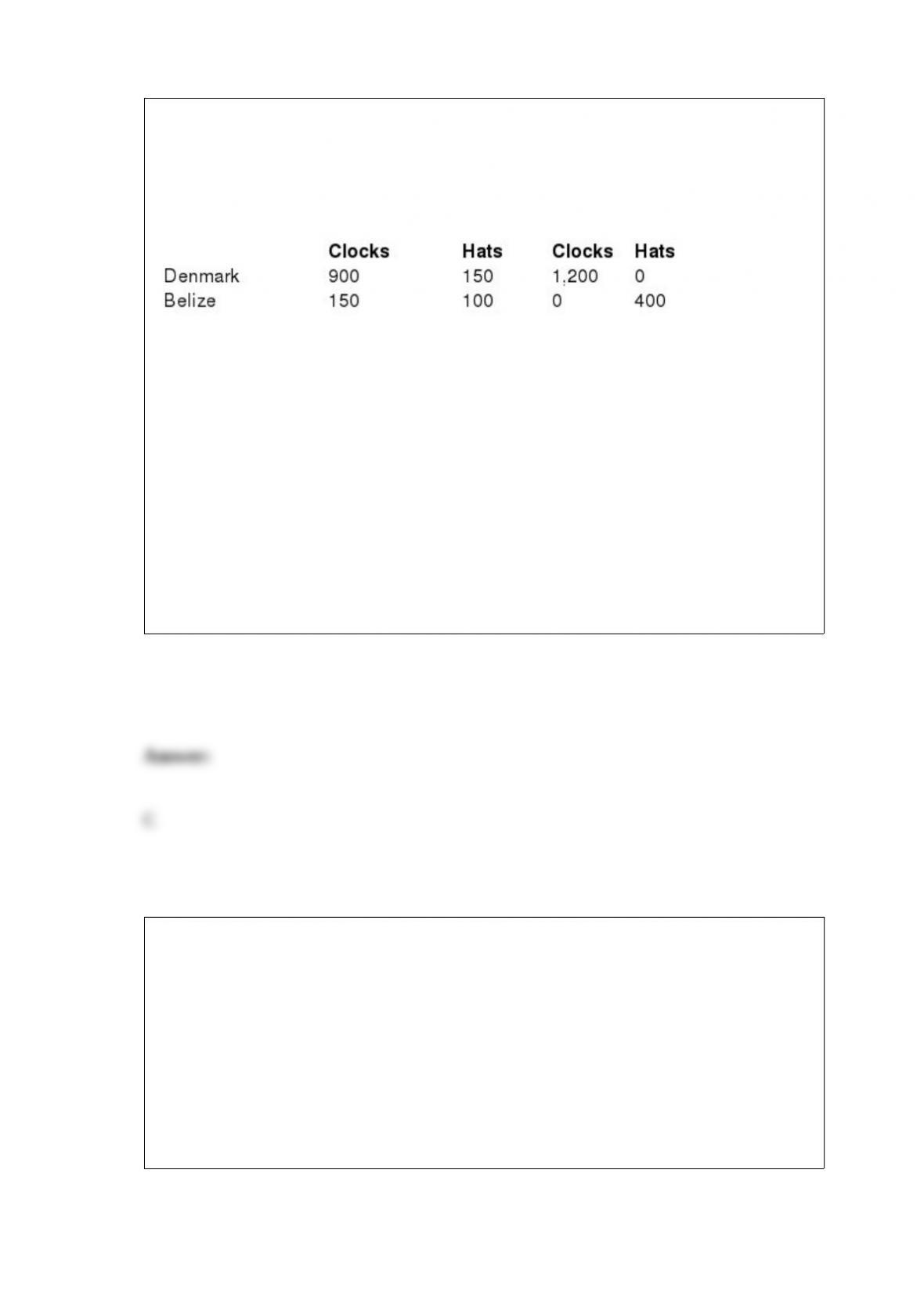
Table 9-6
Production and
Consumption Production
Without Trade With Trade
Denmark and Belize can produce both clocks and hats. Table 9-6 shows the production
and consumption quantities without trade, and the production numbers with trade.
Refer to Table 9-6. Prior to trade, what was the opportunity cost to produce 1 hat in
Belize?
A) 1/6 of a clock
B) 2/3 of a clock
C) 1.5 clocks
D) 6 clocks
Which of the following statements is false?
A) There is an indifference curve associated with any combination of goods selected by
a consumer.
B) A consumer is indifferent among all consumption bundles along a given budget line.
C) All consumption bundles along a given indifference curve are equally desirable.
D) Consumption bundles that lie on higher indifference curves yield higher utility.
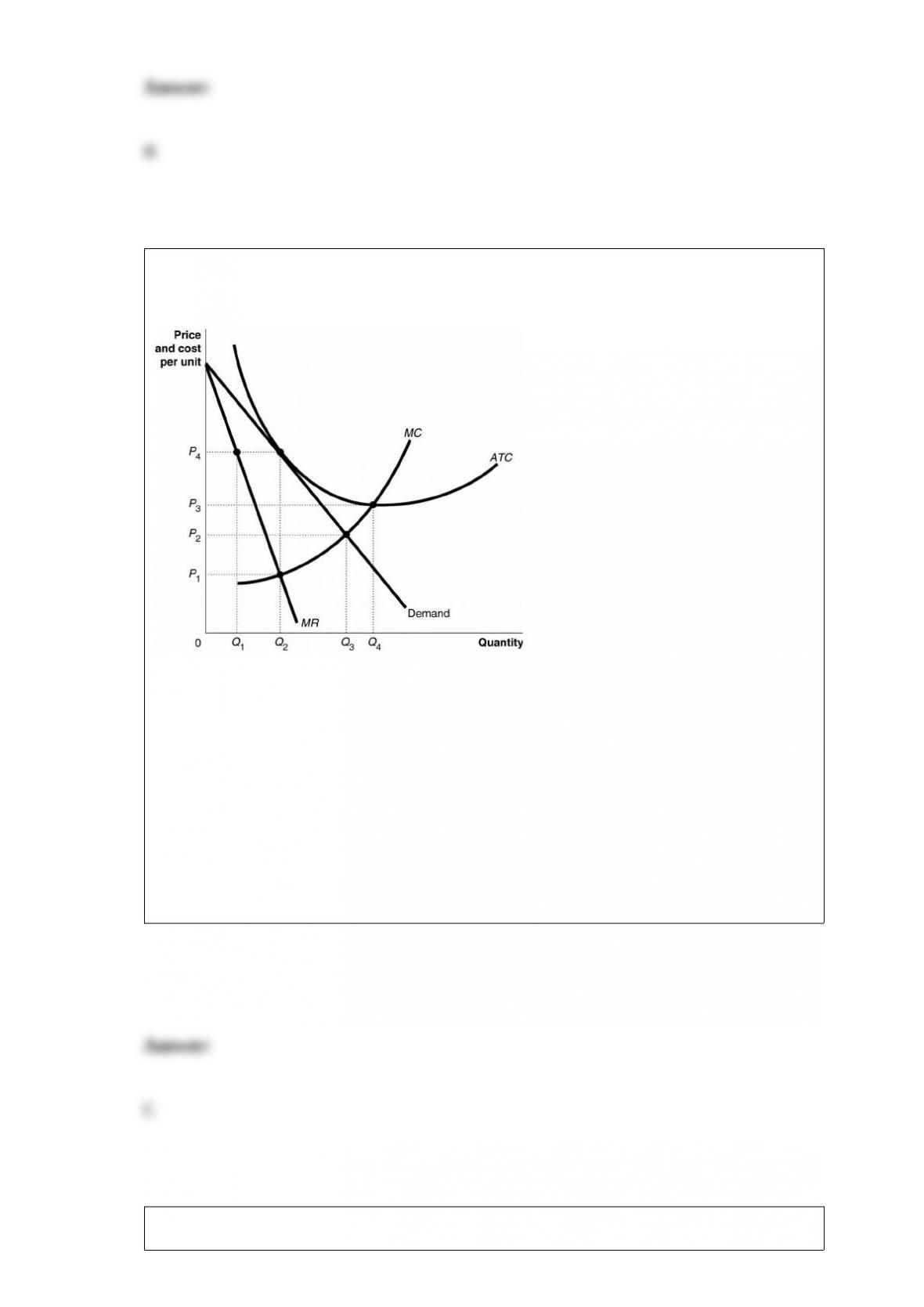
Figure 13-11
Refer to Figure 13-11. What is the allocatively efficient output for the firm represented
in the diagram?
A) Q1 units
B) Q2 units
C) Q3 units
D) Q4 units
Which of the following statements is true?
A) The supply of oil is very elastic over short time periods but becomes perfectly
inelastic over time. A given shift in supply results in a greater increase in the price of oil
when the supply of oil is perfectly inelastic.
B) The supply of oil is very inelastic over short time periods but becomes more elastic
over time. A given shift in supply results in a smaller increase in the price of oil when
the supply is more elastic.
C) The supply of oil is perfectly inelastic; therefore, as the demand for oil increases
over time the price of oil increases significantly.
D) Over short periods of time increases in the demand for oil are greater than increases
in the supply of oil. Over the long run increases in the demand and the supply of oil are
about equal. As a result, the price of oil increases greatly in the short run but is stable in
the long run.
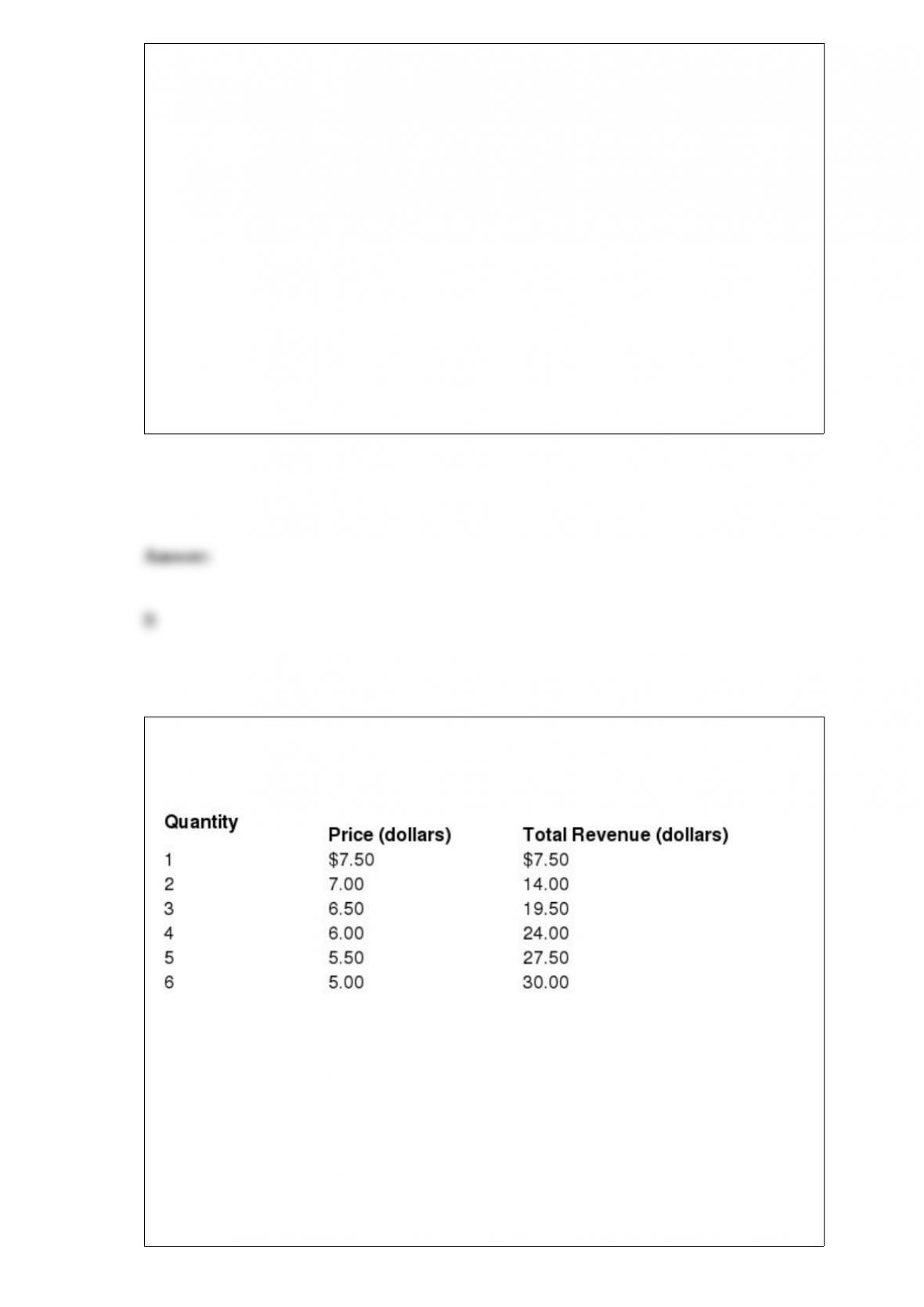
Table 13-1
Refer to Table 13-1. What portion of the marginal revenue of the 5th unit is due to the
output effect and what portion is due to the price effect?
A) output effect = $3.00; price effect = $0.50
B) output effect = $1.50; price effect = $2.00
C) output effect = $5.50; price effect = -$2.00
D) output effect = $4.00; price effect = -$0.50

A contract under which a buyer agrees to make payments in exchange for the provider
agreeing to pay some or all of the buyer’s medical bills is referred to as
A) a fee-for-service plan.
B) the Affordable Care Act.
C) a deductible.
D) health insurance.
Compared to a competitive market, a firm that has a monopsony in a labor market
would
A) hire fewer workers and pay higher wages.
B) hire more workers and pay lower wages.
C) hire fewer workers and pay lower wages.
D) hire more workers and pay higher wages.

Which of the following criteria should be used to evaluate if government intervention in
a market for the purpose of environmental protection is justified?
A) Does the intervention program reduce pollution to zero using the least costly
method?
B) Is the intervention program economically efficient?
C) Does the intervention program make the amount of economic surplus as large as
possible?
D) Is the damage to the environment from government intervention as small as
possible?
Sequential games are often used to analyze which two types of business strategies?
A) whether to invest in research and development and whether to offer employees an
early retirement package
B) deciding to merge with another firm and deciding how much to spend on an
advertising campaign
C) deciding to end production of an unprofitable product and deciding to shut down
temporarily
D) deterring entry by another firm and bargaining between firms