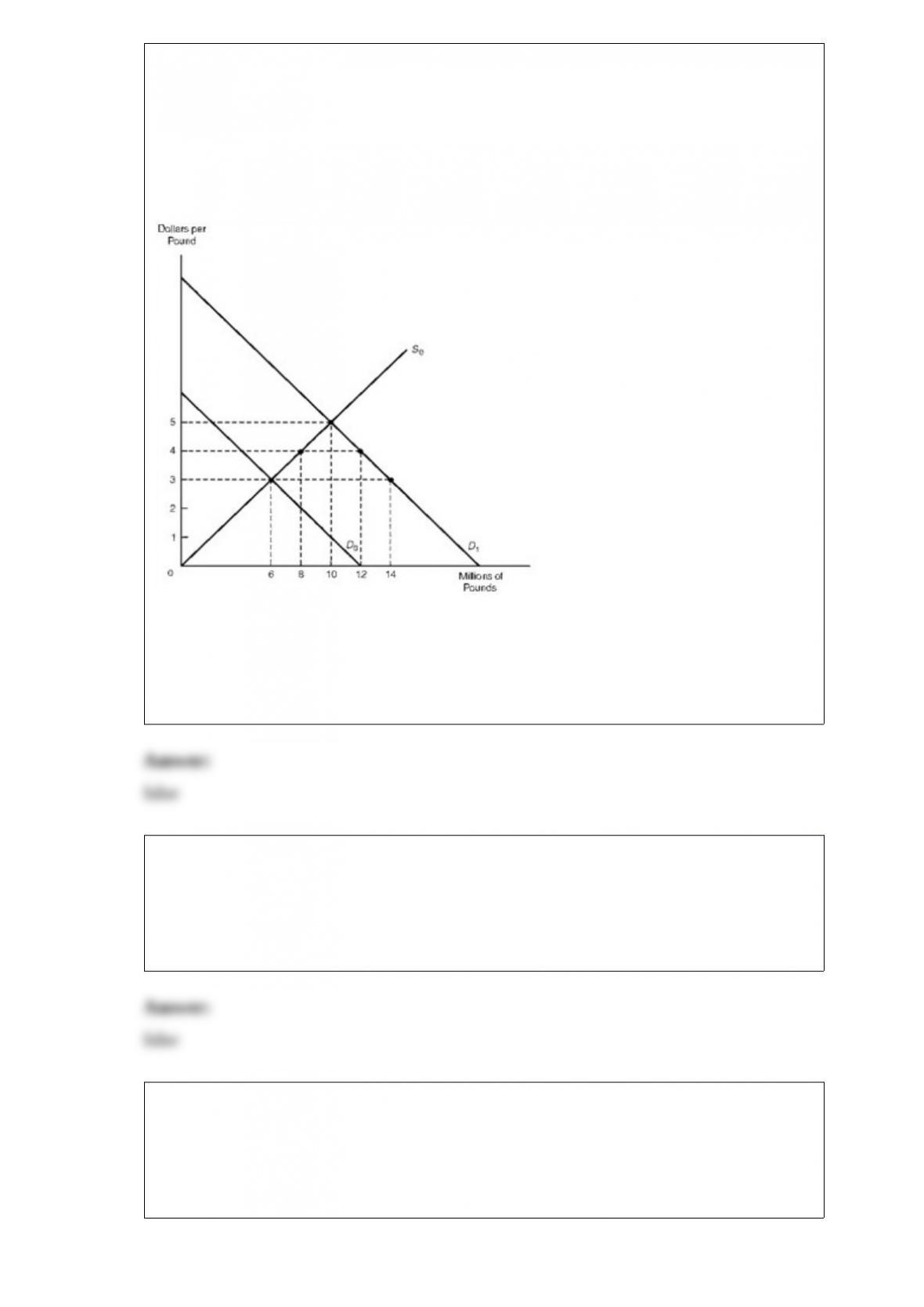
1) the diagram below represents the exchange market position of the united states in
trade with the united kingdom. starting at the equilibrium exchange rate of $3 per
pound, suppose the demand for pounds rises from d0 to d1.
figure 17.1 foreign exchange market
refer to figure 17.1. if the exchange rate was allowed to rise to $4 per pound, u.s.
monetary authorities would have to supply 6 million pounds to the foreign exchange
market in exchange for dollars to maintain this rate.
a.true
b.false
2) the gold standard’s “rules of the game” required central bankers in a surplus country
to initiate contractionary monetary policies which lead to higher interest rates and net
investment inflows.
a.true
b.false
3) the figure below illustrates the supply and demand schedules of swiss francs in a
market of freely-floating exchange rates.
figure 12.1 the market for francs
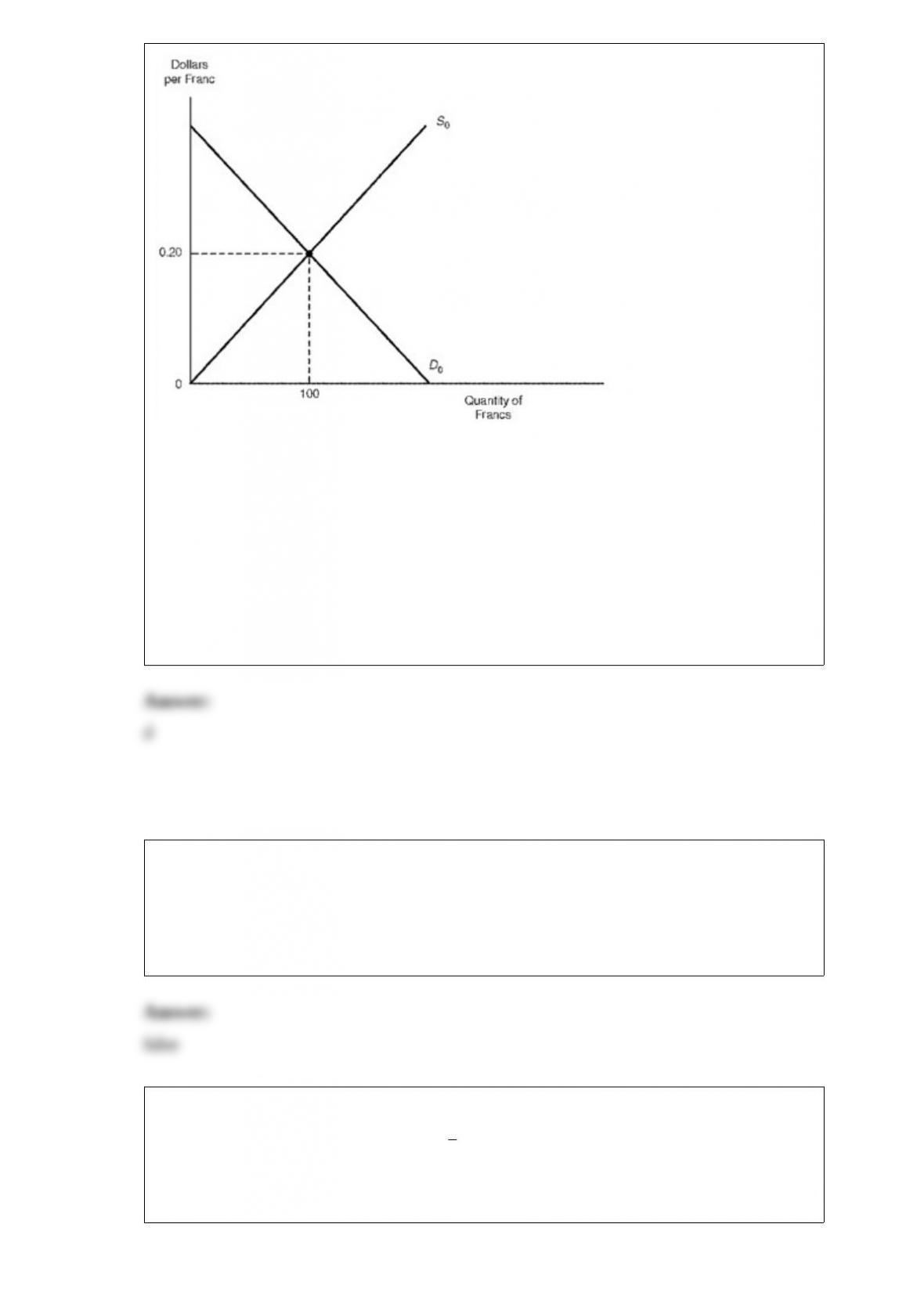
refer to figure 12.1. should the u.s. price level rise relative to the swiss price level, there
would occur a (an):
a.increase in the demand for francs–increase in the supply of francs-appreciation of the
dollar
b.decrease in the demand for francs–decrease in the supply of francs-depreciation of
the dollar
c.increase in the supply of francs–decrease in the demand for francs-appreciation of the
dollar
d.decrease in the supply of francs–increase in the demand for francs-depreciation of the
dollar
4) there are two explanations of constant opportunity costs: (1) factors of production are
imperfect substitutes for each other; (2) all units of a given factor have different
qualities.
a.true
b.false
5) figure 2.2 illustrates trade data for canada. the figure assumes that canada attains
international trade equilibrium at point c.
figure 2.2. canadian trade possibilities
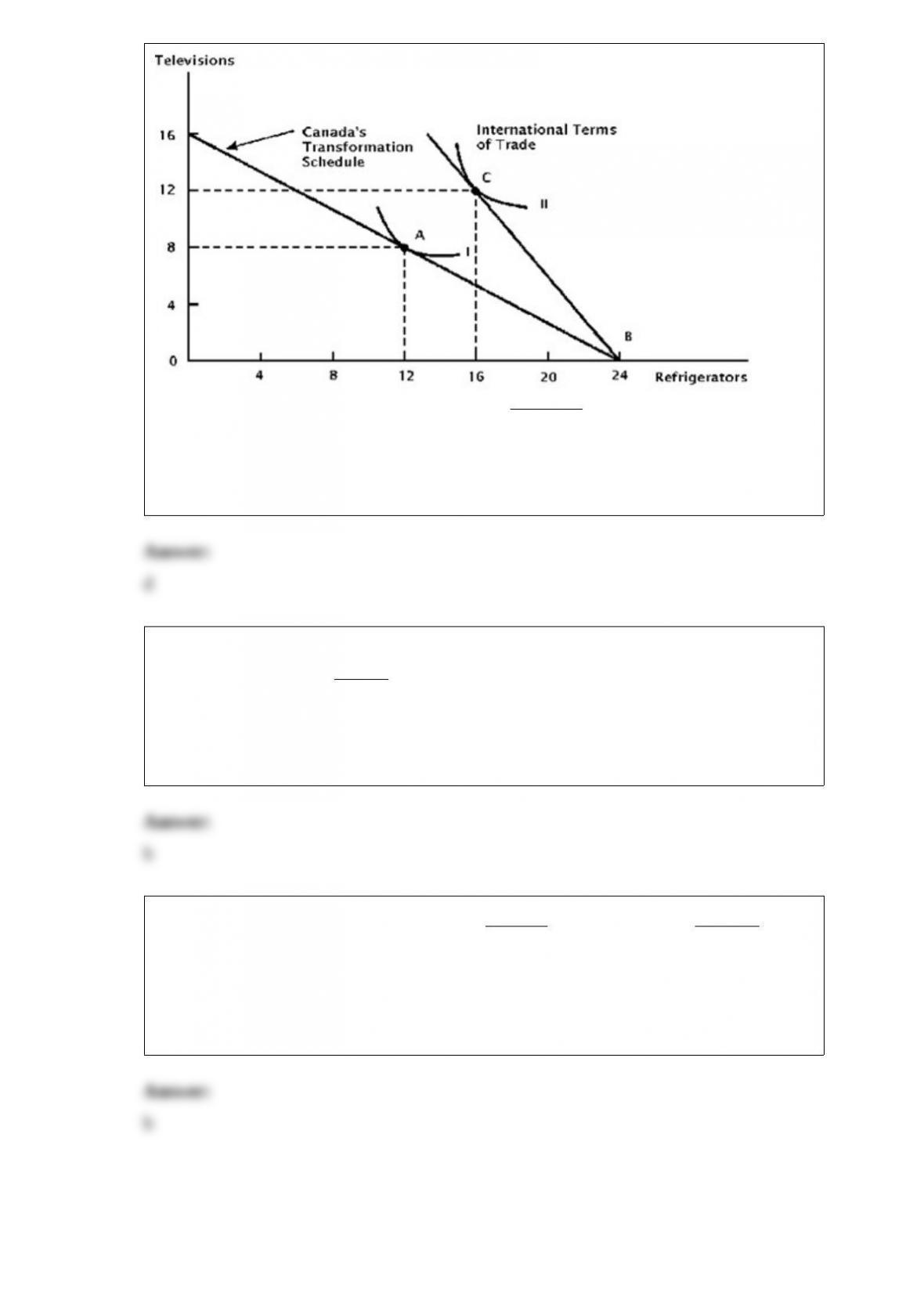
consider figure 2.2. with specialization, canada produces:
a.16 televisions
b.12 televisions and 8 refrigerators
c.8 televisions and 16 refrigerators
d.24 refrigerators
6) suppose the united states faces domestic inflation and a current account surplus.
should the united states revalue the dollar, one would expect the:
a.inflation to become more severe–surplus to become less severe
b.inflation to become less severe–surplus to become less severe
c.inflation to become less severe–surplus to become more severe
d.inflation to become more severe–surplus to become more severe
7) if the supply schedule for tin is relatively inelastic to price changes, a decrease in the
demand schedule for tin will cause a:
a.decrease in price and an increase in sales revenue
b.decrease in price and a decrease in sales revenue
c.increase in price and an increase in sales revenue
d.increase in price and a decrease in sales revenue
8) improvements in productivity may lead to decreasing comparative costs if
a.the assumption of fixed technologies under constant costs is relaxed
b.technologies available to each nation is allowed to differ
c.resource endowments are allowed to vary
d.all of the above
9) the appreciation in the value of the dollar in the early 1980s is explained by all of the
following except:
a.the united states being considered a safe haven by foreign investors
b.relatively high real interest rates in the united states
c.confidence of foreign investors in the u.s. economy
d.relatively high inflation rates in the united states
10) small countries tend to have higher measures of openness than larger countries
because:
a.their productivity is higher
b.they are more reliant on international trade
c.they are less reliant on international trade
d.they are more diverse