It has been suggested by some economists that rent seeking activity often occurs within
families, particularly when an inheritance is involved.
a. True
b. False
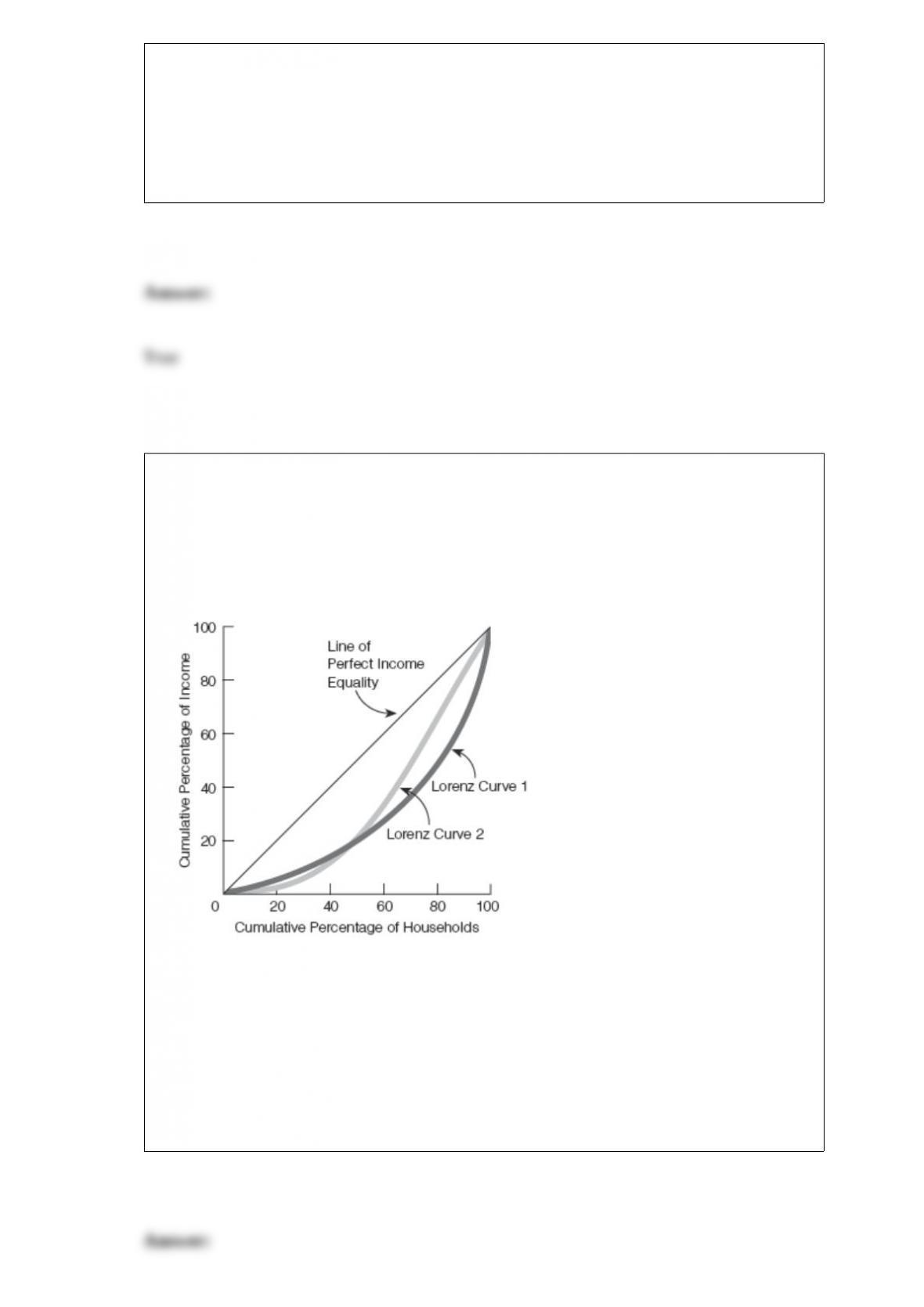
Refer to Exhibit 29-2.This graph depicts the Lorenz curve for two countries, country 1
(Lorenz curve 1) and country 2 (Lorenz curve 2).Although the Gini coefficient is
__________ in country 1 than in country 2, the bottom quintile in ____________
receives a larger share of income compared to the bottom quintile in _______________.
Exhibit 29-2
a. lower; country 1; country 2
b. lower; country 2; country 1
c. higher; country 1; country 2
d. higher; country 2; country 1
A positive externality exists and government wants to apply a per-unit subsidy in order
to bring about an efficient outcome. Under what condition will the solution (the
subsidy) be worse than the problem (the market failure)?
a. Under the condition that the subsidy is greater than the marginal external benefit
(associated with the positive externality).
b. Under the condition that the post-subsidy output is not farther away from the efficient
level of output than the pre-subsidy output is from the efficient level of output.
c. Under the condition that the post-subsidy output is farther away from the efficient
level of output than the pre-subsidy output is from the efficient level of output.
d. Under the condition that the subsidy is less than the marginal external benefit
(associated with the positive externality).
e. none of the above
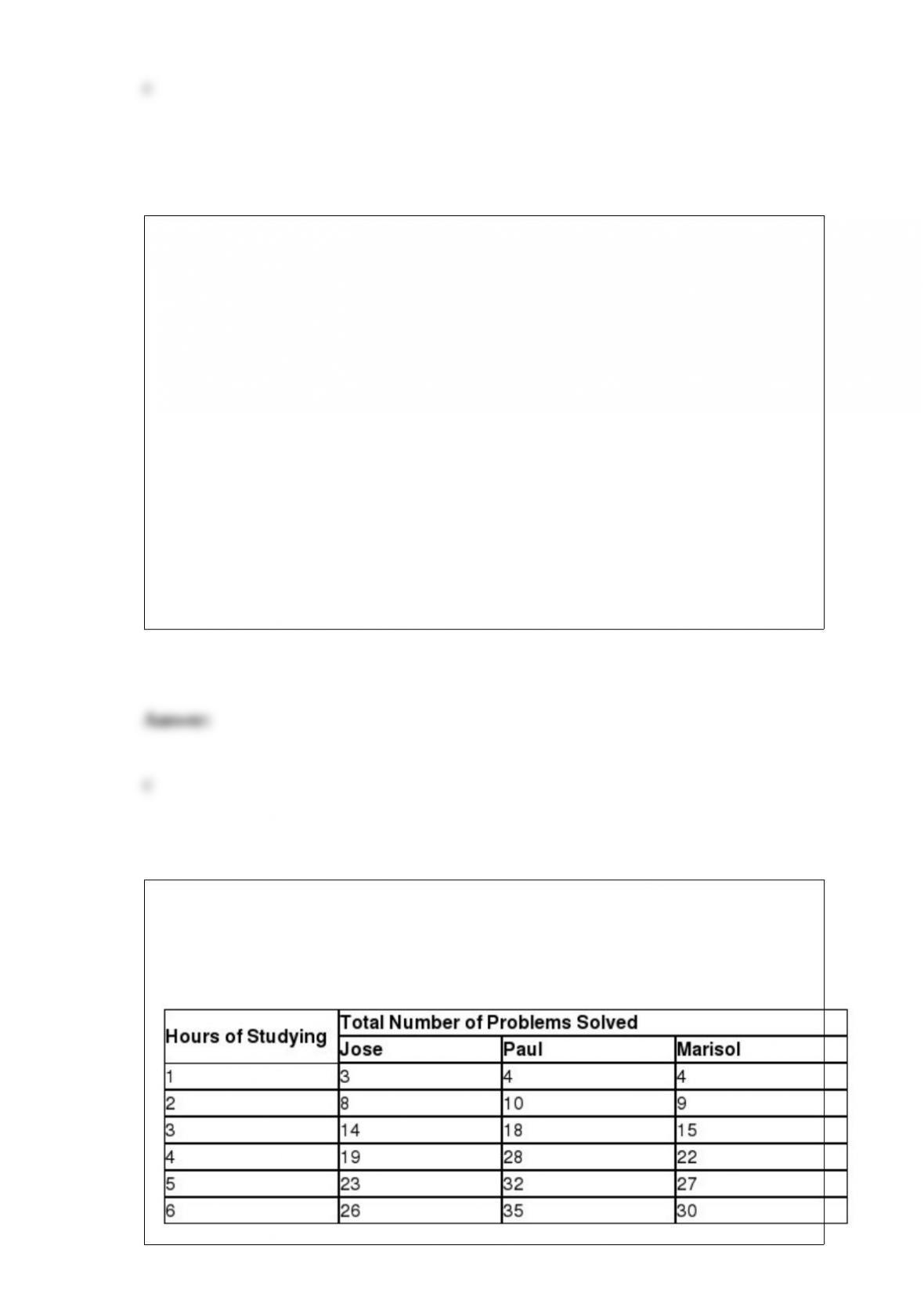
Refer to Exhibit 22-10. Professor Jones, who is encouraging the three students to work
together in order to be “more productive,” is implicitly assuming that by working
together they will be able to
Exhibit 22-10

a. solve more problems in the same amount of time than they would by studying
separately.
b. solve the same number of problems in less time than they would by studying
separately.
c. decrease their marginal products through joint efforts.
d. all of the above
e. a and b
Another term for excess supply is shortage.
a. True
b. False
The model predicting victory in a two-person race for the candidate closer to occupying
the center of the voter distribution is built on the assumption that
a. people always vote for the Democratic candidate if they are Democrats and for the
Republican candidate if they are Republicans.
b. people vote for the candidate who comes closer to matching their own views.
c. most people don’t vote unless the election is predicted to be close.

d. none of the above
One U.S. Senator promises to vote for a measure that another U.S. Senator wants only
if the favor is returned in kind. This is an example of
a. rational ignorance.
b. median voter politics.
c. logrolling.
d. public interest talk.
e. none of the above
Price elasticity of supply is the percentage change in the quantity __________ of a good
divided by the percentage change in __________.
a. demanded; the price of the good
b. supplied; the price of the good
c. demanded; the price of another good
d. supplied; the price of another good
e. demanded; income
The elasticity of demand for a factor is lower,
a. the higher the elasticity of demand for the product the factor helps to produce.
b. the higher the factor cost-total cost ratio.
c. the fewer substitutes for the factor.
d. a and c
e. all of the above
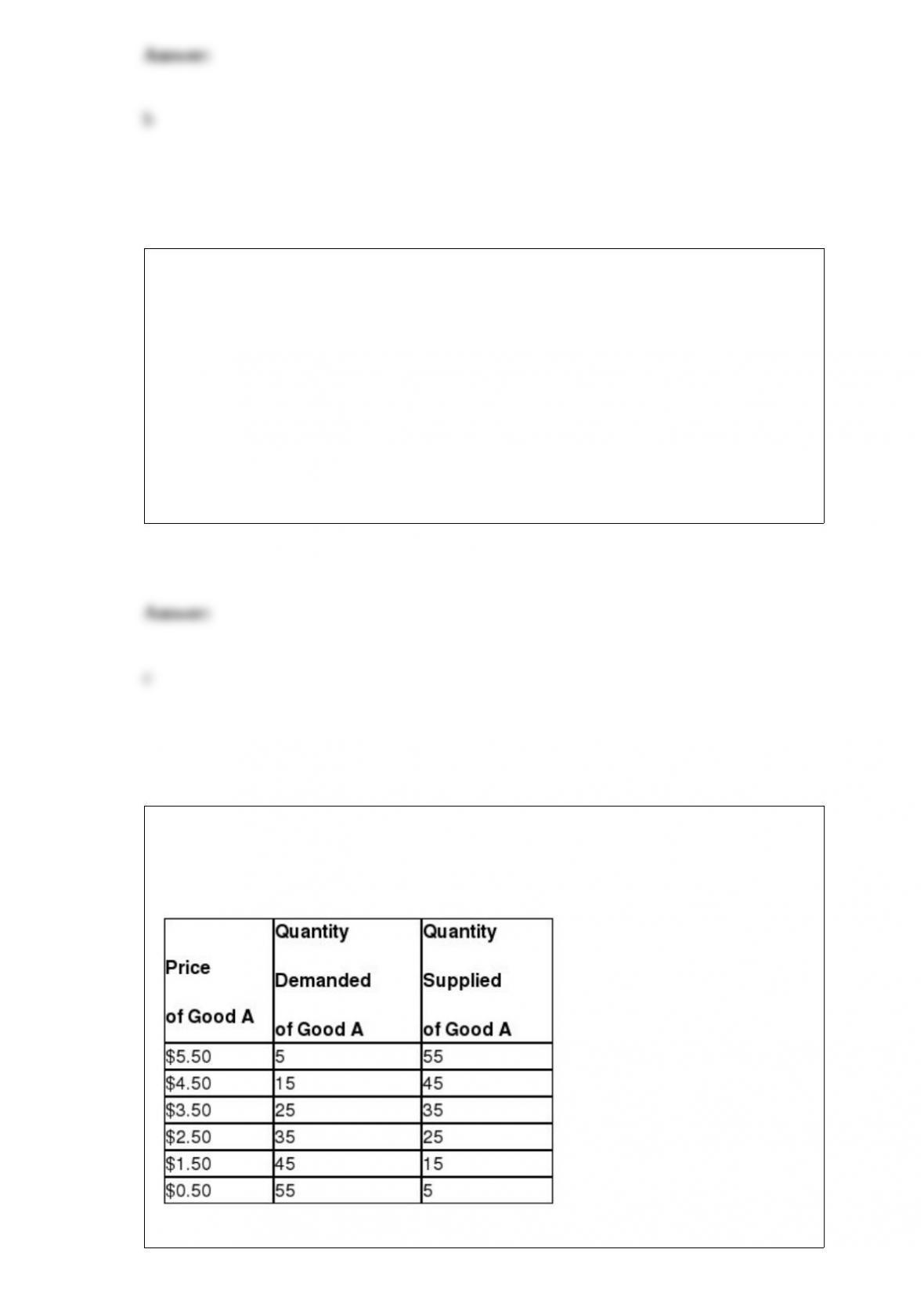
Refer to Exhibit 20-3. When price decreases from $3.50 to $2.50, the price elasticity of
supply is
Exhibit 20-3
a. 0.
b. 1.0.
c. 5.0.
d. 0.1.
e. 0.5.
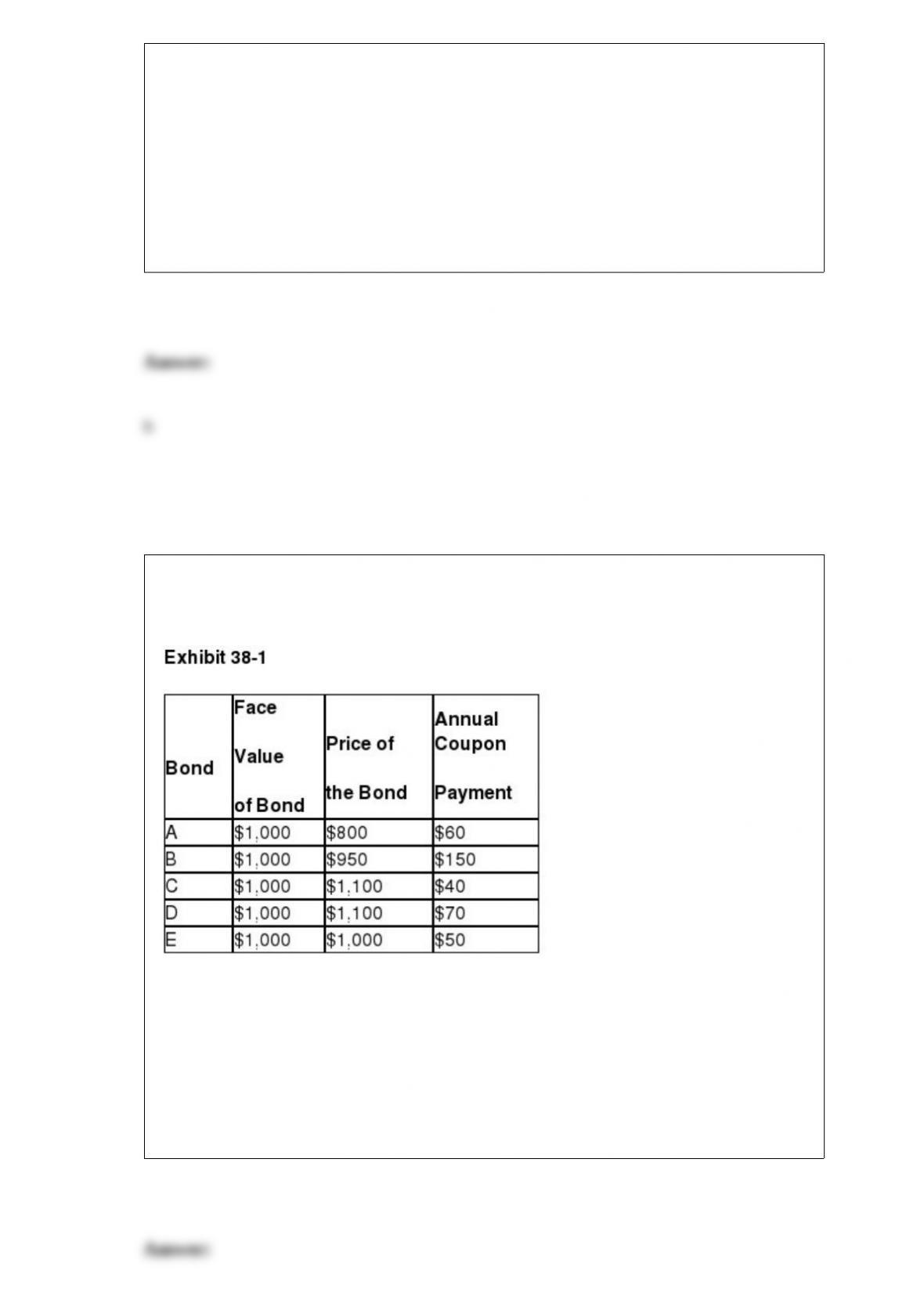
Refer to Exhibit 38-1. The yield on bond A is approximately
a. 7.5 percent.
b. 0.06 percent.
c. 6.0 percent.
d. 0.075 percent.

Marginal revenue is
a. total revenue divided by the quantity of output.
b. total profit minus total costs.
c. the change in total output brought about by using an additional unit of a variable
input.
d. the change in total revenue brought about by selling an additional unit of the good.
e. the change in total revenue minus the change in total costs.
The act of selling goods abroad at a price below their cost and below the price charged
in the domestic market is called
a. dumping.
b. slumping.
c. export manipulation.
d. constraining.
e. none of the above
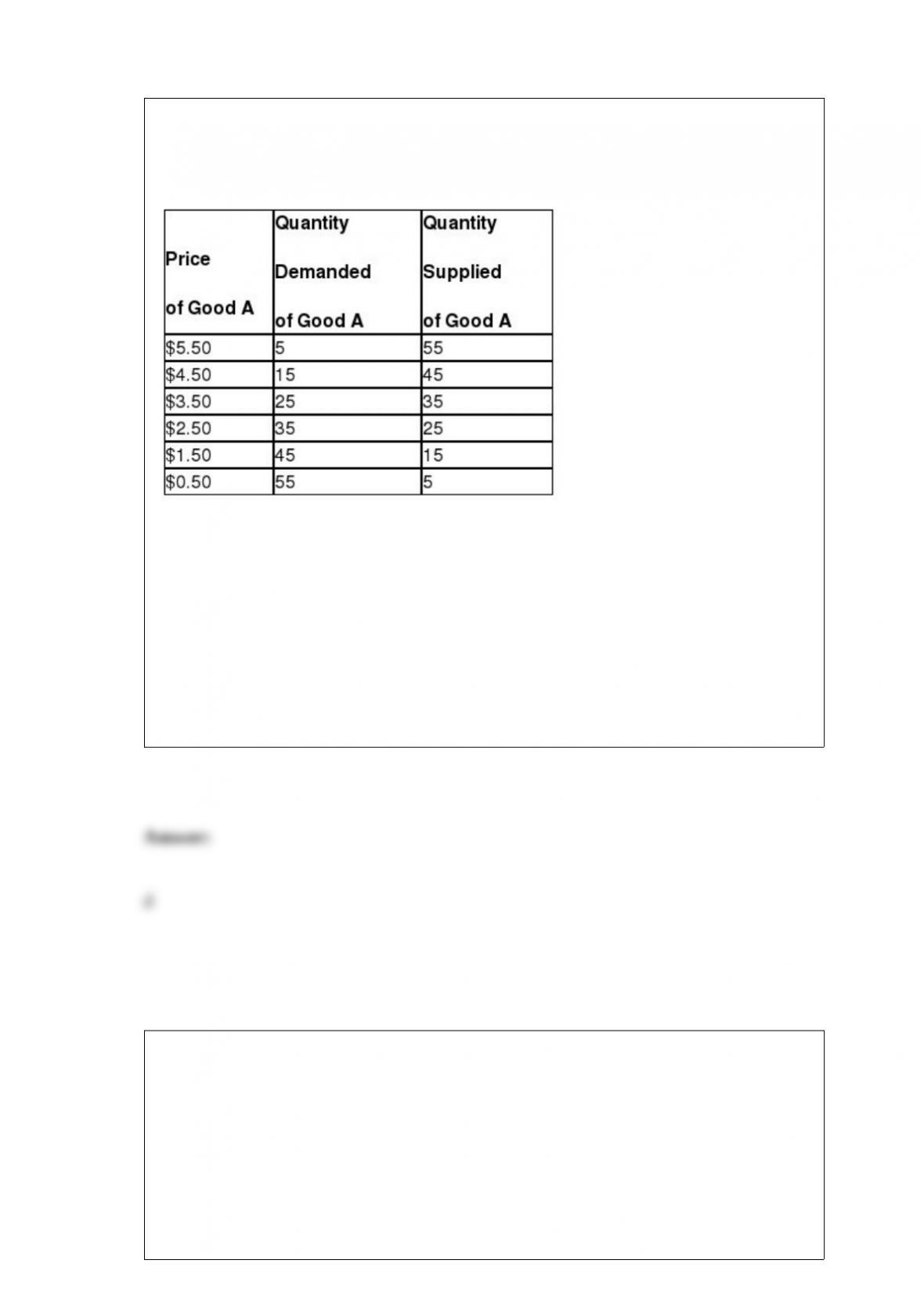
Refer to Exhibit 20-3. When price decreases from $5.50 to $4.50, the price elasticity of
supply is
Exhibit 20-3
a. 0.
b. 0.1.
c. 0.5.
d. 1.0.
e. 5.0.
Increased productivity in the agricultural sector during much of the twentieth century
shifted the
a. demand curve for farm products rightward.
b. supply curve of farm products leftward.
c. demand curve for farm products leftward.

d. supply curve of farm products rightward.
The general and likely purpose of a (labor) strike is to convince management that
a. the supply curve of labor is what the union says it is.
b. the demand curve (for the product they sell) is what the union says it is.
c. workers have a higher marginal physical product than the management think they
(the workers) have.
d. it is not in their best interest to raise the prices of the product they sell.
e. none of the above
Refer to Exhibit 34-4. Country 1 has a comparative advantage in the production of
__________, and country 2 has a comparative advantage in the production of
__________.

a. good A; good B
b. good B; good A
c. both goods; neither good
d. neither good; both goods
e. neither good; neither good
International trade policies are largely advocated, argued, and lobbied for based more
on their distributional effects than on their aggregate or overall effects. What does this
imply?
a. Producers will lobby for protectionism even though they may know that their gains
from protectionism will be outweighed by the losses to consumers.
b. Consumers care more about how policies affect them than how policies affect them
and everyone else, too.
c. Tariffs are more effective than quotas.
d. Consumers’ surplus will rise (when it rises) more than producers’ surplus will fall
(when it falls).
e. none of the above

Given an 8 percent increase in wages, firm A cuts back on labor more than firm B. It
follows that, ceteris paribus,
a. there are likely fewer substitutes for labor in firm B than firm A.
b. there are likely fewer substitutes for labor in firm A than firm B.
c. sunk costs are greater for firm A than firm B.
d. the demand for the product that firm A produces is likely less elastic than the product
that firm B produces.
e. a and d