
Unemployment benefits are
A) paid regardless of a person’s income from other sources and regardless of assets.
B) reduced by an amount that is equal to an individual’s income from other sources.
C) not paid to individuals with assets valued over $200,000.
D) paid to individuals the entire time they are unemployed regardless of how long they
are unemployed.
The “high-tech revolution” grew out of many tiny start-up operations. This is an
argument that more technological change occurs in ________ market structures.
A) oligopolistic
B) monopoly
C) duopoly
D) more competitive
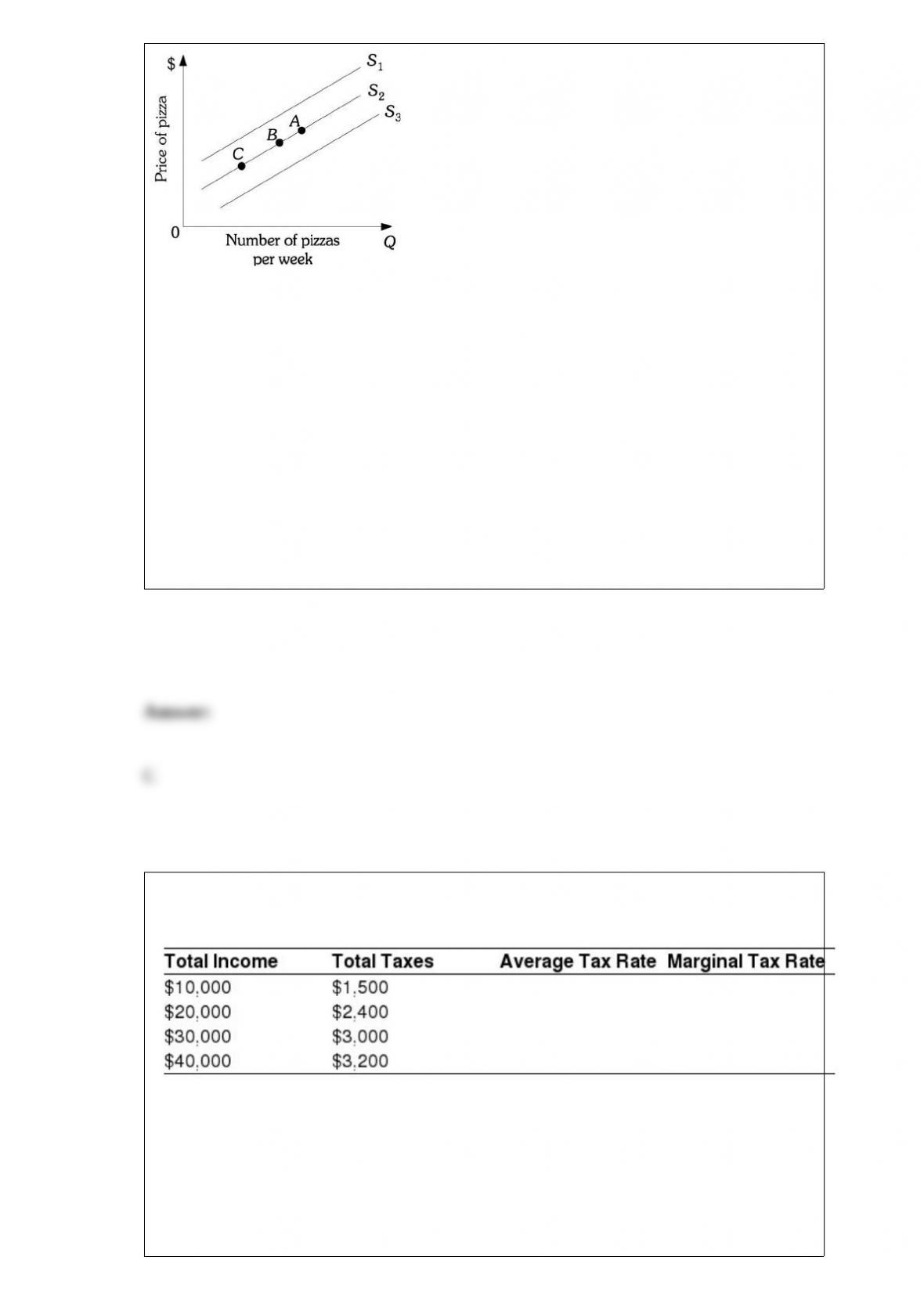
Figure 3.14
Refer to Figure 3.14. A decrease in the wage rate of pizza makers will cause a
movement from Point B on supply curve S2 to
A) Point A on supply curve S2.
B) Point B on supply curve S2.
C) supply curve S3.
D) supply curve S1.
Table 19.2
Refer to Table 19.2. The tax rate structure in this example is
A) proportional.
B) progressive.

C) regressive.
D) marginal.
For ________, there is a range of exchange rates that can lead automatically to both
countries realizing the gains from specialization and comparative advantage.
A) any pair of countries
B) very few countries
C) only industrialized countries
D) only democratic countries
Relating to the Economics in Practice on page 377: Intergenerational earnings mobility
A) is roughly equal in all high-income countries.
B) is greater in the United States than in any other high-income country.
C) is lowest in the Nordic countries.
D) is three times greater in Canada than in the United States.
A firm can minimize its losses by shutting down when ________ are less than
________ costs.
A) variable costs; fixed
B) fixed costs; variable
C) revenues; variable
D) operating profits; sunk
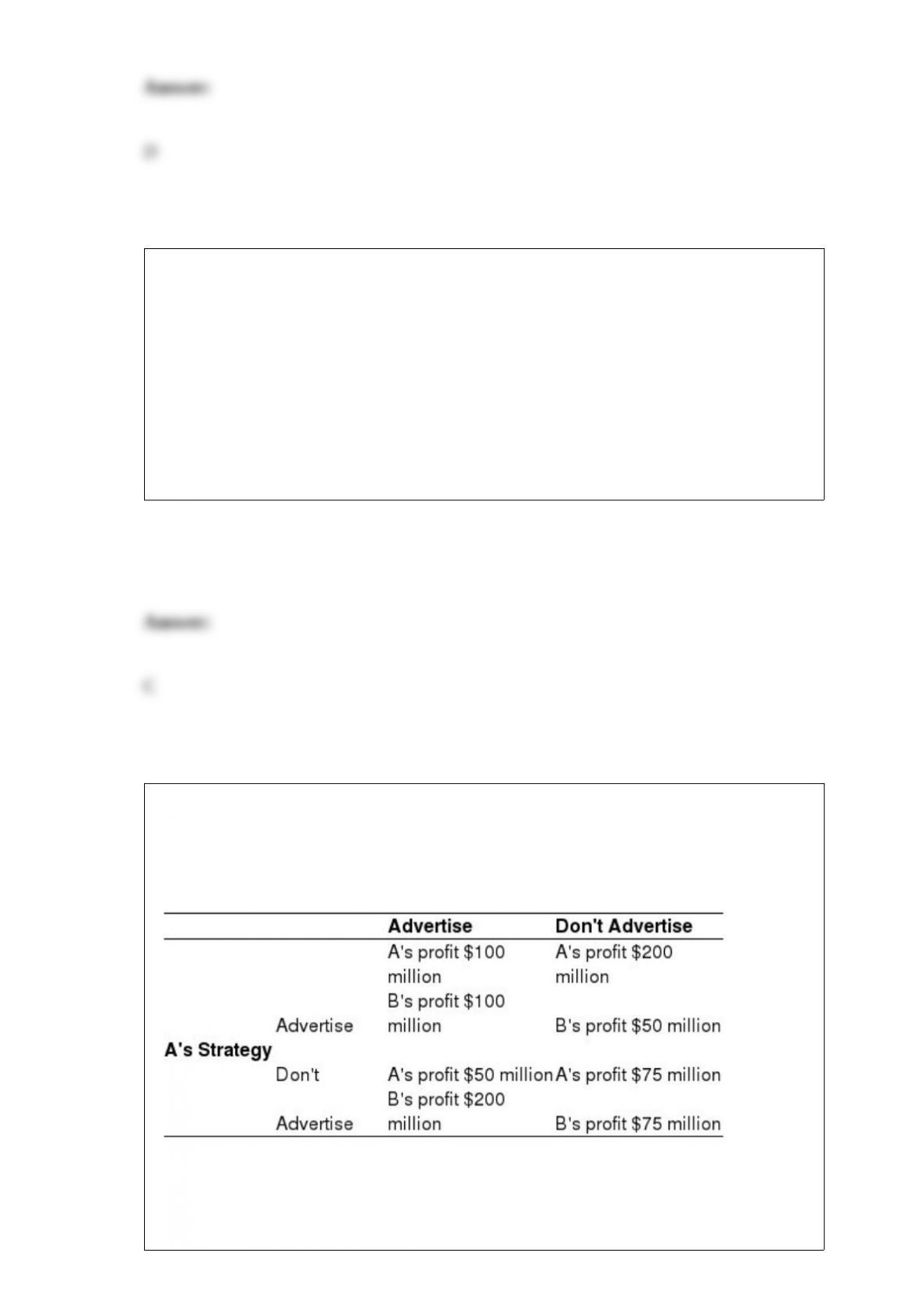
Table 2
B’s Strategy
Refer to Table 14.2. What is the Nash equilibrium in the game?
A) (Advertise, Advertise)

B) (Don’t Advertise, Don’t Advertise)
C) (Don’t Advertise, Advertise)
D) (Advertise, Don’t Advertise)
Esmerelda’s Egg Emporium is a monopolistically competitive firm. Its marginal
revenue curve ________ its demand curve, intersecting the quantity axis ________ the
point at which the demand curve intersects it.
A) lies above; midway between the origin and
B) is the same as; exactly at
C) lies below; midway between the origin and
D) lies above; twice as far out as
In the capital market, households ________ supply the financial resources to firms that
allow them to purchase ________.
A) indirectly; capital
B) directly; capital
C) indirectly; land

D) indirectly; labor
If the quantity of coffee demanded increases by 4% when the price of tea increases by
12%, the cross-price elasticity of demand between coffee and tea is
A) -3.
B) 0.33.
C) 3.
D) 48.
San Francisco International Airport (SFO) is located adjacent to the community of San
Bruno. The noise from air traffic negatively affects individuals living in San Bruno,
however, this cost is not considered by airlines or air travelers. The airlines feel they
have a right to use the airspace while the individuals living in San Bruno feel they have
the right to quiet. The following diagram depicts the marginal costs and marginal
benefits associated with air travel.

Figure 16.5
Refer to Figure 16.5. If the government assigns property rights to ________ and no
negotiations occur between the parties, the resulting level of air travel is 120 units.
A) the residents of San Bruno
B) both the airlines and the residents of San Bruno in a 50-50 split
C) the airlines
D) indeterminate from the given information.
Table 16.4 shows the situation facing two firms, both of which are polluting. Assume
that each firm emits 5 units of pollution.
Table 16.4
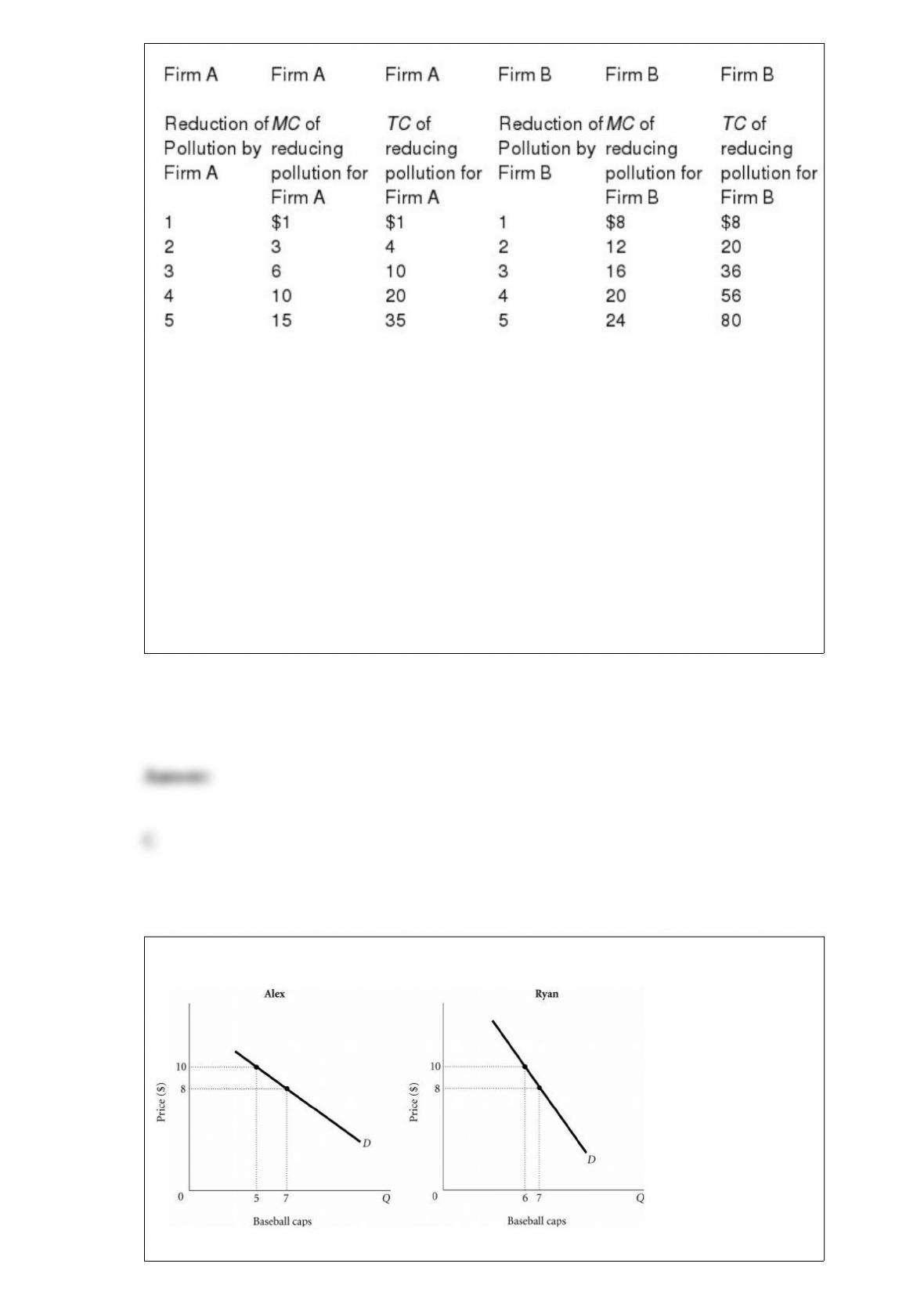
Refer to Table 16.4. Suppose the government wants to reduce the total amount of
pollution from the current level of 10 to 4. To do this, the government caps each firm’s
emissions at 2 units and issues 2 permits to each firm. If firms are allowed to trade
permits, what is the total cost of the pollution reduction?
A) $24
B) $40
C) $43
D) $81
Figure 8
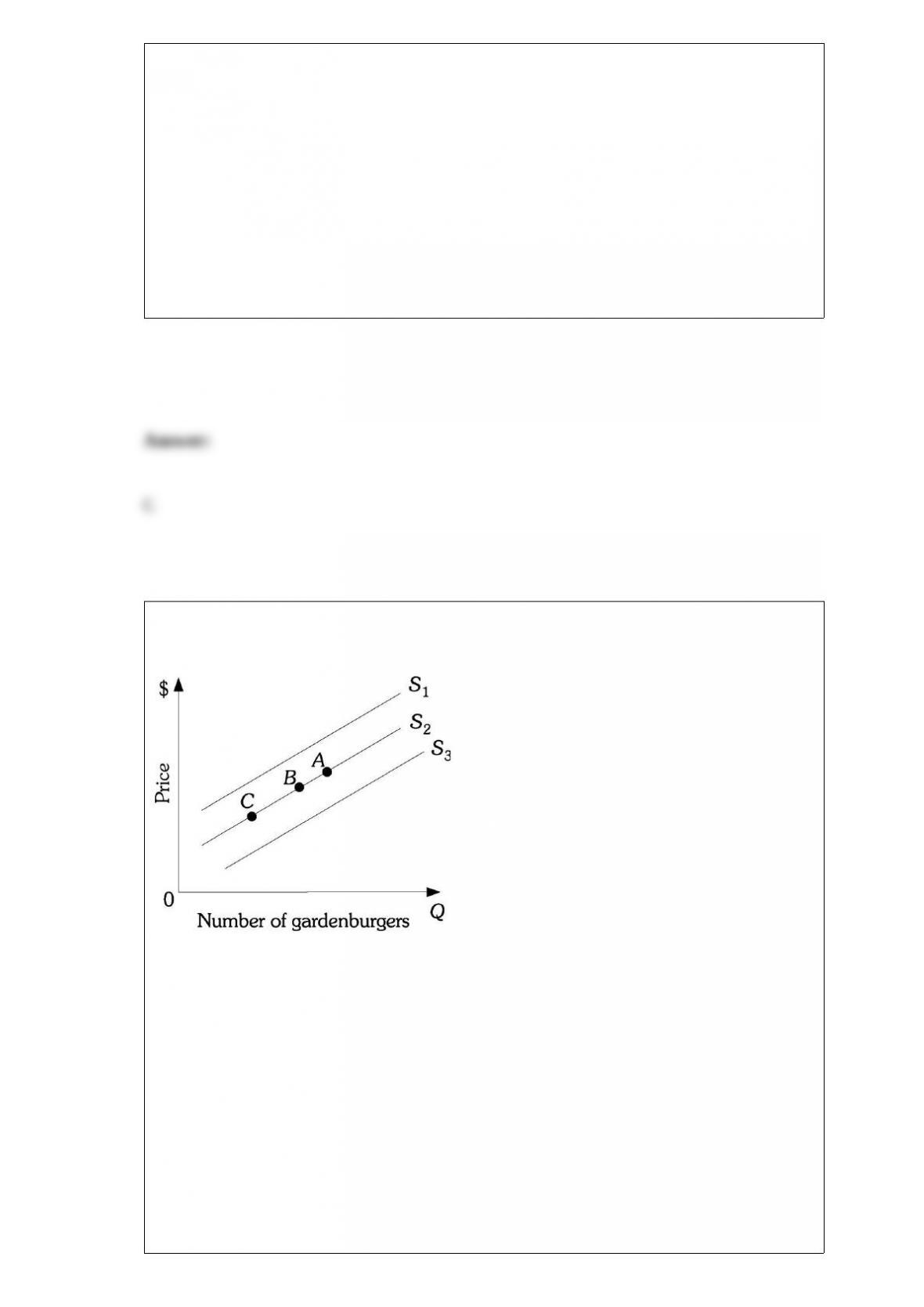
Refer to Figure 3.8. Assume there are only two people in the market for baseball caps:
Alex and Ryan. Along the ________, at a price of $8, quantity demanded would be 14.
A) demand curve for Alex
B) demand curve for Ryan
C) market demand curve
D) none of the above
Figure 3.15
Refer to Figure 3.15. An increase in the price of tomatoes (an input for gardenburgers)
will cause a movement from Point B on supply curve S2 to
A) supply curve S3.
B) supply curve S1.
C) Point A on supply curve S2.
D) Point C on supply curve S2.

Pie-Oh-My, a monopolistically competitive firm, is baking 80 gourmet pies per day and
selling each pie for $25. At that production level, ATC is $40, AVC is $30, AFC is $10,
and both MR and MC are $16. This firm should
A) continue to produce 80 pies, as price is greater than AFC.
B) increase output to the point where price equals marginal cost.
C) decrease output to the point where marginal cost equals average cost.
D) produce zero pies and pay fixed costs.
When it comes to public goods, it is important to remember
A) that government intervention necessarily solves the market failure.
B) only one level of output can be realized, and consumers are willing to pay different
amounts for that level.
C) the free rider problem is difficult to overcome, but the drop-in-the-bucket problem is
not.
D) all goods provided by the government are public goods.

The Supplemental Security Income program is designed to take care of ________.
A) the very poor who have dependent children
B) the elderly who are poor
C) individuals who have been laid off from jobs
D) people who work, but whose income is below the poverty level
Assume the Backwoods Shoe Company hires three inputs: labor (L), capital (K), and
land (A) to produce shoes (X). Which of the following conditions must be met so that
the firm is using the optimal, or least costly, combination of inputs?
A) MPL = MPK = MPA
B) PL = PK = PA
C) MPL/PL = MPK/PK = MPA/PA
D) MPL = MPK = MPA = 1/PX
India has a comparative advantage compared to Spain in the production of clothing if
A) India can produce clothing at a lower monetary cost than Spain can.
B) India can produce clothing using fewer resources than Spain can.
C) the demand for clothing is higher in India than in Spain.
D) India can produce clothing at a lower cost in terms of other goods than Spain can.
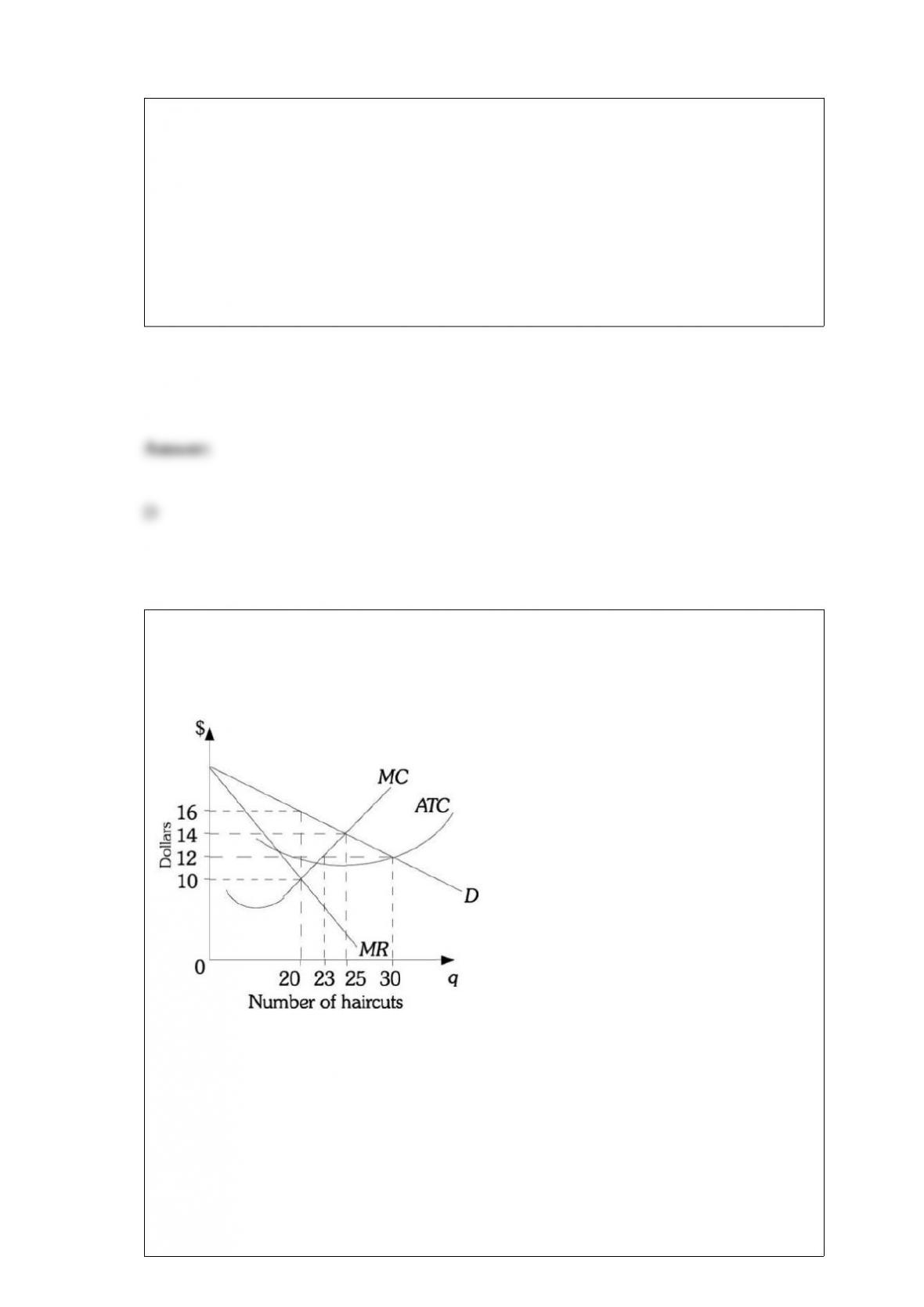
Below are drawn cost curves for Clips Ahoy Barber Shop, a monopolistically
competitive firm.
Figure 15.1
Refer to Figure 15.1. If Clips Ahoy maximizes profits, its ________ is $240.
A) total revenue
B) total cost
C) profit

D) marginal revenue
If the supply of labor increases, which of the following events will occur?
A) The wage rate will fall, and firms will increase employment up until the point where
MRP equals the new wage rate.
B) The wage rate will fall, and firms will decrease employment to the point where MRP
equals the new wage rate.
C) The wage rate will increase, and firms will decrease employment to the point where
MRP equals the new wage rate.
D) The wage rate will increase, and firms will increase employment up until the point
where MRP equals the new wage rate.
A formal statement of a theory is known as a(n)
A) model.
B) positive statement.
C) empirical measure.
D) causal statement.
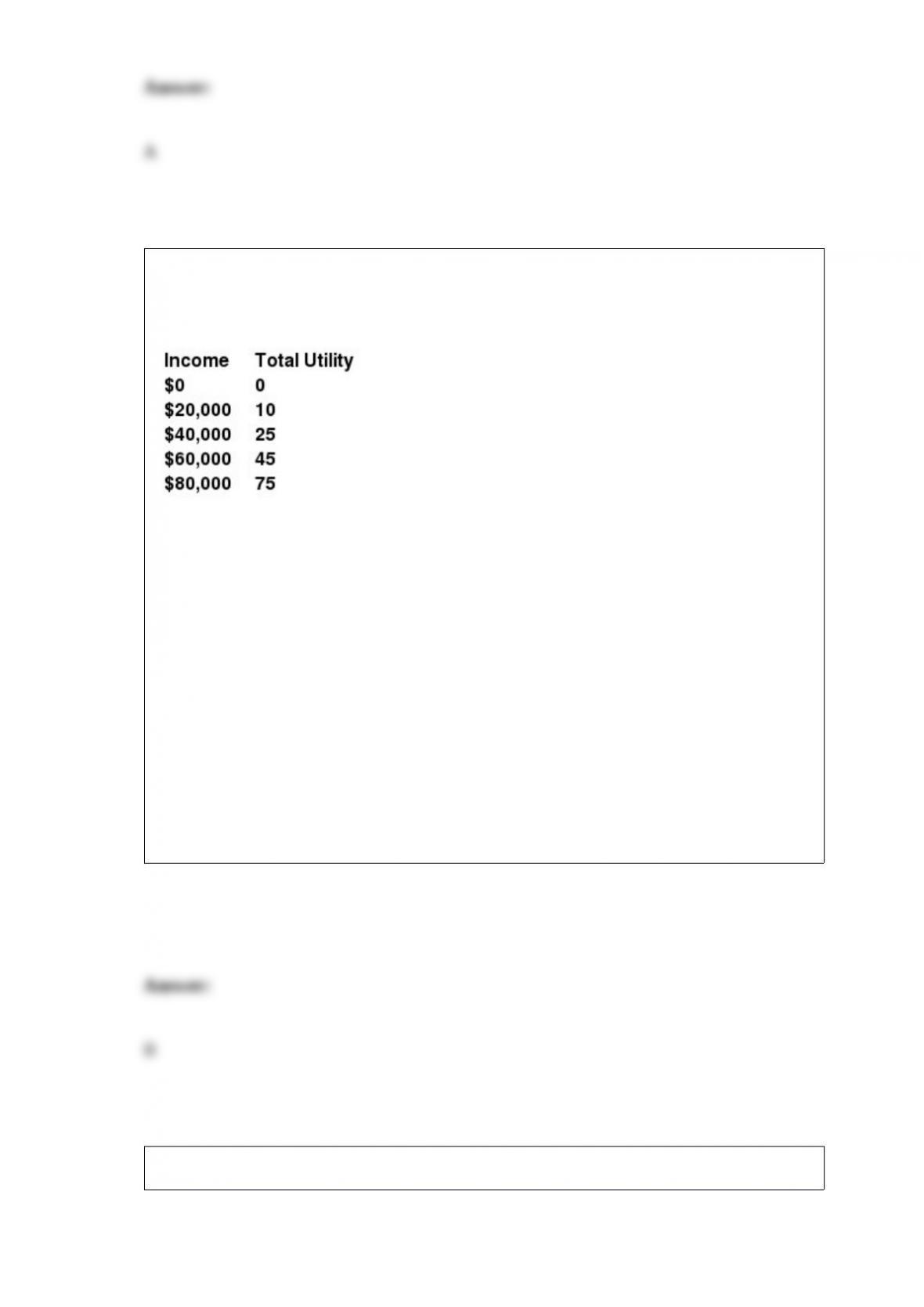
The table shows the relationship between income and utility for Terri.
Table 17.3
Refer to Table 17.3. Suppose Terri has a 25% chance of becoming disabled in any given
year. If she does become disabled, she will earn $0. If Terri does not become disabled,
she will earn her usual salary of $80,000. Terri has the opportunity to purchase
disability insurance for $20,000 which will pay her her full salary in the event she
becomes disabled. Terri’s utility with the policy is ________ and her expected utility
without the policy is ________.
A) 25; 45
B) 45; 56.25
C) 45; 18.75
D) 75; 37.5
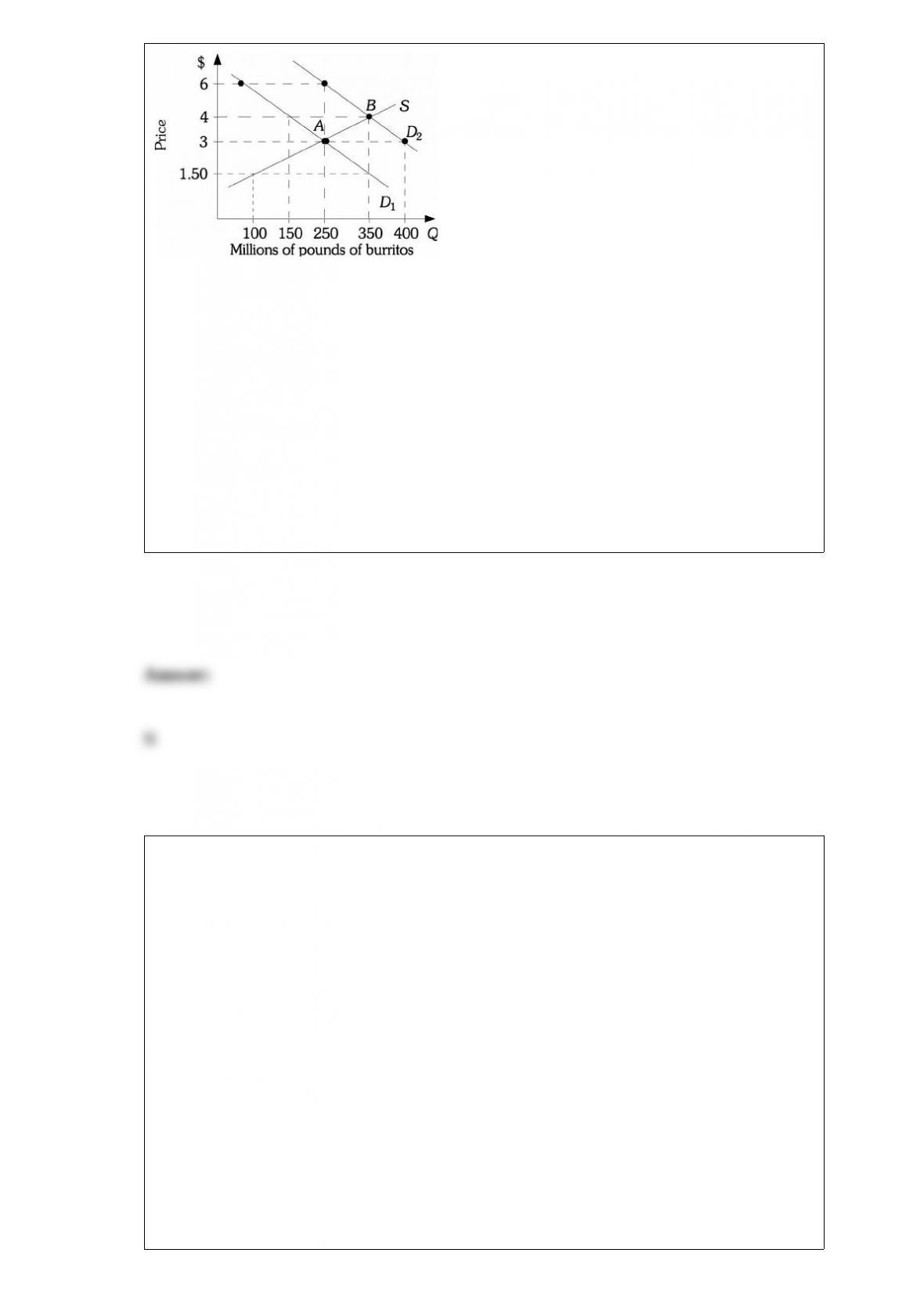
Figure 12
The market is initially in equilibrium at Point A. If demand shifts from D1 to D2 and the
price of burritos remains constant at $3.00, there will be
A) an excess supply of 150 million pounds of burritos.
B) an excess demand of 150 million pounds of burritos.
C) an excess supply of 50 million pounds of burritos.
D) an excess demand of 100 million pounds of burritos.
Investors put up $520,000 to construct a building and purchase all equipment for a new
restaurant. The investors expect to earn a minimum return of 10 per cent on their
investment. The restaurant is open 52 weeks per year and serves 900 meals per week.
The fixed costs are spread over the 52 weeks (i.e. prorated weekly). Included in the
fixed costs is the 10% return to the investors and $1,000 per week in other fixed costs.
Variable costs include $1,000 in weekly wages and $600 per week for materials,
electricity, etc. The restaurant charges $5 on average per meal.
Total revenue per week is
A) $3,000.
B) $4,000.
C) $4,500.
D) $8,100.
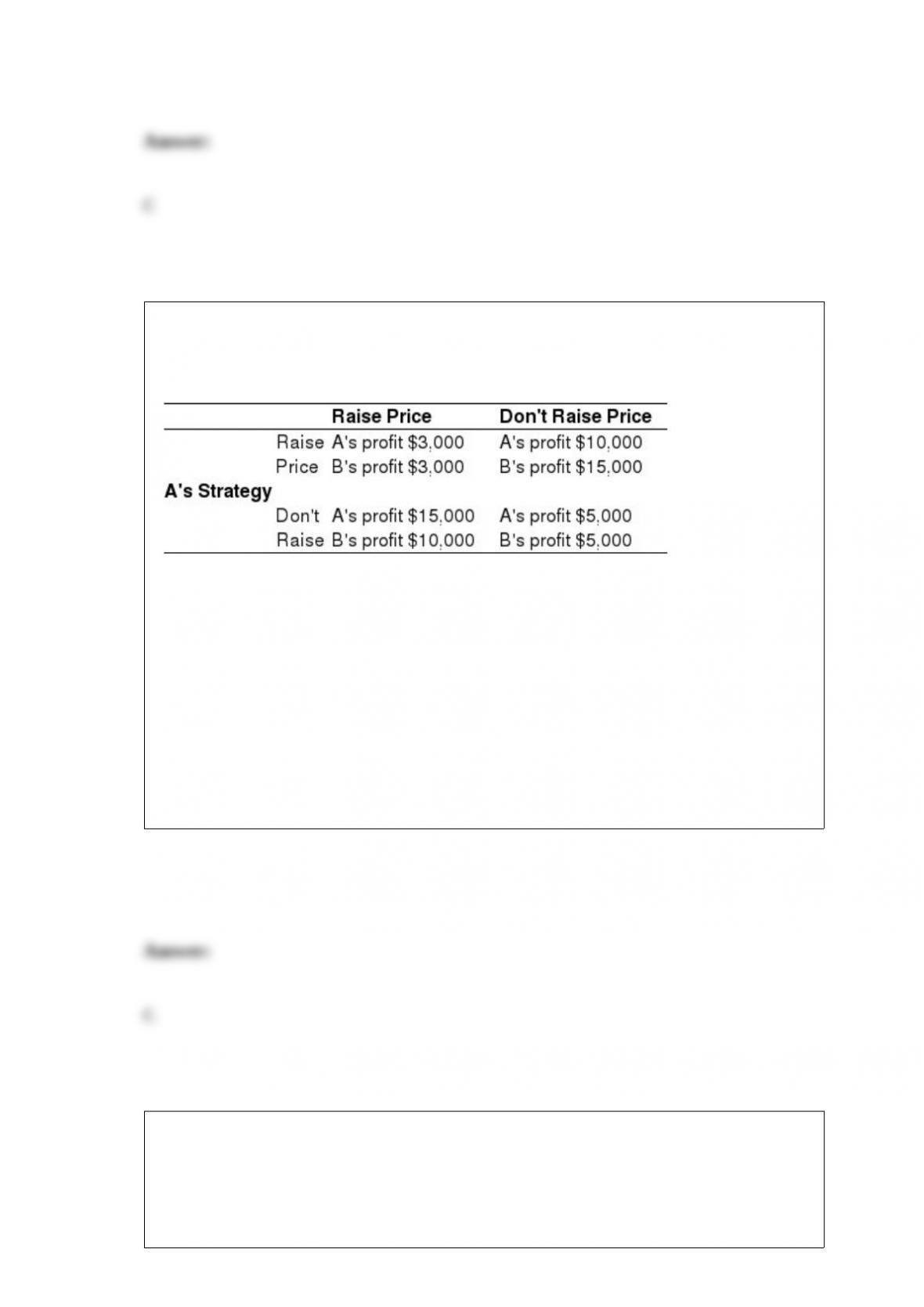
Table 14.1
B’s Strategy
Refer to Table 14.1. Firm A s optimal strategy isʹ
A) to not raise the price of its product.
B) to raise the price of its product.
C) dependent on what Firm B does.
D) indeterminate from this information, as no information is provided on Firm A s risk ʹ
preference.
What percentage of United States personal income in 2012 came from ownership of
property?
A) 18%

B) 25%
C) 51%
D) 64%
Amy spends $6,000 on remodeling a storefront that she then opens as a take-out deli.
After opening her deli, her business is terrible, and she needs an additional $2,000 to
keep the deli open. Which of the following is true?
A) The $6,000 Amy spent on remodeling represents a part of the total variable cost of
her business.
B) The $6,000 Amy spent on remodeling represents a sunk cost of her business.
C) The $2,000 Amy needs to keep the deli open represents her marginal costs of
production.
D) The $2,000 Amy needs to keep the deli open represents her total fixed costs.
The transition from socialism to market capitalism by the ________ approach suggests
that the transition proceed immediately and impact all economic variables at once.
A) shock therapy
B) use-it-or-lose-it
C) now-or-never
D) gradualism
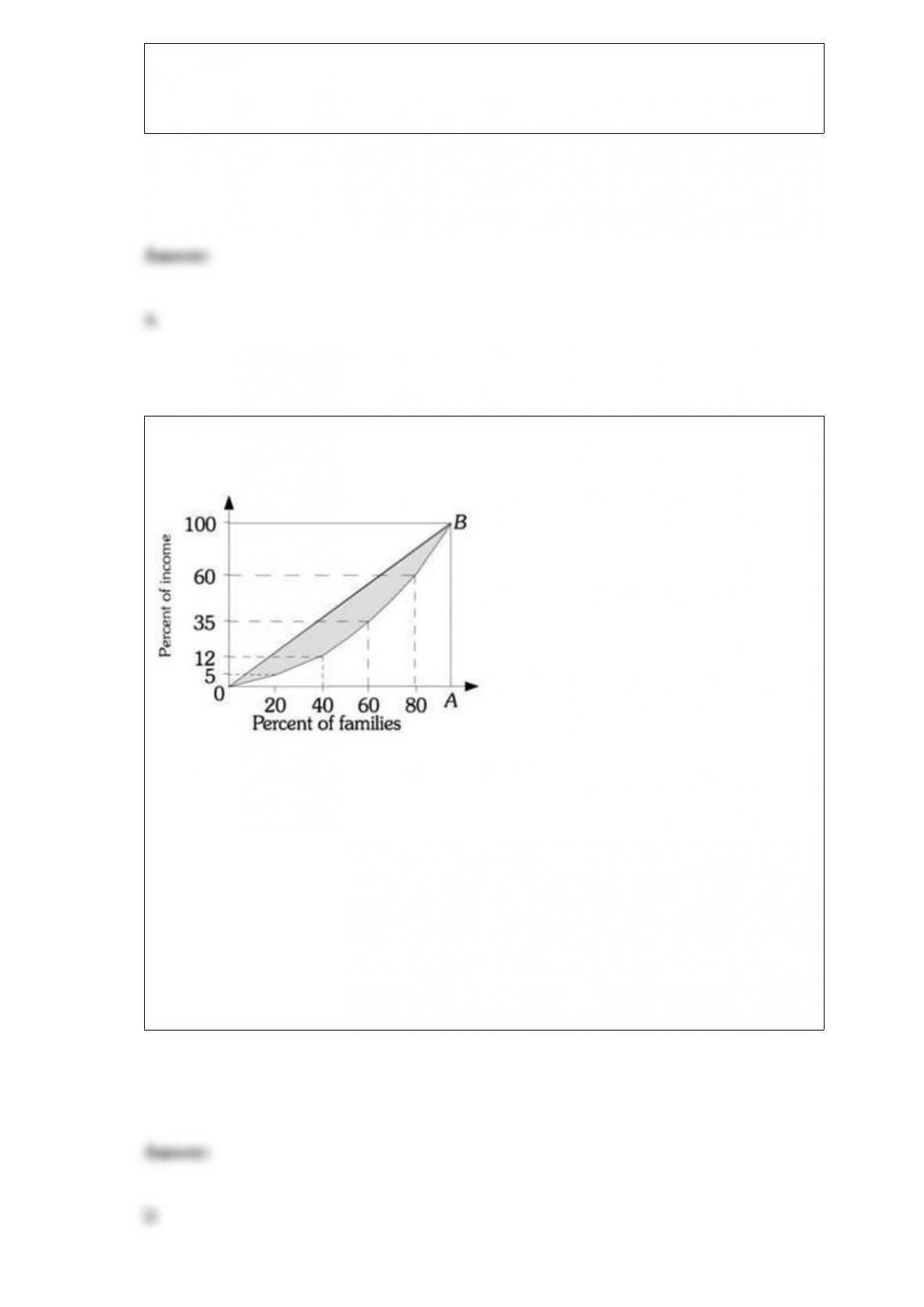
Figure 18.4
Refer to Figure 18.4. Suppose that the Lorenz curve were the same as the 45-degree line
OB. This would mean that
A) the distribution of income is perfectly equitable.
B) the distribution of income is completely inequitable.
C) only one family earned all the income.
D) the distribution of income is equal.
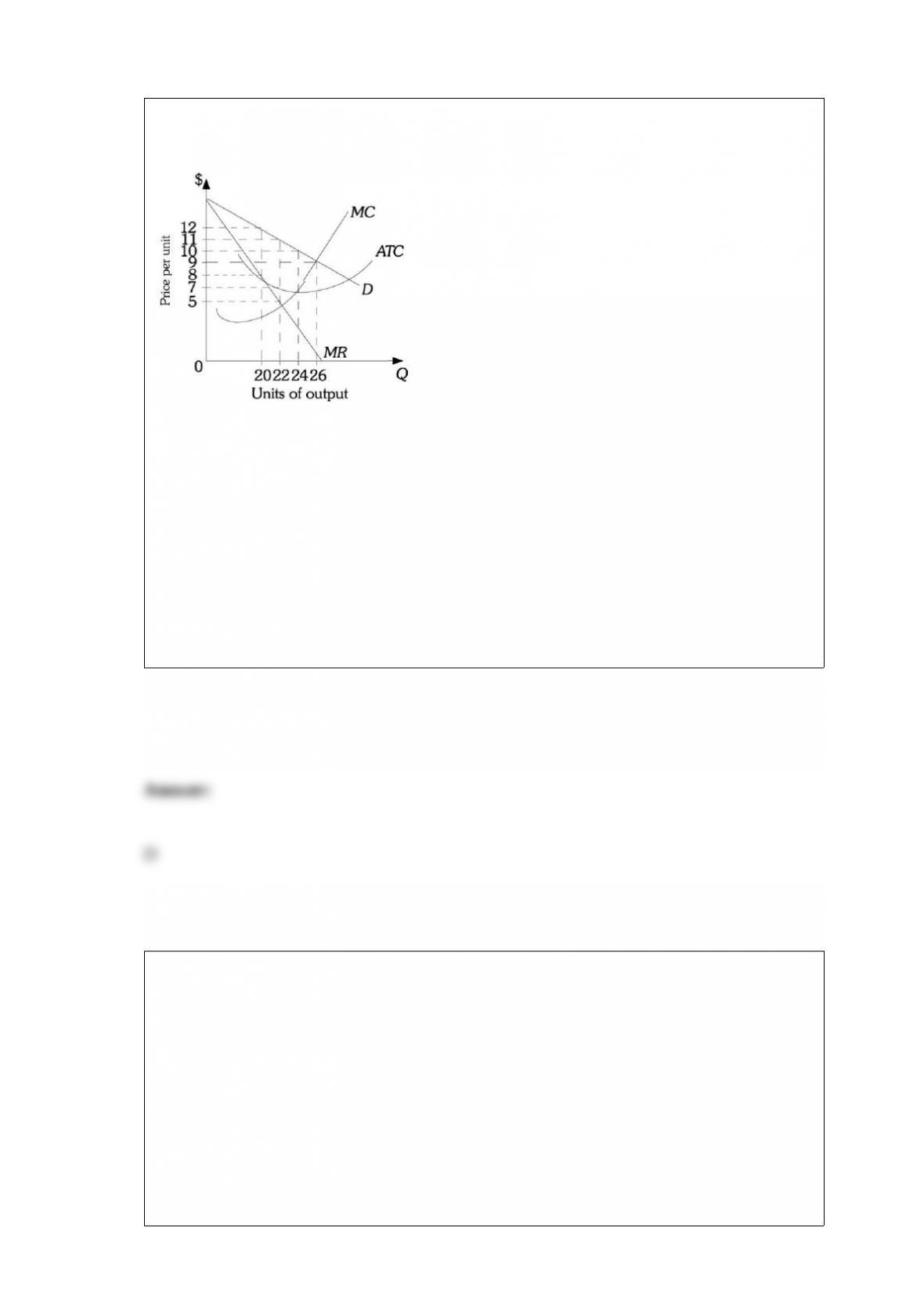
Figure 13.5
Refer to Figure 13.5. The profit-maximizing price for this firm is
A) $5.
B) $7.
C) $9.
D) $11.
Comparing the after-tax distribution of income to the before-tax distribution of income,
it is true that the after-tax distribution of income is ________ the before-tax distribution
of income.
A) more equally distributed than
B) less equally distributed than
C) more equitably distributed than
D) virtually the same as

When ________ substitutes exist, a firm in an imperfectly competitive industry has
________ power to raise price.
A) more; more
B) more; less
C) fewer; less
D) no; infinite