“A producer wanting to employ optimal quantity of inputs should choose the point
where diminishing returns sets in.” True or false?
“Assuming the long-run average cost curve is U-shaped, a firm will always seek to
operate at the lowest point on the long-run average cost curve.” True or false?
Emissions permits allow polluters to pay for the right to pollute a specified amount.
a. True
b. False

Buyers’ expenditures and sellers’ revenues are always identical.
a. True
b. False
What percentage of American business firms are incorporated?
a. about 20 percent
b. about 40 percent
c. about 50 percent
d. over 60 percent
Marginal, average, and total figures are bound together. If any two are known, the third
can be calculated.
a. True

b. False
Cyclical unemployment occurs when real GDP falls below potential GDP.
a. True
b. False
Direct controls work if
a. there is vigilance and enthusiasm in enforcement by the regulatory agency.
b. speed and rigor are used in the court system in prosecuting cases.
c. there are significant penalties imposed by the legal system.
d. All of the above occur.

How do advocates of discretionary stabilization policy view frequent changes in
spending and tax policy?
a. The changes make the economy more difficult to forecast.
b. The changes make life more difficult and hectic for Congress and the Fed.
c. The changes smooth out the business cycle, making planning easier.
d. The changes cause more instability in the economy and make planning more difficult.
As one moves down a straight-line demand curve away from the vertical axis, demand
becomes less elastic and then inelastic.
a. True
b. False
Under laissez faire, the allocation of scarce resources among the different industries
a. is possible only with government tax and subsidy policies.
b. is accomplished by the price system.
c. requires a considerable amount of central planning.

d. is the result of consumer planning.
Technical superiority can be a source of entry barriers.
a. True
b. False
An economy could produce above its potential GDP for a short period of time by
a. reducing the size of the labor force.
b. increasing the price of final goods and services.
c. adding extra shifts of work, such as overtime or night shifts.
d. increasing the money supply.

If investment is zero, the capital stock
a. continues to flow.
b. falls to zero.
c. remains constant.
d. grows steadily.
The working population of the United States is approximately
a. 144 million
b. 290 million
c. 300 million
d. 1.3 billion
In calculating the nation’s total output, net exports
a. represent exports of goods and services minus imports of goods and services.
b. have been a negative number in the last several years.

c. would include purchases of U.S.-made automobiles by foreigners minus purchase of
foreign-made automobiles by U.S. residents.
d. All of the above are correct.
Some years ago, the World Bank surveyed the ways in which countries encouraged or
discouraged market activity. Its conclusion was:
a. when poor people are allowed access to the institutinos richer people enjoy, they are
ill equipped to take advantage of those benefits
b. when poor people are allowed access to the institutions richer people enjoy, they can
thrive and help themselves
c. that there was no measurable difference between the countries that actively
encouraged market activity from those that discouraged it.
d. without the proper resources, encouraging market activity had no effect
Economic progress is best measured by
a. the growth rate of prices over time.
b. the growth rate of GDP per capita
c. the amount of time it takes a worker to work to afford certain goods and services.

d. the growth rate in the population.
Public goods are
a. valuable socially.
b. not depletable and not excludable.
c. subject to the “free rider” problem.
d. All of the above are correct.
Competitive forces will reduce the effects of employers’ discrimination over time.
a. True
b. False

Speculators make their profits on
a. price differences in different time periods.
b. price increases from inflation.
c. avoiding double taxation of income.
d. the difference in interest rates on stocks and bonds.
If economies of scale exist for a particular production relationship, long-run average
costs will
a. rise.
b. fall.
c. first rise and then fall.
d. be unaffected since there is no direct relationship between the two.
If the Fed sells $5 million in government bonds, how much will the money supply
change?
a. It will increase by $5 million.

b. It will increase by more than $5 million.
c. It will decrease by $5 million.
d. It will decrease by more than $5 million.
What are the economic effects of a currency appreciation?
a. It will decrease aggregate demand and aggregate supply, so that output will certainly
fall, and prices may fall as well.
b. It will increase aggregate demand and aggregate supply, so that output will certainly
rise, and prices may rise as well.
c. It will increase aggregate demand and decrease aggregate supply, so that prices will
certainly rise and output may rise as well.
d. It will decrease aggregate demand and increase aggregate supply, so that prices will
certainly fall and output may fall as well.
Where a firm generates beneficial externalities, society would be better off if
a. the firm produced a larger output level.
b. the firm reduced its output level.

c. a tax was levied on the firm equal to the dollar amount of the externalities.
d. price was reduced below marginal private cost.
Gross Domestic Product is best described as the
a. measure of a nation’s total economic welfare.
b. national income, including nonmarket income.
c. sum of money values of all final output produced in the domestic economy within the
year.
d. national output minus environmental damage.
Why does a tax change affect aggregate demand?
a. A tax change alters saving by an equal amount.
b. A tax change alters imports and net exports.
c. A tax change alters government spending by an equal amount.
d. A tax change alters disposable income and consumption spending.
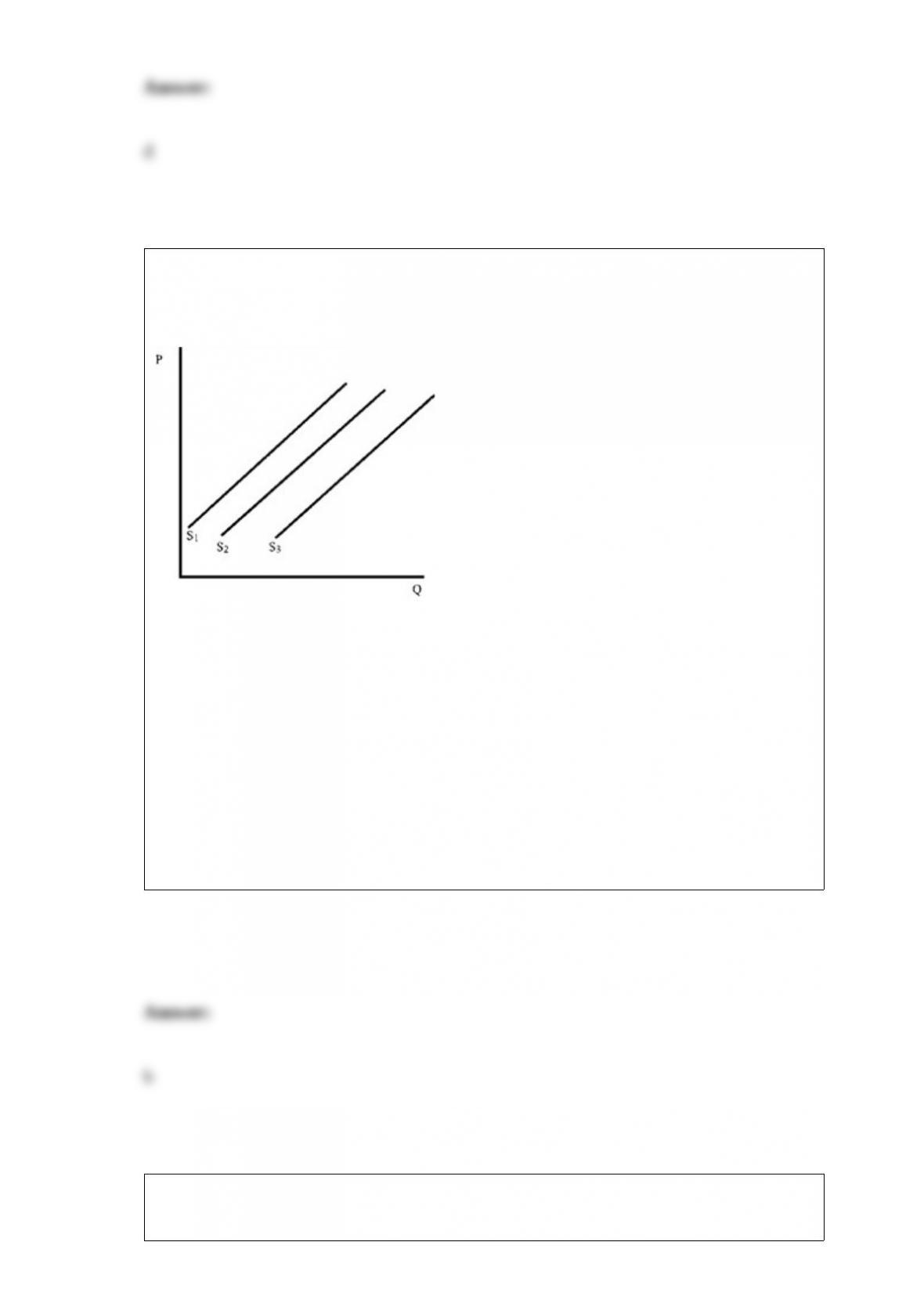
Figure 4-16
Assume that Figure 4-16 shows the supply of soda. An increase in the price of syrup
used in the production of soda will shift supply from
a. S1 to S2.
b. S2 to S1.
c. S2 to S3.
d. S1 to S3.
Environmentalists worry that economic growth imposes costs on society. Among these
costs are
a. pollution.
b. crowding.
c. waste disposal.
d. All of the above are costs.
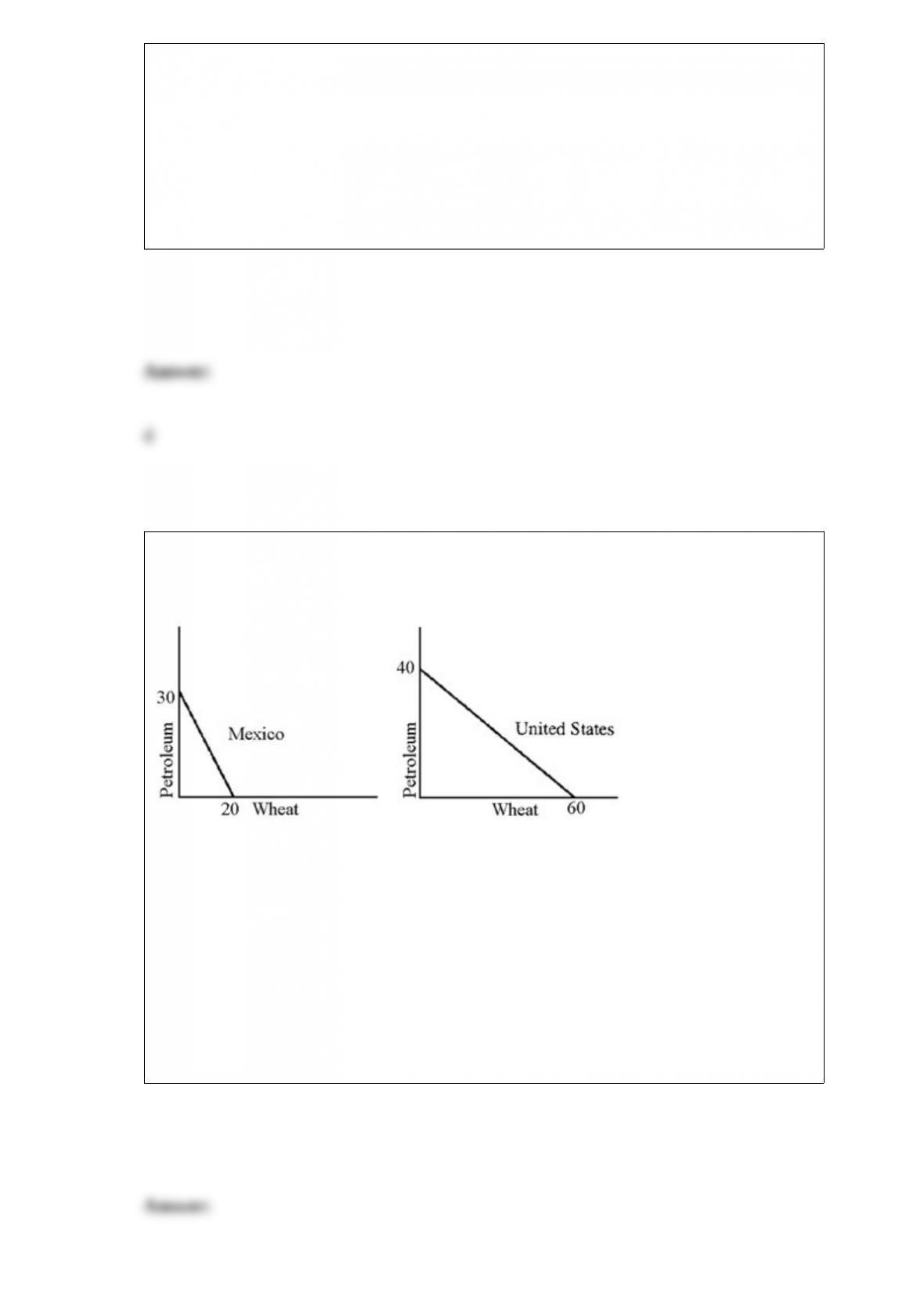
Figure 22-2
In Figure 22-2,
a. the opportunity cost of 1 unit of wheat in the United States is a 2/3 unit of petroleum.
b. the opportunity cost of 1 unit of wheat in Mexico is a 2/3 unit of petroleum.
c. the opportunity cost of wheat is higher in the United States than it is in Mexico.
d. the United States has a comparative advantage over Mexico in the production of
petroleum.

Over time, aggregate demand and aggregate supply grow by the same amount.
a. True
b. False
Powers of many regulatory agencies are designed to protect public health and safety.
a. True
b. False
Figure 5-16
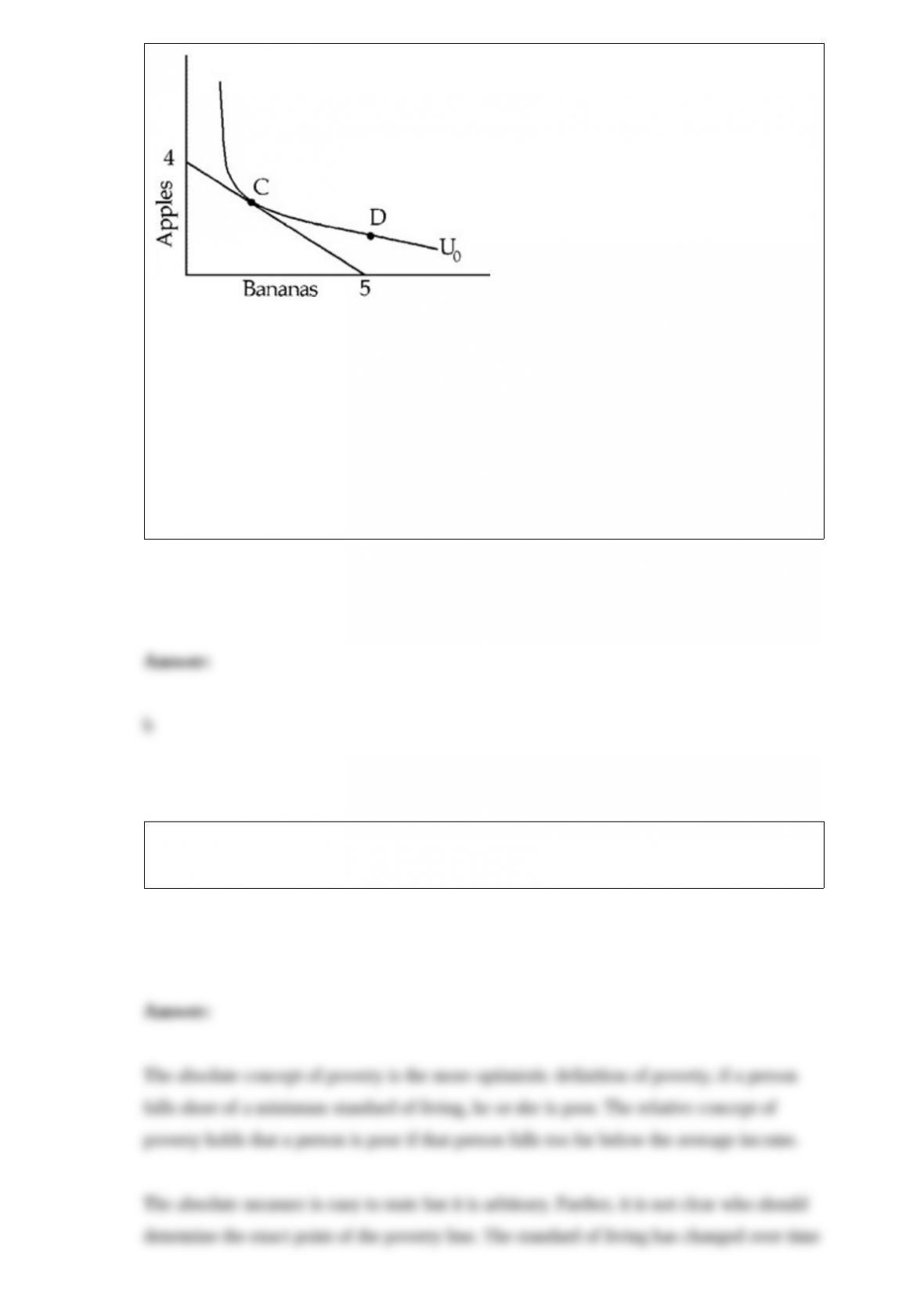
In Figure 5-16, a decrease in the price of apples will
a. shift Adam’s budget constraint out.
b. make Adam’s budget constraint steeper.
c. shift Adam’s indifference curves out.
d. make Adam’s budget constraint flatter.
What is the difference between the absolute and relative concepts of poverty? What are
the major problems in measuring poverty with them?
Discuss some of the government regulations designed to ensure depositors’ safety and
to control the money supply.
Give some arguments for and against a balanced budget requirement.
Why did observers at first believe that the damage from the impending subprime
mortgage crisis would be too small to cause a recession?
Explain the concept of ‘creative destruction’ by innovation. Does it ensure positive
economic profits in the long run?
How does the market mechanism distribute income?
Along a straight-line demand curve, why does the price elasticity of demand grow
steadily smaller as we move from left to right?
What is the distribution of national income currently among the owners of the factors of
production-land, labor, capital, and entrepreneurship?
What are the important factors which determine the velocity of money?
How do lags affect stabilization policy? Your answer should include three specific types
of lags.
Explain why an airline may decide to sell an air ticket to a stand-by passenger at less
than the full-fare if there are empty seats on the airplane?
Explain how interest rates and bond prices are related to one another. Why is this
important for monetary policy?
Discuss the problems associated with the Bretton Woods system.
At one time, policy makers interpreted the Phillips curve as offering a menu of
inflation-unemployment choices. Today, the curve is no longer viewed this way. Why
has the interpretation changed?
Assume that you have taken over management of a small concession stand on a local
beach for the summer. Your main product is iced water, popular on hot days. You’ve
been selling 400 cups per day at 50 cents each. The cups cost 5 cents each. One of your
customers suggests that you cut the price to 40 cents to make more money. For the
customer to be correct, how much must your sales increase?
Write a short note on the regulation of the U.S. securities markets.